Home Blog Page 1216

Megaworld Q1 income rises 16% to P5.83B

THE BELLAGIO PALAWAN

MEGAWORLD Corp. saw its first-quarter (Q1) net income rise by 16% to P5.83 billion, driven by leasing activity and growth across its residential, office, mall, and hotel businesses.

Consolidated revenue for the first three months grew by 11% to P20.93 billion on the back of strong contributions from its residential, leasing, and hotel operations, Megaworld said in a regulatory filing on Wednesday.

“This strong start to the year is a reflection of our clear strategy and the strength of our diversified portfolio. All of our core businesses — residential, office, malls, and hotels — grew during the first quarter. More than half of our township developments are in the provinces, and the opportunity for expansion and growth is there,” Megaworld President Lourdes T. Gutierrez-Alfonso said.

Real estate sales improved by 8% to P13.09 billion on project sales across Metro Manila and key growth centers in the provinces.

Leasing revenue went up by 15% to P5.34 billion due to tenant demand and synergy between Megaworld’s office and retail ecosystems.

Megaworld Premier Offices grew its revenue by 17% to P3.69 billion. It secured over 50,000 square meters (sq.m.) of new office leases during the quarter — the highest quarterly total in five years — driven by expansions and new tenants from business process outsourcing firms and multinational companies.

Megaworld Lifestyle Malls saw an 11% revenue increase to P1.66 billion on higher foot traffic, sustained consumer spending, and more than 13,000 sq.m. of new tenant openings during the quarter.

Megaworld Hotels and Resorts recorded a 27% increase in revenue to P1.43 billion due to higher room rates.

As of end-March, Megaworld held nearly half a trillion pesos in total assets. It has 35 townships nationwide and approximately 7,000 hectares of land bank.

The property developer aims to expand its office gross leasable area (GLA) to two million sq.m. by 2030 and its retail GLA to one million sq.m. by the same year.

These targets will bring Megaworld’s total leasing portfolio GLA to three million sq.m. by 2030.

Megaworld is the real estate arm of listed conglomerate Alliance Global Group, Inc. (AGI).

“Megaworld remains to be the top contributor to the revenue pie of the Alliance Global Group. This quarter’s results affirm the strength of the company’s township model, which thrives because of the unique connections it fosters between people, businesses, and experiences,” AGI President and Chief Executive Officer Kevin L. Tan said.

Meanwhile, AGI said in a separate disclosure that it plans to raise P26.7 billion from the issuance of warrants to fund expansion plans and settle debt.

The issuance covers up to 2.226 billion underlying common shares at a minimum price of P12 per share.

Warrants refer to derivative instruments that give holders the right — but not the obligation — to purchase or sell a stated number of shares of stock at a specified price and within a specific period.

“The proceeds of the offer will be used to finance capital expenditures, repayment of debt obligations, general corporate purposes, and transaction costs,” AGI said.

“The offering of the warrants to eligible stockholders will allow the latter to have the opportunity to maintain their ownership ratio prior to the issuance of the warrants,” it added.

On Wednesday, Megaworld shares rose by 1.11% or two centavos to P1.82 each, while AGI stocks climbed by 2.1% or 13 centavos to P6.32 apiece. — Revin Mikhael D. Ochave


DigiPlus profit jumps to P4.2B on surge in engagement with digital entertainment

BingoPlus livestreaming studio

TANCO-LED digital entertainment provider DigiPlus Interactive Corp. recorded a 110% increase in first-quarter (Q1) net income to P4.2 billion, driven by its flagship platforms and new game offerings.

Revenue for the January-to-March period climbed by 69% to P23.06 billion, while earnings before interest, taxes, depreciation, and amortization surged by 118% to P4.59 billion, DigiPlus said in a stock exchange disclosure on Wednesday.

“This was fueled by the strong performance of its flagship platforms and the contribution of new game offerings across BingoPlus, ArenaPlus, and GameZone,” DigiPlus said.

“The company’s performance was further boosted by reinforcing operational efficiency, enabling more reinvestment in marketing, product innovation, and user experience, as well as the rationalization of the Philippine Amusement and Gaming Corp. share rate on e-games,” it added.

For the first quarter, the company contributed P8.8 billion in taxes and regulatory fees, up by 28% from last year.

DigiPlus said it is on track to begin its Brazil operations in the fourth quarter. It has started hiring efforts to craft a team that can drive growth and local market relevance.

The company also recently incorporated DigiPlus Global Pte. Ltd. in Singapore, setting the stage for broader growth opportunities and global expansion.

With this, DigiPlus said it remains confident in its ability to sustain its growth, led by data-driven operations and its innovation pipeline.

“DigiPlus aims to bring the success it has established in the Philippines to participate in the thriving digital entertainment and electronic gaming industry globally,” DigiPlus Chairman Eusebio H. Tanco said. 

“Our performance in the first quarter shows that we are building not just for scale, but for long-term value creation. We continuously invest in technology, talent, and trust — and this is what sets us apart,” he added.

DigiPlus has over 40 million registered users. It offers bingo, sports betting, and live-streamed games.

On Wednesday, DigiPlus shares rose by 0.6% or 25 centavos to P41.95 apiece. — Revin Mikhael D. Ochave

Century Pacific Food sees 11% income growth, reaffirms full-year outlook

CENTURYPACIFIC.COM.PH

LISTED food and beverage manufacturer Century Pacific Food, Inc. (CNPF) is keeping its target of achieving double-digit revenue and profit growth this year despite tariff-related uncertainties.

“Our exposure to recent United States tariff actions is limited, though we continue to monitor developments closely. We navigate this dynamic environment with a keen eye on both risks and opportunities, recognizing that agility and responsiveness are key to sustaining our momentum,” CNPF Chief Finance Officer Richard Kristoffer S. Manapat said in a regulatory filing on Wednesday.

“Against this backdrop, we reaffirm our double-digit growth outlook for both revenue and profit — anchored on our mission of delivering accessible, affordable nutrition to the consumers we serve,” he added.

Mr. Manapat made these remarks as CNPF reported an 11% increase in first-quarter net income to P1.9 billion, driven by its branded segment. Consolidated revenue grew by 10% to P19.9 billion.

The branded segment posted a 13% sales increase, supported by a better consumer landscape amid easing inflation. The segment, which accounts for the bulk of the company’s sales, includes subcategories such as marine, meat, milk, and other emerging segments.

The original equipment manufacturer (OEM) tuna and coconut exports segment saw a 2% sales decline due to a high 2024 base and an unfavorable commodity cycle.

Operating expenses as a percentage of sales decreased by 70 basis points to 14.5% amid disciplined spending.

The earnings before income, taxes, depreciation, and amortization (EBITDA) margin was sustained at 14%, while the net profit margin remained stable at 9.6%. 

“While it’s still early in the year, we aim to continue our growth trajectory in the coming quarters. We remain cautiously optimistic — mindful of ongoing global market volatility and cost-related headwinds,” Mr. Manapat said.

CNPF shares rose by 1.28% or 50 centavos to P39.50 apiece on Wednesday. — Revin Mikhael D. Ochave

SMFB delivers 16% profit growth in first quarter

SANMIGUELFOODS.COM

ANG-LED food and beverage manufacturer San Miguel Food and Beverage, Inc. (SMFB) reported a 16% increase in its first-quarter (Q1) net income to P11.6 billion, driven by sustained consumer demand.

Consolidated revenue for the January-to-March period rose by 4% to P98.9 billion, SMFB said in a regulatory filing on Wednesday.

Gross profit increased by 11% to P28.6 billion, while income from operations grew by 16% to P15.2 billion.

“Our results this quarter reflect the strength of our diversified portfolio and our continued focus on execution. We are optimistic about the rest of the year. Our continued investments in key growth areas, from expanding production capacities to strengthening our distribution network, are designed to meet the evolving needs of the Filipino consumer,” SMFB Chairman Ramon S. Ang said.

“With our strong brands and disciplined execution, we are well-positioned to sustain our growth trajectory in 2025 and beyond,” he added.

San Miguel Foods, the company’s food segment, posted an 83% increase in net income to P3 billion as revenue rose by 8% to P46.3 billion, led by high-teens growth in poultry and steady performance across the Purefoods processed meats, Magnolia dairy and coffee, and flour categories.

The beer business, led by San Miguel Brewery, Inc., increased its net income to P6.6 billion, with sales reaching P36.3 billion. Domestic revenue stood at P32 billion, while international sales reached $74.9 million.

Meanwhile, the spirits segment, through Ginebra San Miguel, Inc., recorded an 11% rise in net income to P2.1 billion. Revenue grew by 8% to P16.3 billion, supported by sustained consumer demand and initiatives to reach a broader customer base.

On Wednesday, SMFB shares rose by 0.1% or five centavos to P51.35 apiece. — Revin Mikhael D. Ochave

Robinsons Land plans P125-B capex to hit 2030 goal

THE VICTOR is lit up at night with the colors of the Philippine flag.

GOKONGWEI-LED real estate developer Robinsons Land Corp. (RLC) is allocating up to P125 billion in capital expenditure (capex) to fund its five-year plan of delivering P25 billion in net income by 2030.

RLC Chief Financial Officer Kerwin Max S. Tan said during a media briefing on Wednesday that more capex will be used for project development to reach the 2030 goal.

He added that RLC aims to increase earnings by 12% annually to achieve the 2030 target.

“Historically, our capex has been in the P20-25 billion range annually. I guess it would still be the same, except that previously, when we allocated P20-25 billion for capex, 20% was allocated for purchasing land,” Mr. Tan said.

“As we have the land bank in place, and potentially some more, I think more of the capex will be allocated to project development,” he added.

According to Mr. Tan, RLC’s capex will be funded through internal funds and debt.

“We have internally generated funds. If we do undertake debt, we ensure that the yields are higher than the prevailing interest rates,” he said.

RLC President and Chief Executive Officer Mybelle V. Aragon-GoBio said in the same briefing that the company has been efficient in utilizing its land assets.

“We balance it. We purchase land for say five to ten years’ use, but mostly for immediate development because it drags down your balance sheet if you’re not able to fully utilize it immediately,” she said.

Earlier this week, RLC unveiled a roadmap that aims to deliver P25 billion in net income by 2030 in time for its 50th anniversary.

One of the strategies is to expand the company’s investment portfolio, with plans to increase mall gross leasable area (GLA) by 50%, office space by 50%, hotel room keys by 25%, and double its logistics capacity by 2030.

RLC will also leverage its real estate investment trust platform, RL Commercial REIT, Inc. (RCR), to unlock capital.

The property developer will drive the premiumization of its offerings and forge new partnerships. It will also tap new business streams such as sports and entertainment centers, ecosystem synergies, and sustainability-driven customer services to enhance customer experience.

RLC recorded a 4% increase in its first-quarter attributable net income to P3.48 billion, while revenue was maintained at P11.03 billion.

On Wednesday, RLC shares closed unchanged at P12.20 per share. — Revin Mikhael D. Ochave

A luxe weekend at NUSTAR

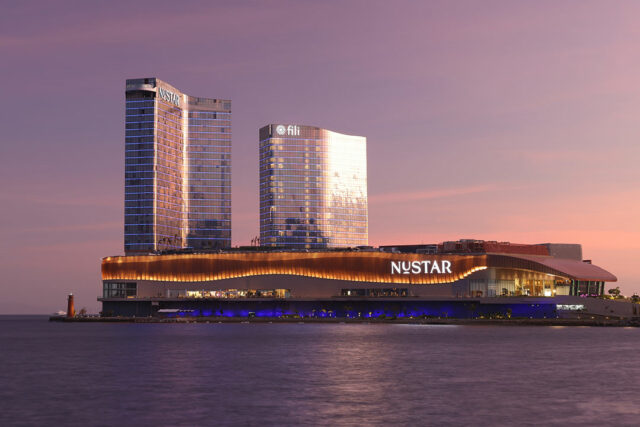
NUSTAR RESORT CEBU FAÇADE

PERFECT WEEKENDS can exist, and they can be found at Cebu’s ultra-luxury NUSTAR.

Between May 2 to 4, media guests were billeted at the NUSTAR Hotel, the new addition to Universal Hotels and Resorts, Inc.’s (UHRI) nine-hectare development in Cebu. The lobby itself presented quiet elegance with a generous use of marble, as well as an impressive Czech glass installation on the ceiling. Brocade curtains, marble arches, and curved mirrors that mimicked windows completed the look.

Stays in various hotels here and abroad didn’t quite prepare us for the grandeur that was our Seaview King room — the butler who handled our luggage must have seen our eyes bug out. The room, decorated in a glam Streamline Moderne (think of it like naval Art Deco) had blondwood and the same luxurious marbles in the lobby.

The bathroom had a rain shower, a tub, an intelligent toilet, and his-and-hers sinks; the marble stretched out from the floor almost all the way to the ceiling. Blinds in the bathroom, controlled electronically with a button, rose up to reveal a view of the sea from the tub — perfect when you’re lying in it under the tub’s chandelier. Guerlain toiletries were on the sinks, scented with the brand’s Eau Imperiale, made for the Empress Eugenie of France.

Our king bed was of course, comfortable, and it was hard to get up — the discreet button on our bedside controlled the curtains to wake us up with sunlight and the view of Cebu’s waters (poor me!). The smart TV could play music from our phone, while the room’s phone had a button that called our personal butler. Upon asking to be woken up at 5 a.m., the butler was sure we wouldn’t be able to wake up, and called again at 6 a.m. — but not before asking if we would like some coffee with the wake-up call. Their butlers were trained by Heilbron Hospitality, one of the top schools for the profession.

We would have stayed in the room and let the rest of the weekend roll out, but there was work to be done: namely, a sunset cruise, and visits to the resort’s restaurants and shops.

The Mall has jewelry stores like Diagold and Chao Tai Fook (with such goodies as lucky bracelets in 24-karat gold, according to the salesperson), as well as stores like Gucci offering exclusive items (while Manila finally got a taste of Gucci’s summer raffia bags, island locations like Cebu get first dibs on resortwear). The salespeople in the mall’s luxury stores (which include Boss, Versace, Kenzo, Ferragamo, Loewe, Givenchy, Louis Vuitton, and Dior) were also noticeably friendlier than most.

As for the restaurants, we’ve written about Mott 32 before (https://tinyurl.com/ynbn44dn), and the breakfast at its sister property’s Fili (a must) but this time we got to try Good Luck Hotpot, which also has branches in Metro Manila. Good Luck offered seafood on ice, black chicken sliced paper-thin, several types of broth simmering on cloisonné tabletop stoves, and cultural Chinese dances (one had a veiled female dancer; the other had a masked dancer who switched masks as if by magic, a staple of Sichuan opera — he did dance to a pop song, however).

Finally, they held a gala night for the media guests and their loyal patrons, as well as a sprinkling of Cebu society, which meant raffle prizes, and performances by Ryan Cayabyab and Basil Valdez.

After every work day, we were pleased to find roses in our bedroom and bathroom — you have no idea how hard it was to go home.

A PREVIEW OF THINGS TO COME
Roel Constantino, general manager for hotels at NUSTAR, said during a media roundtable on May 3, “Above all, luxury is about how you feel. That is what we aim for.”

The hotel has 223 guestrooms and suites, and what we had was a preview of things to come — the hotel officially opens on May 8.

The rooms range in size from 52 square meters (sq.m.), while suites go up to 225 sq.m. The room rates start at P17,000, but an opening promo offers them with discounts up to 25% (that’s P12,750++ a night), from May 8 to July 31.

The resort itself has many things planned until the end of 2027, which Katrina Mae de Jesus, assistant vice-president of business development for NUSTAR, states to be the completion date for the whole resort.

Other structures underway include the Grand Summit (a more straightforward accommodation option; it was topped off three days before our arrival) and the Sky Deck. Upon completion, the Grand Summit hotel will increase the number of keys in the property to 971. The pools and gardens of the Leisure Park’s first phase have already been completed, but there’s a water park planned for that, too. The Mall will have more luxury brands, and the fourth floor will have a 3,200 sq.m. wellness spa.

Ms. De Jesus was proud to discuss the resort’s final project, which will bring the property to completion in 2027: the performing arts theater, which will seat 1,700 people. “It will be the first in the Visayas and Mindanao,” she said. “It’s a full-on, high-tech proper theater similar to the ones that you see in Manila.” Until then, foreign performers will have to make do with venues that can’t seat as many, or perform in older theaters with outdated technology.

Added Mr. Constantino of the planned theater: “Which is also to enhance Cebu’s desirability as a leisure destination, also as a MICE (Meetings, Incentives, Conferences, and Exhibitions) destination. It’s to strengthen Cebu’s positioning in the region, and add credence to its claim to be the next big MICE destination in Asia.”

Ms. De Jesus explained their plans for UHRI in the next few years: “We do have smaller format casinos in Mindanao, and there will be a project in the North soon.”

NUSTAR’s sister brand Fili, a homegrown five-star brand and the country’s first, is already under construction at Bridgetowne in Quezon City. “Fili by itself is a brand that is also intended to expand across the country,” said Mr. Constantino. “I believe there are several locations across Manila that are in the drawing board.”

So, soon the capital will be able to try out luxurious hospitality, Southern-style. — Joseph L. Garcia

Nat’l AI-powered identity security strategy to protect PHL from threats

REUTERS

THE PHILIPPINE government must develop a national artificial intelligence (AI)-powered identity security strategy and support the adoption of biometrics and fraud detection technologies to protect Filipinos from cybersecurity risks, according to technology company HID Global.

“There is a key opportunity to strengthen the country’s security and identity infrastructure… The government can consider creating a national AI-powered security strategy to accelerate the adoption of biometrics, mobile identity verification and fraud detection across sectors,” Prabhuraj Patil, HID Global senior director for Physical Access Control Solutions in the Association of Southeast Asian Nations (ASEAN) and India Subcontinent, said in an e-mail.

“By standardizing AI-driven identity solutions in e-governance, financial transactions, and critical infrastructure, the Philippines can enhance security while improving service efficiency.”

AI can enhance existing security solutions through real-time anomaly detection, automate routine tasks, and facilitate predictive analytics for efficient and proactive threat management, Mr. Patil said.

About 35% of security leaders worldwide now use biometric technologies while 13% plan to, according to HID’s 2025 State of Security and Identity Report.

According to HID’s study, which surveyed 1,800 respondents worldwide including the Asia Pacific, the adoption of AI agents in companies’ security operations has been rapid amid their improved efficiency and speed in security processes (50%) and ability to provide enhanced real-time data analysis (47%).

“Experts are moving away from traditional access methods, adopting mobile solutions and integrating biometric technologies like fingerprint and facial recognition. This transition enhances security and user convenience,” Mr. Patil said.

Cloud-based identity management, mobile credentials, and AI-driven security analytics can also help lower energy consumption, reduce plastic waste, and optimize security efficiency, he added.

The Philippines’ vulnerability to disasters has also been driving the adoption of sustainable security technologies such as solar-powered surveillance systems and disaster-proof cloud identity verification, the official said.

“These solutions ensure business continuity and environmental sustainability while reducing reliance on physical security infrastructure.”

Mr. Patil also cited the need for a unified security framework to ensure interoperability between government agencies, banks, healthcare, and telecom providers and improve identity verification processes and cross-agency digital transactions.

The government must also strengthen public-private partnerships to leverage digital identity solutions, cyber resilience programs, and research and development grants, he added. — Beatriz Marie D. Cruz

PetroEnergy unit secures DoE endorsement for offshore wind projects

BUHAWIND.COM.PH

YUCHENGCO-LED PetroEnergy Resources Corp. (PERC) has secured key government approvals for its energy projects with a combined capacity of 4 gigawatts (GW), allowing the company to fast-track the projects’ development.

In a stock exchange disclosure on Wednesday, PERC said the Department of Energy (DoE) had granted the Certificate of Energy Project of National Significance to its Northern Luzon Offshore Wind Project, led by Buhawind Energy Northern Luzon Corp. (BENLC), which has a capacity of 2,000 megawatts (MW).

BENLC is a partnership between PERC’s renewable energy arm, PetroGreen Energy Corp., and Copenhagen Energy Group (CE).

The company’s other offshore wind projects — the 1-GW Northern Mindoro and 1-GW Eastern Panay offshore wind projects — have also secured the Certificate of Energy Project of National Significance.

Projects certified as energy projects of national significance are eligible for expedited permitting and review processes from both local and national government agencies.

“Projects granted with Certificate of Energy Project of National Significance are those validated by the DoE as having significant capital investments and will lead to greater energy security and broader economic, environmental, and technological benefits for the country,” PERC said.

Further, the 2-GW Northern Luzon Offshore Wind Project located in Ilocos Norte has also received its Certificate of Registration from the Bureau of Customs as an accredited importer, valid for one year — a key requirement for the importation of equipment, tools, and machinery for the project’s pre-development studies and construction.

PERC is aiming to increase its generation capacity to 500 MW by 2029 from its current 145 MW. — Ashley Erika O. Jose

Everything Bistro under one roof

MY SOUTH HALL serves dishes from several The Bistro Group restaurants.

ALMOST EVERYTHING that The Bistro Group offers can be found at My South Hall at S Maison in the SM Mall of Asia complex.

Last month, BusinessWorld saw the lineup at My South Hall, which includes The Bistro Group’s beloved restaurant brands such as Fish & Co., Modern Shang, El Pollo Loco, and Sarap Bistro Filipino. If that doesn’t hit your fix, Watami, Italliani’s, Texas Roadhouse, and other Bistro Group restaurants are right outside the food hall. While the food hall was opened right before the pandemic (which shuttered its operations), it reopened in 2021.

The restaurant group, which celebrates its 30th anniversary, also introduces new concepts there like Taiwanese-inspired hotpot Xi Nen Hot Pot and milk tea brand WCKD.

“The roster was curated based on popular food trends, customer demand, and a mix of international and local flavors to offer something for everyone, while maximizing foot traffic and variety,” said Lisa Ronquillo-Along, The Bistro Group’s chief marketing officer.

As for the food hall concept, it’s becoming recently popular in the metro, with restaurant groups opening their own across the city, populating them with smaller kitchens of their brands. “The food hall model is attractive because it offers variety, faster customer turnover, and appeals to diners looking for quick, diverse, and trendy food experiences — all in one space,” she said in an e-mail.

The Bistro Group, best known for its franchises of foreign concepts (its first was TGI Friday’s in 1994), has been trying out its hand with homegrown concepts, such as the aforementioned Sarap and Shangri-La Plaza’s Siklab+. “The Bistro Group is entering the Filipino food space with Sarap and Siklab to tap into the growing demand for local cuisine, diversify beyond foreign franchises, and create original brands they can potentially expand locally and globally,” said Ms. Ronquillo-Along.

Just because the group celebrated its 30th anniversary this year doesn’t mean it is slowing down — it recently brought in upscale Morton’s The Steakhouse and LongHorn Steakhouse. Ms. Ronquillo-Along said, “Our longevity comes from consistently delivering quality, adapting to trends, and strong operational expertise. Foreign chains trust us for our proven track record, local market know-how, and ability to maintain global standards — helping us lead and set benchmarks in the industry.”

My South Hall is found at the ground floor of S Maison Conrad Manila. — JLG

Use of nonbank online lending apps rising among Filipinos

STOCK PHOTO | Image by Katemangostar from Freepik

FILIPINOS spent about 1.54 billion seconds on nonbank digital lending applications in 2024, according to consumer finance company Digido.

Active users spent about 12 minutes and 14 seconds per month on average on these apps, with the average duration per session at 58 seconds, Digido said in a statement.

User activity seen in the apps rose by 16% year on year in 2024, it added.

The company’s analysis covered 47 digital lending applications operating in the Philippines, including Digido.

Broken down, apps specializing in personal loans saw the most activity at 76.4% of the total, followed by those offering buy now, pay later (BNPL) services at 21.4%, and installment loans at 2.2%.

Downloads of online lending apps also surged by 42.4% to 127.69 million units in 2024 from 89.66 million a year prior, with the personal loan segment likewise being the main driver, Digido said.

Unique users jumped by 43% year on year to 67.84 million people, while the number of active users rose by 53% to 11.78 million individuals.

“Nonbank, digital-forward lenders maintain their current market growth rates despite the already high level of fintech (financial technology) penetration and saturation of offerings. Personal loans, in particular, remain a key driver of this industry due to its flexibility, ease of access, and competitive rates,” Digido Business Development Manager Rose Arreco said.

“The growth in downloads, active and unique users, as well as the increase in total time spent in applications indicate continued consumer interest and high demand for such financial instruments while illustrating the industry’s role in promoting financial inclusion and continuing towards increased access to formal credit,” she added.

The Philippine digital lending market is likely to surpass $1 billion (about P56.33 billion) by the second half of the year amid increasing demand for online financial services, Digido earlier said.

This is bigger than its estimate of a $796-million value at end-2024 and the $693 million recorded in 2023. The Philippines’ digital lending market has been growing at an average of 28% or $68 million annually from 2013 to 2023, it added.

Broken down, nonbank digital lenders are expected to make up 55.2% of the market by the second half of this year for a $556.5-million value.

On the other hand, digital banks are seen to have a 44.8% share equivalent to $451 million. — B.M.D. Cruz

Performance of Philippine Agriculture

AGRICULTURAL OUTPUT grew by an annual 1.9% in the first quarter, as good weather helped boost crops, fisheries and poultry production, the Philippine Statistics Authority (PSA) said. Read the full story.

Performance of Philippine Agriculture

MPIC Q1 net income jumps 48% to P9.1B on asset sale gain

MANUEL “MANNY” V. PANGILINAN

METRO PACIFIC Investments Corp. (MPIC) reported a 48% increase in its first-quarter (Q1) net income to P9.1 billion from P6.1 billion a year earlier, driven by a gain from the divestment of its oil storage business.

“Reported net income surged 48% to P9.1 billion from P6.1 billion, driven by a gain from the sale of MPIC’s oil storage company, Philippine Coastal Storage and Pipeline Corp. (PCSPC),” MPIC said in an e-mail statement on Wednesday.

In October last year, MPIC sold its 50% stake in PCSPC to an affiliate of global infrastructure investor I Squared Capital in a $296-million deal.

Operating revenue climbed to P19.29 billion, while consolidated core net income rose by 17% to P6.6 billion. Better performance across MPIC’s portfolio led to a 16% increase in contribution from operations to P7.9 billion.

The power business contributed the largest share of net operating income at P4.9 billion or 62%. The water and toll road segments contributed P1.9 billion and P1.4 billion, respectively, representing 42% of net operating income.

“We are pleased with our strong start to 2025, marked by solid performance across our core businesses and improved earnings momentum. These results reflect the steady execution of our strategy and the strength of our foothold in power, water, toll roads, and healthcare,” MPIC Chairman, President, and Chief Executive Officer Manuel V. Pangilinan said.

The power business, led by Manila Electric Co., posted a 9% growth in reported net income to P10.4 billion, as total revenue increased by 10% to P114.5 billion on higher energy sales.

Water provider Maynilad Water Services, Inc. grew its core net income by 17% to P3.6 billion on lower operating expenses. Revenue climbed by 6% to P8.6 billion due to an 8% tariff increase implemented in early January.

Toll road operator Metro Pacific Tollways Corp. saw a 15% decline in reported net income to P1.5 billion, as the prior-year figure benefited from the reversal of contingent considerations related to the Jakarta-Cikampek Elevated toll road acquisition.

Toll revenue increased by 16% to P8.7 billion on rate adjustments and domestic traffic growth. 

“Looking ahead, we remain focused on sustaining this growth trajectory. We are accelerating investments in power generation and expanding our presence in agribusiness — both critical to supporting national development and ensuring long-term value creation,” Mr. Pangilinan said.

MPIC is one of the three key Philippine units of Hong Kong-based First Pacific Co. Ltd., alongside Philex Mining Corp. and PLDT Inc.

Hastings Holdings, Inc., a unit of PLDT Beneficial Trust Fund subsidiary MediaQuest Holdings, Inc., holds a majority stake in BusinessWorld through the Philippine Star Group, which it controls. — Revin Mikhael D. Ochave