Home Blog Page 1215

Trump confronts South Africa’s Ramaphosa with false claims of white genocide
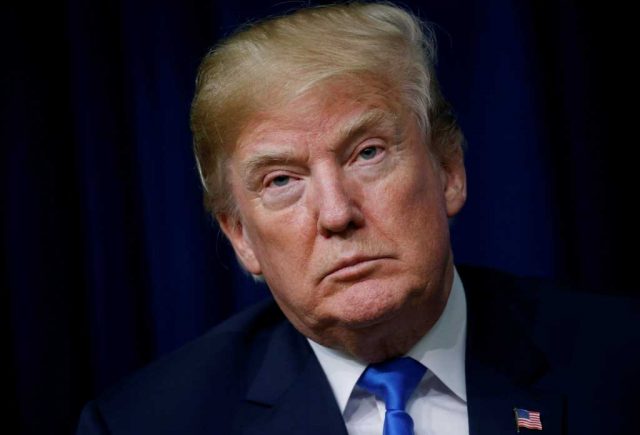
U.S. President Donald Trump — REUTERS/LEAH MILLIS/FILE PHOTO

WASHINGTON — U.S. President Donald Trump confronted South African President Cyril Ramaphosa on Wednesday with explosive false claims of white genocide and land seizures during a tense White House meeting that was reminiscent of his February ambush of Ukrainian leader Volodymyr Zelenskiy.

South Africa has one of the highest murder rates in the world, but the overwhelming majority of victims are Black.

Mr. Ramaphosa had hoped to use Wednesday’s meeting to reset his country’s relationship with the U.S., after Trump canceled much-needed aid to South Africa, offered refuge to white minority Afrikaners, expelled the country’s ambassador and criticized its genocide court case against Israel.

The South African president arrived prepared for an aggressive reception, bringing popular white South African golfers as part of his delegation and saying he wanted to discuss trade. The U.S. is South Africa’s second-biggest trading partner, and the country is facing a 30% tariff under Mr. Trump’s currently suspended raft of import taxes.

But in a carefully choreographed Oval Office onslaught, Mr. Trump pounced, moving quickly to a list of concerns about the treatment of white South Africans, which he punctuated by playing a video and leafing through a stack of printed news articles that he said proved his allegations.

With the lights turned down at Mr. Trump’s request, the video – played on a television that is not normally set up in the Oval Office – showed white crosses, which Mr. Trump asserted were the graves of white people, and opposition leaders making incendiary speeches. Mr. Trump suggested one of them, Julius Malema, should be arrested.

The video was made in September 2020 during a protest after two people were killed on their farm a week earlier. The crosses did not mark actual graves. An organizer of the protest told South Africa’s public broadcaster at the time that they represented farmers who had been killed over the years.

“We have many people that feel they’re being persecuted, and they’re coming to the United States,” Mr. Trump said. “So we take from many … locations, if we feel there’s persecution or genocide going on,” he added, referring specifically to white farmers.

“People are fleeing South Africa for their own safety. Their land is being confiscated, and in many cases, they’re being killed,” the president added, echoing a once-fringe conspiracy theory that has circulated in global far-right chat rooms for at least a decade with the vocal support of Mr. Trump’s ally, South African-born Elon Musk, who was in the Oval Office during the meeting.

South Africa, which endured centuries of draconian discrimination against Black people during colonialism and apartheid before becoming a multi-party democracy in 1994 under Nelson Mandela, rejects Mr. Trump’s allegations.

A new land reform law, aimed at redressing the injustices of apartheid, allows for expropriations without compensation when in the public interest, for example if land is lying fallow. No such expropriation has taken place, and any order can be challenged in court.

South African police recorded 26,232 murders nationwide in 2024, with 44 linked to farming communities. Eight of those victims were farmers.

Mr. Ramaphosa, sitting in a chair next to Mr. Trump and remaining poised, pushed back against his claims.

“If there was Afrikaner farmer genocide, I can bet you, these three gentlemen would not be here,” Mr. Ramaphosa said, referring to golfers Ernie Els and Retief Goosen and billionaire Johann Rupert, all white, who were present in the room.

That did not satisfy Mr. Trump.

“We have thousands of stories talking about it, and we have documentaries, we have news stories,” Mr. Trump said. “It has to be responded to.”

‘THERE IS JUST NO GENOCIDE’
Mr. Ramaphosa mostly sat expressionless during the video presentation, occasionally craning his neck to look at the screen. He said he had not seen the material before and that he would like to find out the location.

Mr. Trump then displayed printed copies of articles that he said showed white South Africans who had been killed, saying “death, death” as he flipped through them, eventually handing them to his counterpart.

Mr. Ramaphosa said there was crime in South Africa, and the majority of victims were Black. Mr. Trump cut him off and said: “The farmers are not Black.”

Mr. Ramaphosa responded: “These are concerns we are willing to talk to you about.”

The South African president cited Mandela’s example as a peacemaker, but that did not move the U.S. president, whose political base includes white nationalists. The myth of white genocide in South Africa has become a rallying point for the far right in the United States and elsewhere.

“I will say: apartheid, terrible,” Mr. Trump noted. “This is sort of the opposite of apartheid.”

The extraordinary exchange, three months after Trump and Vice President JD Vance upbraided Ukraine’s Zelenskiy inside the same Oval Office, could prompt foreign leaders to think twice about accepting Trump’s invitations and risk public embarrassment.

Unlike Mr. Zelenskiy, who sparred with Mr. Trump and ended up leaving early, the South African leader kept his calm, praising Mr. Trump’s decor – the president has outfitted the Oval Office with gold accessories – and saying he looked forward to handing over the presidency of the Group of 20 next year.

Mr. Trump declined to say whether he would attend the G20 meeting in South Africa in November.

Later in the meeting, Mr. Rupert, the business tycoon, stepped in to back up Mr. Ramaphosa, saying that crime was a problem across the board and many Black people were dying too.

Following the meeting, Mr. Ramaphosa sought to focus on trade, telling reporters the two countries had agreed to discuss critical minerals in South Africa. His trade minister said the government had submitted a trade and investment proposal that included buying liquefied natural gas from the U.S.

But the president also flatly denied Mr. Trump’s allegations about a wave of racial violence against white farmers.

“There is just no genocide in South Africa,” he said. — Reuters
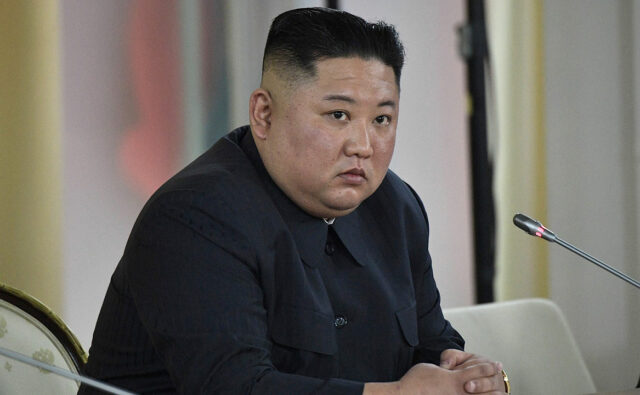
North Korean leader Kim Jong Un condemns warship accident as ‘criminal’

KREMLIN.RU/EVENTS/PRESIDENT/NEWS/60363/PHOTOS-COMMONS.WIKIMEDIA.ORG

SEOUL — A serious accident occurred on Wednesday during the launch of a new North Korean warship while leader Kim Jong Un was attending the event, with him calling it a “criminal act” that could not be tolerated, state media KCNA reported.

Mr. Kim, who witnessed the failed launch of the 5,000-ton destroyer, excoriated the accident as caused by “carelessness” that tarnished the country’s dignity, and ordered the ship to be restored before a key ruling party meeting in June, KCNA said on Thursday.

The report did not mention whether there were any casualties.

KCNA said the incident at the eastern port of Chongjin was caused by a loss of balance while the vessel was being launched and it said sections of the bottom of the warship were crushed, but it did not give more details of damage sustained.

“Kim Jong Un made stern assessment saying that it was a serious accident and criminal act caused by absolute carelessness, irresponsibility and unscientific empiricism which is out of the bounds of possibility and could not be tolerated,” KCNA reported.

Mr. Kim said the accident “brought the dignity and self-respect of our state to a collapse”, adding an immediate restoration of the destroyer was “not merely a practical issue but a political issue directly related to the authority of the state.”

The rare public disclosure of an accident follows a report of the launch of another destroyer of a similar size in April attended by Mr. Kim at the west coast shipyard of Nampho.

North Korea has previously experienced accidents such as space launch vehicle failures and civilian disasters that have subsequently been used to promote the role of the leadership and the ruling Workers’ Party in correcting the problems.

The 5,000-ton destroyers launched by North Korea this year are the country’s largest warships yet.

In a report last week on preparations for the launch of the accident ship, U.S.-based 38 North said it appeared the ship would be side-launched from the quay, a method not previously observed in North Korea.

“The use of this launch method could be one of necessity, as the quay where the ship is being built does not have an incline,” the 38 North report said.

Commercial satellite imagery of the shipyard the day before the launch showed the destroyer positioned on the quay with support vessels by its side. — Reuters

Vietnam says more tariff negotiations with United States needed

REUTERS

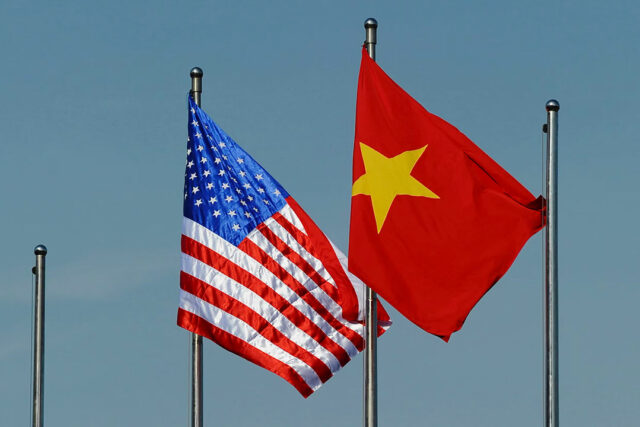
HANOI — The United States and Vietnam have concluded a second round of trade negotiations on tariffs and agreed to continue the talks to address unresolved issues, Vietnam’s trade ministry said in a statement on Thursday.

The second round of talks took place in Washington on May 19-22 involving Vietnam’s Trade Minister Nguyen Hong Dien and the US Trade Representative (USTR) Jamieson Greer, the Vietnamese ministry said on its website showing pictures of meetings.

“At the end of the negotiation round, Vietnam and the United States made positive progress, identifying groups of issues on which consensus was close, and groups of issues that needed further discussion to reach consensus in the coming time,” the statement said, without elaborating.

It noted that talks will need to continue in early June.

The USTR did not immediately reply to a request for comment outside of US business hours.

Vietnam heavily relies on exports to the United States and faces one of the highest “reciprocal” tariff rates set by the White House at 46%.

Those duties have been paused globally by Washington until July. — Reuters

Torrential rain ravages Australian towns, thousands brace for isolation

SYDNEY — Torrential rain pummeled Australia’s southeast on Thursday, triggering flash flooding and forcing officials to issue fresh evacuation orders, while 50,000 residents were warned to prepare to isolate with more downpours expected over the next 24 hours.

Major flooding hit several rural towns in the Hunter and Mid North Coast regions of New South Wales, Australia’s most populous state, with most of the Mid North Coast region facing further heavy rainfall through Thursday.

Police said the body of a 63-year-old man was found in a flooded home near Taree, more than 300 kilometers (186 miles) north of Sydney. The rural town is one of the worst-hit by the floods, which have washed away farms and destroyed homes, roads and bridges.

“We’re bracing for more bad news in the next 24 hours. This natural disaster has been terrible for this community,” New South Wales Premier Chris Minns said during a media briefing.

“There’s 140 flood warnings, 50,000 people are in the range where they have been asked to prepare to evacuate and could be isolated, and there’s been 9,500 properties in the direct vicinity. So, we’re far from out of the woods here.”

Two men and one woman have been reported missing in separate incidents, authorities said.

More than 100 schools were closed on Thursday, while thousands of properties remained without power.

Cundletown in the Mid North Coast has been entirely cut off by floods, said Nicole Sammut, a nurse caring for 67 elderly residents at an aged care home, which is also being used as a shelter by emergency teams.

“I came to work on Tuesday and haven’t left,” Ms. Sammut told Reuters.

“We are up on a hill but behind us is all water. We are isolated. I’ve never seen the water this high.”

MORE HEAVY RAIN
A slow-moving coastal trough has dumped about four months of rain over the past two days, cutting off entire towns and stranding residents on roofs and the second floors of their homes, as rescuers struggle to access the area by boat or air.

Mr. Minns apologized to people who had to wait for several hours for rescue crews, but assured efforts had been ramped up with 2,500 emergency services personnel being deployed.

Television images showed a woman winched to a helicopter from a flooded property, while several people were seen being rescued on boats.

Australia’s Bureau of Meteorology forecast that some areas could receive up to 200 millimeters (8 inches) of rain through Friday, triggering life-threatening flash flooding, before the weather system is expected to weaken and track south towards Sydney. — Reuters

Physical activity sustains work performance

“Physical activity plays an important role in employees’ health, well-being, and quality of life, according to Johns Hopkins Bloomberg School of Public Health. Employees who are healthier, it said in a 2023 Guide for Employers, are more productive, require less sick leave, and have lower healthcare costs.

Snap Fitness’s Cubao branch, which operates 24/7, aims to cater to individuals looking to squeeze in a workout in their schedule, its chief executive officer Vanessa Orendain said.

“”Schedule and availability don’t matter—just find the time and get moving. You don’t need a full 30-minute workout; even 15 minutes makes a difference,”” Ms. Orendain said.

Work out “for the feeling,” she added, and not just for aesthetic results.

Interview by Edg Adrian Eva
Video editing by Jayson Mariñas

A sip of something special: SM Store x CBTL’s exclusive Chocolate Cloud Series

SM Store truly has it all for you and it’s more than just great finds and good vibes. You can now enjoy The Coffee Bean & Tea Leaf (CBTL) right inside SM Store! That’s right! Your favorite café is now part of your in-store shopping experience, available in 43 locations nationwide.

And starting May 24, there’s even more to look forward to: CBTL is launching an SM Store exclusive drink — the Chocolate Cloud Series. It’s a rich, velvety chocolate drink topped with chocolate-flavored whipped cream. This limited-edition drink series offers a one-of-a-kind coffee experience you won’t find anywhere else.

This indulgent trio — Chocolate Cloud, Chocolate Cloud Latte, and Chocolate Cloud Ice Blended — has been specially crafted to reflect SM Store’s warm, family-friendly and welcoming atmosphere.

Whether you are craving for something cozy and comforting after a long day, or taking a break in between errands, the Chocolate Cloud Drink Series will surely complete your day.

Because at SM Store, it’s not just about what you buy — it’s about how you feel while you’re there. And with a refreshing drink on your hand? It’s a day well spent.


Spotlight is BusinessWorld’s sponsored section that allows advertisers to amplify their brand and connect with BusinessWorld’s audience by publishing their stories on the BusinessWorld Web site. For more information, send an email to online@bworldonline.com.

Join us on Viber at https://bit.ly/3hv6bLA to get more updates and subscribe to BusinessWorld’s titles and get exclusive content through www.bworld-x.com.

US panel submits view on Nippon Steel-US Steel deal to Trump, source says

PIXABAY

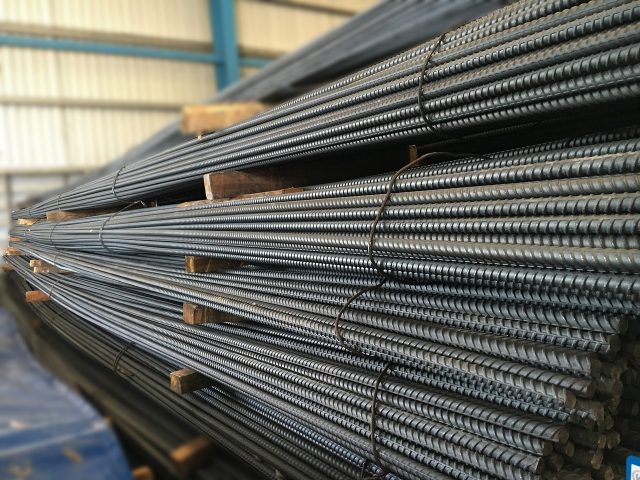
A powerful U.S. national security panel on Wednesday submitted a recommendation to President Donald Trump on Nippon Steel’s fraught $14.9 billion bid for U.S. Steel, a person familiar with the matter said, without providing further detail on its contents.

The submission complies with an executive order signed by Mr. Trump last month, which tasked the Committee on Foreign Investment in the U.S. with outlining whether any measures proposed by the companies assuage the national security risks previously identified by the committee.

Reuters could not learn the content of the committee’s recommendation.

Mr. Trump will now have 15 days to decide the fate of the transaction, although the timeline could slip.

The companies and the Treasury Department, which leads CFIUS, did not immediately respond to requests for comment.

Following a previous CFIUS-led review, former President Joe Biden blocked the deal in January on national security grounds.

The companies sued, arguing they did not receive a fair review process. The Biden White House rejected that view.

Reuters reported earlier this week that Nippon Steel has floated plans to invest $14 billion in U.S. Steel’s operations including up to $4 billion in a new steel mill if the Trump administration green lights its merger bid, in response to requests from the government for more investment.

The April directive asks for a statement describing the position of each agency that is a member of CFIUS as well as the reasons behind it. — Reuters

G7 finance leaders try to downplay tariff disputes, find consensus

FLICKR

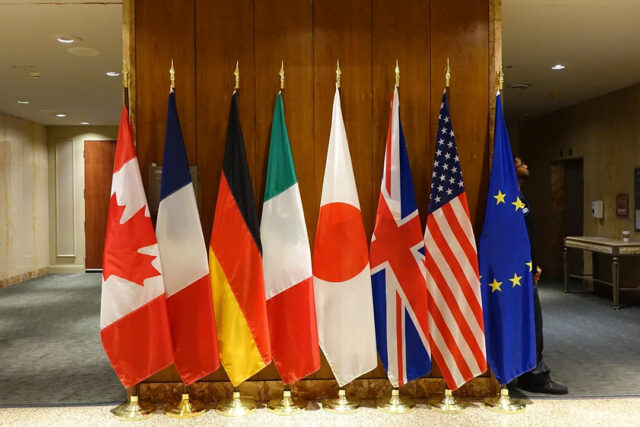
BANFF, Alberta – Finance leaders from the Group of Seven industrialized democracies sought to downplay disputes over U.S. President Donald Trump’s tariffs and find some common ground to keep the forum viable as they met in the Canadian Rocky Mountains on Wednesday.

G7 finance ministers put a positive spin on discussions in Banff, Alberta, to try to reach an agreement on a joint communique largely covering non-tariff issues. The discussions included support for Ukraine, the threat from non-market economic policies of countries including China, and combating financial crimes and drug trafficking.

“I had a very productive day,” U.S. Treasury Secretary Scott Bessent told reporters when asked about his bilateral meetings as he departed the venue for a mountaintop dinner with fellow G7 ministers and central bank governors.

The finance leaders were striving to avoid a repeat of a fractured G7 finance meeting hosted by Canada in 2018, when Trump’s first-term steel and aluminum tariffs made a joint statement impossible.

That meeting, described as the “G6 plus one,” ended with Canada, Japan, Germany, France, Britain and Italy expressing “unanimous concern and disappointment” over Mr. Trump’s tariffs.

Mr. Trump’s tariffs are far more extensive this time, but G7 sources said there was an effort to find compromise with Mr. Bessent.

“There’s been a marked improvement in the mood,” a spokesperson for French Finance Minister Eric Lombard said after Lombard’s bilateral meeting with Mr. Bessent. “We had sincere and honest discussion between allies.”

Earlier, Mr. Lombard said that he was willing to live without a joint statement as long as the G7 reached a better understanding on how to reduce trade imbalances, better growth policies and the war in Ukraine.

“And making progress is what matters ultimately. It’s not just a question of agreeing on a statement today for the sake of it,” Mr. Lombard said.

But Italian Economy and Finance Minister Giancarlo Giorgetti took a different tack, saying on X that reaching a communique compromise was “a step we consider crucial.”

UKRAINE DISCORD

G7 delegation sources said it remained unclear whether the leaders could agree on joint communique language. One European source said, for example, that U.S. officials wanted to delete language describing Russia’s invasion of Ukraine as “illegal” from the draft.

Giorgetti said that Italy is pushing a proposal to bar countries that have done business in support of Russia’s war effort from being part of Ukraine’s reconstruction. The idea echoes what Bessent said last month that “no one who financed or supplied the Russian war machine will be eligible for funds earmarked for Ukraine’s reconstruction.”

China has been key in helping Russia circumvent Western sanctions and has served as a conduit of high-tech and battlefield goods such as drone components.

Delegates were also discussing a possible lowering of the $60-a-barrel G7 price cap on Russian crude oil.

“We expect a thorny discussion on the price cap,” one of the officials said.

The EU is pushing to lower the price level as it works on an 18th package of sanctions against Russia aimed at Russian energy and the financing of sanctions circumvention.

“There is no agreement yet on the communique but it’s fundamental that we get this communique. It would be serious if not agreed,” a European official said.

CALMING INFLUENCE

A second European official said Mr. Bessent’s participation in the G7 meeting and efforts to try to find common ground provided some comfort to participants, describing him as “flexible.”

Bessent skipped a much broader G20 finance meeting in South Africa in February, and a testy White House exchange between Trump and South African President Cyril Ramaphosa raised more questions about Trump’s participation in a November G20 leaders summit.

A U.S. source briefed on Bessent’s positions said on Monday that Washington would not agree to a joint statement unless it served U.S. priorities, which include stronger G7 steps to combat non-market practices such as China’s subsidies that have led to excess manufacturing capacity.

“The message we’re passing on to Bessent is that tariffs are not the correct response to dealing with global imbalances,” another European official said.

In a bilateral meeting, Mr. Bessent and Japanese Finance Minister Katsunobu Kato agreed that the current dollar-yen exchange rate reflects fundamentals, the Treasury said in a statement, that added that they did not discuss specific currency levels.

Currency issues are a factor in Japan’s effort to negotiate a tariff-reducing trade deal with the U.S.

Canadian Finance Minister Francois-Philippe Champagne told reporters that he had a good meeting with Bessent.

“We get along very well. We got along very well,” Champagne said but declined to provide specifics.

Mr. Bessent also met with Germany’s new Finance Minister Lars Klingbeil on Wednesday.

A German source at the G7 meeting described the discussion as an open and constructive exchange that lasted longer than planned, and the two men agreed to meet again in Washington after Bessent extended an invitation.

Japan, Germany, France and Italy all face a potential doubling of U.S. duties to 20% or more in early July. Britain negotiated a limited trade deal that leaves it saddled with 10% U.S. tariffs on most goods, and host Canada is still struggling with Trump’s separate 25% duty on many exports. — Reuters

Philippines’ Marcos asks cabinet secretaries to resign in government reset

PHILIPPINE STAR/NOEL B. PABALATE

MANILA – Philippine President Ferdinand Marcos Jr has asked all cabinet secretaries to submit their resignations, a move his office described on Thursday as a “bold reset” that will enable him to overhaul his government to better meet public expectations.

The sweeping directive comes just over a week after a disappointing midterm election for the administration, widely seen as a referendum on Marcos’ leadership.

“This is not about personalities — it’s about performance, alignment, and urgency,” Mr. Marcos said in a statement issued by the Presidential Communications Office.

“Those who have delivered and continue to deliver will be recognized. But we cannot afford to be complacent. The time for comfort zones is over.”

Mr. Marcos failed to secure a sweep of Senate seats for his allies, signaling a divided legislative landscape heading into the second half of his single six-year term.

Candidates aligned with his estranged vice president, Sara Duterte, outperformed expectations in what many viewed as a proxy battle between the two camps.

“This is not business as usual,” Mr. Marcos said.

“The people have spoken, and they expect results — not politics, not excuses. We hear them, and we will act,” he said.

Mr. Marcos has faced a steep decline in public support, according to a March survey by Pulse Asia, with only 25% of Filipinos approving of his performance, down from 42% previously.

In stark contrast, Ms. Duterte enjoyed a significantly higher approval rating of 59%.

Sentiment towards the government has soured due in part to a perceived failure to control inflation, a top concern of Filipino households, even though it has been back within the central bank’s 2% to 4% target range since August. — Reuters

Contact centers target 5% growth

FREEPIK

By Justine Irish D. Tabile, Reporter

THE CONTACT CENTER Association of the Philippines (CCAP) is projecting at least 5% growth in revenues and jobs this year, even as companies increasingly adopt new technologies, including artificial intelligence.

“For 2025, we’re still projecting a growth of between 5% and 7% as an industry,” CCAP President Haidee C. Enriquez said during a pre-event conference for Contact Islands 2025 on Wednesday.

Last year, the contact center industry booked $31.5 billion in revenues, 82% of the information technology and business process management (IT-BPM) industry’s total revenue. It also had 1.62 million full-time employees, making up 89% of the industry’s total employee count.

If the 5-7% growth is realized this year, the industry’s revenues by the end of the year may range from $33.1 billion to $35.42 billion, and its employee count may range from 1.7 million to 1.73 million.

However, she said that the Information Technology and Business Process Association of the Philippines is set to review the targets under the Philippine IT-BPM Industry Roadmap 2028.

“The 5-7% growth is not yet the revisited targets. But we are very confident that we will achieve that,” she said.

Citing an internal survey conducted among its 167 member companies, she said 100% of the companies said they are “somewhat confident” and “confident” that they will be hitting their targets.

Ms. Enriquez noted, however, that there has been slower growth in headcount due to the adoption of new technologies.

“But it does not necessarily impact the revenue, simply because members are slowly but surely going into higher value services,” she added.

CCAP Board Director Tonichi Achurra-Parekh said the headcount will likely continue to grow in the near term even as more companies adopt new technologies.

“Do we project that we will see a reduction in FTEs (full-time employees) in the next one to two years? Maybe not. But yes, it will be slower. Further than that, we don’t know, just because of the fast-paced development of the technology,” she said.

“We are now focused on upskilling and retraining our workforce to make sure that… we move up to the high-value, complex type of work. That we are going to see, and that will continue to happen,” she added.

Jamea S. Garcia, corporate secretary of CCAP, said upskilling workers would allow contact center companies to shift to higher-value work, which would boost revenues.

“The revenue per FTE becomes higher because there are more efficiencies to be had,” she added.

Following the group’s projection, the contact center industry is estimated to hire 80,000 to 100,000 more employees this year. This would be lower than about 110,000 new hires last year.

According to Ms. Enriquez, companies are deploying more resources towards upskilling existing workers.

“The industry in general got P500 million in funding from the Technical Education and Skills Development Authority (TESDA) for upskilling,” she said. “Well, the rest, hopefully, will come from the Department of Information and Communications Technology (DICT).”

Ms. Enriquez said workers will undergo training in new technologies, covering areas such as cybersecurity, data analysis, data annotation, and medical coding.

CHALLENGES
Aside from talent and skills gaps, the contact center sector is also facing competition from new and re-emerging markets for IT-BPM services.

“There are more and more locations that want to be like the Philippines… And most of our members actually reported that this is a challenge more than ever for many of them when it comes to generating and attracting new clients,” said Ms. Enriquez.

These markets include countries in Latin America, the Association of Southeast Asian Nations, and Eastern Europe.

“They have discovered the gold mine that we discovered many, many years ago. So, they are capitalizing, like Cairo, for example, and our neighboring countries, like Malaysia and Vietnam,” said Ms. Achurra-Parekh.

“And they’re making it very attractive for the same investors that we have so that they (the clients) will go there,” she added.

‘CAUTIOUSLY OPTIMISTIC’
Meanwhile, Ms. Enriquez said they are closely monitoring the US government’s tariff policies for signals, as the US remains the dominant source of outsourced work to the Philippines.

“There is some concern. So, suffice it to say that we are cautiously optimistic as an industry that it will not have a long-term impact on us,” she said.

“The tariffs are now centered on goods, not services. But given the unpredictability on that side of the fence, there might be, later on, tariffs imposed on services that are being offshored to the Philippines,” she added.

However, Ms. Enriquez said the US tariffs on goods have not impacted the ways of doing business for contact centers in the Philippines.

“But we’re being very watchful and cautious,” she added.

Citing historical trends, CCAP said the industry growth fell sharply from 12.3% in 2016 to just 2.5% and 3.9% in 2017 and 2018, respectively. These years coincide with US President Donald J. Trump’s first term.

Mr. Trump, who began his second term in January, has upended global trade by imposing reciprocal tariffs on most of its trading partners.

The Philippines is facing a 17% reciprocal tariff, the second-lowest rate among Southeast Asian countries.

The US has paused reciprocal tariffs until July pending negotiations with trading partners.

However, Ms. Achurra-Parekh said that while the tariff policy only covers goods, it may also affect how contact centers in the Philippines provide services to US customers.

“Indirectly, the consumer behavior in the US will impact how we provide the services,” she said.

“Although we don’t manufacture the goods, at the end of the day, we service them,” said Ms. Garcia.

Lawmakers urged to prioritize energy reforms in the next Congress

Linemen balance atop electric posts along Commonwealth Avenue in Quezon City, Oct. 17, 2024. — PHILIPPINE STAR/MIGUEL DE GUZMAN

INCOMING LAWMAKERS should prioritize measures that would prioritize energy security, particularly amendments to the Electric Power Industry Reform Act (EPIRA) and reforms that would enhance the powers of key regulatory bodies, according to analysts.

“The next Congress should prioritize legislation that puts energy security at the forefront, while still addressing affordability and sustainability concerns,” Noel M. Baga, convenor of think tank Center for Energy Research and Policy, said in an interview with BusinessWorld.

The 19th Congress is set to resume session on June 2 until sine die adjournment on June 13. The 20th Congress is set to open in late July.

Mr. Baga is also pushing the passage of a law that will increase the regulatory powers of the Department of Energy and Energy Regulatory Commission (ERC).

This includes the power to conduct regular inspections of power generation facilities to ensure their proper operation and maintenance.

“This is fundamental to national energy security by preventing outages and reducing dependence on emergency imports,” he said.

Lawmakers are also being urged to amend the 23-year-old EPIRA to address high power costs.

“We call on our lawmakers to urgently pass EPIRA amendments to address high electricity costs, and to look into exempting power end-users from value-added tax to ease the financial burdens on Filipino households and businesses,” consumer group ILAW said in a statement on Wednesday.

A bill seeking to amend EPIRA was included in the list of priority bills of the 19th Congress, but it failed to hurdle both Houses.

In his State of the Nation Address last July, President Ferdinand R. Marcos, Jr. called on Congress to review the EPIRA and amend outdated policies to align with current industry needs.

Jose Enrique “Sonny” A. Africa, executive director of think tank IBON Foundation, said the direction of EPIRA in privatizing generation and transmission assets should move “towards developing state capacity in managing the power sector and eventual nationalization.”

Mr. Africa said lawmakers should also include reforms that would further empower regulators.

“Reforms also include ensuring that regulatory agencies like the ERC are empowered, independent and responsive to citizens and not just corporate stakeholders. Institutionalizing community participation in planning and monitoring will help restore trust and accountability,” he said.

The ERC is tasked with promoting competition, encouraging market development, ensuring customer choice and penalizing abuse of market power.

Analysts also said the next Congress should focus on legislation that would phase out fossil fuels.

“Congress can also legislate a clear, binding roadmap for phasing out fossil fuels especially coal, while ensuring that workers and communities in affected sectors are supported through just transition programs. This should include retraining, income guarantees and local livelihood opportunities,” Mr. Africa said.

He said legislators can “push harder” for renewable energy with incentives to encourage the shift from large-scale, “corporate-owned energy producers to small- and medium-scale renewable initiatives, including cooperatives and local governments.”

The Philippines is hoping to increase the share of renewable energy in the power generation mix to 35% by 2030 and 50% by 2040.

Gerry C. Arances, convener of consumer group Power for People Coalition (P4P), said the next Congress should look into the continued dependence on fossil fuels.

“All summer power crises have one root cause — power plants using fossil fuels that break down,” he said.

“As the industry is organized right now, it gives perverse incentives to power companies to keep using the fuel as their profits are not just guaranteed, but actually increase when they fail to deliver electricity,” he added. — Sheldeen Joy Talavera

Filipinos turn electric amid high fuel prices

THE Chamber of Automotive Manufacturers of the Philippines, Inc. expects electric vehicle sales to increase by 7% to 20,000 units this year. — REUTERS

By Sheldeen Joy Talavera, Reporter

JOHN REX O. GABALES, a 22-year-old entrepreneur from Bulacan province north of the Philippine capital, bought his Chinese-made BYD Seagull electric car last year to replace his diesel-based hatchback amid high fuel prices.

“My fuel costs are far less now at about P1,000 for every 600 kilometers from P4,000,” he told BusinessWorld via Zoom. “I love this car.”

Fuel adjustments have led to a net increase of P4 per liter for gasoline and P3.80 for diesel as of May 20, according to Energy department data posted on its website.

Last year, 18,690 electric vehicles (EV) were sold in the Philippines, accounting for 4% of total car sales, according to the Chamber of Automotive Manufacturers of the Philippines, Inc. (CAMPI). It expects EV sales to increase by 7% to 20,000 units this year.

Mr. Gabales, who bought the BYD car for P938,000 ($16,800), admits that he often suffers from “range anxiety,” worried that his car battery would get drained while on a road trip.

“I was in Tarlac, coming from Bulacan, and I only had about 55% of charge left,” he recalled. “Do I continue driving home or do I pass by San Fernando or Angeles City to charge?”

“As an EV owner, that is my only concern, especially when going to places without a clear route plan,” he added.

There were more than 900 publicly accessible charging stations in the Philippines as of March 31, according to the Department of Energy (DoE).

“The DoE continuously develops policies and programs to further strengthen the adoption of EVs and the rollout of electric vehicle charging stations in the Philippines,” Patrick T. Aquino, director at the DoE’s Energy Utilization and Management Bureau, said in a Viber message.

These include guidelines and standards for the installation, operation and safety of EV charging stations, he pointed out.

Compared with an internal combustion engine vehicle (ICEV), an electric car is more efficient, and owners can save about P3.29 per kilometer based on current energy prices, Mr. Aquino said.

“EVs offer several benefits compared with ICEVs, including less maintenance due to fewer moving parts,” he pointed out.

The Electric Vehicle Industry Development Act seeks to promote the development and adoption of EVs in the Philippines by mandating an increase in the share of EVs in corporate and government fleets.

Under the Comprehensive Roadmap for the Electric Vehicle Industry, the business-as usual scenario target is a 10% EV fleet share by 2040, while it sets a clean energy scenario target of at least 50%.

The roadmap also outlines a short-term goal of deploying 7,300 EV charging stations by 2028.

While these targets seem ambitious, Mr. Aquino said they could be hit with the right policies and interventions.

“By combining infrastructure development with public engagement, we can accelerate the transition to EVs and build a cleaner, more sustainable transportation sector,” he said.

CAMPI President Rommel R. Gutierrez earlier said EV sales growth is expected to track overall industry sales growth, driven by increasing consumer adoption, supportive government policies and the entry of more players.

Edmund A. Araga, president of the Electric Vehicle Association of the Philippines, expects EV adoption among Filipinos to rise 20%. There are also more choices now when it comes to EV brands, he said in a Viber message.

Several electric vehicle companies have established a presence in the Philippines, including China’s BYD and Changan Motor Group, Vietnam’s VinFast LLC and Tesla. Local companies like ToJo Motors Corp. make electric public utility vehicles.

Nissan Motor Co. Ltd., Kia Motors and Hyundai Motor Co. are also present in the Philippine EV market with their respective electric models like the LEAF, EV6 and IONIQ 5.

SUSTAINABILITY PUSH
In line with the government push, industry players are also leveling up their game to be at the forefront of the country’s EV adoption.

Green logistics service provider Mober expanded its EV fleet to more than 110 units last year and is now looking to deploy 500 EVs by yearend.

“Mober positions itself as the go-to partner for businesses looking to transition to green logistics without disruptions,” Dennis O. Ng, founder and chief executive officer at Mober, said in an e-mailed reply to questions.

As part of its medium to long-term strategy, the company is planning to build two more EV charging hubs in Southern and Northern Luzon to boost logistic capacity.

“We are currently finalizing the investment requirements for these projects, but we anticipate allocating a substantial portion of our capital expenditure over the next two to three years to support infrastructure development, fleet expansion and renewable energy integration,” Mr. Ng said.

“This expansion is a critical step in scaling our operations while maintaining our commitment to zero-emission logistics,” he added.

Manila Electric Co. (Meralco), the main power distributor of Metro Manila and nearby cities, is converting more than 150 of its vehicles to electric as part of its sustainability push. It has also deployed more than 60 level 2 and level 3 fast chargers to support the shift.

“With the expansion of the EV market, declining costs and the numerous advantages of electric vehicles including lower emissions, reduced maintenance, significant fuel savings and government incentives, the shift to electrification has become increasingly viable,” Ronnie L. Aperocho, Meralco executive vice-president and chief operating officer, said in a Viber message.

By the end of the decade, the company aims to invest and electrify 25% of its fleet, or more than 700 electric vehicles, supported by a robust charging infrastructure — level 3 direct current fast chargers across its business centers, sector offices and main headquarters, he added.

The company through unit Movem Electric, Inc. seeks to become a “caring player” by expanding commercial charging infrastructure in and out of its franchise area. Mr. Aperocho said public awareness is also needed to accelerate local EV adoption.

“One of the biggest concerns among potential buyers is range anxiety — the fear of running out of battery before reaching a charging station,” he said. “While EV battery technology has advanced significantly, skepticism remains due to misinformation and a general lack of awareness about the benefits of EV ownership.”

While there is a positive outlook on the future of EV adoption and infrastructure development in the Philippines, Mr. Ng said the industry needs “a stronger ecosystem” supported by government policy, infrastructure and private sector collaboration.

He said the Electric Vehicle Industry Development Act is “a promising step forward” with its tax breaks, import duty exemptions, and the mandate for EV fleet adoption in the government and private sector.

“However, its full potential can only be realized with clear guidelines, local government support and stronger enforcement,” he added.