Home Blog Page 1214

Asia’s factory activity worsens as US trade uncertainty bites
REUTERS

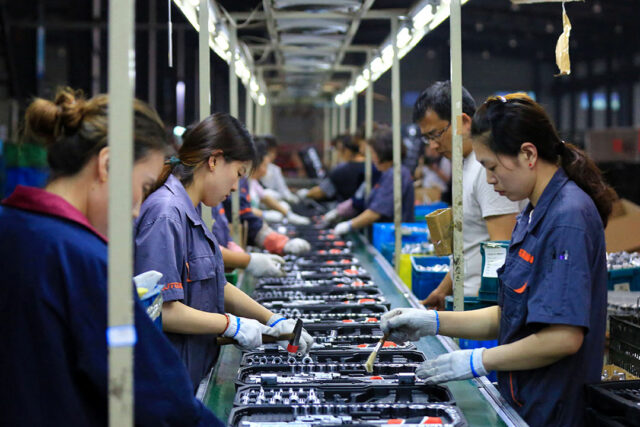
 – Asia’s factory activity deteriorated in July as soft global demand and lingering uncertainty over U.S. tariffs weighed on business morale, private sector surveys showed on Friday, clouding the outlook for the region’s fragile recovery.

The surveys were taken before Japan and South Korea clinched trade deals with Washington, offering some hope that receding uncertainty could prop up manufacturing activity in coming months, some analysts say.

Factory activity shrank in export power-houses Japan and South Korea, surveys for July showed, underscoring the challenge Asia faces as President Donald Trump’s policies threaten the global free trade system the region relied upon for growth.

China’s factory activity also deteriorated in July as softening business growth led manufacturers to scale back production, boding ill for the region’s economy.

The S&P Global China General Manufacturing PMI fell to 49.5 in July from 50.4 in June, undershooting analysts’ expectations of 50.4 in a Reuters poll and dropping below the 50 threshold that separates growth from contraction.

The reading comes a day after an official survey showed China’s manufacturing activity shrank for a fourth straight month in July, suggesting a surge in exports ahead of higher U.S. tariffs has started to fade while domestic demand remained sluggish.

The survey “provides further evidence that China’s economy lost some momentum last month, largely due to domestic weakness,” said Zichun Huang, an economist at Capital Economics.

The S&P Global Japan manufacturing purchasing managers’ index (PMI) also fell to 48.9 in July from 50.1 in June, a sign U.S. tariffs were hurting the world’s fourth-largest economy.

Most of the survey data was collected before the announcement of a Japan-U.S. trade agreement last month, which lowers tariffs imposed on Japan to 15% from a previously threatened 25%.

As the trade deal with Washington kicks in, “it will be important to see if this will translate into greater client confidence and improved sales in the months ahead,” said Annabel Fiddes, economics associate director at S&P Global Market Intelligence, which compiles the survey.

South Korea also saw factory activity contract in July for the sixth straight month with the S&P Global PMI falling to 48.0 in July, from 48.7 in June.

“Both production volumes and new orders fell at a steeper rate than that in June, with anecdotal evidence indicating that weakness in the domestic economy was compounded by the impacts of U.S. tariff policy,” said Usamah Bhatti, economist at S&P Global Market Intelligence.

The survey was conducted from July 10 to July 23, before South Korea reached on Wednesday a trade deal with the U.S. lowering tariffs to 15% from a threatened 25%.

Factory activity in July expanded in the Philippines and Vietnam, but shrank in Taiwan, Indonesia and Malaysia, PMIs showed. – Reuters
CEO Tim Cook says Apple ready to open its wallet to catch up in AI

UNSPLASH

 – Apple CEO Tim Cook signaled on Thursday the iPhone maker was ready to spend more to catch up to rivals in artificial intelligence by building more data centers or buying a larger player in the segment, a departure from a long practice of fiscal frugality.

Apple has struggled to keep pace with rivals such as Microsoft and Alphabet’s Google, both of which have attracted hundreds of millions of users to their AI-powered chatbots and assistants. That growth has come at a steep costhowever, with Google planning to spend $85 billion over the next year and Microsoft on track to spend more than $100 billion, mostly on data centers.

Apple, in contrast, has leaned on outside data center providers to handle some of its cloud computing work, and despite a high-profile partnership with ChatGPT creator OpenAI for certain iPhone features, has tried to grow much of its AI technology in-house, including improvements to its Siri virtual assistant. The results have been rocky, with the company delaying its Siri improvements until next year.

During a conference call after Apple’s fiscal third-quarter results, analysts noted that Apple has historically not done large deals and asked whether it might take a different approach to pursue its AI ambitions. Mr. Cook responded that the company had already acquired seven smaller companies this year and is open to buying larger ones.

“We’re very open to M&A that accelerates our roadmap. We are not stuck on a certain size company, although the ones that we have acquired thus far this year are small in nature,” Mr. Cook said. “We basically ask ourselves whether a company can help us accelerate a roadmap, and if they do, then we’re interested.”

Apple has tended to buy smaller firms with highly specialized technical teams to build out specific products. Its largest deal ever was its purchase of Beats Electronics for $3 billion in 2014, followed by a $1 billion deal to buy a modem chip business from Intel.

But now Apple is at a unique crossroads for its business. The tens of billions of dollars per year it receives from Google as payment to be the default search engine on iPhones could be undone by U.S. courts in Google’s antitrust trial, while startups like Perplexity are in discussions with handset makers to try to dislodge Google with an AI-powered browser that would handle many search functions.

Apple executives have said in court they are considering reshaping the firm’s Safari browser with AI-powered search functions, and Bloomberg News has reported that Apple executives have discussed buying Perplexity, which Reuters has not independently confirmed.

Apple also said on Thursday it plans to spend more on data centers, an area where it typically spends only a few billion dollars per year. Apple is currently using its own chip designs to handle AI requests with privacy controls that are compatible with the privacy features on its devices.

Kevan Parekh, Apple’s chief financial officer, did not give specific spending targets but said outlays would rise.

“It’s not going to be exponential growth, but it is going to grow substantially,” Mr. Parekh said during the conference call.

“A lot of that’s a function of the investments we’re making in AI.” – Reuters

Apple revenue forecast beats estimates, tariff costs projected at $1.1 billion

The Apple logo hangs in a glass enclosure above the 5th Ave Apple Store in New York, Sept. 20, 2012. — REUTERS

 – Apple forecast revenue for the current quarter ending in September well above Wall Street’s estimates on Thursday, sending shares up despite a warning from CEO Tim Cook that U.S. tariffs would add $1.1 billion in costs over the period.

As the centerpiece of U.S. President Donald Trump’s trade war, those tariffs cost Apple $800 million in the June quarter and spurred some customers to buy iPhones in late spring this year. Those purchases helped Apple’s fiscal third-quarter sales beat expectations by the biggest percentage in at least four years, according to LSEG.

The company still forecast growth, though, with Chief Financial Officer Kevan Parekh saying the company expects revenue growth for the current quarter in the “mid to high single digits,” which would exceed the 3.27% growth to $98.04 billion that analysts expected, according to LSEG data.

Apple reported $94.04 billion in revenue for its fiscal third quarter ended on June 28, up nearly 10% from a year earlier and beating analyst expectations of $89.54 billion, according to LSEG data. Its earnings per share of $1.57 topped expectations for $1.43 per share.

Apple shares were up 3% in after-hours trading, extending gains after Apple provided its forecast.

Sales of iPhones, the best-selling product for the company based in Cupertino, California, were up 13.5% to $44.58 billion, beating analyst expectations of $40.22 billion.

Apple has been shifting production of products bound for the U.S., sourcing iPhones from India and other products such as Macs and Apple Watches from Vietnam.

The ultimate tariff rates many Apple products could face remain in flux, and many of its products are currently exempt. Sales in its Americas segment, which includes the U.S. and could face tariff impacts, rose 9.3% to $41.2 billion.

In Greater China, where Apple has faced long delays in approval to introduce AI features on its devices, sales were $15.37 billion, up from a year ago and above expectations of $15.12 billion, according to a survey of five analysts from data firm Visible Alpha.

That gain was a turnaround from a year-over-year decline in China sales in the March quarter.

In a conference call with analysts, Mr. Cook said some of that was due to a subsidy program in China to help revive the smartphone market, which boosted some of Apple’s products.

“It was the first full quarter of the subsidy playing out,” Mr. Cook told analysts.


EARLY PURCHASES

In an interview with Reuters, Cook said the company set seasonal records for upgrades of iPhones, Macs and Apple Watches. He said Apple estimates about 1 percentage point of its 9.6% of sales growth in the quarter was attributable to customers making purchases ahead of potential tariffs.

“We saw evidence in the early part of the quarter, specifically, of some pull-ahead related to the tariff announcements,” Cook told Reuters, though he also said the active user base for iPhones hit a record high in all geographies.

The U.S. is still negotiating with both China and India, with Mr. Trump saying India could face 25% tariffs as early as Friday. However, analysts said India could still retain cost advantages for Apple in the longer term.

“The pull-forward in demand due to tariffs was somewhat expected given the uncertainty around pricing. However, it’s important to put this in context as this is typically a slow quarter for Apple, yet they still delivered exceptional results with iPhone growth,” Emarketer analyst Jacob Bourne said.

Tariffs are only one of Apple’s challenges. The company faces competition from rivals such as Samsung Electronics Co 005930.KS in a tough market for premium-priced mobile phones. On the software front, Apple faces challenges from Alphabet GOOGL.O, which is quickly weaving AI features into its competing Android operating system.

While AI leaders Microsoft and Nvidia have seen their stock market values soar to record highs, Apple’s shares have fallen 17% in 2025, with investors concerned about the impact of tariffs, and about what they view as slow progress integrating AI features into its products.

Apple has delayed the release of an AI-enriched version of Siri, its virtual assistant, but Cook said the company is “making good progress on a personalized Siri.” He also said Apple, which has thus far not engaged in the massive capital expenditures of its Big Tech rivals to pursue AI, is “significantly growing” its investments in artificial intelligence.

“Apple has always been about taking the most advanced technologies and making them easy to use and accessible for everyone, and that’s at the heart of our AI strategy,” Mr. Cook said.

Apple faces regulatory rulings in Europe that threaten to undermine its lucrative App Store business. Apple said sales from its services business, which includes the App Store as well as music and cloud storage, were $27.42 billion, topping analyst expectations of $26.8 billion.

Sales of wearables such as AirPods and Apple Watches were $7.4 billion, missing estimates of $7.82 billion. Mac sales of $8.05 billion beat expectations of $7.26 billion, while iPads hit $6.58 billion in sales, missing expectations of $7.24 billion.

Apple said gross margins were 46.5% in the fiscal third quarter, beating analyst expectations of 45.9%, according to LSEG estimates. The company forecast gross margins for the current quarter of 46% to 47%, with the entire range above estimates of 45.9%, according to LSEG data. – Reuters

Britain says EU is removing tariffs on steel under quota

STOCK PHOTO | Image by bauportalat from Pixabay

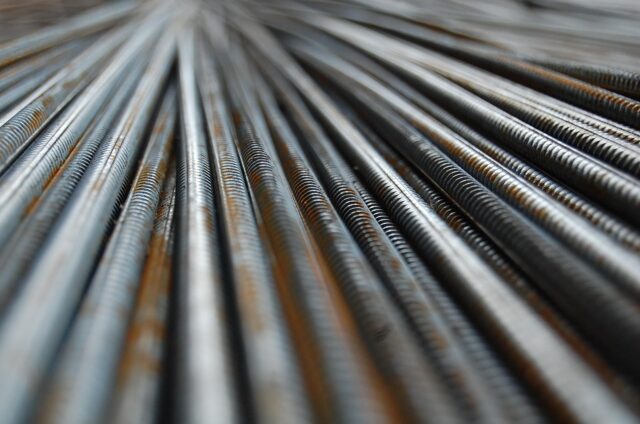
 – Britain said the European Union will remove tariffs on key steel products under a quota system from Friday as part of a reset of ties and a recent deal to ease trade barriers.

In May, Britain agreed the most significant reset of defense and trade ties with the European Union since Brexit, which included a “bespoke arrangement” to protect UK steel exports from new EU rules and tariffs.

Britain had said the European Commission would restore its country-specific steel quota to pre-2022 levels, but had not previously specified when this would take effect.

Trade minister Jonathan Reynolds said the removal of tariffs was “yet another positive step forward for the UK steel sector” after the government intervened to save jobs at British Steel and struck a deal to avoid the highest U.S. steel tariffs.

“Restoring our steel quota helps give producers the certainty they need to compete, grow, and maintain vital export relationships,” he said.

Britain said it could export up to 27,000 tons of steel to the EU each quarter without paying an extra tariff under the arrangement.

Gareth Stace, director general of UK Steel, said the restoration of the quota was “excellent news”, adding companies had been “plagued by problems” shipping items like support beams.

Britain is yet to conclude negotiations with the United States after both sides agreed in May to work to eliminate steel tariffs on exports from Britain.

British steel exports to the U.S. face tariffs of 25%, and avoided an increase to 50% thanks to its U.S. agreement, but talks to remove the tariffs have stalled due to discussions over supply chains and where British steel is “melted and poured“. – Reuters

Does Britain face another multi-billion-pound consumer finance scandal?

FREEPIK
STOCK PHOTO | Image by Pierre Blaché from Pixabay

 – Britain’s Supreme Court will make a landmark ruling on Friday on car finance commissions that could lead to consumer claims of billions of pounds in compensation from banks and other finance firms.

The judgment is expected after financial markets close in London on Friday.

The Supreme Court has been reviewing an earlier Court of Appeal ruling that found it was unlawful for lenders to pay commissions to motor dealers without a customer’s informed consent.

Lenders, including Lloyds Banking Group, Close Brothers, Barclays and the UK arms of Santander and Bank of Ireland, have already set aside nearly 2 billion pounds ($2.7 billion) between them to cover potential compensation claims.

Some analysts say the banks may face the most significant payouts since the almost 40 billion pounds in compensation to customers for mis-selling payment protection insurance, largely paid out by a 2019 regulatory deadline for doing so.


WHAT WILL THE SUPREME COURT CONSIDER?

Reviewing three earlier claims – two against South African lender FirstRand FSRJ.L and one against Britain’s Close Brothers – the Supreme Court will decide the extent of car dealers’ legal responsibility to provide appropriate information to consumers when also acting as credit brokers.

The court is also expected to rule on whether commissions paid by lenders to car dealers were secret and whether lenders acted unfairly.


WHO MIGHT BE AFFECTED?

The Financial Conduct Authority banned the payment of discretionary motor finance commissions in 2021. But some customers say they were treated unfairly before the ban came into effect, prompting the FCA to launch an investigation in January 2024 into historic potential misconduct.

If the Supreme Court rules that lenders and brokers should have been more transparent about commissions, the regulator has said it will consult on the structure of a compensation scheme within six weeks.

More than 2 million people a year rely on the motor finance market to buy a car, FCA data shows.


HOW MUCH COULD BANKS HAVE TO PAY?

Only a handful of UK lenders have motor finance businesses large enough to be materially affected by the ruling.

These include Lloyds, Close Brothers and Santander UK, which have already made provisions of 1.15 billion pounds, 295 million pounds and 165 million pounds respectively. Bank of Ireland Group’s UK arm and Barclays have made smaller provisions.

But analysts say other types of commissions paid by banks to credit brokers could face scrutiny if the court decides customers must consent to such payments.

Total “worst case” industry costs could reach 30 billion pounds, ratings agency Moody’s said in November.

RBC Capital analysts estimated the impact on banks and non-banks could be around 11 billion pounds in a revised estimate this week.


COULD THE GOVERNMENT STEP IN?

Press reports have suggested that Britain’s finance minister Rachel Reeves is considering changing the law to shield lenders from the worst of the potential fallout, potentially to supersede any Supreme Court judgment. The government declined to comment on the media speculation around contingency plans.

The government expressed reservations in January about the earlier Court of Appeal ruling, adding it wanted to see a “fair and proportionate judgment” on motor finance that balanced claims with ensuring lenders could continue to provide finance. – Reuters

Trump hits dozens of countries with steep tariffs, including 35% for Canadian goods

US President Donald J. Trump announced he will impose a 10% baseline tariff on all imports to the United States. — REUTERS

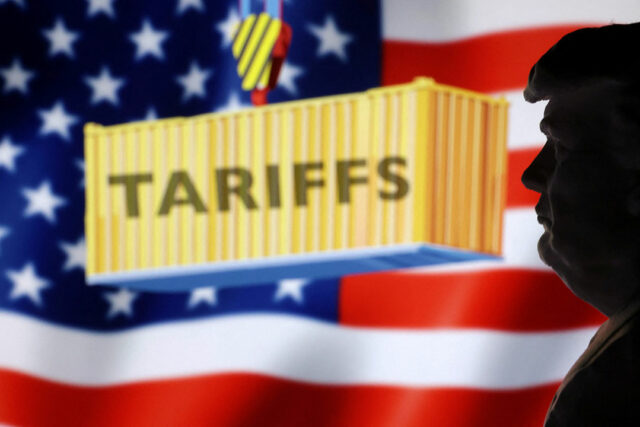
USUS President Donald Trump slapped dozens of trading partners with steep tariffs ahead of a Friday trade deal deadline, including a 35% duty on many goods from Canada, 50% for Brazil, 25% for India, 20% for Taiwan and 39% for Switzerland.

Trump released an executive order listing higher import duty rates of 10% to 41% starting in seven days for 69 trading partners as the 12:01 a.m. EDT (0401 GMT) deadline approached. Some of them had reached tariff-reducing deals and some had no opportunity to negotiate with his administration.

The order said that goods from all other countries not listed in an annex would be subject to a 10% US tariff rate.

Trump’s order said that some trading partners, “despite having engaged in negotiations, have offered terms that, in my judgment, do not sufficiently address imbalances in our trading relationship or have failed to align sufficiently with the United States on economic and national-security matters.”

Trump issued a separate order for Canada that raises the rate on Canadian goods subject to fentanyl-related tariffs to 35% from 25% previously, saying Canada had “failed to cooperate” in curbing fentanyl flows into the US.

The higher tariffs on Canadian goods contrasted sharply with Trump’s decision to grant Mexico a 90-day reprieve from higher tariffs of 30% on many goods to provide more time to negotiate a broader trade pact.

A US official told reporters that more trade deals were yet to be announced as Trump’s higher “reciprocal” tariff rates were set to take effect.

“We have some deals,” the official said. “And I don’t want to get ahead of the President of the United States in announcing those deals.”

Regarding the steep tariffs on goods from Canada, the second largest US trading partner after Mexico, the official said that Canadian officials “haven’t shown the same level of constructiveness that we’ve seen from the Mexican side.”

The extension for Mexico avoids a 30% tariff on most Mexican non-automotive and non-metal goods compliant with the US-Mexico-Canada Agreement on trade and came after a Thursday morning call between Trump and Mexican President Claudia Sheinbaum.

“We avoided the tariff increase announced for tomorrow,” Sheinbaum wrote in an X social media post, adding that the Trump call was “very good.”

Approximately 85% of US imports from Mexico comply with the rules of origin outlined in the USMCA, shielding them from 25% tariffs related to fentanyl, according to Mexico’s economy ministry.

Trump said the US would continue to levy a 50% tariff on Mexican steel, aluminum and copper and a 25% tariff on Mexican autos and on non-USMCA-compliant goods subject to tariffs related to the US fentanyl crisis.

“Additionally, Mexico has agreed to immediately terminate its Non Tariff Trade Barriers, of which there were many,” Trump said in a Truth Social post without providing details.

KOREA DEAL, INDIA DISCORD

South Korea agreed on Wednesday to accept a 15% tariff on its exports to the US, including autos, down from a threatened 25%, as part of a deal that includes a pledge to invest $350 billion in US projects to be chosen by Trump.

But goods from India appeared to be headed for a 25% tariff after talks bogged down over access to India’s agriculture sector, drawing a higher-rate threat from Trump that also included an unspecified penalty for India’s purchases of Russian oil.

Although negotiations with India were continuing, New Delhi vowed to protect the country’s labor-intensive farm sector, triggering outrage from the opposition party and a slump in the rupee.

Trump’s rollout of higher import taxes on Friday comes amid more evidence they have begun driving up consumer goods prices.

Commerce Department data released Thursday showed prices for home furnishings and durable household equipment jumped 1.3% in June, the biggest gain since March 2022, after increasing 0.6% in May. Recreational goods and vehicles prices shot up 0.9%, the most since February 2024, after being unchanged in May. Prices for clothing and footwear rose 0.4%.

TOUGH QUESTIONS FROM JUDGES

Trump hit Brazil on Wednesday with a steep 50% tariff as he escalated his fight with Latin America’s largest economy over its prosecution of his friend and former President Jair Bolsonaro, but softened the blow by excluding sectors such as aircraft, energy and orange juice from heavier levies.

The run-up to Trump’s tariff deadline was unfolding as federal appeals court judges sharply questioned Trump’s use of a sweeping emergency powers law to justify his sweeping tariffs of up to 50% on nearly all trading partners.

Trump invoked the 1977 International Emergency Economic Powers Act to declare an emergency over the growing US trade deficit and impose his “reciprocal” tariffs and a separate fentanyl emergency.

The Court of International Trade ruled in May that the actions exceeded his executive authority, and questions from judges during oral arguments before the US Appeals Court for the Federal Circuit in Washington indicated further skepticism.

US Treasury Secretary Scott Bessent said earlier that the United States believes it has the makings of a trade deal with China, but it is “not 100% done,” and still needs Trump’s approval.

US negotiators “pushed back quite a bit” over two days of trade talks with the Chinese in Stockholm this week, Bessent said in an interview with CNBC.

China is facing an August 12 deadline to reach a durable tariff agreement with Trump’s administration, after Beijing and Washington reached preliminary deals in May and June to end escalating tit-for-tat tariffs and a cut-off of rare earth minerals. — Reuters

Zaijian Jaranilla and Jane Oineza’s controversial love scene to air in episode 10 of Si Sol at si Luna

In the next episode of Puregold Channel’s Si Sol at si Luna, Sol confronts Luna, who has been ghosting him after they shared a kiss in the elevator.

As Puregold’s hit digital series heads toward its most daring episode yet, the story of Sol (Zaijian Jaranilla) and Luna (Jane Oineza) rises to a new level of emotional and narrative complexity.

In the previous installment of Si Sol at si Luna, titled “Missing Person: Luna,” Luna appeared to distance herself after an electrifying kiss with Sol in the office elevator. Much to the delight of viewers, the ultimate kilig moment seemed to foretell the start of something deeper, but before they could hold their breath, Luna began to pull away.

Visibly shaken after a confrontation with Ara (Karina Bautista), who asserted that Luna should leave the much younger Sol alone, Luna was even more confused by a revelation from her team leader, Ben (Joao Constancia): he harbors feelings for her.

Ara explains why she felt the need to confront Luna in Si Sol at si Luna’s latest episode.

Episode 9 ended with yet another unexpected twist: Ara admitting to having fallen for Sol.

The characters are caught in a web of desire, doubt and hesitation, and unspoken grief that leave audiences wondering if Sol and Luna — clearly drawn to one another — can ultimately withstand the pressures coming from all sides.

Things get even more real in the upcoming episode, as Si Sol at si Luna shows Zaijian Jaranilla’s first-ever onscreen love scene.

The digital series has teased more than a kiss for Sol and Luna in the upcoming episode.

Known to multitudes of fans for his roles as a stellar child actor, Jaranilla’s performance in the next Si Sol at si Luna marks a significant turning point in his career as he explores more mature and emotionally layered material.

Hinted at in trailers, the love scene is expected to be both tender and bold, featuring two characters who are confronting societal expectations about age, grief, and compatibility.

Sol and Luna share another kiss in the upcoming episode of Si Sol at si Luna.

Adding another layer of controversy to the show’s narrative, the intimate scene will bring Sol and Luna’s age gap, a point of strain and unease in the series, to the fore. At its core, the moment is not about shock, but about asking difficult questions: Can love grow between two people in vastly different emotional places? Will this moment of intimacy begin healing, or will it only add to or deepen wounds?

As the series continues to push the boundaries of what local digital storytelling can achieve, the coming episode may prove to be its most talked-about yet.

Catch Si Sol at si Luna’s tenth episode, ‘The Eclipse’, on Saturday, August 2 at 7 PM, only on Puregold Channel.

Subscribe to Puregold Channel on YouTube, like @puregold.shopping on Facebook, and follow @puregold_ph on Instagram and X, and @puregoldph on TikTok for more updates and behind-the-scenes content.

Episode 9: Si Sol at Si Luna | Episode 9 “Missing Person: Luna”


Spotlight is BusinessWorld’s sponsored section that allows advertisers to amplify their brand and connect with BusinessWorld’s audience by publishing their stories on the BusinessWorld Web site. For more information, send an email to online@bworldonline.com.

Join us on Viber at https://bit.ly/3hv6bLA to get more updates and subscribe to BusinessWorld’s titles and get exclusive content through www.bworld-x.com.

SSS to hike pensions starting Sept.

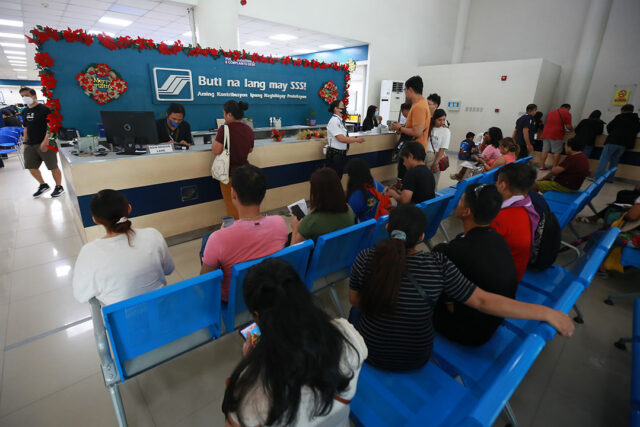
Social Security System (SSS) members queue to avail themselves of service benefits at its branch along East Avenue in Quezon City, Jan. 3, 2025. — PHILIPPINE STAR/MIGUEL DE GUZMAN

THE SOCIAL Security System (SSS) is implementing a landmark pension reform program starting this September, which will gradually increase the monthly pensions of all pensioners over a three-year period.

The Social Security Commission (SSC) approved the SSS Pension Reform Program, which features a structured, three-year increase in pensions for all SSS pensioners, on July 11.

This is the first multi-year adjustment of pensions in the SSS’ 68-year history.

“After careful actuarial review, we are rolling out a rational and sustainable pension increase that uplifts all pensioners without compromising the fund’s actuarial soundness,” SSS President and Chief Executive Officer Robert Joseph M. De Claro said in a statement.

Starting this year, all pensioners as of Aug. 31, 2025, will receive annual pension increases every September until 2027.

The pension for retirement and disability pensioners will be raised by 10% every September until 2027. The pension for death or survivor pensioners will be increased by 5%.

“After three years, pensions will have increased by approximately 33% for retirement/disability pensioners and 16% for death/survivor pensioners,” the SSS said.

Around 3.8 million pensioners will benefit from the pension reform. This includes 2.6 million retirement/disability pensioners and 1.2 million survivor pensioners.

The SSS said the pension reform program “will not necessitate any contribution increase.”

Mr. De Claro said the actuarial team confirms that the pension fund “remains financially sound.”

Quoting its chief actuary, the SSS said the reform will slightly shorten the fund’s lifespan — to 2049 from 2053 previously, but this is offset by strong cash flow from previous contribution reforms and better collection efforts.

Mr. De Claro said they are “committed to restoring fund life back to 2053 through coverage expansion and improved collection efficiency.”

Finance Secretary Ralph G. Recto, who chairs the SSC, said the pension hike will help spur economic growth as pensioners will have additional spending power.

The SSS estimated the pension hike will inject around P92.8 billion into the Philippine economy from 2025 to 2027, but the Department of Finance (DoF) estimated this could reach up to P117.2 billion.

“For retirement pensioners aged 60-89 (99.4% of all retirement pensioners), around P4,923 is the average monthly pension just before implementation of this reform program. Such a pension amount will grow to about P6,548 after the third tranche of pension increase — an increase of P1,625 or 33%,” the DoF said.

“After three years of pension increases starting September 2025, SSS will have paid about P41,145 in additional pensions to such average retirement pensioner,” it added.

Meanwhile, the SSS said it is able to implement the pension reform due to strong cash flows from the increase in incremental contribution rates that was completed in January 2025.

Under Republic Act No. 11199 or the Social Security Act of 2018, the SSS implemented incremental contribution rate hikes of one percentage point every two years starting in 2019 from the original contribution rate of 11%. — AMCS

BSP sees July inflation settling at 0.5% to 1.3%

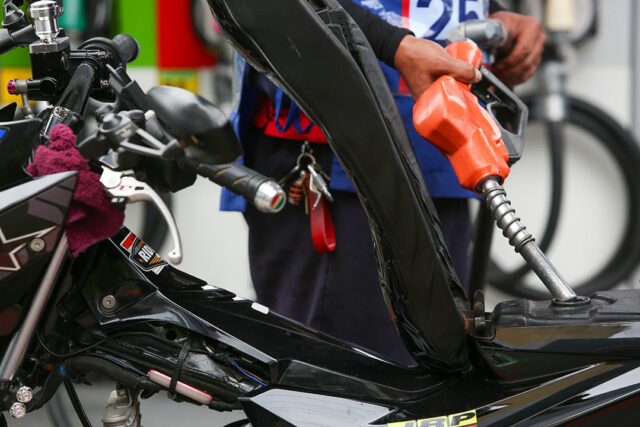
A gas station attendant refuels a vehicle in Paco, Manila, Feb. 22, 2025. — PHILIPPINE STAR/NOEL PABALATE

By Luisa Maria Jacinta C. Jocson, Senior Reporter

THE BANGKO SENTRAL ng Pilipinas (BSP) on Thursday said it expects headline inflation to settle below 2% in July.

The central bank’s month-ahead forecast showed that inflation likely fell within the 0.5%-to-1.3% range in July. If realized, July inflation would be slower than the 1.4% print in June and the 4.4% clip a year ago.

“Upward price pressures for the month are likely to be driven by higher meat and vegetable prices partly due to unfavorable weather conditions, increased electricity rates, elevated domestic fuel costs, and the depreciation of the peso,” it said.

Manila Electric Co. (Meralco) hiked rates by P0.4883 per kilowatt-hour (kWh) in July, bringing the overall rate for a typical household to P12.6435 per kWh from P12.1552 per kWh a month earlier.

The peso fell to P58.32 against the greenback at end-July from its finish of P56.33 at end-June. The peso’s close at end-July was its weakest in almost six months or since its P58.34 finish on Feb. 4.

“These price pressures, however, could be partially offset by the continued decline in rice prices,” the BSP added.

Rice inflation has been steadily declining for the past few months amid several government interventions for the staple grain. In June, rice inflation contracted for the sixth straight month to a record 14.3%, the biggest drop since 1995.

“Going forward, the BSP will continue to monitor developments affecting the outlook for inflation and growth in line with its data-dependent approach to monetary policy decision-making.”

The local statistics agency is set to release the July inflation data on Aug. 5 (Tuesday).

IMF FORECAST
Meanwhile, the International Monetary Fund (IMF) projects Philippine headline inflation to settle below 2% this year, giving the central bank more space to ease policy rates further.

Following the release of its World Economic Outlook (WEO), the IMF said it expects inflation to average 1.8% this year, below the central bank’s 2-4% target.

“The headline inflation projections have been revised down by 0.8 percentage point (ppt) and 0.6 ppt for 2025 and 2026 respectively, reflecting lower-than-expected inflation outturn in the first half of 2025,” an IMF spokesperson said in an e-mail.

Headline inflation picked up to 1.4% in June from 1.3% in May but slowed from 3.7% a year ago. This brought the six-month average inflation to 1.8%.

The BSP expects inflation to average 1.6% this year.

Risks to the inflation outlook are “broadly balanced,” the IMF said, but cited risks such as higher commodity prices due to escalating geopolitics, supply-chain disruptions and climate shocks, among others.

For 2026, the multilateral institution sees inflation settling at 2.3%, lower than the BSP’s 3.4% forecast.

With inflation expected to be well-contained, the central bank can continue its rate-cutting cycle.

“Monetary policy has room to be more accommodative amid a benign inflation outlook,” the IMF said.

The central bank has been on an easing cycle since August last year, lowering borrowing costs by a total of 125 basis points. This brought the benchmark to 5.25%.

BSP Governor Eli M. Remolona, Jr. has said a rate cut is still on the table at the Monetary Board’s Aug. 28 meeting.

“Amidst prevailing uncertainty and with two-sided risks to inflation, a data-dependent approach, and clear and effective communication around policy settings will be important to manage expectations.”

UNCERTAINTY PERSISTS
Meanwhile, the IMF said its latest gross domestic product (GDP) projection for the Philippines this year reflects the impact of “recent global trade policy conflicts and elevated policy uncertainty.”

In its latest WEO, the IMF maintained its 2025 growth forecast for the Philippines at 5.5%. This would fall at the lower end of the government’s 5.5-6.5% target for the year.

“Real GDP growth forecast for 2025 is unchanged relative to April WEO reflecting offsetting effects from higher growth in trading partners contributing positively, and lower-than-expected first-quarter outturn and higher energy prices contributing negatively.”

The IMF had also raised its 2026 projection to 5.9% from 5.8% previously, citing “robust consumption and an increase in investment, which will be supported by monetary policy easing.”

“The forecast for 2026 reflects a positive contribution from smaller-than-expected consolidation in 2026 as announced in the authorities’ revised Medium Term Fiscal Framework.”

At its June meeting, the Development Budget Coordination Committee revised its fiscal program to account for external factors.

The government is now aiming to bring down its deficit to 4.3% of GDP by 2028, versus its previous target of 3.7%.

The growth outlook for next year is also expected to be partially offset by a “higher impact of uncertainty on private demand” that was initially priced in during the April forecasts, it added.

Meanwhile, the IMF said that downside risks to growth include escalating trade measures, prolonged uncertainty and geopolitical tensions.

“Extreme climate events and other natural disasters also constitute downside risks.”

“On the upside, accelerated implementation of structural reforms and a reduction in infrastructure gaps can contribute to higher growth over the medium-term,” it added.

Details of PHL-US trade deal still being finalized

FACEBOOK.COM/USEMBASSYPH/

THE PHILIPPINES’ reciprocal trade agreement with the US is still being finalized a day before its expected implementation, the Department of Trade and Industry (DTI) said.

“Our talks are still ongoing. We just have to see what will happen on Aug. 1,” said Trade Undersecretary Allan B. Gepty on the sidelines of the British Chamber of Commerce Philippines 2025 Midyear Economic Briefing.

“The announcement is 19% but let us see what will happen. There are still a lot of things that we are ironing out,” he added.

The US is expected to implement the 19% tariff on Philippine goods starting today (Aug. 1), slightly lower than the 20% rate that US President Donald J. Trump threatened to impose.

While this is the second-lowest rate in Southeast Asia, the rate is still higher than the 17% announced in April.

Philippine government officials have justified the modest tariff shift to the few concessions it had offered. The Philippines had agreed to grant zero tariffs on automobiles, wheat, soy, medical equipment, and pharmaceutical products from the US.

“Well, maybe what I can say is that we are working on the details. So, the details, of course, cover other terms and conditions of the agreement because it’s not just market access,” said Mr. Gepty.

“So, there is a set of rules that we are negotiating. But of course, as I have mentioned before, it is covered by our nondisclosure agreement,” he added.

Citing previous US pronouncements, Mr. Gepty said that Washington is also interested in a lot of measures that basically affect trade.

“So, that is why we also have to address those measures, like the nontariff barriers,” he said. “Definitely there will be some announcements to be made once there is a set of parameters that will be agreed upon by both sides.”

“What is really important is that we engage with the US. Because the US is a major trading and investment partner of the country. And of course, we’re really advocating for a free trade agreement (FTA),” he added.

LIMITED IMPACT
Meanwhile, Finance Undersecretary and Chief Economist Domini S. Velasquez said the impact of the US tariff on the Philippine economy will likely be “very limited.”

“It’s not just the Philippines, but we compare it with others. Until we have that kind of clarity, we don’t know. We know it’s limited given that we have smaller exports compared to the rest of the world,” she told reporters on the sidelines of an event on Thursday.

“(For) full-year GDP, (the impact is) very limited. For exports, of course, it will have an impact… but we need to see the whole picture,” she added.

The Philippines’ new US tariff rate is now the same as Indonesia, and slightly lower than Vietnam’s 20%.

“For the Philippines, we do think it is still one of the lowest in the region at 19%… for example, semiconductors, which take up a majority of the exports of the Philippines, remain to be zero tariffs or exempt for now.”

“Looking at our domestic situation, the Philippine economy continues to grow at a solid pace, broadly aligned with the 6% target of the government,” she added.

The government is targeting 5.5-6.5% growth this year. The Philippine Statistics Authority is set to release second-quarter GDP data on Aug. 7.

Ms. Velasquez noted the recent trade deficit data, which showed a surge in exports, reflecting the frontloading done by US importers.

Latest data from the Philippine Statistics Authority (PSA) showed the country’s trade deficit narrowed to $3.95 billion in June as exports jumped by 26.1% to $7.02 billion. This marked the sixth straight month of annual expansion for exports.

In June, the United States was the top destination for Philippine-made goods at $1.22 billion or a 17.3% share to total exports.

“We’re a little bit more cautious in the second half of the year in terms of trade because imports in the US have increased. Exports, not just in the Philippines but in the rest of Asia, have increased also because of this front-loading of exports to the US,” Ms. Velasquez said.

Meanwhile, Ms. Velasquez said the government is continuing to implement reforms and policies that will further open up the economy and generate investor interest.

“There’s difficulty for foreign investors to come in here. Now that we’ve liberalized (several sectors), what we need to do is incentivize investors to come into the Philippines.”

“Unfortunately, it’s a very uncertain environment and it’s a little bit more difficult as opposed to your business-as-usual kind of environment,” she said.

The Corporate Recovery and Tax Incentives for Enterprises to Maximize Opportunities for Reinvigorating the Economy Act (CREATE MORE) is one such measure that the government is banking on to bring in more investors.

“This administration is building on past liberalization reforms by actively incentivizing foreign investment through the CREATE MORE Act,” she said.

The CREATE MORE Act has yielded a total of 182 projects with committed investments worth P90.13 billion since the approval of its implementing rules and regulations. It is also expected to generate more than 40,000 jobs. — Justine Irish D. Tabile and Luisa Maria Jacinta C. Jocson

Government looks to raise P30 billion from RTBs

BW FILE PHOTO

THE GOVERNMENT is looking to raise at least P30 billion from the sale of its first retail Treasury bond (RTB) offering this year.

In a notice on its website dated July 30, the Bureau of the Treasury (BTr) said it is planning to sell a minimum P30 billion worth of five-year peso-denominated RTBs due in 2030.

This will be the government’s 31st RTB offering and the first time that small-denominated government securities will be available on an e-wallet.

The rate-setting auction is scheduled for Aug. 5.

“The interest rate shall be based on current market levels of comparable securities rounded down to the nearest one-eighth (1/8) of one percent (1%),” the BTr said.

The final interest rate will be determined through a Dutch auction with the government securities eligible dealers. In a Dutch auction, the rate for the bond is determined by starting with the highest rate and incrementally lowering it until it is accepted by the auction participants.

The public offer period will run from Aug. 5 to Aug. 15, unless ended earlier by the Treasury.

The RTBs are scheduled to be issued and settled on Aug. 20. It will also mature on Aug. 20, 2030.

The RTB 31 will be sold in minimum denominations of P5,000 and in multiples of P5,000 thereafter, with a maximum investment amount of P500,000, while each exchange offer will have a minimum amount of P5,000.

Due to the RTB offer, the BTr will cancel the scheduled auction for five-year Treasury bonds on Aug. 5.

The Treasury is also offering a bond exchange program for holders of government bonds maturing on Sept. 9, 2025 (FXTN 10-60), Feb. 4, 2026 (FXTN 03-01), and Feb. 14, 2026 (FXTN 07-62). The exchange offer also runs from Aug. 5 to 15.

“The purpose of the invitation is to present a reinvestment opportunity for holders of the Eligible Bonds given its forthcoming maturity dates. The Exchange Offer is likewise intended to manage refinancing risk in the debt portfolio of the Republic and is an integral part of its overall liability management program,” the BTr said.

BTr set the repurchase price for eligible bondholders at 99.79% of the face value to be exchanged for the FXTN 10-60, 99.92% for FXTN 03-01, and at 100.42% for the FXTN 07-62.

The RTBs will be available through over-the-counter placement in bank branches and digital channels such as the BTr Online Ordering Facility, the Bonds.PH mobile app, the Overseas Filipino Bank mobile banking app, and the Land Bank of the Philippines mobile banking app.

The RTBs will also be available to users of the GCash app through GBonds for a minimum of P5,000.

Finance Secretary Ralph G. Recto previously said the government could be aiming to raise P200 billion from the RTBs.

A trader said in a text message that the government could raise as much as P500 billion from the offer if the yield reaches 6.125% due to the exchange option, but this would depend on the July inflation figure.

“If July CPI (consumer price index) data confirms Bangko Sentral ng Pilipinas (BSP) will be able to cut next month, then the RTB might fetch 6%. If not 6.125%,” the trader said.

The Philippine Statistics Authority will release July inflation data on Aug. 5.

The RTBs could fetch a coupon rate of 6% due to about P800 billion in maturing bonds from August to September, Rizal Commercial Banking Corp. Chief Economist Michael L. Ricafort said in a Viber message.

This would be higher than the 5.9345% seen for the five-year bond according to the PHP Bloomberg Valuation Service (BVAL) Reference Rates as of July 31.

Mr. Ricafort also noted holders of the maturing five-year RTBs issued in 2020 may be looking for reinvestment opportunities “since these were set near record low of 2.625% five years ago and would be reinvested possibly at more than twice the yield at around 6%.”

The Treasury last offered RTBs in February 2024, raising P585 billion from five-year notes at a coupon rate of 6.25%.

The government borrows from local and foreign sources to help fund its budget deficit, which is capped at P1.56 trillion or 5.5% of gross domestic product this year. Aaron Michael C. Sy

PCC clears Mitsubishi’s P18.4-B deal for indirect GCash stake

PHILSTAR FILE PHOTO

THE PHILIPPINE Competition Commission (PCC) has approved Ayala Corp.’s sale of 50% of its stake in AC Ventures Holding Corp. (ACV) to Japan’s Mitsubishi Corp. for P18.4 billion.

The competition watchdog found that Mitsubishi’s investment in ACV would not “significantly reduce” competition in the market for quick response (QR) code-based person-to-merchant digital payments, the PCC said in an e-mailed statement on Thursday.

ACV is the venture capital arm of Ayala Corp. and holds 13% of Globe Fintech Innovations, Inc. (Mynt), the parent company of GCash operator G-Xchange, Inc. and tech-based microlender Fuse Lending.

The PCC found that Mitsubishi has a limited presence in the QR code-based payment market despite its indirect ownership of convenience store chain Lawson Philippines, and said the transaction would not lead to a “substantial lessening” of competition.

“The commission cited in its [July 3] decision the small market share held by GCash in the provision of QR-based person-to-merchant payments, as well as the strong governmental push for interoperability in QR-based payments across the country,” the PCC also said.

Ayala Corp. and Mitsubishi finalized the investment deal in April, after it was announced in October last year.

Following the transaction, Ayala Corp. and Mitsubishi now each hold 50% of ACV.

Mitsubishi subscribed to 18.03 million common and redeemable preferred shares of ACV as part of the investment agreement.

Person-to-merchant payments via QR codes allow businesses to accept digital payments from consumers for goods and services they sell.

Ayala Corp. President and Chief Executive Officer Cezar P. Consing earlier said that Mitsubishi’s investment is expected to bring “meaningful value” to Mynt and its registered users.

“It’s all about serving better the many Filipinos that depend on GCash and Fuse, and for making a wider variety of financial and other products available to as many Filipinos as possible,” he said.

Under the Philippine Competition Act, the PCC is directed to review mergers and acquisitions to ensure transactions do not lead to a substantial lessening of competition in relevant markets.

Ayala Corp.’s core businesses are in the banking, real estate, and telecommunications sectors, while Mitsubishi is Japan’s largest trading company, with global operations spanning energy, urban development, and various other industries.

On Thursday, Ayala Corp. shares rose by 0.08% or 50 centavos to P590 apiece. — Revin Mikhael D. Ochave

ADVERTISEMENT
ADVERTISEMENT