Home Blog Page 1180

Shohei hits 40th homer; Blake Snell fans 10 as Dodgers rout Blue Jays

BLAKE SNELL struck out 10 over five shutout innings and Shohei Ohtani blasted his 40th home run of the season to boost the Los Angeles Dodgers to a 9-1 win over the visiting Toronto Blue Jays on Saturday evening.

Max Muncy also homered and singled, and Andy Pages contributed two hits and two RBIs for Los Angeles, which will try for a three-game sweep of the American League East leaders on Sunday.

Snell (2-1) allowed three hits and walked three in his second game back following a four-month absence with an injury to his throwing shoulder.

After the two-time Cy Young Award winner was lifted after 90 pitches, Brock Stewart, Jack Dreyer and Alexis Diaz combined to allow one run over the final four innings.

Ernie Clement spoiled the shutout with a solo homer in the eighth for the Blue Jays, who had won three in a row heading into the series.

Toronto right-hander Chris Bassitt (11-6) allowed three runs on six hits over 4 2/3 innings, with two strikeouts and two walks.

Freddie Freeman walked to lead off the fourth and Muncy went the other way with a sinker, clearing the fence in the left-field corner for a two-run homer and a 2-0 lead.

Ohtani blasted his home run to straightaway center with one out in the fifth to stretch it to 3-0.

The Dodgers scored six runs in the sixth, loading the bases with no outs in the sixth before Dalton Rushing lined a two-run single up the middle for a 5-0 lead.

After an intentional walk to Ohtani, Mookie Betts lined a single off the glove of Toronto third baseman Buddy Kennedy, scoring two more runs for a 7-0 lead. Pages then came up with the bases full and two outs in the inning and doubled down the third-base line to make it 9-0.

Snell struck out the first two batters of the game on six pitches and needed just nine pitches to retire the side in order.

Kennedy hit a ground-rule double into the stands in the left-field corner to lead off the third and Davis Schneider walked with one out, but Snell struck out two batters in the inning to help him escape the jam.

Snell walked two batters in the fourth, but struck out two more to strand both. — Reuters

Short-handed Fever record dominant win over Sky

KELSEY MITCHELL had 26 points and eight assists and the host Indiana Fever continued their mastery of the Chicago Sky with a 92-70 victory in a match-up of short-handed teams Saturday night in Indianapolis.

Lexie Hull added 17 points, Sophie Cunningham scored 16 and Aliyah Boston had 15 for the Fever (18-14), who played their 10th consecutive game without All-Star Caitlin Clark (groin) and their first game since losing fellow guards Aari McDonald (foot) and Sydney Colson (knee) to season-ending injuries.

Rachel Banham scored 11 points to lead the Sky (8-23), who played without forward Angel Reese (back), the team leader in scoring, rebounds and assists, for the eighth time in 10 games.

The Fever, which will host Chicago again on Sept. 5, improved to 4-0 against the Sky this season with the average margin of victory being 24.8 points. Indiana scored the first eight points of the third quarter to open a 56-37 lead. Rebecca Allen made a field goal for the Sky’s first points of the period and Banham followed with a 3-pointer to trim Chicago’s deficit to 14.

Chicago got as close as 13 before Mitchell assisted on Cunningham’s 3-pointer and followed with a basket to push the lead to 74-54 at the end of the third quarter.

The score was tied at 10 in the first quarter before Hull and Mitchell made consecutive 3-pointers to complete an 8-0 run by the Fever, who were coming off their most lopsided loss of the season in a 95-60 defeat at Phoenix on Thursday.

Kamilla Cardoso made a layup to stop the run, but Indiana opened a nine-point lead three times, the last coming when Boston’s layup produced a 25-16 edge at the end of the first quarter.

Ariel Atkins and Sevgi Uzun made consecutive 3-pointers to start the second-quarter scoring and pull Chicago within three points. Cunningham scored 10 points as the Fever expanded the lead to 48-37 at halftime after the Sky scored just three points in the final 4:16 of the second quarter. — Reuters

Trent Grisham’s go-ahead homer pushes NY Yankees past Astros

TRENT GRISHAM slugged a tie-breaking homer with two outs in the eighth inning and the host New York (NY) Yankees recorded a 5-4 victory over the Houston Astros on Saturday afternoon.

Grisham had three hits after entering the game in a 5-for-36 slide and snapped a 4-4 tie by blasting a full-count fastball from Bryan King (3-3) into the second deck in right field.

Grisham’s 21st homer occurred after recent bullpen acquisitions Camilo Doval and David Bednar contributed to the Yankees blowing a 4-2 lead in the top half of the eighth.

Doval allowed an RBI single to Jose Altuve after committing a throwing error on a grounder by Jesus Sanchez. Bednar issued a tying, bases-loaded walk to Christian Walker but got two strikeouts to keep the game tied, then finished off New York’s second win in eight games with a 1-2-3 ninth.

Giancarlo Stanton drove in two runs and his RBI single in the fifth gave the Yankees a 3-2 lead. Stanton also drew a bases-loaded walk in the first inning off Houston’s Framber Valdez.

Stanton came up with runners at first and second in his third encounter with Valdez after Judge walked on a pitch-clock violation and Bellinger singled.

On the first pitch, Stanton lined a single to center field to score Judge and move Bellinger to third. It was Stanton’s sixth hit in 12 career at-bats against Valdez.

Ben Rice accounted for New York’s other two runs. Rice lifted a sacrifice fly that scored Judge in the first and Bellinger scored on the catcher’s double play.

New York’s Luis Gil allowed two runs on six hits in 5 1/3 innings in his second start back from a strained lat. The reigning AL Rookie of the Year Award winner showed better command than Sunday’s season debut in Miami and notched seven strikeouts and walked one.

Gil’s outing ended at 91 pitches after he allowed a single to Carlos Correa. Mark Leiter Jr. followed Gil and ended the sixth by getting Walker to hit into a double play started by shortstop Anthony Volpe.

Jeremy Pena hit his fourth career leadoff homer and Correa hit a tying RBI single in the fourth as the Astros lost for the 17th time in 27 games.

Valdez allowed four runs on eight hits in 5 2/3 innings, striking out one and walking four. — Reuters

Little’s 70-yarder

In the final seconds before halftime of the Jaguars’ preseason opener yesterday, kicker Cam Little sent the pigskin on an improbable journey. From 70 yards away, with no time left and little at stake, he struck it with such force and precision that it sailed past the uprights, clearing the crossbar with ease. In an official game, the effort would have trumped Justin Tucker’s mark by a decidedly significant four yards. In the muted ledger of August matches, however, it will go down as something else entirely — a feat without a place in the National Football League’s record books, but etched in the memory of those who witnessed it just the same.

The Jaguars, to their credit, saw the moment as a chance to make history. Head coach Liam Coen later admitted the attempt was as much about Little’s desire as about opportunity. “He wanted it, so we gave it to him.” What followed was a rare instance when competition formality cracked, and all and sundry leaned into the spectacle. And so far had the ball travelled that even the ball boy stationed deep in the end zone had ample time to prep for a fittingly clean catch.

To be sure, Little’s resume is already rich for a second-year pro. A sixth-round pick last year, he converted 27 of 29 field goal attempts and all of his extra points as a rookie. He set franchise records for scoring and makes from 50 yards or more. A 59-yarder last season marked his threshold in official play — until yesterday’s moonshot, that is, when the distance stretched into the ridiculous.

Under the circumstances, casual observers from the outside looking in may well have cause to dismiss Little’s accomplishment as an oddity. That said, it also hints at a deeper truth about football: in a league where contests so often hinge on a single possession, the ability to score from anywhere midfield is no small advantage. The Jaguars’ special teams may have just found a weapon that forces opponents to rethink the edges of their defensive range.

Clips of the 70-yarder will not appear in the NFL’s archives, and no one will etch Little’s name beside Tucker’s in the record books. Still, the ball did what it did, and those who saw it — whether at the EverBank stadium or on a screen — will remember what they felt when the unlikely became a certainty. In the outer margins of an exhibition, a 21-year-old kicker showed just how far the game can reach.


Anthony L. Cuaycong has been writing Courtside since BusinessWorld introduced a Sports section in 1994. He is a consultant on strategic planning, operations and human resources management, corporate communications, and business development.

Majority of Filipinos back sexuality education in schools, survey finds

STOCK PHOTO | Image by Paul Victor Tamuria from Pixabay

The majority of Filipinos are in favor of teaching concepts of sexuality, sexual health, and family planning in schools in an age-appropriate and culturally sensitive manner, according to the latest Pulse Asia survey.

“What is even more encouraging is the positive outlook majority of Filipinos have in entrusting schools as spaces where children can have responsible discussions about their bodies and relationships,” Au Quilala, executive director of the Philippine Legislators’ Committee on Population and Development (PLCPD), said in a press release.

Ms. Quilala said that teaching comprehensive sexuality education (CSE) could help children protect themselves from abuse, unwanted and early pregnancies, and sexually transmitted infections like Human Immunodeficiency Virus (HIV).

“We should not underestimate the importance Filipinos place on children receiving accurate information,” she said.

Data from the survey showed that 73% agreed to teach CSE in schools
while only 13% disagreed. Meanwhile, the remaining 14% are undecided.

The United Nations Population Fund (UNFPA) said that while it is important to educate the youth with scientific and accurate information about their bodies, strong safeguards must be in place.

The agency suggested effective monitoring and evaluation to ensure quality and age-appropriateness, regular engagement with parent groups, sustained teacher training, and meaningful youth participation upon the implementation of CSE in schools.

“By actively involving young people, Comprehensive Sexuality Education becomes more responsive to their realities and strengthens their ability to make informed and empowered life-changing decisions,” it said in a statement on Friday.

Pulse Asia conducted the survey in March, with an overall margin of error of ±4 percentage points at a 95% confidence level.


Rising cases of young HIV patients

The World Health Organization (WHO) said that the Philippines has the fastest-growing number of HIV cases in the Asia-Pacific region, with an estimated 252,800 cases in 2025, and a 550% growth in cases from 4,400 in 2010 to 29,600 in 2024.

The organization added that during the first quarter of the year, a third of the newly diagnosed patients are between the ages of 15 and 24.

Loveyourself Inc. Program Manager Denis Cruz said that while the rising cases indicate more children are being put at risk, it can also mean that more children will be able to receive the proper support and treatment they need.

“In the HIV program, we are not just testing people; we are also linking them to the necessary care depending on their HIV test result,” Mr. Cruz told BusinessWorld in a Facebook message.

“Should they test non-reactive or negative, we can link them to preventive services,” he said. “Should they test reactive or positive, we link them to HIV treatment.”

Mr. Cruz noted that the growing number of cases may also be attributed to the increased accessibility of diagnostic centers, hospitals, and community-based organizations that offer free HIV tests.

Self-testing kits also made the test more accessible nationwide. “They can order these kits from us or social hygiene clinics and have it delivered to their doorstep and do it at home,” he said.

Another possible factor contributing to the rise of cases could also be the repealed Republic Act (RA) No. 8504, or the “Philippine AIDS Prevention and Control Act of 1998, said Mr. Cruz.

In 2018, former Philippine President Rodrigo R. Duterte signed Republic Act No. 11166, or the Philippine HIV and AIDS Policy Act, which lowered the age of consent for testing to 15.

“If we are testing more people compared before, the diagnosis would in turn increase as well,” Mr. Cruz said. “Increased awareness, especially among the youth regarding testing is also a factor in the increased diagnosis.” – Almira Louise S. Martinez

Philippines’ strategic partnership with India could irk China — analysts

NOEL PABALATE/PPA POOL

By Kenneth Christiane L. Basilio and Chloe Mari A. Hufana, Reporters

CHINA may become more aggressive in asserting its South China Sea claims after the Philippines and India forged a strategic partnership, a move that could help counter Beijing’s expansive claims in the disputed waters, analysts said on Sunday.

Manila and New Delhi’s shared disputes with China may signal to Beijing that their deepening ties are aimed at challenging its influence in the Indo-Pacific region, said Josue Raphael J. Cortez, a diplomacy instructor at the De La Salle-College of St. Benilde’s School of Diplomacy and Governance.

“China will undoubtedly undertake more aggressive actions brought about by the deepening of ties between the Philippines and India,” he said in a Facebook Messenger chat.

The Chinese Embassy in Manila did not immediately reply to a Viber message seeking comment.

Philippine President Ferdinand R. Marcos, Jr., last week went on a five-day state visit to India, during which Manila elevated its ties with New Delhi to a strategic partnership and secured a range of agreements spanning defense, maritime cooperation, and investments.

His visit coincided with a joint patrol by the Philippine and Indian navies in the South China Sea, which began before he left for New Delhi — the first for both forces in the disputed waters.

China asserts a sweeping claim over the South China Sea based on its so-called nine-dash line, which overlaps with the exclusive economic zones of countries like the Philippines, Vietnam, and Malaysia.

A 2016 ruling by a United Nations-backed tribunal in The Hague voided Beijing’s claim, but China has rejected the decision and maintains significant naval presence in contested areas, including the Spratly Islands and Scarborough Shoal.

Clashes between Philippine and Chinese vessels have intensified in recent months, as Manila pushes back against what it calls repeated incursions into its waters.

“Similar to us, India is also facing a territorial tension with Beijing, hence the latter might perceive this heightened cooperation as a way for the two countries to challenge its might,” said Mr. Cortez.

Like the Philippines, India has been entangled in border disputes with China along the mountainous Himalayan region. The two nuclear-armed nations share about 4,000 kilometers of border, much of which is contested.

“The cooperation between the two not only complicates Beijing’s efforts to isolate the Philippines,” Rocio Salle Gatdula, a defense economist studying security at Georgetown University, said in a Facebook chat. “It also broadens the number of external actors with a stake in regional stability that prompts China to reassess its strategy and posture.”

Deeper engagements between the Philippines and India could help accelerate the Southeast Asian nation’s military modernization and bolster self-reliance in defense manufacturing, Ms. Gatdula said.

“By tapping into India’s growing defense industry, the Philippines gains access to modern yet affordable military hardware, potential avenues for co-development and technology transfers that can boost local defense manufacturing,” she said.

Industrial defense cooperation and joint arms production could result from deepening Philippine-Indian ties, alongside possible joint military exercises, Don McLain Gill, who teaches international relations at De La Salle University, said in a Facebook chat.

People-to-people exchanges would also be strengthened due to the improved ties, he added. “We are also enhancing scholar-to-scholar, expert-to-expert, civil society-to-civil society cooperation… we expect that there will be more annual track 2 exchanges.”

TAIWAN CONFLICT
While in India, Mr. Marcos also said the Philippines would likely be involved in a conflict over Taiwan, which China claims as part of its territory. Reuters reported that China’s foreign ministry accused the Philippines of “playing with fire” over the Mr. Marcos’ Taiwan remarks.

“The Philippines is a natural neighbor of Taiwan, and the defensive statements of President Marcos is a manifestation that whatever happens in the Taiwan Strait, northern Philippines will suffer from the ripple effects,” Chester B. Cabalza, founding president of Manila-based International Development and Security Cooperation said in a Messenger chat.

Raymond M. Powell, a fellow at Stanford University’s Gordian Knot Center for National Security Innovation, last week said in an X post that China Coast Guard vessels were seen “bracketing” Batanes Islands, which lies less than 200 kilometers from the self-ruling island of Taiwan, in what he called as a “new level of aggression” from Chinese ships.

“The timing of the deployment and official government statements suggest strongly that the current maritime aggression is a dramatic People’s Republic of China overreaction to President Marcos’ comments about Taiwan,” he said in a Facebook chat.

SEA CODE
Mr. Marcos last week reiterated his call for a legally binding code of conduct in the disputed waterway as Manila prepares for its 2026 chairmanship of the Association of Southeast Asian Nations (ASEAN).

Analysts said the Philippines must leverage its economic ties with China to forge a long-delayed South China Sea code of conduct among the ASEAN members, with Manila urging regional partners to align trade opportunities with peace efforts, according to a diplomacy analyst.

Josue Raphael J. Cortez, an ASEAN Studies lecturer at De La Salle-College of St. Benilde, said that Manila sees economic incentives as the strongest means to keep Beijing engaged in a South China Sea pact, noting that stability could help Beijing find new markets, improve its image in ASEAN, and attract more foreign investment.

“The economic facet may be considered as the most influential element that we may maximize so as to ensure that China will continue to be committed to the cause,” he said via Facebook Messenger chat.

“Given that it (China) is our largest trading partner, and it is also in the process of searching for avenues where it can offer its products that are usually exported to Washington in great numbers, China may realize that aside from ensuring peace, this may also be the most viable way to improve its optics within Southeast Asia and the rest of the world,” Mr. Cortez added.

China and the US are in a trade war, marked by tit-for-tat tariffs, export controls, and restrictions on technology access. The dispute has disrupted global supply chains, driven companies to diversify manufacturing bases, and prompted Beijing to seek alternative markets to offset lost export opportunities to the US.

President Marcos last week affirmed that a legally binding code of conduct would help prevent collisions, artificial island construction, and aggressive behavior in the contested waters, particularly important given the Philippines’ position within the “hottest” part of the South China Sea.

Hosting ASEAN in 2026 provides a platform for Manila to fast-track the agreement and reinforce a rules-based maritime order. Mr. Marcos has highlighted the urgency of delivering the pact, calling on ASEAN members and China to move beyond talk and conclude the framework.

Negotiations on a unified stance against Beijing within ASEAN have been stalled for decades as some members pivot towards the world’s second-largest economy, despite signing in 2002 the non-binding Declaration on the Conduct of Parties.

“Given that our respective national interests have their fair share of caveats, other state claimants may concur with the idea if they viewed its provisions as something that would not force them to alter the dynamics they have with their neighbors and with China,” according to Mr. Cortez.

“The code of conduct (COC), after all, is a political commitment; hence, given that we all seek regional security and stability, the political will of ASEAN leaders may be the driving force for us to achieve this COC, regardless of our differences.”

About $3.36 trillion worth of global trade passes through the South China Sea annually, underscoring the economic and strategic stakes.

The Philippines and China have built a robust but occasionally strained trade relationship, underpinned by Beijing’s position as Manila’s largest trading partner since 2016.

Bilateral trade reached over $80 billion in 2023, with Philippine exports — led by electronics, agricultural products such as bananas and pineapples, and mineral ores — flowing to China, while imports consist largely of machinery, steel, chemicals, and manufactured goods.

China is also a major investor in Philippine infrastructure, agriculture, and energy projects, with cooperation expanding under the Belt and Road Initiative.


DoLE bolsters partnership with academe, industry amid labor force growth

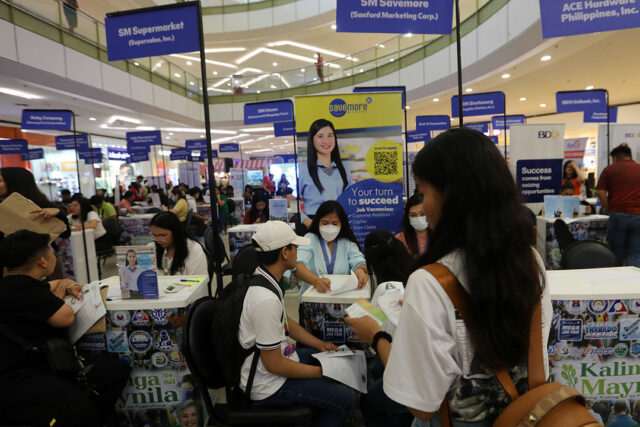
People flock to a job fair at SM City San Lazaro in Manila, June 26, 2024. — PHILIPPINE STAR/EDD GUMBAN

By Adrian H. Halili, Reporter

THE Department of Labor and Employment (DoLE) is strengthening its collaboration with the education sector to improve the local job supply amid the growing number of Filipinos entering the labor force, its top official said at the weekend.

“We are improving industry-academe collaboration and embedding skills development into curriculum design. Flexible and responsive education systems are key to increasing labor force participation and addressing emerging skill requirements,” Labor Secretary Bienvenido E. Laguesma said in a Viber message.

There were 52.42 million Filipinos that were part of the labor force in June, growing from the 52.32 million in May and the 51.9 million working Filipinos a year prior, according to the local statistics agency.

In its latest Labor Force Survey, the Philippine Statistics Authority (PSA) also found the labor force participation rate (LFPR) slipped to 65.7% in June from 65.8% in May and the 66% the same month last year. LFPR is the proportion of the working-age population (15 years old and over) that is part of the total labor force.

Mr. Laguesma said that the government is also implementing enterprise-based education and training to align education and training programs with the evolving needs of the labor market.

He added that aligning government-industry-academe programs would strengthen curriculum development, enhance training delivery, and support job placement programs, ensuring alignment with industry standards.

He also said that the agency was expanding upskilling and reskilling initiatives in digital technologies, artificial intelligence, and other in-demand skills, in collaboration with the private sector and academia.

Mr. Laguesma said that the government was also strengthening Senior High School (SHS) programs by intensifying information dissemination about the K-12 program to employers and enhancing the work preparation component of the SHS curriculum to better prepare graduates for employment.

Recently, the SHS program has been criticized due to its failure to produce job ready graduates, almost more than 10 years since its implementation.

He added that the agency is looking to “future proof labor demand” by advancing market intelligence as well as job research and development.

“To future-proof labor demand, we will improve market intelligence systems, intensify research and development, and support the graduation of informal sector workers and micro and small enterprises into the formal economy,” he said.

The government will also strengthen and expand social protection measures to reduce the vulnerability of Filipinos to improve labor market governance.

It will also “improve institutional arrangements on flexible working arrangements to support diverse needs of employees and businesses; promote industrial peace; improve job transitions programs; and enhance job forecasting protocols to anticipate future skills and labor demand,” he said.

The Labor chief also noted that the government’s 10-year jobs master plan would further bolster the Philippines’ labor market.

The government’s Trabaho Para sa Bayan (TPB) Plan is a 10-year roadmap that aims to increase the labor force participation rate to 68.2% by 2034.

“Under the TPB Plan, we have identified key sectors for job generation and productivity: digital economy, green and blue jobs, creative and care industries, construction, agriculture and agribusiness, tourism, logistics, and advanced manufacturing,” he added.

House to continue push to hold VP accountable for fund misuse

VICE-PRESIDENT Sara Duterte-Carpio, in this Aug. 27, 2024 photo, attended the deliberations on the proposed 2025 budget for the Office of the Vice-President at the House of Representatives in Quezon City. — PHILIPPINE STAR FILE PHOTO/MIGUEL DE GUZMAN

LAWMAKERS said on Sunday the House of Representatives will continue to pursue Vice-President (VP) Sara Duterte-Carpio’s accountability over alleged misuse of secret funds, should the Supreme Court uphold its ruling voiding her impeachment.

Ms. Duterte has not been cleared of the allegations in the impeachment complaint that was struck down by the High Court as being unconstitutional, said Deputy Speaker La Union Rep. Francisco Paolo P. Ortega V.

“The Supreme Court decision delved on procedural issues but not on the alleged misuse of CIFs (confidential and intelligence funds),” he said in a statement. “The accountability part was not resolved, so we intend to continue asking her to account for those funds and answer for how they have been handled or mishandled.” The Office of the Vice-President did not immediately reply to an e-mail seeking comment.

The High Court earlier ruled that the impeachment of Ms. Duterte violated the constitutional ban on filing more than one impeachment complaint within a year and breached her right to due process but did not absolve the Vice-President of the charges.

A total of three complaints were hurled against Ms. Duterte in December last year. But she was only impeached in February after more than 200 congressmen signed a fourth complaint, allowing the chamber to immediately send the ouster changes to the Senate without any hearing.

The estranged Vice-President has been subjected to congressional probes into the alleged misuse of P612.5 million worth of CIF under Ms. Duterte’s office in 2022 and the Department of Education in 2023, which has been used by lawmakers as indictment for her impeachment.

Allegations against Ms. Duterte also include unexplained wealth, destabilization efforts and plotting to assassinate President Ferdinand R. Marcos, Jr., his wife and Speaker Ferdinand Martin G. Romualdez. She has denied all charges.

“The people should understand this: the entire 93-page [Supreme Court] ruling tackled the impeachment process and rules in the House,” Deputy Speaker and Zambales Rep. Jefferson F. Khonghun said in the same statement.

“In other words, the Vice-President is not yet off the hook on the use of this large amount of taxpayers’ money,” he added. “We will pursue accountability on her part wherever it takes us.”

Mr. Ortega said the House will explore possible next steps should the Supreme Court uphold its ruling that dismissed Ms. Duterte’s impeachment complaint and barred any new complaint against her until Feb. 6 next year.

“We will have to discuss after February 6, 2026 how to pursue accountability on the part of Vice-President Sara Duterte for her mishandling of P612.5 million in confidential funds in 2022 and 2023,” he said. — Kenneth Christiane L. Basilio

Comelec tallies 2.1M voter registrants

PHILSTAR FILE PHOTO

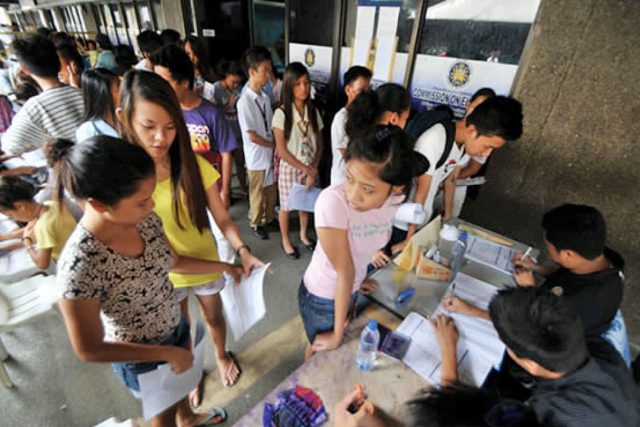
THE Commission on Elections (Comelec) has so far tallied over 2.1 million new registrants for the Barangay and Sangguniang Kabataan Elections (BSKE), it reported on Sunday.

The commission reported it has processed a total of 2.14 million applications submitted from Aug. 1-9, exceeding its expected one million registrants ahead of its Aug. 10 deadline for registration.

Chairman George Erwin M. Garcia thanked more than two million Filipinos who participated in what he described as the most successful and historic voter registration drive in recent history.

He added that the overwhelming turnout, achieved within a short registration period, demonstrated the public’s strong desire to have their voices heard, regardless of social status.

“Indeed, the Filipino youth are the ones truly standing firm in carrying the nation’s future. Rising to the challenge and answering the call is an act of heroism for the nation,” he told reporters in Filipino via a Viber chat group.

Calabarzon tallied the most registrants with over 265,000, followed by central Luzon with 220,650. The Cordillera Administrative Region had the lowest with over 39,000.

Comelec’s special register anywhere program recorded over 10,000 registrants.

The polls are expected to be reset to November 2026 pending President Ferdinand R. Marcos, Jr.’s signing of a new law that will delay the December 2025 polls.

According to a transcript, published by the Presidential Communications Office, Mr. Marcos on Saturday told media representatives in India that he will sign the bill, as opposed to earlier reports that he will let the measure lapse into on Aug. 14.

The village and youth council elections, originally set for Dec. 1, will be postponed to next year to allow Comelec to focus on the first-ever Bangsamoro Autonomous Region in Muslim Mindanao’s parliamentary elections set for October. — Chloe Mari A. Hufana

PAGASA: Storm Podul intensifies

DOST-PAGASA OFFICIAL FACEBOOK PAGE

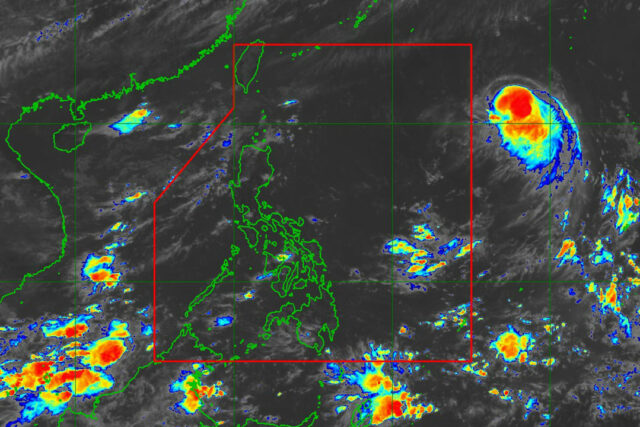
SEVERE Tropical Storm Podul tracked northeast of Luzon continued to intensify as it makes its way into the Philippine Area of Responsibility (PAR), the local weather bureau said on Sunday.

In an 11 a.m. advisory, the Philippine Atmospheric, Geophysical and Astronomical Services Administration (PAGASA) said that Severe Tropical Storm Podul has continued to accelerate while maintaining its strength.

“Podul may enter the PAR between tonight and tomorrow early morning. On the track forecast, Podul may pass close or over the southern Ryukyu Islands on Wednesday (Aug. 13) morning. Furthermore, a landfall scenario over Taiwan on Wednesday afternoon or evening is also not ruled out,” PAGASA added.

The agency noted that Podul is unlikely to directly affect the weather and sea conditions in the country within the next five days.

The storm was last seen 1,680 kilometers east of extreme Northern Luzon, moving westward at 25 kilometers per hour (kph). It had maximum sustained winds of 110 kph near the center, gustiness of up to 135 kph.

The severe tropical storm is forecast to move generally westward today (Aug. 10) and on Monday (Aug. 11), then west northwestward or northwestward from Tuesday.

“There is large uncertainty in the projected track and intensity of Podul from Monday through the end of the forecast period since any northward or southward shift in the track forecast will significantly change the intensity forecast,” it said. — Adrian H. Halili

Comprehension remains a challenge for Filipinos, says PSA

PHILIPPINE STAR/WALTER BOLLOZOS

by Almira Louise S. Martinez, Reporter

Reading comprehension remains a primary challenge for Filipinos aged 10 to 64 despite high basic literacy, according to the Philippine Statistics Authority (PSA).

“If we compare our numbers to those of other countries in the ASEAN region, we’re not far behind; in fact, we are higher than other countries,” PSA Undersecretary and National Statistician Claire Dennis S. Mapa told a news briefing in Filipino.

“What we saw was that we have a problem with [is] comprehension, and that’s something we already knew before,” Mr. Maps added.

In the 2024 Functional Literacy, Education, and Mass Media Survey (FLEMMS), 93.1% of respondents have basic literacy, or those who can read, write, and compute; however, only 70.8% are considered functionally literate, or able to comprehend.

Mr. Mapa said in his presentation that for every nine individuals aged 10 to 64 who can read, write, and compute, two have difficulty with comprehension.

The data showed that Region 3 had the highest basic literacy rate at 92.8%, while the Bangsamoro Autonomous Region in Muslim Mindanao (BARMM), with 81.0% score ranked lowest.

For functional literacy, Cordillera Administrative Region (CAR) had the highest score of 81.2%, while Region 9 ranked the lowest with 59.3%.

Mr. Mapa added that a 2019 analysis by the PSA, which found that 2% of high school completers were unable to comprehend what they read, led the agency to discontinue the automatic classification of high school graduates as functionally literate.

“In our old assessment, we had what was called automatic assignment. This meant that once someone graduated from high school, they were automatically classified as functionally literate,” he said.

“Based on the previous surveys and our discussions with the technical experts from EDCOM2 (The Second Congressional Commission on Education) and DepEd (Department of Education), we really need to test them (high school graduates).”


Interventions

Through a more detailed survey, Mr. Mapa said the government can now create a more targeted intervention, designed for the different needs across the country.

“Intervention will now be targeted. Of course in schools, in different institutions, on specific provinces, including local government units.”

For low-performing areas, especially in provinces, INNOTECH Centre Director Majah-Leah V. Ravago said teachers influence the performance of students. “Teachers shape the learners, which affects this kind of outcome,” she told reporters in Filipino.

“We need to be more selective about who enters the teaching profession because it’s crucial, especially in basic education, and foundational learning which is DepEd’s focus today,” she added.

Ms. Ravago noted that to address the issue with literacy rates, the government must also concentrate on making the teaching profession ‘attractive’.

“One of the issues is salary, and then there’s the burdensome aspect of teaching, where teachers are expected to do much more than just teach,” she said.

“Let’s start with the interventions on teachers training to attract good teachers because they are the shapers of our learners,” she added.

Senate to begin e-gaming probe

A person holds cards near a keyboard, chips and dice in this illustration picture. — REUTERS/DADO RUVIC/ILLUSTRATION

THE PHILIPPINE Senate will begin its investigation into online gambling amid calls to either ban or regulate the platforms.

In a statement on Sunday, Senator Erwin T. Tulfo, who heads the Games and Amusement committee, said that the Senate is set to tackle online gambling on Aug. 14.

“On Thursday, the bills on online gambling will be heard… I made a commitment to prioritize these bills because the problem is getting worse. It’s a crisis now. So, we really need to take action, to solve this problem,” Mr. Tulfo said in mixed Filipino and English.

Officials from the Philippine Amusement Gaming Corporation (PAGCOR) and the Department of Finance (DOF) are expected to attend the Senate inquiry, he added. The Senate panel will tackle four bills and three resolutions, and a privilege speech on the ill effects of the online gambling industry.

“Our problem is, we were not ready. There is no regulation, so people gamble without restraint. There is no control over how much to bet… children are not able to gamble too,” he added.

Several bills aiming to regulate or ban online gambling are pending in the Senate amid calls from civil society groups and other lawmakers who raised concerns over the proliferation of digital gambling platforms, citing addiction and mounting debt among vulnerable communities, particularly the youth.

Other proposed measures on online gambling include prohibiting promotions, advertisements, and its linking to electronic wallets. 

“You have to weigh it, right? This is your income, but this is also a social ill, right? The problem is that people are becoming addicted to gambling. How can that be, right? What is important?” he asked.

“Is income more important than the future of the people, the youth, the parents who are addicted to gambling?” Mr. Tulfo further asked.

Last week, the Philippine central bank said that it is finalizing new rules to mitigate gambling-related harm by strengthening financial safeguards across banks, e-wallets, and payment platforms.

The Bangko Sentral ng Pilipinas (BSP) said it was proposing safeguards to include biometric ID checks, daily transaction limits, time-based payment restrictions, and user tools for spending caps, voluntary breaks, and self-exclusion for gaming sites.

The BSP said the proposed measures would curb addiction, fraud, and financial harm while encouraging responsible use of digital finance.

The overall gaming industry booked P215-billion gross gaming revenue in the first half, with P93.36 billion generated by integrated resorts, according to PAGCOR. — Adrian H. Halili

ADVERTISEMENT
ADVERTISEMENT