Home Blog Page 1179

Meralco seeks DoE approval for 900-MW baseload procurement

BW FILE PHOTO

POWER distributor Manila Electric Co. (Meralco) is seeking to procure 900 megawatts (MW) of electricity via a competitive selection process (CSP).

It currently has three other CSP applications pending.

“There is another one coming in — a 900-MW baseload CSP,” according to Meralco Senior Vice-President and Head of Regulatory Affairs Jose Ronald V. Valles.

Mr. Valles said the auction is scheduled for late 2025.

The proposed CSP forms part of Meralco’s 2025 power supply procurement plan to obtain over 2,100 MW of capacity, which has been approved by the Department of Energy (DoE).

The CSP policy requires distribution utilities to procure power at a least-cost basis.

Meralco has requested DoE certificates of compliance for the three other CSPs, involving 200 MW of renewable energy baseload power, 600 MW worth of baseload, and 450 MW worth of mid-merit power.

Baseload power plants generate a steady supply of electricity to meet regular demand, while mid-merit plants are designed to operate during periods of intermediate demand.

“There is another one in the pipeline but we are still waiting for the resolution of the DoE with respect to these three CSPs because these are more urgent in terms of the commercial operations date that we are looking at for the distribution utility,” Mr. Valles said.

He said that Meralco’s application for the 200-MW CSP is now under review after the power distributor submitted its reply on the comments of the Philippine Competition Commission (PCC) and the Energy Regulatory Commission.

The company has yet to receive the review of the ERC and PCC for its 600-MW and 450-MW CSPs.

In a statement on Sunday, Meralco confirmed  receipt of the show-cause order issued by the Energy Regulatory Commission (ERC) for alleged failure to submit complete fuel data for the January to October 2022 period.

The order stems from the ERC’s request in January 2023 for documents related to the power supply agreement (PSA) between Meralco and Panay Energy Development Corp. (PEDC).

The ERC required submission of invoices and fuel cost computation for the period.

“As ERC’s directive was for the declared purpose of verifying generation charges ‘being passed on to its consumers,’ Meralco complied and provided ERC with copies of the invoices for its then existing PSA with PEDC — notwithstanding that these documents had already been previously submitted under Meralco’s regular reports to ERC,” the company said.

For the fuel cost computation, Meralco said that it clarified that its then PSA with PEDC was a financial contract with a fixed price or single tariff for the duration of the contract term.

“This means that it does not specify any fuel cost component, in contrast to a two-part tariff that distinguishes fixed costs from fuel costs on a monthly basis. Given this, the fuel cost computation was obviously not applicable,” the company said.

Following Meralco’s submission in 2023, the company said it did not receive any further communication from the ERC.

“At the outset, Meralco emphasizes that it does not only validate but scrutinizes the fuel components of the generation charges before these are passed through to its consumers,” the company said.

Meralco’s controlling stakeholder, Beacon Electric Asset Holdings, Inc., is partly owned by PLDT Inc.

Hastings Holdings, Inc., a unit of PLDT Beneficial Trust Fund subsidiary MediaQuest Holdings, Inc., has an interest in BusinessWorld through the Philippine Star Group, which it controls. —  Sheldeen Joy Talavera

BSP launches SME credit risk database

BW FILE PHOTO

THE Bangko Sentral ng Pilipinas (BSP) has launched a credit risk database with a web-based scoring system which will allow financial institutions to evaluate small businesses and boost credit access.

“It aims to enhance access to credit of small and medium enterprises (SMEs) by helping financial institutions (FIs) assess the creditworthiness of their SME borrowers, creating a truly inclusive economy,” the BSP said in a memorandum on its website.

The Credit Risk Database Philippines Web-based Scoring System (CRDPh System) is an automated platform designed to streamline the secured submission and processing of data and retrieval of credit risk database outputs.

It transitioned to a web-based platform from the previous standalone CRD scoring tool.

“By complementing existing models and tools, the CRDPh System expects to enhance the FIs’ credit risk-based evaluation of SME borrowers, address information asymmetry, improve loan pricing, reduce dependence on collateral, and ultimately support access to finance of SMEs.”

Banks continued to miss the lending quota for small businesses at the end of March, extending just P546.82 billion to micro, small and medium enterprises (MSMEs), equivalent to 4.63% of their total loan portfolio of P11.82 trillion.

This fell short of the 10% overall requirement under the Magna Carta for MSMEs. Under the law, banks must allocate 8% of their loan portfolio to micro and small enterprises, and 2% to medium-sized businesses.

For years, most banks have opted to incur penalties for noncompliance with the lending quota instead of taking on the risk associated with lending to small businesses.

Analysts have attributed the failure to meet the lending quotas to the dearth of credit information on these types of borrowers.

The first phase of the project, which was launched in 2020, covered the construction of the database of SME data; the development and validation of the scoring model; and the deployment to pioneer FIs. 

“The ongoing Phase 2 of the CRD project will support the development of new CRD services and a transition plan toward a sustainable, permanent operation beyond the project-based phase,” it added.

The CRDPh System was primarily developed to “facilitate transition of CRD from project-based to sustainable operation.”

“Once additional services are developed, the CRDPh System will also provide FIs with statistical information on SMEs which will be useful in understanding trends and patterns in the SME sector and formulation of business strategies.”

Additional services include comparison of CRD outputs with the FI’s internal rating/score, consultancy service for/analysis of FIs’ SME client, and statistical information.

“Furthermore, the CRDPh System is envisioned to encourage FIs to efficiently manage SME data as they are required to periodically submit SME data to continuously enhance the CRD database,” it said.

The project is a joint initiative with the Japan International Cooperation Agency.

There are a total of 33 pioneer financial institutions currently participating in the project. These are institutions that voluntarily shared data for the construction of the CRD database and scoring model.

“On the other hand, participating FIs are FIs which will utilize and access the CRDPh System to generate CRD outputs and periodically submit data. Thus, participating FIs are considered as both data contributors and users of the CRD scoring model.”

The Philippines is also the first country to adopt the CRD outside Japan, it added. 

“CRD is a large-scale database of anonymized financial, non-financial and borrower performance-related (due dates and past due status) data of small and medium enterprises (SME) provided by pioneer FIs from which a statistical credit scoring model was developed.”

The scoring model can generate the probability of default and credit score output of an SME borrower in a particular group of similar attributes, as data is anonymized, the BSP said.

CRD outputs can be used to assess the capacity of SMEs to repay loans, validate or develop internal rating systems, and align pricing decisions or strategies with borrowers’ credit risk profile. — Luisa Maria Jacinta C. Jocson

GOCC subsidies fall nearly 27% in June

PHILSTAR FILE PHOTO

SUBSIDIES provided to government-owned and -controlled corporations (GOCCs) fell 26.68% from a year earlier in June, the Bureau of the Treasury (BTr) reported.

The BTr said budgetary support to GOCCs was P7.45 billion in June, against P10.16 billion a year earlier.

Month on month, GOCC subsidies fell 5.90% from P7.92 billion in May.

State-owned firms receive monthly subsidies from the National Government to support their daily operations if their revenue is insufficient.

In June, the National Food Authority (NFA) topped the subsidy list with P3.43 billion or 46.07% of the total. It received no subsidies in February and March.

This was followed by the National Irrigation Administration (NIA), which received P2.39 billion.

The Philippine Fisheries Development Authority was granted P268 million in subsidies in June.

State-run firms on the subsidy list included the Philippine Heart Center (P184 million), the Philippine Coconut Authority (P165 million), the National Kidney and Transplant Institute (P124 million), the Philippine Children’s Medical Center (P114 million), and the National Power Corp. (P106 million).

Other GOCCs obtaining subsidies of less than P100 million include the Philippine Rice Research Institute (P96 million), the Subic Bay Metropolitan Authority (P86 million), the National Dairy Authority (P75 million), the Light Rail Transit Authority (P74 million), and the Philippine National Railways (P72 million).

Those receiving less than P50 million were the Lung Center of the Philippines (P49 million), the Development Academy of the Philippines (P40 million), the Cultural Center of the Philippines (P34 million), the Philippine Institute of Traditional and Alternative Health Care (P29 million),the Center for International Trade Expositions and Missions (P20 million), the People’s Television Network, Inc. (P18 million), the Metropolitan Waterworks and Sewerage System (P14 million) and the Sugar Regulatory Administration (P11 million).

Also in this tier were the Aurora Pacific Economic Zone and Freeport Authority (P10 million), the Philippine Institute of Traditional and Alternative Health Care (P8 million), the Southern Philippines Development Authority (P7 million), the Philippine Tax Academy (P5 million), the Philippine Center for Economic Development (P5 million), and the Zamboanga City Special Economic Zone Authority (P4 million).

Receiving no subsidies were the Land Bank of the Philippines, the Small Business Corp., the National Electrification Administration, the National Housing Authority, the Bases Conversion Development Authority, the Intercontinental Broadcasting Corp.-13, the Philippine Crop Insurance Corp., the Power Sector Assets and Liabilities Management Corp., the Tourism Infrastructure & Enterprise Zone Authority and the Tourism Promotions Board.

In the first six months, GOCC subsidies totaled P52.50 billion, down 21.89%.

The NIA was the top recipient during the period with P17.73 billion. This was followed by PSALM (P8 billion) and the NFA (P7.18 billion).

As of July, the Department of Finance had collected P105 billion in GOCC dividends. — Aubrey Rose A. Inosante

PHL export data to start reflecting tariff impact after 1st half boosted by frontloaded shipments

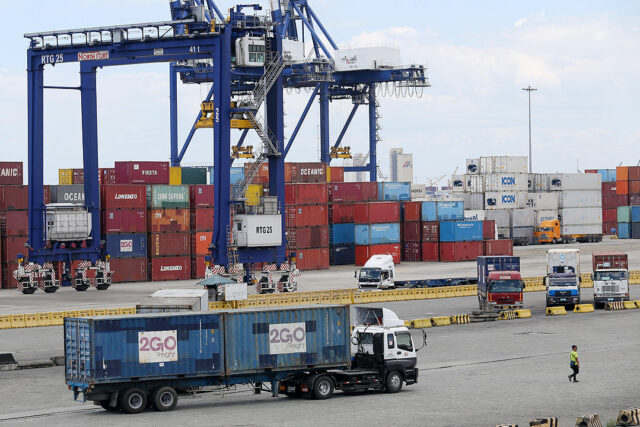
Trucks enter the port area in Manila. — PHILIPPINE STAR/EDD GUMBAN

THE GROWTH in Philippine exports seen in the first half could start slowing down beginning in early August after the 19% US reciprocal tariff took effect, an analyst said.

Rizal Commercial Banking Corp. (RCBC) Chief Economist Michael L. Ricafort said there was some frontloading of exports in recent months to avoid the US tariffs.

“But once the US tariffs become effective on Aug. 7, this could slow exports to the US by many countries,” he said via Viber.

Preliminary data from the Philippine Statistics Authority indicate that exports grew 13.2% in the first half to $41.24 billion.

Of the total, 16%, or $6.598 billion, was accounted for by the US. US shipments rose 13.2% from a year earlier.

In a recent trade forecast, the World Trade Organization (WTO) said that a surge of imports in the US ahead of widely anticipated tariff hikes contributed to the upward revision to the projections for 2025.

Starting Aug. 8, the WTO projects world merchandise trade to grow 0.9% in 2025, up from the -0.2% projected in April.

“Global trade has shown resilience in the face of persistent shocks, including recent tariff hikes. Frontloaded imports and improved macroeconomic conditions have provided a modest lift to the 2025 outlook,” WTO Director-General Ngozi Okonjo-Iweala said.

“However, the full impact of recent tariff measures is still unfolding. The shadow of tariff uncertainty continues to weigh heavily on business confidence, investment, and supply chains. Uncertainty remains one of the most disruptive forces in the global trading environment,” she added.

For next year, the WTO projects a 1.8% increase in world trade.

Despite the temporary boost of frontloading and more favorable global macroeconomic outlook on trade, the WTO still expects recent tariff changes to have an overall negative impact.

“This stems from a combination of factors. On the one hand, the US-China truce and exemptions for motor vehicles are contributing positively,” the WTO said.

“On the other hand, higher ‘reciprocal’ tariff rates introduced on Aug. 7 are expected to weigh increasingly on imports in the United States and depress exports of its trading partners in the second half of 2025 and in 2026,” it added.

Mr. Ricafort said Philippine exports are around three to five times smaller compared to those of other Association of Southeast Asian Nations (ASEAN) countries, insulating it from the tariff impact.

“The Philippine economy is not that export dependent and lately domestically driven, wherein about 70% of the economy was accounted for by consumer spending,” he said.

“The markets are still in a wait-and-see mode if Trump would be willing to compromise and settle for lower negotiated tariffs during the trade negotiations, given the TACO track record in recent months,” he added, referring to the “Trump Always Chickens Out” investment thesis being peddled by market traders.

The TACO thesis holds that Mr. Trump usually issues threats at the start of negotiations, then backs off later.

Despite this, Mr. Ricafort said the Philippines needs to diversify its export markets to other affluent markets.

“It is also better to diversify export winners beyond electronics, like agricultural export winners such as coconut oil, bananas, pineapples, mangoes, other tropical fruits, tuna, other seafood, or marine products,” he added.

Economic affairs officers Rajan Sudesh Ratna and Jing Huang of the UN Economic and Social Commission for Asia and the Pacific (ESCAP) are projecting that the US tariffs will reduce ASEAN exports to the US.

According to their report, “the higher tariffs will reduce China’s competitiveness and prompt global buyers to seek alternative suppliers, both reducing demand and redirecting trade flows.”

However, it said ASEAN countries will benefit from this shift, “gaining market share as trade is diverted away from China.”

“All ASEAN member countries gain purely through trade diversion rather than trade creation, indicating that while overall demand remains unchanged, supply sources are shifting,” it said.

“ASEAN’s ability to absorb trade diverted from China demonstrates the importance of flexible supply chains and open trade policies,” it added.

However, they said ASEAN must explore alternate markets beyond China, as their exports “may face challenges due to increased costs associated with tariffs, especially if their exports are levied duties for China.”

To address these challenges, they recommended that bloc members increase intra-ASEAN trade.

“Strengthening intra-regional trade through harmonization of regulations and reduction of tariffs among member states will create a more robust internal market within ASEAN itself and prevent them from absorbing the external shock emanating from the additional US tariffs,” they said.

They said ASEAN should adopt a collective approach to enhancing bargaining power in negotiations with external partners to reduce reliance on the US market.

They added that “ASEAN can capitalize on the shifting trade dynamics by promoting bilateral and regional economic partnerships with China.”

Another recommendation is for ASEAN to look into market diversification, focusing on countries with which it has free trade agreements (FTAs), and to actively pursue new FTAs.

They also recommended a focus on services trade and the adoption of digital policies.

“With the US reciprocal tariffs imposed across the board on almost all countries with higher duties on China, some of the supply chain linkages of ASEAN members are likely to be disrupted,” they said.

“ASEAN must formulate an alternate export strategy. In this regard, looking at other important markets, focusing on services trade by including it in its FTAs, entering into FTAs with other major trading partners, and discussing how to enhance intra-ASEAN trade are some of the options,” they added. — Justine Irish D. Tabile

LPG licensing services expand to Palawan

A man arranges tanks of liquefied petroleum gas (LPG) on a truck. — PHILIPPINE STAR/EDD GUMBAN

THE Department of Energy (DoE) said it will conduct a five-day session with the liquefied petroleum gas (LPG) industry to outline the licensing process in Palawan.

“By delivering services directly to the people, we are strengthening safety standards while helping local enterprises operate more efficiently and competitively,” Energy Undersecretary Alessandro O. Sales said in a statement on Sunday.

During the activity, scheduled to run until Aug. 15, the DoE will provide same-day processing to enable retailers, dealers and gasoline station owners in the island province to secure their license to operate (LTOs) and certificate of compliance.

Applicants must prepare and present complete documentation to qualify for same-day processing.

The DoE said that it will expand the initiative to islands and remote provinces to ensure that the services reach underserved areas.

In the recent years, LPG dealers from the provinces have had to travel to the DoE Central Office in Taguig City to submit and process applications.

By taking licensing services to the regions, the DoE aims to reduce travel costs and lost business time, encourage wider compliance, and make regulatory processes more accessible to smaller operators.

The One-Stop Shop complies with the LPG Industry Regulation Act (LIRA) and related DoE issuances, which require operators to obtain licenses and certifications from the DoE and other agencies.

The DoE said these requirements ensure adherence to health, safety, security, environmental, and quality standards applicable to the LPG and liquid fuels industries.

As of June, the DoE has issued LTOs to 14,672 LPG facilities nationwide. — Sheldeen Joy Talavera

DTI imposes 200-day provisional safeguard measures on corrugating medium imports

THE Department of Trade and Industry (DTI) is imposing a provisional safeguard measure of P3,438 per metric ton (MT) on imports of corrugating medium, effective for 200 days.

In an order, the DTI said the preliminary investigation found a “causal link between the increased imports of the products under consideration and serious injury to the domestic industry.”

“The increased volume of imports, both in absolute terms and relative to domestic production, was found to be the substantial cause of the overall impairment in the operations of the local industry,” it added.

Made from a high percentage of recycled paper, corrugating medium is used in corrugated box packaging.

The DTI is acting on a petition filed by the Pulp and Paper Manufacturers Association of the Phils. (PULPAPEL), which accounts for 90% of the total domestic production of corrugating medium.

According to the DTI’s preliminary report, imports of corrugating medium significantly increased between 2019 and 2023.

“Over the period of investigation, the volume of imports grew by approximately 71%… In 2023, imports rose to 99,671 MT,” it said.

“In 2024, imports increased further by 28% compared to 2023, marking the highest level during the period. The 2024 import volume is also 1.71 times higher than the 2019 pre-pandemic level,” it added.

According to the DTI, this reflects a recent, sudden, sharp, and significant increase in imports in absolute terms.

The biggest suppliers of corrugating medium are Japan, Indonesia, Australia, Vietnam, and China.

Last year, Japan accounted for a 54.52% share of total Philippine imports, or 69,713 MT, followed by PROC (32.55%), Vietnam (4.97%), and Indonesia (4%).

During the period, the DTI said the share of imports represented a significant share in proportion to production.

“While domestic production slightly increased, imports grew at a significantly faster rate, outpacing production growth. In 2024, the share of imports relative to domestic production increased further,” it said.

The investigation also showed price depressions of 14.78% and 12.83% in the last two years and a price suppression of 1.62% in 2024.

“The condition of competition shows that the market share of locally produced corrugating medium was essentially displaced during the investigation as the share of imports in the Philippine market significantly increased,” the DTI said.

It said the industry suffered loss of market share, declining utilization, reduction in employment, and incurred losses.

“If the surge in imports continues, local industry will lose market share to cheaper imported products. Without the corrugating medium industry, consistency and availability of local supply will be imperiled,” it added.

The safeguard measure on imports of corrugating medium covers ASEAN Harmonized Tariff Nomenclature Codes 4805.19.90 and 4805.12.00 will take effect after the issuance of the relevant Customs Memorandum Order/Circular.

It does not apply to imports originating from developing countries, the  DTI said. — Justine Irish D. Tabile

Penshoppe group banking on automated distribution

FACEBOOK.COM/PENSHOPPE

By Justine Irish D. Tabile, Reporter

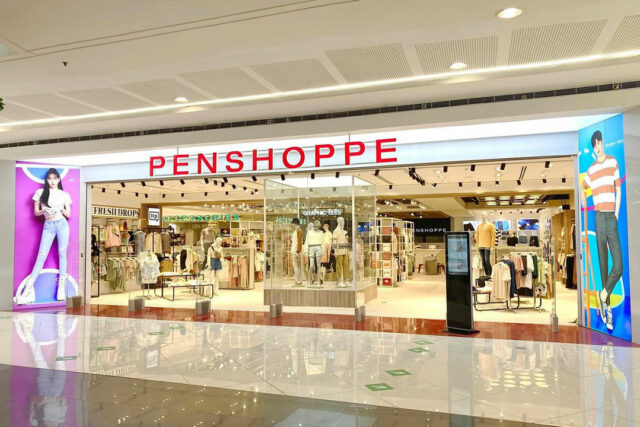
FASHION RETAILER Golden ABC, Inc., which trades under the Penshoppe brand, said it is banking on an automated distribution operation to support the growth of its bricks-and-mortar stores.

Bryan Liu, vice-president for strategy and operations at Golden ABC, said: “In the past few years, one of our biggest changes was the way we operate our back end. So we invested in a huge and highly automated distribution center,” he said.

“There are robotics, and there are things in play in that facility that will make us more efficient and allow us to serve our stores and customers better,” he added.

He added that the pandemic pushed the company to improve coordination across the end-to-end value chain to be a lot more efficient and serve customers a lot better.

“Very recently, we also really spent a lot more time revisiting how we develop our products. We have invested a lot more time and effort in how we develop our products, our brands, and our stores,” he added.

He also said that artificial intelligence (AI) is one of the initiatives driving the company today.

“Given that our vision is to be a more AI-driven company. We are really focusing a lot on our data, and the way that we collect, structure, store, and consume data is now a big part of how we operate in the company,” he added.

Golden ABC is also the company behind brands such as OXGN, Forme, Memo, Regatta, and BOCU.

Brandon Liu, newly appointed vice-president for Penshoppe, said in a statement “We’ve built Penshoppe to resonate globally while staying rooted in Filipino identity.”

“As we move forward, our focus is to remain as relevant as ever — and to keep delivering what our customers expect from us as a market leader: on-trend fashion, culturally attuned collaborations, and brand experiences that are both globally competitive and uniquely our own,” he said.

He said the company is always on the lookout for what its customers need.

“Our success in the past few years has also been attributed to being able to stay relevant to the consumer; otherwise, we might not be as good in terms of the position we are in now,” he added.

He said Penshoppe currently caters to a young demographic, “but we are trying to challenge that, in the sense that it is not just targeting the youth but really people who are looking for great value products at affordable pricing.”

“We are leading it back to the brand values and what we stand for. I don’t want to box it in terms of demographics; it actually depends on where you are in life as well,” he added.

Looking forward, he said the company is exploring better ways of working, including how to bring about better products, brands, and store experiences.

“Those things are always something that we are looking at on how we can improve. Even entries into new territories or new categories, for example, are something that we always study,” he said.

“In this ever-changing industry of fashion, we do not have a crystal ball, but then it is in our approach and how we do things. We always make it a point to find out what is important to our customer,” he added.

He said the process of figuring out what customers are looking for “is changing, and there is really no way to predict it, but again, we know, and we have the experience here, especially in the Philippines, to know what the tendencies of what our customers may be looking at are and what is important to them.”

“It is really being able to adapt even with TikTok … More than just using it as a social media platform, people are shopping on TikTok. So it is also being able to know how we can approach it, how we can do this live selling and approach it through something that still makes sense for the brand,” he added.

He said that accessibility in terms of price points and nationwide reach will continue to play a key part for Penshoppe.

“We are still very strong in terms of our physical stores … I’ll admit there are a lot of things we can still improve on, from how we translate in-store experience down to online, that integration,” he added.

PHL ready for Indian visitors — DoT

STOCK PHOTO | Image by ASphotofamily from Freepik

THE Department of Tourism (DoT) is expecting an increase in Indian travelers to the Philippines after the two countries established a strategic partnership.

“The two main hurdles for visiting the Philippines have been removed. First, the visa-free entry for nationals coming into the country,” Tourism Secretary Ma. Esperanza Christina G. Frasco said in a statement on Sunday.

“Second, direct flights have cut travel time from anywhere from 13 to 20 hours to only six hours, soon,” she added.

She also cited President Ferdinand R. Marcos, Jr.’s executive order offering digital nomad visas to attract long-staying professionals.

Last year, India was the Philippines’ 13th largest source market, accounting for 79,366 arrivals, mostly leisure travelers interested in beaches, shopping, and educational tourism.

“Secretary Frasco expressed optimism about increasing these numbers, emphasizing plans to intensify marketing campaigns aimed at attracting high-value and luxury travelers from India,” the DoT said.

In particular, she put forward Cebu as a wedding destination for Indian couples.

Another lucrative market being eyed by the department is the MICE (Meetings, Incentives, Conferences, and Exhibitions) segment, which in India is valued at $49 billion.

To support these initiatives, Ms. Frasco said that the department will offer familiarization trips and business-to-business meetings.

“We fully recognize the necessity of educating the market here, and that is why we are at present recalibrating our budgets to make sure that we fully invest in the Indian market,” she said. — Justine Irish D. Tabile

Leading the AI-driven future

IN BRIEF:

• Organizations should consider the integration of artificial intelligence (AI) technologies to transform their operations, requiring a comprehensive redesign of business processes to emphasize agility and innovation.

Investing in employee training and upskilling is crucial to address the growing demand for AI skills, enabling companies to enhance their workforce capabilities and maintain a competitive edge.

• A balanced approach to AI investment — combining ready-made solutions with custom development — allows organizations to leverage existing technologies while tailoring solutions to meet specific business needs.

As artificial intelligence (AI) becomes a pivotal force in business transformation, companies are increasingly recognizing its potential to fundamentally reshape their operations. Strategic deployment of AI is vital for organizations seeking to evolve into intelligent operations powered by AI. This evolution transcends mere task automation; it requires a comprehensive redesign of business processes to prioritize AI integration. By embracing this transformation, companies can innovate and strengthen their positions in the evolving landscape of AI.

Despite a general understanding of AI among business leaders, many remain reluctant to implement it actively. To bridge this gap, leaders should engage with AI in several impactful ways.

ENVISIONING FUTURE BUSINESS LANDSCAPES
The potential for disruption in business models lies in the combination of traditional AI, generative AI (GenAI), and other emerging technologies, including mobile applications, the Internet of Things (IoT), and blockchain. The integration of these technologies can provide advantages that exceed the capabilities of any single technology, creating a synergy that fundamentally redefines legacy business models.

In various sectors, including agriculture, retail, and business process outsourcing (BPO), there are significant opportunities for AI integration. For instance, AI can enhance agricultural productivity through precision farming techniques that utilize data analytics and IoT devices to optimize crop yields. In the retail sector, AI-driven analytics can provide insights into consumer behavior, enabling businesses to develop personalized marketing strategies that resonate with local preferences. AI in retail is also used for personalized product recommendations, inventory management, predictive analytics, customer service, and enhancing in-store experiences with tools like virtual try-ons, chatbots, and smart mirrors.

An effective strategy for navigating this disruption is to engage in future-back planning, which involves envisioning the future state of the industry and developing a roadmap to build the necessary competencies for success.

BUILDING A ROBUST DATA FOUNDATION
A strong data infrastructure is essential for organizations looking to leverage data effectively. This infrastructure encompasses the systems, technologies, and processes that support data collection, storage, and management. As organizations invest in AI, establishing a solid data foundation becomes increasingly important.

With the growing volume of data, the infrastructure must scale efficiently to handle increased storage and processing needs. A well-structured data infrastructure enables seamless integration of diverse data sources, promoting interoperability among data systems and AI tools. This can help accelerate AI adoption and enhance collaboration across teams.

ADDRESSING TALENT AND TECHNOLOGY GAPS
The need for skilled AI professionals in the workforce is becoming increasingly urgent. According to the EY AI Anxiety in Business Survey, many employees express a desire for more training and upskilling opportunities related to AI, yet there is a prevailing concern that existing opportunities may not be sufficient. This highlights the importance of investing in employee development to cultivate AI skills within the organization. By enhancing the capabilities of their current workforce, companies can accelerate AI adoption and gain a significant competitive edge.

Moreover, organizations must prioritize attracting and nurturing talent proficient in AI technologies. This focus enables operations to be driven by professionals who can fully leverage AI’s capabilities, positioning the business at the forefront of technological advancement. On the technology side, companies often face the dilemma of whether to build, buy, or adopt a hybrid approach to AI solutions. Thoughtful planning and discussion are essential to navigate this decision. While some organizations may hesitate to invest in generative AI applications, believing their existing systems will eventually incorporate these functionalities, pursuing customized AI tools tailored to specific needs can yield substantial benefits.

In the EY AI Pulse Survey, 95% of senior leaders in the US reported that their organizations are currently investing in AI, emphasizing the necessity of a diversified investment strategy. This strategy should balance the acquisition of ready-made AI products with custom development, allowing for tailored solutions where necessary while also leveraging the speed and cost-efficiency of pre-built technologies.

EMBRACING AGENTIC AI FOR SIGNIFICANT ADVANCEMENTS
Agentic AI is characterized by its ability to autonomously perform tasks, make decisions, and interact with users and systems. This technology leverages large language models to adaptively plan and achieve desired outcomes. Unlike traditional AI, which primarily executes predefined tasks, agentic AI can analyze situations and make informed choices.

As organizations integrate intelligent agents into their operations, they are witnessing significant improvements in customer engagement and operational efficiency. For example, an inventory optimization agent in the retail sector can adjust strategies based on real-time data, enhancing customer satisfaction while achieving operational goals.

In the future, collaboration between agents and humans is expected to become more prevalent, with agents gaining greater autonomy. This shift will mark a transition toward a model where AI plays a central role in business operations.

Embracing AI across all facets of the enterprise is essential for organizations aiming to thrive in a rapidly changing landscape. By fostering a culture of innovation and experimentation, companies can empower their teams to adopt new technologies and methodologies.

PURSUING ONGOING GROWTH
Achieving strategic AI maturity allows organizations to become agile entities characterized by seamless decision-making and a relentless pursuit of innovation. By leveraging digital advancements, these organizations can respond swiftly to market changes, enhance processes, and drive sustained growth, positioning themselves for success in the evolving business landscape.

This article is for general information only and is not a substitute for professional advice where the facts and circumstances warrant. The views and opinions expressed above are those of the author and do not necessarily represent the views of SGV & Co.


Ryan Gilbert K. Chua is the consulting leader of SGV & Co.

Ferris and Watkinson cruise to runaway Ironman 70.3 victory

AUSTRALIA’s Josh Ferris (center) reigned supreme in the 2025 IRONMAN 70.3 Lapu-Lapu with Mike Phillips and Sam Osborne completing the podium finish. — IRONMAN.COM

AUSTRALIA’S Josh Ferris and New Zealand’s Amelia Watkinson reigned supreme in the 2025 IRONMAN 70.3 Lapu-Lapu presented by Megaworld after a grueling triathlon race in front of the cheering Cebuanos in Mactan.

Mr. Ferris led from the start to finish, timing in three hours, 49 minutes and 10 seconds in the 1.9km swim, 90km bike and 21km run while Ms. Atkinson also cruised to the same runaway victory with 4:14:22.

The 24-year-old budding Australian star waxed hot by leaving his rivals off the dust in the swim leg, clocking 21:37 to set the pace in his coast-to-coast win that proved just three minutes short of the IRONMAN Philippines record set by Mexico’s Mauricio Méndez in 2018, also in Lapu-Lapu, with a 3:46:44 time.

He was steady in the bike (2:02:15 ride) before holding just enough in the run (1:20:32) as New Zealand’s Mike Phillips (3:52:40) unleashed a strong closeout to finish only three minutes shy of the title.

Completing the men’s podium was New Zealand’s Sam Osborne, last year’s runner-up to Henri Schoeman of South Africa, with 4:04:05.

The 33-year-old Ms. Watkinson, for her part, had a 10-minute lead in a more dominant showing to rule the women’s division over Australian athlete Sophie (4:24:42) and compatriot Kiwi Samantha Kingsford (4:27:45).

But more than the thrill and taste of winning the world-renowned race, Mr. Ferris and Ms. Watkinson appreciated Filipino hospitality more after being welcomed by loud cheers at the finish line by Cebuano locals and students proudly waving their flags and signs for the athletes — Filipino and foreigners they may be.

“I was screaming along without knowing. My ears were about to burst, they were so loud. All the school kids out there, all the people were cheering, and it was awesome,” said Mr. Ferris, citing his Cebu race as one of his best races ever to serve as a momentum-builder for her promising career.

“This is the pinnacle of our sport. Everyone grows up watching IRONMAN. To win here — it’s amazing. Hopefully, it’s the first of many.”

The grizzled Watkinson, who looks forward to her next race in Uzbekistan and would love to return to Cebu next year, echoed the same euphoria.

“It’s actually quite a unique atmosphere. You can feel the visual energy out there. The kids had so much enthusiasm. It’s different here — it’s not just racing, it’s racing with emotion,” she beamed.

The race had a minor crash on the Cebu-Cordova Link Expressway (CCLEX) during the bike leg amid the unexpected rain though fortunately, there were no major injuries reported with the quick response of organizers. — John Bryan Ulanday

Gilas battles host Saudi Arabia for quarterfinal slot

GILAS PILIPINAS’ Dwight Ramos — FIBA

Games on Monday
(King Abdullah Sports City, Jeddah) 2 p.m. (7 p.m. Manila Time) – Chinese-Taipei vs Jordan
7 p.m. (12 a.m. Tuesday Manila Time) – Saudi Arabia vs Philippines

AS soothing as that feel-good 66-57 win over Iraq at the end of group play was, Gilas Pilipinas’ situation in the FIBA Asia Cup in Jeddah, Saudi Arabia remains the same.

Do or die.

And the Nationals are navigating this next part of the campaign — a KO duel with the host Saudis for a quarterfinal seat — with the same mindset that has carried them through despite a fumbling 0-2 start in Group D.

Fight, fight, fight.

“What I like about our team is that we just don’t quit. Back home, we call it the never-say-die attitude,” coach Tim Cone said his Gilas troops snapped out of their funk after numbing defeats to Chinese-Taipei (87-95) and New Zealand (86-94).

“We have that. I think that’s very evident on this team and we hope that will be the one that’ll get us forward.”

By finishing third in Group D with 1-2, the Filipinos earned their place in the Qualification to the Quarterfinals phase against the Saudis, who took No. 2 in Group C with 2-1.

At stake in this you-or-me gig slated 7 p.m. on Monday before an expected full house at the King Abdullah Sports City (12 a.m. on Tuesday Manila time) is a Last-8 date with the topnotcher of Group A, tipped to be three-peat-seeking Australia (2-0 at presstime).

“It’s great to advance (to the play-in for a quarterfinal spot). We’re definitely not satisfied, though,” top gun Justin Brownlee said in an interview on One Sports.

“We got a lot more work to do, there’s a lot of tough teams ahead but whatever challenges lie ahead we’re just ready to take them on.”

Mr. Brownlee had his worst game of the tournament against Iraq, limping with only eight points on three-of-12 shooting after averaging 28 in the two losing outings.

But Dwight Ramos fired 21, doing the most damage in Gilas’ telling 22-7 salvo in the third, as the rest led by AJ Edu and Scottie Thompson stepped up in other aspects.

“We have to use Justin (Brownlee) not just to be a scorer for us but we can play off of him because he does draw so much attention,” Mr. Cone said in anticipation of opponents’ hound-Brownlee schemes.

Mr. Cone hopes from the Iraq game, the Nationals will continue playing to their strengths, especially on the defensive end.

“I really believe this is the kind of game we kind of envisioned we would play, where it’s a little bit more low-scoring. We’re battling for every possession. Every basket is crucial and I thought that’s what we did (against Iraq) and that’s what we’re going to expect from ourselves going forward.”

But one concern going to the clash with the home squad is the status of Calvin Oftana, who suffered an ankle injury last Saturday. — Olmin Leyba

Philippines to host ASEAN+ Individual Chess Championships-Governor Henry Oaminal Cup

PHILSTAR FILE PHOTO

FILIPINOS eyeing the Grandmaster (GM) title would get the chance to realize their dream as the country hosts the ASEAN+ Individual Chess Championships-Governor Henry Oaminal Cup slated Nov. 2 to 10 at the Misamis Occidental Resort and Aquamarine Park considered.

Tournament organizers promised to draw more than the four GMs and six International Masters (IM) required for the eventual champion in the open section to earn an automatic GM title.

And aspirants like IMs Michael Concio, Pau Bersamina and Jem Garcia and FIDE Masters (FM) Christian Gian Karlo Arca, Alekhine Nouri and Ivan Travis Cu are expected to pounce on the opportunity and join the meet co-organized by the National Chess Federation of the Philippines and Misamis Occidental.

Also staked are an IM title and a GM norm for the runner-up and an IM title for the second runner-up in the Open side while a woman GM title will be on the line in the women’s division of this ASEAN Chess Confederation-sanctioned event.

Filipino GMs Daniel Quizon, John Paul Gomez, Joey Antonio and Darwin Laylo as well as WGM Janelle Mae Frayna should see action in the event that will also be backed by the Philippine Sports Commission.

Chess Notes: Filipinos Jan Clifford Labog (U2000), Paul Christian Barroga (U1700) and Yana Emilou de Vera (W1700) topped their respective divisions in the just concluded Asian Amateur Championships in Hong Kong. Also delivering medals were FM Roel Abelgas (U2300) and Allaney Jia Doroy (W2000, who both copped the silver. — Joey Villar

ADVERTISEMENT
ADVERTISEMENT