Home Blog Page 1155

Signal no. 2 up in Batanes as Gorio slightly intensifies

Source: PAGASA

The municipality of Itbayat in Batanes province has been placed under Tropical Cyclone Wind Signal No. 2 as Typhoon Gorio (international name: Podul) slightly intensifies while heading toward Taiwan, according to the Philippine Atmospheric, Geophysical and Astronomical Services Administration (PAGASA) on Wednesday.

In its weather bulletin released at 5:00 am, PAGASA said that under Signal No. 2, Itbayat is expected to experience winds of 62 to 88 km/h, which can pose a minor to moderate threat to life and property.

Tropical Cyclone Wind Signal No. 1 is also in place for the rest of Batanes province, where winds of 39 to 61 km/h are expected, which can pose a minimal to minor threat to life and property.

Typhoon Gorio slightly intensifies to 140 km/h from 130 km/h near its center, with gusts of up to 170 km/h from 160 km/h.

It was located 165 km Northeast of Itbayat, Batanes, moving west-northwestward at a speed of 25 km/h.

PAGASA said that Gorio is expected to exit the Philippine Area of Responsibility (PAR) on Wednesday afternoon or evening as it continues to approach the eastern coast of southern Taiwan.

A Gale warning has also been issued to the seaboards in Batanes and Babuyan Islands, where rough waves of up to 9.0 meters and 3.5 meters are expected, respectively.

Small vessels are advised not to venture out to sea under these conditions, PAGASA said. – Edg Adrian A. Eva

China slaps temporary duties on Canadian canola

STOCK PHOTO | Image by Alexa from Pixabay

 – China on Tuesday announced preliminary anti-dumping duties on Canadian canola imports, a new escalation in the year-long trade dispute that began with Ottawa’s imposition of tariffs on Chinese electric vehicle imports last August.

The provisional rate will be set at 75.8%, effective from Thursday, the Ministry of Commerce said in a statement.

Canola Council of Canada President Chris Davison said that rate makes the Chinese market effectively closed for Canadian canola, to which Canada exported almost C$5 billion ($3.64 billion) of the oilseed crop in 2024.

ICE November canola futures RSX5 fell as much as 6.5% to a four-month low after the announcement.

“This really came as a surprise and a shock,” said trader Tony Tryhuk of RBC Dominion Securities.

China, the world’s largest importer of canola, also known as rapeseed, sources nearly all its supplies of the product from Canada. The steep duties would likely all but end imports if they are maintained.

“This is huge. Who will pay a 75% deposit to bring Canadian canola to China? It is like telling Canada that we don’t need your canola, thank you very much,” said one Singapore-based oilseed trader.

China imposed tariffs on canola oil and meal in March.

Canada is now in a trade conflict with the world’s two largest economies, as its exports also face tariffs imposed by the United States. Canada’s number one canola market is the U.S., followed by China.

China’s Ministry of Commerce said an anti-dumping probe launched in September 2024 had found that Canada’s agricultural sector – particularly the canola industry – had benefited from substantial government subsidies and preferential policies.

The Canadian government and canola industry have previously rejected allegations of dumping. The industry believes China’s complaint is based on other ongoing trade and political disputes, Davison said.

A final ruling could result in a different rate, or overturn Tuesday’s decision.

The decision marks a shift from the conciliatory tone struck in June when China Premier Li Qiang said there were no deep-seated conflicts of interest between the countries during a phone call with Canadian Prime Minister Mark Carney.

“This move … will put additional pressure on Canada’s government to sort through trade frictions with China,” said Trivium China agriculture analyst Even Rogers Pay.

Canada’s trade, agriculture and prime minister’s office did not immediately respond to request for comment.

Canada has imposed tariffs on Chinese electric vehicles, steel and aluminum.

Separately, China also launched an anti-dumping investigation into Canadian pea starch and imposed provisional duties on imports of halogenated butyl rubber, according to ministry statements.


NO EASY REPLACEMENT

Replacing millions of tons of Canadian canola is likely to be difficult at short notice, say analysts.

China uses imported canola to make animal feed for its aquaculture sector, as well as for cooking oil.

The move provides an opportunity for Australia, which looks set to regain access to the Chinese market with test cargoes this year after a years-long freeze in the trade, Pay said.

Australia, the second-largest canola exporter, has been shut out of the Chinese market since 2020 due mainly to Chinese rules to stop the spread of fungal plant disease.

However, even if Australian imports increase, “fully replacing Canadian canola will be very difficult unless import demand drops sharply”, said Donatas Jankauskas, an analyst with commodity data firm CM Navigator.

Davison said his industry believes China will need Canada’s canola to meet the sort of demand it has experienced in recent years.

“I think the expectation would be that they could not meet those needs with a quality of a product and the volume that we provide,” Davison said.

Canadian farmers are about to begin harvesting canola and will not be happy to see prices plunge, said Canadian Canola Growers Association President Rick White. As long as the prohibitive duty is there farmers face suppressed prices.

“It’s going to certainly have a damping effect on price for farmers and they’re going to be stuck with that,” White said.

Commodity funds have a substantial long position in ICE canola futures, traders said, which should add fuel to the selloff fire.

“This will help accelerate their exit of that long and could really extend the losses,” said Tryhuk.

Another trader said there was already downward pressure coming into canola prices as Canada’s crop is widely believed to be bigger than many previously forecast due to good weather.

Ventum Financial broker David Derwin said traders were unsure about how to take the Chinese move yet, since it is not a final rule.

“Is it a negotiating tactic? Or does China put it in and that’s that?,” Mr. Derwin asked. – Reuters

US deficit grows to $291 billion in July despite tariff revenue surge

United States dollar banknotes and an American flag are seen in this multiple exposure illustration photo. — JAKUB PORZYCKI/NURPHOTO VIA REUTERS CONNECT

The U.S. government’s budget deficit grew nearly 20% in July to $291 billion despite a nearly $21 billion jump in customs duty collections from President Donald Trump’s tariffs, with outlays growing faster than receipts, the Treasury Department said on Tuesday.

The deficit for July was up 19%, or $47 billion, from July 2024. Receipts for the month grew 2%, or $8 billion, to $338 billion, while outlays jumped 10%, or $56 billion, to $630 billion, a record high for the month.

The month of July this year had fewer business days than last year, so the Treasury Department said that adjusting for the difference would have increased receipts by about $20 billion, resulting in a deficit of about $271 billion.

Net customs receipts in July grew to about $27.7 billion from about $7.1 billion in the year-earlier period due to higher tariff rates imposed by Trump, a Treasury official said. These collections were largely in line with the increase in June customs receipts after steady growth since April.

Mr. Trump has touted the billions of dollars flowing into U.S. coffers from his tariffs, but the duties are paid by companies importing the goods, with some costs often passed on to consumers in the form of higher prices.

Consumer price index data on Tuesday showed increases in prices for some tariff-sensitive goods like furniture, footwear and auto parts, but they were offset by lower gasoline prices in the overall index.

For the first 10 months of the fiscal year, customs duties totaled $135.7 billion, up $73 billion, or 116%, from the year-earlier period.

U.S. Treasury Secretary Scott Bessent told Fox Business Network’s “Kudlow” program that the growing U.S. tariff revenue will make it difficult for the Supreme Court to rule against Trump’s import taxes if a legal challenge to them makes its way to the country’s top court.

Ken Matheny, director of macroeconomics Yale University’s Budget Lab, said it is unclear how much further monthly tariff revenue will grow, but the applied tariff rate measured by customs duties divided by the value of goods imports is still around 10%, lower than the current average tariff rate of about 18% based on the latest announcements.

Significant numbers of firms are likely holding goods in bonded customs warehouses in the hope that negotiations will bring tariff rates down, but at some point those goods will enter the country, triggering duty payments, he said.

“I suspect these numbers are showing us there is a sizable balance of imports where the duties haven’t been recognized yet,” Mr. Matheny said, adding that this could lead to a “temporary big surge in duties.”

The overall year-to-date budget results showed a $1.629 trillion deficit, up 7%, or $112 billion, from the same period a year earlier. Receipts were up 6%, or $262 billion, to $4.347 trillion, a record high for the 10-month period, while outlays grew 7%, or $374 billion, to $5.975 trillion, also a 10-month record.

The year-to-date customs duties were more than eaten up by an increase of 10% or $141 billion in costs for government healthcare programs, including Medicare for seniors and Medicaid for the poor, to $1.557 trillion.

The Social Security pension program, the largest single expense item, saw an increase of 9% or $108 billion over the first 10 months of fiscal 2025 to $1.368 trillion.

Interest on the public debt also continued to grow, topping $1.01 trillion for the 10-month period, an increase of 6% or $57 billion over the prior year due to slightly higher interest rates and increased debt levels. – Reuters

Brazil to provide $5.6 billion to help exporters navigate US tariffs

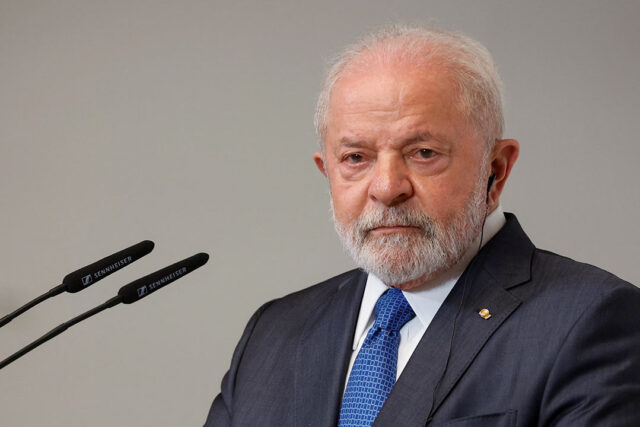
BRAZILIAN President Luiz Inacio Lula da Silva — REUTERS

 – Brazil’s President Luiz Inacio Lula da Silva on Tuesday said his government would provide 30 billion reais ($5.55 billion) in credit as part of a plan to support companies that export goods and are affected by steeper tariffs imposed from Washington.

In an interview with local news outlet BandNews, Mr. Lula said this was an initial amount to help the exporters, adding the package will also include support through government purchases.

The government is set to announce on Wednesday the highly anticipated plan at an event 11:30 a.m. (1430 GMT) in the capital Brasilia, according to the office of Lula’s chief of staff.

Reuters had reported last week, citing sources, that Brazil’s government was mulling shifting some 30 billion reais from a fund managed by state development bank BNDES to support local firms hit the tariffs.

The U.S. hiked the levies imposed on the imports of Brazilian goods to 50% from 10% earlier this month, although products including orange juice and aircraft were exempted from the increase. – Reuters

Israel bombards Gaza City; Hamas leader visits Cairo in bid to salvage ceasefire talks

WIKIMEDIA.ORG

 – Israeli planes and tanks kept bombarding eastern areas of Gaza City overnight, killing at least 11 people, witnesses and medics said on Tuesday, with Hamas leader Khalil Al-Hayya arriving in Cairo for talks to revive a U.S.-backed ceasefire plan.

The latest round of indirect talks in Qatar ended in deadlock in late July with Israel and Palestinian militant group Hamas trading blame over the lack of progress on a U.S. proposal for a 60-day truce and hostage release deal.

Israel has since said it will launch a new offensive and seize control of Gaza City, which it captured shortly after the war’s outbreak in October 2023 before pulling out.

Hamas’ meetings with Egyptian officials, scheduled to begin on Wednesday, will focus on ways to stop the war, deliver aid, and “end the suffering of our people in Gaza,” Hamas official Taher al-Nono said in a statement.

Israeli Prime Minister Benjamin Netanyahu’s plan to expand military control over Gaza, expected to be launched in October, has increased a global outcry over the widespread devastation, displacement and hunger afflicting Gaza’s 2.2 million people.

It has also stirred criticism in Israel, with the military chief of staff warning it could endanger surviving hostages and prove a death trap for Israeli soldiers. It has also raised fears of further displacement and hardship among the estimated one million Palestinians in the Gaza City region.

Foreign ministers of 24 countries including Britain, Canada, Australia, France and Japan, said on Tuesday the humanitarian crisis in Gaza had reached “unimaginable levels” and urged Israel to allow unrestricted aid into the enclave.

Israel denies responsibility for hunger in Gaza, accusing Hamas of stealing aid. It says it has taken steps to increase deliveries, including pausing fighting for parts of the day in some areas and announcing protected routes for aid convoys.


CEASEFIRE

A Palestinian official with knowledge of the mediated ceasefire talks said Hamas was prepared to return to the negotiating table, and the leaders who were visiting Cairo on Tuesday would reaffirm that stance.

“Hamas believes negotiation is the only way to end the war and is open to discuss any ideas that would secure an end to the war,” the official, who asked not to be named due to the sensitivity of the matter, told Reuters.

However, the gaps between the sides appear to remain wide on key issues, including the extent of any Israeli military withdrawal and demands for Hamas to disarm.


DISARMAMENT CONDITIONS

A Hamas official told Reuters on Tuesday the Islamist movement was ready to relinquish Gaza governance on behalf of a non-partisan committee, but it would not relinquish its arms before a Palestinian state is established.

Netanyahu, whose far-right ultranationalist coalition allies want an outright Israeli takeover of all of Gaza, has vowed the war will not end until Hamas is eradicated.

On Tuesday, Gaza’s health ministry said that 89 Palestinians had been killed by Israeli fire in the past 24 hours.

Witnesses and medics said Israeli bombardments overnight killed seven people in two houses in Gaza City’s Zeitoun suburb and another four in an apartment building in the city center.

In the south of Gaza, five people, including a couple and their child, were killed by an Israeli airstrike on a house in the city of Khan Younis and four others by a strike on a tent encampment in nearby coastal Mawasi, medics said.

The Israeli military said it was looking into the reports of the latest bombardments and that its forces take precautions to mitigate civilian harm. Separately, it said its forces had killed dozens of militants in north Gaza over the past month and destroyed more tunnels used by militants in the area.


MORE DEATHS FROM STARVATION, MALNUTRITION

Five more people, including two children, have died of starvation and malnutrition in Gaza in the past 24 hours, the territory’s health ministry said. The new deaths raised the number of deaths from the same causes to 227, including 103 children, since the war started, it added.

Israel disputes the malnutrition fatality figures reported by the health ministry in the Hamas-run enclave.

The war began on October 7, 2023, when Hamas-led militants stormed into southern Israel, killing 1,200 people and taking 251 hostages, according to Israeli figures.

Israel’s offensive against Hamas in Gaza since then has killed more than 61,000 Palestinians, according to local health officials. – Reuters

White House to lead review of some Smithsonian museums

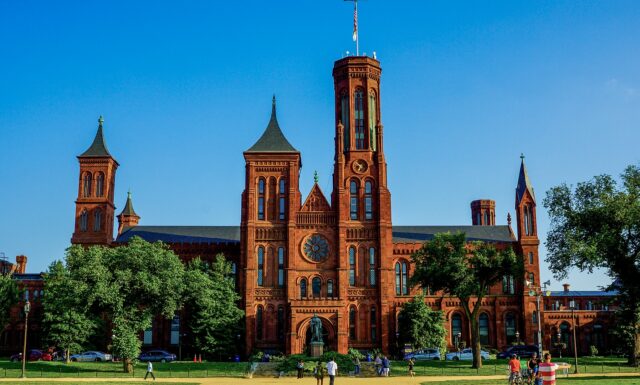
FILE PHOTO | By Nate Lee - Own work, CC BY-SA 4.0, https://commons.wikimedia.org/w/index.php?curid=51779781

The White House said on Tuesday it will lead an internal review of some Smithsonian museums and exhibitions ahead of the 250th anniversary of the U.S. Declaration of Independence, after President Donald Trump earlier this year accused the institution of spreading “anti-American ideology” and raised alarm among civil rights advocates.

Three top White House officials said in a letter to Smithsonian Institution Secretary Lonnie Bunch that the review aims to ensure the institution highlights “historically accurate” and “inclusive portrayals” of the country’s heritage.

“This initiative aims to ensure alignment with the President’s directive to celebrate American exceptionalism, remove divisive or partisan narratives, and restore confidence in our shared cultural institutions,” the White House letter stated.

The letter referenced an executive order issued by Mr. Trump in March titled “Restoring Truth And Sanity To American History,” when the Republican president singled out the Smithsonian. He said the institution had come under the influence of a “divisive, race-centered ideology” in recent years.

The order was in line with the Trump administration’s efforts to do away with diversity and inclusion programs in government, universities and corporations. It raised concerns of political interference at the vast museum and research institution as well as fears that his administration was undoing decades of social progress and undermining the acknowledgment of critical phases of American history.

The Smithsonian Institution consists of 21 museums and galleries plus the National Zoo, according to its website.

The Smithsonian said in an emailed statement it was reviewing the letter and added it will engage “constructively” with the White House and the U.S. Congress. The institution receives most of its budget from Congress but is independent of the government in decision-making.

The White House review will assess tone and historical framing of exhibition text, websites, educational materials and digital content, with a focus on the exhibitions planned for the 250th anniversary of the Declaration of Independence, the letter stated.

The museums should begin replacing “divisive or ideologically driven language with unifying, historically accurate, and constructive descriptions” where necessary within 120 days, the letter said. – Reuters

South Korea’s former first lady imprisoned after court issues warrant

South Korea's former first lady Kim Keon Hee arrives at the special prosecutor's office in Seoul, South Korea, Aug. 6, 2025. REUTERS/Kim Hong-Ji

 – South Korea’s former first lady Kim Keon Hee has been arrested after a court late on Tuesday issued a warrant to arrest her following accusations of graft that she denies, a special prosecutor leading a wide-reaching probe said.

Ms. Kim is South Korea’s only former first lady to be arrested, joining her husband, ex-President Yoon Suk Yeol, in jail as he faces trial following his ouster in April over a botched bid to impose martial law in December.

Earlier in the day, Ms. Kim, wearing a black suit, bowed as she arrived at court, but did not answer reporters’ questions or make a statement. After the hearing ended she left to await the ruling at a detention center in Seoul, the capital, in line with customary practice.

The court issued the warrant for Ms. Kim’s detention, the special prosecutor appointed in early June said in a brief message. The prosecutor’s office did not provide further details.

The charges against her, punishable by years in prison, range from stock fraud to bribery and illegal influence peddling that have implicated business owners, religious figures and a political power broker.

She has been accused of breaking the law over an incident in which she wore a luxury Van Cleef pendant reportedly worth more than 60 million won ($43,000) while attending a NATO summit with her husband in 2022.

The item was not listed in the couple’s financial disclosure as required by law, according to the charge.

Ms. Kim is also accused of receiving two Chanel bags together valued at 20 million won and a diamond necklace from a religious group as a bribe in return for influence favorable to its business interests.

The prosecution sought Ms. Kim’s arrest because of the risk of her destroying evidence and interfering with the investigation, a spokesperson for the special prosecutor’s team told a press briefing after Tuesday’s hearing.

The court accepted the argument on the risk of destroying evidence, Yonhap news reported.

The spokesperson, Oh Jeong-hee, said Ms. Kim had told prosecutors the pendant she wore was a fake bought 20 years ago in Hong Kong.

The prosecution said it was genuine, however, and given by a domestic construction company for Ms. Kim to wear at the summit, Oh said.

Ms. Kim’s lawyers did not immediately comment on Tuesday but they have previously denied the accusations against her and dismissed as groundless speculation news reports about some of the gifts she allegedly received.

Mr. Yoon is on trial on charges of insurrection, which could result in life imprisonment or even the death penalty.

The former president, who also faces charges of abuse of power among others, has denied wrongdoing and refused to attend trial hearings or be questioned by prosecutors. – Reuters

US trade team will meet Chinese officials in two or three months, Bessent says

REUTERS

 – U.S. trade officials will meet again with their Chinese counterparts within the next two or three months to discuss the future of the economic relationship between the two countries, Treasury Secretary Scott Bessent said on Tuesday.

The comments come a day after the trading partners extended a tariff truce for another 90 days, staving off triple-digit duties on each other’s goods.

In an interview on Fox Business Network’s “Kudlow,” Mr. Bessent also said Chinese President Xi Jinping had invited Trump to a meeting, but one had not been scheduled.

“There’s no date,” Mr. Bessent said. “The president hasn’t accepted yet.”

Mr. Trump told CNBC earlier this month that the U.S. and China were getting very close to a trade agreement and he would meet Mr. Xi before the end of the year if a deal was struck.

Mr. Bessent also said on Fox Business that the U.S. will need to see “months, if not quarters, if not a year” of progress on fentanyl flows before it considers reducing tariffs on China.

Washington accuses Beijing of failing to curb the flow of precursor chemicals for fentanyl, a leading cause of U.S. overdose deaths. Beijing has defended its drug control record and accused Washington of using fentanyl to “blackmail” China.

Mr. Trump imposed 20% tariffs on Chinese imports over the issue in February, and they have remained in effect despite a fragile trade truce reached by both sides in Geneva in May. An additional 10% base tariff has also been imposed on Chinese imports. – Reuters

Education sector gets over P1 trillion under proposed 2026 budget

PHILIPPINE STAR/WALTER BOLLOZOS

By Kenneth Christiane Basilio, Reporter

The Philippine government plans to allot more than P1 trillion to the education sector to meet the recommended spending benchmark by a United Nations (UN) agency, a Department of Budget and Management (DBM) document showed on Wednesday.

photo by Kenneth Christiane L. Basilio, BusinessWorld

The 2026 National Expenditure Program (NEP) proposes to allocate about P1.224-trillion for education spending, a 15% increase from P1.055-trillion from this year’s budget, according to the DBM’s budget briefer, a copy of which was obtained by BusinessWorld.

The proposed allocation covers the Department of Education, Commission on Higher Education, Technical Education and Skills Development Authority, and state universities.

“This notably meets the recommended education spending of the UNESCO (United Nations Educational, Scientific and Cultural Organization) Education 2030 Framework for Action of allocating 4.0 to 6.0% of GDP (Gross Domestic Product),” the document stated.

“National Government education spending will likewise meet the UNESCO-recommended 15.0 to 20.0% of total public expenditure,” it added.

The Philippines allocated 3.6% of GDP to education in 2023, according to the World Bank, missing the 4-6% benchmark set by the Incheon Declaration.

Meanwhile, the Public Works department saw its budget fall by 15% to 881.3 billion, with P235.1 billion going to flood management programs.

On the other hand, the Transportation department’s proposed budget more than doubled to P197.3 billion from P87.2 billion in this year’s spending plan, as the Marcos administration pushes ahead with mass transit upgrades and flagship infrastructure projects.

Other agencies that received a sizable share of the proposed budget are the following:
Health – P320.5 billion
Defense – 299.3 billion
Interior and Local Government – P287.5 billion
Agriculture – P239.2 billion
Social Welfare – P227 billion
Judiciary – P67.9 billion
Labor and Employment – P55.2 billion.

Banks’ bad loan ratio eases in June

STOCK PHOTO | Image by iiijaoyingiii from Pixabay

By Katherine K. Chan

THE Philippine banking sector’s nonperforming loan (NPL) ratio dropped to a three-month low in June even as banks continued to expand their lending portfolios, Bangko Sentral ng Pilipinas (BSP) data showed.

Data from the BSP showed banks’ gross NPL ratio eased to 3.34% in June from 3.38% in May, and 3.51% in the same month last year.

This was the lowest NPL ratio in three months or since the 3.3% in March.

Loans are considered nonperforming once they are unpaid for at least 90 days after the due date. These are deemed as risk assets since borrowers are unlikely to pay.

The amount of nonperforming loans inched up by 0.5% to P530.29 billion in June from P527.45 billion in May. Soured loans also jumped by 5.5% year on year from P502.42 billion.

The total loan portfolio of the banking system stood at P15.88 trillion as of end-June, up by 1.69% from P15.62 trillion at end-May and up by 10.9% from P14.32 trillion a year ago.

Reinielle Matt M. Erece, an economist at Oikonomia Advisory and Research, Inc., said the impact of policy rate cuts are starting to spill over to bank lending rates.

“We have seen lower interest rates which may make it easier for borrowers to repay their obligations,” he said.

The central bank has so far lowered borrowing costs by a total of 125 basis points (bps) since it began its easing cycle in August last year. In June, the Monetary Board cut by 25 bps to bring the benchmark rate to 5.25%.

“The slight easing in the NPL ratio may reflect stable borrower repayment capacity, supported by low inflation, steady employment, and still-resilient domestic demand,” John Paolo R. Rivera, a senior research fellow at the Philippine Institute for Development Studies, said in a Viber message.

Mr. Rivera also attributed the softening ratio to universal and commercial banks’ tighter lending policies.

“However, a larger reason for the NPL easing is the significant increase in loan volume for the month which grew by about 12% year on year,” Mr. Erece said. “This caused the ratio of nonperforming loans to overall loans to decrease as the denominator increased significantly.”

Meanwhile, past due loans increased by 1.75% to P670.5 billion in June from P659 billion in May. Year on year, it went up by 9.17% from P614.17 billion.

Past due loans as of June accounted for 4.22% of the system’s total loan portfolio, unchanged from end-May but lower than the 4.29% a year ago.

Restructured loans, on the other hand, slipped by 0.44% to P312.03 billion in June from P313.39 billion in May, but rose by 6.27% from P293.62 billion in June 2024.

It took up less of the industry’s total loan portfolio at 1.96% from 2.01% in the previous month and 2.05% in the same period last year.

Banks’ loan loss reserves edged up by 1.42% to P505.91 billion in June from P498.83 billion in May and by 5.5% from P479.46 billion a year earlier.

Loan loss reserve ratio in June was unchanged from May at 3.19%, but lower than the 3.35% in the same month in 2024.

Meanwhile, lenders’ NPL coverage ratio, which gauges the allowance for potential losses due to bad loans, inched up to 95.4% from 94.57% in May. Year on year, it slipped from 95.43%.

“A policy rate cut later this month could lower borrowing costs, encourage loan growth, and help more borrowers service their debt,” Mr. Rivera said.

BSP Governor Eli M. Remolona, Jr. said a rate cut is “quite likely” at the Monetary Board’s next meeting on Aug. 28.

“However, faster credit expansion also means banks will need to manage credit risks carefully to prevent a rebound in NPLs,” Mr. Rivera said.

Mr. Erece, on the other hand, said banks’ bad loan ratio may continue to narrow in the next few months.

“Apart from the expected impacts of rate cuts, we may also expect a rise in borrowing brought by the end of the year spending,” he said.

2026 budget proposal heads to Congress for deliberation

President Ferdinand R. Marcos, Jr. receives a copy of the Fiscal Year 2026 National Expenditure Program and President’s Budget Message from Budget Secretary Amenah F. Pangandaman during a ceremonial turnover at Malacañan Palace on Aug. 12. — NOEL B. PABALATE, PHILIPPINE STAR/PPA POOL

By Kenneth Christiane L. Basilio, Reporter

LAWMAKERS should avoid compromising the proposed P6.793-trillion national budget for next year through congressional insertions, which could undermine the Philippines’ fiscal consolidation efforts and hamper growth prospects, analysts said on Tuesday.

President Ferdinand R. Marcos, Jr. on Tuesday received a copy of the 2026 National Expenditure Program (NEP) from Budget Secretary Amenah F. Pangandaman during a ceremonial turnover at Malacañan Palace.

The record P6.793-trillion spending plan for 2026 will be formally submitted to Congress today (Aug. 13). It is 7.4% higher than this year’s national budget, and is equivalent to 22% of the country’s gross domestic product (GDP).

With the theme “Agenda for Prosperity: Nurturing Future-Ready Generations to Achieve the Full Potential of the Nation,” the Palace said next year’s budget “will build on the solid foundations laid over the past three years of (Mr. Marcos’) administration.”

John Paolo R. Rivera, a senior research fellow at the Philippine Institute for Development Studies, said the 2026 budget will be pivotal in funding the Marcos administration’s priorities at the midpoint of his six-year term and is critical to keeping the reform agenda on track.

“A well-prioritized budget can spur infrastructure, social protection and job creation. But if questionable insertions divert funds from high-impact projects, they could dilute growth momentum and make fiscal targets harder to hit,” he said in a Viber message.

“Any misallocation at this point could slow the country’s trajectory and make catching up in the last two years far more difficult,” he added.

Next year’s budget is expected to face more public scrutiny after the 2025 national budget was hit with allegations of fund diversions, blank line items by the Executive and concerns over outsized public works allocations.

In his State of the Nation Address, Mr. Marcos warned Congress that he will not sign any General Appropriations Act (GAA) that is “not fully aligned” with the NEP.

“I am willing to do this even if we end up with a reenacted budget,” Mr. Marcos said.

However, Ms. Pangandaman earlier told BusinessWorld that a reenacted budget would hurt the economy and will force the government to fund projects that are not aligned with its 2026 plans.

“The 2026 budget will be pivotal because it’s the main vehicle for translating the administration’s growth and fiscal consolidation goals into concrete programs,” Mr. Rivera said.

The government is targeting 5.5-6.5% GDP growth this year, and 6-7% growth from 2026 to 2028. It also aims to bring down the debt-to-GDP ratio to 60.4% by the end of 2025, and to 56.9% by 2028.

Next year’s spending plan will also be key to how the Marcos administration navigates risks from shifting global trade dynamics, such as the US tariff policies, said Reinielle Matt M. Erece, an economist at Oikonomia Advisory and Research, Inc.

The US began to impose higher tariffs on most of its trading partners starting Aug. 7. A 19% tariff was slapped on goods from the Philippines, Indonesia, Cambodia, Malaysia and Thailand.

“The 2026 budget and how it is utilized will describe how the administration manages the economy through harsher economic conditions, especially as trade wars may continue to persist and investor sentiment may continue to be affected by it,” he said in a Viber message.

AJ A. Montesa, advisor at budget watchdog People’s Budget Coalition, said congressional insertions in the proposed national budget may redirect funds away from key administration priorities, channeling it toward lawmakers’ own interests.

“Congressional insertions represent political self-interest outweighing the public good,” he said in a Viber message.

“A single congressman doing it may be or seem harmless, but as a whole, congressional insertions can create an inefficient budget misaligned with long-term national needs,” he added.

The Marcos administration is prioritizing infrastructure, industry development, food security and climate resilience in its spending plan for next year, according to a Budget department briefer on the proposed 2026 spending plan.

The government should increase spending on health, social, education and agriculture, which are seen as “high-yield, high-multiplier and job-generating” sectors, Jose Enrique “Sonny” A. Africa, executive director at think tank IBON Foundation, said in a Viber message.

“The reorientation to more social spending immediately improves people’s lives while generating demand, creating jobs and pressing structural change,” he said.

While the national budget has grown annually, Mr. Africa noted that funding for sectors such as health and education has declined as a share of GDP, raising concerns over the government’s spending priorities.

“The fall in social spending as a share of GDP between 2024 and 2025 has to be reversed — health spending drops from 1.4% of GDP to some 1.1%, education from 4.4% to 4.3%, and social security, welfare and employment from 2% to 1.2%,” he said.

He added that more support should be extended to Philippine businesses, including subsidies, to help spur domestic industrialization. “The government needs to start on a more active domestic industrialization policy.”

“The new budget must target productivity and social well-being to keep the country in its growth path and faster economic activity,” said Mr. Erece.

Jonathan L. Ravelas, a senior adviser at Reyes Tacandong & Co., said in a Viber message, said the government must reconsider its no-new tax policy and weigh fresh revenue measures and improve revenue collections, as the proposed budget increase could exert additional fiscal pressure,

“The 7.4% increase adds fiscal pressure, especially with limited revenue levers,” he said, adding that it’s only sustainable if state spending is “laser-focused” on government priorities.

“The problem with expenditures in the past three years is that its level is as if we are still in a pandemic,” Luis F. Dumlao, an economics professor at the Ateneo de Manila University said in a Facebook chat. “It may be sustained within the next three years within this administration, but it won’t be beyond future administrations.” — with Chloe Mari A. Hufana

AI could boost Philippine economy by P1.8 trillion

Artificial intelligence technologies can potentially boost the Philippine economy by P1.8 trillion, according to a new report. — REUTERS/DADO RUVIC/ILLUSTRATION

By Beatriz Marie D. Cruz, Reporter

ARTIFICIAL INTELLIGENCE (AI) technologies can potentially boost the Philippine economy by P1.8 trillion (around $31 billion), as Filipinos increasingly use AI for work and upskilling, according to a report by Google Philippines and consulting firm Public First.

If realized, this would result in a 7% increase in gross value added (GVA), and can possibly “lift our overall global standing,” Google and Public First said in its 2025 Economic Opportunity Report.

“With this new technology, it’s as if we’re adding a new growth engine, a new industry to the Philippines,” Gabriel Roxas, country marketing manager at Google Philippines and Vietnam, said at a news briefing on Tuesday.

The skills gained from AI can boost an average worker’s productivity by P110,000 a year (about $2,000), according to the report.

Today’s AI technologies could potentially augment around 37% of workers, it added.

It could also save the average worker around three hours worth of administrative tasks in a week, freeing up their time for more productive and high-value chores, it said.

This would also boost workers’ wages by over 6%, according to the report.

To unlock the economic benefits of AI, companies must develop new workflows and invest in the necessary infrastructure to accelerate AI adoption in their operations, Mr. Roxas said.

“What’s even more significant is when artificial intelligence unlocks different kinds of services, products or businesses that aren’t even within the scope of what they’re currently doing, which is actually likely possible, because these are new frontiers or revenue streams that won’t be possible without the technology available,” he added.

AI should also be ingrained in accelerating economic development and growth, which would help accelerate scientific innovation and boost workers’ skills overall, he added.

Across the Philippines, AI adoption has been growing at a fast pace, driven by its young and mobile-first population.

In its report, Google and Public First noted that AI adoption is higher among the younger workforce, which bodes well for the Philippines as it has a median age of 26.

“We saw higher adoption rates among the younger workforce. So, that bodes well for us because these are people who are leaning into new technologies and eager to try it out,” Mr. Roxas said.

“We’ve gotten used to using smartphones, these devices for everyday productivity tasks,” he added. “All the more that it’s going to be easier to access artificial intelligence solutions on our mobile devices.”

AI can also boost productivity across traditional and emerging sectors, he said.

In particular, AI can help boost the growth of the wholesale and retail industry by P410 billion (about $7.2 billion), which is equivalent to a 9% increase in GVA.

Wholesale and retail companies could use AI to improve their advertising, and quickly respond to consumer queries and requests, Mr. Roxas said.

“Of course, and maybe this is what we can encourage our Filipino businesses to do, is that AI can open up new markets for you to export to, especially the markets where they have a different language,” Mr. Roxas said.

The financial and insurance sector can also grow by P300 billion (around $5.2 billion), increasing its GVA by 12%, if it adopts AI to create better product solutions and detect cases of fraud.

The report noted that AI can increase the GVA of the public administration and defense sector by 9%, reaping economic benefits of about P109 billion (around $1.9 billion).

“AI can streamline a lot of frontline services as well, in terms of actually optimizing procurement, identifying bottlenecks, and catching fraud. But ultimately, the end vision here is for governments to actually personalize how they interact and solve the problems of each citizen,” Mr. Roxas noted.

Greater digital access can increase the overall economic impact of AI in the Philippines by P37 billion, Google and Public First said, citing the importance of smartphones, connectivity, and digital infrastructure in achieving this.

AI can also address some of the country’s pressing issues, namely, cyberthreats and fraud, agriculture, and public sector challenges, Google and Public First said.

According to the report, AI-driven solutions can reduce about half of the costs (about P180 billion) arising from cybersecurity threats and fraud.

By 2035, AI could also boost the productivity of the Philippines’ agriculture sector by about P120 billion through satellite imagery, weather forecasts, and farm sensors.

Lastly, AI tools can increase the efficiency of the public sector by 5% by streamlining repetitive tasks, the report said.

“With artificial intelligence, you can automate highly repetitive tasks, so that the manpower of the government can focus on much more pressing issues,” Mr. Roxas noted.

The report, which included a survey of over 1,084 online adults based in the Philippines, said that 50% of respondents are using AI weekly in their personal lives.     

It also noted that 76% of Filipino respondents said that they’re already using AI for work or intend to do so in the next 12 months.

“This tells us that it’s actually quite mainstream to leverage artificial intelligence,” Mr. Roxas said.

The Google and Public First survey noted that 87% of Filipinos have shown interest in using AI to learn a new skill.

This means they see AI as a partner or tutor that will help them make the most out of the available technologies, Mr. Roxas said.

About 88% of Filipinos are willing to engage in skills training to better take advantage of the benefits of AI, the report said.

With this, businesses and employees must meet halfway to find better ways to learn AI at a quicker pace, according to Mr. Roxas.

“What’s most important is for us is to come together as an ecosystem and as a community to drive education and learning. Because it’s not just about learning a technology, it’s about economic growth,” he said.