Home Blog Page 1115

Dior appoints Jonathan Anderson as design chief for women’s wear and haute couture

PARIS — Dior is appointing its menswear designer Jonathan Anderson to also head womenswear designs and haute couture, replacing Maria Grazia Chiuri and widening his role as it seeks to reignite sales, the LVMH-owned label said on Monday.

“Jonathan Anderson is one of the greatest creative talents of his generation. Its unique artistic signature will be a key asset for writing the next chapter of the Dior house’s history,” LVMH CEO Bernard Arnault said in a statement.

The French fashion house named Anderson, 40, in April as head of menswear designs, recruiting him from smaller LVMH label Loewe.

The award-winning Irish designer generated buzz around Loewe over the decade he spent at the Spanish label, thanks to quirky designs that caught the attention — and praise — of fashion critics.

Signature styles under his tenure include baggy, barrel-legged jeans priced at €800 ($909.92) and the compact Puzzle handbag, which sells for around €3,000.

Mr. Anderson, whose departure from Loewe was announced in March, is one of several new high profile designers taking over some of the world’s biggest fashion labels amid a wide-sweeping industry overhaul, including Chanel and Gucci.

The sector is struggling to pull out of a prolonged slump, weighed down by China’s property crisis and economic uncertainty in the United States.

Top luxury houses are betting on new design direction to help rekindle interest from shoppers, who have pulled back on fashion as prices rise.

In his new role, Mr. Anderson succeeds Ms. Chiuri, 61, who was recruited in 2016. The first female creative director at the label, Ms. Chiuri relayed feminist messages and showcased artwork at her runway shows, which featured modern renditions of house classics, including Dior’s famous, nipped-waist bar jackets, adding fluidity and sometimes a sporty flair to feminine gowns. — Reuters

Manila Water invests P158.16 million in facility upgrades

MANILA WATER CO., INC.

MANILA WATER CO., Inc., the east zone water concessionaire, said it has invested P158.16 million to enhance lightning and surge protection systems at eight of its key facilities.

“This investment is a proactive measure to safeguard our facilities, our personnel, and the communities we serve,” Jeric T. Sevilla, director for corporate communications affairs at Manila Water, said in a media release on Tuesday.

“By enhancing the resilience of our pumping stations, we are ensuring the continuity of water service even in the face of extreme weather events and electrical disturbances,” he added.

The facilities covered by the upgrade include the Cubao Pumping Station; Balara Pumping Stations 1 and 2; Maybunga Pumping Station; N. Domingo Pumping Stations 1 and 2; Pasig Pumping Station; and San Juan Pumping Station 1.

“These facilities are being equipped with advanced protection systems designed to mitigate the risks posed by lightning strikes and electrical surges,” Manila Water said.

The project includes the installation of a static-dissipating air terminal lightning protection system, which is intended to intercept and safely redirect lightning strikes away from critical infrastructure to minimize potential damage.

It also involves upgraded grounding systems that help safely dissipate electrical currents into the ground, significantly reducing the risk of equipment damage and operational disruptions.

“The upgraded systems will not only improve safety and reduce hazards but also extend the lifespan of critical assets, resulting in long-term cost savings and improved regulatory compliance,” the company said.

Manila Water serves the east zone of Metro Manila, covering parts of Marikina, Pasig, Makati, Taguig, Pateros, Mandaluyong, San Juan, portions of Quezon City and Manila, and several towns in Rizal province. — Sheldeen Joy Talavera

National Government outstanding debt

THE NATIONAL GOVERNMENT’S (NG) outstanding debt rose to a record P16.75 trillion in the first four months amid a modest uptick from March that was tempered by a strong peso, according to the Bureau of the Treasury (BTr). Read the full story.

National Government outstanding debt

Interim measures of protection in aid of arbitration

STOCK PHOTO | Image from Freepik

The preference for arbitration and other alternative dispute resolution (ADR) methods — such as mediation, negotiation, and conciliation — over litigation is well-established (Stemship Mutual Underwriting Association (Bermuda) Limited v. Sulpicio Lines, Inc., G.R. No. 196027, Sept. 20, 2017).

Republic Act No. 9285, otherwise known as the “Alternative Dispute Resolution Act of 2004” (ADR Act), declares the policy that the “State shall encourage and actively promote the use of ADR as an important means to achieve speedy and impartial justice and declog court dockets.” Similarly, A.M. No. 07-11-08-SC or the “Special Rules of Court on Alternative Dispute Resolution” affirms the State’s commitment “to actively promote the use of various modes of ADR and to respect party autonomy or the freedom of the parties to make their own arrangements in the resolution of disputes with the greatest cooperation of and the least intervention from the courts.”

Arbitration agreements embody the contractual commitment of parties to submit to arbitration the disputes covered therein (Cagayan de Oro City Water District v. Hon. Pasal, G.R. No. 202305, Nov. 11, 2021). Hence, as the Supreme Court elucidated in Fruehauf Electronics Philippines Corp. v. Technology Electronics Assembly and Management Pacific Corp. (G.R. No. 204197, Nov. 23, 2016), “arbitration is a purely private mode of dispute resolution… As a private alternative to court proceedings, arbitration is meant to be an end, not the beginning, of litigation.”

Yet, even with arbitration proceedings taking place outside the courtroom, the Supreme Court, in Transfield Philippines, Inc. v. Luzon Hydro Corp. (G.R. No. 146717, May 19, 2006), affirms that “the pendency of arbitral proceedings does not foreclose resort to the courts for provisional reliefs.”

Section 14 of Republic Act No. 876, otherwise known as the Arbitration Law, which generally governs domestic arbitration, recognizes the rights of any party to petition the court “to take measures to safeguard and/or conserve any matter which is the subject of the dispute in arbitration.”

Furthermore, Section 28 of the ADR Act of 2004 specifically provides that it is not incompatible with an arbitration agreement for a party to request from a Court an interim measure of protection and for the Court to grant such a measure. This applies to both international commercial arbitration and domestic arbitration (Rep. Act No. 9285, Sec. 33). Thus, any party may request that provisional relief be granted against the adverse party (i) to prevent irreparable loss or injury; (ii) to provide security for the performance of any obligation; (iii) to produce or preserve any evidence; or (iv) to compel any other appropriate act or omission (Rep. Act No. 9285, Sec. 28).

Article 17(2) of the UNCITRAL Model Law on International Commercial Arbitration, which governs international commercial arbitration, provides that an interim measure of protection is a temporary measure issued to order a party to: a.) maintain or restore the status quo pending determination of the dispute; b.) take action that would prevent, or refrain from taking action that is likely to cause current or imminent harm or prejudice to the arbitral process itself; c.) provide a means of preserving assets out of which a subsequent award may be satisfied; or d.) preserve evidence that may be relevant and material to the resolution of the dispute.

The procedure for a petition seeking an interim measure of protection from the court is outlined in Rule 5 of the Special ADR Rules. Such a petition may be made, a.) before arbitration is commenced, b.) after arbitration is commenced, but before the constitution of the arbitral tribunal, or c.) after the constitution of the arbitral tribunal and at any time during arbitral proceedings but, at this stage, only to the extent that the arbitral tribunal has no power to act or is unable to act effectively (Special ADR Rules, Rule 5.2.).

Interim measures of protection include, but are not limited to, the following: a.) preliminary injunction directed against a party to arbitration; b.) preliminary attachment against property or garnishment of funds in the custody of a bank or a third person; c.) appointment of a receiver; d.) detention, preservation, delivery or inspection of property; or, e.) assistance in the enforcement of an interim measure of protection granted by the arbitral tribunal, which the latter cannot enforce effectively (Special ADR Rules, Rule 5.6.).

Despite the availability of these court remedies during or even before arbitration proceedings, several provisions of the Special ADR Rules on interim measures of protection still reinforce the overarching policy favoring arbitration and other modes of ADR over court action. Thus, while any party to an arbitration may request the court’s assistance in implementing or enforcing an interim measure ordered by the arbitral tribunal, the court will only provide such assistance when the tribunal itself cannot effectively enforce it (Special ADR Rules, Rules 5.6(e) and 5.16).

Moreover, any question involving a conflict or inconsistency between an interim measure of protection issued by the court and that by the arbitral tribunal shall be immediately referred by the court to the arbitral tribunal, which shall have the authority to decide such question (Special ADR Rules, Rule 5.14).

A court order granting or denying an application for interim measure of protection must also indicate that it is issued without prejudice to the subsequent grant, modification, amendment, revision or revocation by an arbitral tribunal (Special ADR Rules, Rule 5.9). Hence, if the arbitral tribunal issues its own interim measure of protection, any prior court order that is inconsistent with the subsequent order issued by the arbitral tribunal is ipso jure modified, amended, revised, or revoked to the extent of the inconsistency (Special ADR Rules, Rule 5.13).

In addition, if the petition for the issuance of an interim measure of protection was filed prior to the constitution of an arbitral tribunal, the court shall defer the action on the pending petition upon being informed that an arbitral tribunal has already been constituted. Again, the court may act upon such a petition only if it is established by the petitioner that the arbitral tribunal has no power to act on any such interim measure of protection or is unable to act thereon effectively (Special ADR Rules, Rule 5.15).

The need to seek interim measures of protection from the courts before or during arbitration is underscored by the fact that an arbitral tribunal is merely a contractual and consensual body. Unlike courts, it does not possess inherent powers over the parties and cannot issue coercive writs or compulsory processes (Fruehauf Electronics Philippines Corp. v. Technology Electronics Assembly and Management Pacific Corp., G.R. No. 204197, Nov. 23, 2016). Therefore, the mechanisms allowing parties to seek interim relief from the courts, whether during or before arbitration, are designed not to circumvent arbitration agreements or undermine the proceedings. Rather, consistent with the State’s policy favoring arbitration and other modes of ADR, these mechanisms serve to support or facilitate the arbitration process, acknowledging some of the inherent limitations of an arbitral tribunal.

(The views and opinions expressed in this article are those of the author. This article is for general informational and educational purposes only and not offered as and does not constitute legal advice or legal opinion.)


Khurshid C. Kalabud, Jr. is an associate of the Angara Abello Concepcion Regala & Cruz Law Offices (ACCRALAW), Davao Branch. (6382) 224-0996

kckalabudjr@accralaw.com

How PSEi member stocks performed — June 3, 2025

Here’s a quick glance at how PSEi stocks fared on Tuesday, June 3, 2025.


Winning GEA-3 bidders to be revealed next week

BW FILE PHOTO

WINNING BIDDERS of the third round of green energy auction (GEA-3), which attracted over 7,500 megawatts (MW) worth of bids, are set to be announced next week, the Department of Energy (DoE) said.

“Hopefully, by Monday,” Energy Secretary Rowena Cristina L. Guevara said on the sidelines of the ADB Asia Clean Energy Forum on Tuesday.

Ms. Guevara did not disclose the number of winning bidders.

In February, the DoE announced that GEA-3 exceeded the auction goal of 4,650 MW after receiving offers totaling 6,950 MW for pumped storage hydropower projects and 550 MW for impounding hydro projects.

Meanwhile, geothermal attracted bids for 30.887 MW, well below the 100 MW target.

Overall, the auction round received offers for 14 projects, with delivery periods of between 2025 and 2035.

The GEA program promotes renewable energy (RE) as a primary source of energy, with bidders undergoing competitive selection. The government is hoping to increase the share of RE in the power mix to 35% by 2030 and to 50% by 2040.

“The GEA underscores the department’s commitment to creating a fair and competitive environment for RE development, ensuring transparency, innovation, and deployment of cost-effective RE technologies across the country,” the DoE said.

This year, the government is staging two more auctions focusing on integrated renewable energy and energy storage systems and offshore wind power. — Sheldeen Joy Talavera

Lazada investing P2 billion to grow in Mindanao

Lazada Philippines Chief Executive Officer Carlos Barrera

By Justine Irish D. Tabile, Reporter

E-COMMERCE platform Lazada Philippines plans to invest at least P2 billion to expand its footprint in Mindanao, with the goal of making goods cheaper for consumers and enabling inclusive digital growth.

“Lazada has been steadily investing in the region over the years. We continue to build our logistics capabilities, drive new buyer engagement, and support local sellers as they establish and grow their businesses online,” Lazada Philippines Chief Executive Officer Carlos Barrera said on Monday.

“Looking ahead, we see strong potential in the region and are exploring the possibility of investing over PHP 2 to 3 billion over the next few years. Any such investment will be guided by market performance and aligned with our strategic roadmap,” he added.

He said that Mindanao has the lowest e-commerce penetration, which is in the single digits.

“When we look at opportunity, it is not so much about what it accounts for today, but we believe that over time it should be a sizable portion of our business at 20-25%,” he said.

“We are investing today to build that future growth and to help bridge that e-commerce development gap,” he added.

He said the investment will be geared towards making buying online cheaper in the region through promotions and vouchers.

“Historically, the cost of delivering items to Mindanao was the highest in the country. So, we have been investing a lot, and we have been able to lower the cost of shipping by more than P40 per order,” he said.

“That’s one of the big investments, and we’re also investing more in online marketing and installation campaigns, trying to get more of the users to test out e-commerce,” he added.

Meanwhile, a portion of the investment will help sellers in Mindanao gain more traction and reduce their cost of doing business.

“We set up an office, we have dedicated account managers, a dedicated team there, and we are incubating a lot of sellers. So we give them different packages to help them grow,” he said.

“We have onboarded more than 500 sellers over the past few months, and we’re also investing a lot to help them grow. So, for example, what we will do is co-funded vouchers and commission waivers,” he added.

Lazada will also be investing in logistics and financing in Mindanao.

“We are opening more hubs. We are growing our own logistics ecosystem there. We are also helping with financing options; together with our partners, we are giving more buy now, pay later options for the users in the area and even seller financing,” Mr. Barrera said.

The company also identified the Philippines as among the targets for a $100-million investment in the creator economy.

Asked how much will be allocated for the Philippines, he said that “it will depend on the performance of the influencers. So we earmark an amount, and then we spend based on performance.”

“The Philippines is one of the biggest countries for influencers,” he said. “We have very strong beauty bloggers, so the Philippines will probably be one of the top two countries in terms of influencers.”

The other leading countries are Thailand and Indonesia, he said.

On Monday, Lazada announced its mid-year sale, known as the “6.6 Super Wow Sale,” during which shoppers can tap vouchers for up to P2,000 off and LazFlash deals of up to 90% off between June 5 and 8.

“Beyond the discounts, Lazada is redefining online shopping through AI-powered experiences and our Authenticity Guarantee, delivering the best prices on quality assortment and a more personalized shopping experience through tools like LazzieChat,” according to Mishie de la Cruz, commercial director for electronics at Lazada Philippines.

“Shoppers can also look forward to a worry-free experience this 6.6, with Lazada’s easy and convenient returns process, including the Change of Mind option that’s available for most product categories,” Joey Bienvenida, commercial director for fashion at Lazada Philippines, said.

May spot power prices decline 11.2% vs April

BW FILE PHOTO

POWER prices on the Wholesale Electricity Spot Market (WESM) fell in May as supply growth outpaced that of demand, the Independent Electricity Market Operator of the Philippines (IEMOP) said. 

IEMOP reported that WESM rates system-wide declined 11.2% month on month in May to P4.01 per kilowatt-hour (kWh).

Between April 26 and May 25, the available supply increased 4.1% to 22,218 megawatts (MW). Demand rose 2.9% to 15,169 MW.

“This supply-demand level resulted in an increased margin of 4,945 MW, up from 4,585 MW in April 2025,” Arjon B. Valencia, manager for corporate planning and communication at IEMOP, said via Viber.

For Luzon, spot prices dipped 7.9% month on month to P4.23 per kWh, with supply rising 4.1% to 15,620 MW while demand grew 3.6% to 10,993 MW.

WESM rates in the Visayas surged 17.9% month on month to P3.71 per kWh as supply rose 4% to 2,664 MW. Demand grew 3.5% to 2,078 MW.

Spot power prices in Mindanao slipped 24.3% month on month to P3.11 per kWh. During the period, the available supply rose 4% to 3,934 MW. Demand, on the other hand, decreased 0.9% to 2,098 MW.

Coal remained the top power generation source on the WESM, accounting for 59.9%, Mr. Valencia said. This is followed by renewable energy (22%) and natural gas (17%).

IEMOP operates the WESM, where energy companies can buy power when their long-term contracted power supply is insufficient for customer needs. — Sheldeen Joy Talavera

Geothermal de-risking project may tap $100M

Geothermal - Unified Leyte Power Plants

THE PHILIPPINES is looking to access an initial $100 million for the first tranche of the Geothermal Resource De-Risking Facility managed by the Asian Development Bank (ADB), the Department of Energy (DoE) said.

The loan is worth $250 million overall, to be drawn down in two or three tranches.

“It’s possible that our first tranche is $100 million. That’s what we’re looking at. We want to make sure that the private sector can absorb the facility offering,” Energy Undersecretary Rowena Cristina L. Guevara told reporters on the sidelines of the ADB Asia Clean Energy Forum on Tuesday.

According to the ADB website, the project will be funded by $190 million from ADB’s ordinary capital resources and $60 million from Association of Southeast Asian Nations Catalytic Green Finance concessional funds.

The project seeks to address the risks faced by prospective geothermal power investors.

Ms. Guevara said the preparation of the geothermal de-risking facility is in the “final stages and we hope that next year it will be in place with the Land Bank of the Philippines (LANDBANK).”

The DoE is in talks with the state-run bank to be the possible facility manager.

Energy Assistant Secretary Mylene C. Capongcol said the project awaits the approval of the Investment Coordination Committee of the Department of Economy, Planning, and Development.

As of 2023, the Philippines had installed geothermal energy capacity of 1,952 megawatts (MW), making it the third-biggest geothermal producer behind Indonesia and the US.

In February, the third green energy auction, which covers geothermal, attracted bids for 30.887 MW, well below the 100 MW target. — Aubrey Rose A. Inosante

DSWD to receive 490,000 sacks of rice from NFA

CAR.DSWD.GOV.PH

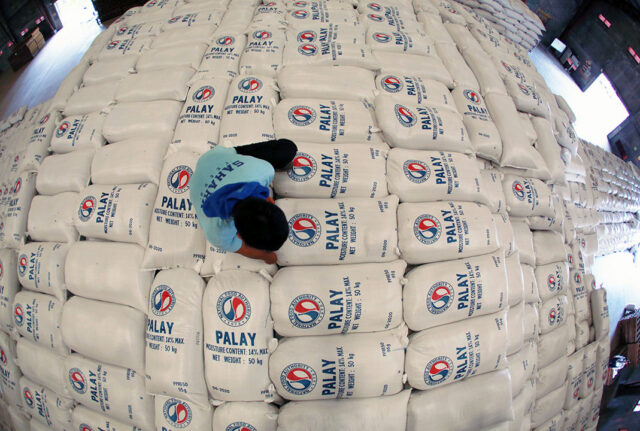
THE Department of Agriculture (DA) said on Tuesday it will supply the Department of Social Welfare and Development (DSWD) with 490,000 sacks of rice for its feeding program and relief operations.

The rice will be provided to the DSWD between June and December, the DA said in a statement.

It said the drawdowns from the National Food Authority (NFA) will allow the grains agency to buy more palay (unmilled rice) from farmers.

“This clears space in our warehouses and allows us to buy more palay at fair prices,” it said.

Social Welfare Secretary Rexlon T. Gatchalian said his agency requires 35,000 sacks of rice monthly to keep its repacking hubs in Pasay and Cebu operational.

NFA stocks currently exceed 8 million sacks — “pushing storage to near capacity,” the DA said.

The DA recently expanded its P20-per-kilo rice program to include minimum-wage earners as beneficiaries.

The DSWD on Monday said it has integrated the initiative into its food stamp program and was in the process of compiling the list of approved retailers such as Kadiwa outlets and small agricultural cooperatives. — Kyle Aristophere T. Atienza

PHL rice inventory rises 1.3% month on month in early June

PHILIPPINE STAR/MIGUEL DE GUZMAN

THE national rice inventory rose 1.3% month on month to 2.37 million metric tons (MMT) as of June 1, as the government built up its grain holdings.

Year on year, inventory rose 14.2%.

As of June 1, 49.4% of the rice stocks was held by households, 33.9% by the commercial sector, and 16.8% by the National Food Authority (NFA).

Month on month, rice stocks held by the NFA rose by 14.7%. Rice held by the commercial sector fell 2.1%, and by households fell 0.3%.

Stocks held by NFA warehouses and the commercial sector rose 472.8% and 35.5% year on year, respectively, it added. Household stocks fell 29.7%.

The NFA’s reserves hit 400,000 metric tons as of May 31.

Department of Agriculture spokesman Arnel V. de Mesa has said that the inventory levels in December were “enough until the harvest.”

Supply is considered “sufficient” to bridge the lean months between mid-July and mid-August, he added. — Kyle Aristophere T. Atienza

PHL wholesale price growth accelerates to 4%

PHILIPPINE STAR/MICHAEL VARCAS

GROWTH in wholesale prices accelerated to a 16-month high of 4% in April, the Philippine Statistics Authority (PSA) said in a report.

Citing preliminary data, the PSA said the general wholesale price index (GWPI) accelerated from 2.6% a year earlier and 3.6% in March.

The April reading was the strongest in 16 months, or since the 4.3% posted in December 2023.

In the four months to April, GWPI growth averaged 3.3%, against 2.9% a year earlier.

“The pickup in prices can reflect the sustained pickup in economic activity with a particular increase in crude materials cost outside fuels. Fuel costs are likely keeping a lid on overall GWPI growth,” Nicholas Antonio T. Mapa, a senior economist at the Metropolitan Bank & Trust Co., said via e-mail.

He added that the GWPI reading for the Visayas reflects modest gains in food prices as food production in 2025 improved compared to last year’s El Niño-affected output.

The PSA said the uptrend was driven by growth in the index of chemicals, including animal and vegetable oils and fats, which accelerated to 15.3% in April from 12.4% in March.

Also accelerating were sub-indices for crude materials, inedible except fuels (94.6% from 77.9%), beverages and tobacco (3.7% from 3.4%), machinery and transport equipment (1.4% from 1.3%), and miscellaneous manufactured articles (0.1% from 0%).

Prices for food (2.9%) and manufactured goods classified chiefly by materials (1.3%) were steady year on year in April.

Meanwhile, mineral fuels, lubricants, and related materials prices declined 4.2%, steeper than the 1.9% dip recorded in March.

Luzon wholesale price growth outpaced the national GWPI, accelerating 4.3% from the 3.9% logged in March, the strongest reading since the 4.4% posted in October 2023.

Wholesale price growth in the Visayas slowed to 0.7% from 0.8% a month earlier, the weakest reading since the 0.4% booked  in September 2021.

The Mindanao GWPI picked up to 1.1%, from 0.8% in March, the strongest reading since the 1.2% posted in October 2024. — John Phoebus G. Villanueva