Home Blog Page 109

Crazy Carabao launches resto-pub experience in Laguna

The Crazy Carabao Restaurant offers a tasty menu right beside a beer brewery in Sta. Rosa, Laguna.— EDG ADRIAN A. EVA

Filipino craft beer brand Crazy Carabao Brewing Co. on Wednesday opened a restaurant integrated right beside its brewery in Sta. Rosa, Laguna, offering guests a dining experience while witnessing the craftsmanship behind its beers.

Christopher James Payne, president of Crazy Carabao, told BusinessWorld that the resto-brewery is the first of its kind for the company. Initially, the space was just a hangout area within the 762-square-meter brewery.

“Eventually we thought, why not go all in and make it a proper restaurant where people could come regularly? And that’s how we started,” Mr. Payne said during the Crazy Carabao brewery media lunch and tour.

Located at Daystar Industrial Park, the brewery now features two resto-pubs: Captain Crust, serving pizzas and comfort foods, and Crazy Carabao Restaurant, which offers mains such as kebabs, garlic beef salpicao, baby back ribs, and steaks.

Crazy Carabao said its food offerings are best enjoyed alongside its lineup of five craft beers, all of which can be sampled at the brewery.

Guests can sip a Pilsner, perfect for those who prefer a light and refreshing brew, or a Pale Ale, known for its smooth and balanced taste.

For something crisp and fruity, there’s the Golden Ale, while the Indian Pale Ale provides a bold, aromatic kick for adventurous palates.

Casual drinkers may prefer the Apple Cider, light with a semi-sweet finish, or the Piña Colada, distinct for its sweet, tropical flavor.

A personal favorite is the combination of the Piña Colada’s sweetness with the savory taste of garlic beef salpicao.

The restaurant is already open to the public and can accommodate up to 30 guests. It can also host sports watch parties and live music events, Mr. Payne said.
A tour package to the brewery, which includes food and drinks at the resto-pubs, will also be offered soon.

BusinessWorld had a chance to see the stringent process behind the creation of Crazy Carabao’s craft beers. Upon entering, visitors are greeted by a spacious, spotless production area dominated by large, impressive machinery.

From the machines that handle the mashing and lautering of grains to the filling of bottles and final packaging, every step of the brewing process is on full display.

Crazy Carabao said the brewery can produce 400 cases, or around 9,600 bottles, per day.

While already open to the public, developments in the new restaurant are still ongoing to better reflect Crazy Carabao’s branding — adventurous and unconventional, Mr. Payne said.

“What we wanted to accomplish is that when you come into the space, your first impression is, ‘Okay, these guys are not playing around,’” he said.

Looking ahead, Mr. Payne said the company plans to open resto-pubs with smaller versions of the brewery in key locations, such as Makati City and Bonifacio Global City (BGC) in Taguig.

The company also plans to offer distinct beer variants depending on the region.

“It is an exciting direction if we want to really introduce Crazy Carabao nationwide,” he said.

Mr. Payne also said the brand plans to leverage its craft beers, particularly the easy-to-drink varieties, to attract the younger market, which he noted tend to drink less alcohol and are more health-conscious. — Edg Adrian A. Eva

Joint statement on Strait of Hormuz by European nations, Japan, Canada

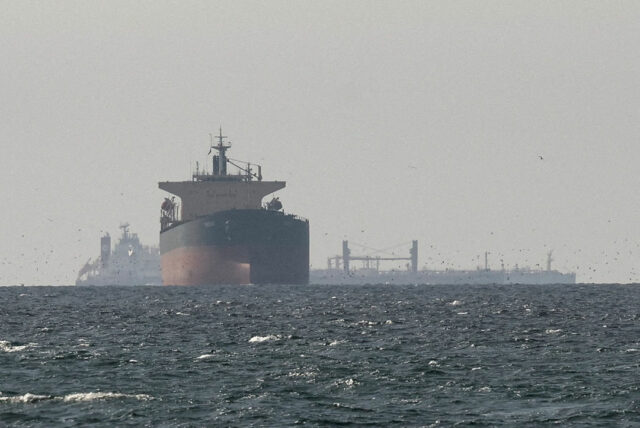
Tankers sail in the Gulf, near the Strait of Hormuz, as seen from northern Ras al-Khaimah, near the border with Oman’s Musandam governance, amid the US-Israeli conflict with Iran, in United Arab Emirates, March 11, 2026. — REUTERS

LONDON —- Leading European nations, Japan, and Canada issued a joint statement on Thursday saying they were ready to join appropriate efforts to ensure safe passage through the Strait of Hormuz and would take steps to stabilize energy markets.

This is the full text of the statement from Britain, France, Germany, Italy, the Netherlands, Japan, and Canada:

We condemn in the strongest terms recent attacks by Iran on unarmed commercial vessels in the Gulf, attacks on civilian infrastructure including oil and gas installations, and the de facto closure of the Strait of Hormuz by Iranian forces.

We express our deep concern about the escalating conflict. We call on Iran to cease immediately its threats, laying of mines, drone and missile attacks and other attempts to block the Strait to commercial shipping, and to comply with UN Security Council Resolution 2817.

Freedom of navigation is a fundamental principle of international law, including under the United Nations Convention on the Law of the Sea.

The effects of Iran’s actions will be felt by people in all parts of the world, especially the most vulnerable.

Consistent with UNSC Resolution 2817, we emphasize that such interference with international shipping and the disruption of global energy supply chains constitute a threat to international peace and security. In this regard, we call for an immediate comprehensive moratorium on attacks on civilian infrastructure, including oil and gas installations.

We express our readiness to contribute to appropriate efforts to ensure safe passage through the Strait. We welcome the commitment of nations who are engaging in preparatory planning.

We welcome the International Energy Agency decision to authorise a coordinated release of strategic petroleum reserves. We will take other steps to stabilise energy markets, including working with certain producing nations to increase output.

We will also work to provide support for the most affected nations, including through the United Nations and the IFIs (International Financial Institutions).

Maritime security and freedom of navigation benefit all countries. We call on all states to respect international law and uphold the fundamental principles of international prosperity and security. — Reuters

Solaire Resort Entertainment City lights the aisle this May 2026

Photo shows (L-R) Rycel Engalla, director of Hotel Sales & Marketing; David Batchelor, SVP of Resort Operations; and Marimil Ermita, VP Hotel Operations, at the launch of “Light the Aisle,” Solaire Resort Entertainment City’s first bridal fair happening on May 9-10, 2026.

Its inaugural bridal showcase sets the stage for the Philippines’ most distinguished wedding planners, designers and visionaries to bring dream weddings to life.

Every wedding is a new beginning.

For some, it marks the start of life together. For others, it becomes a celebration of a love story that has already stood the test of time — a vow renewal, a milestone anniversary, a golden wedding, or a gathering that honors years of shared memories. Whatever form it takes, the meaning often feels the same: a beautiful occasion made even more meaningful by the people, details, and setting that bring it to life.

This May, Solaire Resort Entertainment City opens that world to couples and families through Light The Aisle: A Luminous Beginning, a two-day Bridal Showcase happening on May 9-10, 2026.

Set within Solaire Resort Entertainment City’s elegant event spaces, the showcase invites guests to imagine how wedding and milestone celebrations can unfold across the property — from the Grand Ballroom and Pre-Function Area to the Pool Deck and Luxury Suites. These spaces set the tone for occasions that can feel intimate, grand, and deeply personal all at once.

A Gathering of Celebrations Shaped by Distinct Signatures

Part of what gives Light The Aisle its pull is the roster behind it. 

Among the planners taking part are Christine Ong-Te Events, Events by Miss P, Kim Torres Events, Kiss the Girl Events, Rhed Sarmiento Events, and Sweet Comfort Events Management, — each bringing a point of view that many couples already recognize when searching for the right team behind a meaningful celebration.

Some are known for stylish, highly visual weddings where every detail reads beautifully both in person and in photographs. Others are recognized for polished coordination, romantic atmosphere, or the kind of planning discipline that makes a celebration feel seamless from start to finish.

For the Bridal Showcase, each planner will present a fully realized wedding vignette shaped by that signature style. Rather than simply offering pegs or mood boards, the installations invite guests into settings that already feel layered, considered, and celebration-ready — the kind of spaces where a wedding, a renewal of vows, or an anniversary gathering can immediately be imagined in full.

The Names Behind the Look, the Mood, and the Memory

Alongside the planners are creative partners whose work also helps define how celebrations are seen and remembered.The showcase opens with a curated selection of sought-after stylists, including Amante Fleurs Event Styling, Events Central by Anna Winstel, Eyecandy Manila Event Styling Co., Ginger Gaddi, Jo Claravall, Kathy Sy King, Kyno Kho, Key Design by Erick Daquioag, Ralph & Co.as additional names are set to join this growing roster of wedding visionaries.

A key moment of the showcase will unfold on May 10 with a bridal fashion show by renowned Filipino designer Val Taguba. Known for refined silhouettes and romantic detailing, Taguba’s couture creations will bring the elegance of the wedding aisle to life on the runway, closing the two-day showcase with a stylish nod to contemporary Filipino bridal fashion.

Serving as the official photography and video partner, Nice Print Photography will document the event’s highlights across the two-day showcase — capturing the installations, runway presentation, and the many celebrations imagined throughout the venue.

Where Ideas Begin to Feel Real

Across two days, guests will be able to move through Solaire Resort Entertainment City’s spaces while gathering ideas for the kind of celebration they hope to create.

The program includes guided venue tours, styled photo corners, food tastings, consultation sessions with planners, designers, and suppliers, live musical performances, bridal masterclasses, and a bridal fashion show. Together, these create a fuller picture of how a celebration may come together — not only in concept, but in atmosphere, movement, and feeling.

Just as important, the showcase places Solaire Resort Entertainment City at the heart of that vision as a destination for meaningful occasions. Whether the celebration calls for a grand ballroom reception, a more intimate exchange of vows, a poolside gathering, or a milestone anniversary marked with family and close friends, the property offers a setting where scale, polish, and personal detail can meet in one place.

This May 9–10, 2026, Solaire Resort Entertainment City welcomes couples, families, and celebration planners to discover Light The Aisle: A Luminous Beginning and explore how meaningful occasions can take shape in a destination built for moments worth remembering.

For updates on the Bridal Showcase, visit Solaire Resort Entertainment City’s website at sec.solaireresort.com/light-the-aisle or follow @solaireresort on Instagram and Facebook.


Spotlight is BusinessWorld’s sponsored section that allows advertisers to amplify their brand and connect with BusinessWorld’s audience by publishing their stories on the BusinessWorld Web site. For more information, send an email to online@bworldonline.com.

Join us on Viber at https://bit.ly/3hv6bLA to get more updates and subscribe to BusinessWorld’s titles and get exclusive content through www.bworld-x.com.

China poses pressing threat, deterrence needed to avert invasion, Taiwan says

A Navy miniature is seen in front of displayed Chinese and Taiwanese flags in this illustration taken, April 11, 2023. — REUTERS/DADO RUVIC

TAIPEI — China poses a pressing threat given its military build-up continues unabated and effective deterrence is needed to make sure any attack would be very risky for Beijing, Taiwan Defense Minister Wellington Koo said on Friday.

China does not currently plan to invade Taiwan in 2027 and seeks to control the island without the use of force, the US intelligence community said on Wednesday, striking a measured tone on one of the world’s biggest potential flashpoints.

Beijing has stepped up pressure on Taiwan, which it views as its own territory, with frequent military drills. Taiwan’s democratically elected government rejects Beijing’s sovereignty claims.

Speaking about the US report, Mr. Koo said China has neither given up the option of using force against Taiwan nor slowed military spending.

“So its military expansion, and the threat it poses to us, remain very serious,” he told reporters at parliament.

“We need to make it feel that any plan to attack Taiwan would carry a high degree of risk: in other words, to make its assessment of a successful invasion very low.”

If China continues expanding its military while Taiwan’s defense capabilities do not improve, the likelihood of an attack would rise, Mr. Koo said.

“On the other hand, if our defense capabilities continue to improve and our deterrence grows stronger, then its calculation regarding an attack on Taiwan will decrease. That would have the effect of pushing back such a date again and again.”

China’s foreign ministry on Thursday said that Taiwan is an internal issue and that the US needs to “stop hyping up the ‘China threat’ theory”.

Taiwan President Lai Ching-te has proposed $40 billion in extra defense spending, but the plans have been slow to work their way through parliament where the opposition, which has the most seats, has complained they are too vague and that its lawmakers cannot be expected to sign “blank cheques”.

Mr. Lai on Thursday visited Taiwan’s new domestically developed submarine, which is still undergoing sea trials, as well as one of its two existing combat-capable submarines, bought from the Netherlands in the 1980s.

Mr. Koo said one of those two Dutch-built submarines had already completed an upgrade, with the upgrade for the other to be done by the end of the year.

“These two submarines will significantly enhance our combat capabilities,” he said. — Reuters

Israel launches new wave of attacks on Iran as crisis deepens

SMOKE AND DUST rise after an Israeli strike on Beirut’s southern suburbs, March 2, 2026. — REUTERS/MOHAMED AZAKIR

DOHA/WASHINGTON/JERUSALEM — Israel launched a fresh wave of attacks on Iran on Friday, a day after President Donald Trump told it not to repeat its strikes on Iranian natural gas infrastructure, which sharply escalated the US-Israeli war on Iran.

The conflict has killed thousands of people, spread to neighboring nations and hit the global economy since the United States and Israel launched strikes on February 28, after talks about Tehran’s nuclear program failed to yield a deal.

“The IDF has just begun a wave of strikes against the infrastructure of the Iranian terror regime in the heart of Tehran,” a spokesperson for the Israeli Defense Forces said, without providing details.

Bahrain, Kuwait, and the United Arab Emirates said they were dealing with missile attacks in the early hours of Friday, following days of Iranian strikes on regional energy infrastructure that has roiled global markets.

Energy prices jumped on Thursday after Iran responded to an Israeli attack on a major gas field by hitting Qatar’s Ras Laffan Industrial City, which processes around a fifth of the world’s liquefied natural gas, causing damage that will take years to repair.

Saudi Arabia’s main port on the Red Sea, where it has been able to divert some exports to avoid Iran’s closure of the Gulf’s exit point, the Strait of Hormuz, was also attacked on Thursday.

But oil prices fell on Friday as leading European nations and Japan offered to help secure safe passage for ships through the Strait of Hormuz, the conduit for a fifth of the world’s oil supplies, and the US outlined moves to boost oil output.

The strikes on regional energy facilities underscored Iran’s continued ability to exact a heavy price for the US-Israeli campaign, and the limits of air defenses in protecting the Gulf’s most valuable and strategic energy assets.

Mr. Trump, politically vulnerable to rising fuel prices among his core voters ahead of November’s midterm elections, has lashed out at allies who have responded cautiously to his demands that they help secure the Strait of Hormuz, the conduit for around a fifth of the world’s oil.

He said he had told Israeli Prime Minister Benjamin Netanyahu not to repeat the attack on energy infrastructure.

“I told him, ‘Don’t do that’, and he won’t do that,” he told reporters in the Oval Office on Thursday.

Mr. Netanyahu later said Israel had acted alone in the bombing of Iran’s South Pars gas field and confirmed that Mr. Trump had asked Israel to hold off on such attacks.

Iran is being “decimated” and no longer had the capacity to enrich uranium or make ballistic missiles, but a revolution in the country would require a “ground component,” he said, without elaborating.

ENERGY CRISIS ESCALATES
With no end in sight to the conflict, and the threat of a global “oil shock” growing by the day, Britain, Canada, France, Germany, Italy, the Netherlands and Japan issued a joint statement expressing “our readiness to contribute to appropriate efforts to ensure safe passage through the Strait”.

They also promised “other steps to stabilize energy markets, including working with certain producing nations to increase output”.

There was little indication of any immediate move. German Chancellor Friedrich Merz reiterated that any contribution to securing the strait would come only after hostilities ended.

The resistance by major US allies to becoming involved in the war reflects scepticism over a conflict European leaders have said has unclear objectives that they did not seek and over which they have little control.

Israel’s bombing of Iran’s South Pars gas field, which Mr. Trump said the US had not known about, suggested gaps in coordination of strategy and war aims between the main protagonists.

Adding to the confusion around the attack, three Israeli officials said the operation had taken place in consultation with the United States, but was unlikely to be repeated.

Director of National Intelligence Tulsi Gabbard told the House intelligence committee that US and Israeli goals differed: “…the Israeli government has been focused on disabling the Iranian leadership. The president has stated that his objectives are to destroy Iran’s ballistic missiles launching capability, their ballistic missile production capability, and their navy.”

‘A NEW STAGE IN THE WAR’
Iran’s military said strikes on Iran’s energy infrastructure had led to “a new stage in the war” in which it had attacked energy facilities linked to the United States.

“If strikes (on Iran’s energy facilities) happen again, further attacks on your energy infrastructure and that of your allies will not stop until it is completely destroyed,” Iranian military spokesman Ebrahim Zolfaqari said, according to state media.

QatarEnergy’s CEO told Reuters the Iranian attacks had knocked out a sixth of Qatar’s LNG export capacity, worth $20 billion a year, and that repairs would take three to five years.

Israeli media reported that an Iranian strike hit oil facilities in Israel’s port of Haifa, causing damage but no casualties. — Reuters

Philippines’ BoP position swings to deficit in February

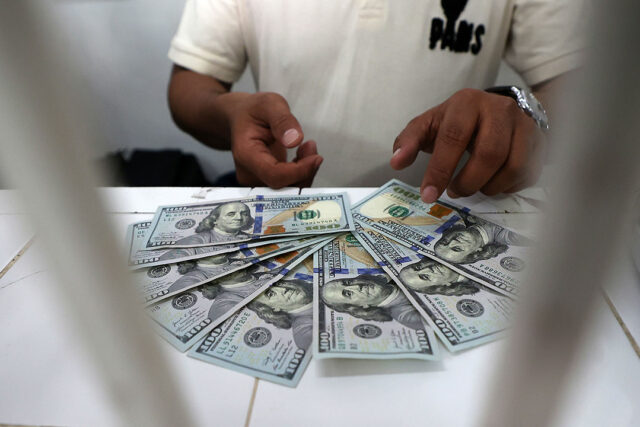
A person shows US dollars at a currency exchange store in Manila, Philippines, Oct. 21, 2022. — REUTERS

By Katherine K. Chan, Reporter

The Philippines’ balance of payments (BoP) position swung to an over $2-billion deficit in the second month of the year, the Bangko Sentral ng Pilipinas (BSP) said late on Thursday.

Based on central bank data, the BoP position stood at a $2.277-billion deficit in February, a reversal from the $3.086-billion surplus recorded in the same month in 2025.

Month on month, the BoP position ballooned from the $373-million gap recorded in January.

February’s tally brought the country’s two-month BoP deficit to $2.651 billion, wider than the $992-million gap seen in the comparable year-ago period.

BoP refers to the country’s economic transactions with other nations. A deficit shows that the country spent more than it received, while a surplus indicates more funds entered into the country.

The central bank sees the Philippines’ BoP deficit widening to $5.9 billion or -1.2% of its gross domestic product this year.

Meanwhile, revised BSP data showed that the country’s dollar reserves hit a fresh high of $113.3 billion at end-February, exceeding the previous record of $112.707 billion at end-September 2024.

Month on month, the gross international reserves (GIR) edged up by about 0.6% from $112.615 billion in January.

As of February, the country’s GIR level translated to 7.5 months’ worth of imports of goods and payments of services and primary income, higher than the three-month standard.

“Specifically, the latest GIR level ensures the availability of foreign exchange to meet balance of payments financing needs, such as for payment of imports and debt service, in extreme cases when there are no export earnings or foreign loans,” the BSP said in a statement.

It is also enough to cover about 4.3 times the country’s short-term external debt based on residual maturity.

GIR comprises foreign-denominated securities, foreign exchange, and other assets such as gold. It enables a country to finance imports and foreign debts, maintain the stability of its currency, and safeguard itself against global economic disruptions.

The BSP expects the end-2026 GIR level to reach $110 billion

Converge launches 12-MW Pampanga data center

Converge ICT Solutions, Inc. has launched its P5-billion 12-megawatt data center in Angeles, Pampanga which further boosts its data center capacity while also helping position the country as a data center hub.

“Amid the ongoing digital revolution, our capabilities must keep pace with emerging technologies. We have focused on building world-class, future-ready facilities so we can become the country’s leading provider of digital service,” Converge ICT Chief Executive Officer Dennis Anthony H. Uy said during the company’s data center inauguration on Friday.

Overall, Converge has a total data center capacity of about 20-MW in total, including its Caloocan, Pasig, and Pampanga facilities, Mr. Uy said.

The company’s data center in Angeles is scalable by up to 36 MW, James Tristan M. Mendoza, chief executive officer of Converge Studios told reporters at the sidelines of the event, adding that the facility is also artificial intelligence (AI) ready to support the surging demand for content and cloud services.

He said the listed fiber broadband and technology provider is looking at further expanding its data centers, with several data centers on the pipeline.

Further, Converge said it is anticipating growth in its large enterprise and public sector units by introducing more cloud solutions and managed services.

“You cannot move into AI, cloud, or advanced tech solutions without a strong digital backbone in place. This is the complete stack digital infrastructure that we have built. This is infrastructure designed for full coverage, reliability, and scale,” Mr. Uy said.

Converge is also further bolstering its network as it plans to integrate into its operations the transpacific link Bifrost and the intra-Asia SEA-H2X cable system.

The Bifrost cable system spans 20,000 kilometers and is designed to support AI workloads, cloud-native platforms, and real-time digital services.

Converge will host the landing of the Bifrost cable system in the Philippines, following the cable’s landing in Davao.

The Bifrost Cable System connects Singapore, Indonesia, the Philippines, and the United States. Bifrost lands in Singapore, Guam, and California, with branching units extending connectivity to Jakarta, the US, and the Philippines, enabling dynamic traffic routing and robust regional interconnection.

SEA-H2X is expected to expand international bandwidth and strengthen undersea fiber connectivity in the Asia-Pacific region.

The cable system is designed for 160 terabits per second capacity and has six landing points across Southeast Asia, including the Philippines, Singapore, Hong Kong, China, Malaysia, and Thailand.

The two submarine fiber networks, with their respective landing stations in Davao and La Union will be ready for service, Converge said, adding that these will provide the company with a high-capacity boost and direct access to key international markets.

At the local bourse on Friday, shares in the company closed 0.75% lower at P13.24 apiece. — Ashley Erika O. Jose

Peso hits new low of P60.10 per dollar

A money changer handles US dollars at an establishment in Quezon City. — PHILIPPINE STAR/MIGUEL DE GUZMAN

THE PHILIPPINE PESO sank to a fresh record low on Thursday, breaching the P60-per-dollar mark and heightening inflation risks from more expensive imports.

The local currency closed at a new record low of P60.10 a dollar — 58 centavos weaker than its Wednesday finish — as markets reacted to Iran’s retaliatory attacks on Israel and US assets in the Middle East.

The peso opened the session sharply weaker at P59.90, which was its intraday best. The peso’s worst showing during the session was P60.40, a record intraday low.

Dollar turnover rose to $2.437 billion on Thursday from $1.78 billion on Wednesday.

The peso’s decline reflected the market’s knee-jerk reaction to Iran’s retaliation, Reyes Tacandong & Co. Senior Adviser Jonathan L. Ravelas said in a Viber message.

War in the Middle East threatens to push global crude prices past $100 per barrel, which could widen the Philippines’ import bill and add pressure on domestic prices. Higher energy costs may also complicate the policy outlook for the Bangko Sentral ng Pilipinas (BSP).

“The dollar-peso closed at a new all-time low as oil prices continued to climb as the intensifying US-Iran war has led to energy assets of both countries being targeted, coupled with hawkish comments from Powell overnight,” the first trader said by telephone.

Top central banks from the US, Canada and Japan struck hawkish tones on Wednesday as the Iran war drove energy prices sharply higher amid a pivotal week of global policy meetings, Reuters reported.

“The BSP likely saw these market pressures on the local currency moving in line with macroeconomic factors,” the second trader said in a Viber message, likewise noting the peso’s depreciation was mainly driven by hawkish signals from US Federal Reserve Jerome H. Powell overnight.

A weaker peso tends to push up the cost of imported goods, particularly fuel and food, potentially feeding into broader price pressures. This could limit the central bank’s room to cut interest rates and may revive expectations of policy tightening if inflation accelerates.

“The peso’s depreciation directly affects the local costs of these imports, but it will be the prolonged peso weakness that could significantly dent inflation,” the second trader said.

Finance Secretary and Monetary Board Member Frederick D. Go said on Tuesday that a prolonged surge in oil prices due to the Middle East war could prompt the Monetary Board to raise borrowing costs as early as next month.

“If the price of oil continues to persist at elevated levels, it is most likely that the Monetary Board will consider tightening in the next meeting,” Mr. Go said in an interview with Bloomberg TV.

BSP Governor Eli M. Remolona, Jr. earlier said that the central bank may have to consider monetary tightening if the surge in oil prices spill over into inflation.

The Monetary Board will hold its next rate-setting meeting on April 23.

If the Board hikes rates in April, this would be the BSP’s first rate hike in over two years or since October 2023.

The Monetary Board has been on an easing path since August 2024, slashing the benchmark policy rate by a total of 225 basis points (bps) to an over three-year low of 4.25%.

Rizal Commercial Banking Corp. Chief Economist Michael L. Ricafort noted in a Viber message that the peso could have closed weaker if not for the BSP’s intervention.

The BSP said in a statement on Thursday it continues to intervene in the foreign exchange market to prevent inflationary swings.

“On the peso, the BSP stresses that it operates in the foreign exchange market to smooth excess volatility and maintain orderly conditions. This is consistent with a flexible exchange rate policy, with intervention limited to tempering large swings that could affect inflation rather than defending any specific level,” the central bank said. 

Moving forward, Mr. Ravelas said the peso could remain above the P60-per-dollar level if the Middle East war escalates.

Trading will be closed on Friday due to the Eid’l Fitr (Feast of Ramadan) holiday. Aaron Michael C. Sy

Fitch: Middle East war weighs on Philippine credit rating outlook

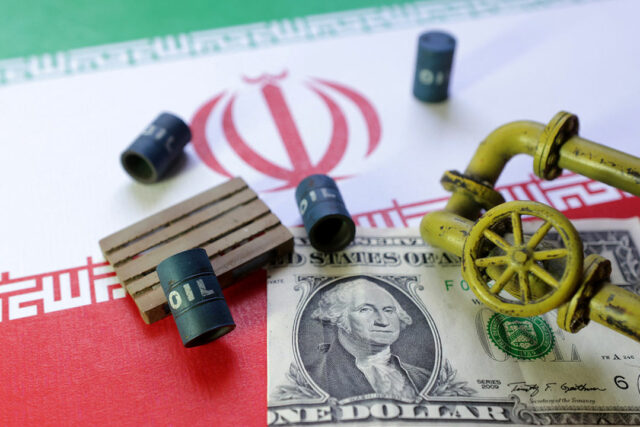
Iranian flag, a US dollar banknote and miniatures of oil pipes and barrels are seen in this illustration taken June 23, 2025. — REUTERS/DADO RUVIC/ILLUSTRATION

By Katherine K. Chan, Reporter

RISKS of stalled growth and slower fiscal consolidation amid the ongoing war in the Middle East could imperil the Philippines’ credit rating, especially as the country is among the most exposed to disruptions, Fitch Ratings said. 

Jeremy Zook, senior director for Asia-Pacific (APAC) Sovereign Ratings at Fitch Ratings, said the Philippine economy could still recover this year from the flood control corruption scandal fallout, but emerging risks from the Middle East war will likely delay the rebound.

“Our baseline expectation is that we do see a gradual pickup in some of that (capital expenditure) and growth does recover in 2026,” he said in an online briefing late on Wednesday. “Now, of course, the conflict in Iran does challenge this baseline.”

Though Fitch sees the current growth risks as temporary, further escalation might bring negative rating pressures, according to Mr. Zook.

“Right now, we do view this slowdown in growth as temporary and, again, perhaps hit even more by the Middle East shock. But I think it would be kind of our view that… if these growth challenges become more ingrained and more structural in nature, then that would really be where the potential rating challenges and rating risks come from,” he said.

In April last year, Fitch affirmed its “BBB” long-term foreign currency issuer default rating and “stable” outlook for the Philippines.

A “stable” outlook means the Philippines will likely maintain its rating in the next 18 to 24 months.

Finance Secretary Frederick D. Go said in an earlier interview with Bloomberg that the ongoing US-Israel war on Iran poses a challenge to the Philippines’ goal of achieving an “A” rating from credit rating agencies like Fitch.

Still, he affirmed that economic managers will “continue to pursue that road to ‘A.’”

In an earlier commentary, the debt watcher said a prolonged and intensified conflict in the Middle East would weigh on the country’s oil imports, overseas Filipinos’ remittances and the peso, which could lead to a “substantial impact” on its credit rating.

Fitch Ratings Head of APAC Sovereigns Thomas Rookmaaker noted at the same briefing that economies in the region are “particularly vulnerable” to energy shocks.

“The large shares of the oil and gas products that are used in this region that pass through the Strait of Hormuz, of course, is a vulnerability,” he added.

Three weeks since the United States and Israel’s attacks on Iran late last month, Iran continues to block the Strait of Hormuz for the two countries and their allies’ vessels, fueling concerns over oil trade from the region as disruptions in the vital chokepoint have pushed fuel prices up globally.

Nearly a fifth of the world’s oil supply, including about 98% of the Philippines’ crude supply, is shipped via vessels from the Middle East that traverse the Strait of Hormuz.

However, Fitch noted that the Philippines might suffer more economic spillovers compared to its regional peers considering its heavy reliance on oil from the Middle East.

“Certainly, as a very large net energy importer, (the) Philippines is probably one of the more exposed in terms of potential economic impact in the APAC region,” Mr. Zook said.

In the local market, fuel prices continue to climb double digits weekly, with diesel prices now over P100 per liter.

Economic managers have already warned that prolonged oil shocks would strain the Philippine economy, potentially accelerating inflation near or even above the central bank’s 4% tolerance point and shave off 0.2-0.3% from gross domestic product (GDP) growth.

Meanwhile, Mr. Zook said that the oil crisis could likewise dampen the country’s fiscal measures.

“I think on the fiscal side, just touching on that briefly, of course, the oil shock could have some implications there as well,” he said. “It may mean a slower pace of consolidation going forward and certainly a higher fiscal deficit this year, as we have seen some in the way of subsidies being rolled out already.”

Mr. Rookmaaker also said significant oil supply shock, with oil price holding at $100 per barrel, could trim 0.4 percentage point from global GDP growth. The debt watcher projects the global economy to grow by 2.6% this year.

Iran has warned that global oil price could surge to $200 per barrel, a development analysts said might not be far-fetched as the war drags on and with retaliation worsening tension in the region

High oil prices could dent PHL output by 1 ppt this year

Crude oil is dispensed into a bottle in this illustration photo, June 1, 2017. — REUTERS/THOMAS WHITE/ILLUSTRATION

PHILIPPINE economic output could be reduced by up to one percentage point (ppt) this year if oil prices breach $130 per barrel, an economist said.

Francisco Cid L. Terosa, an associate professor and former dean of the School of Economics of the University of Asia and the Pacific (UA&P), said the extent of the potential economic slowdown will depend on the oil shock and disruption to supply.

“There’s going to be a potential slowdown in overall economic growth, and my initial estimates, depending on the severity of the price shocks and supply disruption, will be a decrease in GDP by around 0.3 to as high as 1 percentage point,” he said in a lecture on Wednesday.

Mr. Terosa warned that the Philippines could see a “high reduction in output” if oil prices exceed $130 per barrel.

Reuters reported US crude futures rose more than 3% higher to $99.39 per barrel, while Brent futures jumped to $111.19 a barrel in early trading on Thursday.

Iran accused Israel of striking its facilities in the huge South Pars gas field on Wednesday and retaliated by vowing attacks on oil and gas targets throughout the Gulf, firing missiles at Qatar and Saudi Arabia.

Mr. Terosa said that if the war in the Middle East lasts longer, he expects the inflation rate to quicken to at least 6%.

“The inflation rate can go as high as 6% or 7%, or worst case is maybe 8%, like during COVID-19 time if the conflict is prolonged,” he said.

Mr. Terosa said prices of food products, food and beverage service activities, retail trade, and air transport are expected to go up further.

If prices of refined petroleum products rise by 10%, Mr. Terosa said inflation will go up by 0.68 ppt.

A 10% jump in land transport costs is likely to drive inflation up by 0.46 ppt, while a similar increase in electricity costs is expected to result in a 0.41 ppt rise in inflation.

A 10% rise in air transport and water transport will translate into a 0.31 ppt and 0.07 ppt increase in inflation, respectively.

While not included in the basket of goods, Mr. Terosa noted the biggest inflationary pressure may come from retail trade because of the pass-through costs.

“Retail trade, by itself, has the potential to push inflation by 1.9 percentage points,” he added.

Mr. Terosa also noted that a drop in output in key industries has a ripple effect across the economy.

If there is a P1 decline in the supply of refined petroleum products, total economic output could fall by about P4.68.

“The impact of the decrease in production of refined petroleum products will lead to the greatest decrease in total production across the different industries in the economy,” he said.

A P1 drop in supply in electricity, water transport, land transport and air transport could lead to a P2.55, P2.4, P1.98, and P1.22 decrease in total economic production, respectively.

Mr. Terosa also expects severe production declines in the construction, retail trade, and food products industries, as they are largely exposed to supply disruptions in refined petroleum, electricity, and transport.

A moderate impact is expected on the wholesale trade, professional, scientific, technical activities, computer, electronic and optical products, basic metals, and chemical and chemical products sectors, he added.

At the same time, MUFG Global Markets Research said rising oil prices are likely to push food prices higher as well, adding pressure to consumer prices.

“Across Asia, economies such as Thailand, India, and the Philippines, where food carries a relatively high weight in CPI (consumer price index) baskets, are also particularly vulnerable to second-round inflation pressures, as higher energy costs are likely to spill over into food prices,” MUFG Senior Currency Analyst Lloyd Chan said in a separate note on Thursday.

Before the war broke out in late February, inflation quickened to a 13-month high of 2.4% on the back of rising energy costs.

FUEL EXCISE TAX CUT
To address the impact of rising fuel costs on inflation, the Philippine government has been looking at a number of interventions, including the suspension or reduction of the excise tax on fuel.

Peter Lee U, an associate professor and former dean of the UA&P School of Economics, however, argued that the policy would benefit mostly those who drive private cars.

He said the government should continue collecting excise tax on fuel products and focus on targeted interventions.

“I think the better alternative would be not to take it out, keep collecting the taxes, and then at least you have more tax revenue, and the country has more tax revenue that you can take to use for the helping of these sectors,” he said.

On the other hand, Mr. Terosa said that suspension or reduction of the excise tax on fuel products will help in slowing down inflation.

“It will probably lower the inflation rate by around 0.38 percentage point. It will slow down the rise, and that will be good, but of course only for crisis situations,” he said.

For this reason, he said that the suspension of the excise tax indirectly benefits commuters in the long run.

“But at the first glance, for me, it is regressive. Because when you lift the excise tax, you ease the burden of those who drive cars,” he said.

WIDER CURRENT ACCOUNT
Meanwhile, the Bangko Sentral ng Pilipinas (BSP) may tighten its monetary policy later this year as persistent high oil prices could widen the country’s current account gap, Capital Economics said.

Gareth Leather, an Asia economist at Capital Economics, said the Philippine central bank is unlikely to take monetary policy action immediately, but continued oil price shocks could eventually trigger a rate hike.

“Most other central banks will be more reluctant to tighten but those in Indonesia, the Philippines, Mexico and parts of Central Europe could eventually do so if the price spike is sustained,” Mr. Leather said in a March 18 note.

He noted that the Philippines is among the countries that are “unlikely to respond immediately, but where a prolonged period of high energy prices would trigger tightening.”

BSP Governor Eli M. Remolona, Jr. earlier said inflation could breach 4% if oil prices hold at $100 per barrel, which may prompt the BSP to raise its key rate.

The central bank wants inflation to stay between 2% and 4%, with 3% as their “sweet spot.”

Finance Secretary Frederick D. Go also said the Monetary Board will consider tightening in their next meeting if oil prices remain elevated for long.

The central bank has eased borrowing costs since August 2024, delivering a total of 225 (bps) to bring the benchmark policy rate to an over three-year low of 4.25%.

“In the Philippines, heavy reliance on imported energy could push the current account deficit deeper into negative territory,” Mr. Leather said.

The Philippines exports over 90% of its oil from the Middle East, making it vulnerable to major price or supply shocks from the region.

The country’s current account deficit (CAD) narrowed by 12.3% to $16.291 billion last year or -3.3% of Philippine gross domestic product (GDP) from the $18.565-billion gap in 2024, the latest BSP data showed.

The central bank expects the CAD to narrow to $15.3 billion or -3% of GDP this year. — Justine Irish D. Tabile and Katherine K. Chan


DBM releases P21.5B to keep infrastructure projects running, cushion rising fuel prices

The government upgraded the bike lane along Elliptical Road in Quezon City, Aug. 7, 2025. — PHILIPPINE STAR/MIGUEL DE GUZMAN

THE DEPARTMENT of Budget and Management (DBM) released P21.47 billion to keep infrastructure projects running and cushion the impact of global shocks following an order from President Ferdinand R. Marcos, Jr.

In a statement on Thursday, the DBM said that it fast-tracked the release of the funds to ensure that critical services continue uninterrupted amid higher oil prices that threaten transport costs and household budgets.

“Every peso we release is meant to ease a burden, sustain a livelihood, or keep a service running for our people — especially at a time when global events beyond our control are affecting daily life here at home,” Budget Secretary Rolando U. Toledo said.

“At a time when global headwinds are pushing fuel prices up, it is critical that we step in where it matters most — supporting our drivers, protecting commuters, and ensuring that no Filipino is left to carry these challenges alone,” he added.

Of the total, the DBM allocated P2.49 billion for the Department of Transportation’s fuel subsidy program “to provide direct relief to drivers and operators grappling with rising fuel costs.”

“As global oil prices climb, the subsidy helps drivers stay on the road without passing on the full burden to commuters — keeping fares stable and transport accessible for millions of Filipinos,” the DBM said.

Meanwhile, it released P18.65 billion to the Department of Public Works and Highways (DPWH) for infrastructure projects nationwide.

It also released P324.36 million to the DPWH to ensure timely completion of foreign-assisted infrastructure projects.

“All fund releases are subject to strict budgeting, accounting, and auditing safeguards —ensuring that assistance reaches the right beneficiaries while protecting every peso of public funds,” the DBM said. — Justine Irish D. Tabile

SEC clears MREIT’s P16.2-billion asset infusion ahead of schedule

MREIT.COM.PH

MREIT, INC. (MREIT), the real estate investment trust of Megaworld Corp., has secured approval from the Securities and Exchange Commission (SEC) for its P16.2-billion “Wave 4” asset infusion.

The approval allows the company to proceed with the acquisition of nine Grade A office buildings, MREIT said in a statement on Thursday.

“The approval comes ahead of the company’s expected timeline, allowing MREIT to move forward with the next phase of its portfolio expansion strategy, with the assets set to contribute to income retroactively from Jan. 1 of the year, enabling investors to immediately benefit from the acquisition,” it said.

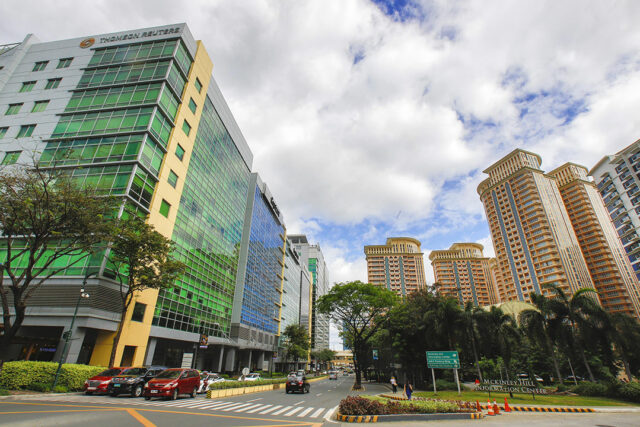
The transaction involves the infusion of office buildings in McKinley Hill, Taguig, with a combined gross leasable area (GLA) of about 165,500 square meters (sq.m.).

This will increase MREIT’s total GLA by about 34% to around 647,000 sq.m.

The deal was structured as a property-for-share swap valued at P16.03 billion, with the remaining balance of P187.5 million to be settled in cash.

The share swap was executed at a 15% premium to MREIT’s 30-day volume-weighted average price (VWAP), the company said.

“This structure minimizes dilution to existing shareholders and provides additional room for MREIT to grow its dividends per share.”

“This approval marks another important milestone in MREIT’s growth journey,” said Kevin L. Tan, chairman of MREIT.

“Wave 4 represents a key step in scaling the platform while maintaining our focus on disciplined and accretive expansion,” he added.

As of end-2025, the assets had an occupancy rate of 97%, with more than 80% leased to global capability center (GCC) tenants, according to the company.

Following the completion of Wave 4, MREIT said it is preparing for its next round of asset infusions, “Wave 5,” which is expected to include retail properties.

“Wave 5 is expected to begin the company’s diversification into retail properties, starting with several mall assets targeted for the second half of the year,” it said.

The company said the next phase could increase its portfolio to about 750,000 sq.m., as it targets one million sq.m. of GLA by 2027.

MREIT said its expansion pipeline is supported by Megaworld’s portfolio of income-generating properties and the broader assets of Alliance Global Group.

MREIT shares fell 1.03% to P13.50 per share on Thursday. — Alexandria Grace C. Magno