Home Blog Page 1075

PCA expects Europe, UAE to absorb more coconut exports

CENTURYPACIFIC.COM.PH

THE Philippine Coconut Authority (PCA) is banking on other markets to absorb coconut exports, with shipments to the US expected to slacken in response to the 19% tariff imposed on Philippine goods.

“There are bigger markets than the US,” PCA Administrator Dexter R. Buted said, citing Europe and the United Arab Emirates (UAE).

Speaking to reporters on the sidelines of the opening ceremony of the COCONUT Philippines Trade Fair, Mr. Buted also noted the potential of Japan and China to absorb some Philippine shipments.

Demand in China and Japan, he said, centers on young coconut and coconut water.

In Europe, “there is demand for virgin coconut oil and desiccated coconut, which they use for pastries, bread, and chocolates,” he added.

He added that the demand for coconut water has surged 1,000%, noting that a Philippine company has secured a P15-billion contract to supply coconut water to a global brand for five more years.

He said that while the US market cannot be completely ruled out, diversification will help maintain the country’s position as a top global exporter of coconut.

Trade Secretary Ma. Cristina A. Roque said negotiations with the US concerning reciprocal tariffs are still ongoing.

“For coconut, we’re still negotiating with the US, so nothing is final yet. The coconut industry is very important for us, and definitely we need to really find or strengthen the market for this,” she said.

To help mitigate the impact of the 19% tariff, she said the Department of Trade and Industry (DTI) has reached out to manufacturers.

“We’ve already reached out to the various manufacturers and industries, she said, noting that talks have taken place without providing details.

“We have 29 DTI offices all over the world and 21 trade offices. Let’s take advantage of this. To the businessmen out there who are affected, the DTI is here for you to help you and to assist you,” she added.

She said support will take the form of finding more markets and buyers for Philippine exports.

“We are encouraging more people to really get into the coconut business because it is a star product. Globally, there is a huge market, and locally, there is also a big demand,” she said.

“We really hope that we can grow this market, because wherever I go, they really want coconut, especially from the Philippines,” she added. — Justine Irish D. Tabile

DTI P14-B budget pitch cites need to expand investment promotion

THE Department of Trade and Industry (DTI) said it hopes to obtain an additional P2 billion for its 2026 budget, citing the need for more investment promotion and industry support.

“We are still hoping that the P12 billion can still go up by another P2 billion,” Trade Secretary Ma. Cristina A. Roque told reporters on the sidelines of the opening ceremony of the COCONUT Philippines Trade Fair on Friday.

“Based on the budget hearing, everybody wants to support the small and medium enterprises and, of course, foreign trade because they can see the results,” she added.

Under the National Expenditure Program (NEP) 2026, the DTI and agencies under its umbrella were allocated P12.426 billion.

She said that a portion of the budget will be used to promote international trade and foreign investment.

“How can we get foreign investors to come in if they don’t know what the programs that we have are or what we can offer to these foreign investors?” she said.

“We need to really do marketing because there are other Southeast Asian people really marketing their countries, and the numbers show that we are growing in terms of foreign direct investment (FDI) and exports,” she added.

Under the NEP, foreign trade and investment marketing were allotted P1 billion, which will be used to fund roadshows and other such activities.

She said the DTI is seeking support from Congress for fair trade and consumer protection programs, as well as digitalization and increased staff.

“There are too many products being sold via e-commerce. We need more people and technology to make sure that the products are safe,” she added.

Ms. Roque said additional funding is needed for micro, small, and medium enterprise (MSME) development.

“That’s really a big sector. We also need funds for that, especially for the trade shows,” she said, noting that such events generate more sales for MSMEs.

“We need to promote and find avenues for them to sell their products,” she added.

She is also seeking additional funding for halal certification.

“We have so many products, but they’re not halal certified. Why? Because certification is expensive,” she said.

“We have 3,000 MSME products out there that are halal. We are hoping to grow that,” she added.

Another initiative being pushed by the DTI is the creative industry, which received P50 million of funding under NEP.

“We were asking for P450 million for the creative industry. That’s also where our edge is,” she said.

“We’re really pushing it because the creative industry is a driver for trade and tourism,” she added. — Justine Irish D. Tabile

PHL needs broader investor base to mitigate volatile flows — BPI

STRENGTHENING the Philippine investor base could help mitigate any potential volatility when investment flows dry up, Bank of the Philippine Islands (BPI) Wealth Chief Investment Officer Luis Antonio Zialcita said.

“I guess one of the key things that we have to achieve… is a stronger local investor base. At this point in time, markets are very dependent on flows,” Mr. Zialcita said at a panel discussion at the Philippine Investment Conference 2025.

Other parts of the world economy, including those in Southeast Asia, have become more important as the US tariffs weigh on its economy’s trade with other countries, PwC China Economist Dr. Jackie Yan said in the same panel.

“In my view, I don’t see it as decoupling. I just see it as both decoupling and recoupling. It’s just a transformation of the global supply chain,” he said.

“This is where increasingly the other parts of the world economy, like the ASEAN economy, are becoming significantly more important because it’s integrated into this global supply chain transformation.”

Particularly in the case of China, investments and exports are flowing more into countries in ASEAN, while exports from the region are increasing into the US, he said.

“We’re seeing the restructuring of the supply chain and investment flows because I think one thing people didn’t really appreciate enough is that investment and trade are always linked with each other. You have cross-border investment and then you create new trade linkages,” he said.

“We have looked like there’s a decoupling maybe between the US and China, but I think behind the scenes you are seeing ASEAN becoming an integrated part of this and it’s just creating new trade and investment linked to this along the way.”

While the Philippines is unlikely to decouple from the US in the short term, a deepening of financial markets could help open up the country to more foreign investors, Mr. Zialcita said.

“The regulatory changes that the SEC (Securities and Exchange Commission) Chair has mentioned, the deepening of our markets, is one of those key things that will allow us to finally be global,” he said, noting that market pricing in the Philippines remains low compared to other regions.

“For the meantime, at least the valuations are very attractive… that is something that investors should consider,” he said.

In a speech at the same conference, SEC Chairman Francisco E. Lim said the commission is working to broaden participation and modernize infrastructure to deepen the capital markets.

These efforts include a shelf registration framework for issuers, aimed at providing flexibility and speed; efforts to improve liquidity and price discovery, as well as expanding the repo market to include trust entities, mutual funds, and insurers. 

The SEC is also reviewing real estate investment trust (REIT) regulations to expand eligible assets, lengthen reinvestment periods, and attract broader participation.

“We are promoting sustainability reporting, aligning with global standards, recognizing that resilient markets must integrate ESG (environmental, social, and governance) principles,” Mr. Lim added.

The regulator is likewise pushing to include Philippine corporations in global indices by addressing gaps in liquidity, fraud, and disclosure.

Through the Capital Markets Forum, the SEC is also working with its ASEAN partners to support cross-border offerings and regional integration.

“At the SEC, we recognize that these reforms demand not only ideas, but execution.

That is why we are strengthening our own foundations, building capacity, culture, and agility,” Mr. Lim said. — Aaron Michael C. Sy

Low end of GDP goal seen possible — DoF

DOF.GOV.PH

IMPROVED household spending and base effects could boost the economy in the second half, helping the government meet the lower end of its 5.5% to 6.5% growth target, the Department of Finance (DoF) said.

“We do think maybe the growth will be faster (in the second half) to be able to meet at least the 5.5%” Finance Undersecretary and Chief Economist Domini S. Velasquez told BusinessWorld on the sidelines of an event on Friday, referring to the lower end of the target range.

Ms. Velasquez said household consumption, which accounts for over 70% of the economy, will remain the key growth driver, aided by easing inflation and lower interest rates.

Inflation eased to a nearly six-year low of 0.9% in July, bringing average inflation in the first seven months to 1.7%.

“Now that we’re in the first half at 5.4%, we think we’ll be able to reach at the minimum 5.5%. Part of it is due to base effects since our growth was low in the second half last year,” she said.

In the first half, gross domestic product (GDP) growth averaged 5.4%, against the year-earlier 6.2%.

Economy Secretary Arsenio M. Balisacan has said that GDP must grow by 5.6% for the rest of the year to achieve the low end of the full-year target.

“Lower interest rates also provide additional support for consumption and investment,” Ms. Velasquez said.

However, she cautioned that the Philippines is not “insulated from external events.”

Ms. Velasquez noted that trade may offer a “temporary contribution” as exports rose 17% in July.

The Philippine Statistics Authority (PSA) reported that exports grew 17.3% to $7.34 billion, while imports declined 2.3% to $11.38 billion in July.

“Although there are uncertainties, we do think that the structural reforms, the reforms that we put in place for the long term, should help the Philippines weather this uncertainty,” she said.

The government approved P231.25 billion worth of investments under the Corporate Recovery and Tax Incentives for Enterprises to Maximize Opportunities for Reinvigorating the Economy.

The 19% tariff rate for the Philippines imposed by US President Donald J. Trump took effect on Aug. 7.

Nicholas Antonio T. Mapa, chief economist at Metropolitan Bank & Trust Co. expects a further recovery in agriculture to help lift growth in the following quarters.

“The main reason for that is because last year, which is where we saw a lot of negatives for agriculture output, we had El Niño. This year, no El Niño. However, we’re running into a La Niña spell starting next month,” he said in his presentation at the same event. 

Mr. Mapa also said household spending will gain ground due to lower inflation, with investments rising as the Bangko Sentral ng Pilipinas (BSP) cuts rates. 

The BSP on Thursday cut its key policy rate by 25 basis points to 5% for a third meeting in a row. — Aaron Michael C. Sy

Bids solicited for Samar-Leyte, Panay railway feasibility study

PHILSTAR FILE PHOTO

THE Department of Transportation (DoTr) said it is soliciting bids from consultants for a bundled feasibility study covering a railway on Panay and another linking Samar and Leyte. 

In a request for expressions of interest, the DoTr  invited interested parties for the P157.21-million contract to carry out the feasibility studies on the proposed rail lines.

“The DoTr now calls for the submission of eligibility documents for the consulting services for the conduct of the Samar-Leyte Railway and Panay Railway feasibility study,” the DoTr said.

Bids are due Sept. 8, the DoTr said, adding that the contractor will have 365 days to complete the project.

The studies will include the pre-feasibility and development studies as well as the preliminary detailed engineering design of the infrastructure projects, the DoTr said.

In 2023, the DoTr said it obtained about P600 million in funding for feasibility studies on four projects — the Panay railway, the Philippine National Railway North Long Haul line, the North Mindanao Railway, and the San Mateo Railway, which connects LRT Line 2 to the Rizal towns of San Mateo and Rodriguez.

The Panay rail system project includes the construction of a passenger and freight railway, logistics facilities, maintenance depots, and transit-oriented developments.

Also in 2023, the DoTr created a task force for the proposed Eastern Visayas Metro Railway System which will link Samar and Leyte islands. — Ashley Erika O. Jose

BCDA shoots for P70B in investment approvals

NLEX.COM.PH

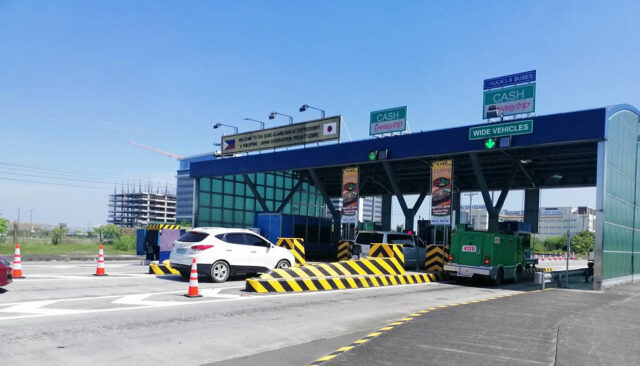
THE Bases Conversion and Development Authority (BCDA) said it is hoping to double its investment approvals to P70 billion this year and breach P100 billion in funds remitted to the Treasury since 1993.

“Last year, our investment approvals were around P30 billion, now it is already more. Our target this year is around P70 billion, which is double last year,” BCDA President and Chief Executive Officer Joshua M. Bingcang said at a roundtable on Friday. 

“It is because more of our infrastructures are complete, so we are prepared to welcome more investment,” he added.

According to Mr. Bingcang, the BCDA has approved P57 billion worth of investment pledges as of August.

“We are on track to reach P70 billion by year-end. So, I think what will happen is we will have the third biggest approvals after the Board of Investments and the Philippine Economic Zone Authority,” he added.

The Philippine Statistics Authority (PSA) has reported that the BCDA approved around P32 billion worth of investment pledges last year.

These include the P4-billion waste-to-energy deal it entered into with Indian engineering firm Uttamenergy Ltd.

The project will be developed by a consortium of Uttamenergy and the Philippines’ Global Heavy Equipment and Construction Corp. and ATD Waste-to-Energy Corp.

He said that the BCDA is set to visit South Korea and Japan in September and October, respectively.

Separately, Mr. Bingcang said the BCDA is on track to breach P100 billion in remittances to the government since May 1993.

“We will breach the P100-billion remittance to the National Government. We were at P96 billion as of May,” he said.

Remittances as of May consisted of P78 billion in disposition proceeds, P12.1 billion in dividends, P3.9 billion in guarantee fees, and P1.8 billion in other remittances.

He added that the BCDA will also be investing around P1 billion over the next two years in improving the Subic–Clark–Tarlac Expressway (SCTEX).

“My goal is to complete all the interchanges that were not done before because we didn’t have the budget. Now, because we have extra revenue on top of our payment to our Japan International Cooperation Agency loan, it’s time to give back and reinvest,” he said.

He said that the goal is to demonstrate improved services on the toll road alongside higher tolls.

“We’ll be completing three more interchanges in Luisita (Tarlac), Hermosa (Bataan), and Mabalacat (Pampanga). We will also be installing road lighting,” he added.

For lighting, the BCDA has earmarked P300 million, as well as P250 million for each interchange.

“We’ll be investing around P1 billion for the improvement of SCTEX, probably over two years because the approval process is not under our control; we will still need the approval of the Toll Regulatory Board,” he added.

He said that the P1 billion is already earmarked for SCTEX and noted that more services on the toll road are being planned.

“We will be coming up with more service facilities in SCTEX, especially if you’re going to Subic. There are none currently,” he said.

He said fuel station concessions can be directly negotiated and may not go through bidding. — Justine Irish D. Tabile

PHL touted as potential golfing destination

PHILSTAR FILE PHOTO

THE Department of Tourism (DoT) said its Philippine Golf Experience (GolfEx) project hopes to position the Philippines as a premier golfing destination.

“It has been a long-held desire to bring golf and tourism together in a way that truly unlocks their potential,” Tourism Secretary Ma. Esperanza Christina G. Frasco said in a statement over the weekend.

She said the Philippines has more than a hundred world-class golf courses.

“What was needed was a deliberate effort to place golf within our broader national strategy, not only as a sport but also as an experience that brings together play and culture as well as community,” she added.

The DoT views golf tourism as a high-value and low-impact form of tourism that induces travelers to stay longer, spend more, engage deeply with the destination, and return.

The DoT launched GolfEx at Clark, Pampanga, which is itself an emerging golf and leisure hub.

“Clark is ready for the golf tournaments and all kinds of sports tournaments,” said Clark Development Corp. President and Chief Executive Officer Agnes VST Devanadera. — Justine Irish D. Tabile

Quantum leap: Risks and rewards

IN BRIEF:

• ​Quantum computing is rapidly becoming a transformative force that could reshape industries, economies, and the foundation of digital trust.

• It has the potential to revolutionize various industries, including pharmaceuticals, finance, logistics, and energy while attracting significant global investment in research and development.

• It also poses significant cybersecurity risks by enabling the rapid decryption of current encryption methods, necessitating the adoption of Post-Quantum Cryptography and cryptographic agility to protect sensitive information against potential threats.

Quantum computing is no longer a futuristic concept. It is rapidly becoming a transformative force that could reshape industries, economies, and the foundation of digital trust. For business leaders, the question is no longer if quantum computing will matter — but when, and how prepared we are.

Unlike traditional computers that process information using a bit, the fundamental unit of digital information represented as either 1 or 0, quantum computers use quantum bits, or qubits, which follow the rules of quantum physics. These qubits exhibit unique behaviors that classical bits cannot. For example, through superposition, a qubit can represent multiple values at once, allowing quantum computers to explore many possible solutions simultaneously. Entanglement links qubits so that changes to one instantly affect the others, enhancing coordination and efficiency. On the other hand, tunneling, another phenomenon in quantum mechanics, allows particles to pass through barriers that would normally block them.

These are just some of the quantum behaviors that give quantum computers the ability to solve certain problems much faster than today’s most advanced machines.

INDUSTRY APPLICATIONS FOR QUANTUM COMPUTING
The potential applications are vast. In pharmaceuticals, quantum computing can accelerate drug discovery by reducing the time and computational resources required for early-stage drug screening, streamlining the drug development pipeline. In finance, it could optimize portfolios and enhance fraud detection systems by analyzing vast datasets for anomalies and patterns much more quickly than classical computers. This capability allows for real-time monitoring, quicker identification of suspicious activities, and the reduction of financial losses.

In logistics, algorithms used in quantum computing could solve complex routing problems, capable of simultaneously considering myriad variables like traffic scenarios. In energy, it could help design better batteries for electric vehicles (EVs) and materials for clean technologies. In particular, quantum computing can simulate chemical reactions in battery materials to develop longer-lasting, faster-charging batteries that boost EV efficiency at a lower cost. Two automobile manufacturers are leveraging it for their EV battery technology, focusing on increasing energy density, reducing charging times, and extending battery life to develop cleaner, more sustainable transportation options. Moreover, by modeling atomic structures and simulating electron behavior, quantum computing can help identify materials that enhance energy conversion rates while reducing costs, making options like solar energy more accessible and affordable.

Governments and corporations are also taking notice. According to Quantum Initiatives Worldwide 2025 by Qureca, over $55.7 billion in public funding has been committed globally to quantum R&D. The Philippines, through the Philippine Council for Industry, Energy and Emerging Technology Research and Development (PCIEERD), has launched its Quantum Technology Roadmap, aiming to become a quantum-enabled economy by 2030.

CYBERSECURITY ISSUES
However, with great promise comes great risk — especially in cybersecurity.

Today’s digital security depends on complex mathematical puzzles that are extremely difficult for conventional computers to solve. These puzzles form the basis of encryption methods used to protect online banking, confidential e-mails, and e-commerce transactions. For example, systems like RSA, a widely used method of asymmetric cryptography that secures digital communications through a public key for encryption and a private key for decryption, and elliptic curve cryptography, a key-based technique for encrypting data, rely on the difficulty of factoring large numbers or solving equations with many variables.

Quantum computers, however, are expected to solve these problems much faster — especially using techniques like Shor’s algorithm, which can break these protections by factoring large numbers efficiently. Even methods like the Advanced Encryption Standard (used to secure data) and Secure Hash Algorithms (used to verify data integrity) could be weakened by Grover’s algorithm, which speeds up the process of searching and cracking encrypted data. These breakthroughs could make it possible to compromise sensitive information that is currently considered secure.

This creates a critical concern: attackers could intercept encrypted data today and wait until quantum computers can decrypt it — a strategy known as “Harvest Now, Decrypt Later” (HNDL).

How then can business leaders address this?

The first step is adopting Post-Quantum Cryptography — new encryption methods designed to resist quantum attacks. In 2024, the US National Institute of Standards and Technology released new standards that define quantum-safe algorithms suitable for today’s systems.

For highly sensitive environments, Quantum Key Distribution offers another layer of protection. It uses quantum physics to securely exchange encryption keys, detecting any interception attempts.

Equally important is cryptographic agility — the ability to quickly update encryption methods as threats evolve. This means understanding what encryption an organization’s systems currently use, designing software that can easily switch to stronger algorithms, and working closely with technology partners to ensure that current systems can adapt without disruption. Financial institutions, in particular, should assess their readiness to make these transitions smoothly and securely.

The transition to quantum-safe systems will take time. But as quantum expert Michele Mosca warns: if the time to migrate (TM) plus the time your data must remain secure (TL) exceeds the time until quantum computers become a threat (TQ), then it is already too late. The TQ timeline is shortening. Advances in qubit fidelity, error correction, and scalable architectures are accelerating the emergence of Cryptographically Relevant Quantum Computers — machines capable of breaking today’s encryption.

REDEFINING POSSIBILITIES
Quantum computing will redefine what is possible. It will unlock new capabilities, drive innovation, and challenge existing paradigms. At the same time, it will also test our resilience and foresight.

For business leaders, the call to action is clear: prepare now, invest wisely, and shape the quantum future with confidence.

This article is for general information only and is not a substitute for professional advice where the facts and circumstances warrant. The views and opinions expressed above are those of the author and do not necessarily represent the views of SGV & Co.


Philip B. Casanova is a technology consulting principal of SGV & Co.

China reissues warning to students planning to study in the Philippines

PHILSTAR FILE PHOTO

By Adrian H. Halili, Reporter

CHINA’S MINISTRY of Education has renewed its warning to Chinese students considering studying in the Philippines, citing what it described as a worsening security situation for its nationals in the country.

In a Facebook post on Saturday, the Chinese Embassy in Manila confirmed that the advisory was issued on Aug. 30. The ministry pointed to a recent increase in what it called “malicious incidents” involving Chinese students in the Philippines and warned of “deteriorating security” and “unfavorable conditions” for international learners, the embassy said.

This is the second time this year that Chinese authorities have issued such an advisory. A previous warning was released on July 18, similarly raising concerns about safety and treatment of Chinese nationals.

The embassy said the advisory was meant to remind Chinese citizens planning to study abroad to conduct risk assessments, strengthen awareness of safety precautions and plan their education arrangements carefully.

“The ministry cited a recent surge in malicious incidents targeting Chinese citizens in the Philippines, accompanied by deteriorating security and unfavorable conditions for international students,” it added.

The ministry also cited alleged instances of Chinese citizens and businesses in the Philippines facing frequent inspections and harassment from local law enforcement.

The Philippines’ Department of Foreign Affairs (DFA) did not immediately reply to a WhatsApp message seeking comment.

In response to the earlier July advisory, the agency had expressed concern over what it described as “inaccuracies” in the Chinese government’s statements.

The DFA said Philippine law enforcement authorities are committed to ensuring the safety of all foreign nationals, including Chinese citizens, and act on crimes committed both by and against foreigners.

The DFA also urged the Chinese Ministry of Education to reconsider its advisory, stating that it did not accurately reflect the country’s overall security situation, particularly in areas frequented by international students and expatriates.

Josue Raphael J. Cortez, a diplomacy instructor at De La Salle-College of St. Benilde’s School of Diplomacy and Governance, said Manila should respond to Beijing’s advisory “by showing the openness of Filipino culture toward international students.”

“The fact that there is an influx of foreign students opting to pursue their higher education here is a signal that such claim is erroneous,” he said in a Facebook Messenger chat. He added that crimes against foreign nationals should not be generalized to depict the security environment in the Philippines.

“The statement may not merely be due to the looming tension between our two countries but may also be brought about by the recent developments where crimes against foreign nationals transpired,” Mr. Cortez said.

He said the government should continue to ensure that the country is conducive and safe for both tourists and international students.

Relations between Manila and Beijing have grown increasingly strained in recent years. The Philippines has adopted a firmer stance on defending its sovereign rights in the South China Sea, especially within its exclusive economic zone, where multiple maritime confrontations have occurred.

In 2016, a United Nations-backed arbitral tribunal ruled in favor of the Philippines, voiding China’s sweeping claims over much of the South China Sea. Despite the ruling, China has continued to assert control over disputed areas, leading to heightened tensions in the region.

BRIDGING GAPS
Meanwhile, analysts said the Philippines should boost cooperation with Cambodia as President Ferdinand R. Marcos, Jr. prepares for a state visit next week amid state efforts to rally regional support against China’s growing assertiveness in the South China Sea.

“The Philippines must build a credible and strong relationship with Cambodia to tell our side on the West Philippine Sea and the importance of the maritime rules-based order,” Chester B. Cabalza, founding president of the Manila-based think tank International Development and Security Cooperation, said via Messenger chat.

Last week, Malacañang said Mr. Marcos is scheduled to visit Cambodia, though the Department of Foreign Affairs has yet to release official details of the trip.

Mr. Cabalza said deeper engagement with Cambodia could help the Philippines push the long-delayed Code of Conduct (CoC) in the South China Sea, especially as Manila prepares to assume chairmanship of the Association of Southeast Asian Nations (ASEAN) in 2026 — one year earlier than scheduled due to Myanmar’s internal political crisis.

“These initiatives will help us pursue the completion of the Code of Conduct when Manila receives the baton of chairmanship in the ASEAN ministerial meeting next year,” he said.

Hansley A. Juliano, a political science lecturer at the Ateneo de Manila University, said the visit is an opportunity to bridge gaps between mainland and maritime Southeast Asia and find common ground despite Cambodia’s known closeness to China.

“The President’s chance here is to establish common possible interests on increasing engagement, and even possibly help in opening spaces for Cambodia in ASEAN,” he said in a Messenger chat, adding that it could help foster greater regional cohesion.

He also cited the importance of promoting fair treatment among ASEAN member states to strengthen the bloc’s position on global platforms, such as the United Nations General Assembly.

“It would help bolster not only our international position but even nuance China’s leverage in the region,” he added.

Cambodia, a staunch supporter of Beijing, has often been seen as a roadblock in ASEAN’s efforts to present a unified stance on the South China Sea. Despite this, analysts said engaging Phnom Penh is essential to building trust and consensus within the regional bloc.

“If Mr. Marcos succeeds in leveraging common interests with Prime Minister Hun Manet — where Cambodia actively advocates for ASEAN centrality — then this is a good chance to build more trust and confidence between the two Southeast Asian nations,” Mr. Cabalza said.

Mr. Juliano said the Philippines should engage with Cambodia’s geopolitical alignment, which contrasts with the Philippines’ deepening strategic ties with the US and other Western allies.

“Cambodia being the most vocal China supporter in mainland Southeast Asia is well known, but it precisely means we cannot afford to ignore it,” he said. “Better know them upfront than not, especially for the upcoming ASEAN meets.”

Since taking office in 2022, Mr. Marcos has taken a more vocal stance against China’s expansive claims in the South China Sea. Tensions have intensified, with the Philippines pushing back against China’s presence in waters it claims as part of its exclusive economic zone.

ASEAN and China signed a nonbinding Declaration of Conduct in 2002, but progress toward a binding CoC has been slow due to legal, political and strategic differences.


Ukraine eyes deeper trade ties with the Philippines

MEMBERS of the Honor Guard attend a rising ceremony of Ukraine's biggest national flag to mark the Day of the State Flag, amid Russia's attack on Ukraine, in Kyiv, Ukraine, Aug. 23. — UKRAINIAN PRESIDENTIAL PRESS SERVICE/REUTERS

By Chloe Mari A. Hufana, Reporter

UKRAINE is moving to deepen trade and investment ties with the Philippines, with proposals for formal agreements in agriculture, technology and cybersecurity as Kyiv seeks new partners in Asia despite the ongoing war with Russia.

Ukrainian Ambassador to the Philippines Yuliia Fediv said a draft memorandum of understanding (MoU) creating a joint commission on trade, investment and scientific cooperation has been sent to the Department of Trade and Industry (DTI).

A similar proposal was transmitted to the Department of Agriculture (DA). A high-level Ukrainian delegation is expected to visit Manila this October, she added.

“The Ukrainian government has already sent the draft MoU on the creation of a joint commission on trade, investment and scientific technical cooperation,” Ms. Fediv said at a forum on Aug. 30. “It was sent by our Ministry of Economic, Ecology, and Agriculture to your Department of Trade and Investment. So, we just wait for the official answer… Hopefully, we can [already sign] this agreement on creating a joint commission.”

Trade between the Philippines and Ukraine remains modest but has shown potential. In 2022, Ukraine ranked as the Philippines’ 90th largest trading partner, 119th as an export market and 76th as a source of imports, according to the Presidential Communications Office.

Total trade reached $16.9 million, with Philippine exports worth $1.49 million and imports worth $15.41 million. Top Ukrainian exports include meat, wheat and eggs.

Beyond agriculture, Ms. Fediv said Kyiv is keen to pursue cooperation in electronics, high-tech, military and financial technologies, pharmaceuticals, culture, fashion and publishing. She urged Philippine businesses, universities and associations to work with government agencies to cut red tape and accelerate collaboration.

She also highlighted the difficulty of certification during wartime but noted that Ukraine has developed digital tools such as remote certification via Zoom, already recognized in Japan and South Korea. “Just to have less red tape in order to start this and also take into consideration that we are open to welcome you on the territory of Ukraine and secure your security,” she said.

Ms. Fediv said Kyiv views Manila as a potential hub for engaging with the Association of Southeast Asian Nations (ASEAN), particularly as the Philippines prepares to head the bloc next year.

She cited Manila’s support for Kyiv in international forums like the United Nations (UN), while reiterating Ukraine’s backing for the Philippines’ bid for a nonpermanent seat in the UN Security Council for 2027-2028.

“We are open to [going] with you and to see you as a hub for the whole ASEAN country, as we want to become a sectoral dialogue partner in food security in 2026,” she said. “Hopefully, the Philippines will be leading ASEAN, as not so many other ASEAN countries are pro-Ukrainian, rather pro-Russian or pro-China.”

“It’s a long way to go, but we also rely on you because you are a leader in the region, and you are one of the creators of ASEAN. So just be helpful, and we will reciprocally be helpful to you,” she added.

Despite what she described as a “state of war,” Ms. Fediv said Ukraine has launched at least three online platforms — CodeUA, Nazovni, and Rebuild Ukraine — to allow foreign firms to continue doing business.

CodeUA serves as a hub for Ukraine’s IT sector, while Rebuild Ukraine showcases recovery projects where global companies can invest. Nazovni functions as a networking tool, letting foreign companies create profiles and connect directly with Ukrainian partners.

“It’s like an online meeting point for Ukrainian and Filipino businesses to connect and build digital ties,” Ms. Fediv said, expressing hope that these links would lead to real-world partnerships.

Diplomacy lecturer Josue Raphael J. Cortez of De La Salle-College of St. Benilde said Ukraine’s outreach reflects its strategy to diversify partners amid global volatility and its war with Russia.

“Although in terms of our roster of partners, Ukraine is not among our top partners in trade, this does not mean that such deepening will not have any value on the part of our two countries,” he said in a Facebook Messenger chat. “Instead, this may be well-aligned with our respective economic interests today.”

He added that stronger ties could benefit both countries: Ukraine could supply agricultural products such as wheat and dairy, while the Philippines could expand exports in semiconductors and other goods.

For Kyiv, the move underscores an effort to offset Russia’s attempts at isolating it. For Manila, it offers an opportunity to diversify trade and strengthen engagement with a partner navigating global conflict.

Priest who opposed drug war among Magsaysay winners

FLAVIANO VILLANUEVA with two seniors at an outreach program.

By Brontë H. Lacsamana, Reporter

THE 67th Ramon Magsaysay Awards has honored three transformative leaders from Asia: a nonprofit advancing girls’ education in India, a Maldivian diver-turned-environmentalist tackling plastic pollution and a Filipino missionary priest devoted to defending the dignity of the poor and victims of injustice.

The 2025 recipients are the Foundation to Educate Girls Globally (India), Shaahina Ali (Maldives) and Flaviano Antonio L. Villanueva (Philippines). They join more than 300 past laureates of the Ramon Magsaysay Award, long regarded as Asia’s Nobel Prize for its recognition of integrity, courage and service.

“Each generation of Ramon Magsaysay awardees has shown us that integrity, courage and compassion can shape societies for the better,” Ramon Magsaysay Award Foundation Chairman Edgar O. Chua said during the global announcement on Sunday. “This year’s recipients stand firmly by that proud tradition.”

Mr. Villanueva, who opposed ex-President Rodrigo R. Duterte’s deadly drug war and known simply as “Father Flavie,” was cited for his “lifelong mission to uphold the dignity of the poor and the oppressed, daily proving with unwavering faith that by serving the least of their brethren, all are restored.”

A member of the Society of the Divine Word, the Catholic priest established the Arnold Janssen Kalinga Center in Manila in 2015 to provide food, clothing, medical services and temporary shelter to the homeless. Beyond charity, his work emphasizes dignity and community, encouraging poor Filipinos to rebuild their lives.

He also gained prominence for helping families of victims of the Philippine government’s bloody anti-drug campaign. His team helped locate and properly bury bodies of those killed, while offering counseling and spiritual healing to grieving relatives.

Foundation President Susanna B. Afan said Mr. Villanueva’s mission reflects a holistic approach to service. Outside of providing food, clothing and shelter to the poor, an important part of his work includes spiritual healing for families affected by injustices, she said.

In a video call with reporters, Mr. Villanueva said the award should inspire people to act with “greatness of spirit.” He added: “I pray and hope that this award, these people, and everybody who has been possessed by this greatness of spirit will not keep this, but rather continue to reach out so that everybody in this fractured world may be possessed by that greatness.”

From the Maldives, Shaahina Ali became the first Magsaysay Awardee from her country. A diver, photojournalist and instructor, she has dedicated her life to protecting marine ecosystems.

In 2015, Ms. Ali partnered with Parley for the Oceans, a global nonprofit, to design a program that addresses plastic pollution by turning waste into livelihood opportunities. As executive director of Parley Maldives, she leads the national implementation of the “Avoid, Intercept, Redesign (AIR)” strategy, which has since become a cornerstone of the island nation’s environmental policy.

She was recognized for “her unwavering commitment to protecting the marine ecosystem of the Maldives with passion, vision and inclusivity.”

Ms. Afan said Ms. Ali’s work offers lessons for other countries, including the Philippines. “We can work with her on how to best tackle plastic pollution,” she told reporters.

The third awardee, Educate Girls, was founded in 2005 by Safeena Husain in Rajasthan, India’s biggest state and one with the country’s highest illiteracy rate for girls.

The nonprofit mobilizes communities to challenge cultural stereotypes and ensure that girls and young women attend school, finish their education and gain skills to pursue livelihoods.

The Ramon Magsaysay Awards Foundation praised the group for “liberating them from the bondage of illiteracy and infusing them with skills, courage and agency to achieve their full human potential.”

In a statement, Ms. Husain welcomed the recognition, saying: “Girls’ education is the closest thing we have to a silver bullet to solve some of the world’s most difficult problems. It is one of the best investments a country can make.”

Ms. Afan expressed hope that Educate Girls could share its model with communities in the Philippines, particularly in remote islands where education access remains a challenge.

Since its establishment in 1958 to honor the legacy of Philippine President Ramon Magsaysay, the award has celebrated people and organizations across Asia who embody moral courage and transformative leadership.

“Their stories affirm that the leadership values embodied by President Ramon Magsaysay remain as urgent and as vital today, guiding us in a world where the need for principled action and moral clarity has never been greater,” Mr. Chua said.

Senator calls for crackdown on illegal e-sabong operators

PHILIPPINE STAR/IRISH LISING

A SENATOR has called on the Philippine National Police (PNP) and the National Bureau of Investigation (NBI) to crack down on online cockfighting, as it continues to operate despite being illegal.

In a statement on Sunday, Senator Erwin T. Tulfo, who heads the committee on Games and Amusement, said that he will invite officials from the PNP and the NBI to the panel’s next hearing to determine why online cockfighting remains active.

Mr. Tulfo added that he expects these illegal operations to be shut down by the next Senate Committee hearing.

“These do not only harm families, these also do not provide any benefit to the nation,” he said.

He also intends to invite the PNP provincial directors of Batangas and Pampanga and even the regional directors of central Luzon and Calabarzon, along with the police director of Cordillera to the next Senate hearing.

Mr. Tulfo noted that the Philippine Amusement and Gaming Corporation (PAGCOR) has already requested the assistance of the agencies to shut down the operators, but no action has been taken.

“With the number of people carrying roosters inside cockfighting arenas and live video streaming happening openly, it is impossible that the police chief or provincial director doesn’t know where these operations are taking place,” he added.

All online cockfighting (e-sabong) operations were banned, according to a Duterte-era executive order in 2022, which was upheld when President Ferdinand R. Marcos, Jr. came into power.

“If authorities truly want to shut these operations down, there are ways to do it. But if they have the blessing of police and NBI officials, this problem will become a never-ending cycle,” Mr. Tulfo said.

Separately, Manila Rep. and House Committee on Human Rights Chairman Bienvenido “Benny” M. Abante said that he is looking to invite the businessman and his business partner allegedly involved the disappearance of 34 sabungeros during its next hearing.

“Later on, we will also call him because he was charged with murder,” Mr. Abante said in a statement also on Sunday.

Mr. Abante said that his committee would like to continue its probe into the missing sabungeros, despite the ongoing investigation of other government agencies.

“I don’t know if it stopped or actually nothing happened to it yet, so we are going to continue it… This is exactly a human rights violation (issue),” he added.

The victims were accused of cheating in the blood sport widely popular in the Philippines, and their remains were reportedly dumped in the lake within the restive Taal Volcano.

The case regained national attention after a witness emerged and alleged that a gambling tycoon orchestrated the killings.

Meanwhile, the Bureau of Immigration (BI) ordered all ports to monitor the movement of two high-profile individuals tagged in the missing cockfighters case amid an immigration lookout bulletin order (ILBO) issued by the Department of Justice (DoJ).

“We have yet to receive a copy of the order, but as a proactive measure, the Commissioner has instructed all ports to monitor their travels,” Spokesperson Dana Krizia M. Sandoval told reporters via Viber on Sunday.

Justice Secretary Jesus Crispin C. Remulla last week said an ILBO has been issued against those identified by their whistleblower Julie Patidongan.

An ILBO instructs the BI to monitor the movements of persons of interest and alert law enforcement. — Adrian H. Halili and Chloe Mari A. Hufana