Home Blog Page 1065

Lotte among Korean firms planning PHL investments

THE Department of Trade and Industry (DTI) said South Korean companies led by Lotte Group are planning food service and retail investments in the Philippines.

In a statement on Wednesday, the DTI said it heard expressions of intent from the Korean companies at a May 19 meeting.

“Central to the discussion were the South Korean firms’ plans to leverage their operational expertise and advanced retail models to contribute to the Philippines’ economic growth,” the DTI said.

“These companies aim to invest in joint ventures, master franchise agreements, and localized operations that will generate employment, strengthen supply chains, and modernize retail distribution in the country, progressing beyond exporting their brands,” it added.

It said Lotte Group’s restaurant service arm, Lotte GRS, is preparing to launch its Lotteria flagship brand in the Philippines.

“It is targeting at least 30 store openings across five years. This initiative has a strong focus on local sourcing and workforce development,” the DTI said.

Another potential investor outlined plans to introduce modern convenience store formats following successful tests in Vietnam and Mongolia.

The DTI said this potential investor committed to 95% local sourcing,.

“These include fresh items such as fruits, vegetables, sandwiches, and salads,” it said, adding that the potential investor expressed interest in digital commerce platforms and last-mile delivery services.

“In addition to food service and retail ventures, South Korean firms are also exploring opportunities in restaurant expansion and import-export channels for Philippine agricultural and seafood products,” the DTI said.

“One company, which recently signed a partnership with a Philippine firm, is set to open its first store in Manila by August,” it added. — Justine Irish D. Tabile

Expanded P20 rice program targets 14M beneficiaries

PHILIPPINE STAR/NOEL B. PABALATE

THE Department of Agriculture (DA) said it hopes to expand the coverage of its P20-per-kilo rice pilot test to reach about 14 million beneficiaries by September.

The program will be expanded to parts of Luzon and Mindanao, after having been initially launched in selected Visayan provinces on May 1,the DA said in a statement.

The pilot test for the subsidized-rice program, targeted at vulnerable segments of society like the poor, persons with disabilities, senior citizens, and single parents — is scheduled to run until December.

The second phase of the rollout, which begins in July, will target Zamboanga del Norte, which has a poverty incidence of 37.7%; as well as Basilan, Cotabato City, Tawi-Tawi, the Maguindanao provinces, and Davao Oriental. It will also be offered in Sorsogon, on Luzon.

The third phase, starting in September, will extend coverage to Sultan Kudarat, Lanao del Norte, Agusan del Sur, Sarangani, and Dinagat Islands. Also included in this phase is Catanduanes.

The subsidized rice is sourced from the National Food Authority, whose current inventory is equivalent to around 8 million 50-kilo bags of milled rice.

In locations where local government units (LGUs) share the subsidy, it will be up to the LGUs to determine eligibility, with the limit set at 30 kilos per household. — Kyle Aristophere T. Atienza

5 RE projects endorsed for grid impact study

PHILSTAR FILE PHOTO

THE Department of Energy (DoE) said it endorsed five renewable energy (RE) projects to undergo a system impact study (SIS) with the National Grid Corp. of the Philippines.

“In April 2025, the DoE issued five SIS endorsements, which are all new applications,” the DoE said in a posting on its website.

Such studies are conducted to determine the adequacy and capability of the grid to accommodate the new connection.

The DoE issued SIS endorsements to JBD Water Power, Inc.’s 200-MW Abra-Kalinga Wind Power Project in Kalinga; Freya Renewables, Inc.’s 160-MW E.B. Magalona Wind Power Project in Negros Occidental; and Amihan Power, Inc.’s 80-MW Presentacion 3 Wind Power Project in Camarines Sur; PAVI Green Camsur Renewable Energy, Inc.’s 50.104-MWp PAVI Green Naga Solar Power Project in Camarines Sur; and Energy Development Corp.’s 30-MW Botong-Rangas Geothermal Project in Sorsogon.

This year, the department has issued 40 SIS endorsements — 30 to renewable energy projects, two to conventional power projects, and eight to energy storage systems.

Meanwhile, the DoE has endorsed four power projects to the Energy Regulatory Commission.

The biggest project of the four was Isabel Ancillary Services Co. Ltd.’s 86.320-MW Isabel Modular Diesel Power Plant in Leyte.

The DoE also endorsed National Power Corp.’s 0.3-MW Jintotolo Diesel Power Plant in Masbate and 0.19-MW Sibolo Diesel Power Plant in Antique; and Amatera Renewable Energy Corp.’s 65.012-MWdc Vista Alegre Solar Power Project in Negros Occidental.

A certificate of endorsement (CoE) is a prerequisite for generation facilities to be issued a certificate of compliance, a license issued by the ERC that grants permission to operate.

In the first four months, the DoE issued 32 CoEs, of which 14 are conventional projects and 18 renewable energy projects. — Sheldeen Joy Talavera

More investments needed to support EPR law due to dearth of recyclers

ANGELES CITY INFO OFFICE

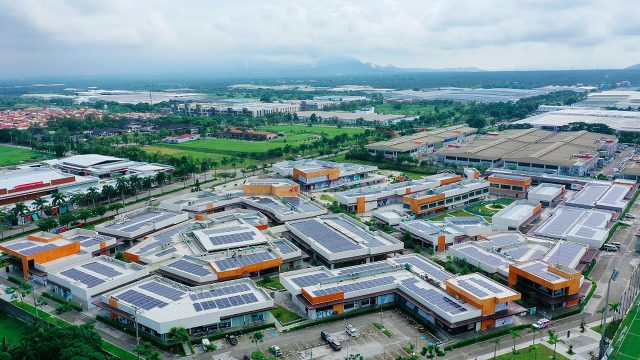
THE DISTANCE to recycling centers is keeping plastic waste in the provinces from being processed, according to a fintech offering a global plastic deposit program.

Rene Guarin, Plastic Bank vice-president for the Asia-Pacific region, said the dearth of recycling centers points to an opportunity to tap public-private partnerships (PPP) and blended finance to enable broader compliance with the Expanded Producer Responsibility (EPR) law.

There’s a lot of plastics in the provinces. They just stay there because the main constraint is, “How do I bring this to recyclers if they’re far?” he added.

The expense of transporting plastics to processing facilities could exceed the value of the waste, he noted.

The EPR law requires companies to manage the entire life cycle of their plastic packaging, including disposal. It set a recovery rate target of 80% for all plastic packaging.

“I think if you take a look at recycling industry, not much investment is really coming in,” he said on the sidelines of an EPR event with Philippine companies.

“If there are no bailing machines or crushers, the cost of transport is really higher than the market value,” he said, citing feedback from waste collectors.

“Then the recyclers say, we have the machines, but sometimes our machines need to be upgraded so that they would meet international standards,” Mr. Guarin said.

“For each market, there are different standards, different kinds of machines are needed,” he added.

Mr. Guarin said PPPs and blended finance — which involves pooling public funds and private philanthropy — are key to helping recyclers upgrade their facilities and equipment, as an alternative to commercial bank financing.

“Right now, their investment is really coming from their own funds. If there’s a PPP, that would reduce the cost of money for them to upgrade and expand their capacity,” he said. “That would bring in more recycling in the Philippines.”

Mr. Guarin also cited the need to mainstream blended finance to reduce the burden of loan financing with grants.

“It’s been practiced in other countries,” he added.

“But if you talk to processors, they don’t have any idea because nobody has approached them (with such a scheme) in the Philippines.”

Plastic Bank has a traceable recycling system supported by the blockchain. Garbage collectors, for instance, can exchange the plastic they collect for either cash or social benefits such as health insurance, grocery vouchers and school supplies.

Plastic Bank, a Canadian fintech, sells on the materials it collects to large brands for use as recycled materials.

“We add value to the plastic we sell. We call our material social plastic,” Founder and Chief Executive Officer David Katz said.

“It’s collected by everybody. It’s for everybody.”

Plastic Bank offers solutions in the form of plastic credits to help Philippine companies achieve their 80% recovery rate by 2028.

The EPR law requires all companies with assets exceeding P1 billion to implement EPR programs.

Mr. Guarin said companies may not be able to meet the 80% recovery rate if they do not pay equal attention to waste reduction or using recycled plastic in their packaging.

“This is the experience of other countries. They say that once it hits around 60%, it’s hard to collect that volume for compliance,” he said.

“That’s where the other part of the approach comes in, which is the reduction side.”

“Part of that reduction is you use recycled materials so that that would be deducted from the plastic that was asked of you to recover,” he explained.

“A good combination of recovery and using recycled materials would allow companies to meet that 80% requirement,” he added.

Meanwhile, Canadian Chamber of Commerce of the Philippines President Christopher A. Ilagan called for more incentives for EPR activities including tax deductions for conducting research and development, in order to aid in compliance.

He backs a duty-free import scheme for equipment and green lanes for sustainable inputs, among others.

“Building material recovery facilities, upgrading waste management systems, and deploying traceability technologies are capital intensive,” he said.

“Incentivizing infrastructure investment ensures that EPR is not just a compliance exercise, but also a catalyst for industrial transformation,” he added.

“True circularity begins with design. Companies that invest in packaging that is recyclable, reusable, or made from recycled content should be recognized.” — Kyle Aristophere T. Atienza

Negros sugar farms report pest infestation

PHILSTAR FILE PHOTO

SUGAR FARMS in northern Negros Occidental reported an infestation of red-striped soft scale insects (RSSI), which have the potential to reduce sugar content in cane by almost 50%, the Sugar Regulatory Administration (SRA) said on Wednesday.

The infestation might have been brought to Negros from Luzon, “where RSSI infestation…is still present in some farms,” it said.

SRA Administrator Pablo Luis S. Azcona said:

“We cannot afford to have an infestation, as some farmers are already starting to plant their cane for the next crop year,” he said.

“We made a good showing this year despite the challenges brought about by the long drought, and I hope we can maintain the momentum and even exceed our targets for next year if we all help one another in containing this infestation,” he added.

The SRA said earlier this week that sugar production for crop year 2024-2025 could total 1.837 million metric tons (MMT), exceeding the initial estimate of 1.782 MMT but lower than the actual output of 1.92 MMT in the preceding crop year. The new estimate, if realized, would come in just below the US Department of Agriculture’s 1.85-MMT forecast.

The SRA said it will quarantine the farms, following protocols previously practiced by the coconut industry in containing a cocolisap infestation.

It said the spread of the cocolisap was effectively contained by ensuring that agricultural products would not be shipped out of Calabarzon (Cavite, Laguna, Batangas, Rizal and Quezon) while the infestation was active.

Citing the National Crop Protection Center at the University of the Philippines Los Baños, the SRA said insecticides such as dinotefuran, phenthoate,pymetrozine, and thiamethoxam have shown potential in limiting the RSSI infestation.

The process of testing the insecticides will require an emergency-use permit from the Fertilizer and Pesticide Authority, the SRA said, noting that the insecticides are “not yet registered for sugarcane.”

The SRA said it will propose trials to be conducted in Negros. — Kyle Aristophere T. Atienza

IFC technical assistance tapped for PEZA eco-industrial park transition

REUTERS

THE Philippine Economic Zone Authority (PEZA) said it partnered with the International Finance Corp. (IFC) to look into eco-industrial park (EIP) opportunities in the Philippines.

“As we transition to the EIP model, we are optimistic that PEZA’s 427 economic zones (ecozones) and the country’s freeports will adopt the EIP framework and green growth strategies,” PEZA Director General Tereso O. Panga said in a social media post on Wednesday.

“Our ecozones must evolve beyond being just viable locations for foreign direct investment (FDI). They must now enable industrial symbiosis, climate resilience, green infrastructure, and energy efficiency to ensure sustainable growth while upholding social responsibility, environmental stewardship, and ethical excellence,” he added.

According to Mr. Panga, the technical assistance project covers the development of a diagnostic report on EIP opportunities in the country.

Through the project, IFC-WB will help PEZA in benchmarking the EIP frameworks adopted by other countries, reviewing the enabling law necessary for the EIP transition, conducting market assessments on the potential impact of EIP framework adoption, and drafting a roadmap for EIP framework implementation.

“Guided by IFC’s EIP certification program, a global voluntary certification system will be developed to ensure transparent and comparable performance across industrial zones,” Mr. Panga said.

“This international initiative aims to boost the adoption of sustainability standards in industrial parks, freeports, and economic zones through the participation of developers and operators from various countries,” he added.

Five industrial parks will serve as case studies to evaluate the potential impact of EIP adoption. The five are Lima Technology Center, First Philippine Industrial Park, Laguna Technopark, Light Industry and Science Park, and Carmelray Industrial Park.

“These zones will serve as test beds for integrating sustainability into business strategy — helping to attract more investments amid increasing competition from countries also pursuing EIP certification for their economic zones,” Mr. Panga said.

He said that the EIP framework will enable companies in a common property “to gain a competitive advantage through the physical exchange of materials, energy, water, and by-products — thereby fostering inclusive and sustainable development.”

PEZA recently launched the Sustainability Reporting Guide for Exporters and has partnered with Japan’s Zeroboard, Inc. for decarbonization efforts.

“This commitment means a great deal to us in PEZA, as we are responsible for a substantial portion of the country’s FDI in manufacturing and services, contributing approximately 60% of the Philippines’ total annual exports of goods and services,” Mr. Panga said.

“Undoubtedly, these sustainability programs will enhance the competitiveness not only of PEZA but also of our valued ecozone locators and stakeholders,” he added. — Justine Irish D. Tabile

No new taxes stance ‘possible’ with crackdown on tax cheats

FINANCE SECRETARY RALPH G. RECTO — PHOTO FROM DEPARTMENT OF FINANCE FACEBOOK PAGE

By Aubrey Rose A. Inosante, Reporter

THE Philippines’ decision to not impose new tax measures until 2028 is deemed feasible if accompanied by stepped-up enforcement against tax evaders, analysts said.

“This is possible if there is intensified tax collection… (and) running after tax cheats,” Rizal Commercial Banking Corp. Chief Economist Michael L. Ricafort said via Viber.

Fitch Solutions unit BMI said, however, that spending pressures could mount to cushion the economy against US tariffs.

In March, government expenditure rose 35.37% to P655 billion, bringing spending to P1.477 trillion in the first quarter.

Finance Secretary Ralph G. Recto has said he is not seeking to impose new taxes or revenue measures, citing the government’s robust fiscal position.

In April, the Department of Finance (DoF) withdrew its proposal to increase capital gains tax, donor’s tax and estate tax, which could have could have yielded around P300 billion in revenue.

Mr. Ricafort said if the government fails to bring down the share of debt to gross domestic product to 60% from 62% at the end of the first quarter, it might be compelled to impose new taxes or pursue further reforms, or be stricter with its spending priorities.

He called for “avoiding wasteful spending and other leakages, anti-corruption initiatives, as well as right-sizing the government.”

Minimal Government Thinkers President Bienvenido S. Oplas, Jr. warned of the deterrent effect on investment of new taxes.

“Any new tax can adversely affect business and consumer confidence and should be avoided as much as possible. We need to focus instead on better tax administration, raising more revenue from existing taxes, and controlling spending to limit high borrowing and budget deficits,” he said.

He also called for curbing smuggling and illicit trade, to minimize revenue losses.

Mr. Oplas, citing Federation of Philippine Industries Chairman Jesus L. Arranza, said the government loses P250 billion a year from the smuggling of petroleum, alcohol, tobacco, jewelry, clothing, and other items.

“Another good policy is more privatization. Lots of big-ticket items, hundreds of billions of pesos, can be realized from this alone,” he said.

According to the DoF’s Privatization and Management Office, the Caliraya-Botocan-Kalayaan power project privatization can raise between $200 million and $600 million.

The government’s outstanding debt, currently at P16.68 trillion is expected to hit P20.7 trillion by the time President Ferdinand R. Marcos, Jr. steps down.

Philippine and US coast guards hold first sea exercises in South China Sea

(FROM FRONT) BRP Ramon Alcaraz, USCG Cutter Stratton and BRP Melchora Aquino sail during the 6th bilateral Maritime Cooperative Activity in the South China Sea on May 20. — PHILIPPINE MILITARY

COAST GUARD vessels of the Philippines and the US took part for the first time in joint sea exercises with naval and air force units in the South China Sea, the Philippine military said on Wednesday.

The exercises, held on Tuesday in waters off Palawan and Occidental Mindoro, involved the Philippine Navy, Air Force and Coast Guard, alongside the US Coast Guard Cutter Stratton and a US Navy P-8A Poseidon maritime patrol aircraft.

The “maritime cooperative activity,” which was the second for the year and sixth overall since the allies launched the joint activities in 2023, included communication drills and search-and-rescue scenarios, the military said in a statement.

“Joint activities like the maritime cooperative activity reaffirm the Armed Forces of the Philippines’ (AFP) commitment to modernizing its capabilities and strengthening defense partnerships to secure our national and regional maritime interests,” AFP chief General Romeo S. Brawner, Jr. said in the statement.

A Philippine Navy patrol ship and gunboat took part in the drills, joined by two Philippine Coast Guard (PCG) patrol vessels and the Stratton.

A Philippine Navy helicopter, the Philippine Air Force’s turboprop attack plane and choppers and the Poseidon aircraft took part in surveillance and operational coordination exercises over Philippine waters.

The Philippines and US, which are long-time treaty allies, are working together to bolster defense coordination amid increased Chinese assertiveness in the South China Sea, a key global trade route that is believed to be rich in minerals and oil deposits.

The drills simulated “real-world scenarios” involving tactical ship maneuvers, search and rescue operations and communication exercises, and was the sixth iteration of the maritime rehearsal between the two countries, the PCG said in a separate statement on Tuesday.

The sea drills reinforced the Philippines and US’ commitment to uphold maritime security and a “rules-based international order,” it said.

“This exercise is about ensuring readiness, saving lives and supporting our shared maritime responsibilities,” PCG Commander for Palawan Commodore Weniel A. Azcuna said in the statement.

China claims nearly all of the South China Sea based on a 1940s nine-dash line map, putting it at odds with the Philippines, Vietnam and Malaysia.

Beijing continues to assert sovereignty over the waterway despite a 2016 ruling by a United Nations-backed tribunal that voided its claim for being illegal.

The maritime drills coincided with the Philippines and Australia’s first military exercises in southern Philippines, where their armies held combat drills to enhance urban and jungle warfare tactics.

Three platoons of the Philippine Army’s infantry and combat engineer units will hold a month-long drill alongside their Australian Army counterparts in Mindanao, where they will perform combat interoperability exercises in land warfare, the Philippine Army said on Tuesday.

The Philippines seeks to expand its security ties with other western countries and regional allies as it faces an increasingly assertive China over disputed features in the South China Sea.

Already tied with a visiting forces agreement with Japan, Australia and New Zealand, the Southeast Asian nation also seeks similar military pacts with France and Canada after signing a security deal with Germany for expanded cooperation in the cybersecurity space, weaponry and logistics.

Dubbed as Exercise Kasangga — Filipino for ally — the exercise will see Filipino and Australian troops in “real-world training scenarios” that will challenge their techniques in breaching enemy positions, unit mobility and reconnaissance operations.

The joint exercise comes on the heels of the Philippine-US Balikatan (shoulder-to-shoulder) war games and will coincide with Exercise Kamandag (poison), a multinational exercise involving the US, South Korea, the United Kingdom and Japan forces on coastal defense operations throughout the main island of Luzon. — Kenneth Christiane L. Basilio

PHL says resupply missions don’t need Chinese approval

BRP SIERRA MADRE, a marooned transport ship which Philippine Marines live in as a military outpost, sits on the disputed Second Thomas Shoal, part of the Spratly Islands in the South China Sea. — REUTERS

By Kenneth Christiane L. Basilio, Reporter

THE Philippines on Wednesday rejected China’s claim that it had allowed a civilian vessel from the Southeast Asian nation to deliver supplies to a military outpost in the South China Sea, saying it does not need Beijing’s approval.

“Any type of mission to that ship is well within the rights of the Philippine Navy and of the country, and needs no approval from any foreign power,” Philippine Navy spokesman Rear Admiral Roy Vincent T. Trinidad told BusinessWorld in a Viber message on Wednesday.

The China Coast Guard (CCG) on Tuesday said it had allowed a Philippine civilian vessel to deliver supplies to BRP Sierra Madre, a World War II-era ship that Manila beached at Second Thomas Shoal in 1999 to asserts its claim. It has a handful of soldiers there.

China’s coast guard conducted “inquiries, verification and full supervision” throughout the resupply mission on May 16, according to a China Military Online report.

The disputed shoal has been a source of tension between Manila and Beijing, whose bigger coast guard and navy vessels frequently fire water cannons at smaller Philippine ships during resupply missions.

The two reached a provisional agreement in July last year for such operations.

The CCG urged the Philippines to “honor its commitments” and work with it to keep the situation at the shoal under control, according to the report published on the military news website sponsored by the People’s Liberation Army.

“The CCG will continue to carry out rights protection and law enforcement activities in the Nansha Qundao, including the Ren’ai Jiao, and their adjacent waters in accordance with law,” coast guard spokesman Liu Dejin said in the news report, referring to the Spratly Islands and Second Thomas Shoal by their Chinese names.

The Philippine Navy is committed to safeguarding the integrity of the country’s territory, Mr. Trinidad said, adding that it would not “tolerate any disrespect to our sovereignty.”

“Ayungin or Second Thomas Shoal is a low-tide elevation within the Philippines’ exclusive economic zone, and as such, the country exercises sovereign rights over it in accordance with the United Nations Convention on the Law of the Sea,” he added.

Manila and Beijing have repeatedly locked horns over maritime features that both nations claim in the South China Sea, leading to confrontations that involve the use of water cannons and repeated sideswipes by Chinese vessels against Philippine ships.

Manila has condemned such acts as aggressive and unlawful, while Beijing maintains its actions are meant to defend Chinese sovereignty.

China claims nearly all of the potentially mineral- and oil-rich South China Sea based on a 1940s nine-dash line map that overlaps with the exclusive waters of the Philippines and neighbors like Vietnam and Malaysia.

Lawmaker bucks ASEAN visa plan, cites national security concerns

REUTERS

A CONGRESSMAN on Wednesday opposed the Philippines’ endorsement of a plan to have a unified visa system for the Association of Southeast Asian Nation (ASEAN), raising concerns about foreign spy infiltration.

In a statement, Cagayan de Oro Rep. Rufus B. Rodriguez urged Tourism Secretary Ma. Esperanza Christina G. Frasco to withdraw her agency’s endorsement of the planned visa system, telling her to consider the consequences to national security.

“This will be more dangerous to our national security than our present visa issuance process,” he said. “[It] will allow Chinese tourists who are actually spies to get ASEAN visas.”

The Chinese Embassy in Manila did not immediately reply to a Viber message seeking comment.

The Tourism department last week backed a proposal making travel among ASEAN members more seamless during a forum held in Thailand. Ms. Frasco said the visa proposal could be patterned after the Schengen visa system of the European Union.

“We are all for boosting our tourism sector and our economy by having more tourist arrivals but given our experience and our raging dispute with China over the West Philippine Sea, we don’t want to just accept Chinese tourists,” Mr. Rodriguez said.

“They should undergo rigorous evaluation by our embassy and consulates in China,” he added.

Philippine authorities have arrested several Chinese nationals since the start of the year for espionage, including surveillance near military facilities, the presidential palace and the Commission on Elections headquarters in Manila.

The arrests came amid rising tensions between the Philippines and China due to their sea dispute.

China claims nearly the entire South China Sea based on a 1940s nine-dash line map that overlaps with the Philippines’ exclusive economic zone. It has deployed coast guard and maritime militia fleets in disputed waters where confrontations between Philippine and Chinese vessels have occurred.

Mr. Rodriguez alleged that Chinese spies have entered the Philippines by posing as tourists, students or businessmen.

“Many of them are actually spies of Beijing, several of whom have been caught red-handed by the authorities near military installations and sensitive government offices,” he added. — Kenneth Christiane L. Basilio

Voter registration for village and youth council elections set for July

PHILIPPINE STAR/MIGUEL DE GUZMAN

THE Commission on Elections (Comelec) on Wednesday said that it will reopen voter registration for ten days from the last week of July to the first week of August, ahead of the upcoming village and youth council elections scheduled for Dec. 1.

“Because we have village elections, many of our fellow citizens want to reactivate or transfer their registration or register as new voters. So, we will be allotting around ten days for voter registration nationwide,” Chairman George Erwin M. Garcia said in Filipino at a news briefing in Manila City.

The poll chief said they could not extend the voters’ registration period as the body would need to conduct hearings and cleansing to ensure the political aspirants’ records.

He clarified that the ten-day registration period does not include voters in the Bangsamoro Autonomous Region in Muslim Mindanao (BARMM).

“We might not be able to open registration for new voters, reactivate previous voters, or allow any changes to registration details in the BARMM area because we do not want to create the impression that those who register during the ten-day period from July to August will be allowed to vote in the Bangsamoro elections if they are from BARMM,” Mr. Garcia said.

“Therefore, voter registration in BARMM will be suspended to ensure that only those already in the official list for the 2025 national and local elections will be allowed to vote in the Bangsamoro polls.”

BARMM’s first-ever parliamentary elections were moved to Oct. 13, from May 12, prompted by a Supreme Court ruling that excluded the province of Sulu from BARMM.

The December polls will be counted manually, compared to the recently concluded midterm polls on May 12, which used automated counting machines.

Meanwhile, the poll chief said that the Starlink communications equipment used during the midterm elections will be donated to schools under the Department of Education (DepEd).

Around 8,000 Starlink devices will be distributed around the DepEd schools and Comelec satellite offices. The devices will be donated by iOne Resources.

The Philippines recently wrapped up its midterm elections, where Filipinos voted for 12 new senators, hundreds of party-list and district representatives, and thousands of local government officials. — Chloe Mari A. Hufana

Romblon elects 1st female governor

ROMBLON’S first female governor-elect Trina Firmalo-Fabic (center in photo) has been proclaimed on Wednesday by the Provincial Board of Canvassers at Romblon’s capitol.

She won the May 12 polls after securing 93,425 votes, against 76,541 votes garnered by opponent and reelectionist Jose R. Riano.

Ms. Firmalo is the daughter of former Romblon Governor Eduardo “Lolong” and Dr. Leonie Firmalo.