Home Blog Page 1063

197 scam reports: Gogolook turns over Scam Vault PH data to CICC to boost online scam investigations

In photo (from left to right): CICC Acting Executive Director and Undersecretary Aboy Paraiso and Gogolook Philippines Country Head and General Manager Mel Migriño

In a significant move to bolster the country’s fight against online scam, Taiwan-based TrustTech company Gogolook, the developer of the digital anti-scam app Whoscall, formally turned over consolidated scam data to the Cybercrime Investigation and Coordinating Center (CICC) this week.

The dataset, covering the period from June 26 to July 30, includes a total of 197 validated scam reports submitted by Filipino netizens through Scam Vault PH — a community-driven platform operated by Scam Watch Pilipinas in partnership with Gogolook.

Of the 197 scam reports turned over, 77 involved SMS and instant messaging scams, including spoofed alerts from banks and mobile wallets that attempted to trick recipients into clicking malicious links or disclosing sensitive information.

Meanwhile, 108 reports came from social media platforms, exposing scam accounts posing as job recruiters, online sellers, digital payment verifiers, or even impersonating government agents to gain public trust and extract data or money.

The remaining 12 reports involved malicious URLs, such as phishing websites and deepfake pages designed to impersonate legitimate institutions and deceive users into entering confidential information.

Across all channels, the most common types of scams reported included fraud, spoofing, phishing, investment scams, and spam. The diversity of these scams highlights the evolving tactics of cybercriminals, who continue to exploit digital platforms and trusted brands to deceive the public.

“This data reflects the power of digital collaboration. By mobilizing citizen reports through Whoscall and Scam Vault PH, we’re able to give law enforcement a clearer picture of the evolving scam landscape,” said Mel Migriño, country head and general manager of Gogolook in the Philippines. “This handover to the CICC is not just a milestone — it’s a promise to continue empowering Filipinos with tools and knowledge to fight back.”

Deputy Executive Director Aboy Paraiso of the CICC welcomed the data handover, calling it a vital resource for ongoing cybercrime investigations.

“This is actionable intelligence. With these citizen reports, we can trace digital footprints, identify scam networks, and protect more Filipinos,” Mr. Paraiso said. “We thank Gogolook and Scam Watch Pilipinas for helping transform public vigilance into meaningful law enforcement leads.”

The Scam Vault PH platform enables the public to report a wide range of online scam content — from suspicious text messages and fake Facebook accounts to fraudulent websites.

Each submission is verified, categorized, and tagged before being forwarded to enforcement agencies for investigation.

The CICC is expected to integrate the Scam Vault data into its threat intelligence and cybercrime tracking systems. It will also coordinate with the Philippine National Police Anti-Cybercrime Group (PNP-ACG) and other law enforcement bodies to pursue leads, disrupt criminal operations, and hold perpetrators accountable.

The Scam Vault PH initiative is a joint initiative by Gogolook, the CICC, the PNP-ACG, and Scam Watch Pilipinas.


Spotlight is BusinessWorld’s sponsored section that allows advertisers to amplify their brand and connect with BusinessWorld’s audience by publishing their stories on the BusinessWorld Web site. For more information, send an email to online@bworldonline.com.

Join us on Viber at https://bit.ly/3hv6bLA to get more updates and subscribe to BusinessWorld’s titles and get exclusive content through www.bworld-x.com.

Gov’t officials to face lifestyle checks

Workers from the Department of Public Works and Highways (DPWH) continue working on the flood control project in Marikina City. — PHILIPPINE STAR/WALTER BOLLOZOS

By Chloe Mari A. Hufana, Reporter

PHILIPPINE President Ferdinand R. Marcos, Jr. on Wednesday ordered lifestyle checks on government officials as the probe into questionable flood control projects continues.

“The President has ordered a lifestyle check on all officials amid the ongoing investigation into anomalous flood control projects,” Palace Press Officer Clarissa A. Castro told a news briefing in Filipino.

She said the review would begin with the Department of Public Works and Highways (DPWH), which implements flood control programs nationwide.

Mr. Marcos has also ordered the continuous review of DPWH records tied to questionable flood control projects.

“The government’s investigation is also underway to identify those behind the projects that were supposed to help address the country’s widespread flooding problem,” Ms. Castro added, noting the government will file criminal charges regardless of political ties.

“There will definitely be lawsuits. Those who should be charged will be charged,” she noted.

Earlier this month, Mr. Marcos launched the sumbongsapangulo.ph platform for Filipinos to report irregularities in flood mitigation projects in their areas.

The President has so far visited 11 areas that were reported on the website, including a ghost project worth P55 million in Bulacan province.

As of Wednesday, Ms. Castro said the website has received 9,020 reports.

Department heads will spearhead the lifestyle checks, although Ms. Castro said the Ombudsman and the Bureau of Internal Revenue (BIR) may also initiate such reviews motu proprio.

“In every agency, a lifestyle check can be conducted. The Ombudsman may initiate it, and the BIR may carry out inspections and lifestyle checks within their jurisdiction,” she said.

Ms. Castro assured the review will be nonpartisan and independent, despite allegations of corruption within certain departments.

Budget Secretary Amenah F. Pangandaman, Transportation Secretary Vivencio “Vince” B. Dizon, and Information and Communications Technology Secretary Henry Rhoel R. Aguda  expressed willingness to undergo a lifestyle check.

“We are open and we welcome the lifestyle checks,” Ms. Pangandaman told reporters at a separate event.

Mr. Aguda said they will cooperate with the lifestyle checks. “Today with social media, you can’t hide anything anymore,” he added.

“That’s the right thing to do. For the entire government. I think it’s very important,” Mr. Dizon said.

Despite the alleged corruption within DPWH’s ranks and calls for a new chief, Ms. Castro said the President still has full confidence in Public Works Secretary Manuel M. Bonoan.

In his 4th State of the Nation Address on July 28, Mr. Marcos ordered a sweeping probe into anomalous flood control projects as parts of the country experienced heavy flooding during bad weather.

He directed the DPWH to submit a complete list of projects from the past three years, stressing that those riddled with irregularities must face a full investigation.

University of Makati political science professor Ederson DT. Tapia said lifestyle checks in the Philippines are often symbolic rather than systemic.

While Mr. Marcos’ directive signals political will, the real test is whether it will lead to prosecutions and reforms or remain mere optics, he added.

“What’s at stake is not just billions lost, but the lives and welfare those funds could have protected. Every peso lost to anomalous flood control projects is a classroom not built, a hospital left unfunded, or a community still exposed to floods,” he said in a Facebook Messenger chat.

“That’s the true cost of corruption, it robs both the present and the future,” Mr. Tapia added.

Hansley A. Juliano, a political science lecturer at the Ateneo de Manila University, said lifestyle checks should only be preliminary tools and not the ultimate form of investigation.

“Lifestyle checks are supposed to be seen as preliminary; they cannot be the end-all and be-all of the investigation,” he said in a Facebook Messenger chat.

“It is within the right of the government and courts to demand the disclosure of SALNs (Statement of Assets, Liabilities, and Net Worth) the same way we do to government officials under investigation (or even the extreme of a Sandiganbayan case and impeachment).”

Mr. Juliano said government officials should maintain standards, otherwise these efforts might risk being mere “optics.”

On flood control projects, he noted that those funded or assisted by foreign partners often undergo stricter oversight, while local government unit-led projects without external or civil society monitoring are more prone to anomalies. 

He stressed that flood mitigation initiatives must be based on feasibility studies and climate change considerations to avoid becoming wasteful “band-aid” solutions driven by propaganda or political gain.

Local automakers interested in participating in RACE program

VEHICLES occupy both sides of Escolta Street in Manila on Sunday. — PHILIPPINE STAR/RYAN BALDEMOR

By Justine Irish D. Tabile, Reporter

LOCAL AUTOMAKERS have also expressed interest in participating in the Revitalizing the Automotive Industry for Competitiveness Enhancement (RACE) program, the Department of Trade and Industry (DTI) said.

At a budget hearing on Wednesday, Trade Secretary Ma. Cristina A. Roque said that the new auto revival strategy has yet to be implemented.

“We want more companies to avail. Francisco Motors and other local companies have also expressed their interest to avail of this program,” she said.

“It is open to everyone. And the bottomline is, if they can [manufacture] 100,000 units in three years, then they will be able to avail of the incentives,” she added.

She said that the government is aiming to fast-track the release and the implementation of the joint administrative order that will govern the strategy.

“There are other departments involved, so it really needs to be cleared first by all the departments, and then from there, we will roll out,” she said.

“There’s no timeline yet, but we are fast-tracking it so that more players can join,” she added.

Aside from the DTI, the other departments involved in the RACE program are the Department of Finance and the Department of Budget and Management.

According to the secretary, the program will be open to as many players as possible, unlike its predecessor program, the Comprehensive Automotive Resurgence Strategy (CARS), which only had three slots.

“We already discussed this with different companies and stakeholders that may want to avail of this program,” Ms. Roque said.

Aside from local players, other companies that have expressed interest in participating in the RACE program are Toyota Motor Philippines Corp. and Mitsubishi Motors Philippines Corp. Both Toyota and Mitsubishi were also participants in the CARS program.

In the National Expenditure Plan, the RACE program is provided with a budget of P250 million, while fiscal support arrearages for CARS are valued at around P225 million.

However, these programs faced closer scrutiny from lawmakers, who were concerned that foreign manufacturers benefit more than local manufacturers.

“Instead of funding local industries using taxes paid by citizens, why are we funding industries or foreign companies that are already successful,” Kabataan Party-list Rep. Renee Louise M. Co said in Filipino during the hearing.

In response to this, Ms. Roque said that the strategies emphasize the need for the automakers to support the local industries.

“Parts of the car must come from local industries… In the RACE program, part of the requirement is for them to buy a certain percentage of the parts from the local manufacturers, and that is their contribution to the industry,” she said.

SIMILAR INCENTIVES
Board of Investments (BoI) Executive Director Fe L. Del Rosario said that the government will still provide the same incentives under the RACE program, which include the fixed investment support (FIS).

“More or less for the RACE, it will have the same incentives, but in terms of volume requirements per model, it will be lower,” she said, noting that the requirement was 200,000 under the CARS program.

“In the RACE program, we [will] actually provide so-called FIS, which is equivalent to not more than 40% of capital expenditure in the form of tax certificates,” she added.

However, Ms. Del Rosario said that the FIS will not be automatically given, as there is a committee that will evaluate the claims of the company according to the guidelines.

The same provision is also present in the CARS program, where Mitsubishi and Toyota are expected to receive P484 million and P1.3 billion in FIS.

“The amount in the budget referring to the arrearages is the one that will cover these unpaid FIS,” said Ms. Del Rosario.

However, she said that the BoI is currently conducting an audit on the claims in terms of what was approved and what should be paid to the companies.

“Once our audit is done, the P225 million should cover the claim of the companies, whatever it can cover,” she added.

Deputy Minority Leader Antonio L. Tinio, however, raised the issue of whether the government should include technology transfer requirements in the strategy.

“In other countries like India, Indonesia, and Malaysia, they invite the foreign manufacturers, but the requirement is at some point the technology can be used by their own people,” he said.

In response, the DTI stated that it is open to studying technology transfer provisions that would benefit local manufacturers in the strategy.

SEC expands one-day registration to 81 industries

BW FILE PHOTO

By Revin Mikhael D. Ochave, Reporter

THE SECURITIES and Exchange Commission (SEC) recently increased the number of industries that can avail of the one-day company registration process.

In a statement, the corporate regulator said it expanded the list of industries eligible for one-day company registration to 81 from 33 previously.

Companies can apply through the One-Day Submission and Electronic Registration of Companies (OneSEC) Zuper Easy Registration online facility.

The wider coverage resulted in a 190% increase in company registrations through OneSEC to 2,938 in July from 1,014 in May.

Some of the new industries allowed to avail the one-day company registration process include computer programming, customs brokerage, deep sea commercial fishing, drugstore, laundry services, property management, radio broadcasting, and veterinary activities. 

“Company registration marks the first step in legitimizing a business, which is why we want to make the process as easy and accessible as possible to our stakeholders,” SEC Chairperson Francisco Ed. Lim said in the statement.

“As we move to streamline the registration process, we hope to encourage more entrepreneurs to use the corporate vehicle in facilitating their business and eventually, raise funds for expansion by tapping the capital market,” he added.

Introduced in 2021, OneSEC offers pre-filled application forms that lets companies finish the registration process in as fast as one minute and 14 secondsfrom the start of the application to the receipt of a digital certificate of incorporation.

Eligible corporations that can register using the system include one-person corporations and regular corporations with two to 15 incorporators, board of directors and stockholders.

Mr. Lim said the SEC will further streamline its processes to improve ease of doing business in the country. 

“This is just the beginning. We will continue to assess our internal policies to identify the bottlenecks that we need to remove to further improve the ease of doing business, thereby reinforcing the trust and confidence of our stakeholders in our systems,” he said.

SM Investments Corp. economist Robert Dan J. Roces said the SEC’s move is a big win for startups and micro, small, and medium enterprises (MSMEs) as it will help legitimize their businesses. 

Faster entry into the formal economy means easier access to finance and growth opportunities, and the jump in registrations shows how strong the demand is. This step not only supports entrepreneurs but also fuels jobs and competition in the broader economy,” Mr. Roces said in a Viber message

Rizal Commercial Banking Corp. Chief Economist Michael L. Ricafort said in a Viber message that the expanded eligibility will help encourage greater compliance among businesses.   

“This is part of the efforts to further ease doing business, both small and large businesses, apart from the initiatives of the Anti-Red Tape Authority,” he said.

DIGITAL FINANCE
Meanwhile, Mr. Lim said the Philippines can become a leader in trusted digital finance.

“If we work together — government, industry, and innovators — we can make the Philippines not just a participant, but a leader in the digital financial revolution,” he said in his keynote address at the Manila Tech Summit 2025 on Wednesday.

“Technology is transforming finance at a breathtaking pace. But while the channels change, our duty as regulators does not: markets must always be fair, transparent, and safe for all. That is why our principle is simple: same activity, same risk, and same regulatory outcome. The SEC is technology-neutral, but never risk-blind,” he added. 

The SEC is also pushing for a capital market that is digital, inclusive, and trusted, according to Mr. Lim. 

“Our goal is clear: a capital market that is deeper, more inclusive, and globally competitive — powered by technology, secured by trust, and inspired by the ingenuity of the Filipino,” he said. 

Mr. Lim also said that regulation is a platform for innovation and growth, and not a hindrance to progress. 

“Ease of doing business and investor protection are not opposing goals — they are twin pillars of market integrity,” he said.

“Every safeguard we build is not just a shield against abuse — it is a bridge between innovation and trust, ambition and stability, risk and reward.”

The SEC has been introducing programs to improve the ease of doing business in the country and urged more MSMEs to register as corporations.

On July 16, the commission issued Memorandum Circular No. 8 that granted a 20% discount in registration fees, and up to 50% discount in the filing fee for MSMEs seeking to tap the capital market.

It also implemented strict timelines in the processing of applications for permits, licenses, registrations, certificates, clearances, and other authorizations.

The SEC also adopted a “deemed approved” policy if it fails to meet its own deadline for review.

BSP adopts new format for policy announcements

BW FILE PHOTO

THE BANGKO SENTRAL ng Pilipinas (BSP) will start implementing a new format for communicating monetary policy decisions starting Aug. 28, as part of efforts to increase transparency.

In a statement, the BSP said it will release its statement on monetary policy on its official website and its official X account at 2:30 p.m.

This will be followed by a press briefing at 3 p.m., which will be livestreamed on the BSP’s official Facebook page.

The briefing will begin with a statement to be read by BSP Governor Eli M. Remolona, Jr. and followed by a question-and-answer session with members of the media.

“This is part of the BSP’s efforts to further strengthen transparency and public appreciation of monetary policy actions,” the central bank said.

Prior to the change, the Monetary Board’s (MB) monetary policy decision was announced by the BSP governor at a 3 p.m. briefing.

John Paolo R. Rivera, a senior research fellow at the Philippine Institute for Development Studies, said the new format is a “positive move toward greater market transparency and responsiveness.”

He noted that it would allow market players to react to the Monetary Board’s stance in real-time, leaving less room for uncertainty and speculation.

“This also aligns the BSP with global best practices among central banks that time their announcements to maximize market guidance while minimizing volatility,” Mr. Rivera said in a Viber message.

“It signals confidence in its policy communication and enhances its signaling power, especially in times of heightened market sensitivity,” he added.

The BSP’s new format is similar to the US Federal Reserve’s format.

The Federal Open Market Committee releases a statement at 2 p.m. Eastern Time on the final day of its two-day meeting. The Fed Chair holds a press conference around 30 minutes after the statement is released.

The MB will hold its policy review today (Aug. 28), where it is widely expected to deliver a 25-basis-point rate cut. If realized, this would bring the benchmark rate to 5% from the current 5.25%. — KKC

CBD rents hold firm; fringe faces oversupply

PHILIPPINE STAR/ MICHAEL VARCAS

THE METRO MANILA office market is expected to see continued demand for high-quality and strategically located properties, but fringe areas are facing oversupply, according to property consultancy firm Cushman & Wakefield.

In its Second Quarter 2025 Philippine Office and Investment MarketBeat report, the consultancy said rental rates for Prime and Grade A offices in central business districts (CBD) such as Makati, Bonifacio Global City (BGC), and Ortigas rose 0.5% quarter on quarter to P1,118 per square meter (sq.m.) per month, while vacancy rates improved to 10.5% from 11% in the previous quarter.

“This was driven by a flight-to-quality, with demand fueled by multinational relocations and financial sector expansions,” the report said.

By contrast, office rents in fringe CBD areas fell 1.8% quarter on quarter to P842 per sq.m. per month, with vacancy rates rising to 23.4% from 22.8% in the previous quarter due to persistent oversupply and returned spaces.

Cushman & Wakefield data showed that BGC’s CBD has an existing inventory of 2.3 million sq.m., while Ortigas and Makati CBDs each have 1.6 million sq.m. and 1.5 million sq.m., respectively.

Fringe areas, meanwhile, account for a total of 4.7 million sq.m. of unoccupied office space, led by Quezon City (1.5 million sq.m.), Pasay City (800,000 sq.m.), Muntinlupa City (700,000 sq.m.), BGC (Taguig) fringe (500,000 sq.m.), and Makati fringe (500,000 sq.m.).

“The resilience of Metro Manila’s office market, particularly in the established CBDs, underlines the enduring demand for high-quality and strategically located properties. Meanwhile, fringe areas will require more innovative approaches to address persistent challenges,” Claro dG. Cordero, Jr., director and head of research, consulting & advisory services at Cushman & Wakefield, said in a statement.

The consultancy noted that fringe areas are likely to continue experiencing rental adjustments and landlord concessions, with more than 300,000 sq.m. of additional supply expected through 2027. Elevated vacancy rates and hybrid work trends are also expected to weigh on performance in the fringe office segment.

“Additional supply in 2025, especially in Quezon City and Muntinlupa, is expected to sustain pressure on rents and vacancies in fringe markets,” Mr. Cordero said. “CBDs may continue to benefit from demand for high-quality, well-located office spaces.”

Despite headwinds, Cushman & Wakefield said sustained economic growth and easing inflation highlight the resilience of the Philippine real estate market across sectors.

The Philippine economy expanded by 5.5% in the second quarter, slightly higher than 5.4% in the previous quarter but slower than the 6.5% growth in the same period last year.

Headline inflation, meanwhile, eased to a near six-year low of 0.9% in July due to lower utility and food costs.

“The Philippine real estate market continues to reflect the country’s economic momentum, driven by strong consumption patterns, tourism recovery, and advancing logistics demands. Each sector is adapting to the evolving needs of end-users, creating long-term opportunities for developers and investors alike,” Mr. Cordero said. — Beatriz Marie D. Cruz

ACEN unit allots P34.5B for 247-MW Banahaw Wind project

ACENRENEWABLES.COM

GIGAWIND4, INC., an ACEN Corp. unit, is earmarking P34.5 billion for a wind power project in Tayabas, Quezon, with a planned capacity of 247 megawatts (MW).

“In the pursuit of a sustainable and low-carbon future, the proposal for the 247-MW wind farm represents a strategic initiative,” GigaWind4 said in its filing with the Department of Environment and Natural Resources.

“It aligns with the national trajectory towards renewable energy, addresses the necessity for a diversified and resilient energy mix, and significantly contributes to the Philippines’ transition towards clean energy,” it added.

Covering 10 barangays in the city of Tayabas, the Banahaw Wind Power Project will span 4,536 hectares of land.

The project involves the installation of 38 wind turbine generators with a rated capacity of 6.5 MW each.

“The Banahaw Wind Power Project is not only a significant endeavor in advancing renewable energy, but it also holds great potential to address regional needs and bring about positive socio-economic changes,” the company said.

“The project’s benefits to the host municipalities and barangays encompass economic growth, community development, environmental stewardship, and social progress,” it added.

GigaWind4 said the construction of the power project may take about two years, with full operations possibly achieved within five years.

ACEN, the listed energy platform of the Ayala group, has 7 gigawatts of attributable renewable energy capacity across operational, under-construction, and committed projects.

Its portfolio spans the Philippines, Australia, Vietnam, India, Indonesia, Laos, and the United States. — Sheldeen Joy Talavera

8990 Holdings stockholders approve voluntary delisting

8990HOLDINGS.COM

REAL ESTATE developer 8990 Holdings, Inc. has secured stockholders’ approval for its planned voluntary delisting from the Philippine Stock Exchange (PSE).

The voluntary delisting was approved by stockholders during the annual meeting on Aug. 26, 8990 Holdings said in a regulatory filing on Wednesday.

In July, 8990 Holdings announced its delisting plan, with subsidiary 8990 Housing Development Corp. launching a tender offer at P10.42 per share as part of the exit process.

The tender offer will exclude common shares held by majority shareholders Iholdings, Inc., Kwantlen Development Corp., Mariano D. Martinez, Luis N. Yu, Jr., and the qualifying common shares of the directors.

8990 Holdings said the voluntary delisting would help unlock the value of its business and assets.

“The voluntary delisting of the company would unlock the intrinsic value of the company’s business and assets, which does not seem to be fully appreciated by the market, based on the historical trading price of the company’s shares on the PSE,” 8990 Holdings said.

8990 Holdings is engaged in property development through the brands Deca Homes, Deca Towers, and Urban Deca Towers. Its portfolio includes low-cost mass housing units and subdivision lots, as well as medium-rise and high-rise housing units. The company is also engaged in hotel operations.

On Wednesday, 8990 Holdings shares fell by 1.75% or 18 centavos to P10.12 apiece. — Revin Mikhael D. Ochave

Exploring El Nido’s charm beyond sunshine and sand

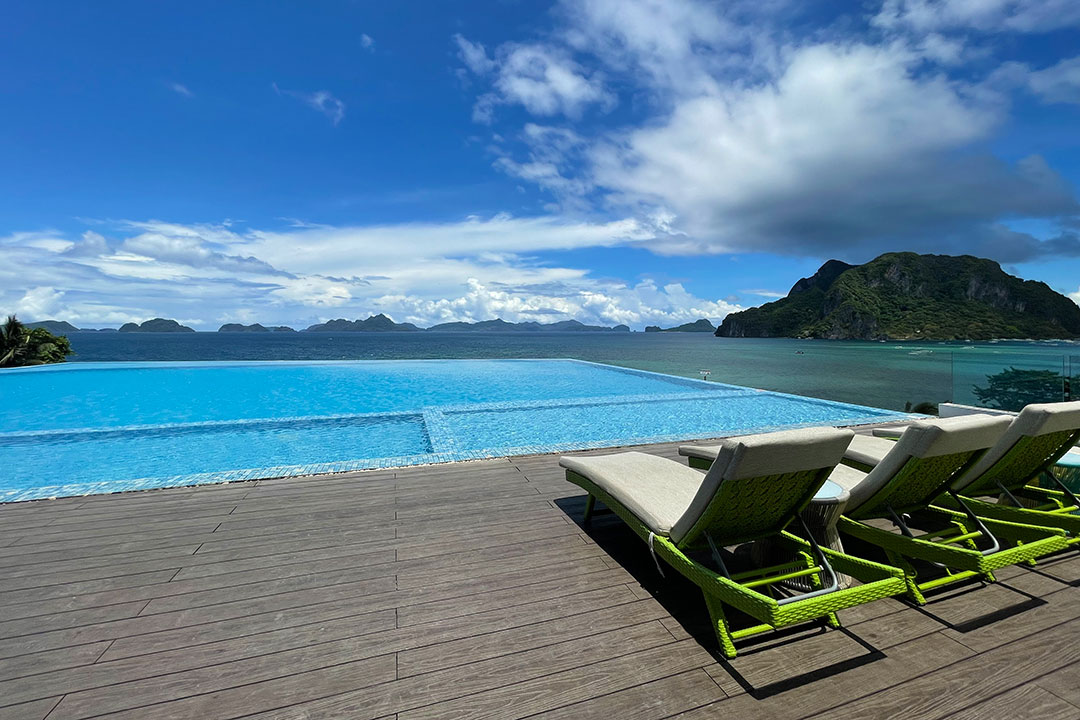
THE INFINITY POOL at Lime Resort El Nido.

By Almira Louise S. Martinez, Reporter

LOW SEASON came early at one of the most popular summer destinations, El Nido, according to a manager in one of the hotels in the coastal town. Yet, despite the gloomy weather, tourists can still enjoy an unforgettable getaway, one that goes beyond the usual island hopping and snorkeling.

“The tourists usually do inland tours; they just rent out a van and then they go around the town,” Annie Rose L. Latoza, pricing manager at Lime Resort El Nido, told BusinessWorld in an interview.

Some of the usual land-based activities include ziplining 750 meters across Las Cabanas Beach; trekking at the Taraw Cliff Canopy, an Instagram-worthy spot with a panoramic view of Bacuit Bay; riding an ATV at Daluyon Surf; and making a quick stop at a souvenir shop along Town Square.

Meanwhile, for tourists who want to have the ultimate staycation on the island while enjoying the sea breeze, accommodations like Lime Resort have more to offer than just a relaxing place.

LIME RESORT EL NIDO
Located at Sitio Lugadia, Brgy. Corong-Corong, Lime Resort El Nido is about 15 to 20 minutes away from the airport. It currently has 164 operating rooms, with rates ranging from P4,500 to P15,500 during the rainy season.

“Usually we go up to 40% (discount) if ever the occupancies are really low,” Ms. Latoza said. “But on the usual days, especially during the regular season, 20%.”

During their stay, guests can enjoy the resort’s amenities like the Sky Lounge, the KTV area, the playground, an infinity pool overlooking the Bacuit Bay, an indoor gym, the rooftop, and the function room.

“Sometimes our guests, especially back in July, just stayed in our hotel,” Ms. Latoza said. “Luckily, we have our pool, so despite the rain, they were still able to use it.”

The Pulp Café, conveniently located in the building’s lobby, offers guests their daily coffee fix in a cozy setting.

To keep the atmosphere vibrant, the resort also hosts events such as Happy Hour from Monday to Thursday, Ladies Night/Live DJ on Wednesdays, and Grill Night with live entertainment from Friday to Sunday — perfect for mingling, unwinding, and soaking in the island vibe.

Rain or shine, El Nido continues to offer more than its turquoise waters and fiery sunsets. Its beauty shines not only in its sun-drenched beaches and mesmerizing corals, but in the local community that ensures every visit is worth remembering.

BEACH CLUBS
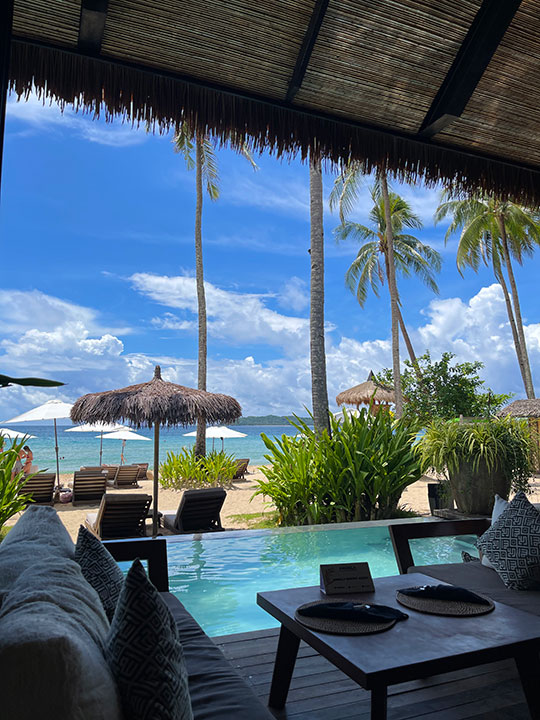
Situated on the shorelines of Palawan’s crystal waters and fine white sand, beach clubs are a huge hit in El Nido.

“Filipinos like to be more comfortable than foreigners,” Carmel Delos Santos-Panelo, the manager of the Angkla Beach Club and Boutique Resort, told reporters in an interview.

Foreigners, she noted, are content to lounge around anywhere, even just by the beach.

Angkla — which hosted the beach wedding of basketball player Kiefer Ravena and former Pinoy Big Brother housemate Diana Mackey earlier this August — is a stunning beach club popular among local tourists.

Compared to other resorts in El Nido, Angkla takes pride in its beach club, which has “never” experienced a slow season since its establishment in 2020.

Walk-in visitors are allowed at the beach club for a P1,000 fee, consumable for drinks and food, and pool access.

To set the mood, a DJ spins lively beats during lunch, a lively background when dining on the club’s signature Filipino dishes and refreshing cocktails, all coming together to create a laid-back tropical escape.

“You can enjoy the whole day here. You can eat breakfast to lunch, then stay through sunset until dinner if you like,” Ms. Panelo said. “That’s probably why we don’t really have a slow season at the beach club,” she added.

Another beach club known for having a beautiful spot to watch the sunset is Panorama Beach Club. Although it is exclusive for checked-in guests, walk-in visitors can still watch the El Nido sunset at Chabacano, a Spanish/Mediterranean restaurant just above the beach club which serves an iconic Paella Negra and melt-in-the-mouth Manchego Croquetas.

The golden hour from 4 to 7 p.m. is the perfect time to dine at Chabacano, where guests can savor their meals while watching the sun dip below the horizon.

BITES AROUND THE TOWN SQUARE
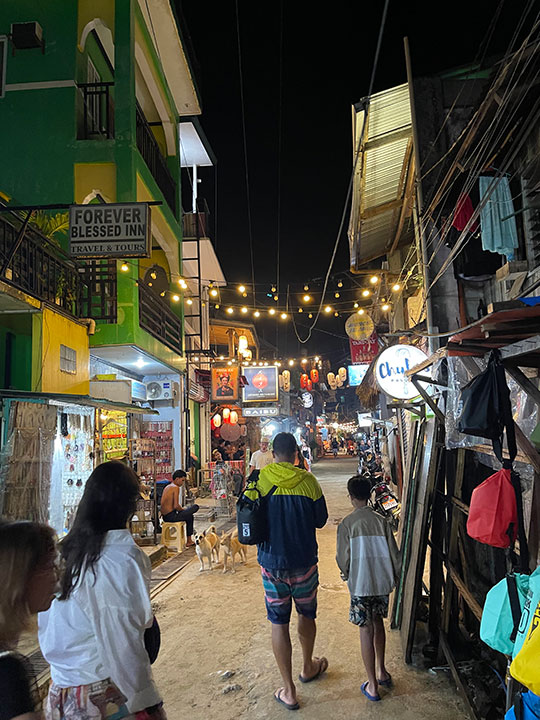
For a more laid-back set-up, a lot of affordable yet filling meals are available across El Nido’s Town Central Square.

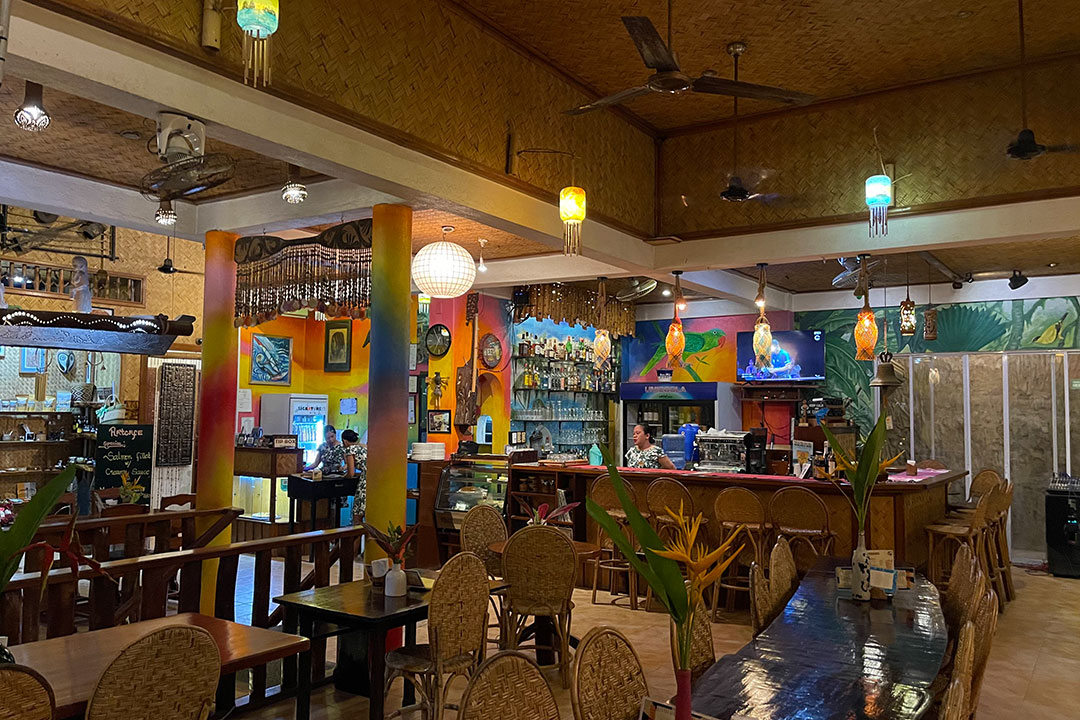
With a menu ranging from Filipino to European dishes, Artcafe, one of the oldest establishments in El Nido, serves an array of hearty meals at the right price.

The vibrant restaurant tucked in the heart of the town’s busy streets is known for its sustainability and eco-friendliness. “Our salad is organic, fresh from our farm,” said Resiel G. Malindin, restaurant manager of Artcafe. “Local vegetables like lettuce and arugula are from our own farm, and then chicken,” she added.

A few steps away is Jeje Bistro, a newly opened restaurant serving breakfast plates and handcrafted cocktails, perfect for brunch or casual hangouts.

Boutique shops and lively bars also dot the town to ensure that every visitor finds something memorable to bring home, whether it’s a keepsake, a night of fun, or simply the charm of island living.

BusinessWorld was part of the press trip in El Nido hosted by Lime Resort El Nido from Aug. 12 to 14.

EDC signs deal for 440-MW geothermal projects in Indonesia

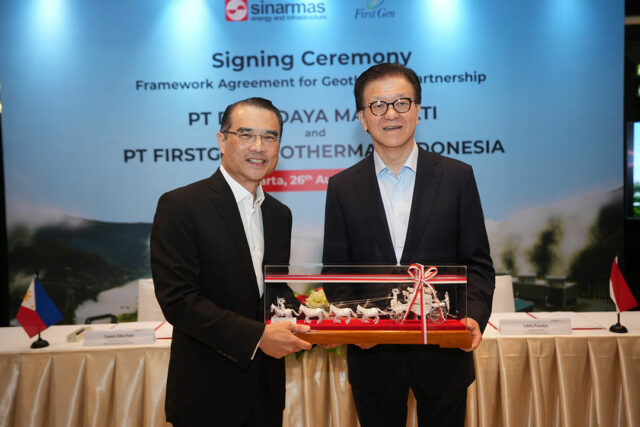
FEDERICO R. LOPEZ, chairman and CEO of First Gen Corp. and Energy Development Corp. (EDC), receives a memento from Frankie Oesman Widjaja, chairman of PT Dian Swastatika Sentosa Tbk, to mark the partnership between the two companies to jointly explore the development of about 400 MW of geothermal energy in Indonesia. The agreement was signed on Aug. 26 in Jakarta, Indonesia. — EDC

ENERGY DEVELOPMENT CORP. (EDC) has partnered with PT DSSR Daya Mas Sakti, a subsidiary of Indonesia’s PT Dian Swastatika Sentosa Tbk (DSSA), to develop geothermal resources with a total capacity of 440 megawatts (MW) in Indonesia.

In a statement on Wednesday, EDC said its subsidiary, PT First Gen Geothermal Indonesia, has entered into an agreement with PT DSSR Daya Mas Sakti.

The company said the partnership will focus on the development and management of geothermal resources across six strategic fields in the provinces of West Java, Flores, Jambi, West Sumatra, and Central Sulawesi.

“By combining EDC’s global capabilities with DSSR’s strong local presence, this joint venture will not only develop projects, but also build capacity and transfer knowledge that will leave a lasting impact on Indonesia’s renewable energy sector,” EDC Vice-Chairman and Chief Executive Officer (CEO) Francis Giles B. Puno said.

EDC said the collaboration provides the company with an opportunity to apply its global expertise in geothermal development to strengthen Indonesia’s renewable energy capacity.

“Our goal is to strengthen national capacity in geothermal development and to fully harness the country’s natural potential for clean energy. Together, we aim to create real value for communities, the economy, and the environment,” said Lokita Prasetya, president director of PT DSSR Daya Mas Sakti and vice-president director of PT Dian Swastatika Sentosa Tbk.

PT DSSR Daya Mas Sakti is an indirect subsidiary of PT Dian Swastatika Sentosa Tbk engaged in geothermal energy development.

Founded in 1996, PT Dian Swastatika Sentosa Tbk is a leading energy and infrastructure company in Indonesia. DSSA’s businesses span mining, renewable energy, technology, chemicals, and investments.

In October last year, EDC said it had obtained rights to explore and drill two greenfield geothermal projects from Indonesia’s Ministry of Energy and Mineral Resources.

The company secured preliminary survey and exploration rights for the Koto Sani Tanjung Bingkung and Bora Pulu geothermal projects, which have a combined potential capacity of 40 MW and would require a total investment of $456 million.

First Gen, the parent company of EDC, holds a total of 3,675 MW of combined capacity from its portfolio of plants powered by geothermal, wind, hydropower, solar energy, and natural gas.

At the local bourse on Wednesday, shares of the company rose 0.73% to close at P16.50 apiece. — Sheldeen Joy Talavera

BTr fully awards bonds

BW FILE PHOTO

THE GOVERNMENT made a full award of its dual-tranche offering of Treasury bonds (T-bonds) on Wednesday at lower yields before an expected rate cut by the Bangko Sentral ng Pilipinas (BSP).

The Bureau of the Treasury (BTr) raised P35 billion as planned via its dual-tenor T-bond offer as total bids reached P128.332 billion, or more than triple the amount placed on the auction block.

Broken down, the Treasury borrowed the programmed P15 billion via the reissued seven-year bonds, with total bids reaching P93 billion or more than four times the amount on offer.

The bonds, which have a remaining life of two years and seven months, were awarded at an average rate of 5.634%. Accepted yields ranged from 5.62% to 5.648%.

The average rate of the reissued papers went down by 18.3 basis points (bps) from the 5.817% fetched for the series’ last award on July 22, but was 200.9 bps above the 3.625% coupon for the issue.

This was also 7.4 bps below the 5.708% fetched for the same bond series and 9 bps lower than the 5.724% quoted for the three-year bond — the benchmark tenor closest to the remaining life of the issue — at the secondary market before Wednesday’s auction, based on PHP Bloomberg Valuation Service (BVAL) Reference Rates data provided by the BTr.

Meanwhile, the government also raised P25 billion as planned from the reissued 25-year T-bonds, with total bids for the tenor reaching P35.332 billion.

The notes, which have a remaining life of 24 years and five months, were awarded at an average rate of 6.374%. Accepted yields ranged from 6.3% to 6.41%.

The average rate went down by 27.5 bps from the 6.649% fetched for the series’ last award on June. 25 and was also 0.1 bp lower than the 6.375% coupon for the issue.

However, this was 6 bps above the 6.314% seen for the same bond series and 2.7 bps higher than the 6.347% quoted for the 25-year bond at the secondary market before Wednesday’s auction, PHP BVAL Reference Rates data showed.

Both T-bond tenors offered on Wednesday fetched lower rates amid expectations of a rate cut by the BSP on Thursday, Rizal Commercial Banking Corp. Chief Economist Michael L. Ricafort said in a Viber message.

“Both bonds’ yields fell significantly compared to their previously traded averages, which is another instance of the market preparing for the BSP’s anticipated rate cut tomorrow,” a trader likewise said in a text message.

A BusinessWorld poll conducted last week showed all 20 analysts surveyed expect the Monetary Board to cut the target reverse repurchase rate by 25 bps to 5% on Thursday. If realized, this would be the third straight 25-bp reduction since April.

The BSP has slashed benchmark borrowing costs by a cumulative 125 bps since it kicked off its easing cycle in August 2024.

Mr. Ricafort said the T-bonds’ yields eased amid strong investor demand.

“[The reissued seven-year bond] was met with much higher demand compared to the [25-year bond], indicating a clear preference for shorter tenor instruments at the moment,” the trader added.

Expectations of a US Federal Reserve cut next month also helped drive bond yields lower, Mr. Ricafort added. — A.M.C. Sy

Bringing premium tea craftsmanship to milk tea

BO·YA JASMINE GREEN MILK TEA IN LARGE TEAR & WIN CUP

Chagee opens 3 stores in the Philippines

ALTHOUGH the Philippines is a coffee-drinking culture, Chinese milk tea brand Chagee is hoping to kickstart Filipinos’ newfound appreciation for tea. Its executives recently told the press that it will be bringing “the premium tea bar experience” to the Philippines.

“Tea has a global influence across history. Coffee is cool now, but tea actually predates coffee,” said Katrina Khoe, Chagee APAC head of public relations, at the media preview on Aug. 22 in Taguig City. “We want people to discover that they can be comfortable and create connections over a good cup of tea.”

Chagee was first brewed in Kunming, Yunnan Province, China, in 2017, and opened stores in Southeast Asia in 2019, in Malaysia, Singapore, and Thailand. The brand now has over 6,000 branches worldwide.

In the Philippines, its first three branches will open on Aug. 29 in the following locations: SM North EDSA and Robinsons Galleria in Quezon City, and Venice Grand Canal Mall in Taguig.

What sets it apart from other competitors in the market is that its offerings are actually made from whole tea leaves, according to Ms. Khoe.

“Chagee is not a bubble tea brand. There is no artificial flavoring tea base and no artificial sweeteners in our drinks,” she explained.

ADDING MILK TO TEA
Chagee let the press try some of its bestsellers at the preview. They highlighted their signature drink, BO·YA Jasmine Green Milk Tea, or BO-YA for short, which has sold 600 million cups to date.

Milk tea fans will enjoy the light taste of the beverage, which comes across as only slightly milky and not as sweet as other brands with a similar offering. Using premium green tea leaves native to Yunnan’s high mountains, it does come across that the drink is freshly brewed, from the floral aroma to the gentle taste itself.

A novelty for Filipinos will be the straws that come with the Chagee cups — basically three mini, almost-flat straws attached together — designed so that you take small and slow sips to better appreciate the tea flavors.

Ryan David, Chagee senior tea industry researcher, told BusinessWorld that adding milk to tea is ultimately a matter of preference, but that Chagee does its best to find the right balance.

“We tailor every recipe so that not all have the same amount of milk. We go through many processes to determine how much of the tea flavor comes through,” Mr. David explained.

“For the darker ones, like roasted oolong and black tea, we can put more, while the green teas just require a lighter splash.”

Since it boils down to preference, this also explains why the Da Hong Pao Milk Tea, Chagee’s second bestseller and made of rich, intense roasted oolong, was more impressive to some. The tea flavors blended much better with the milk compared to the BO-YA, which more or less concludes with a similar aftertaste to what other milk tea competitor brands offer.

Even smoother brews were also showcased, like the Osmanthus Oolong Milk Tea, the fragrant Lapsang Souchong Black Milk Tea, and the distinctly sweet Glutinous Green Milk Tea. These five make up Chagee’s first menu items in the Philippines.

Ms. Khoe told BusinessWorld that Arla is the milk brand of choice here simply because it is locally accessible. The question of alternatives also gave them something to think about.

“There are no milk alternatives in the Philippines yet, but in Singapore we have already launched oat milk,” she said.

THE TEA BAR EXPERIENCE
Natasha Besquillo, Chagee Philippines’ brand and marketing lead, shared the aesthetic visions for the first three branches in the country.

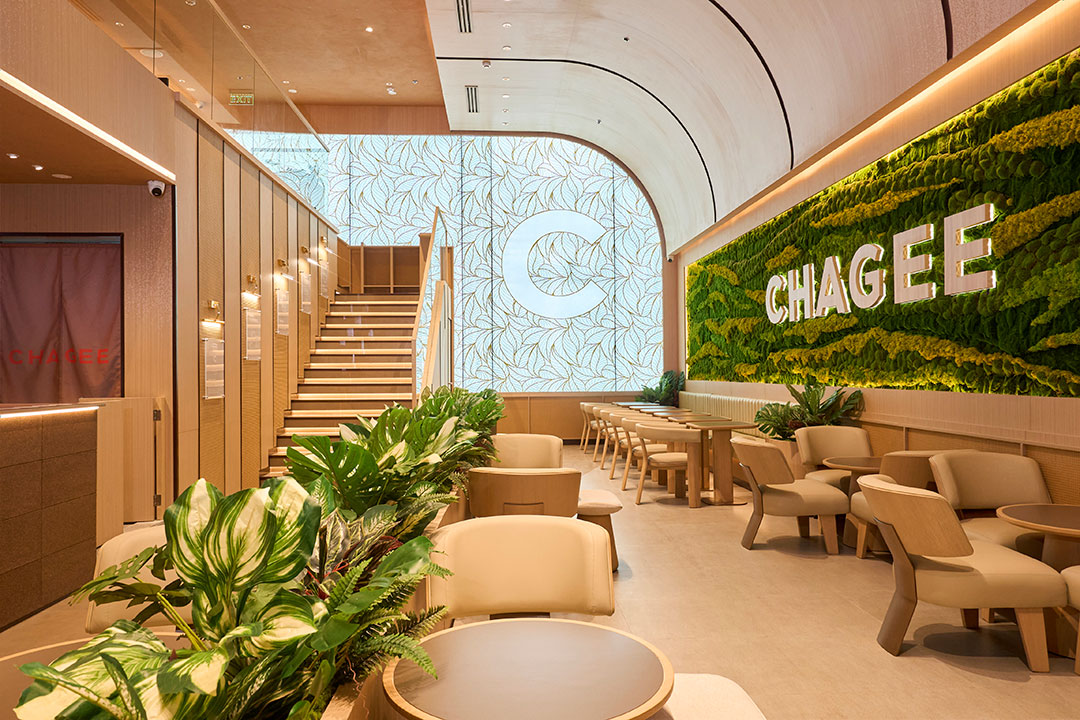
“The first store, in SM North EDSA, is a concept store with two levels that can accommodate 45 people. The second store, in Robinsons Galleria, has a larger seating capacity of 60 people,” she explained. Finally, the third branch in Venice Grand Canal Mall will differ from the two with its al fresco dining.

As for what ties them all together, Ms. Besquillo said that milk tea lovers can expect natural wood exteriors, clean design, and a color palette based on tea colors. They will have the minimalist style, with the goal of being a refuge from the hustle and bustle of urban life.

Ms. Khoe promised that these first three branches will display the premium quality that made Chagee popular in its initial markets. “Similar to espresso, tea leaves are put under high pressures for lattes and frappes. Our machines will make sure the tea leaves will be brewed perfectly,” she explained.

As for tailoring drinks to local preferences, Chagee is still considering whether it will come up with Philippines-exclusive flavors, such as the orchid-flavored drink that was recently launched in Singapore.

“In the market study we did in the Philippines, one of the challenges we found was that Filipinos have such a strong coffee-drinking culture. That’s one thing we will be taking as a challenge,” Ms. Besquillo said.

LAUNCH PROMOS
Along with the opening of the three stores, Chagee is launching its “Tear and Win” promo, available from Aug. 29 to 31.

By purchasing a large fresh milk tea, customers can peel open a special perforated section of their Tear and Win cup to look for instant prizes, including iPhones, Jo Malone perfumes, limited-edition merchandise, and even a Louis Vuitton Speedy bag.

Chagee is also offering special bundle deals, where customers can enjoy two large BO·YA Jasmine Green Milk Teas for P165 or one large BO·YA Jasmine Green Milk Tea and one large Da Hong Pao Milk Tea for P169. Both bundles are eligible for the “Tear and Win” promo. — Brontë H. Lacsamana