Home Blog Page 106

It’s an Alaïa!

“YOU don’t understand. This is an Alaïa,” said Alicia Silverstone’s character in 1995’s Clueless upon being told to hit the ground while wearing a red number with a black feather trim. “He’s like, a totally important designer.”

Just in time for the ’90s resurgence 30 years after that line was delivered, Rustan’s now has the Alaïa brand in its stores.

Founded by Tunisian-French designer Azzedine Alaïa (who passed away in 2017), the brand once reigned in the late 1980s to ’90s.  It skyrocketed to fame worldwide with the help of muses like Naomi Campbell. Today, the brand has Peter Mulier as its Creative Director (though his departure was announced earlier this month by WWD).

While Alaïa is yet to find a permanent home in Rustan’s Makati, there is a pop-up in its beauty floor (a search for the Alaïa website on Google also leads to a Philippines-only link: maison-alaia.com/en-ph/). On the shelves are displayed some of Alaïa’s leather goods. There’s the Le Mina bag, made of laser cut leather. An item that went viral last year, the east-west oriented Le Teckel (a name for sausage-shaped dogs) is also on display, alongside the Vienne (a line of Mary Jane shoes with the same laser cut on the Le Mina), and many other stylish shoes besides.

“We’re proud to say that Rustan’s is the first to bring in the brand,” said Jackie Avecilla, head of marketing for Rustan Commercial Corp., in an interview at the sidelines of another event on March 24. “We didn’t advertise; we did nothing. But oh my God, it’s selling like hotcakes.”

She said that some styles are already out of stock: “Good problem on our end,” she said, and new stocks will come in after Easter (the shoes are apparently the top sellers).

“It kind of cements the position of Rustan’s as the premier luxury retail destination,” she said. “We’re proud that these brands like Alaïa… and the rest to come, partner, or choose Rustan’s as the first store in which to set foot in the Philippines.”

“Our goal is really to modernize Rustan’s. Admittedly, it’s a 75-year-old store, and we want to bring in the younger generation without necessarily alienating our loyal clients,” she explained. “By bringing in these fresh, contemporary, modern, and young brands, we are able to attract that younger generation,” she said.

“We have more brands coming — I’m sorry, I can’t divulge — we have a lot of new fashion brands; very exciting, all coming this year.”

Check out the Alaïa pop-up at the 1st floor of Rustan’s Makati. — Joseph L. Garcia

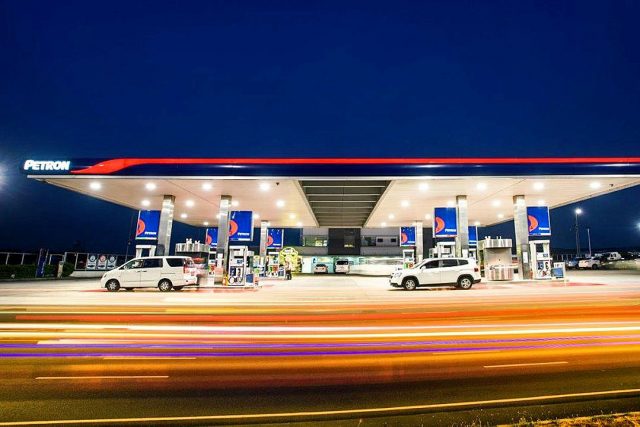
Petron takeover seen unnecessary; analysts favor private ownership

PETRON.COM

By Sheldeen Joy Talavera, Reporter

A GOVERNMENT takeover of Petron Corp. may not be necessary, as the company could operate more efficiently in private hands, according to analysts.

“The better policy is to allow the company to continue as a well-managed publicly listed company so that it can serve customers more efficiently,” China Bank Capital Corp. Managing Director Juan Paolo E. Colet told BusinessWorld.

“Any concern about fuel pricing or supply management can be addressed through other means, such as moral suasion or regulation,” he added.

Petron President and Chief Executive Officer Ramon S. Ang earlier renewed his offer to sell the oil company back to the government, as the country grapples with supply issues and rising prices.

“I first made this offer to Congress in 2021, and it remains open. If the government believes that Petron under its ownership will better serve the Filipino people especially in times like these, we are ready to sit down and make it happen,” Mr. Ang said in a statement on Friday.

Petron is the country’s only integrated oil refining company and held a 27.8% market share as of the first half of 2025.

The company operates 50 terminals across the region and about 2,700 service stations and maintains a refining capacity of nearly 270,000 barrels per day.

Its refinery in Bataan processes 180,000 barrels per day and supplies roughly a third of national fuel demand.

The government previously owned Petron through the Philippine National Oil Co. (PNOC), which acquired Esso Philippines — Petron’s former name — during the 1974 global oil shock.

In 1994, PNOC entered into a stock purchase agreement with Aramco that gave the latter a 40% stake in Petron. London-based investment fund manager Ashmore Group acquired Aramco’s stake for $550 million in 2008.

San Miguel Corp. (SMC) later took control of Petron following an option agreement with Ashmore and began managing the company in 2009.

April Lee Tan, chief equity analyst at COL Financial, said the oil company would be better operated under private ownership rather than government control, citing what she described as the state’s track record in managing businesses.

“One of the reasons they (government) took the company public in the 1990s was recognition that the company would operate more efficiently in private hands. Government has a poor track record of managing businesses in general,” she told BusinessWorld.

She said acquiring a majority stake in Petron could put pressure on the national budget.

“Our current deficit and debt position isn’t very strong as we have not yet recovered from the deterioration caused by the pandemic,” Ms. Tan said.

Instead of acquiring Petron, the government should focus on addressing inflation over the long term, she added.

“Although it may seem a good idea in the short term because there is a war, what if there’s no war?” Ms. Tan said, adding that the government can encourage more exploration activities, create strategic reserves, and improve rail infrastructure.

Recent tensions in the Middle East, including the US-Israeli attack against Iran last month, disrupted supply in the region, contributing to higher fuel prices.

Iran War: Trump is depleting a more powerful weapon than US missiles

FREEPIK

By Max Hastings

IT WAS REPORTED last week that the Iranian missile inventory has been depleted from about 5,000 to a thousand or so, and that the US and its allies are now firing one or two Patriots at each incoming airborne threat, in place of the clusters unleashed at the start. In other words, both sides are experiencing munitions shortages.

But my longer-term concern is the depletion — indeed, exhaustion — of another American weapon, which I think is more important than mere hardware: belief in the truth of what the leader of the US tells the world about the war, peace, and everything else.

Matters have come to a head when President Donald Trump asserts that his government is conducting promising talks with the Iranians, while the Iranians deny this, and there is worldwide uncertainty about whether to accept his version or the one put out by Tehran’s fanatics. Likewise, when he says the war “is almost won,” nobody knows whether this is a prelude to a fresh US bombardment, a ground invasion, or a ceasefire.

Throughout history governments have sometimes lied, especially during wars. There was a catchphrase among Napoleon’s soldiers, when they began to lose battles: “To lie like a bulletin.” They lost faith in official handouts from Paris.

As far back as two centuries ago, visitors to Russia complained about its people’s chronic mendacity, undiminished among its leadership today. In the first years of World War II, the British government found it ever harder to bluster away its armies’ humiliating defeats.

Yet none of this meant then, or means now, that it does not matter for a great nation to lose its reputation for trustworthiness, as the US has done under Trump. It is impossible in the midst of a war to tell the whole truth. But it is worth a lot that “our side” — whatever that may be — should be more credible than the enemy. Almost no European ally believes the president’s assertion, the lynchpin of his justification for starting the war, that Iranian nuclear ambitions posed an imminent threat to either Israel or the West.

I have just reread a little handbook that was issued to every US soldier landing in Britain during World War II, published by the War Department. Among other wisdom, it told GIs: “We can defeat Hitler’s propaganda with a weapon of our own: plain, common horse sense; understanding of evident truths.” Likewise Winston Churchill and his ministers realized that one of their most formidable tools was that famous truth-teller the British Broadcasting Corp. (BBC).

Contrary to the illusion held by many Americans, the BBC is not a government-run body, it is an independent corporation administered by trustees and funded by public subscription. Throughout World War II, millions of people in occupied Europe risked their freedom to hear its news. The penalty for those caught listening by German detector vans was deportation to a concentration camp.

The magic words with which its impeccably modulated announcers began their reports — “this is London” — resounded across the globe. After 1945, the BBC habit persisted. Tens of millions of people — especially in Africa, the Middle East, and parts of Asia — even now prefer the Beeb’s foreign language news to the local variety, rigorously censored by their own governments. Voice of America (VOA) has never achieved quite the same authority or reputation for impartiality, but it has been nonetheless useful and influential.

The British and American governments have often been fiercely critical of the output of both the BBC and VOA. Churchill sometimes ranted against the former’s alleged disloyalty. Margaret Thatcher deplored its allegedly excessive impartiality, as she saw it, especially during the 1982 Falklands war. On the British side of the Pond, however, no government has dared to do worse things to the BBC than moan about it. Politicians, including Churchill, understood the priceless value of its perceived integrity.

The Nazis adopted a contrary approach to propaganda by employing a US-Irish renegade named William Joyce to harangue the British people. Throughout the conflict he broadcast from Berlin a daily stream of falsehoods, chortling as he delivered them in a voice that caused him to become known to Churchill’s nation as Lord Haw-Haw.

A Berlin bulletin might include this sort of mockery rooted in fake news: “You should ask your prime minister to tell you where is the aircraft-carrier Illustrious… I will tell you where Illustrious is — at the bottom of the sea, where its crew are feeding the fishes, along with so many other British ships and their crews. Gairman [his pronunciation] torpedoes are sending them all to feed the fishes!” The gloating tones were not unlike those of Defense Secretary Pete Hegseth describing the fate of Iranians under American bombardment.

It is doubtful, however, whether dancing on the graves of your enemies, and wildly exaggerating your own successes, impresses anybody. The British learned to enjoy listening to Lord Haw-Haw’s fantasizing, which gave them a much-needed laugh, though that did not stop them hanging Joyce in 1946.

Today Trump is assaulting the organs of truth, while peddling obvious lies, for instance his claim that a Tomahawk missile that apparently hit a Tehran school was Iranian. He is seeking to shut down VOA, and suing the BBC for billions of dollars in a Florida court. Worse, the head of the Federal Communications Commission, a Trump lackey, is threatening to withdraw the licenses of US outlets that fail to broadcast the administration’s fictional narrative of the war.

Trump’s assault on reality puts me in mind of a 1917 Punch magazine cartoon of Germany’s Kaiser Wilhelm II raging at a British newspaper front page and saying, “I have never seen a more abominable tissue of deliberate truths!”

The White House’s standard-bearers would say — privately at least — that we now live in a post-truth world; that their MAGA people neither expect to be told what is real by their leaders, nor mind that they are lied to. A defiant Florida woman told a British reporter last month: “Who cares if what Trump says is true?” She loved him anyway.

Such people are oblivious to how low America’s standing has fallen. Yet this matters very much, not just for now or even for the balance of Trump’s term, but for the future of the US. If it chooses to speak and behave in a way that is morally indistinguishable from that of its rival superpowers, why should other nations not choose China or Russia as partners, rather than America?

“Once to every man and nation comes the moment to decide,” wrote the New England poet James Russell Lowell almost two centuries ago. “In the strife of Truth with Falsehood, for the good or evil side.” It is extraordinarily dangerous for any country, however rich and dominant, to base its entire polity on a belief that it will forever enjoy military and economic superiority; that might alone can sustain its hegemony.

America is no longer seen, especially in Europe, as worthy of trust. To quote again that 1942 US serviceman’s handbook: “It is militarily stupid to criticize your allies.” Even superpowers need friends yet America has few left who, after enduring so many insults from Washington, sincerely respect those in charge there, or believe what they say.

Truth is not merely a virtue. It is a weapon, which this administration has wantonly broken with its own hands, even as it wages a shooting war in which scarcely anybody save the Israelis sees merit or reason.

BLOOMBERG OPINION

Pushing global investments to boost competitiveness

The Philippine Economic Zone Authority (PEZA) ended 2025 with approved investments reaching P260.89 billion, exceeding its target and posting a 21.91% increase from the previous year. The figure ranks among the highest in the agency’s 30-year history and represents the strongest growth since 2016. On top of these, PEZA has marked gains in foreign investments, with Japan remaining as the top investor with P32.6 billion, followed by Cayman Islands with P16.7 billion, South Korea with P11.46 billion, Singapore with P11.19 billion, and China with P6.87 billion.

PEZA Director-General Tereso O. Panga said the agency will build on this momentum as it targets P300 billion in investments this year.

“We remain focused on strengthening our ecozone ecosystem, expanding high-quality investments, and creating more jobs for Filipinos, as we position PEZA for sustained growth and greater opportunities in the years ahead,” he said in a statement.

As the Philippines assumes the 2026 chairmanship of the ASEAN Business Advisory Council, the country pushes for advanced regional trade and investment, prioritizing economic corridors and business partnerships across the region.

Meanwhile, PEZA, working with the Department of Trade and Industry (DTI) and overseas trade offices, has launched a coordinated campaign to attract manufacturers, technology firms, and logistics providers to its network of economic zones.

For instance, the government is leveraging the “China+1+1” strategy, where firms diversify operations beyond China to manage risks linked to tariffs and geopolitical pressures. Now, PEZA is receiving inquiries from companies in robotics, electronics, automotive, medical devices and e-commerce.

At the same time, China remains one of the country’s top investment partners, accounting for 22% of total foreign investments. Within PEZA zones, 118 Chinese firms have generated more than $406 million in exports and created over 16,000 jobs.

A recent investment mission to Shenzhen brought together Philippine officials and Chinese firms exploring expansion in Southeast Asia. Ten companies joined the Philippine Business Forum, including global motorcycle brand Piaggio, while several firms entered exploratory talks for possible relocation.

PEZA also reported that Shenzhen-based Grandsun plans to expand its Philippine operations and bring more of its supply chain into the country.

Several companies cited proximity to China and uncertainty over US tariffs as key factors in evaluating the Philippines as a production base.

Similar efforts in Taiwan have produced concrete investment commitments and expansion plans in high-value sectors such as electronics and communications.

Aromate Industries signed a $4.3 million agreement to build a new facility in Batangas, while another Taiwanese electronics manufacturer is preparing a $5 million to $6 million project expected to create about 300 jobs by late 2025.  

Other firms confirmed plans to establish production facilities, including a video products manufacturer projecting up to $90 million in sales within three years and a broadband equipment supplier set to expand operations in Laguna by 2026.

PEZA said 78 Taiwanese firms already operate in its zones, with investments exceeding P17 billion, exports of $485 million, and more than 26,000 jobs generated.

Still, Japan continues to lead foreign direct investment in Philippine economic zones, with about 800 Japanese firms generating more than P500 billion in investments and employing over 343,000 workers.

Japanese firms, including Sumitomo Wiring Systems, MinebeaMitsumi, and Kaga Electronics, expressed plans to expand operations, while other companies are studying new manufacturing projects.

Discussions with business groups such as Keidanren and Keizai Doyukai also covered labor mobility, skills matching, and supply chain integration, with both parties identifying agriculture, healthcare, and manufacturing engineering as priority sectors.

Within ASEAN, the Philippines engaged business leaders across manufacturing, renewable energy, agro-processing, and IT services, promoting the Philippines as a base for regional expansion.

A Thai food processing firm has established a 5.5-hectare facility in Misamis Oriental, expected to generate up to 2,500 jobs, while other companies are exploring projects in agriculture and industrial production.

DTI and PEZA officials also discussed partnerships with Thailand-based firms for digital infrastructure, including FiberHome, to develop smart industrial communities in economic zones.

Beyond Asia, PEZA led a five-day investment mission to the United States, held alongside the Consumer Electronics Show 2026 in Las Vegas.

The mission secured investment leads across several sectors, including a planned nitrile glove manufacturing project expected to bring about $200 million in capital and more than 2,000 jobs across South Luzon and Cebu.

PEZA also linked with a prospective investor in portable brain imaging systems, a segment within the medical device sector that officials identified as a new source of foreign direct investment following the launch of the country’s first pharmaceutical park.

In New York, the delegation met a global aerospace firm planning to expand its Philippine operations. The company, which has operated in Baguio City since 1984, is considering New Clark City for its next phase. The expansion could bring in more than $15 million in new investments and add 1,000 jobs to its existing workforce of over 2,000 employees.

Beyond manufacturing, the Philippines also engaged a U.S.-based mental health services provider exploring the establishment of a global center of excellence in the country. The proposed IT and business process management (IT-BPM) operation could employ more than 1,500 Filipinos within its first year.

PEZA also held discussions with investors in renewable energy, liquefied natural gas, and housing, reflecting broader interest in infrastructure and energy-related projects.

More than 250 companies with American equity are currently registered in its zones, accounting for over P410 billion in cumulative investments and employing more than 380,000 Filipinos as of November 2025.

In Europe, ongoing negotiations for a Philippines-European Union free trade agreement are boosting investment prospects. PEZA said more than 190 companies with European equity already operate in its zones, contributing over P400 billion in investments and supporting more than 430,000 jobs.

The Philippines’ trade relationship with the European Union currently operates under the Generalised Scheme of Preferences Plus (GSP+), which allows duty-free access for more than 6,000 products. The arrangement supported €2.2 billion in Philippine exports in 2024, while total bilateral trade reached €16.8 billion.

With GSP+ set to expire in 2027, officials from both parties said they are working to complete the free trade agreement to maintain market access and avoid disruptions.

PEZA believes that foreign investors are confident with the country’s economic performance and its economic zones.

“[W]e are confident that the influx of investments and expansion of projects at PEZA will continue,” Mr. Panga explained. “Locators are seeing the value of expanding and consolidating their supply chains in the Philippines.”

Consequently, the agency cited the Corporate Recovery and Tax Incentives for Enterprises to Maximize Opportunities for Reinvigorating the Economy (CREATE MORE) law, green lanes for strategic investments, and ongoing reforms in public-private partnerships (PPP) as key initiatives to attract foreign firms. Such measures complement PEZA’s “one-stop shop” system, which handles investor registration and compliance processes.

While these reforms target national competitiveness, the World Bank noted that sustaining growth depends on how well the government executes its investment plans. Stronger public investment execution and fiscal consolidation remain priorities, particularly in infrastructure and essential services that support business operations. — Mhicole A. Moral


Peso may extend its slide on war-driven uncertainty

BW FILE PHOTO

THE PESO could sink further against the dollar this week as uncertainty around energy supply persists due to the Middle East war.

On Friday, the local unit dropped to a new record low of P60.55 versus the greenback, plunging by 32 centavos from its P60.23 finish on Thursday, Bankers Association of the Philippines (BAP) data showed.

It also hit an intraday low of P60.57 during the session, which is now the weakest point the peso has touched thus far, surpassing the P60.40 recorded on March 19.

Year to date, the local currency has weakened by P1.76 or 57.886% from its P58.79 finish on Dec. 29, 2025.

Week on week, the peso depreciated by 45 centavos from its P60.10 finish on March 19.

“The peso weakened to P60.55 as markets begin to price in oil-related risks, reinforcing near-term dollar demand. Trading remains constraint-driven, with flows reflecting caution rather than panic,” Reyes Tacandong & Co. Senior Adviser Jonathan L. Ravelas said in a Viber message.

The peso slid to a new all-time low amid market doubts over a ceasefire between Iran and the United States due to mixed signals from both sides, Rizal Commercial Banking Corp. Chief Economist Michael L. Ricafort said in Viber message.

Less hawkish sentiment from the Bangko Sentral ng Pilipinas (BSP) after its off-cycle policy meeting on Thursday and higher inflation estimates also dragged down the local unit, he said.

Ahead of its scheduled policy review on April 23, the Monetary Board held an off-cycle meeting on Thursday as it sought to soothe market jitters over worsening inflation risks stemming from the Middle East war.

The BSP left the policy rate unchanged at 4.25% as BSP Governor Eli M. Remolona, Jr. said that adjusting their monetary settings would have limited effectiveness, with current inflation risks due to the war being largely supply-driven.

The central bank now expects headline inflation to average 5.1% this year — well above its 2%-4% tolerance band. Annual inflation last breached the target in 2023.

For this week, Mr. Ravelas said the peso could remain range-bound against the greenback as uncertainty around oil supply persists.

He sees the peso moving between P60.25 and P60.75 per dollar this week, while Mr. Ricafort expects it to range from P60.20 to P60.70.

Global stock markets fell and oil prices rose on Friday, driven by a lack of progress in bringing an end to the four-week-old Middle East conflict that is beginning to sap consumer and business confidence, Reuters reported.

The global equity market sell-off has deepened in recent days, as US President Donald J. Trump’s statements about negotiations are increasingly viewed as less important than the situation in the Gulf, where attacks persist and the crucial Strait of Hormuz is effectively blocked by Iran.

Mr. Trump extended a deadline for Iran to reopen the Strait of Hormuz, but Iran has given no direct indication that it was ready to negotiate. The country’s Islamic Revolutionary Guard Corps reiterated it would continue to disrupt shipping through the strait, which is used to ship roughly one-fifth of the world’s oil and gas supply.

Brent crude futures rose 4.22% to settle at $112.57 a barrel. US West Texas Intermediate futures settled up 5.4% at $99.64.

Government bond yields rose, as central banks are seen as more likely to raise interest rates to head off a potential inflationary shock from higher energy costs.

The US dollar was higher against major peers, including the euro, Japanese yen and Swiss franc.

The US dollar index, which tracks the currency against six peers, rose 0.29% to 100.17 for a fourth straight session of gains. — Aaron Michael C. Sy with Reuters

New Schiaparelli exhibition looks at how Fashion Becomes Art

CHOKER by Schiaparelli, Pagan collection, autumn 1938 ­— PHOTOGRAPH © EMIL LARSSON/VAM.AC.UK

LONDON — From trompe l’oeil knits to Oscars gowns, a new exhibition on luxury fashion house Schiaparelli opened in London last week, tracing the history of the nearly 100-year-old brand, from its founder Elsa Schiaparelli to current US designer Daniel Roseberry.

Dresses, hats, gloves, and jewelry are among the more than 200 items on show at Schiaparelli: Fashion Becomes Art, running at the V&A museum from March 28 until November, with photos and artwork also displayed.

Italian-born Ms. Schiaparelli began her eponymous Paris-based fashion house in 1927 with knitwear with trompe l’oeil motifs before fusing fashion and art, collaborating with the likes of Salvador Dali and Jean Cocteau whose drawings appeared on her creations.

A rival of Gabrielle “Coco” Chanel, she was known for flouting convention with designs including a dress adorned with a lobster print — worn by Wallis Simpson — and a hat resembling an upside-down shoe.

“Elsa Schiaparelli dressed women who were bold and unconventional and unafraid to stand out in a crowd,” the exhibition’s lead curator Sonnet Stanfill told Reuters at a press preview last Wednesday.

“I hope (visitors are) inspired by the witticisms, the use of color, texture, embroidery, the collaboration with artists.”

Ms. Schiaparelli, who closed her studio in 1954 after financial difficulties, died in 1973. She was 83.

The brand was later bought by Diego Della Valle, founder of Italian leather goods maker Tod’s, and relaunched in 2012.

Mr. Roseberry has been creative director since 2019. Among his creations on show at the exhibition is a red gown singer-actor Ariana Grande wore to perform at the 2025 Oscars.

“What’s really impressive about the work of Daniel Roseberry is that he references the history of the House but with a very light touch,” Ms. Stanfill said. “He’s not beholden to the archive, and so he translates those kinds of dramatic silhouettes, unusual color combinations and haute couture techniques for a modern audience.” — Reuters

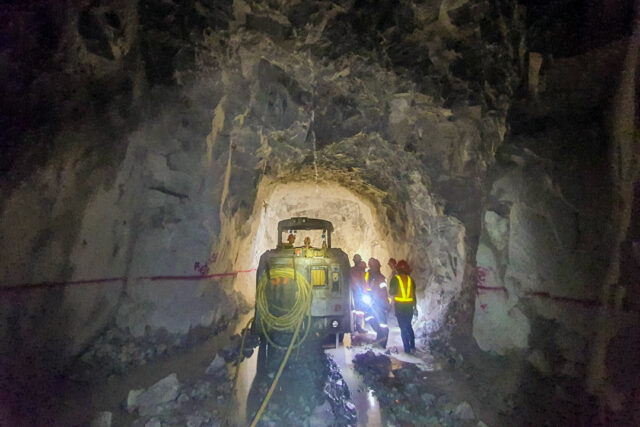
Apex Mining shares rise on earnings, higher dividend

APEXMINES.COM

SHARES of Apex Mining Co., Inc. rose week on week after the company reported higher earnings and increased its dividend payout, an analyst said.

Data from the Philippine Stock Exchange (PSE) showed that Apex Mining was the ninth most traded stock by value last week, with 53.52 million shares worth P739.59 million changing hands as of Friday.

The stock closed at P14.40, up 2.9% from P14.00 in the previous week. This outperformed the mining sector’s 1.4% decline and the Philippine Stock Exchange index’s (PSEi) 0.8% drop.

Year to date, the stock has risen 15.8% from its P12.44 close on the last trading day of 2025. This gain also exceeded the mining sector’s 4.7% increase and the PSEi’s 1.3% decline.

Luis A. Limlingan, head of sales at Regina Capital Development Corp., said Apex Mining’s strong earnings for 2025, as reported in its annual report released last week, supported the rise in its share price.

The company reported a 33.9% increase in full-year earnings to P18.71 billion from P13.37 billion in 2024.

Attributable net income rose 77.2% to P7.66 billion from P4.33 billion a year earlier.

Mr. Limlingan said the company’s performance last year may have been driven mainly by gold prices reaching an all-time high during the period.

Data from the Bangko Sentral ng Pilipinas (BSP) showed that the country’s gold holdings reached a record $18.578 billion at end-2025, rising 68.8% from $11.006 billion at the end of 2024.

Gold prices reached an all-time high of $4,549.92 per ounce in December, while spot silver also hit a record high of $64.64 per ounce during the same month, Reuters reported.

“Even though APEX Mining sold fewer ounces of gold, it earned much more per ounce, driven by all-time-high gold prices, thereby boosting revenue… when metal prices rise, more income flows directly to profit,” Mr. Limlingan said.

A separate company disclosure showed that Apex Mining sold 100,425 ounces of gold in 2025, 4% lower than the previous year, but at a price 45% higher at $3,531 per ounce.

Mr. Limlingan added that the company’s recently raised dividend payout may have also been welcomed by the market last week.

On March 17, Apex Mining said it doubled its cash dividend rate to 20% of consolidated net income, to be taken from unrestricted retained earnings.

Luis R. Sarmiento, president and chief executive officer of the company, said in the announcement that the increase “manifests the company’s commitment to continuously provide value to its shareholders.”

He added that the company’s expansion plans are “proceeding smoothly” despite uncertainties seen around the globe.

Mr. Limlingan said the stock showed “heightened volatility,” as profit taking followed after “gold prices pulled back from recent highs amid expectations of potential rate hikes.”

BSP Governor Eli Remolona, Jr. recently signaled the central bank’s focus on managing the impact of oil price shocks.

He affirmed the possibility of oil reaching $200 per barrel, saying that the BSP would be “forced to tighten [its policy] if that happens.”

The central bank recently held an off-cycle meeting and kept its key policy rates unchanged. Its next meeting is scheduled on April 23.

Despite the volatility, Mr. Limlingan said the stock is expected to continue tracking gold prices, with its near-term direction “commodity driven.”

For the next trading week, he placed immediate support at P14.00 and resistance at P15.40. — Matthew Miguel L. Castillo

The current crisis: Learning from COVID-19

STOCK PHOTO | Image by Vectorjuice from Freepik

Our distance from the escalating US-Israel war on Iran is of no comfort. Sure, Iran won’t fire intercontinental ballistic missiles to hit US military bases on Philippine soil.

Well, a disingenuous political science professor insists that the Philippines does not host US military bases. What we have, he says, are EDCA (Enhanced Defense Cooperation Agreement) sites that harbor US troops, weapons, and facilities.

My flippant response: The political scientist needs to brush up on his English literature and reread Shakespeare’s Romeo and Juliet (Act 2, Scene 2): “What’s in a name? That which we call a rose, by any other word would smell as sweet.” But I hasten to add that US military bases or EDCA locations do not have the identity of a rose and would not smell sweet.

It is in the economic sphere where the Philippines is being hit badly. The global economy is in shambles, and this does not spare the Philippines. Most dreadful is that the doubling down by the war protagonists — the escalation trap — could lead to what BlackRock chief executive officer Larry Fink described as a “steep and stark recession.”

The energy crisis in particular is intensifying. Crude oil prices are surging in a volatile manner. Current trading for Brent crude oil, the global benchmark, is priced between $110 and above $115 per barrel. Before the US-Israel war of choice commenced, Brent crude oil was trading at $72 per barrel.

The data from the Department of Energy (DoE) show that fuel prices in the Philippines have skyrocketed to between 101.68% and 109.39% for diesel and between 44.28% and 76.33% for gasoline. To contextualize the soaring prices in the Philippines, the country imports 98% of its crude oil from the Middle East, according to the DoE.

We can gauge the magnitude and intensity of the current crisis through the acute perception and opinion that compares the Gulf war catastrophe to the impact of the COVID-19 pandemic.

In his BusinessWorld column “When the Middle East burns, the Filipino nanay feels the heat” (March 16 and 23), Rafael Lopa wrote: “I see a parallel between how this crisis could unfold and how we lived through during the COVID-19 pandemic.”

Similarly, the Manila Bulletin (March 25) cited Isidro Consunji, Chairman and President of DMCI Holdings: “Fuel shock may hit economy harder than pandemic disruption.”

That paper also quoted former Department of Finance (DoF) Secretary Carlos Dominguez III: “Solving the oil crisis could be harder than fighting COVID.” In the same vein, as reported by the Manila Bulletin, Mr. Dominguez said that “the current fuel shock could be a more ruthless adversary than COVID-19.”

To be sure, given their different nature and context, COVID-19 and the globalized war on Iran would have distinct, dissimilar strategies and solutions. In the case of COVID-19, it was a sound and sensible strategy to first “freeze the economy” to slow down the spread of the virus (to “flatten the curve”).

With regard to the war on Iran, the ideal solution is to enable the warring parties to de-escalate and pursue negotiations. But this is easier said than done, for the enemies are now mired in an escalation trap. Besides, the Philippines does not have control over the situation, thus “leaving the nation at the mercy of volatile international markets,” in the words of Mr. Dominguez.

Still, our government and society cannot be paralyzed. The imperative tasks are manifold: Provide relief to the population, protect jobs and income, and keep the economy afloat.

Here, we relearn the basic lessons from how we addressed COVID-19. Messrs. Lopa and Dominguez both point out the necessity of collective action. Mr. Lopa calls this the “collaboration imperative.”

He notes: “When COVID-19 arrived, the Filipino people demonstrated a surprising capacity for collective action.” Mr. Dominguez, in a similar manner, calls for a “united front,” involving local governments, the national government, and the private sector.

The intervention to provide immediate relief to households through social protection such as insurance and cash assistance will unavoidably result in severe fiscal strain.

Sadly, before the war erupted, the Philippine economy was already suffering from a serious fiscal problem, resulting from massive corruption, non-productive expenditures, and weak revenue collection.

In other words, before the Gulf war’s onset, a central economic task was fiscal consolidation by way of rationalizing spending and increasing tax revenues.

But the war has abruptly changed economic strategies. Government is now forced to spend more and thus increase borrowing. That said, economic policies that address the population’s immediate needs in times of crisis should not lead to the worsening of underlying problems. Policymakers and legislators must apply prudence and discipline.

To illustrate, the suspension of the fuel excise tax and a proposal to likewise suspend the value-added tax (VAT) on fuel are unsound, considering both equity and efficiency objectives. Suspending fuel taxes is in fact anti-poor. A recent paper “Who benefits from suspending fuel excise taxes in the Philippines?” (March 25), authored by Jan Carlo Punongbayan from the University of the Philippines School of Economics shows that the bottom 30% of households capture only 17% of forgone gasoline excise revenue and 2.5% of forgone diesel excise revenue, while the top 30% capture 48% and 85%, respectively.”

Punongbayan’s study is consistent with the earlier DoF estimate released in March 2022 that the top 10% of households accounted for 48.8% of the country’s fuel consumption, while the bottom 50% consumed 13.9%.

Further, the suspension of taxes will not make a significant dent on the process because the real problem is supply. To quote Mr. Consunji, what we face is a “no-supplier” situation that makes oil become an absolute scarcity or makes fuel prices so astronomical.

Hence, it is a superior approach to preserve the revenues from fuel taxes and use them to subsidize public transport and the food and electricity of distressed households. The basic principle is that subsidies must address poverty and income inequality. Given the scarcity of revenues, subsidies have to be well-targeted, mainly benefiting the poor and vulnerable households.

Regarding the fear that targeted subsidies can become politicized and arbitrary, the evidence shows that the country has existing rule-based and transparent targeting systems (for example, 4Ps). Further, an increasing number of local government units are adopting better data infrastructure, what Action for Economic Reforms calls data-driven development.

For current subsidies and other expenditures to address the crisis will be enormous, and government will have to borrow. But to make borrowing credible and to have fiscal sustainability, the government likewise has to find ways to protect and even increase revenues. Even in times of economic crisis, some revenue measures that are technically sound and politically feasible can be pursued. Take for example taxes on wealth and luxurious consumption. Or taxes on harmful or unhealthy consumption like tobacco, electronic cigarettes, alcohol, and sweetened beverages. Taxes on sin products can also lead individuals to shift from purchasing harmful goods to using resources for essential goods.

The point here is that some policies can be seen as unpopular but are objectively necessary. Such policies avoid greater costs or harm and ultimately benefit the interests of the majority, both for the short term and the long term.

Thus, the collective action required to surmount the current crisis must be accompanied by clear, transparent, and coherent communications. Jurgen Habermas’ “communicative action” gains relevance. The main elements of communicative action in conjunction with collective action are people’s civic involvement, openness, consensus, and reasoning based on evidence.

Still, the challenge for collective action is overcoming the deep divisions in Philippine society and rebuilding the trust in institutions and leaders. We shall overcome.


Filomeno S. Sta. Ana III coordinates the Action for Economic Reforms.

www.aer.ph

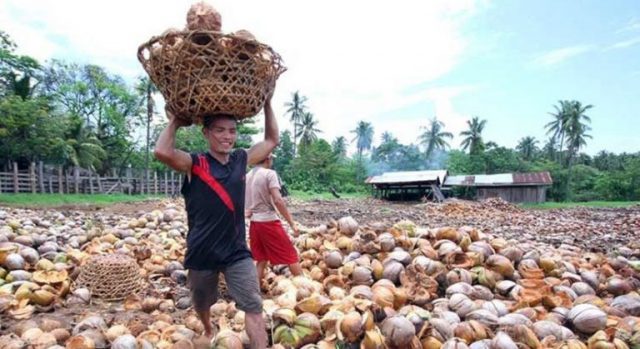
Agro-based exports up 7.5% in Feb.

PHILSTAR FILE PHOTO

AGRICULTURE-BASED exports in February rose 7.5% year on year to $608.06 million, according to preliminary data from the Philippine Statistics Authority (PSA).

The PSA said agro-based exports accounted for 8.3% of total exports by value.

Exports in the first two months rose 4.5% to $1.19 billion.

Coconut products, the Philippines’ top agricultural export commodity, posted a 6.5% increase to $313.41 million in February. The commodity group accounted for 4.3% of total exports.

Fruit and vegetable exports grew 17.3% to $227.48 million in February, driven by 56.6% growth in shipments of pineapple and pineapple products. Fruit and vegetables accounted for 3.1% of the Philippines’ total exports.

Outbound shipments of other agro-based products, including seafood, rubber, and various types of plant fiber, declined 13.2% to $66.94 million in February. This group of commodities accounted for 0.9% of total exports.

The biggest export gains were recorded for copra meal or cake (547.5%), pineapple concentrate (143.6%), pineapple juice (86.0%), canned pineapple (65.4%), and desiccated coconut (42.7%).

The top declines in export growth were posted by abaca fiber (-76.6%), mangoes (-43.6%), sugar products (-33.7%), rubber (-19.6%), and unmanufactured tobacco (-13.3%). — Vonn Andrei E. Villamiel

SSS explores possible relief measures for members, employers

SSS FACEBOOK PAGE

THE SOCIAL Security System (SSS) is exploring the possibility of offering a loan moratorium for members and a condonation program for contribution penalties for employers to provide relief as Filipinos deal with the fallout from the ongoing war in the Middle East.

The state pension fund is “actively studying” the feasibility of the two measures amid “economic challenges,” it said in a statement on Sunday.

SSS President and Chief Executive Officer Robert Joseph M. de Claro said the measures “aim to provide immediate relief to SSS members and employers struggling with financing difficulties, ensuring they can continue to access vital benefits without an added burden.”

“We recognize the hardships many Filipinos are enduring,” he said. “SSS remains committed to protecting the welfare of our over 40 million members.”

“We are expediting internal reviews and consultations with stakeholders to roll out these support initiatives as swiftly as possible, while safeguarding the long-term sustainability of the SSS fund.”

The pension fund is also evaluating options to extend contribution payment deadlines for employers and individual paying members, it said.

SSS is likewise pursuing digital initiatives to streamline its administrative and implementation processes and ensure the prompt delivery of relief measures and services, Mr. de Claro added.

SSS said updates on these potential relief programs will be announced through official channels once they are finalized. — Justine Irish D. Tabile

Holy Week at the mall

STOCK PHOTO | Image by Kjpargeter from Freepik

THE various malls in the metro have come out with their schedules for Holy Week, with reduced mall hours later in the week, and most closed on Maundy Thursday, Good Friday, and Black Saturday — but not all of them. Many of the mall supermarkets, for example, will be open throughout the week. Following in a list of most of the schedules.

SM SUPERMALLS
SM Aura
April 2 (Maundy Thursday): Closed

April 3 (Good Friday): Closed

(Supermarket open both days, 8 a.m. to 6 p.m.)

April 4 (Black Saturday) and April 5 (Easter Sunday), 10 a.m. to 10 p.m.

S Maison

April 2 (Maundy Thursday): Closed

April 3 (Good Friday): Closed

(except for select restaurants; 11 a.m. to 10 p.m.)

April 4 (Black Saturday) and April 5 (Easter Sunday): 10 a.m. to 10 p.m.

SM City Manila
April 2 (Maundy Thursday) and April 3 (Good Friday): Closed

(Supermarket open on April 2, 8 a.m. to 6 p.m.)

April 4 (Black Saturday) and April 5 (Easter Sunday): 10 a.m. to 9 p.m.

SM City Marikina
April 2 (Maundy Thursday) and April 3 (Good Friday): Closed

(Supermarket open on April 2, 8 a.m. to 6 p.m.; and on April 3, 8 a.m to 1 p.m.)

April 4 (Black Saturday) and April 5 (Easter Sunday): 10 a.m. to 10 p.m.

SM City North EDSA
April 2 (Maundy Thursday) and April 3 (Good Friday): Closed

(Supermarket and Hypermarket open April 2, 8 a.m. to 6 p.m.; April 3, 8 a.m. to 5 a.m.)

April 4 (Black Saturday) and April 5 (Easter Sunday) 10 a.m. to 10 p.m.

SM Mall of Asia
April 2 (Maundy Thursday) and April 3 (Good Friday) : Closed (except select restaurants)

April 4 (Black Saturday) and April 5 (Easter Sunday): 10 a.m. to 10 p.m.

SM Megamall
April 2 (Maundy Thursday) and April 3 (Good Friday): Closed

(Supermarket A open April 2, 8 a.m. to 6 p.m.; Closed April 3)

(Supermarket B open April 2, 8 a.m. to 6 p.m.; April 3, 8 a.m. to 5 a.m.)

April 4 (Black Saturday) to April 5 (Easter Sunday): 10 a.m. to 10 p.m.

The Podium
April 2 (Maundy Thursday) and April 3 (Good Friday): Closed

April 4 (Black Saturday) to April 5 (Easter Sunday): 10 a.m. to 10 p.m.

SM Southmall
April 2 (Maundy Thursday) and April 3 (Good Friday): Closed

April 4 (Black Saturday) to April 5 (Easter Sunday): 10 a.m. to 9 p.m.

ROBINSONS MALLS
All Robinsons Malls are closed on April 2 (Maundy Thursday) and April 3 (Good Friday), with a few exceptions:

Robinsons Antipolo: open from 10 a.m. to 10 p.m (both days)

Robinsons La Union, Luisita, and Tagaytay: 11 a.m. to 9 p.m. (both days)

Robinsons Angeles, Gapan, Ilocos, Malolos, Pangasinan, Santiago, Starmills, Tuguegarao, Dasmarinas, Galleria South, Gen. Trias, Lipa, Naga, Palawan, and Iligan: 11 a.m. to 9 p.m. (April 2 only)

ARANETA CITY
Gateway Mall 1 & 2, Ali Mall, Farmers Plaza:
April 2 (Maundy Thursday) and April 3 (Good Friday):Closed

April 4 (Black Saturday): 10 a.m. to 10 p.m.

April 5 (Easter Sunday): 10 a.m. to 9 p.m.

AYALA MALLS
Ayala Malls UP Town Center, Shops at Serendra, Ayala Malls Harbor Point, Ayala Malls Evo City, Ayala Malls Serin, Ayala Malls Nuvali, Ayala Malls Vermosa will be open for Food and Dining only.

Ayala Malls Nuvali
April 2 (Maundy Thursday): Open from 10 a.m. to 9 p.m.

Ayala Malls Harbor Point, Ayala Malls Evo City, Ayala Malls Nuvali, Ayala Malls Serin, Ayala Malls Vermosa will be open for Food and Dining only.

April 3 (Good Friday): Open from 11 a.m. to 9 p.m.

Glorietta, Greenbelt, One Ayala, Trinoma, Vertis North, Manila Bay, Market! Market!, Circuit, Arca South, Feliz, The 30th, Cloverleaf, Fairview Terraces, Marikina
April 2 (Maundy Thursday) and April 3 (Good Friday): Closed

UP Town Center, Shops at Serendra, Metropoint Mall
April 3 (Good Friday): Closed

ORTIGAS MALLS
Greenhills Mall and Estancia
April 2 (Maundy Thursday) and April 3 (Good Friday): Closed

April 4 (Black Saturday) to April 5 (Easter Sunday): 10 a.m. to 10 p.m.

FILINVEST MALLS
Festival Mall, Westgate, Main Square, Fora Mall
April 2 (Maundy Thursday) and April 3 (Good Friday): Closed

April 4 (Black Saturday): 10 a.m. to 9 p.m.

April 5 (Easter Sunday): 10 a.m. to 9 p.m.

MEGAWORLD LIFESTYLE MALLS
Eastwood City, Forbes Town, Uptown Bonifacio, Lucky Chinatown, Greenhouse at The Village Square Alabang, Southwoods Mall, Laguna
April 2 (Maundy Thursday) and April 3 (Good Friday): Closed

Alabang West Parade, Twin Lakes Shopping Village: open from 10 a.m. to 9 p.m. all week

The following will be open on April 4 (Black Saturday) to April 5 (Easter Sunday):

Eastwood City (10 a.m. to 10 p.m.), Forbes Town (noon to 9 p.m. Saturday; 10 a.m. to 9 p.m. Sunday), Uptown Bonifacio (10 a.m. to 11 p.m. Saturday, 10 a.m. to 10 p.m. Sunday), Lucky Chinatown (10 a.m. to 10 p.m.), Greenhouse at The Village Square Alabang (10 a.m. to 8 p.m.), Southwoods Mall, Laguna (10 a.m. to 9 p.m.)

Concreat raises cement prices in phases amid higher costs

CHP.COM
CHP.COM

CONSUNJI-LED Concreat Holdings Philippines (CHP) has implemented cement price increases in phases starting March 15, with additional adjustments in the coming weeks, to offset rising costs, its top executive said.

“There’s nothing we can do about it. Somebody has to give in,” DMCI Holdings Executive Vice-President and Chief Financial Officer Herbert Consunji, who also serves as president and chief executive officer of CHP, said at a media briefing last week.

He said that, as a rule of thumb, every P2 increase in fuel prices translates to about P1 added to cement costs.

“There was already one [imposed] on Mar. 15, then there’s another this week — another P10. Then in April, another P10, so maybe around P30,” he said.

Mr. Consunji said cement plants need to maintain current production levels, similar to power plants that must continue operating, prompting the company to adjust prices to reflect higher operating costs rather than reduce output.

“Gasoline/fuel gets used up fast because of logistics — logistics, delivery, and trucks. Then, at the same time, mixing the cement adds another big cost. That’s two major expenses right there,” he said.

Mr. Consunji said the planned increase amounts to about P20 on the current P200 price, or roughly a 10% rise.

CHP produces cement under the APO, Rizal, and Island brands, including Ordinary Portland Cement (OPC), which is used in large-scale construction projects.

The company operates through wholly owned subsidiaries APO Cement Corp. and Solid Cement Corp.

DMCI Holdings, Inc. earlier said its capital expenditures (capex) will remain unchanged despite higher oil prices linked to tensions in the Middle East. Mr. Consunji said the company may review operating costs, while funding plans could also be reassessed.

“Everything will be reset. But we’ll never know what’s going to happen,” he said.

DMCI allocated P2.9 billion for Concreat Holdings Philippines this year for plant capacity improvements, operational upgrades, and preventive maintenance.

For 2025, Concreat Holdings Philippines posted a net loss of P1.9 billion, citing higher financing expenses and lower average selling prices, although the company has implemented operational improvements to support recovery. — Alexandria Grace C. Magno

ADVERTISEMENT
ADVERTISEMENT