Home Blog Page 1040

Thailand’s top court rules tycoon and ex-PM Thaksin must serve one year in jail

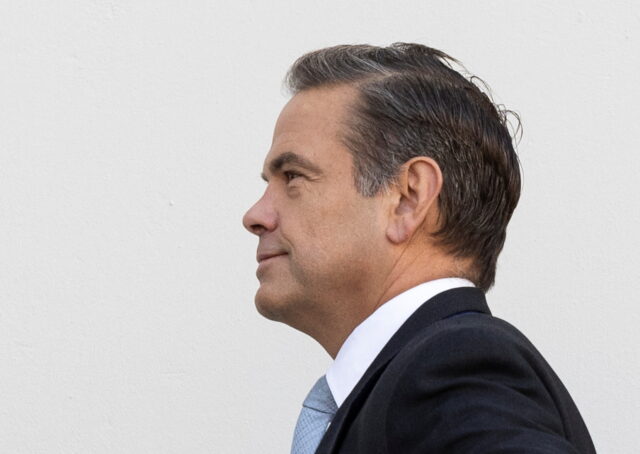
FORMER Thai Prime Minister Thaksin Shinawatra — REUTERS

BANGKOK — Thailand’s Supreme Court on Tuesday ruled former prime minister Thaksin Shinawatra must serve one year in jail because his detention in a VIP wing of a hospital in lieu of prison was unlawful, in another major blow for a powerful family that has dominated politics for two decades.

The judges said Thaksin did not have severe illness and his hospitalisation could not be counted as time served, adding the responsibility did not solely lie with the doctors and that the polarising billionaire intentionally prolonged his hospital stay.

Thaksin was seen at the court removing his jacket and getting into a corrections department van.

In a statement on Facebook, the tycoon said he accepted the verdict and would stay strong.

“Today, I may no longer have freedom, but have freedom of thought to create benefit for the country and people,” Thaksin said.

The 76-year-old power-broker is experiencing a period of political reckoning after his daughter and protégé Paetongtarn Shinawatra was sacked as prime minister by a court on August 29 – the sixth premier from or backed by the Shinawatra family to be removed by the judiciary or military.

Following Paetongtarn’s sacking last month, days of chaos ensued before her government fell on Friday, outmaneuvred by challenger Anutin Charnvirakul, who was elected premier by parliament in a humiliating defeat for Thaksin’s once unstoppable Pheu Thai party.

On return from 15 years of self-imposed exile in 2023, Thaksin spent only a few hours in prison before being transferred to hospital complaining of heart trouble and chest pains, prompting widespread scepticism and public outrage.

His eight-year sentence for conflicts of interest and abuse of power was commuted to one year by the king and Thaksin was released on parole after just six months, the entirety of which he had spent in the VIP wing of a hospital.

A political ally of Thaksin who was in the courtroom said he took the decision well.

“He still has the fighting spirit, he told me he came back (from overseas) and was ready to face any situation, whether it’s good or bad,” Kokaew Pikulthong, a lawmaker for the Pheu Thai party, told reporters. — Reuters

US lawmakers publish Jeffrey Epstein’s ‘birthday book’ featuring alleged Trump note

A US flag is draped at Union Station with the US Capitol dome in the background on Capitol Hill in Washington, DC, June 28, 2025. — REUTERS/KEN CEDENO

WASHINGTON – Democrats in the US House of Representatives on Monday made public a birthday letter DoUSnald Trump allegedly wrote to sex offender Jeffrey Epstein more than 20 years ago, though the White House quickly denied its authenticity.

The letter, the existence of which was reported by the Wall Street Journal in July, appears to have been signed by Trump, but he has denied doing so and has said it does not exist.

Democrats on the House Oversight Committee released the letter after Congress received the 2003 “birthday book” from Epstein’s lawyers. The letter is dated three years before allegations of sex abuse by Epstein became public in 2006.

Later on Monday, Republicans who control the Oversight Committee released hundreds of pages of documents turned over by Epstein’s lawyers, including the full “birthday book,” Epstein’s will and his 2007 non-prosecution agreement with prosecutors in Florida.

The birthday letter contains text of a purported dialogue between Trump and Epstein in which Trump calls him a “pal” and says, “May every day be another wonderful secret.” The text sits within a crude sketch of the silhouette of a naked woman.

White House Deputy Chief of Staff Taylor Budowich denounced the release, saying the signature on the letter was not Trump’s and alluded to Trump’s lawsuit against the Journal’s parent company, News Corp.
“Time for @newscorp to open that checkbook, it’s not his signature. DEFAMATION!” Budowich posted on X.

The case of Epstein, who died by suicide in prison in 2019, has caused a political headache for Trump after many of his supporters embraced a slew of conspiracy theories surrounding the convicted sex offender.

Republicans on the House Oversight panel last week released more than 33,000 pages of files related to Epstein in a bid to ward off a bipartisan vote that would have forced further disclosures.

Epstein’s victims and some members of Congress remain unsatisfied. Referring to Trump, House Democrats said on X on Monday, “What is he hiding? Release the files!”

After long suggesting that the files contain damaging information, Trump reversed course after returning to the White House. He has repeatedly labeled the matter a Democrat-led “hoax.”

The book, given to Epstein as a 50th birthday present, is filled with photos of bad haircuts, women and men including Epstein in tight bathing suits and reminiscences from childhood friends, former girlfriends, and people who came to know Epstein after he became wealthy.

It also includes messages to Epstein purported to be from famous people other than Trump, among them former US President Bill Clinton, Harvard Law School professor Alan Dershowitz and former Bear Stearns CEO Alan “Ace” Greenberg.

The message allegedly from Clinton applauds Epstein for his “childlike curiosity” and his “drive to make a difference,” while Greenberg supposedly wrote, “Working with Jeffrey has been a pleasure and watching his meteoric success has given me many vicarious thrills.”

Clinton could not immediately be reached for comment after business hours. Dershowitz and a lawyer who represented him in Epstein-related civil litigation also could not be immediately reached. Greenberg died in 2014. — Reuters

Philippines’ Marcos wants to remove flood control funding in 2026 budget

President Ferdinand R. Marcos, Jr. answers questions from the media after his first Cabinet meeting at the Heroes Hall of the Malacañan Palace, July 5. — PHILIPPINE STAR/KRIZ JOHN ROSALES

Philippine President Ferdinand R. Marcos Jr. said there’s no need to include flood control projects in the 2026 national budget, in the wake of corruption allegations in this type of infrastructure.

The P350 billion ($6.2 billion) funding for flood control projects this year can be rolled over to 2026, Mr. Marcos said in a video of a podcast released by his communications office.

“We already are seeing that all flood control projects supposed to be in the 2026 budget are probably no longer needed,” Mr. Marcos said. The Department of Public Works and Highways is seeking a budget of P250.8 billion for flood management program for 2026.

The president made the announcement as investigations on alleged irregularities in these projects deepened. In a Senate committee hearing earlier in the day, a government contractor tagged several members of the House of Representatives and public works officials for their alleged involvement in corruption in flood control projects. Some of these lawmakers denied the allegations. — Bloomberg

Puregold marks 27th anniversary with ‘ber’ months treats for customers

Leading supermarket chain Puregold is welcoming the “ber” months with an anniversary blowout for customers, including raffle giveaways of up to P1 million and SUVs, and its first-ever grocery “hakot” fun run.

Puregold customers from across the country are in for various treats in “Nasa Resibo ang Panalo,” a nationwide raffle promo which runs from Sept. 29 to Nov. 23, 2025.

Up for grabs in weekly draws are sacks of rice; latest gadgets including tablets, laptops, and mobile phones; P5,000 worth of P-Wallet credits; a whole year’s supply of groceries worth P10,000 per month; 27-second “hakot all you can” shopping sprees; and a sari-sari store startup package worth P25,000.

The biggest prizes include motorbikes, SUVs, and P1-million prizes for five winners.

Puregold’s anniversary celebration will culminate in its first-ever “Puregold Hakot Relay,” a unique fun run set on Nov. 22, 2025 at Rizal Park’s Burnham Green.

At the event, three-member teams will take on relay loops to pick up grocery items along the route, with the goal of crossing the finish line together, each with their own filled grocery bags. All finishers will get a medal and additional freebies at the end of the relay.

Those who have already registered can claim their race kits from Nov. 17 to Nov. 21 at the branch where they registered.

“Our anniversary celebration is the perfect way to usher in the “ber” months and kick off the spirit of giving during this season. Our customers can look forward to exciting giveaways every time they shop in any of our branches,” said Vicent Co, Puregold President.

Puregold is celebrating its anniversary this year on a high, as the company has seen sustained growth, logging net sales of P11.38 billion by the end of June 2025, an 11.6% increase from the same period last year.

The company attributes this hike to the full operation of new stores opened in 2024, and revenues from branches that opened in the first half of this year.


Spotlight is BusinessWorld’s sponsored section that allows advertisers to amplify their brand and connect with BusinessWorld’s audience by publishing their stories on the BusinessWorld Web site. For more information, send an email to online@bworldonline.com.

Join us on Viber at https://bit.ly/3hv6bLA to get more updates and subscribe to BusinessWorld’s titles and get exclusive content through www.bworld-x.com.

Real-life ‘Succession’ ends: Lachlan Murdoch takes control and siblings take cash

Rupert Murdoch's son Lachlan Murdoch arrives for the hearing on the contentious matter of succession of Rupert Murdoch's global television and publishing empire, in Reno, Nevada, US Sept. 23, 2024. REUTERS/Fred Greaves

The Murdoch family has reached a deal that will see Rupert Murdoch’s politically conservative eldest son Lachlan Murdoch cement control of the family media empire that includes Fox News and the Wall Street Journal.

The agreement, announced on Monday, ends a family brawl over who will control one of the highest-profile global media groups and puts to rest questions of succession within the Murdoch family after its patriarch’s death.

The drama is considered to be one of the inspirations for the television series “Succession,” about the infighting of the members of a media dynasty. Its real-life resolution preserves the conservative tilt of Murdoch’s media outlets.

Under the deal, Rupert’s children James Murdoch, Elisabeth Murdoch and Prudence MacLeod will receive cash from the sale of about 16.9 million shares of Fox Class B voting stock and about 14.2 million shares of News Corp’s Class B common stock. The amount of the payment was not disclosed.

One source said each of the children is expected to receive about $1.1 billion in proceeds.

They agreed to sell their personal holdings in Fox and News Corp over a period of six months, according to the announcement.

A new family trust will be created to benefit Lachlan Murdoch, and his younger siblings Grace and Chloe Murdoch, who are Rupert’s children from his marriage to Wendi Deng Murdoch. This trust, worth about $3.3 billion according to the source, will hold 36% of Fox’s Class B common stock and 33% of News Corp’s Class B shares, the companies’ statements said.

A battle over Rupert’s global television and publishing empire played out last autumn in a Reno, Nevada, courtroom, where a judge considered the contentious matter of succession.

Murdoch, 94, attempted to change the terms of the family’s trust, which was set up after his 1999 divorce from his second wife, Anna, and holds significant stakes in Fox News parent Fox Corp and Wall Street Journal owner News Corp.

Under the original trust, News Corp and Fox voting shares would have been transferred to Murdoch’s four oldest children – Prudence, Elisabeth, Lachlan and James – upon his death.

Murdoch worried that three of his heirs, James, Elisabeth and Prudence, could mount a coup to oust Lachlan, who serves as executive chairman of Fox and chairman of News Corp.

Murdoch had proposed an amendment to the trust that would block any interference by Lachlan’s siblings, who are more politically moderate, according to the New York Times, which obtained a sealed court document detailing the succession drama.

A Reno, Nevada, probate court rejected that plan in December, saying that Rupert and Lachlan had acted in “bad faith” in seeking to amend the irrevocable trust. That decision created a fresh opening for settlement talks, according to the source.

Fox News continues to be the number one U.S. cable news network, playing an influential role in U.S. politics, particularly among Republicans who prize its conservative-leaning audience.

“You know that there will always be a conservative guardian of Fox News. And frankly, if I were a shareholder. I would really think this was a very good move,” said Claire Enders, CEO and founder of UK-based media research firm Enders Analysis. — Reuters

Cuts to US oil jobs and spending threaten output growth

REUTERS

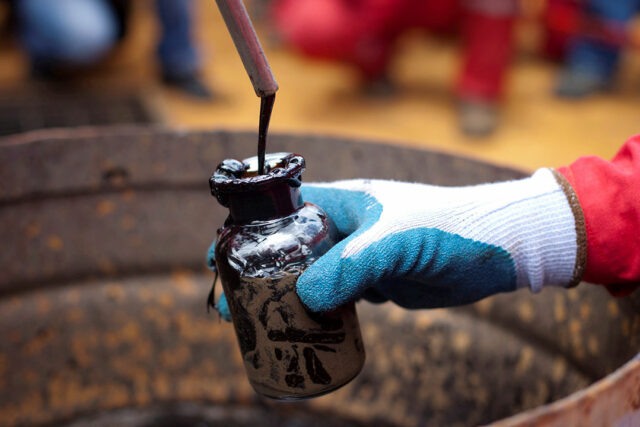
HOUSTONUS – The US oil industry has laid off thousands of workers and cut billions in spending due to lower oil prices and the biggest consolidation in a generation, in what could mark the end of the rapid output growth that made the US the world’s top producer.

The Organization of the Petroleum Exporting Countries and its allies in the OPEC+ producer group are increasing output to win back market share that was lost to the United States and other producers in recent years. OPEC+ agreed on Sunday to further raise production from October by 137,000 barrels per day.

Those increases have driven international oil prices down around 12% this year to just above breakeven levels for many US oil companies, prompting cuts in spending and jobs that industry officials say could curb production.

A plateau or fall in output would diminish the United States’ sway in global markets and challenge US President Donald Trump’s energy dominance agenda for the country.

ConocoPhillips – the third largest US oil producer – said last week it would cut up to 25% of its staff. That followed a similar announcement in February by rival Chevron, which said it would lay off 20% of its workforce, totaling roughly 8,000 people.

Oilfield service company SLB said it was reducing its workforce earlier this year, while Halliburton has cut staff in recent weeks.

Lower oil prices and rising costs have pushed 22 public US producers, including Occidental Petroleum Corp, ConocoPhillips, Diamondback Energy, to cut their capital expenditures by $2 billion, according to a Reuters analysis of second quarter earnings announcements. The analysis did not include oil majors Exxon or Chevron.

US oil rig count – an indicator of future activity – has fallen by about 69 to 414 this year, according to Baker Hughes.

“We’ve gone from ‘drill, baby, drill’ to ‘wait, baby wait’ here in the Permian,” said Kirk Edwards, president of Texas-based Latigo Petroleum, referring to the largest US oilfield.

The market needs oil prices to consistently trade around $70 to $75 a barrel for rigs to get back to work again, he said. US West Texas Intermediate futures CLc1 were trading at $62.15 a barrel on Monday, after settling at $61.87 on Friday.

“It’s having a very devastating effect on domestic employment and eventually it will affect our production,” said Edwards. “At some point US output growth will plateau and start to turn down, but that oil will be made up by OPEC.”

Many analysts are already forecasting a drop in production from the record 13.2 million barrels per day reached in 2024, powered by the country’s shale revolution.

Research firm Energy Aspects expects US onshore output to drop by 300,000 bpd in 2025 from last year, while rival Wood Mackenzie estimates US onshore growth from lower 48 US states of 200,000 bpd, the smallest increase since 2021 when COVID-19 ravaged demand.

Weekly production from the lower 48 US states stood around 13.4 million bpd in the last week of August, according to data from the US Energy Information Administration, below the peak 13.6 million bpd it touched in December last year.

“Modest crude production growth will slow even more as upstream activity stabilizes at a lower level and operators focus more on operational efficiency and capital discipline,” Energy Aspects analysts Jesse Jones and Paola Romero said in a note.

IDLE EQUIPMENT, FEWER JOBS
While US operators are dropping rigs, the US frac spread count – which measures equipment deployed to fracture subsurface rock and complete wells – has fallen by 39 so far this year to 162 as of last week, its lowest since February 2021, according to market consultancy Primary Vision.

“You can’t take 60 rigs and 20 to 30 frac spreads out of the Permian in three months and not eventually see a production response,” Diamondback Energy CEO Kaes Van’t Hof said in an earnings call in August.

“With volatility and uncertainty persisting, we see no compelling reason to increase activity this year,” he added.

Trump’s trade policies and tariffs have also pushed up costs of materials used in the industry such as steel and casings.

“There is a sense of inflation coming up, tariffs are having an impact, so therefore the global economy is going to be slowing, and demand is going to go down,” ConocoPhillips CEO Ryan Lance said during a town hall meeting on Thursday.

Diamondback, another large driller in the Permian basin, said it expects the cost of steel casing for wells to increase almost 25% through the course of 2025 as Trump’s steel tariffs bite, raising the breakeven cost of nearly every well drilled in the United States this year.

The company said operating costs had risen to 35% of total spending compared with about 20% historically.

In a video message to employees announcing the layoffs, ConocoPhillips said controllable costs have risen by about $2 per barrel to $13 in 2024 from three years prior, making it harder for the company to compete.

“Tariffs have introduced some level of uncertainty and that’s manifesting with internationally sourced equipment alongside a trend of inflation,” the company said in August during its earnings call.

US oil and gas production jobs fell by 4,700 in the first six months of this year, Texas labor market statistics showed, while energy services jobs declined by about 23,000 to 628,062 in August from the start of this year, according to a report from the Energy Workforce & Technology Council.

To be sure, improved efficiencies from drilling have helped companies drop rigs, while holding production flat, but those improvements will not be enough to keep onshore US production rising, or even steady in some basins, analysts say.

“Trump administration’s policies are limiting drilling activity in places where there is potential for increases in supply and productivity,” said Josh Young, chief investment officer at energy investment firm Bison Interests. — Reuters

Luxury cars, ghost projects, and public rage: Where did the billions go?

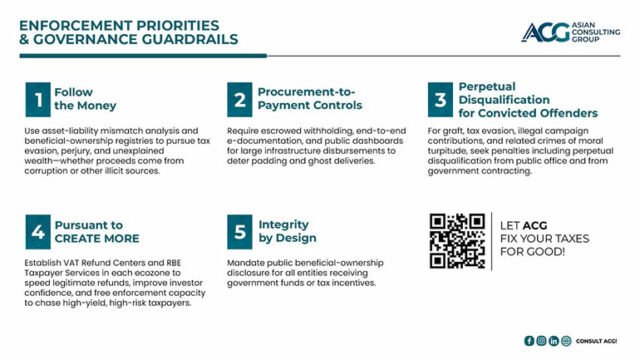
By The Asian Consulting Group

Alarming allegations of corruption within the Department of Public Works and Highways (DPWH) have once again placed the agency under intense public scrutiny. From ghost flood-control projects to overpriced contracts and lavish lifestyles of public officials, the latest revelations suggest that systemic rot may be far deeper than previously thought.

Senator Panfilo M. Lacson recently exposed how massive kickbacks continue to plague DPWH projects, claiming that up to 60% of public funds for infrastructure are lost to corruption. This means that in a P100-million project, only P40 million may actually go toward construction, while the rest vanishes into the pockets of intermediaries, contractors, and politicians.

Such practices not only drain public coffers but also put lives at risk by leaving communities vulnerable to floods and poorly built infrastructure.

In Bulacan, multiple flood-control projects were found to be substandard or completely nonexistent. Shell companies and ghost contractors are allegedly being used by district engineers to win bids and funnel funds. Acts that violate both procurement law and public trust. The situation has deteriorated so badly that Senator Lacson has described the DPWH as a “playground for syndicates.”

Perhaps the most blatant example of this impunity came when a DPWH engineer was arrested after reportedly offering hundreds of millions in bribes to halt a congressional probe. This incident makes clear that corruption within the agency is not just persistent, it’s emboldened.

In response, President Marcos, Jr. has ordered a sweeping probe and directed agencies such as the Commission on Audit (CoA), Bureau of Internal Revenue (BIR), and Bureau of Customs (BoC). The display of luxury vehicles and extravagant lifestyles by some engineers raises legitimate suspicions regarding undeclared income and illicit enrichment.

Yet lifestyle checks must not serve as a mere display of political will. They must lead to concrete action. If proven guilty, those involved in corruption must face not only criminal charges but also permanent removal from public office. There can be no place in government for individuals who exploit public funds for personal gain. Anything less undermines the rule of law and enables a culture of impunity.

The issue goes beyond money. Every peso lost to corruption is a peso stolen from flood protection, education, healthcare, and community resilience. When infrastructure that is meant to safeguard lives becomes a source of personal enrichment, public safety becomes collateral damage.

This is not just about exposing wrongdoing, it is about rebuilding trust. And that begins by making sure those who have betrayed it are never given the chance to do so again.

Reference/s: https://newsinfo.inquirer.net/2098418/lacson-bares-systematic-corruption-kickback-in-flood-control-projects

https://bilyonaryo.com/2025/08/24/garapalan-na-dpwh-engineer-nabbed-after-allegedly-dangling-up-to-p360m-sop-kickbacks-from-infra-projects-to-bilyonaryo-congressman/business


Spotlight is BusinessWorld’s sponsored section that allows advertisers to amplify their brand and connect with BusinessWorld’s audience by publishing their stories on the BusinessWorld Web site. For more information, send an email to online@bworldonline.com.

Join us on Viber at https://bit.ly/3hv6bLA to get more updates and subscribe to BusinessWorld’s titles and get exclusive content through www.bworld-x.com.

Dairy duty: Indonesia presses businesses to find a million cows

REUTERS

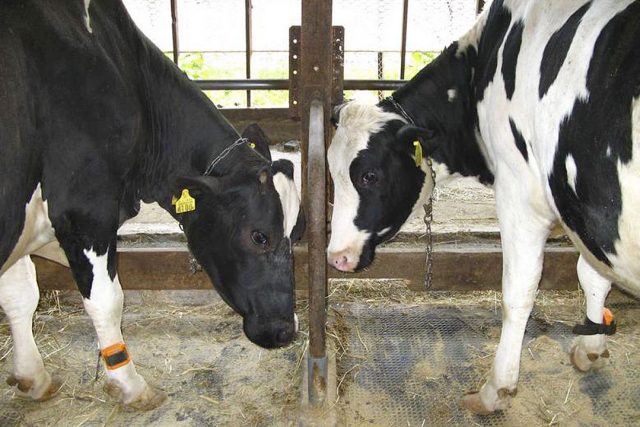
KUNINGAN, Indonesia – The once-empty barns of the Laras Ati milk cooperative are filled with the recent arrival of more than 200 pregnant spotted Holstein-Friesian cows from Australia under Indonesia’s ambitious plan to ratchet up milk production.

The centerpiece of a program to provide free meals to 83 million children and expectant mothers, the plan calls for importing a million dairy cows over five years, at a cost of nearly $3 billion, to lift the size of the country’s dairy herd more than four-fold from 220,000 now.

With limited fiscal space, Jakarta is pressing private companies to fund the imports – an unorthodox approach causing concern amongst the business community in Southeast Asia’s largest economy, according to scheme participants and documents seen by Reuters.

The spokesperson for Indonesia’s Presidential Communication Office and state secretariat minister did not respond to requests for comment.

Progress has been slow since its launch in December, with just 11,375 dairy cows imported by the end of July, all from Australia thus far, against a target of 200,000 for the year, government data shows.

The slow pace has cast doubt over the expanded rollout of the free meals plan, which was the biggest pledge made to voters by President Prabowo Subianto as he swept to power in last year’s election, experts said.

A lack of cattle means the world’s fourth-largest country by population relies mostly on milk powder imported from Australia, New Zealand and the United States. Prabowo’s policy platform also pushes for greater self-sufficiency for the archipelago.

Helmed by the agricultural ministry, the plan called for businesses – many without direct dairy experience – to pay for and import cows that are brought into the care of cooperatives such as Laras Ati in West Java.

The idea, Deputy Minister of Agriculture Sudaryono said in June, is to import live cattle to decrease the need to import milk and meat.

“It’s not the government that will allocate funds to import live cattle,” he said in a statement. “There is a significant demand for meat and milk, so we are opening the opportunity for many investors,” he said.

PRESSURE TO PARTICIPATE
Last November, shortly after Prabowo took office, the agriculture ministry sent a communique to over 200 private businesses asking them to commit voluntarily to import cattle to support the free meals program, industry sources said. The commitment was for 20 cows per year from 2025 through 2029.

Reviewed by Reuters, the communique was also sent to more than a dozen multinational companies.

Ministry data said 196 businesses committed to bringing in cows as of May. Sources familiar with the matter have said that most of the companies have no prior experience dealing with live cattle.

Four people involved in the program, speaking on condition of anonymity due to concern they could face government backlash, said the companies felt compelled to participate fearing the consequences of not doing so, such as facing delays in securing import licenses for their core businesses, including frozen meats and milk powder.

Documents and correspondence reviewed exclusively by Reuters illustrate such consequences for one company, whose import commitment earlier this year was below the expected 20 cow “minimum” that companies had been advised to fund.

The correspondence, via text messages, showed an official of the company inquiring with a government official about an inordinate delay in the approval of an import license recommendation despite its commitment to import cattle.

The government official asks for the import commitment to be raised to 20 cows. The company official complies and resends the license recommendation request, which is then approved in a matter of days.

The details of the company and ministry are being withheld to protect the company official from what they feared would be further backlash.

The Directorate General of Animal Husbandry and Animal Health at Indonesia’s agriculture ministry did not reply to requests for comment.

DAIRY NEOPHYTES
Arip Setiadi, who heads the Laras Ati co-op about 250 kilometres (155 miles) southeast of Jakarta, said the agriculture ministry called investors as well as dairy cooperatives into a meeting in March.

“They told us, importers and cooperatives, to collaborate in increasing the dairy cow population and milk production,” Setiadi, 42, said during a recent visit to his farm, located in a region where half the cattle population was wiped out by a foot and mouth disease outbreak in 2022.

Of the cows at Laras Ati, 160 were bought by 16 members of the Indonesian Association of Animal Protein Entrepreneurs (APPHI), with no cattle experience, which is why the herd is managed by the co-op. Another 160 bought by APPHI members were moved to the KAN Jabung cooperative in East Java.

Achmad Fachmi, head of APPHI, said that businesses are under obligation to adhere to government regulations and policies in their operations. The association represents businesses in cold chain distribution, including meat and dairy products.

He added that close discussions were held with the ministry, expressing “our hopes that by running this program, we will be supported in terms of the licensing process” for their core businesses.

Each cow costs the buyers around 45 million rupiah ($2,800), which includes the import price as well as six months’ worth of expenses for items including transport, feed, and vaccines.

Under the scheme, cattle purchasers and the cooperatives will share revenues, with the buyers expected to recoup their investment in about three-and-a-half years, APPHI figures.

Several industry experts expressed skepticism over the structure of the plan as well as the country’s readiness to manage a massive influx of cattle.

“As an exporter we have responsibilities with animal welfare. The infrastructure there doesn’t support all that,” said Adam Petty, founder of Dairy Livestock Exports, an Australian exporter of dairy heifers that ships thousands of animals a year, including to Indonesia.

Rochadi Tawaf, an adviser with Indonesia’s Cattle and Buffalo Breeders Association and a lecturer in animal husbandry at Padjadjaran University, questioned the reliance on inexperienced firms.

“If the program is given to entrepreneurs with no track record of success in the dairy business, it won’t produce results,” he said. — Reuters


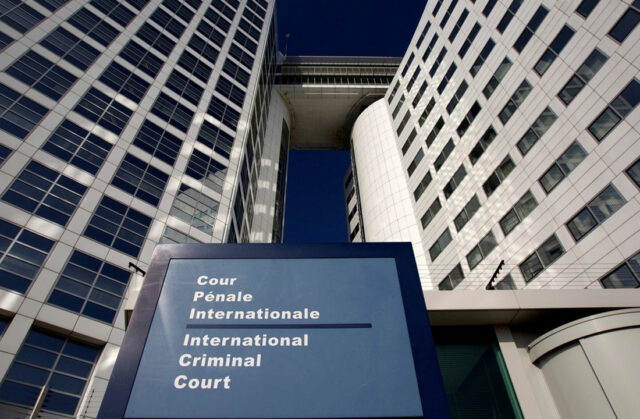
ICC postpones hearing for Philippines’ Duterte for health assessment

International Criminal Court -- Reuters

THE HAGUE – International Criminal Court judges on Monday postponed hearings to determine the definitive charges against former Philippine President Rodrigo Duterte to see if the octogenarian is fit enough to follow the pre-trial proceedings in his case.

Duterte, 80, was arrested and taken to The Hague in March on murder charges linked to his “war on drugs”, where thousands of alleged narcotics peddlers and users were killed.

He has maintained his arrest was unlawful and tantamount to kidnapping.

In August, his defense lawyers asked the court for an adjournment of all proceedings arguing that the former president was not fit to stand trial. Details of Duterte’s alleged health conditions were redacted in the public version of the request.

On Monday, judges allowed for an indefinite postponement of the so-called confirmation of charges hearings set for September 23. But they stressed the period would be limited “to the time strictly necessary to determine whether Mr Duterte is fit to follow and participate in the pre-trial proceedings”, according to a decision published on the court’s website.

Many of the filings related to Duterte’s health are confidential or heavily redacted and it is not clear when the court expects to rule on his fitness to follow his case. It is rare for international courts to find suspects, even increasingly elderly suspects, wholly unfit for trial.

The ICC has never found a suspect unfit for trial despite several other defendants’ petitions. — Reuters

MBC Media Group: Notice 2025 Annual Stockholders Meeting


Spotlight is BusinessWorld’s sponsored section that allows advertisers to amplify their brand and connect with BusinessWorld’s audience by publishing their stories on the BusinessWorld Web site. For more information, send an email to online@bworldonline.com.

Join us on Viber at https://bit.ly/3hv6bLA to get more updates and subscribe to BusinessWorld’s titles and get exclusive content through www.bworld-x.com.

Analysts see BSP pause in October

INDIVIDUALS shop for food items inside a supermarket in Quezon City, Jan. 16, 2023. — PHILIPPINE STAR/ MIGUEL DE GUZMAN

By Katherine K. Chan

THE BANGKO SENTRAL ng Pilipinas (BSP) may hold off further monetary easing in October after inflation rose to a five-month high in August, with analysts expecting the central bank to deliver its last interest rate cut for the year in December.

Union Bank of the Philippines (UnionBank) Chief Economist Ruben Carlo O. Asuncion said it would be difficult for the BSP to justify another reduction in borrowing costs next month given the rebound in price pressures.

“Given the upside surprise in headline and core inflation, a rate cut in October looks unlikely,” Mr. Asuncion said in an e-mailed reply to questions. “It is difficult to justify a BSP rate cut as both cyclical and structural inflation measures tilt upward.”

Security Bank Chief Economist Angelo B. Taningco said the Monetary Board would likely pause in October “in light of the rising inflationary pressures.” “However, we still maintain our view for the BSP to conduct its fourth 25-basis-point (bp) rate cut for the year in December,” he said in an e-mail.

Headline inflation quickened to 1.5% in August from 0.9% in July, mainly due to typhoon-driven spikes in vegetable and fish prices. It was faster than market expectations but slower than 3.3% a year earlier.

The August rate fell within the BSP’s 1-1.8% forecast but exceeded the 1.3% median estimate in a BusinessWorld poll of 16 analysts. It also marked the sixth straight month that inflation remained below the BSP’s 2-4% target.

For the first eight months, inflation averaged 1.7%, matching the central bank’s 2025 forecast.

Reinielle Matt M. Erece, an economist at Oikonomia Advisory and Research, Inc., said the August outcome would weigh heavily on the BSP’s next policy move.

“While inflation from the previous months went below analysts’ expectations, the August reading went beyond,” he said in a Viber message. “Thus, we may see a more cautious and calibrated approach from the central bank with regard to the timing of the next rate cut.”

In a report, Deutsche Bank also noted that inflation risks in the coming months could prompt a pause in October, though it still expects easing to resume in December.

The BSP lowered the benchmark interest rate by 25 bps to 5% on Aug. 28, its third straight cut since August 2024. In total, it has reduced rates by 150 bps this cycle.

BSP Governor Eli M. Remolona, Jr. earlier signaled that there could be room for one more adjustment before yearend but stressed that the easing cycle is nearly complete.

Emilio S. Neri, Jr., chief economist at Bank of the Philippine Islands, said the central bank’s stance reflects concerns about inflationary risks next year.

“(Mr. Remolona) is probably foreseeing the changes in inflation next year,” he told Money Talks with Cathy Yang on One News. “We will be on an uptick that could lead to a breach.”

“And if we aren’t able to control inflation expectations, that could lead the BSP to actually hike instead of cut,” he added.

Still, he said a cut later in the year remains possible, particularly if global developments support looser policy.

FED CUE
Nicholas Antonio T. Mapa, chief economist at Metropolitan Bank & Trust Co., said the Philippine central bank would likely align its decision with the US Federal Reserve’s next policy move and domestic growth data.

“We expect BSP to await more data points on inflation, see whether the Fed cuts in November and look to third-quarter GDP (gross domestic product) numbers for guidance,” he said in a Viber message.

If the Fed resumes easing, domestic growth stays modest and inflation trends align with the target, the BSP may consider another rate cut before yearend, he added.

Mr. Erece said labor market and growth conditions could justify another adjustment.

The Monetary Board will meet on Oct. 9 and Dec. 11 for its final two policy reviews this year.

Meanwhile, analysts flagged the increase in core inflation, which strips out volatile food and fuel items, as a key concern. Core inflation climbed to 2.7% in August, the highest in eight months, from 2.3% in July.

“The main surprise from our standpoint in the latest release is the jump in core inflation to an eight-month high,” Miguel Chanco, chief emerging Asia economist at Pantheon Macroeconomics, said in a note last week. “It’s worth remembering, though, that in the Philippines, core inflation still includes some elements of food and energy prices.”

Mr. Mapa said the uptick was driven by select food items outside the core basket that were affected by storm damage. “These food items, such as other vegetables, appear to have been impacted by the recent spate of storms and thus constitute a supply-side shock inflation episode,” he said.

Despite the August rise, core inflation averaged 2.4% in January to August, slower than 3.2% a year ago.

This shows companies are passing on more costs and demand remains firm, which the BSP is watching closely, Mr. Asuncion said.

The central bank expects full-year inflation to stay below target in 2025 before returning to within 2-4% by 2026 and 2027. Its forecast for 2026 is now 3.3%, while its projection for 2027 is 3.4%.

Pantheon Macroeconomics forecasts inflation at 1.8% this year and 3% in 2026, higher than its earlier 2.6% projection. “We continue to believe that the BSP will cut at least one more time before the end of 2025, by 25 bps, though it is unlikely to pull the trigger again until December,” Mr. Chanco said.

UnionBank likewise revised its forecast to 1.8% from 1.6%.

PHL CEOs upbeat despite corruption worries

PHILIPPINE STAR/NOEL B. PABALATE

By Justine Irish D. Tabile, Reporter

MOST Filipino executives remain confident about their industry outlook for the next 12 months but remain dissatisfied with the government’s handling of corruption, a survey by PwC Philippines and the Management Association of the Philippines (MAP) showed.

Of 175 chief executive officers (CEO) surveyed, 83% expressed confidence in business prospects over the next year, with 31% saying they were “very confident.” However, this is slightly lower than last year’s 85% as CEOs weigh external risks such as the US reciprocal tariff and global geopolitical tensions.

PwC-MAP 2025 CEO Survey: Fewer CEOs REmain confident in industry prospects“In general, all the sectors are growing,” Karen Patricia A. Rogacion, deals and corporate finance partner at PwC Philippines, told a news briefing on Monday. “That’s why we need to really have a very responsive government.”

She said executives remain positive about their industries but are mindful that optimism could be tempered by shifting trade rules and geopolitical disruptions.

PwC said 31% were “very confident” compared with 36% last year, and 52% were “somewhat confident” compared with 49% in 2024. The share of those who were “not very confident” rose to 17% from 13%.

Almost half (47%) of CEOs cited geopolitical uncertainty as a major concern, along with uncertain economic growth. About 20% flagged threats from US tariffs and trade regulations.

“There is one important factor that was not present last year, and that is the potential impact of the shifting trade policy, especially by the US,” PwC Philippines Chairman and Senior Partner Roderick R. Danao told the same briefing.

He said tariffs are likely to dampen US demand and increase import costs, raising caution among Philippine companies. “That is a very important precautionary factor for all the CEOs. That is why they are slightly less optimistic despite the sustained consumer demand locally.”

The US government has begun charging Philippine goods entering its market with a 19% reciprocal tariff. While some importers stocked up to offset the short-term impact, Mr. Danao warned that these measures might not be sustainable.

CEOs anticipate the tariffs could translate to higher supplier costs, weaker international revenues, reduced foreign investment and potential customer losses, according to the survey.

Still, 84% of respondents said they were confident about revenue growth in the next 12 months, while 87% expect growth in the next three years. They cited infrastructure development, domestic consumption and state spending as the top drivers of Philippine growth.

“CEOs in the Philippines see both the risks and opportunities that lie ahead, such as the rising digital economy, sustained consumer spending, a robust banking system, and lower inflation and interest rates,” Mr. Danao said.

“They remain optimistic while at the same time anticipating the headwinds arising from fracturing geopolitics and global trade disruptions, which can trigger inflation,” he added.

STICKING POINT
Despite the optimism, CEOs remain critical of the government’s performance in curbing corruption. Only 9% of respondents said the government was doing well in fighting graft.

The survey period, from July 22 to Aug. 25, coincided with a high-profile government probe of “ghost” flood control projects.

“It is a great opportunity for the government to really demonstrate that they are serious about transparency and governance,” Mary Jade Roxas-Divinagracia, deals and corporate finance managing partner at PwC Philippines, told reporters. She added that both business and the public are pushing for accountability.

“The government has to really take this seriously and have a credible investigation,” she said. The business community will be watching closely, and this is the government’s chance to show Filipinos and foreign investors that it is serious about fighting corruption, she added.

Mr. Danao said initiatives such as the sumbongsapangulo.ph website, which lets citizens lodge complaints directly, could be a game-changer. “It keeps on going every day. Now the next step is for the government to show serious enforcement and legal actions to set the tone moving forward.”

The survey also found that 52% of CEOs think their companies would not be economically viable beyond 10 years if they continue on their current path. This is up from 46% last year, reflecting mounting pressure from megatrends such as technological disruption and climate change.

“The pressure is really driven by megatrends like technological disruption and climate change,” Ms. Rogacion said. “The good thing is the CEOs recognize the need to embrace tech, innovation and new investments so they can be more relevant even after 10 years.”

Executives also highlighted the growing role of artificial intelligence (AI). Donald Patrick L. Lim, a member of the CEO Conference Committee of MAP, said the synthetic workforce is on the rise and reliance on AI would only deepen.

“It’s not going to be a very far future,” he said. “It’s very near term, where you will have a machine helping you do a lot of things on its own.” Mr. Lim said.

“That’s why every company right now should have a very strong push towards AI governance from a corporate perspective because AI is, as we all know, going to displace a lot of jobs and a lot of things in how we do our work,” he added.

Based on the survey, 68% of CEOs have explicitly factored AI into their business plans, while 60% have begun implementing AI initiatives. However, many cited resource constraints and the pace of technological change as barriers to broader adoption.

Executives said AI is already helping improve productivity, increase revenue and enhance customer engagement. Over the next year, 82% said they plan to invest in their workforce, 78% in automation and 63% in advanced technologies.