Home Blog Page 1003

Toyota rolls out new-car deals

Toyota GR Yaris — PHOTO BY KAP MACEDA AGUILA

TOYOTA MOTOR PHILIPPINES (TMP) rolls out deals on the Hilux, RAV4, GR Yaris, and more this September. The Hilux 4×2 2.4 G A/T is available for a down payment of P220,800 under the company’s Pay Low offering. This option offers customers down payments as low as 15% with free insurance for the first year, free LTO registration for three years, and no chattel mortgage at 60 months to pay.

The same variant is also available through a monthly payment of P15,511 under the Pay Light option, which offers customers low monthly plans with 50% down payment at 60 months amortization. The Conquest 4×2 2.4 G A/T variant gets a P30,000 discount for cash buyers.

Meanwhile, the RAV4 2.5 LTD HEV CVT premium SUV is made available for a down payment of P307,800 under the Pay Low option, or a monthly payment of P21,312 under the Pay Light offer. The same variant also gets P200,000 off through straight cash payment. The GR Yaris can be had for a down payment of P523,500 or a monthly payment of P35,500 for the 1.6 Turbo A/T variant. Customers paying straight cash get a P160,000 discount.

The Tamaraw Utility Van is also available with special plans: The 2.4 Utility Van DSL M/T is offered for a down payment of P171,300 or a monthly payment of P10,365. A P100,000 discount is also available for those who will pay in straight cash for the 2.4 Utility Van DSL M/T and 2.4 GL Dropside DSL A/T through Toyota Financial Services Philippines.

TMP also offers free periodic maintenance service (PMS) up to the 20,000-km checkup for all brand-new units of the Raize, Veloz, and select variants of the Vios, Fortuner, Hilux, Innova, and Avanza purchased from an authorized Toyota dealership within the promo period. Customers may avail of the free PMS session within 36 months from the release date of their vehicle so long as they don’t skip any maintenance from the 1,000-km to 20,000-km checkups.

All variants of the Tamaraw sold and released during the promo period are also qualified for a service discount voucher of P1,200 (VAT-inclusive), applicable to nine PMS sessions from the 1,000-km to 40,000-km checkups. Customers may avail of the P1,200 service discount voucher within 48 months of the release date of the vehicle. Owners of brand-new Rush, Corolla Altis and Wigo units sold and released during the promo period also qualify for the P1,200 service discount voucher. The voucher, which can be availed within 36 months from the release date of the vehicle, is applicable to seven PMS sessions from the 1,000-km to 30,000-km checkups.

Owners of a Vios, Innova, Fortuner or Hilux may trade up for a brand-new Corolla Cross HEV, Yaris Cross HEV, or Zenix HEV and get a rebate of P30,000 (P20,000 if trading up any brand for a Toyota Tamaraw).

The rebate can be used as cash discount for the purchase of the new vehicle during the promo period or to purchase Toyota genuine accessories. During the promo period, select Vios, Wigo, Avanza, Veloz, Innova, Fortuner, and Hilux sold and released are entitled to a free one-year comprehensive insurance provided by Toyota Insure given that the unit is purchased from any authorized Toyota dealer. The one-year comprehensive insurance covers 24/7 personal accident, passenger auto personal accident, three-year CPTL, own damage (OD), loss/theft, excess bodily injury (EBI), property damage (PD) and acts of nature (AON), and includes emergency roadside assistance.

All brand-new vehicles purchased at any authorized Toyota dealer in the Philippines starting Jan. 1 this year are also eligible for the Toyota Five-Year Warranty, which is composed of a three-year or 100,000-km Manufacturer Warranty, and an additional two-year or 40,000-km Toyota Service Loyalty Warranty if qualified.

All brand-new 2.4 Tamaraw Dropside DSL M/T and A/T, and 2.4 Tamaraw Utility Van LWB DSL M/T units purchased through financing with Toyota Financial Services Philippines are eligible for zero percent interest at the following down payment options: 30% (12 or 24 months), 50% (12, 24, or 36 months).

For more information, visit https://www.toyota.com.ph/promos/EpicJourneys or follow Toyota Motor Philippines on Facebook, Instagram and X (toyotamotorph), and join the ToyotaPH community on Viber to get the latest updates on products, services, and promos.

How the BSP’s upcoming rules could make or break online gambling

STOCK PHOTO | Image by Macrovector from Freepik

By Pierce Oel A. Montalvo, Researcher

WHAT STARTED as a free-for-all for online gambling is about to get some serious house rules from the central bank.

Last July, the Bangko Sentral ng Pilipinas (BSP) released a draft circular introducing comprehensive regulations for online gambling payment services.

The draft circular represents the regulator’s assertive stance on online gambling. Should it become regulation, providers, operators, and consumers alike will be met with drastic changes in the gambling industry.

Then, in August, the central bank ordered to remove in-app gambling links from e-wallets.

“The BSP directive is issued in light of the surge in online gambling transactions and its impact on the financial health of consumers and their families,” the central bank said in a statement.

AN URGENT RESPONSE
The central bank’s intervention followed growing alarm from lawmakers and health experts over online betting’s devastating impact. The Aug. 14 order gave financial firms 48 hours to remove links redirecting users to gambling websites.

“The Monetary Board has approved our policy ordering BSP-supervised institutions to take down all icons and links redirecting to online gambling sites,” BSP Deputy Governor Mamerto E. Tangonan said during a Senate committee hearing on online gambling in August.

The new draft circular goes further, aiming to build comprehensive regulatory walls rather than simply patching leaks. BSP said the suspension would remain in place until guidelines for online gambling payment services are finalized.

“It is finalizing new rules, developed following public consultation, that will require banks, e-wallets, and other financial service providers to adopt stronger safeguards against gambling-related harm,” the central bank said in a statement dated Aug. 7.

The scale of the challenge is substantial. According to Philippine Amusement and Gaming Corp. (PAGCOR), gaming industry gross gaming revenues jumped 26% to P214.75 billion in the first half of 2025. Electronic games drove this growth with a 53.47% increase in gross revenues to P114.83 billion.

PAGCOR currently collects a 30% rate from e-gaming platforms, down from 35%, which could encourage illegal operators to register. However, concerns remain about the proliferation of unlicensed and unregulated sites that could undermine anti-money laundering efforts.

BSP Governor Eli M. Remolona, Jr. said that more measures to regulate e-gaming are being considered.

“We’re still studying it. Basically, as before, we just want to put sand in the wheels,” he said during the Manila Tech Summit on Aug. 26.

The regulatory pressures are heard not just in the government but also in the streets, among online gambling users who have already felt the first blows.

“If you’re a gambler, you’re really a gambler. You’ll find and find other sites,” said a bike taxi driver, who plays scatter slots on his mobile phone. He requested to be anonymous.

“All the riders we’ve been with, they all want to gamble,” he said in an interview in mixed English and Filipino.

“You say all sites disappear, everything, whether illegal, legal, whatever, nothing left, totally banned. Damn, then gambling in street corners will be rampant again.”

DEFINING THE BATTLEGROUND
At its core, the proposed regulations seek to erect an accountability system for all participants in the industry.

The circular places further enforcement on Payment Service Providers (PSPs) — e-wallets, banks, and other financial institutions facilitating these transactions. Under the proposal, these entities must secure prior BSP authority to offer online gambling payment services.

This privilege depends on meeting strict criteria, including minimum capitalization of P300 million.

PSPs must also maintain “strong anti-money laundering and counter-terrorism financing risk management” systems. This function ensures only financially sound and compliant institutions operate in high-risk platforms.

Central to the BSP’s strategy is creating the Online Gambling Transaction Account (OGTA). This account must be created specifically for online gambling, funded exclusively through on-us transfers from the eligible account owner.

By mandating separate OGTAs, the BSP aims to force deliberate decision-making while creating auditable fund trails.

To enforce this, PSPs will implement enhanced know-your-customer measures, including mandatory facial biometric verification for account opening.

The circular will amend specific sections of the Manual of Regulations for Payment Systems to establish these new compliance requirements. PSPs must also conduct periodic reverifications to maintain account integrity and prevent unauthorized access by restricted individuals.

OPERATIONAL LIMITS
The circular imposes strict OGTA operational limitations, establishing daily funding limits not exceeding 20% of primary account average daily balance.

It mandates “transaction windows” not exceeding six hours per day and 24-hour “cooling-off periods” following “heavy usage.”

Heavy usage, among other considerations, is to be defined by PSPs through their company-specific Responsible Online Gambling Policy. These policies should be intended to promote responsible gambling and enable account owners to exercise self-control and prevent gambling addiction.

Once OGTAs are created, all lending options within the same digital platform must be disabled. This measure could sever dangerous links between gambling and reckless spending.

In the draft circular, Online Gambling Operators (OGOs) face strict onboarding requirements through PSPs, which must treat them as “high-risk merchants.” This entails enhanced due diligence, including beneficial ownership verification to identify ultimate natural persons behind corporate structures.

PSPs must verify if OGOs are properly licensed by appropriate government agencies like PAGCOR and maintain good standing.

INDUSTRY PREPARATIONS
The financial technology (fintech) sector is implementing comprehensive systems while bracing for challenges.

Fintech Alliance.PH Chairman Angelito “Lito” M. Villanueva said that members have declared “zero tolerance policy on misuse of digital payment platforms by illegal businesses, especially online gambling.”

“Our members are already putting in place robust due diligence measures and real-time monitoring systems,” Mr. Villanueva, who also sits as Rizal Commercial Banking Corp. executive vice-president and chief innovation and inclusion officer, said in an e-mail.

“This means stricter onboarding for licensed gaming merchants, blacklisting of unregulated sites, and detection tools to flag suspicious activity.”

The Alliance supports proactive, risk-based approaches beyond simply blocking transactions. “We are recommending tools such as transaction caps, time-based restrictions, and self-exclusion features built directly into user interfaces,” Mr. Villanueva said.

Financial institutions are developing internal safeguards to prevent staff from participating in online gambling.

“Many of our members have introduced internal awareness campaigns, stricter HR compliance protocols, and even employee self-exclusion policies,” Mr. Villanueva added.

“If we, the fintech industry players, are safeguarded against gambling risks, then so are the consumers we serve.”

Mr. Villanueva further said that a delicate balance between compliance and user experience has to be made.

“We need proper safeguards without creating unnecessary friction for legitimate digital transactions.”

There are legitimate concerns about implementation costs, though Mr. Villanueva said the Alliance’s position is clear.

“Consumer protection and financial integrity are investments, not expenses,” he said.

Major players have signaled alignment with regulators. In separate statements, GCash and Maya said they will comply with the BSP’s directive immediately. Both e-wallets subsequently dropped links to gambling sites on their platforms.

According to the results of a survey conducted by research firm The Fourth Wall, GCash emerged as the most-used e-wallet app, cited by 92% of respondents, followed by Maya (6%).

“When BSP ordered removal of in-app gambling links, Maya acted swiftly and complied within the mandated period,” Maya said in an e-mail statement to BusinessWorld.

“Maya fully supports the BSP’s efforts to ensure the responsible use of digital financial services, safeguard system security, strengthen consumer protection, and promote financial inclusion.”

Despite industry cooperation, debates emerge about whether regulation is enough.

“We need to go beyond taking down icons and links,” said Mr. Villanueva.

The Alliance plans comprehensive guidance for dispute resolution.

“I would like to create and execute an encompassing ‘bible book’ that will compile these concerns, protocols, and best practices,” Mr. Villanueva said.

THE HUMAN COST
The BSP’s urgency for regulation is underscored by alarming rates of addiction.

Jayvee Vargas, representative for rehabilitation center Bridges of Hope, revealed during a video interview that “seven out of 10 people admitted to our facilities have gambling disorders.”

Bridges of Hope Drugs and Alcohol Rehabilitation Foundation, Inc. is a PAGCOR-accredited help center with 15 branches nationwide.

“I’ve seen in the last five years, I’ve seen it almost double,” Mr. Vargas said, describing the trend as “scary.”

COVID-19 served as a key point when the lockdown drove people to online gambling. However, Mr. Vargas said accessibility is the fundamental issue. “For me, that’s the first problem. It’s very accessible to the public,” he said.

The barriers to entry are minimal. “All you need is capital of P100, and then you can have access to it already,” he said. “You can bet in cents.”

Gambling addiction affects all social strata without discrimination. “Some come from wealthy families. Some come from the lower bracket. It affects everybody.”

Current age verification systems remain fundamentally flawed. “There’s no way to validate the age. You just have to tick, like, a box [saying] ‘Okay, I’m 21 years old,’” Mr. Vargas said. “But there’s no measure that says, ‘Now, show me proof that you’re 21.’”

The addiction cycle follows predictable patterns. “When you have that habit of gambling, you’re always thinking about the wins and not anymore the losses.”

Similarly, the bike taxi driver said that gambling is “like drugs.”

“If you don’t know how to control yourself, you’ll really be addicted to it. That’s why you see, they removed it from GCash… But, we can still gamble.”

The driver added that illegal gambling sites do not impose cash-in limits.

“Because with sites, you really can’t stop the sites. They get a lot from that.”

PROHIBITION VS REGULATION
Mr. Vargas views daily caps and time limits as improvements. “I think that’s better than none,” he said regarding proposed time limits.

However, he said that determined addicts may explore jailbreaks. “The only cap is the limit of how deep their wallet goes,” Mr. Vargas said, regarding self-imposed caps. “If there are limits, daily limits, I’ll just max out the daily limits if I’m really addicted.”

Cooling-off provisions and pop-up risk messaging may provide some benefit. “I think it will have some effect,” Mr. Vargas said, drawing parallels to anti-drunk driving campaigns that have reduced road accidents.

The exclusion of vulnerable groups receives strong support. “I think it’s good to protect that, especially minors and senior citizens,” Mr. Vargas said. For elderly gamblers, “they’re supposed to be relaxing, enjoying life, right?”

The debate ultimately centers on whether regulation suffices or outright prohibition becomes necessary. Mr. Vargas maintains conditional support for regulated access.

“If gambling operators and regulators have robust safety measures for the gaming public, then I don’t believe we need to remove access,” he said.

“But if there’s no robust measure. We’re kind of playing with fire,” he added.

Mr. Villanueva advocates stronger measures given escalating social costs. “The social costs outweigh the financial benefits,” he said.

“A clear and decisive stance will help protect Filipinos from gambling addiction dangers becoming too easy through digital channels.”

A critical risk involves potential migration to illegal platforms. “There could be spillover to the illegal gambling sites,” Mr. Vargas said. “That’s what we have to watch out for — how to stop those sites from existing.”

The driver said that industry giants like GCash should be allowed to provide services on online gambling sites.

“What they should do better there: just bring it back to GCash. Because that’s where they’ll earn.”

The driver added that gambling is a universal reality that should be regulated instead. “Almost all people in the world gamble. There’s no person who doesn’t gamble. Even those who go to church, they gamble.”

“So, even if you’re good, if you hold cards, you’re still a gambler.”

However, Mr. Villanueva said that regardless of their legality, online gambling sites “still allow users to connect their e-wallets and even bank accounts directly.”

“These wallets should be delinked completely from gambling transactions, period.”

America’s friends will never trust the US again

FLICKR-GAGE SKIDMORE

By Andreas Kluth

“WE RESPECTFULLY SUGGEST … ,” the letter says. It was sent by a group representing more than 300 veterans of American diplomacy, intelligence, and national security and addressed to the leaders of the intelligence committees in the Senate and House. For a fleeting moment, I thought — hoped? — that I was reading a Swiftian satire in the tradition of A Modest Proposal. Then it hit me with full force that the entreaty was dead serious and reflected what I and other observers of US foreign policy under President Donald Trump have been worrying about for months.

The letter asks Congress to demand a classified intelligence assessment that answers questions such as the following: Whether America’s allies believe the US remains a stable democracy; whether they regard the US as a reliable partner; whether they’re hedging their security by seeking alternative alliances without the US; and even whether they’re developing contingency plans for wars “in which they might, for the first time in generations, have to fight against US forces if America were to align with Russia against NATO or Ukraine, for example.” Let that sink in.

Such an intelligence assessment, of course, stands a snowball’s chance in hell. The relevant committees, like Congress as a whole, are controlled by Republicans, who are in thrall to Trump. So is the so-called intelligence community that would execute the analysis, which is in the throes of an effort by the Trump administration to purge its ranks of anybody deemed disloyal, even at the expense of losing vital expertise.

But the concerns are out there and becoming more urgent with every news cycle. Consider those military drones that Russia just sent into Poland, where NATO jets shot them down. It appears that Russian President Vladimir Putin was testing NATO’s air defenses, crisis procedures, and resolve, feeling increasingly confident — especially after that cuddly Alaska summit — that Trump is as wobbly on NATO’s mutual-defense commitment as he is indulgent toward his strongman BFF in the Kremlin.

Or consider the Israeli bombing of Qatar, with the aim of killing Hamas leaders. Both Israel and Qatar are, in the jargon, Major Non-NATO Allies of the US. Qatar even hosts America’s largest military base in the region and recently hosted Trump with lavish promises of deals and the personal gift of a luxury jet. All that was clearly irrelevant as Israel’s prime minister once again ignored Trump, who either can’t or won’t protect the sovereignty of his Qatari allies and was reduced to grumbling that the strikes made him “very unhappy.”

If the Polish episode highlights Trump’s inconstancy within NATO and the Qatari event shows his weakness toward Benjamin Netanyahu, America’s actions in Greenland point to downright malice. That semi-autonomous territory belongs to Denmark, one of America’s oldest and tightest allies.* And yet Trump keeps threatening to seize Greenland “one way or the other.” Last month, the Danish foreign minister summoned the top US diplomat in Copenhagen, for the second time this year, to protest covert operations that had come to light. Some Americans had infiltrated Greenland to make lists of people who might turn against Denmark and support a US takeover. This is not friendly.

The list of friends and allies scorned, humiliated and disdained continues: Trump wants to annex Canada, which shares with the US the world’s longest undefended border and now views Washington as one of its top threats. His intelligence director has blocked information about Russia from going to the Five Eyes, an intelligence-sharing arrangement with Britain, Australia, New Zealand, and Canada that is one of America’s most intimate and useful alliances (and has apparently saved many American lives by foiling terrorist plots).

Trump casts doubt on AUKUS, a budding alliance among the US, UK, and Australia, and on the Quad, a partnership among the US, Japan, Australia, and India that was meant to blossom into an alliance one day. From Taiwan and the Philippines to Estonia and Germany, no American ally can be sure that Washington, in a pinch, would have its back.

Trump’s willful destruction of America’s alliance capital is so self-defeating that it “discombobulates us,” says Graham Allison at Harvard University, a doyen among international-relations scholars. It was by deepening and widening its alliances after World War II that the US was able to deter another world war for eight decades and to limit the number of nuclear powers to just nine so far, a degree of geopolitical stability that Allison deems “unnatural” by historical standards. Trump doesn’t get this and instead interacts with allies as if he were a Dickensian landlord squeezing his tenants or a mob boss shaking down a mark.

For the sake of argument, ignore factors such as honor, credibility, ideals, and values for a moment and think only in terms of realpolitik and the looming contest with communist China. Even and especially then, Trump’s de facto policy of contempt for allies seems bonkers. Kurt Campbell and Rush Doshi, who were top foreign-affairs experts in the administration of Joe Biden, point out that China already surpasses the US in many of the metrics that matter in war, from ships and factories to patents and people. But if the US cooperated more with its allies, their combined economic and military power — what Campbell and Doshi call “allied scale” — would dwarf China’s.

The way things are going, that allied scale will remain a pipe dream. The US’ allies are instead reacting as predicted by the “balance-of-threats” theory in international relations. They’re forming other trading and security networks, excluding the US to hedge against hostility by Trump or a future president. The Europeans in their notoriously disunited Union are pulling closer together. The UK, France, and Germany are signing backup defense treaties in case NATO should falter. All of them are talking about how to adapt their nuclear stances to fit a world in which the US “umbrella” may not be there when it rains.

Some Americans are aware that the current direction points toward disaster. I went to see Gregory Meeks this week. He’s the ranking member and former chairman on the House Foreign Affairs Committee. Trump “is isolating America,” he told me. “He’s not leading. If you’re leading, you got to have other people following you, and he’s pushing people away. He treats our allies as if they’re adversaries.”

I asked Meeks what, among all the problems in his inbox, worries him most. He pondered that for a long minute, during which my gaze drifted to the window behind his desk, which perfectly framed the Capitol in all its splendor. “What keeps me up most,” he finally answered, is “whether or not our friends and allies will ever trust the United States again.” The way I heard it, the question was rhetorical. I fear the answer is simple and sad: They won’t.

BLOOMBERG OPINION

*Per capita, Denmark suffered the highest casualty rate in the coalition that joined the US in Afghanistan, for example.

Extended land leases for foreigners seen to boost property demand, values

PHILIPPINE STAR/WALTER BOLLOZOS

By Beatriz Marie D. Cruz, Reporter

THE RECENTLY enacted law allowing foreign investors to lease private lands in the Philippines for up to 99 years is expected to drive up land values and rental prices, boosting demand across office, residential, and industrial segments, property consultants said.

“The extension of land leases for foreigners to 99 years is expected to push up land values and rentals over time, especially in key business hubs, industrial zones, and tourist destinations,” said Jamie Dela Cruz, research manager at KMC Savills, Inc.

“With longer security of tenure, foreign investors are more likely to commit bigger capital, which can fuel both demand and pricing.”

President Ferdinand R. Marcos, Jr. recently signed Republic Act No. 12252, or the Act Liberalizing the Lease of Private Lands by Foreign Investors.

The law increases the maximum lease term from 50 to 99 years, although the President may impose shorter terms for investors engaged in vital services or critical infrastructure.

Roy Amando L. Golez, Jr., director for research at Leechiu Property Consultants, Inc., said the law would benefit high-potential growth areas and income-generating properties such as resorts, hotels, warehouses, offices, and retail spaces.

“A longer land lease can also encourage more launches of industrial parks, logistics hubs, resorts, and mixed-use townships,” said Ms. Dela Cruz, noting that segments requiring long payback periods — such as hospitality and large-scale residential developments — stand to gain the most.

Janlo C. De Los Reyes, head of research and strategic consulting at JLL Philippines, added that extended land leases improve the country’s competitiveness, giving foreign investors greater confidence to commit to high-value developments.

However, consultants cautioned that longer leases could encourage speculative buying, potentially making property less affordable for locals.

Safeguards, such as protections for landowners, clear zoning rules, limits on agricultural and ancestral lands, and transparency in lease agreements, would be necessary to ensure balanced growth, Ms. Dela Cruz said.

57,000 transport workers set to access P20/kg rice

PHILIPPINE STAR/EDD GUMBAN

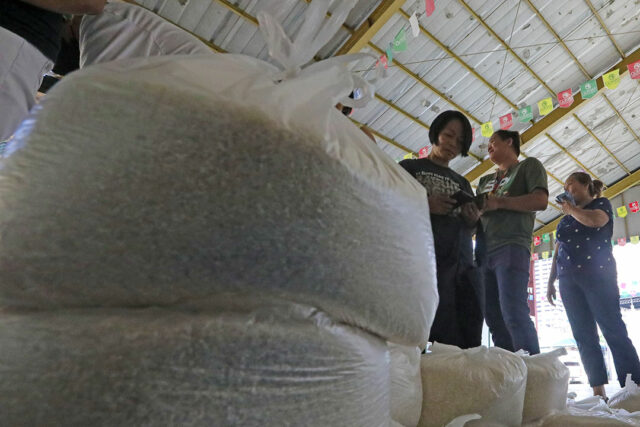
TRANSPORT WORKERS will be eligible to purchase subsidized government rice at P20 per kilogram (kg) starting Sept. 16 (Tuesday), the Department of Agriculture said.

It said the expected number of beneficiaries is about 57,000, with the initial distribution sites identified as follows:  The Bureau of Animal Industry in Quezon City for 17,633 beneficiaries; the Philippine Fisheries Development Authority in Navotas City for 1,001 beneficiaries; Barangay Pandan, Angeles City, Pampanga for 9,961 beneficiaries; Food Terminal, Inc. in Cebu City for 24,742 beneficiaries; and Tagum City, Davao del Norte for 3,650 beneficiaries.

The departments of Transportation and Interior and Local Government and the Land Transportation Franchising and Regulatory Board are assisting with the distribution.

Future distribution areas will include the Bureau of Animal Industry and Agricultural Development Center in Quezon City, the Agribusiness and Marketing Assistance Division (AMAD) office in Cebu, the Food Terminal, Inc. warehouse in Angeles, and the AMAD office in Tagum.

Agriculture Secretary Francisco P. Tiu Laurel, Jr. said in a statement: “This is more than a food program. It’s a promise being fulfilled — a fight against hunger that meets people where they are.”

The program was initially rolled out for senior citizens, solo parents, persons with disabilities, and indigent households. It has since been expanded to minimum-wage earners, farmers, and fisherfolk. Set to join at a later date are public school teachers, non-teaching education department staff, and Walang Gutom program beneficiaries of the Department of Social Welfare and Development.

Mr. Laurel said that President Ferdinand R. Marcos, Jr. plans to expanding the market to 15 million households by 2026 and to continue expanding until the end of his term in 2028. — Andre Christopher H. Alampay

Chevrolet Philippines, BPI offer up to P140K off on Captiva

IMAGE FROM CHEVROLET PHILIPPINES

FROM AUG. 22 to Oct. 31 this year, Chevrolet Philippines and BPI Auto Loan are offering up to P140,000 in cash discounts or P46,000 all-in down payment (based on 20% down payment) when buying a brand-new Captiva from authorized Chevrolet dealerships nationwide. In a release, Chevrolet Philippines said that the Captiva “has undergone rigorous endurance testing that simulates five years of use in just 85 days, proving its value and reliability in handling the demands of modern family life.”

The Chevrolet Captiva boasts advanced safety features, including six air bags, an elevated ride height, MacPherson suspension, and 18-inch alloy wheels. Inside is a panoramic sunroof, 10.4-inch vertical touch screen with Bluetooth, Android Auto, and Apple CarPlay.

With a seven-seat capacity and flexible cargo configurations, the Captiva can accommodate up to 1,709 liters of payload.

For more information, visit the official Chevrolet Philippines website at chevrolet.com.ph, follow the company on social media, or visit the nearest Chevrolet dealership.

Yields on gov’t debt go down on soft US data

YIELDS on government securities (GS) went down last week amid the growing likelihood of a rate cut by the US Federal Reserve this week due to soft inflation data.

GS yields, which move opposite to prices, declined by an average of 4.21 basis points (bps) week on week at the secondary market, according to data from the PHP Bloomberg Valuation System Reference Rates as of Sept. 12 published on the Philippine Dealing System’s website.

At the short end, the 91-, 182-, and 364-day Treasury bills (T-bill) fell by 8.73 bps, 9.92 bps and 11.68 bps to fetch 5.0896%, 5.2143% and 5.3531%, respectively.

At the belly, rates of the two-, three-, four-, five- and seven-year Treasury bonds (T-bonds) also declined by 2.92 bps (5.5977%), 2.84 bps (5.6802%), 2.87 bps (5.7529%), 3.14 bps (5.8131%), and 3.88 bps (5.8911%), respectively.

Meanwhile, rates at the long end were mixed, with the 10-year T-bonds falling by 3.12 bps week on week to 5.9702, while yields on the 20- and 25-year debt rose by 1.39 bps and 1.43 bps to 6.3493% and 6.3491%, respectively.

GS volume traded fell to P46.9 billion on Friday from P63.87 billion the week prior.

“Yields broadly declined over the week amid growing expectations of a September rate cut from the US Federal Reserve following the soft US producer and consumer inflation reports,” the first bond trader said in a Viber message.

US consumer prices increased by the most in seven months in August amid higher costs for housing and food, but a surge in first-time applications for jobless benefits kept the Federal Reserve on track to cut interest rates next Wednesday, Reuters reported.

The larger-than-expected rise in the consumer price index (CPI) reported by the Labor department on Thursday resulted in the biggest year-on-year increase in inflation since January. Higher inflation and softening labor market conditions fanned fears of stagflation, and pose a dilemma for the US central bank, beyond Wednesday’s anticipated rate decision.

The CPI rose 0.4% last month, the biggest gain since January, after increasing 0.2% in July, the Labor department’s Bureau of Labor Statistics said. The CPI was driven by a 0.4% jump in the cost of shelter. Food prices increased 0.5%, with prices at the supermarket soaring 0.6%.

In the 12 months through August, the CPI advanced 2.9%, the largest increase since January, after climbing 2.7% in July.

Economists polled by Reuters had forecast consumer prices would rise 0.3% in August and increase 2.9% on a year-over-year basis.

Financial markets have fully priced in a quarter-percentage-point reduction in rates this Wednesday, with the Fed expected to deliver two similar-sized additional cuts this year.

Meanwhile, another cut by the Bangko Sentral ng Pilipinas this year also remains possible as inflation remained below the central bank’s 2-4% target even as it picked up to 1.5% in August from 0.9% in July, the first trader added.

“Despite prospects of further rate cuts, increasing demand from investors securing fixed returns also contributed to the decline in government bonds.”

A second bond trader said GS yields mostly moved sideways as players were likely taking positions before the Fed’s Sept. 16-17 meeting.

“Two-way interest was seen as some investors try to take profit ahead of quarter-end while some are just waiting to reposition at key levels,” the second trader said.

For this week, yields may continue to go down as the market awaits the Fed’s policy meeting, the first trader said.

“Local yields might continue to decline… as market participants will likely seek for clues on the future moves of the Fed based on potential policy hints from Fed Chair [Jerome H.] Powell following the expected rate cut by the US central bank this week,” the first trader said.

“We now look forward to the language in this week’s FOMC (Federal Open Market Committee) decision for more clues,” the second trader added. — Lourdes O. Pilar with Reuters

Treasure on the road less traveled: CMEPA’s promise for Filipino investors

STOCK PHOTO | Image by Jcomp from Freepik

By Matthew Miguel L. Castillo, Researcher

PUBLIC CLAMOR erupted on July 1 after the government announced the implementation of the Republic Act No. 12214 or the Capital Markets Efficiency Promotion Act (CMEPA) countrywide.

Filipinos complained of a seemingly new tax, entailed by the law, targeting their passively held savings in banks. This emerged as the law’s primary point of impression on the people which led to widespread verbal dismissals of its entirety.

But there are no new taxes.

Instead, CMEPA introduces a simpler, fairer, and more efficient income tax system to encourage saving and to boost capital markets in the Philippines.

The law aims to boost capital markets, increase market participation, improve liquidity, and lower transaction costs. However, such objectives have been greatly overshadowed by the law’s final withholding tax (FWT) component, leading it to be tagged as another money-making scheme that only favors greedy lawmakers.

Regardless of the backlash it received, the CMEPA has already changed the game in the Philippine banking landscape — a reality that investors and depositors will inevitably face.

VAGUE DIRECTIONS
Michael Gerard D. Enriquez, president of Sun Life Investment Management and Trust Corp., said that the immediate negative feedback came from a lapse in communication to the public.

“It was misconstrued that it would withhold taxes on deposits or investments as a whole,” he told BusinessWorld during a Zoom interview, saying that a lot got surprised in hearing this.

BDO Capital and Investment Corp. President Eduardo V. Francisco said in an e-mail that the public thought a new 20% tax on investments and deposits will be added, which “has already been in place for a long time.”

“They should make it clearer next time for communication that [the tax] is only on the interest,” Mr. Enriquez added.

Taxes on interest earnings of deposits and other interest-bearing accounts have been in effect in cascading tiers according to time kept before CMEPA came in.

Interest on money kept for less than three years had been taxed at 20%, between three and four years at 12%, and between four and five years at 5%. The Bangko Sentral ng Pilipinas (BSP)-certified deposits kept beyond the five-year mark were free of taxes.

The CMEPA equalized the rate for all time lengths at 20% for all deposits made after July 1 for both peso- and dollar-dominated accounts.

Mr. Francisco said that the law just “levels the playing field” through this adjustment.

IS THE GRASS GREENER?
As it has taken effect, Mr. Enriquez said that the CMEPA generates “a more equal opportunity for everyone,” pertaining to big and small investors alike.

“[It] addresses not just taxation on investments [but also] the taxes on transactions, especially on equity trading,” he added.

Through the act, the stock transaction tax (STT) has been lowered to 0.1% from 0.6%, implying a smaller cut in trading shares of a domestic corporation through local and foreign stock exchanges.

Additionally, documentary stamp taxes (DST) on the original issuances of shares have been reduced to 0.75% from 1% and completely lifted from initial transactions on mutual and investment trust funds.

CMEPA also imposes a blanket 0.75% DST on bonds, debentures, and certificates of stock and indebtedness issued in a foreign country.

Mr. Francisco said that the law makes it easier for Filipinos to try their hand at investing through such reduced transaction costs and more consistent tax schemes across diverse types of investments.

Sales or transfers of shares listed on either local or foreign stock exchanges are consistently subject to a 0.1% STT, rather than being taxed under the capital gains tax (CGT) system.

Mr. Enriquez said that this change “has greatly brought us closer to the global industry.”

CGTs, which are imposed on profits of unlisted domestic and foreign shares have been equalized to a 15% rate through the law.

Prior to CMEPA, only sales of domestic shares received the 15% tax, while those of unlisted foreign shares were subject to an income tax of 25% for corporations and a progressive tax of up to 35% for individuals.

Mr. Enriquez also noted the benefits CMEPA provides to holders of Personal Equity Retirement Accounts (PERA).

The provision is an additional 50% tax reduction on employers that contribute equal or greater amounts to their PERA beneficiary employees.

PERA is a voluntary retirement saving program that encourages Filipinos to increase their financial security by investing in viable products.

Mutual funds, stocks, securities, and the like — which are nonspeculative, marketable, and provide regular income payments to investors — fall under such products.

Funds placed in the program may be withdrawn as the investor turns 55 years old and has made qualified contributions for at least five years.

THE BIGGEST ROADBLOCK
In reaping the law’s benefits and reaching its objectives, both analysts mentioned that the lack of financial literacy among Filipinos must be addressed first.

“While CMEPA is good, we have a lot of work to do in educating the Filipinos on savings and investments,” Mr. Francisco said.

“Financial literacy is still a big problem in the Philippines… we need to bombard [Filipinos] on the importance of this,” Mr. Enriquez added.

Financial literacy is defined by the BSP as the ability to make informed financial decisions and to maximize the potential benefits of financial resources.

The BSP’s latest financial inclusion survey (FIS) of 1,200 Filipinos in 2021 showed that only 2% of respondents correctly answered all six questions on basic financial literacy.

Financial concepts including division, risk-return trade-off, diversification, inflation, and simple compound interest rates were covered by the questions.

Results showed that 58% of all respondents were aware of portfolio diversification while only 32% knew how to calculate simple interest earned in saving accounts.

In addition, only 7% of respondents said they have attended seminars on financial literacy, while 54% expressed interest in doing so.

TREADING THE WRONG VENTURES
Mr. Enriquez said that Filipinos are more likely to look into get-rich-quick schemes rather than the discipline of managing their finances diligently.

“They are more susceptible to scams and online gambling,” he added.

TransUnion’s State of Omnichannel Fraud update for the first half of 2025 showed that phishing was the most prevalent scamming scheme in the Philippines.

Phishing involves the scammers’ impersonation of reputable companies to bait victims’ in providing sensitive information such as credit card details and bank account numbers.

More than three-fifths (63%) of surveyed Filipino consumers reported being targeted by scams and more than 10% ended up falling victim.

The study also reported that Filipino victims lost an average of $768 or more than P44,700 during the period.

On the other hand, Mr. Francisco said that Filipinos have also been “more conservative with their investments and expansions.”

The latest FIS reflected this downtick, showing that only 37% of adults surveyed had savings in banks from the 53% seen in the previous edition.

Likewise, adults with insurance slipped to 17% from the 23% seen previously.

“We are still educating them to save, so the next stage is to teach them to how and where to invest… we have to [show] them more options,” Mr. Francisco said.

Mr. Enriquez said that financial discipline must be prioritized regardless of financial status and that low earnings should not hinder Filipinos from expanding their financial portfolio.

He added that the highest consideration must be “how much you save rather than how much you make.”

JITTERS ALONG THE WAY
Both analysts also identified wobbly areas in the Philippine investment atmosphere which the act could have addressed further.

Mr. Enriquez said that the country still can catch up on global practices in government securities even with the law’s current provisions.

Individual Filipino investors face a 20% FWT on deals concerning government securities.

Among members of the Association of Southeast Asian Nations, only Thailand and Indonesia also impose FWTs on government securities, at 10% and 15%, respectively.

Additionally, Mr. Enriquez noted that a drawback in CMEPA is the increased tax on foreign currency bonds.

The interest income tax on foreign currency-denominated accounts climbed to 20% from the 15% imposed beforehand.

For the parties concerned to deal with this, Mr. Enriquez suggested that investors may opt for alternative investment instruments offshore where interest rates would be more attractive for them.

Meanwhile, Mr. Francisco said that there is still “a lot to be done” in reducing other fees such as those seen in the Philippine Stock Exchange listing, the Securities and Exchange Commission processing, custodial fees, and the like.

“Filing rules and documentations can be simplified, especially for small to medium enterprises, to encourage more listings,” he added

He also noted the persisting weakness of the stock market after CMEPA took effect, despite one of the law’s objectives being to boost the local bourse.

“Most investments are going towards bank deposits and fixed income investments,” he added.

THE PATH AHEAD
Mr. Francisco said that attracting foreign investors will be key to maximizing the effectiveness of CMEPA in improving capital markets.

“There are macro issues to solve [in light of] CMEPA, we still have to [garner] more foreign direct investments as a lot of foreigners have shunned or left the Philippine stock market,” he said.

The latest BSP data on foreign direct investments show that cumulative investments up to June were down year on year by 23.8% to $3.42 billion from $4.49 billion.

The drop was attributed to monthly levels of nonresident’s net investment in equity capital with $57 million in outflows from the $85 million inflows a year earlier.

He added that talks to improve PERA and Real Estate Investment Trust laws should also be done to boost CMEPA investments moving forward.

On the other hand, Mr. Enriquez said that an awareness campaign is essential for the success of the law and its provisions.

“The tools, like PERA [and CMEPA] are there, but nobody is using them… there should be an aggressive awareness campaign on their benefits,” he said.

He added that the campaign should focus on the “grassroots level” — the employees, which the law aims to help in fund management.

Mr. Enriquez said Filipinos should learn and try investing to know how much the CMEPA offers and enables them.

“The main argument is that ‘I am not earning enough’ […] but a lot of programs have democratized investing,” he added.

Widely used mobile wallets such as GCash and Maya offer investment opportunities in mutual funds and unit investment trust funds through various fund providers.

“[Filipinos] should have a legitimate way to grow their money; you don’t have to start big, you just have to start somewhere,” Mr. Enriquez said.

Anne does Anko

ANNE CURTIS-SMITH checks out the candles at Anko.

ACTRESS Anne Curtis-Smith, the face for Australian brand Anko in the Philippines, told an audience of fans and media guests about her favorite items from the store during a design class on Sept. 8, which served to introduce the store’s new collection which focuses on the color lilac. 

Anko is Kmart Australia’s in-house home and lifestyle brand, established in 2017. Anko is part of the Kmart Group, which also includes Target Australia, and Anko Global, and is owned by Wesfarmers Ltd. The brand is here through a joint venture with Ayala Corp.’s Ayala Malls, opening its first store in November 2024 in the conglomerate’s Glorietta. The brand has opened two more stores since: in Alabang Town Center and in TriNoma Mall, where the design class was held.

Ms. Curtis-Smith’s — she uses her maiden name onscreen; she has been married to food personality Erwan Heussaff since 2017 — Australian roots were emphasized with her endorsement of Anko: “I am Filipina-Australian, so this partnership with Anko is definitely both personal, and of course, purposeful for me.”

Speaking of the new collection introduced that day, Sarah Dummett, business manager for home at Kmart Australia Limited, said, “We’ve designed this range with functionality and versatility; premium pieces that could seamlessly fit into our customers’ home.

“The Anko design team has really explored some of the biggest color trends in the world: we’ve been bold with lilac, which you’ve worn today,” said Ms. Dummett to Ms. Curtis-Smith, referring to the actress’ lilac outfit. The same color was reflected in several new items at the store, from sofa cushions to storage ottomans (more on that later), and even cast-iron enamel pots. Ms. Dummett herself was in green, another key color for Anko, seen in sage towels and deep green marble coasters and trays. She told BusinessWorld that the color choices of her outfit and that of Ms. Curtis-Smith were completely coincidental.

Other colors in the collection are deep rich reds and some soft neutrals.

Both women exchanged style tips — they talked about pairing bold-colored pieces on neutral backgrounds, noting its practicality. They also talked about playing with shapes through things like using curved accents like pillows and trays on straight-lined items like sofas or tables.

Ms. Curtis-Smith also suggested playing with other sensorial elements to complete a space: asked how she makes her home more warm and welcoming, she suggested scent: “I personally have the scent of vanilla in my home, just because I like that smell of it being cozy and warm.”

“I’m a top fan of the candles,” she said during a Q&A session at the class. “I can never get enough of the candles.” While Anko’s candles can cost up to P500, the vanilla and jasmine candles cost much less, at about P100 or less. A line of multilayered scents exists at about P220.

She also talked about her own affection for the muslin bedsheets (“I have to get it before it runs out; the fabric is so nice”), and those ottomans. She said that since having a daughter, Dahlia, in 2020, the ottomans have been important at home due to her daughter’s toys. “You can put all the stuff in it and it will still fit (in) the living room,” said the actress. She’s also trying to limit her daughter’s screen time, she said, making use of Anko’s toys and art supplies to entertain her instead.

It would be noticed that a lot of Anko’s new items have natural finishes: there’s marble and wood, but Ms. Dummett also pointed out linen looks for their home linen line. “It’s really just what the customers [are] telling us that they want,” she told BusinessWorld. “The customers are really looking for those natural fibers and breathable fabrics.” — Joseph L. Garcia

Industrial policy vs neoliberalism in the time of corruption

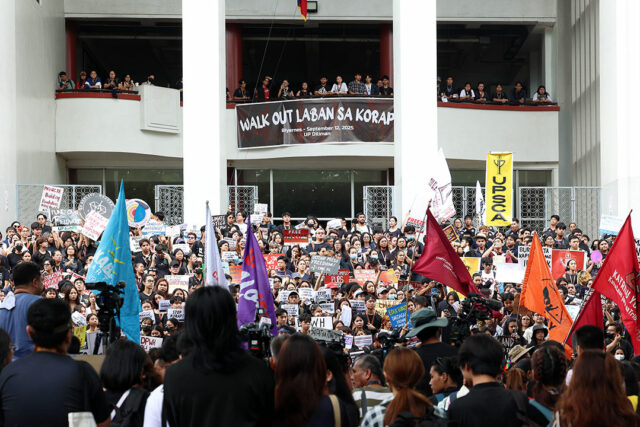
THOUSANDS of students, faculty and personnel of the University of the Philippines in Diliman, Quezon City gather after walking out of their classes and offices to denounce the massive corruption in the government during the Black Friday protest. — PHILIPPINE STAR/MIGUEL DE GUZMAN

The massive anomalies in flood control projects amid the incessant rains, coupled with the shameless display of unexplained wealth by some politicians and contractors, have triggered rage among the people.

Yet again, our communal anger is in full throttle, not unlike what we experienced at EDSA Uno, EDSA Dos, and the Million People March against pork barrel. Yet again, systemic corruption lingers, more widespread and scandalous in scale and impunity.

The government response: the President’s dashboard of flood control contracts and an Independent Commission for Infrastructure, high-profile public hearings at the Senate and the House of Representatives, and intensified deployment of multiple anti-corruption laws and accountability mechanisms.

Even as we hope that today’s anti-corruption drive goes deeper than past episodes, unfortunately it will still be insufficient on its own. Corruption is only one face of Philippine underdevelopment; the other is a failed economic policy framework. The two reinforce each other, and both must be confronted.

Since the 1986 EDSA People Power revolt, successive administrations have broadly adhered to a neoliberal development strategy. It is a model focused on liberalization of trade and investment, deregulation, and privatization. The belief was that liberalized markets would generate efficiency, attract sustained investment, and eventually spur industrial upgrading.

The reality that unfolded was starkly different. The predicted outcome of industrial upgrading and complexity never materialized. Capital flowed into real estate, finance, retail, and public utilities — sectors that offered either quick or safer returns. Workers were afforded little to no choice except to shift to services, mostly informal and low-paying, or to seek jobs abroad as OFWs. Agriculture declined, and the much-promised convergence toward higher-value activities did not take place.

This failure was not merely about corruption or poor execution. It was built into the neoliberal framework itself. Its core assumptions — that markets would naturally channel resources into long-term industrialization, that infrastructure and skills would arise spontaneously through private initiative, that higher expected returns would draw sustained investment — proved false. Markets pursued short-term gains and shunned the risks of transformation, while weak domestic sectors collapsed under liberalized competition.

Industrial policy has thus become imperative. It addresses the tasks that markets fail to perform by reducing risks for long-term investment, coordinating clusters and infrastructure, and ensuring that growth leads to upgrading. Only deliberate state intervention can alter incentives and steer resources toward transformation. By strategically selecting sectors and channeling support, industrial policy fosters domestic value capture, technological upgrading, and long-term productive capacity.

Yet while neoliberalism rests on flawed assumptions, industrial policy carries its own peril. It presumes a state capable of setting priorities, coordinating across sectors, protecting continuity, and resisting capture. In the Philippines, where institutions are fragmented and politically compromised, this assumption cannot be taken for granted.

Thus, any serious alternative must confront both market failure and state failure. A new development strategy must rebuild the state’s capacity to design and sustain industrial policy, while at the same time dismantling systemic corruption.

Is this possible under a political system dominated by intra-elite factions competing for control over the same institutions and resources, often under the guise of reform? Our post-EDSA history teaches otherwise. Shifts in power have not produced structural change. The rules of the game remain the same, and so do the outcomes.

The current flood control scandal follows this pattern. The President himself triggered the issue, earning significant public approval. The controversy has so far visited the doors of rival factions but avoided shame and blame on his allies despite their long participation in the same system. More troubling is the inconsistency. This same administration allowed the controversial transfer of Philippine Health Insurance Corp., better known as PhilHealth, funds to the national treasury, undermining public health financing. This same administration enabled the expansion of pork barrel through congressional insertions, both infrastructure and ayuda (assistance), through the mechanism of bloating the unprogrammed appropriations in the budget.

Such contradictions raise doubts about whether the current leadership is committed to institutional reform, or is merely using selective enforcement for political repositioning.

The cold reality is that expecting transformative change from within the current framework is illusory. What we need is not merely reform from above, but a broader, inclusive, and radical political project that challenges both the prevailing economic orthodoxy and the predatory political elite. In short, the country needs a contemporary revolution that reorders economic priorities and political power.

What that contemporary revolution will look like, and when it will emerge, depends on what Filipinos will demand, fight for, and build.

This column is for those who remain restless, troubled that there are things more deeply wrong than just the corruption in flood control projects.


Nepomuceno Malaluan is a trustee at Action for Economic Reforms and a co-convenor of the Right to Know Right Now Coalition.

Jollibee leads PHL brands in Brand Finance 2025 Sustainability Perceptions Index

BW FILE PHOTO

JOLLIBEE GROUP recorded the highest sustainability perceptions value (SPV) among Philippine companies in Brand Finance’s 2025 Sustainability Perceptions Index, which measures the portion of brand value linked to stakeholder perceptions of environmental, social, and governance (ESG) performance.

The portfolio of brands under Jollibee Foods Corp. led the country with a $174-million SPV and ranked 17th globally among restaurant brands, making it the only Philippine restaurant brand in the global top 20, the company said in a news release on Friday.

“Brand Finance’s Sustainability Perceptions Index 2025 is a barometer of how stakeholders perceive a brand’s contribution to a more sustainable future,” Jollibee Group Global Chief Sustainability Officer Pepot Miñana said.

“Being ranked number one in the Philippines affirms that our efforts are resonating, and that we are moving forward with purpose.”

The group’s “Joy for Tomorrow” agenda guides its sustainability strategies and long-term investments.

In 2024, Jollibee Group cut energy use by 32%, water use by 33%, and waste by 44% per metric ton at Philippine manufacturing sites compared with 2020. It also installed more than 16,800 solar panels generating about 9.1 megawatts of clean energy, diverted 62% of manufacturing waste from landfills, and planted over 21,500 mangrove propagules with employee volunteers.

Other Philippine brands in the sustainability perception rankings include BDO Unibank, Inc. (BDO) with an SPV of $145 million, Red Horse with $126 million, San Miguel Beer with $117 million, Bank of the Philippine Islands (BPI) with $92 million, Petron Corp. (Petron) with $82 million, Ginebra with $71 million, Emperador with $68 million, SM Supermalls (SM) with $60 million, and Puregold Price Club, Inc. (Puregold) with $53 million.

These companies implement sustainability programs covering environmental conservation, social responsibility, and economic empowerment, while some, such as Red Horse, San Miguel Beer, Ginebra, and Emperador, benefit from their parent companies’ ESG initiatives.

Alex Haigh, Brand Finance managing director for Asia-Pacific, said there is growing opportunity for more national brands to strengthen sustainability messaging and deepen consumer loyalty.

“Perceptions of Philippine brands continue to be shaped by sustainability. Brands like Jollibee and BDO show that strong ESG narratives — covering topics such as financial inclusion or responsible sourcing — can resonate both locally and globally,” he said.

London-based Brand Finance specializes in brand valuation and strategy. The consultancy operates in more than 25 countries, conducts over 6,000 brand valuations annually using original market research, and publishes more than 100 reports ranking brands across sectors and regions. — Alexandria Grace C. Magno

Peso may strengthen with Fed likely to cut

BW FILE PHOTO

THE PESO may strengthen against the dollar in the coming days, with the US Federal Reserve expected to deliver its first rate cut this year at this week’s meeting amid weak data out of the world’s largest economy.

On Friday, the local unit closed at P57.10 per dollar, rising by 9.1 centavos from its P57.191 finish on Thursday, data from the Bankers Association of the Philippines showed.

However, week on week, the peso was down by 18.5 centavos from its P56.915 close on Sept. 5.

“The dollar-peso closed lower, tracking dollar weakness overnight amid rising expectations of rate cuts by the Fed this year driven by a cooling labor market,” a trader said in a phone interview.

The dollar was generally weaker against Asian currencies on Friday amid heightened bets of Fed cuts even as US consumer inflation data for August was in line with expectations, Rizal Commercial Banking Corp. Chief Economist Michael L. Ricafort said in a Viber message.

“The US dollar declined versus major global and Asian currencies lately amid increased odds of future Fed rate cuts after the latest US consumer inflation data, which was in line with market estimates but still above the 2% target of the US central bank, and US jobless claims data, which was near the highest in four years that could signal weakness in the US labor market, thereby increasing the urgency of a 25-basis-point (bp) Fed rate cut as early as the next Fed rate-setting meeting on Sept. 17, 2025 and as the markets priced in three 25-bp Fed rate cuts for the rest of 2025 after mostly weaker US jobs and other economic data recently,” he said.

For this week, the trader said the peso could mostly move sideways before the Fed’s policy decision on Sept. 16-17. The trader sees the peso moving between P56.80 and P57.20 per dollar this week, while Mr. Ricafort expects it to range from P56.80 to P57.30.

In the Asian session on Friday, the dollar regained some strength but remained under pressure as a surge in US jobless claims and a modest tick-up in inflation kept investors zeroed in on likely Federal Reserve interest rate cuts this week and beyond, Reuters reported.

The dollar index was last trading up 0.1% at 97.643, having snapped a two-day winning streak on Thursday and on track to record its second consecutive weekly decline.

On Thursday, data showed the biggest weekly increase in the number of Americans filing new applications for jobless benefits in four years.

That overshadowed US consumer inflation data for August, which showed prices rising at the fastest pace in seven months but still modest and broadly in line with expectations.

While the mixed data might add some wrinkles to the Fed’s policy deliberations this week, investor focus is mostly centered on rate cut prospects for now.

Pricing of Fed fund futures indicates that the market believes the Fed is certain to cut its key interest rate by 25 bps on Sept. 17 as labor market softness overshadows inflation risks.

However, traders are reining in bets on a jumbo 50 bps rate cut next month, with pricing implying a shallower path of easing before the end of the year than anticipated earlier, according to the CME Group’s FedWatch tool. — Aaron Michael C. Sy with Reuters