Home Blog Page 10

Securing the digital future through national connectivity

Wahyu_t | Freepik

In a world where high-speed internet has transitioned from a luxury to a fundamental human right (essential for education, commerce, and governance), the Philippines has found itself caught between ambitious goals and the stubborn reality of its geography.

Despite notable progress in connectivity over the past decade, the Philippines continues to contend with a highly digital population coexisting with uneven, often unreliable internet infrastructure.

The Philippines has made significant strides in internet adoption. According to a report by DataReportal and Statista, internet penetration reached approximately 83% to 89% of the population, translating to tens of millions of active users, as of the past two years. This widespread usage reflects the country’s deep integration into the digital economy, where online platforms underpin communication, commerce, and entertainment.

However, penetration alone obscures critical inequalities. Around 16% of Filipinos (roughly 18 to 19 million people) remain offline, largely due to affordability constraints and lack of infrastructure. Moreover, connectivity is heavily skewed toward mobile usage, with the majority accessing the internet through smartphones rather than fixed broadband.

While mobile access has democratized connectivity, it often comes at the cost of stability and speed.

Fixed broadband, which typically delivers more reliable and faster connections, remains limited. According to World Bank, only about 28% of households had access to fixed broadband as of 2023, significantly lower than regional peers such as Vietnam or Thailand. This disparity is particularly evident in rural and geographically isolated areas where infrastructure deployment is both technically challenging and economically prohibitive.

The Philippines faces inherent logistical barriers in laying fiber-optic cables and connectivity landscape where urban centers like Metro Manila enjoy relatively high speeds (averaging over 90 Mbps for fixed broadband) while many provinces lag.

The Digital Divide

The issue of internet access reflects and reinforces broader inequalities. Data from World Bank shows that broadband access has grown much faster among wealthier households than poorer ones, with the gap widening significantly between 2019 and 2022.

This divergence has profound implications. In education, students without reliable internet are excluded from digital learning platforms. In commerce, small enterprises in underserved areas struggle to participate in e-commerce ecosystems. In governance, citizens without connectivity face barriers to accessing digital public services.

Even where connectivity exists, quality remains inconsistent. Average speeds have improved, reaching around 150 Mbps in recent estimates, but reliability and latency issues persist, particularly in congested or underserved networks.

The result is a layered inequality — access does not necessarily guarantee meaningful or productive use.

National Fiber Backbone

The centerpiece of the current administration’s digital strategy is the National Fiber Backbone (NFB) project, managed by the Department of Information and Communications Technology (DICT).

For decades, the Philippines was one of the few countries without a government-owned fiber backbone, leaving the state reliant on private corporations for its own data needs. By mid-2026, the NFB has completed its third phase, stretching thousands of kilometers from the northern tip of Luzon down to the southernmost of Mindanao. 

This infrastructure functions as a digital superhighway, allowing the government to provide high-capacity bandwidth to local government units and public institutions. 

The NFB then serves a strategic economic purpose: by providing a government-owned alternative, the DICT has effectively lowered the barrier entry for smaller, third-party internet service providers.

Government and Policy Interventions

Recognizing these challenges, the Philippine government has undertaken several initiatives. One of the most prominent is the Free Internet Access in Public Places Act (Republic Act 10929), which seeks to provide free Wi-Fi in schools government offices, transport hubs, and other public spaces.

In parallel, infrastructure expansion has accelerated. Data from World Bank states that the number of telecommunications towers nearly doubled from 17,850 in 2020 to over 35,000 in 2023, improving both coverage and network capacity.

Programs led by the DICT have prioritized underserved regions, gradually increasing household internet access even in historically disconnected areas.

Policy reform has also been a focal point. The passage of the Konektadong Pinoy Act in 2025 represents a significant shift toward liberalizing the telecommunications sector. By lowering barriers to entry and encouraging new market players, the law aims to stimulate competition, reduce costs, and improve service quality.

Additionally, partnerships with international institutions such as the World Bank have supported broader digital transformation efforts. These include initiatives to modernize regulatory frameworks, expand broadband infrastructure, and enhance digital skills across the population.

Private Sector and Technological Innovations

Major telecommunications providers continue to invest in fiber-optic networks, with millions of subscribers now connected through fiber broadband services. These investments are concentrated in urban and peri-urban areas, where demand is highest and returns are more predictable.

Emerging technologies are also reshaping the connectivity landscape. The entry of Starlink and other Low Earth Orbit (LEO) satellite providers has fundamentally altered the connectivity map of the Philippines.

Unlike older, high-orbit satellites that suffered from crippling latency, LEO satellites, orbiting much closer to the Earth, provide higher speeds.

Meanwhile, the proliferation of community-based Wi-Fi systems such as pay-per-use hotspots demonstrates grassroots innovation in addressing access gaps, particularly in rural areas.

However, these solutions are not without challenges. Issues of affordability, cybersecurity, and regulatory oversight remain significant. For instance, while public Wi-Fi expands access, it also raises concerns about data privacy and network security, especially in poorly regulated environments.

Towards Inclusivity and Reliability

The push for universal internet access is not a mere technical endeavor, it is a catalyst for profound socioeconomic transformation. With high-speed internet reaching the provinces, we are witnessing a “reverse migration” where digital professionals no longer feel the need to crowd into Metro Manila.

The Philippine gig economy has matured, and provincial digital hubs are sprouting, allowing residents to work for global companies while staying in their hometowns.

This decentralization of the economy is crucial for the long-term sustainability of the nation, as it eases the pressure on urban infrastructure.

Education and governance are also being reimagined. The E-Government initiative has moved from a concept to a reality, with most transactions (from business permits to social security claims) now being processed through a unified digital portal.

The digital divide is also being bridged through hybrid learning modules that allow students in remote areas to access the same high-quality resources.

While there is still a long road ahead to achieve total digital equity, the foundations laid suggest that the Philippines is not just catching up to the world. It starts building a digital future that is uniquely its own. — Krystal Anjela H. Gamboa


Committed to better connectivity for subscribers, Converge wins at Ookla® Speedtest Awards

Converge ICT Solutions, Inc. continues to strengthen its position in the country’s broadband landscape after securing multiple recognitions at the Ookla® Speedtest Awards. The company was recognized for Fastest Fixed Network, Best Fixed Network, and Best Fixed Video Experience, underscoring its continued performance across key connectivity metrics.

The awards are based on analysis by Ookla®, the global authority in broadband and mobile network testing. Drawing from millions of consumer-initiated tests conducted through Speedtest by Ookla®, the results reflect real-world internet experiences from users across the Philippines.

For Converge, these accolades include years of sustained investment in expanding and strengthening its nationwide fiber infrastructure to support the rapidly growing digital needs of Filipino households and businesses.

Affirming the company’s continued focus on strengthening network performance, Converge SVP and Consumer Business Group Head, John Paul Aguilar said: “This recognition reflects the steady work we’ve been doing to strengthen our network and elevate the experience for our subscribers. As connectivity becomes more essential to everyday life, we remain committed to continuously improving our infrastructure and ensuring that Filipino homes and businesses can rely on Converge for consistent, high-quality internet.”

Among this year’s recognitions, Converge earned the Fastest Fixed Network award after recording a Speed Score™ of 61.12, the highest among fixed internet providers in the Philippines according to Ookla®. The result highlights the company’s ability to deliver consistent fiber-fast connectivity across its expanding national footprint.

The company also secured the Best Fixed Network award, supported by a Speedtest Connectivity Score™ of 75.09, reflecting strong overall performance across reliability, speed, responsiveness, and network stability.

For digital entertainment, Converge earned the Best Video Experience award with a Video Score™ of 83.73, demonstrating its capability to deliver smooth, high-quality streaming experiences even during peak usage periods.

Completing the recognition is the Lowest Latency Claim award, where Converge recorded a Latency Score™ of 13.94, highlighting the network’s responsiveness in supporting real-time applications such as online gaming, video conferencing, and cloud-based services.

Emphasizing the importance of continuously improving the customer experience, Ma. Lourdes Ramirez, VP and Head of Brand and Marketing said: “At the heart of our efforts is a simple goal: to serve our subscribers better every day. These recognitions reinforce the trust that our customers place in us, and they motivate us to keep improving the way we deliver connectivity to homes and communities across the country.”

As demand for faster and more reliable connectivity continues to grow, Converge remains focused on expanding its fiber footprint and enhancing network capabilities to support the evolving digital lifestyles of Filipinos.

The company likewise continues to advance its broader vision of evolving from Telco to TechCo, building on its fiber infrastructure to deliver stronger digital experiences and future-ready connectivity solutions nationwide.

For more information on Converge offerings and to become a subscriber, visit https://www.convergeict.com/apply-for-fiberx/.


Spotlight is BusinessWorld’s sponsored section that allows advertisers to amplify their brand and connect with BusinessWorld’s audience by publishing their stories on the BusinessWorld Web site. For more information, send an email to online@bworldonline.com.

Join us on Viber at https://bit.ly/3hv6bLA to get more updates and subscribe to BusinessWorld’s titles and get exclusive content through www.bworld-x.com.

The forensic truth

STOCK PHOTO | Image by Alvaro_cabrera from Freepik

On April 22, the House Committee on Justice held its third meeting regarding the impeachment complaints against Vice-President Sara Duterte. Previous hearings were held on March 25 and April 14. The committee aims to conclude hearings by April 29, after tackling accusations of confidential fund misuse and alleged unexplained wealth. Following the House Committee on Justice’s hearings on the impeachment complaints against Ms. Duterte, the panel will vote on whether to find the complaints sufficient in form and substance, leading to a likely vote on probable cause. If passed, the articles of impeachment will be transmitted to the Senate for a formal trial (congress.gov.ph).

Committee on Justice chair and Batangas 2nd District Rep. Gerville Luistro said that the April 22 hearing was the forensic truth phase, with the hearing centered on statements of assets, liabilities, and net worth, and Bureau of Internal Revenue and Anti-Money Laundering Council records rather than oral testimony, the Philippine News Agency reported. The impeachment hearing against Ms. Duterte that day lasted for nearly nine hours, livestreamed on the internet.

The Justice panel ordered the issuance of a subpoena duces tecum to the National Bureau of Investigation (NBI), to obtain records related to the alleged threats made by Ms. Duterte against President Ferdinand R. Marcos, Jr., First Lady Liza Araneta-Marcos, and former Speaker Ferdinand Martin G. Romualdez; to the Office of the Ombudsman for Ms. Duterte’s Statements of Assets, Liabilities and Net Worth (SALN); to the Bureau of Internal Revenue (BIR) for income tax returns and related records from 2007 to 2025, of Ms. Duterte, her spouse Manases “Mans” Carpio, and identified business entities; to the Securities and Exchange Commission (SEC) for general information sheets and audited financial statements of several firms linked to Ms. Duterte and her family to verify ownership and financial activity; and to Commission on Audit (CoA) official Gloria Camora to testify and produce liquidation reports, disbursement vouchers, certifications, and related submissions of the Office of the Vice-President (OVP) and the Department of Education (DepEd) in connection with the alleged misuse of confidential funds.

The panel also ordered the Philippine Statistics Authority (PSA) to provide and authenticate civil registry documents, including birth, marriage, and death records for individuals listed in OVP and DepEd submissions to verify the identities of recipients of confidential funds. Subpoenas were also ordered for the Anti-Money Laundering Council (AMLC) and former Sen. Antonio Trillanes to attend and submit documents for the April 22 impeachment hearing (gmanews, April 21).

From congress.gov.ph: “These subpoenas form part of the committee’s evidence-gathering process on the two remaining impeachment complaints against the Vice-President, which were earlier found sufficient in form, substance, and grounds.”

And so, on April 22, the Ombudsman Jesus Crispin Remulla, later replaced by Assistant Ombudsman Mico Clavano; Executive Director Ronel Buenaventura of AMLC; BIR Commissioner Charlie Mendoza; and Mr. Trillanes came to the House Justice Committee impeachment hearing to expound upon their submissions in response to the subpoenas served on them by the House Justice Committee. (Ms. Duterte was absent from the hearing, even as Chair Luistro repeatedly asked the Committee Secretariat to loudly “call” her to the meeting at intervals during the session, for the record.)

The AMLC reported that billions of pesos worth of transactions linked to Ms. Duterte and her husband were flagged by banks (summary from inquirer.net, April 22). These transactions cover more than 600 dealings disclosed to the financial crimes task force. Banks flagged 33 suspicious transactions and 630 covered dealings worth P6.7 billion involving Ms. Duterte and her husband, AMLC Executive Director Ronel Buenaventura told lawmakers.

About P4.4 billion flowed into the accounts, P1.5 billion were transferred out, and around P791 million could not be classified as an inflow or outflow, according to the AMLC report presented to the House committee. The vice-president has not disclosed any cash holdings or bank deposits since 2018, according to her net worth statements.

Ms. Duterte’s bank accounts registered 371 large transactions and 30 suspicious transactions from 2005 to January 2026, with flagged cash flows “reaching as high as P55.15 million,” a summary of AMLC’s report showed. The flagged transactions totaled P6.7 billion, broken down into P3.7 billion linked to Ms. Duterte’s accounts and P2.9 billion to Mr. Carpio’s.

The AMLC also noted a marked increase in the historical trend of Ms. Duterte’s bank transactions, which surged to P208.1 million in 2007. The volume further intensified between 2009 and 2013, with annual totals averaging over P400 million. Specific figures included P704.9 million in 2009 and P597.1 million in 2011, while 2010 recorded P648.5 million.

The bulk of the transactions involved credit memos amounting to P1.4 billion, debit memos at P1 billion, and fund transfers totaling P521.8 million. This was followed by time deposit pre-terminations of P218.7 million and miscellaneous transactions of P209.2 million. Other transactions identified included time deposit placements and payments amounting to P109.1 million each, withdrawals totaling P62.7 million, and check deposits worth P48.3 million.

The Ombudsman confirmed to the committee that Ms. Duterte declared no cash on hand or bank deposits for six consecutive years, from 2019 to 2024, even as her net worth rose more than 10 times to P88.4 million in 2024 from a mere P7 million in 2007. “From 2019 to 2024, not even a single peso in cash was declared?” Manila Rep. Joel Chua asked Ombudsman lawyer Karen Batu. In earlier years, during her tenure as Davao City vice-mayor and mayor, Ms. Duterte declared cash on hand and bank deposits ranging from roughly P2 million to P4.3 million (inquirer.net, op.cit.).

Mr. Chua, a lawyer and member of the justice committee, noted that the bank transactions were not reflected in the vice-president’s SALNs. Bicol Saro Party-list Rep. Terry Ridon, also a member of the committee, noted a P50 million “gap” in earnings from the reported financial activity and her declared personal assets in the yearly figures of net worth as reflected in her SALNs since taking public office in 2007 (Ibid.).

The AMLC also confirmed that 19 of the bank transaction entries presented by Mr. Trillanes IV matched its own records on the same dates and amounts, including the P22 million Ms. Duterte had allegedly received from Samuel “Sammy” Uy, a purported drug lord and close business associate of the Duterte family (pna.gov.ph, April 25). However, Mr. Buenaventura said that the AMLC cannot divulge the nature of the transfers and where they were sent, but only whether there was a transfer of the same amount on the same date, which committee chair Ms. Luistro said is good enough (inquirer.net, April 22).

The SEC was asked to present and annotate the Duterte-Carpio income tax returns, the “general information sheet” (GIS), and the audited financial statements of the declared business establishments of the spouses, specifically looking for discrepancies between the Vice-President’s declared assets and her actual business interests. Confirmation of stockholdings in private entities, such as Metro City Chow was discussed. Rep. Jude Asidre counted at least 10 companies of the Carpio couple, as he asked about the discrepancies in the year-to-year GIS of these companies versus the listing in Ms. Duterte’s SALN. Why were there repeated yearly net losses in almost all of these companies? Why were there no GIS/FS filed by these companies in some years?

The SEC was asked to provide records that could confirm if the Vice-President failed to disclose cash-on-hand, bank deposits, or shares in corporations in her SALN between 2019 and 2024. Documents requested from the SEC were intended to be compared with bank transaction reports from the AMLC to identify any irregularities or non-disclosures. Questions focused on reconciling the sharp increase in the Vice-President’s net worth with her official income, using SEC filings to trace corporate ownership (pna.gov.ph). The SEC declined to divulge further personal information under the 1955 Bank Secrecy Law, R.A. 1405, “An Act prohibiting disclosure of or inquiry into deposits with any banking institution,” which was enacted to encourage individuals to deposit their money in banks instead of hoarding cash.

BIR Commissioner Charlito Martin “Charlie” R. Mendoza came to the Justice Committee hearing with a sealed box containing the documents asked for in the subpoena issued to the bureau. He declared ab initio that “We have submitted the documents subject to the condition that the same be examined in an executive session as provided by law,” citing Section 20(a) of the National Internal Revenue Code (NIRC). Bukidnon Rep. Keith Flores cited that the same section of the tax code specifies that the condition states that the divulgence of tax records should be “in aid of legislation.” Flores added: “For now, we are not in a congressional committee hearing, we are in an impeachment hearing, a clarificatory hearing for that matter. And since they are barred by the NIRC, then, I think, it would be prudent not to open the box,” Flores said.

“We will then take back the box,” Mr. Mendoza said. “No, you will not, we will keep the box,” Ms. Luistro said. She asked Mr. Mendoza to sign the sealed box on its four sides, which he did. The Justice Committee voted 24 Yes; four No; and zero abstentions to defer opening the sealed/signed BIR box of documents requested under the subpoena duces tecum.

If the House cannot open the box, can the Senate do so when it convenes as an impeachment court? “If we go by the provisions of the law, Madam Chair, then there is no basis as well for the disclosure… An impeachment proceeding or trial is not one of the exceptions,” the BIR’s Mr. Mendoza said. “This is such an absurd situation,” committee chairperson Luistro quipped (rappler.com, April 24).

How far are we from “the forensic truth”?


Amelia H. C. Ylagan is a doctor of Business Administration from the University of the Philippines.

ahcylagan@yahoo.com

Paywatch Philippines looks to roll out more services

FINTECH COMPANY Paywatch could roll out more services in the Philippines amid growing adoption of its earned wage access (EWA) tool.

Rowell O. del Fierro, country manager of Paywatch Philippines, said the company already offers tools like EWA, bills payment, insurance, and rewards.

“What’s on my wish list and what we’re working on would be wealth management products like high-yield savings accounts,” he told reporters on Thursday.

“It is not necessarily an investment because it needs to be very, very safe,” he added.

With this tool, he said, employees will be able to set aside money and put it in high-yield interest savings accounts for personal use.

“The other one that I am keen to work with is addressing mobility,” he said, adding that they want to allow employees to use their Paywatch credits to pay for their bookings on ride-hailing firms’ platforms.

“We are currently working on implementing these features. Whatever kind of important gap, we want to be able to do that,” he said. “That’s going to be this year. This year, I am working on the wealth management part of it.”

In the Philippines, most of Paywatch’s partners are in the information technology and business process management sector.

“That is just because of the sheer size of the industry. My largest customer has over 50,000 employees from Ilocos to Mindanao,” he said. “The next big sector is manufacturing.”

“These are bigger pools of people. One of our earlier launches was a canning factory in Mindanao… Metro Manila is still the biggest, I guess, but I really wish to have more Philippine Economic Zone Authority companies.”

The company’s user base in the Philippines is at about 100,000 employees from 70 companies, which it targets to increase in the next 12 months. — Justine Irish D. Tabile

A cars-and-coffee affair

PGA Cars flexes its offerings from four iconic European brands. — PHOTO BY PABLO SALAPANTAN

PGA Cars brews another community-building ‘World of Supercars’ event

A KEY ASPECT of supercar and sports car ownership is the immersive culture. We expect that long drives as a group are still being done, but a rising side to this culture has been something called “cars and coffee.” This is a simple idea born out of enthusiasts and owners alike hanging out, imbibing fresh brews, and taking in the sights and sounds of these precious creations.

In fact, there are a number of these gatherings that happen on a weekly basis. We have the Yardstick crowd tucked in between the quaint, quiet side of Legazpi Makati, and the more high-end meet that takes place in Petron Dasmariñas just along EDSA, where the most exclusive supercars gather.

One of the long-standing purveyors of supercars in the Philippines is PGA Cars. The company’s portfolio includes Audi, Bentley, Porsche, and Lamborghini — and the distributor has consistently made available many of the brand’s offerings, even limited editions.

Recently, The “PGA World of Supercars: Coffee, Cars, and Breakfast Meet” was held to celebrate the many loyal owners that PGA Cars has amassed over the years, and show off the new models from each brand.

I went to the event, which PGA Cars held at its BGC showroom. What was expected to be a sleepy Sunday drive to the location turned exciting as groups of high-end exotica drove past me. Each owner was taking advantage of the empty roads to let their cars breathe and sing their engines’ beautiful notes. Arriving at the dealership, I saw a collection of cars from all timelines, so to speak, parked along the side streets of BGC, allowing people to admire these precious metals.

Inside the showroom, people were enjoying coffee and breakfast while chatting in front of the many cars on display. Audi went with an all-SUV lineup for its showcase, including the all-new Audi Q5 hybrid ushering in the next generation of electrified models of the brand.

Lamborghini’s side of the room showed off new-generation supercars, the V12 hybrid Revuelto and the recently launched V8 hybrid Temerario. Lambo’s area seemed the busiest in terms of potential owners talking to eager sales executives, hinting at a potential rise in Lambo ownership locally.

Bentley had on display an elegant, deep-purple-colored Continental GT Speed and a regal-looking Flying Spur. However, not to be outdone, Porsche showed off a unit of the 911 Spirit 70. The Spirit 70 edition was inspired by the ’70s and ’80s 911, featuring famous design cues from that era. Only 1,500 examples will be built worldwide, and one of them calls the Philippines home.

While it may have just been a celebration, the World of Supercars meet does show that our country’s passion for the automotive industry is very much alive and growing: Like-minded men and women from all walks of life sharing an appreciation for what most consider the pinnacle of automotive performance and status.

Rob Reiner’s son Jake describes ‘living nightmare’ after parents’ murder

ROB REINER — COMMONS.WIKIMEDIA.ORG

LOS ANGELES — Jake Reiner, the eldest son of Rob and Michelle Reiner, published a tribute to his late parents on Friday and described the “living nightmare” he has experienced since their murders in December.

Nick Reiner, Jake’s younger brother, has been charged with killing the acclaimed Hollywood filmmaker and his photographer-producer wife in their Brentwood, California, home. He has pleaded not guilty to two counts of first-degree murder and is set to appear in court on Wednesday for a pre-trial hearing.

In an online essay published on Substack, Jake Reiner said he learned of his parents’ deaths as he was attending a celebration of life for one of his best friends. He said he received a call from his sister, Romy Reiner, telling him their father was dead.

“Minutes later, she called back telling me our mother was also dead,” Jake Reiner wrote.

“My world, as I knew it, had collapsed,” he added.

Authorities said the parents were stabbed to death by 32-year-old Nick Reiner, who had a history of mental illness.

“Nothing can prepare you for what it feels like to lose both parents instantly at the same time,” Jake Reiner wrote. “It’s too devastating to comprehend. I still wake up every morning having to convince myself that, no, it’s not a dream. This truly is my living nightmare.”

Jake Reiner, 34, recalled going to see musicals with his mother and attending Dodgers games with his father. He called his father, maker of classic films including When Harry Met Sally and A Few Good Men, his “hero” and his mother “my confidant.”

With their deaths, “I was robbed of so many things.”

“My parents won’t be at my wedding, they won’t get to hold their future grandchild, and they won’t get to see me have the successful career I’m still seeking,” said Jake Reiner, an actor. “It simultaneously breaks my heart and enrages me.”

He added that he asked for “love and compassion — the same principles my parents lived by.”

“Any loss of a parent is devastating, but nothing compares to losing both of them at the same time and, on top of that, having your brother be at the center of it,” Jake Reiner said. “It’s almost too impossible to process.” — Reuters

Golden ABC scales back store expansion to 60 this year

FACEBOOK.COM/GOLDENABC

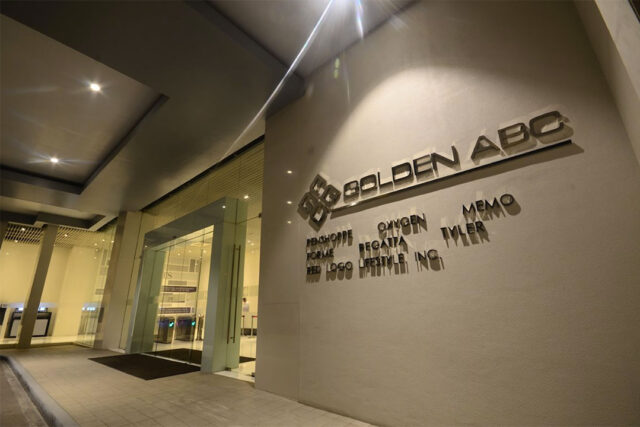
PHILIPPINE fashion retailer Golden ABC, Inc. (GABC) said it plans to open around 60 new stores this year, below its earlier target, as it reassesses expansion plans amid global uncertainties.

“We are a little bit more cautious, and we are assessing now how many of these stores are really necessary,” GABC President and Chief Executive Officer Alice T. Liu told reporters on the sidelines of the Franchise Asia Philippines’ 2026 International Franchise Conference on April 23.

She said the company had initially targeted opening 87 new stores this year.

“Currently, I think our count is about 60 something, so we’re still confident that it will be there,” she said.

GABC ended 2025 with more than 1,000 stores nationwide.

Ms. Liu said the company continues to see opportunities to expand as long as malls remain operational.

“To us, if the malls open, we will continue to open with them,” she said.

The Philippine retail sector has remained stable as mall footprint has exceeded pre-pandemic levels, although global uncertainties continue to affect retailers’ decisions on space expansion, according to the 2026 Global Cities Retail Guide Report by property consultant Cushman & Wakefield.

Some shopping malls, including those operated by SM Supermalls, Robinsons Malls, Ayala Malls, and Vista Malls, have shortened operating hours to manage energy use amid uncertainties linked to the ongoing Middle East conflict.

“We need to really position well our brands,” Ms. Liu said. “Retailers that have the financial muscle to withstand it will continue investing, but we are a bit more cautious.”

Ms. Liu also said the company has no immediate plans for an initial public offering, citing existing funding support.

“So far, since we are able to fund it, we have good partners that are able to fund us. We’d rather grow that way, so that we can manage our own growth,” she said.

GABC operates fashion brands such as Penshoppe, OXGN, Memo, Regatta, ForMe, and BOCU. — Beatriz Marie D. Cruz

ESET launches eCrime Reports to give security teams a strategic edge against modern cybercriminal groups

Enabled with ESET AI Advisor, security teams are able to rapidly analyze and act upon threats with SOC team-level advisory.

ESET, a global leader in cybersecurity, released eCrime Reports, a new strategic offering in the ESET Threat Intelligence portfolio. As companies become increasingly overwhelmed by the growth and complexity of ransomware and infostealers, the demand for high-quality, curated cyber threat intelligence (CTI) has grown. With ESET’s new eCrime Reports, businesses have unprecedented access to data that shows how actual incidents unfold, including affiliate-level attack visibility, full attack-chain timelines and tooling, and region-specific telemetry.

“For over 30 years, ESET has helped governments, channel companies and businesses stay protected from the world’s most advanced cybersecurity threats,” said Roman Kováč, Chief Research Officer at ESET. “Our newly launched eCrime Reports combine technical depth with functional defense guidance, based on feedback from ESET’s threat researchers around the world. This means law enforcement, IT, and security teams don’t just read about threats, they gain insights needed to anticipate attacks, close gaps, and strengthen defenses proactively. Focused on ransomware and infostealers, these eCrime reports help organizations to strengthen their overall cybersecurity posture, particularly in high-stakes environments.”

The new offering comes in two tiers  ESET Threat Intelligence eCrime Reports and ESET Threat Intelligence eCrime Reports Advanced. These curated reports are built on proprietary data and telemetry with unique insights from real-world intrusions occurring across the globe. By following TTPs, ESET’s eCrime Reports uncover hidden clusters of activity, enabling and enhancing eCrime-related strategic decisions. Moving beyond monitoring MaaS and RaaS Dedicated Leak Sites (DLS), eCrime Reports can be supplemented with ESET’s proprietary intelligence feeds, including Android Infostealer, Malicious Email Attachments, Ransomware, Cryptoscam, Phishing URLs, Scam URLs, Smishing and more.

“Quality is essential in threat intelligence data,” said Kováč. “ESET Threat Intelligence customers are able to reduce maintenance and manpower associated with processing feeds  cutting through information overload associated with competitor threat intelligence offerings. Rather than struggling to sift through huge, noncurated external datasets, ESET’s services allow organizations to quickly identify and prioritize emerging business risks and previously unknown threats  giving them more time to accelerate incident response, mount an effective defense and implement an overall more proactive cybersecurity posture.”

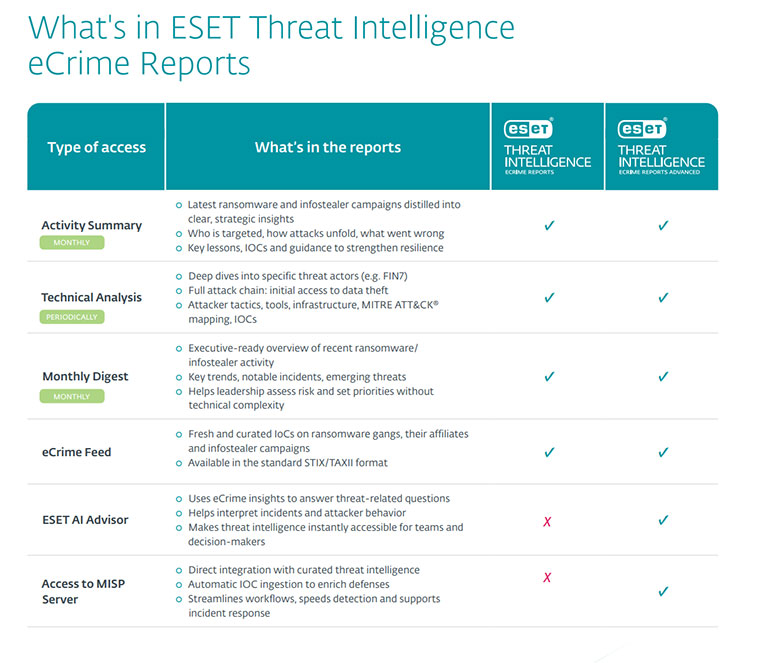
What’s Inside the Reports:

Activity Summary

A high-level overview of recent ransomware and infostealer campaigns distilled into strategic insights. Includes targeting patterns, attack progression, lessons learned, IoCs and actionable guidance to improve resilience.

Technical Analysis

Deep-dive reports on specific threat actors, campaigns, and more, detailing the full attack chain from initial access to data theft. The technical analysis includes attacker tactics, tooling, infrastructure mapping, MITRE ATT&CK® coverage, and associated IoCs.

Monthly Digest

An executive-ready summary of current ransomware and infostealer activities. Outlines key trends, major incidents, and emerging threats to help leadership set priorities and assess organizational risk.

eCrime Feed

A continuously updated stream of curated IoCs focused on ransomware gangs, their affiliates, and infostealer campaigns, delivered in standard STIX/TAXII format.

ESET AI Advisor (Advanced only)

ESET AI Advisor enables security analysts and decision makers to rapidly interpret incidents and act upon threats. Built on 20+ years of AI and ML expertise, this generative AI module seamlessly integrates into day-to-day operations of security analysts.

Access to MISP Server (Advanced only)

Direct integration with curated threat intelligence. Automatic IoC ingestion enriches defenses, streamlines workflows, enhances detection, and supports incident response operations.

ESET’s eCrime Reports join the ESET Threat Intelligence portfolio, which includes three tiers, two of which are Premium APT Reports with in-depth analysis of global APTs, including state-aligned Russian, Chinese, Iranian, and North Korean groups. Supported by global threat hunters, these reports expose espionage activities, exploitation of vulnerabilities, and zero days, and they have been expanded to include geopolitical context. ESET also offers 18 proprietary intelligence feeds and two sub-feeds, including Android threats, IoCs, Botnets, Phishing URLs, and more.

For more information about ESET Threat Intelligence, visit ESET’s website.


Spotlight is BusinessWorld’s sponsored section that allows advertisers to amplify their brand and connect with BusinessWorld’s audience by publishing their stories on the BusinessWorld Web site. For more information, send an email to online@bworldonline.com.

Join us on Viber at https://bit.ly/3hv6bLA to get more updates and subscribe to BusinessWorld’s titles and get exclusive content through www.bworld-x.com.

Argentina truckers end protest at Quequen grain port

REUTERS

BUENOS AIRES — Argentine truckers ended a protest that had paralyzed the Quequen grain port after reaching an agreement with farmers for a 16% freight rate increase, the port authority said.

Activity at the terminal began to normalize following the end of the costly protest, a port source told Reuters.

As part of the deal, truckers were successful in their demand to cap administrative fees charged by grain collectors and cargo providers at 2%.

Trucker association ATCADE also confirmed the deal to Reuters.

The drivers, who had been seeking higher rates to offset costs, had blocked access roads to the hub, which handles about 20% of Argentina’s soybean exports.

The Argentine Chamber of Private Commercial Ports said earlier this week that the protests, which also affected the port of Bahia Blanca, had stalled exports worth approximately $450 million.

Argentina is the world’s third-largest exporter of soybeans and the top global supplier of processed soy meal and oil. — Reuters

Ortigas Land delivers certainty with Offices at The Galleon​ Q4 2026 target

Exterior photo of office tower

As Ortigas Land marks its 95th year in the Philippine real estate industry, the company reports steady progress on The Galleon, its flagship mixed-use development in Ortigas Center in Pasig City.

Construction of the office building is on schedule for completion by fourth quarter of 2026, reinforcing the company’s continued focus on timely delivery.

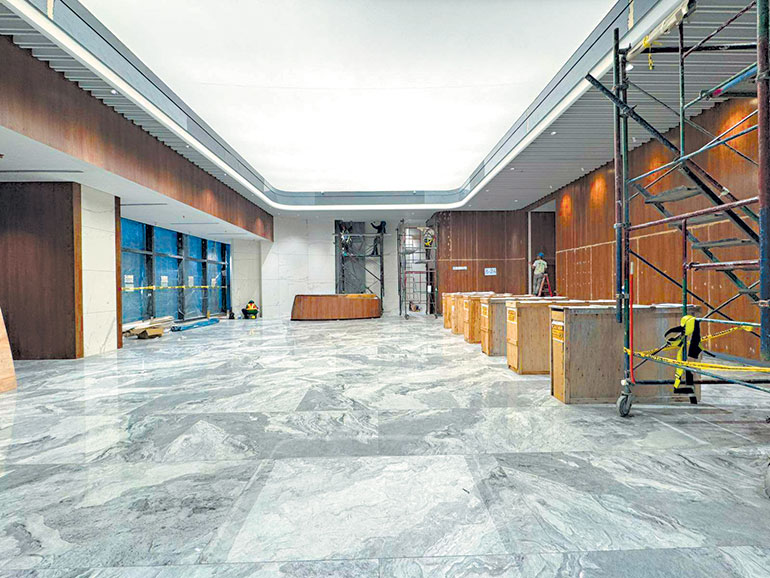
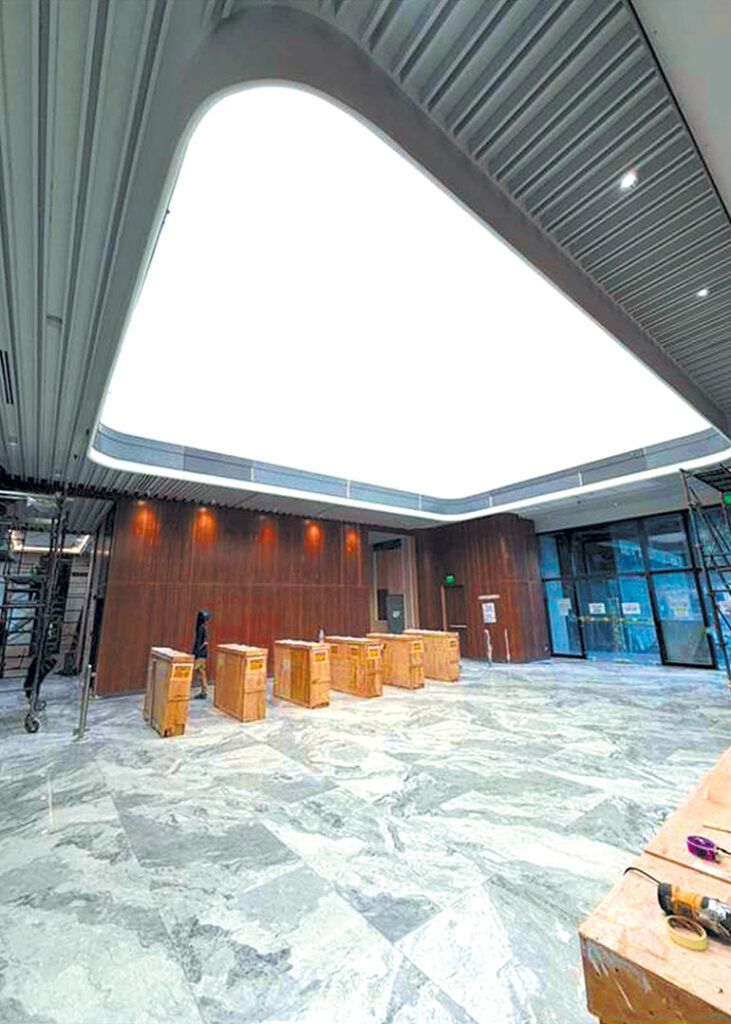
Office lobby takes shape​.

Strategically located along ADB Avenue, Offices at Galleon offers strata office units within one of Metro Manila’s most established corporate ecosystem. Bridging Quezon City, Mandaluyong, and Pasig, the district provides access to a deep and diverse talent pool, supported by proximity to major commercial centers, institutional anchors, essential lifestyle destinations.

This concentration of business, retail, and institutional components reinforces Ortigas Center’s role as a highly functional and accessible hub for day-to-day corporate operations, further strengthened by its proximity to multinational organizations, established educational institutions, and leading healthcare facilities.

Offices at Galleon provides corporate locators an option to own office units in a centrally prestigious business address as well as for commercial investors seeking long-term recurring income.

With the project nearing completion, buyers are also afforded greater visibility on actual build quality and delivery timelines—helping reduce uncertainty and support more confident investment decisions.

The building is designed with efficiency and sustainability in mind, featuring large door plates and modern management systems. Its pursuit for Leadership in Energy and Environmental Design (LEED) certification aligns with global standards for environmentally responsible construction. At street level, the development opens with a high-ceiling lobby designed to accommodate both functionality and scale.

Alongside the office tower, the residential component of The Galleon is also progressing. The 51-storey residential tower is positioned to complement the office development, offering proximity for residents who value accessibility between home and workplace. This integrated environment supports a more efficient urban lifestyle while contributing to the long-term vibrancy of value of the estate.

Recent site progress reflects steady advancement toward structural and interior completion, reinforcing the project’s targeted delivery timeline.

To-date, 97% of the office units have been sold. The remaining inventory represents a rare opportunity to own space in a near-complete, high-quality development.

For companies and investors seeking both stability and long-term value, Offices at Galleon presents a compelling proposition. With completion in sight, strong occupancy, and a prime location within a proven business district, the development stands as a strategic acquisition for those ready to secure their place in one of Metro Manila’s most enduring corporate addresses.

Ortigas Land is a leading Philippine developer with 95 years of building master-planned communities, including Greenhills Center, Capitol Commons, Ortigas East, Circulo Verde, and Costa Calatagan. It integrates heritage and innovation to create spaces that elevate everyday living. www.ortigas.land


Spotlight is BusinessWorld’s sponsored section that allows advertisers to amplify their brand and connect with BusinessWorld’s audience by publishing their stories on the BusinessWorld Web site. For more information, send an email to online@bworldonline.com.

Join us on Viber at https://bit.ly/3hv6bLA to get more updates and subscribe to BusinessWorld’s titles and get exclusive content through www.bworld-x.com.

A shift to caution among consumers

Freepik/Rawpixel.com

The world has long been described as a “global village,” but that village has been feeling less like a community and more like a high-tension wire.

When a spark struck in the oil-rich corridors of the Middle East, specifically the intensifying conflict surrounding the Strait of Hormuz, the heat is felt almost instantly in the Philippines.

The Philippines, structurally dependent on imported energy where nearly 95% of oil is imported, finds itself particularly exposed: what begins as a geopolitical rupture transforms into a domestic economic condition, altering not just prices but patterns of living, consumption, and even social perception.

For a Filipino consumer, the geopolitical tremor manifests as a fuel shock. As of this April, crude has surged at almost $100 per barrel, with analysts from International Energy Agency (IEA) warning of a climb toward $150. This translates almost mechanically into higher fuel costs, a widening import bill, and immediate inflationary pressures.

The transmission mechanism from oil shock to consumer experience is neither linear nor purely economic. It unfolds in layers.

For instance, when the Land Transportation Franchising and Regulatory Board (LTFRB) adjusted minimum fares to P14 and P17 to modern units this year, it did more than increase a commute’s cost — it altered the urban ritual.

A certain precarity rises: for the worker, the extra few pesos per ride represents a slow erosion of the social buffer — the small margin of income that allows for a life beyond survival.

When movement becomes expensive, the city itself begins to shrink. People stay closer to home, social circles tighten, and the activities that fuel culture (e.g., dining out, family visits, or exploring new spaces) are the first to be sacrificed.

The consumer market, once animated by upward mobility, shifts toward caution and preservation. This uncertainty is amplified by the structural vulnerabilities of the national economy. In worst-case scenarios, where oil prices surge dramatically and remain elevated, inflation could spike to levels that significantly erode purchasing power and destabilize growth projections.

Already, institutions have begun revisiting outlooks downward, noting that energy shocks could weaken both consumption and investment.

The metro, once a sprawling map of opportunity, becomes a series of high-cost hurdles.

From the Pump to the Plate

In March 2026, Philippine inflation breached the target of the Bangko Sentral ng Pilipinas (BSP), hitting 4.1%. at the same time, the Department of Trade and Industry (DTI) has attempted to freeze prices for basic commodities until mid-May, making the underlying pressure undeniable.

When the price of rice or vegetables climbs because the trucks carrying them are burning expensive diesel, the burden falls on the bottom 30% income households, the lowest earning families. This cascading effect — what economists often describe as “second-round inflation” — begins to shape the broader consumer price environment.

For these families, inflation is not a mere percentage, but a choice between nutrition and education, or between health and debt.

This reflects a certain shift in consumption: instead of buying for the future, households are forced into a hyper-present state, where every peso is scrutinized for its immediate utility. This survival mindset, while necessary, prevents long-term social mobility. It traps the consumer in a cycle of reacting to global shocks rather than planning for local growth.

The ‘Alternative’ Problem

Interestingly, the crisis also exposes the limits of substitution. While there is increasing discourse around renewable energy and alternatives, these remain structurally insufficient in the short term. Petroleum still dominates the Philippines’ energy mix and alternatives account only for a fraction of total consumption.

This dependency constrains policy options and ensures that global oil dynamics continue to exert a strong influence on domestic markets.

Government responses, such as subsidies, tax adjustments, or monetary policy interventions, can mitigate some of the immediate pain. However, they often function as buffers needing further action.

In the end, the impact of the Middle East conflict on Philippine consumer markets is not just about higher prices. It is about the reconfiguration of everyday life under conditions of external uncertainty. — Krystal Anjela H. Gamboa
Turning medicine policy into real patient access

STOCK PHOTO | Image by Gstudioimagen1 from Freepik

High out-of-pocket expenses for medicines remain a major barrier to healthcare access, particularly in low- and middle-income countries (LMICs), and often lead to financial hardship. Out-of-pocket health spending refers to direct, non-reimbursable payments made by individuals at the point of care covering medicines, consultations, and hospital services that are not fully covered by insurance.

In many LMICs, 50% to 90% of medicine costs are paid out-of-pocket due to gaps in financial protection. In the Philippines, households shouldered 44.4% of total health spending in 2023, with medicines accounting for roughly 46% of out-of-pocket expenditures. These figures underscore a persistent structural challenge: access to treatment remains closely tied to a patient’s ability to pay.

For individuals living with non-communicable diseases (NCDs) such as cancer and diabetes, this burden is particularly acute. Managing chronic conditions often requires long-term and continuous treatment, making affordability a decisive factor in health outcomes. This reality reinforces the need for sustained investment in primary healthcare as a cornerstone of financial protection.

Primary healthcare plays a critical role in reducing overall health expenditures. By providing accessible, preventive, and cost-effective services at the community level, it minimizes the need for expensive hospitalizations and specialized care. Early detection, timely intervention, and coordinated management of chronic diseases not only improve patient outcomes but also generate significant savings for both households and the health system.

The Philippine government has taken important steps to improve affordability. The Tax Reform for Acceleration and Inclusion (TRAIN) Law and the Corporate Recovery and Tax Incentives for Enterprises (CREATE) Act have exempted selected medicines, including those for cancer, hypertension, diabetes, mental health conditions, high cholesterol, kidney disease, and tuberculosis, from the 12% value-added tax (VAT). These measures provide immediate price relief for patients and represent a practical approach to easing financial barriers.

The Universal Health Care (UHC) Act further strengthens financial protection by institutionalizing access to essential health services, including medicines. Automatic enrollment in PhilHealth ensures that all Filipinos are eligible for benefit packages that reduce out-of-pocket costs.

A key development under UHC is the rollout of expanded outpatient benefit packages. In July 2025, PhilHealth launched the Yaman ng Kalusugan Program para Malayo sa Sakit (YAKAP), which consolidates primary care services into a more comprehensive and prevention-focused package. By emphasizing early detection and routine care, YAKAP aims to reduce reliance on hospital-based treatment.

Under the program, members can access preventive consultations, laboratory services, essential medicines, and selected cancer screenings through accredited primary care providers nationwide. By bringing services closer to communities, YAKAP helps bridge long-standing gaps in access while reducing the financial burden on patients.

At the same time, strengthening the Health Technology Assessment (HTA) process is critical to ensuring timely access to innovative medicines. The HTA Council plays a vital role in evaluating the value of health technologies and informing inclusion in the Philippine National Formulary (PNF), which enables government procurement. However, delays in HTA processes and limitations in local data can slow access to new, life-saving treatments.

Addressing these challenges requires a more agile and responsive system. Streamlining HTA processes, enhancing data availability, and exploring complementary procurement pathways, including mechanisms that allow access to medicines outside the PNF, can help ensure that patients benefit from medical innovation without unnecessary delay.

Equally important is the need to strengthen procurement systems. Fragmented and short-term purchasing practices often result in higher costs and inconsistent supply. In contrast, consolidated and strategic procurement enables the government to leverage economies of scale, secure better pricing, and ensure a more stable supply of medicines and vaccines. Investing in efficient procurement is not only fiscally prudent as it is essential to safeguarding public health.

The biopharmaceutical industry remains a committed partner in expanding access. Through global collaborations, capacity-building initiatives, and patient access programs, the industry supports health system strengthening in LMICs. Since 2000, substantial quantities of medicines have been donated to support underserved populations, reflecting a shared commitment to equitable healthcare.

Reducing out-of-pocket expenses for medicines lies at the very heart of public health and economic resilience. No individual should be forced to choose between life-saving treatment and basic necessities such as food or shelter. Achieving this goal requires sustained collaboration among government, the private sector, and the broader healthcare community to build a system where access to medicines is not determined by income, but guaranteed as a fundamental right.


Teodoro B. Padilla is the executive director of Pharmaceutical and Healthcare Association of the Philippines, which represents the biopharmaceutical medicines and vaccines industry in the country. Its members are at the forefront of developing, investing and delivering innovative medicines, vaccines, and diagnostics for Filipinos to live healthier and more productive lives.