The Philippine Senate and the danger of omission
In The Art of Thinking Clearly, Rolf Dobelli presented a moral dilemma that now feels strikingly relevant to the crisis confronting the Senate of the Philippines.
You are with two climbers are crossing a glacier. One slips into a crevasse. You could call for help, but you choose not to, and he dies. You also deliberately push the second climber into the ravine.
Which act is morally worse: fatal inaction or direct action?
Dobelli’s point was that human beings often judge omissions less harshly than deliberate acts, even when the consequences are equally grave. Psychologists call this omission bias, the tendency to believe that doing nothing is somehow cleaner, safer, and, yes, morally neutral.
INSTITUTIONS VULNERABLE TO OMISSION BIAS
But institutions are also vulnerable to omission bias.
And today, the Philippine Senate stands at precisely that crossroads.
The impeachment case against Sara Duterte is no longer simply a legal or procedural issue. It has evolved into a test of constitutional fidelity, institutional courage, and the future direction of Philippine democracy heading toward 2028.
The House of Representatives has already acted. By an overwhelming vote, lawmakers approved the articles of impeachment after concluding that there was probable cause to proceed on allegations involving misuse of confidential funds; discrepancies in her Statement of Assets, Liabilities, and Net Worth (SALN); unexplained wealth; alleged corruption in the Department of Education during her tenure as secretary; and threats against the President, the First Lady, and former Speaker Martin Romualdez.
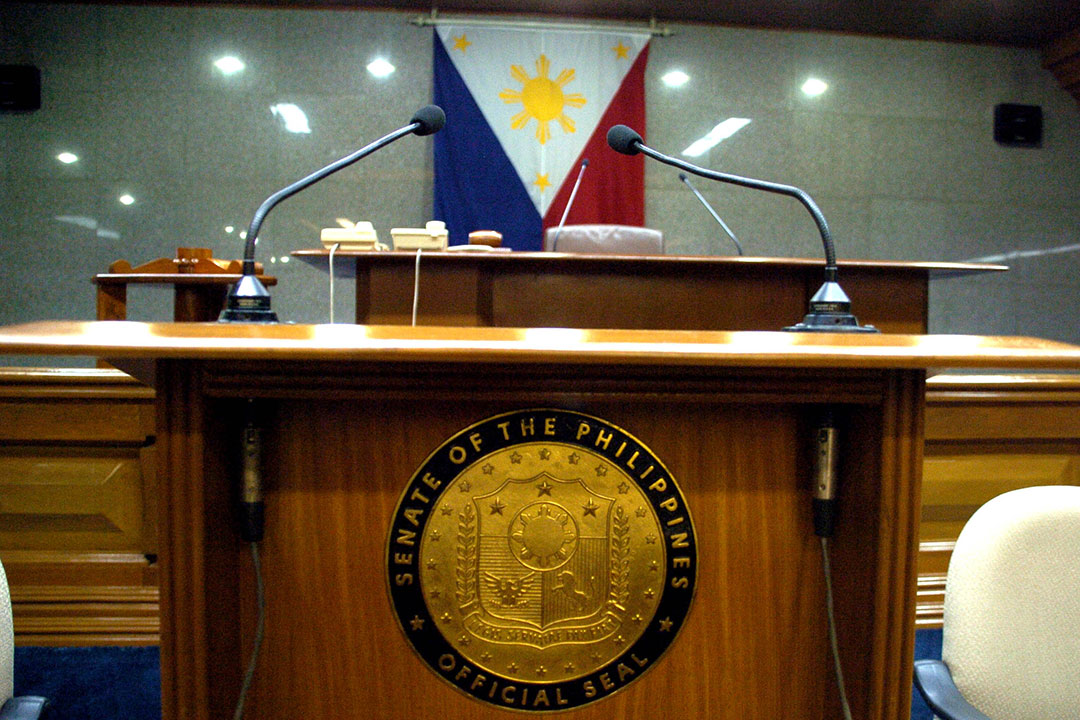
The Constitution is clear enough. Under Article XI, Section 3, the Senate possesses the sole power to try and decide impeachment cases.
WHAT THE SENATE OUGHT TO DO
The Senate is not being asked to prejudge the Vice-President.
It is being asked to perform its constitutional role.
That distinction is critical because a functioning impeachment process is not proof of guilt. It is the mechanism through which truth is tested in full public view. The Vice-President would retain every constitutional protection available to her: the right to counsel, the right to challenge evidence, the right to present witnesses, and the right to defend her name before the Filipino people.
Indeed, if she is innocent of the accusations, the impeachment trial could paradoxically become the most powerful political platform of her career.
That possibility is often ignored by both her supporters and critics.
POLITICAL PERSECUTION AND POLITICAL CAPITAL
If the proceedings unfold daily before national television, livestreams, and social media audiences, and if the Vice-President effectively dismantles the accusations against her, she could emerge politically stronger than before. A public acquittal after months of scrutiny would allow her to argue that she survived the full force of the political establishment and prevailed.
In Philippine politics, persecution narratives often generate political capital.
Her base in Mindanao would likely solidify further. Sympathy votes could expand into the Visayas. Even parts of Luzon, traditionally more skeptical of Duterte politics, might begin viewing her as a victim of elite political warfare rather than as an accused public official.
In that scenario, the impeachment trial becomes not a liability but a national stage. Every hearing becomes free political airtime. Every attack against her becomes an opportunity to project resilience, toughness, and victimhood, traits that have historically resonated with substantial segments of the electorate.
AT STAKE: 2028 PRESIDENTIAL ELECTION
A successful defense in the Senate could therefore transform the 2028 presidential race.
It could revive the Duterte political machine at the precise moment many believed it was weakening.
But the opposite outcome is equally possible.
If the House evidence proves substantial and coherent, and if witnesses withstand scrutiny under oath, the impeachment proceedings could become politically devastating. Unlike ordinary political attacks, impeachment hearings institutionalize scrutiny. Documents are examined publicly. Financial trails are dissected. Contradictions become part of the permanent public record.
The danger for the Vice-President is not merely legal exposure. It is sustained political erosion.
Presidential elections in the Philippines are often won not only through popularity but through the preservation of political inevitability. Once the perception of invincibility weakens, alliances begin to shift. Local political clans reassess loyalties. Business groups diversify their money bets. Even supporters begin searching quietly for alternatives.
ALTERNATIVES TO SARA EMERGING
And the alternatives are already emerging.
Leni Robredo remains a potent moral and political figure despite her 2022 defeat. Her leadership style continues to attract sectors searching for governance grounded in transparency, competence, and institutional reform. Meanwhile, Raffy Tulfo maintains considerable mass appeal rooted in populist credibility and anti-establishment branding.
If Senator Tulfo ultimately declines a presidential bid, and if democratic and reform-oriented forces consolidate behind Robredo or another consensus candidate, the political equation changes dramatically.
The Duterte mystique, long built on perceptions of unstoppable political dominance, could begin to appear less permanent and more conditional.
That is why the impeachment trial matters far beyond the immediate charges.
It is also an early battle over the shape of the 2028 elections.
The Senate therefore faces not merely a judicial responsibility but a historic institutional moment. Will it allow constitutional accountability to proceed openly? Or will it attempt to neutralize the process through procedural delay, technical maneuvering, or institutional hesitation?
THE DANGER OF OMISSION BIAS
This is where omission bias becomes dangerous.
Many senators may persuade themselves that avoiding confrontation preserves stability. Some may argue that impeachment is too divisive. Others may claim that economic legislation, inflation, or national security concerns deserve greater urgency.
But constitutional accountability is not a distraction from governance.
It is part of governance.
No democratic institution can sustainably claim to prioritize reform while simultaneously evading one of the Constitution’s clearest accountability mechanisms.
The Senate should realize that its actions last year had already generated widespread criticism. After initially delaying proceedings during congressional recess, the impeachment complaint was later remanded to the House to clarify issues surrounding the constitutional one-year bar and continuity between Congresses.
To supporters of the Vice-President, these were prudent legal precautions.
To critics, they looked like institutional avoidance, a way of preserving plausible deniability while quietly preventing momentum from building toward a full trial.
TIMING INTENSIFIES PUBLIC SUSPICION
Such timing intensified public suspicion.
The reappearance of Ronald “Bato” dela Rosa at the center of Senate developments added another layer of controversy, especially amid continuing discussions surrounding possible accountability mechanisms linked to the International Criminal Court (ICC) investigations into the Duterte administration’s anti-drug campaign.
Outside the Senate building, civil society organizations, church groups, activists, students, and various multisectoral coalitions converged to pressure lawmakers into proceeding with the trial. Their slogans were sharp and unmistakable:
“No one is above the law.”
“Litisin si Sara, hulihin si Bato.”
“No to Senate as sanctuary for fugitives.”
“Accountability over abuse of power.”
These demonstrations reveal a deeper public anxiety: the fear that powerful political figures may once again escape accountability through institutional protection networks.
Supporters of the Duterte bloc, however, frame the issue differently. They argue that the impeachment process and ICC-related developments are manifestations of political persecution and foreign interference. They invoke nationalism and sovereignty, portraying external scrutiny as an assault on Philippine independence.
NO TO EVADING ACCOUNTABILITY
But sovereignty cannot be selectively invoked to evade accountability.
The ICC issue exists because the Philippines remained a member of the court during the period when the alleged crimes against humanity were committed. International cooperation, including coordination through Interpol or mutual legal assistance frameworks, is not automatically a surrender of sovereignty. It is part of the obligations states voluntarily assume under international law.
The Senate, of all institutions, should understand this distinction clearly.
At stake therefore is more than the future of one political family.
At stake is the credibility of constitutional democracy itself in the Philippines.
IMPEACHMENT AND TRANSPARENCY
If the Senate proceeds with the impeachment trial, the country gains something valuable regardless of the outcome: transparency. Evidence will be tested publicly. Arguments will be heard openly. The Filipino people will see institutions functioning as designed.
If the Vice-President is acquitted after a fair trial, her legitimacy strengthens.
If she is convicted after due process, then accountability prevails.
But if the Senate effectively kills the impeachment through delay or procedural suffocation, the damage could extend far beyond 2028.
It would reinforce a dangerous national lesson: that accountability depends not on constitutional principles but on political arithmetic; that institutions bend differently for the powerful; and that public trust may once again be subordinated to elite alliances.
That erosion of trust is far more corrosive than any single impeachment battle.
Democracies rarely collapse overnight. More often, institutions slowly weaken because they repeatedly choose convenience over principle, silence over scrutiny, and omission over responsibility.
Which should go down to the ravine?
That is the real warning behind omission bias.
Doing nothing is not neutral.
Refusing to act is itself an act with consequences.
The Senate now has an opportunity to demonstrate that constitutional accountability in the Philippines remains alive, functional, and independent of political dynasties or partisan loyalties.
The Filipino people deserve more than spectacle. They deserve institutions willing to confront difficult truths under the rule of law, regardless of who stands accused.
If something must ultimately fall into the ravine, it should not be constitutional accountability.
It should be the culture of impunity that has long haunted Philippine politics.
Diwa C. Guinigundo is the former deputy governor for the Monetary and Economics Sector, the Bangko Sentral ng Pilipinas (BSP). He served the BSP for 41 years. In 2001-2003, he was alternate executive director at the International Monetary Fund in Washington, DC. He is the senior pastor of the Fullness of Christ International Ministries in Mandaluyong.