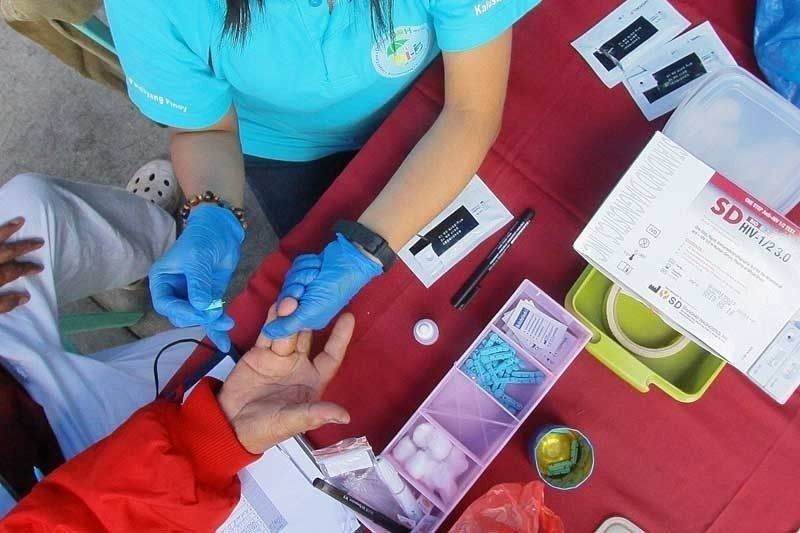
A health expert on Tuesday said that the increase in daily human immunodeficiency virus (HIV) disease cases among young Filipinos pushes the infection to nearly 200,000 patients nationwide by yearend.
“Globally, the trend of HIV is declining. Meanwhile, in our country, it is still rising… This is quite alarming,” Pediatric Infectious Disease Specialist Jo-Anne A. de Castro said in a media conference.
“The average case per day is 55 cases, and this is quite high,” she added.
According to Ms. de Castro, HIV is a virus that attacks cells, usually the white blood cells (WBC), that help the body fight infection. “There’s no cure, but it is a treatable disease.”
Data from the Department of Health (DoH) found that the number of people living with human immunodeficiency virus (PLHIV) is expected to increase to about 252,800 by the end of the year.
The agency added that over 5,500 new HIV cases were reported from July to September this year.
Citing the DoH, Ms. de Castro said that NCR has the highest cases nationwide, followed by CALABARZON, Central Luzon, Central Visayas, SOCCSARGEN, Western Visayas, and Davao.
“For the 15 to 24 years old, they’re about 34%, or about a third,” she said. “And for those children who are less than 15, it’s about less than 1%.”
While HIV is often transmitted sexually, the specialist underscored that it can also be acquired through needles, pregnancy, breastfeeding, blood transfusion, biting, organ transplant, and occupational exposure.
With the majority of the recorded cases in the country being male, Ms. de Castro also noted that anal sex had the highest risk for the sexually transmitted infection.
“In anal sex, the one which is the receptive one, or the bottom, is the one with the higher risk compared to the top,” she said.
“Because the lining of the rectum is so thin, if there’s a break there, the bodily fluids can be transmitted there,” she added.
To address the rising cases, the Philippine Health Insurance Corporation (PhilHealth) announced on Monday that it has increased its Outpatient HIV/AIDS Treatment (OHAT) Package by 95%.
The treatment package offers annual coverage that has expanded from PHP 30,000 to PHP 58,500.
“The news that the number of PLHIV (people living with HIV) is getting younger is alarming,” PhilHealth Acting President and Chief Executive Officer Edwin M. Mercado said in a statement on Monday.
“We call on the parents of the youth to support and let them feel that they are not alone and that a future awaits them through early prevention and regular care under our YAKAP Clinics,” he added. — Almira Louise S. Martinez