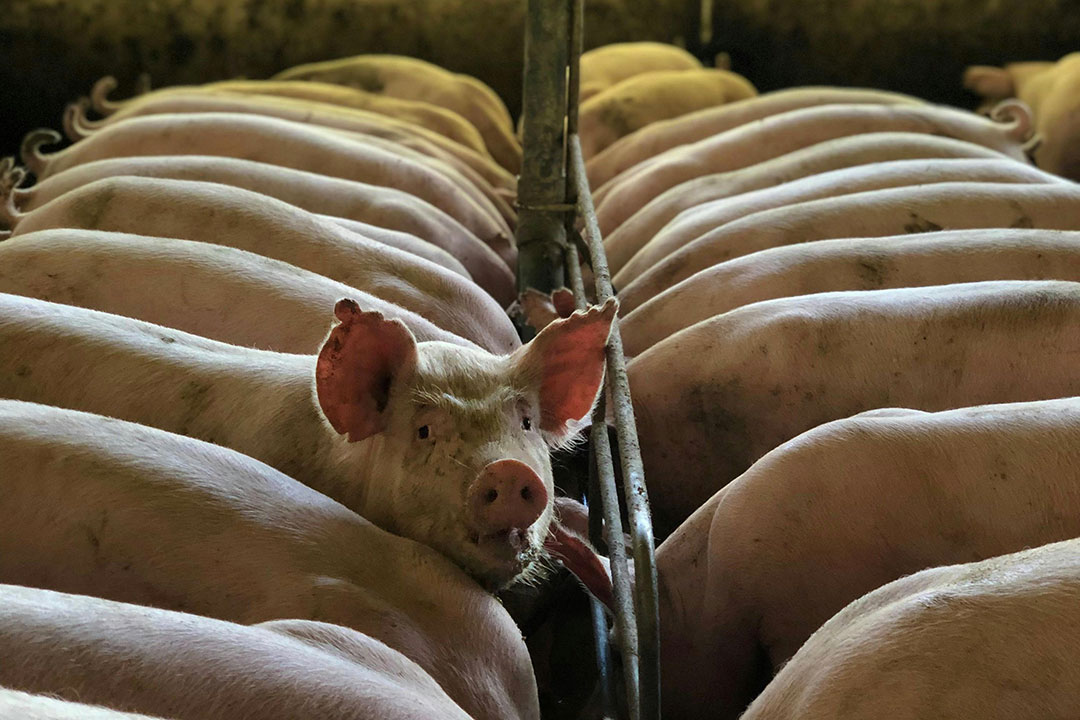
THE Department of Agriculture (DA) said it is procuring swine this year to kick hog industry revival efforts into high gear, with a target of restoring the herd’s population to the level recorded in 2019, before the outbreak of African Swine Fever (ASF).
In a statement on Tuesday, the DA said it will begin procuring about 32,000 gilts — young female animals that have not yet reproduced — with the effort to be overseen by the Bureau of Animal Industry (BAI), under the umbrella of the National Livestock Program.
Before ASF hit, the industry maintained a herd of about 13 million head. The program hopes to add 6 million hogs by 2028.
Agriculture Secretary Francisco P. Tiu Laurel, Jr. said pork supply needs to be stabilized in order to start scaling back imports.
“We need to produce at least one million more head this year alone if we are to stabilize supply, reduce reliance on imports, and move closer to… a food-secure Philippines driven by stronger local production,” he said in the statement.
In 2025, the BAI reported that meat imports rose to a record 1.64 million metric tons (MT), with pork shipments rising 16.09% to 851,760 MT on weak local production.
The DA said the repopulation program has a budget of P1.6 billion and is supported by funding from the Animal Industry Development and Competitiveness Act, which allocates P20 billion annually to develop the livestock industry.
Agriculture Undersecretary Constante J. Palabrica said improved disease control has allowed the government to ease some emergency measures imposed during the ASF outbreak.
“We have not detected infected pigs for some time now, which allowed us to dismantle checkpoints in Metro Manila after two years. This reflects the effectiveness of our containment strategies,” he said.
Mr. Palabrica said, however, that the BAI remains vigilant as repopulation efforts get off the ground.
The DA said vaccination programs targeting ASF and avian influenza are ongoing, as are efforts to obtain more vaccines.
The DA said the BAI is expected to hire up to 4,000 personnel, including 500 veterinarians, to support biosecurity and field operations. — Vonn Andrei E. Villamiel