From journalism to literature: A Filipino story in the Southeast Asian context
 THERE ARE MANY female writers in Southeast Asia, though not many readers are aware of their talent or their body of work.
Filipina writer Marga Ortigas is best known as a broadcast journalist, covering conflicts and disasters both natural and man-made, which she did for about three decades, most notably with CNN and Al Jazeera.
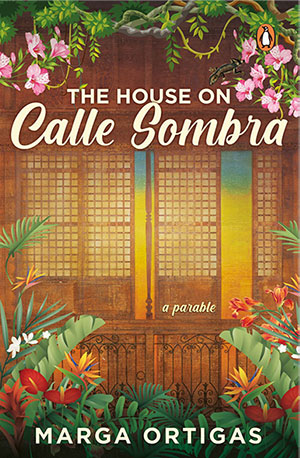
In 2021, she returned to creative writing, the root of her childhood passion for stories. Her debut novel, The House on Calle Sombra, was published, an ambitious work tackling themes of love, greed, and trauma in the context of family and Philippine history. It was then followed by two collections of essays and another novel — and, most recently, a literary award.
ON RECOGNITION
Built upon the Thai Chommanard Book Prize established in 2008, the Chommanard International Women’s Literary Award has a mission “to support and elevate women writers across Asia and beyond.” It celebrates female literary talent from the ASEAN, China, Hong Kong, and Taiwan, sponsored by Bangkok Bank and organized by Praphansarn Publishing Co., Ltd.
Ms. Ortigas’ debut novel was recognized at the literary award’s 2025 edition; the awarding ceremony was held last month. The House on Calle Sombra was given the Country Award for representing the vibrant literary tradition of the Philippines, where “storytelling often intersects with history, memory, and social realities.”
“I knew it had been submitted for consideration, but you never know with these things. You can only hope that people appreciate what is in the work. Reading is really subjective,” said Ms. Ortigas, who spoke to BusinessWorld over Zoom, of her win.
“There was a mixed bag of judges from across Asia, so I’m just glad that somehow they came together to decide that the book was worthy of recognition, considering all the other books submitted,” she added.
From over 66 submissions, Hong Kong writer Lau Yee Wa emerged as the Grand Prize winner for her novel Tongueless — seven other writers were revealed to have been on the shortlist. Aside from Ms. Ortigas representing the Philippines, Singaporean writer Jemimah Wei was the other Country Award winner for her novel The Original Daughter.
As the grand prize winner, Lau Yee Wa was awarded 500,000 baht, and the rest received 40,000 baht each. Another perk for winning is consideration for translation into Thai, subject to rights agreements.
“I picked up all of the other books that were nominated and shortlisted, and they were honestly incredible,” said Ms. Ortigas. “Every single one is different.”
“I was so humbled realizing that there’s so much amazing work coming out of Asia, and it’s unfortunate that the Western world is not very aware of the wealth of literary work in this part of the world,” she added. “In fact, I’m reading more Asian authors now.”
The organizers of the Chommanard International Women’s Literary Award hosted the 10 winners for a week in Thailand, which allowed them to interact and exchange ideas.
Ms. Ortigas noted that women have a unique perspective as writers, which makes them a voice that’s all the more crucial in literature.
“We listen more. Generally, in history, women have kind of been fashioned to sit back and let the man lead. Women have gotten used to taking everything in quietly and watching from the sidelines, which means we pay attention more and we observe more,” she explained.
ON UNDERSTANDING
On the expanded reach of The House on Calle Sombra, Ms. Ortigas posited that family as a theme is something everyone can relate to, which makes it a fairly easy read.
Her writing style, given her background as a TV journalist, has also always been very visual and colorful.
“The book recently got a Spanish translation, and the thing that the Spanish publishers were telling me was appealing about it is the fact that it reads like a telenovela, and yet it’s not superficial,” she said. “It’s a very heavy subject treated very lightly, written with the Filipino in mind, but not specifically just for the Philippines.”
As a writer, the journalist-turned-author believes that she writes “to understand things,” especially having covered the Philippines for many years, from its natural disasters to its changes in administrations.
“Why is the country in this cycle of constant patronage politics, of a feudalistic clan system, like nobody’s learning? So I wanted to try to understand that. That’s why the book was born,” she explained.
With influences like Jeanette Winterson and Italo Calvino, Ms. Ortigas decided to use her lifelong attraction to prose to answer these big questions. Now, after winning Chommanard’s Country Award, the implications of Filipino stories on a global stage are huge.
“They’re beginning to look for other stories in the Western world, beyond their homegrown writers,” she explained. “I think the more regional bodies or the more platforms recognize Asian writing, the better. We don’t have to wait for recognition from Western people; it’s our part of the world pointing out the best of our own.”
Because of this, she recommended that Filipino writers take the leap and submit their work to awards like these.
In her own batch, Ms. Ortigas pointed to Grand Priza winner Lau Yee Wa, whose novel Tongueless explores language, identity, and institutional control in a story where Mandarin is mandated to supplant Cantonese.
Meanwhile, shortlisted Thai author Veeraporn Nitiprapha’s work, Memories of the Memories of the Black Rose Cat, about three generations of a Chinese-Thai immigrant family, has become one of her favorites.
“Reading the styles of all the other authors has given me pause for thought. You can say things in so many different ways,” Ms. Ortigas said. “They explore many themes, like grief, a search for home, and it proves how there’s such a wealth of human experiences out there.”
She quoted another shortlisted author, Nguyễn Phan Quế Mai, whose novel The Mountains Sing highlights the Vietnamese experience across the 20th century, from French colonialism to the Vietnam War.
She said: “If we read each other’s literature, we will understand each other’s humanity.”
The Chommanard International Women’s Literary Award is accepting submissions for the next cycle until June 30. — Brontë H. Lacsamana