Imported inputs seen as structural weakness for PHL agriculture
THE agriculture industry must shock-proof itself against external disruptions, with the Middle East war highlighting the risk of relying heavily reliance on imported inputs, the University of Asia and the Pacific’s Center for Food and Agri Business (CFA) said.
“For the Philippines… agricultural resilience can no longer be viewed purely in terms of production. It must also be understood as the ability to withstand and adapt to shocks originating from an increasingly uncertain global environment,” the CFA said in a briefer.
The CFA said global shocks affect the domestic food system by raising the costs of fuel, fertilizer, and feed, which the country largely imports.
It said the Philippines is almost entirely dependent on imported petroleum products and key feed ingredients, such as wheat and soybean meal.
The country also relies heavily on imported nitrogen and phosphorus-based fertilizers and supplemental corn for animal feed.
This structural dependence has amplified the impact of recent global shocks, the center said.
The CFA noted that diesel prices in the National Capital Region surged to P153.70 per liter in early April from P60.79 in late February, while gasoline prices rose 78% to P94.50 per liter over the same period.
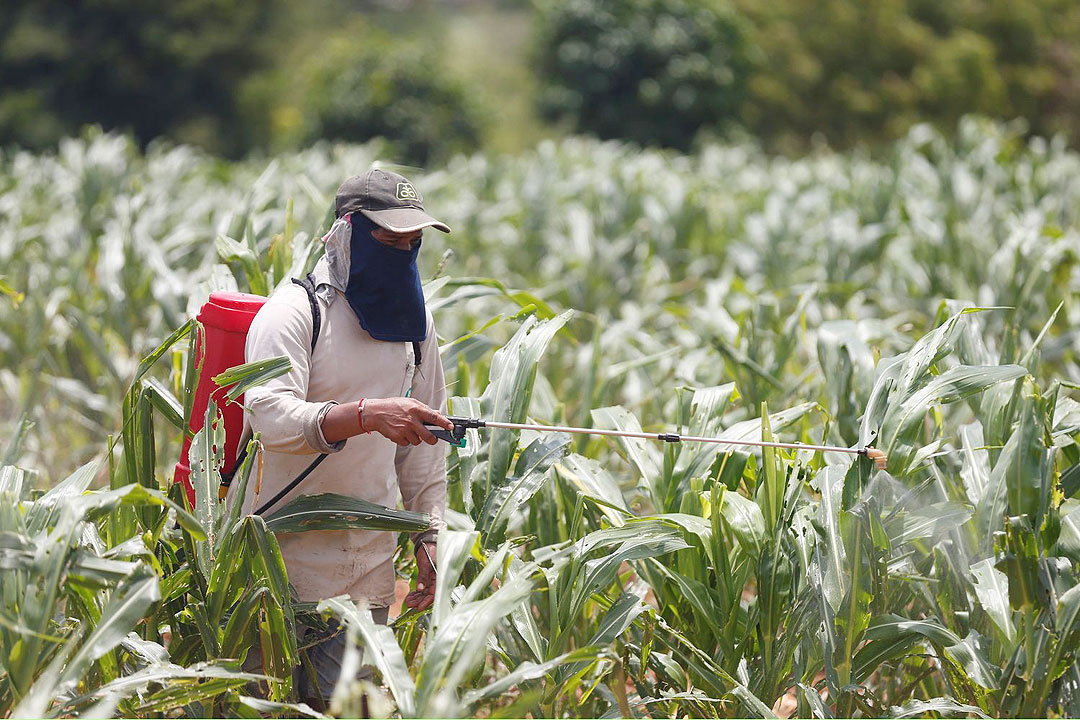
Higher fuel costs have raised expenses across the agricultural value chain, from land preparation and irrigation to transport and post-harvest handling.
In some cases, rising logistics costs have forced farmers to reconsider harvesting.
“These increases have significantly eroded margins, with some farmers opting not to harvest when expected returns fall below transport and handling costs,” the CFA said.
Fertilizer costs have also come under pressure, particularly for nitrogen-based products linked to global energy markets.
The CFA said rising prices can lead farmers to reduce application, resulting in lower yields and greater supply instability over time.
Feed costs pose similar challenges for the livestock and poultry industries, which depend heavily on imported inputs.
According to the CFA, as feed accounts for the largest share of production costs, increases in global grain and oilseed prices quickly translate into higher prices of meat, eggs, and other animal products.
The cumulative effect of these pressures is reflected in higher food prices, the center said. Food inflation accelerated to 2.8% year on year in March from 1.6% in February, driven largely by rising rice prices.
The CFA said while short-term measures such as subsidies and import adjustments can help manage immediate impacts, deeper reforms are needed.
“Reducing dependence on imported inputs, improving efficiency in fertilizer use, strengthening logistics systems, and diversifying supply sources… are all part of building resilience,” the CFA said. — Vonn Andrei E. Villamiel