Go electric, but be ready to power it
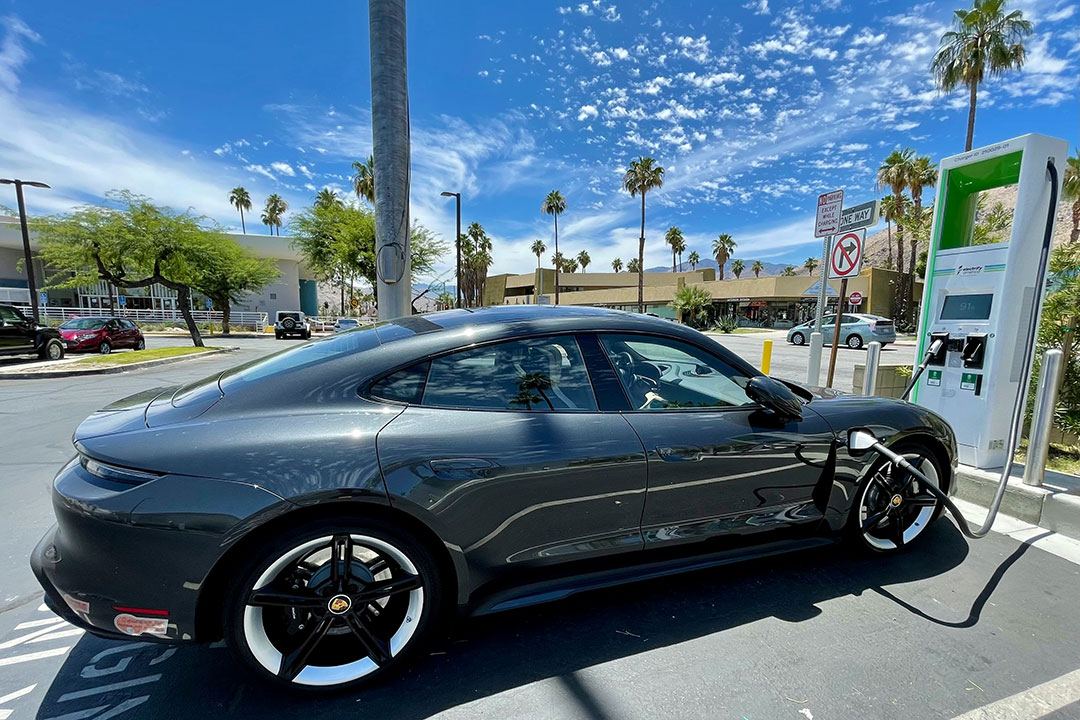
One immediate concern is whether the country can actually produce more than enough electricity, with a predictable degree of consistency and stability, to power a full transition to electric vehicle (EV) mobility for both private and public transportation, including railways.
One engineering reference has gasoline producing about 8.9 kilowatt-hours (kWh) of energy per liter, while an internal combustion engine converts only about 30% of that into motion. An EV, by contrast, converts roughly 85%. On that basis, to travel the same distance as one liter of gasoline, an EV needs about 3.14 kWh of electricity. (Note: In my previous column I miscomputed this to 3.35 kWh.)
Government data indicate that we used 15.4 billion liters of transport fuels in 2023. Using a planning assumption of 3.14 kWh of electricity per liter displaced, full road-fleet electrification would require about 48.4 billion kWh a year. That is roughly 41% of the total electricity consumption in 2023 of 118.0 billion kWh.
The government is now building the North-South Commuter Railway (NSCR), a 147-kilometer electric train from Clark to Calamba, with partial operations targeted by end-2027. Also under construction is the 33-kilometer Metro Manila Subway, a 17-station electric line from Valenzuela to the Bicutan-NAIA corridor, now targeted to open in 2032.
Under study is the Subic-Clark-Manila-Batangas (SCMB) freight railway which, if built to electric standard, will add further grid demand from a 250-kilometer heavy-haul train connecting four major logistics nodes in Central Luzon, Southern Luzon, and Metro Manila. That is, if it hurdles right-of-way challenges.
These three railways are not small loads. A single electric commuter railway running at full capacity consumes a great deal of power. Add to that all the electricity currently consumed by the various light rail transit lines now running around Metro Manila, as well as new lines still to be built.
When we talk about electrifying Philippine transport, meaning rail and road vehicles, both public and privately owned, we are also talking about a fundamental shift in what the national grid is being asked to do. And it seems that the Luzon grid in particular is not ready for all of it at once.
Cargo container traffic moving between the Port of Manila, Subic Bay, Batangas, and Clark currently depend on diesel trucks that use fuel presently sold at very high prices. The SCMB will replace trucks with a freight rail spine linking four logistics nodes that account for about 80% of the country’s port traffic.
But even before construction starts, in the feasibility study, the government should decide whether the SCMB will run on diesel or electricity. Diesel will have lower upfront cost, perhaps simpler engineering. But given present circumstances, using diesel propulsion may not be a pragmatic choice.
A diesel cargo rail will mean every container shifted from road to rail will still depend on fuel bought at the mercy of global oil prices and vulnerable shipping lanes. The railway, which is supposed to reduce logistics costs, will instead institutionalize the volatility it is meant to solve.
But turning to electricity poses its own set of problems. Aside from the limited generating capacity to date, electricity consumption, like diesel fuel, is also taxed. And an electric SCMB’s operating costs will reflect those taxes, pass-through charges, and the broader pricing structure used for selling electricity.
If the effective electricity cost is made higher by tax, then the cost of moving cargo or people by EV or electric rail also goes up. If those costs are allowed to remain high, then the added operating burden will also be embedded in every logistics bill in Luzon.
This is why the grid capacity question, the tax question, and the SCMB propulsion question are not separate policy problems. They are the same problem seen from different angles. But most important is the need to boost grid capacity to ensure it can reliably supply transportation and all other uses. Otherwise, the electrification strategy is for naught.
SCMB and other electric railways draw from a grid that is being actively diversified. Every solar farm, geothermal plant, and domestic power source added to the national mix strengthens the long-run operating cost case for electric rail. The railway and the energy transition reinforce each other, but only if the railway is built to connect to the grid.
The integration argument extends further. The passenger NSCR and the cargo SCMB share corridor geography and belong to the same transport future. If SCMB goes diesel, it will become an island, maintained separately, fueled separately, and disconnected from every other electric investment the country is making in rail and transport.
The same logic applies at the end of the line. SCMB’s planned dry ports in Subic, Clark, Manila, Calamba, and Batangas are potential staging points for electric cargo truck fleets. An electric SCMB that arrives at those ports with a power connection makes the transition to electric cargo trucks easier and cheaper.
But if a cargo rail that runs on diesel instead of electricity arrives at those same ports, then the system extends diesel dependency one more step in the chain, rather than eliminating it. And perhaps this negates the purpose of building the cargo railway in the first place.
There is evidence that the country has already chosen the electric transport direction. The M/B Dalaray, described by UP Diliman as the country’s first locally designed and fabricated battery-electric river ferry, has been tested in the Pasig River. It can carry up to 40 passengers using two 50-kilowatt electric motors.
At the same time, the government is already dropping the Revitalizing the Automotive Industry for Competitiveness Enhancement program, and shifting its focus to the Electric Vehicle Incentive Strategy, or EVIS, designed to attract investors who will build EVs here. Mitsubishi Motors has already announced its intention to make hybrid cars locally by 2028.
The oil shock is a good reason to accelerate electrification, not prolong diesel dependence. SCMB should not be designed against this. The same goes for all of the government’s future choices for public transportation. The direction is obvious. Build it electric, but be ready to power it.
Marvin Tort is a former managing editor of BusinessWorld, and a former chairman of the Philippine Press Council.