By Cesar Polvorosa, Jr.
(Part 2)
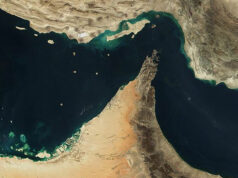
The Strait of Hormuz is only one of several maritime chokepoints that sustain the modern global economy. The Bab-el-Mandeb linking the Red Sea and Gulf of Aden is also of urgent concern.
Energy shipments moving from the Middle East to East Asia must also pass through the Strait of Malacca and the South China Sea before reaching major manufacturing hubs and consumer markets. The Suez Canal is the vital channel between Europe and Asia while the Panama Canal provides the critical link between the Pacific and the Atlantic Oceans. Container ships carrying electronics, industrial components, and consumer goods follow similar routes.
These narrow waterways form a critical infrastructure network for global trade. A disruption in any one of them can reverberate through supply chains that stretch across continents.
The 2026 Iran crisis therefore highlights a broader vulnerability in the architecture of globalization. Modern trade depends not only on efficient markets but also on the stability of a small number of maritime corridors that carry a disproportionate share of the world’s commerce.
If the US-Iran War escalates further, the Philippine economy could experience magnified effects through several channels.
OIL PRICES AND INFLATION
The most immediate impact would be higher oil prices. Because the Philippines imports nearly all its crude oil requirements, global price increases quickly feed into domestic fuel costs.
Higher energy prices affect transport, utilities, and industrial production. Over time, these costs pass through to consumers in the form of higher food and transportation prices. From just about $69.41 per barrel on Feb. 28, the benchmark Brent crude rose to $109-$111 as of April 6. Subsequently, inflation forecast for 2026 is significantly up to 3.9% from a mere 1.7% in 2025. There had already been substantial local fuel price hikes.
OVERSEAS WORKERS AND REMITTANCES
Another channel involves overseas Filipino workers in the Middle East. Remittances from overseas workers constitute a major pillar of the Philippine economy, and many Filipino workers are employed in Gulf countries linked to the energy sector.
In the short term, higher oil prices can strengthen the economies of oil-exporting countries, potentially supporting employment opportunities for overseas workers. However, prolonged instability and shipping blockade could also create security risks or economic disruptions that affect Filipino communities abroad. From an exchange rate of P57.63 to $1 as of Feb. 28 the Philippine Peso has depreciated, breaching the P60 mark to P60.14-P60.17 per $1 as of April 6. While this may imply that overseas Filipino workers (OFWs) remit more peso equivalent of the same number of US dollars, the real impact will be less purchasing power due to higher inflation rates as well as less stable income sources especially from the Persian Gulf countries.
TRADE AND INVESTMENT
Geopolitical tensions can also influence investor sentiment and financial markets. Periods of global uncertainty often lead investors to shift capital toward safer assets, which can place pressure on emerging market currencies.
Higher shipping and logistics costs may also affect export competitiveness by raising transportation expenses for manufacturers and agricultural producers.
SUPPLY CHAIN DIVERSIFICATION IN SE ASIA
The potential consequences of this shift are particularly significant for Southeast Asia. In recent years, several countries in the region have benefited from supply chain diversification as companies seek alternatives to traditional manufacturing centers. Vietnam has emerged recently as one of the world’s fastest-growing export economies. Its integration into global manufacturing networks has been supported by competitive labor costs, expanding industrial infrastructure, and participation in major regional trade agreements.
Similarly, Indonesia, with its large domestic market and abundant mineral reserves, has attracted significant interest from firms seeking to diversify supply chains in sectors such as electric vehicle batteries and advanced manufacturing.
These developments illustrate an increasing broader shift toward the regionalization of global production. Firms are increasingly distributing production across multiple countries within the same region. Such arrangements can reduce transportation risks, improve supply chain flexibility, and, significantly, better protect firms against geopolitical disruptions.
For the Philippines, this transformation presents both challenges and opportunities.
On one hand, global instability can impose economic costs. The Philippines is heavily dependent on imported energy, making it vulnerable to fluctuations in oil prices. For a country integrated into global markets through trade, remittances, and international services, geopolitical shocks can reverberate through multiple channels.
On the other hand, the restructuring of global supply chains also opens new opportunities for investment and industrial development. As multinational enterprises seek to diversify production locations, countries able to provide stable business environments and competitive economic conditions may attract new industries.
The Philippine fundamentals could support such a shift. Its young and English-speaking workforce has already made it a global leader in BPO and other service-based industries. Expanding digital infrastructure and a growing consumer market further enhance the country’s economic potential.
However, capturing a larger share of emerging supply chains will require addressing long-standing structural challenges of infrastructure gaps, regulatory complexities, and governance issues. Countries that can combine political stability, good governance, efficient logistics, and supportive industrial policies will be best positioned to attract new investments.
The United States-Israel and Iran War therefore serves as more than a reminder of the fragility of energy markets. It also reflects a deeper transformation in the nature of globalization itself.
THE RESHAPING OF GLOBALIZATION
For decades, globalization was driven largely by the search for efficiency and seamless integration of markets across the world. Today, however, geopolitical tensions, trade disputes, and security concerns are reshaping that model.
Globalization is evolving, becoming more complex and fragmented. Supply chains are accommodating geopolitical risk as an enduring factor in economic decision-making.
For Philippine policymakers and businesses, the challenge is to adapt to this changing landscape. Firms must increasingly incorporate geopolitical risk into their strategic planning. The stability of supply routes, the reliability of energy sources, and the political dynamics of global trade are no longer peripheral concerns — they are central elements of the global business environment.
The current crisis involving the United States, Israel, and Iran may eventually fade from the headlines. Yet the broader forces reshaping global production networks are likely to endure. For trade-dependent economies such as the Philippines, the real question is not whether globalization will continue, but how its changing geography will influence the opportunities of the decades ahead.
RESILIENCE IN AN ERA OF GEOPOLITICAL RISK
Over the past several years, companies have already begun adjusting their strategies. Firms are diversifying suppliers, relocating production facilities, and developing regional manufacturing hubs to reduce exposure to geopolitical risk.
Governments are also reconsidering the meaning of economic resilience. Energy diversification, strategic reserves, domestic agricultural capacity, and diplomatic engagement with key trade partners are increasingly viewed as components of national economic security.
For the Philippines, strengthening resilience may involve accelerating investments in renewable energy, improving agricultural productivity, building strategic infrastructure and maintaining stable diplomatic relationships with major energy suppliers.
Globalization has created enormous economic opportunities. But it has also tied national economies more closely to geopolitical developments.
The broader lesson is that the global trading system is more fragile than it often appears. Events in the Middle East, disruptions in key shipping lanes, and increasingly frequent climate-related shocks remind us that trade networks are vulnerable to sudden systemic disruptions — what risk analyst Nassim Taleb famously called “Black Swan” events.
If the Iran crisis escalates or maritime routes are disrupted, the effects transcend oil prices but in the reconfiguration of global supply chains themselves. For countries like the Philippines, the lesson is clear: resilience in an uncertain world requires preparing not only for predictable risks but also for the unexpected.
Cesar Polvorosa, Jr. is a professor of economics and international business at a Canadian university. He is an occasional contributor on Philippine and international economic development and geopolitics. His literary work have been published in North American and Asian anthologies and publications, including Likhaan: Book of Poetry and Fiction. He was an economist at the Central Bank of the Philippines and an AVP at a Philippine bank.