ASEAN members working to strengthen currency swap lines as crisis bites, Bangko Sentral chief says
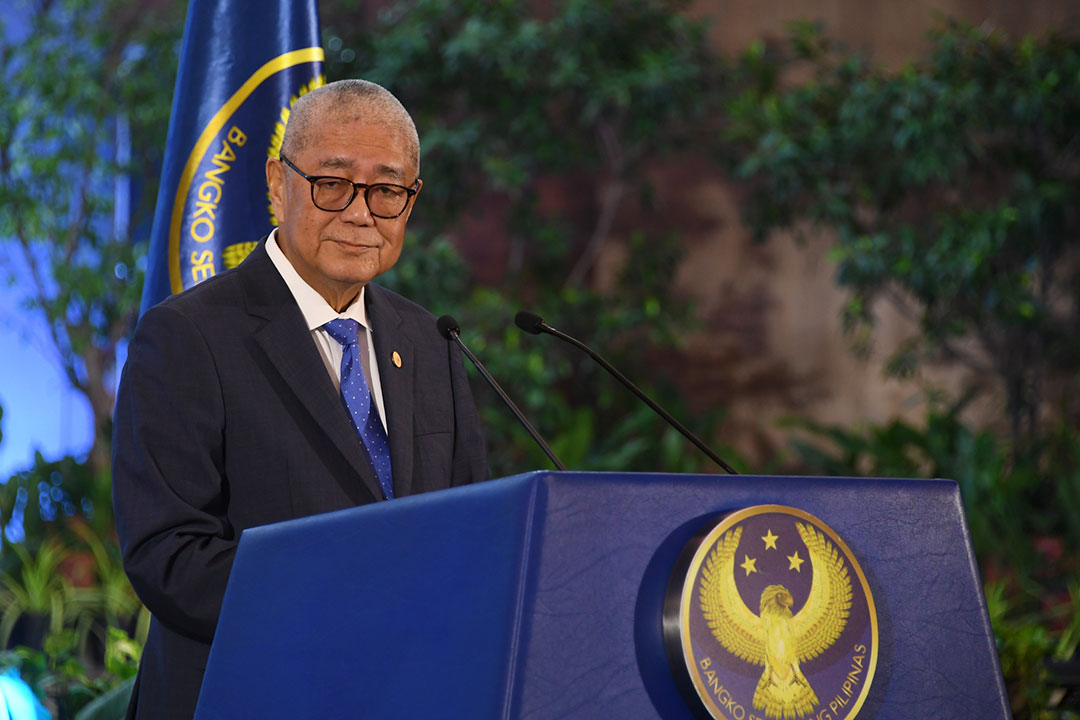
MEMBERS of the Association of Southeast Asian Nations (ASEAN) are working on expanding a regional crisis financing initiative as they deal with the economic fallout from the Middle East conflict, the Bangko Sentral ng Pilipinas (BSP) said.
BSP Governor Eli M. Remolona, Jr. said the 11-member regional bloc seeks to strengthen regional swap lines to help provide its members with emergency liquidity.
“So, one of the things we’re working on is expanding what’s called the Chiang Mai Initiative, which is ASEAN’s way of providing emergency liquidity to each other in times of crisis,” he told Money Talks with Cathy Yang on One News on Thursday.
The Chiang Mai Initiative is a multilateral currency swap arrangement among ASEAN members designed to address short-term liquidity issues in the region during times of crises. It was first established in May 2000 after the Asian Financial Crisis.
Mr. Remolona said the crisis credit line will not be a mere “symbolic gesture,” noting that they are already working on enhancing the initiative.
“It won’t be symbolic,” he said. “We’re talking even as we speak — strengthening those credit lines and those swap lines, making them bigger (and) more serious than before.”
However, the central bank chief said he hopes the energy situation would not worsen further so that the region would need not tap these emergency lifelines.
Meanwhile, Mr. Remolona added that the BSP is also working on improving regional financial integration as part of the Philippines’ ASEAN chairship this year.
The central bank wants Filipinos to be able to invest in stocks of companies in other ASEAN countries and for its neighbors to have access to the Philippine market as well, he said.
This can be achieved through open finance, where individuals may gain access to markets through financial institutions, Mr. Remolona said.
He added that they will support local consumers amid the ongoing crisis by ensuring prices remain manageable, especially for the bottom 30% of households.
“As a central bank, we’re not really very good at subsidizing stuff. It doesn’t work very well with us,” Mr. Remolona said. “What we can do for the Filipinos, especially the lower 30%, is to do our best in terms of price stability, try to prevent high inflation when it comes to the consumer basket of the lower 30% of Filipinos. We can’t do very much more than that.”
Inflation picked up to a 20-month high of 4.1% in March, with faster inflation seen for the bottom 30% at 4.2%, as soaring oil costs due to the Middle East conflict weighed heavily on consumer prices.
The BSP has said that its monetary policy will focus on tempering the spillover effects of oil shocks on transport fares, food and fertilizer prices, electricity rates and wages. — Katherine K. Chan