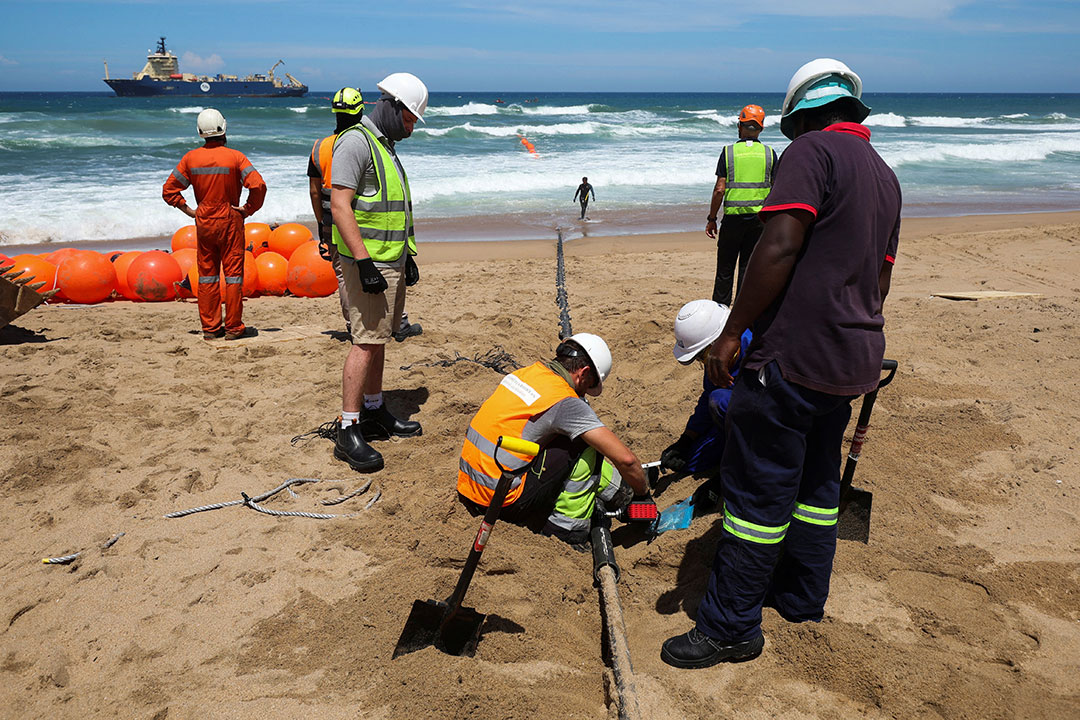
INFINIVAN, Inc., the Philippine telecommunications unit of Japan’s IPS, Inc., is investing $31 million to build a cable landing station (CLS) in Aurora province, in a bid to boost internet connectivity in Southeast Asia.
“The station itself will cost around $16 million, but because of the request for an expansion, we’re going to have another $15 million,” InfiniVAN, Inc. Chief Technology Officer Alberto C. Espedido told reporters on the sidelines of an event on Monday.
The company began the construction of its CLS in January, which will be operational by early 2028.
The Baler CLS forms part of the 8,000-kilometer Candle submarine cable system that will connect the Philippines, Indonesia, Malaysia, Singapore, Japan, and Taiwan.
Candle is being developed by a consortium that involves IPS, Meta Platforms, Inc., TM Technology Sdn. Bhd., PT XLSmart Telecom Sejahtera Tbk and several Asian carriers.
Mr. Espedido noted that the upcoming CLS will help support growing demand for artificial intelligence (AI), 5G, and data centers.
InfiniVAN is also in talks with a government-owned and -controlled corporation to acquire a CLS in San Fernando, La Union, he said.
The company is expected to announce its La Union acquisition by the second quarter, he said.
Also on Monday, InfiniVAN, IPS, IPO Pro, and Indian agentic AI platform Gnani.ai signed a strategic partnership to leverage AI and digital infrastructure for enterprises in the Association of Southeast Asian Nations.
The partnership seeks to exchange cross-border technologies to help businesses adopt AI-driven communication and customer experience technologies in the region.
It is also expected to strengthen trilateral economic and digital cooperation among the Philippines, Japan, and India.
The collaboration is also expected to boost industry confidence in AI and telecom-enabled digital solutions. It will also serve as a foundation for upcoming public-private cooperation on AI, telecommunications, and digital infrastructure, the companies said. — Beatriz Marie D. Cruz