Yields on BSP bills drop after rate cut
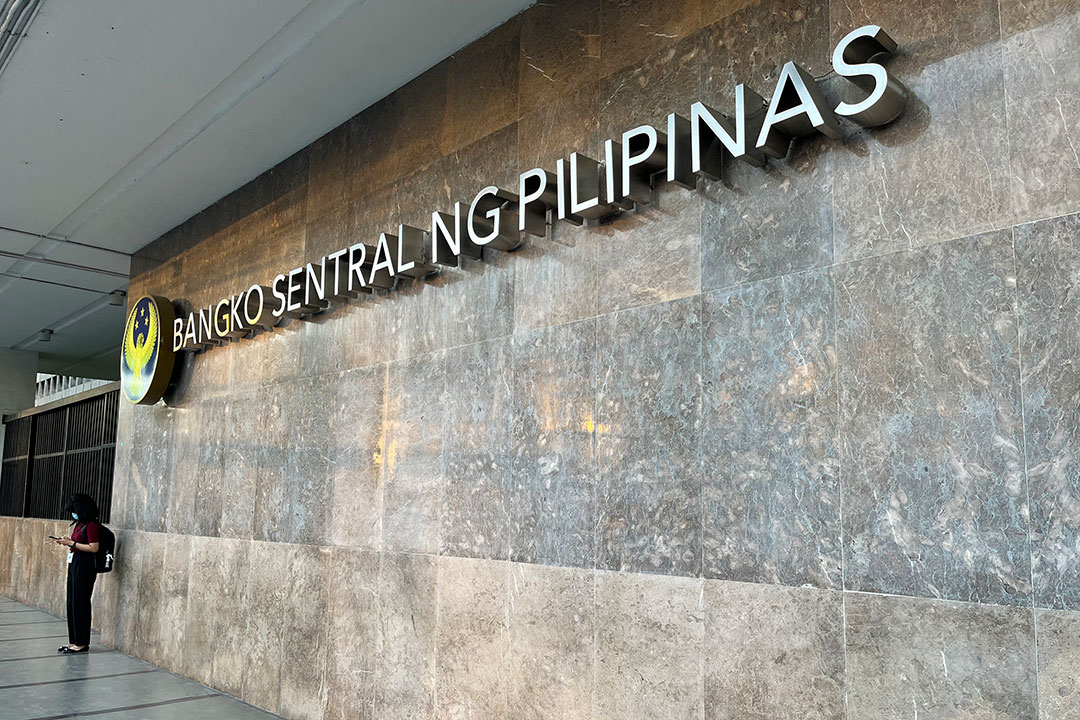
YIELDS on the Bangko Sentral ng Pilipinas’ (BSP) short-term securities declined further on Friday as it cut benchmark borrowing costs for a sixth straight meeting.
The one-month BSP bills attracted P77.838 billion in bids, exceeding the P70-billion offer but below the P112.904 billion in tenders for the P100 billion placed on the auction block in the prior week.
This was equivalent to a bid-to-cover ratio of 1.112 times, slightly lower than the 1.129 ratio seen a week earlier.
The central bank fully awarded its P70-billion offering.
Accepted yields were from 4.38% to 4.58%, lower and wider than the 4.5% to 4.64% band logged during the previous auction. This caused the average rate of the 28-day papers to drop by 10.4 basis points (bps) to 4.4939% from 4.5979% a week prior.
“At the Feb. 20 auction, the weighted average interest rate for the 28-day BSPB fell by 10.4 basis points week on week following the policy rate cut announced the previous day,” the central bank said in a statement.
On Thursday, the BSP delivered a sixth straight 25-bp cut, bringing the key interest rate to an over three-year low of 4.25%.
The Monetary Board has now lowered borrowing costs by a total of 225 bps since it began its easing cycle in August 2024.
The BSP has not auctioned off the 56-day bills since Nov. 3.
The central bank uses the BSP securities and its term deposit facility to mop up excess liquidity in the financial system and to help guide short-term market yields towards its policy rate.
BSP Deputy Governor Zeno Ronald R. Abenoja earlier said that the central bank has reduced its issuance of short-term papers to enhance monetary policy transmission and encourage banks to better manage their liquidity.
Data from the BSP showed that around 50% of its market operations are done through its short-term securities.
As of mid-November 2025, the central bank’s monetary operations have siphoned off P1.5 trillion in liquidity from the market. Of this, 42.4% was absorbed through BSP securities, 34.6% from overnight reverse repurchase agreements, 17.6% via the overnight deposit facility, and 5.4% through the term deposit facility.
The BSP bills also contribute to improved price discovery for debt instruments while supporting monetary policy transmission.
The central bank began auctioning off short-term securities weekly in 2020, initially offering only a 28-day tenor and adding the 56-day bill in 2023. — Katherine K. Chan