Home Blog Page 993

On declining inflation and on the Philippines’ import partners

The Philippines inflation rate for August 2025 was released last week, and we see that it was still low at 1.5% although a bit higher than July’s 0.9%. So the average inflation rate of the country for January to August is still at 1.7%, and this is lower than the average inflation rate of many other Asian countries.

Finance Secretary Ralph G. Recto issued an upbeat statement on this, saying that “Kahit napanatili natin ang mababang inflation, mas paiigtingin pa ng gobyerno ang mga hakbang para suportahan ang produksyon… Patuloy naming prayoridad na protektahan ang halaga ng bawat pisong kinikita ng bawat pamilyang Pilipino (Even though we have maintained low inflation, the government will further intensify measures to support production… Our priority continues to be to protect the value of every peso earned by every Filipino family).”

Low and stable prices, high employment and job opportunities, these are the most basic concerns of Filipinos and almost all other people around the world.

Meanwhile, Japan is now the “inflation capital” of major Asian economies, and this is ironic because it is an industrialized country and industrial economies are supposed to have low inflation because they can mass produce, mass store, and mass transport many things so that logistical and supply bottlenecks are avoided when delivering the goods and services to consumers.

Meanwhile, China has entered deflation.

Major economies in America and Europe also suffer from high inflation above 2.5%. A few though have experienced declining inflation from 2023-2025, like Spain, Portugal, Germany and France (see Table 1).

And when it comes to GDP growth, only three European countries have had growth above 2.5% in 2024 and in the first and second quarters (Q1 and Q2) of 2025: Turkey with 3.2% and 3.6% respectively, Poland with 2.9% and 3.3%, and Spain with 3.2% and 2.8%. Big European nations with crawling growth are: the UK with 1.1% and 1.3%, France with 1.1% and 0.7%, Italy with 0.7% and 0.6%, and Germany with -0.2% and 0.4% (Germany is suffering degrowth).

WHO ARE WE IMPORTING FROM?
Two weeks ago, the Philippine Statistics Authority (PSA) released the country’s merchandise trade data for July. In Table 2, I have compared the January-July total merchandise imports for 2022-2025.

China’s share keeps rising, from 19.8% of the Philippines’ total imports in 2022 to 28.5% in 2025. Including Hong Kong, this comes up to 30%, which is huge. Meanwhile, the share of Japan and the US in the Philippines’ total imports is declining. This means that, for example, more Philippine bus companies are buying more Yutong, King Long, and Higer buses than they are Hino or Isuzu buses, and they are buying no US buses.

Only four European countries make it to the top 20 sources of Philippine imports — Germany, France, Italy, and Spain. The UK is out (see Table 2).

While the Philippines’ defense and war-mongering camps regularly issue anti-China statements, Philippines businesses embrace more China products. China’s trend of domestic deflation (see Table 1 again) is also reflected in its export prices, so many countries’ imports from China (including those of the Philippines) will continue to rise.

Among the big European economies, Spain is the only country with high growth and declining inflation. I read that their tourism sector is doing very well, which contributes to their high growth. The Philippines can learn a thing or two about Spain’s tourism that may be applicable here.


Bienvenido S. Oplas, Jr. is the president of Bienvenido S. Oplas, Jr. Research Consultancy Services, and Minimal Government Thinkers. He is an international fellow of the Tholos Foundation.

minimalgovernment@gmail.com

Toronto Film Festival: Ansari looks to old classics to highlight wealth disparities in Good Fortune

Keanu Reeves, Seth Rogen, and Aziz Ansari in a scene from Good Fortune

TORONTO — Actor-comedian Aziz Ansari said he was inspired by films from the 1930s and 40s for his directorial debut Good Fortune, a fantasy-satire about an angel swapping the lives of a gig worker and an affluent Silicon Valley venture capitalist.

The film, starring Mr. Ansari, Canadian actors Keanu Reeves, Seth Rogen, and Sandra Oh, premiered at the Toronto International Film Festival on Saturday.

Mr. Reeves plays an angel named Gabriel with limited powers who swaps the lives of broke gig worker Arj, played by Mr. Ansari, and tech millionaire Jeff, played by Mr. Rogen, hoping the two learn that money is not important. The outcome is not as he expected.

“You look at films from the ’30s and ’40s, there were a lot of movies that dealt with these kind of issues (wealth, equality, and class) that were comedies… the idea of doing that kind of movie today felt really fun,” Mr. Ansari said in an interview before the premiere.

The movie touches upon the challenges of the average worker today and the disparities in wealth between those at the top and those living paycheck-to-paycheck.

“In those old movies whenever they showed really wealthy people, they’d have a top hat… the modern version of that (is) cold plunge and a sauna, wearing a bathrobe,” Mr. Ansari said.

Mr. Ansari, known for playing Tom Haverford on the TV series Parks and Recreation and creating the show Master of None, said he was inspired by films such as Sullivan’s Travels and My Man Godfrey.

Mr. Reeves’ part as Gabriel is a contrast from his popular role in John Wick where he plays a hit man who comes out of retirement to seek revenge against the men who killed his dog.

“(The film) gives you a good hug. It’s funny. It’s smart. (It gives you) things to think about,” Mr. Reeves said. — Reuters

Uniholdings secures SEC approval for merger-related share issuance

BW FILE PHOTO

UNIHOLDINGS, INC., a publicly listed investment holding company, has received confirmation from the Securities and Exchange Commission (SEC) that its issuance of 64.42 million shares for a recent merger is exempt from the usual registration requirements under the Philippine Securities Regulation Code.

In a confirmation letter, the SEC said the issuance to the stockholders of Addventure Properties, Inc., Buklod Realty Corp., Citiworld Properties & Development Corp., Exquadra, Inc., Quantumlink Realty Corp., and Rivertanks, Inc. “is an exempt transaction under Section 10.1(i) of the Securities Regulation Code.”

The exemption applies because the issuance involved no expenses, commissions, or compensations and was carried out solely in connection with Uniholdings’ legally mandated increase in authorized capital stock.

As the surviving company, Uniholdings issued shares in exchange for the stock of the absorbed corporations.

The SEC said that both the increase in authorized capital stock and the Certificate of Filing of the Articles and Plan of Merger, approved on Dec. 27, 2024, satisfy regulatory requirements.

“The approval cleared regulatory requirements for Uniholdings and eliminates the need for further exemption confirmations from other SEC departments,” the SEC added.

The merger is part of Uniholdings’ strategy to transform into an investment holding company and achieve greater operational efficiency and economies of scale.

The SEC also noted that a payment assessment form for the listing fee will be issued, fulfilling a requirement of the Philippine Stock Exchange for the company’s listing approval.

Uniholdings shares were last traded on Sept. 5, closing unchanged at P126 apiece. — Alexandria Grace C. Magno

CLI acquires 79-ha Liloan site for largest Cebu township

CEBULANDMASTERS.COM

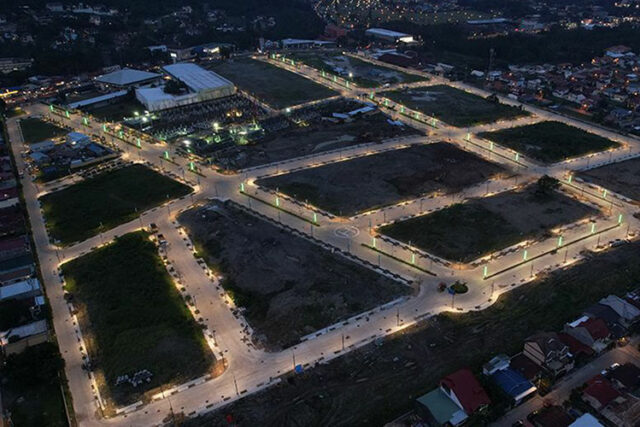
CEBU LANDMASTERS, INC. (CLI) has acquired a 78.8-hectare (ha) property in Liloan, Cebu, through its joint-venture subsidiary Cebu Homegrown Developers, Inc. (CHDI) with Ixidor Holdings, Inc., to be developed into the province’s largest integrated township.

“The Liloan acquisition marks a strategic move in CLI’s growth roadmap, reinforcing its commitment to prudently expand its landbank while addressing the strong and sustained housing demand across its core markets particularly in VisMin,” CLI said in a stock exchange disclosure on Monday.

The planned estate, located about 17.6 kilometers north of Metro Cebu, will include a multi-segment residential community, commercial centers, and green and open spaces.

It will also be connected to transport hubs to balance accessibility and convenience.

“This acquisition substantially deepens our Cebu footprint and advances our mission to create leading townships in the VisMin (Visayas-Mindanao) region, following the success of the Davao Global Township in Davao City and Manresa Town in Cagayan de Oro City,” CLI Chairman and Chief Executive Officer Jose R. Soberano III said.

“Together with Ixidor Holdings, our trusted partner in CHDI, we are committed to creating a model Cebuano township that is built for the future, where a combination of economic, social and environmental benefits will be felt for many generations.”

As of end-June, CLI’s consolidated net income rose by 13% to P2.49 billion, driven by higher sales, revenues, and faster project completions.

In the coming months, the developer plans to launch 12 new projects worth P29 billion in Metro Cebu, Palawan, Davao, and South Mindanao. It is also preparing for its first project in Luzon by 2026.

CLI has about 127 residential, mixed-use, hotel and resort, and township projects across 18 key cities in the Visayas and Mindanao.

At the local bourse on Monday, CLI shares closed flat at P2.41 apiece. — Beatriz Marie D. Cruz

InLife unveils two-pay variant of retirement product

INSULAR Life Assurance Co., Ltd. (InLife) has launched a two-pay variant of its retirement product.

Retire Assure 2 is payable in two installments and is a variant of InLife’s Retire Assure, a life protection plan that also provides a guaranteed monthly income until age 100 and offers cash dividends.

“Our goal with Retire Assure 2 is to help Filipinos make the most of their career milestones by offering a stable, guaranteed path toward their future. So, whether you’re moving into a bigger role or simply rethinking your retirement planning, Retire Assure 2 can provide you with lasting security so you can enjoy the rest of your life after working so hard,” InLife Chief Marketing Officer and Bancassurance Head Gae L. Martinez said in a statement.

The new plan is available to individuals aged 48 to 73 years old, with planholders eligible to receive their monthly payouts after the second premium is paid.

“Upon death, the insured’s beneficiaries receive the higher of either 110% of premiums paid (less payouts already received) or the guaranteed cash value, whichever is greater.”

Retire Assure 2 also offers guaranteed issuance as the application process does not have medical requirements.

InLife’s premium income stood at P18.46 billion last year, while its net profit was at P2.66 billion. — A.M.C. Sy

When memes disrupt politics as usual

FACEBOOK.COM/FTTMPH

By all means, political memes have become a staple on social media and in the digital space in the Philippines. With the ongoing controversy regarding the alleged massive corruption in the Philippine government’s flood control projects, for example, one recalls how certain individuals who were present during the Sept. 1 Senate Blue Ribbon Committee hearing, politicians and contractors in particular, easily became subjects of funny viral memes on various platforms.

Particularly remarkable are memes of this contractor who had invoked his right against self-incrimination and refused to answer questions about his firm’s alleged involvement in “ghost” projects. Rehashed photos of a seemingly pressured and nervous Mark Allan Arevalo of Wawao Builders, slouching with his eyes closed, quickly spread on the internet.

Memes — generally referred to here as pieces of media meant to convey cultural, social, or political expressions mainly through humor — are interesting representations of our society. Indeed, they constitute reality in ways traditional media would not. They come in many different forms and sizes, be it a post that contains just text or one that contains photos or illustrations, or a combination of these. Given the multimedia character of social media sites such as Facebook, TikTok, Instagram, Threads, and X, memes may also include video and even audio clips, to amplify visual and affective aspects. The ubiquity of memes may well be part of what Dr. Sebastian Kaempf of the University of Queensland refers to as the “digital media revolution” which marked the democratization of images and therefore perspectives in the global media landscape thanks to the emergence of digital technology in the early 2000s.

Yet memes as a main feature of social media as we know it also belong to the larger framework and realm of disinformation in the Philippines. Unfortunately, they may also be utilized for so-called “networked disinformation campaigns,” according to Dr. Jason Cabañes of Goldsmiths, University of London and Dr. Jonathan Corpus Ong of the University of Massachusetts-Amherst in their 2018 public report. Furthermore, the production of memes may well fall under what Dr. Aries Arugay and Maria Elize Mendoza of the University of the Philippines Diliman describe as the “digital autocratization and disinformation” in Philippine politics, especially during elections.

It goes without saying that such disinformation phenomena have brought us to where we are now as a nation: a condition that operates under post-truth logics where democratic institutions are severely compromised, and the majority of the population suffer the brunt of corrupt governance.

Speaking of corrupt governance, in view of the anomalous flood control projects, some observers also note how despite the urgent calls for accountability, Filipinos seem to have been constrained to just online engagement to express their anger and frustration, a view often juxtaposed with the recent violent and therefore more legitimate and sustained street protests against corruption in Indonesia.

But is the digital revolution completely futile or can it disrupt politics as usual? Looking into memes could perhaps provide a necessary nuance to this pessimistic view on such online forms of protests and engagements done by Filipino netizens. Indeed, while there is rampant and systematic disinformation, there is also space for critical and meaningful social media engagement through memes.

Take for example the meme page FTTM or Follow the Trend Movement, which as of writing has 4.7 million followers on Facebook, 360,000 on Instagram, 92.7 thousand on Threads, 49.6 thousand on X, and 38.1 thousand on TikTok. Across these platforms, FTTM describes itself as the “Home of Pinoy Pop Culture,” with memes showing images and featuring topics reflective of social trends on essentially anything under the sun, from catchy terms and simple expressions, to personalities, to culture. Politics is just one of them.

Interestingly, however, the page in recent months has become a busy watchdog or complaint center of sorts, advocating good governance practices at national and local levels. In several instances in May, FTTM, through some sarcastic memes, engaged with the official Facebook page of the Caloocan mayor on some perennial issues in the city, such as flood control, streetlights, and sanitation. In July, FTTM also engaged with the official Facebook page of the mayor of Calumpit regarding an online raffle for residents who were required to take selfies in their flooded homes to be considered for prizes.

While FTTM has more diverse and comprehensive memes in terms of theme and content, another Filipino meme page, Nutribun Republic, which now has 573,000 followers on Facebook, exhibits more straightforward, overtly political, academic, and critical, yet absorbable and funny memes. As part of its advocacy to “break the echo chamber” of progressive groups in Philippine society, Nutribun Republic posts memes that aim to provide insightful takes on current issues in politics. When certain pages and trolls downplayed the efforts of Senator Bam Aquino in pushing for free education, Nutribun Republic quickly posted a meme with a detailed writeup.

As these examples demonstrate, there is more to these viral political memes than the thousands of likes, reactions, and comments they get from people online. Indeed, in different ways they are able to disrupt the political establishment insofar as they are able to critically engage the digital space through their creative representation of issues. The potential of political memes to push the envelope of how we should engage online is thus equally important.


J. A. De Lima is a lecturer at the Department of Political Science, Dr. Rosita G. Leong School of Social Sciences, Ateneo de Manila University.

jdelima@ateneo.edu

Toronto Film Festival: Oscar winner Zhao shows the Bard’s life and sorrows in Hamnet

Paul Mescal in a scene from Hamnet

TORONTO — In director Chloe Zhao’s Hamnet, the Oscar winner explores a new landscape of forests, greenery, and dark clouds in 16th century England to tell the story of William Shakespeare and his wife Agnes overcoming the death of their 11-year-old son.

Ms. Zhao walked the red carpet ahead of the film’s Canadian premiere on Sunday at the Toronto International Film Festival with stars Jessie Buckley and Paul Mescal, who play Agnes and Shakespeare.

“Essentially you’ve got two Irish people and a Chinese woman in charge of a story that is so quintessentially British. It’s exciting to me,” Mr. Mescal told Reuters.

Ms. Zhao, who has won several awards for her 2020 drama Nomadland, takes the audience on an emotional journey showing the Bard’s domestic life through the eyes of his wife Agnes, portraying his life as a father and husband rather than his literary genius.

The film is an adaptation of Maggie O’Farrell’s novel Hamnet, acknowledging that the names Hamlet and Hamnet were interchangeable in Shakespeare’s day.

The story is set in Stratford-upon-Avon, where Shakespeare spends his early years, falls in love with Agnes and raises his family before moving to London to become a playwright.

While grief and sorrow are the main themes in the film, showing how Shakespeare and Agnes grieve in their own way over their son Hamnet, there are moments of joy showing the Bard as a father.

“It’s very different because there are no sunsets. No magic hour in this film,” Ms. Zhao said, noting the style that previously won her an Oscar.

“The challenge (as I was making this film) was to keep myself on one stage, in one room and be with myself in stillness… It’s very uncomfortable, but that’s part of the process.”

Hamnet will be released in movie theaters in late 2025. — Reuters

Apollo Global Capital says tugboat AHTS Noah still awaiting operational clearances

APOLLO GLOBAL CAPITAL, INC., a publicly listed holding company, said its offshore exploration tugboat, AHTS Noah, is still awaiting the necessary clearances to formally commence operations.

“The company is evaluating strategic options that may support long-term growth and strengthen its overall position. The company will provide the necessary disclosures when material information is available,” Apollo Global told the stock exchange on Monday.

The company said AHTS Noah, used for offshore exploration, is now awaiting clearance documents to depart for Cagayan Valley after completing final repairs and successful sea trials.

MB Siphon I, a deep-sea siphon mining vessel owned by Apollo Global’s subsidiary JDVC Resources Corp., is dependent on AHTS Noah.

The vessel is awaiting the tugboat’s arrival to maneuver to the mine site and commence operations.

For the second quarter, Apollo Global Capital reported an attributable net loss of P7.4 million, narrower than the P9.36 million net loss recorded in the same period last year.

In August, the company said JDVC Resources reported no field-based mineral exploration activities in the second quarter, while technical planning and preparatory works for future exploration programs remain ongoing.

“The initiation of field operations remains contingent upon the receipt of requisite regulatory approvals, resolution of logistical parameters, and alignment with corporate strategic priorities,” the company said.

JDVC Resources Corp., a subsidiary of Apollo Global, was formed to explore and operate mines for ores and minerals.

Apollo Global was originally engaged in internet-related products but shifted its primary purpose in 2016 to become a holding company. — Ashley Erika O. Jose

EEI secures CALAX section, Megaworld hotel contracts

Arcovia Hotel in Pasig City — MEGAWORLDINTERNATIONAL.COM

LISTED construction firm EEI Corp. said it has secured contracts to build a section of the Cavite-Laguna Expressway (CALAX) and Megaworld Corp.’s Arcovia Hotel in Pasig City, expanding its project pipeline for the quarter.

In a stock exchange disclosure on Monday, EEI said MPCALA Holdings, Inc., a unit of Metro Pacific Tollways Corp., has selected the company for the construction of the P2.7-billion subsection 1 of CALAX in Kawit, Cavite.

“These new project wins mark a significant turnaround for EEI, reflecting our resilience, competitiveness in the industry, and renewed growth momentum,” said EEI Senior Vice-President and Head of Commercial Operations Anna Payawal-Figuera.

The project covers the construction of the roadway, drainage systems, and related structures, EEI said, noting that once completed, the section is expected to improve connectivity between Cavite and Laguna by easing traffic congestion.

“More than expanding our portfolio, this infrastructure and building projects reaffirm our commitment to nation-building by helping drive economic growth, enabling connectivity, and delivering facilities that uplift the lives of our people and our communities,” Ms. Payawal-Figuera said.

EEI has also secured the contract for the construction of Megaworld’s Arcovia Hotel in Pasig City, which covers civil, structural, and architectural finishing, including painting and waterproofing works.

These newly secured contracts bring the company’s project pipeline to P19.1 billion for the quarter, EEI said, adding that its total backlog, or unworked portion of existing contracts, reached P39.24 billion as of end-August.

In July, the company announced that it was preparing to build the first phase of the P15.75-billion Philippine International Exhibition Center (PIEC) in Pasay.

The PIEC, planned for construction in Pasay Harbor City along Manila Bay, will have a gross exhibition area of 269,000 square meters and is projected to be the largest exhibition and convention center in Southeast Asia.

At the stock exchange on Monday, shares in the company closed unchanged at P2.75 apiece. — Ashley Erika O. Jose

How PSEi member stocks performed — September 8, 2025

Here’s a quick glance at how PSEi stocks fared on Monday, September 8, 2025.


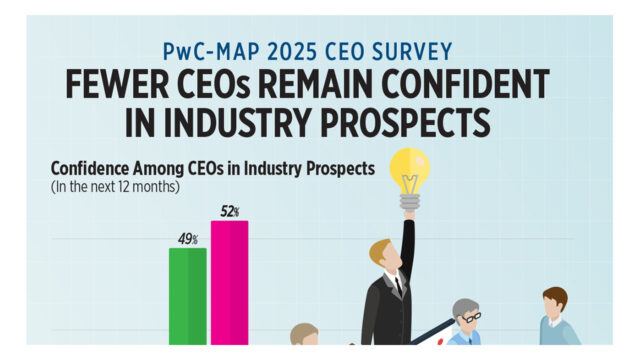
PwC-MAP 2025 CEO Survey: Fewer CEOs remain confident in industry prospects

MOST Filipino executives remain confident about their industry outlook for the next 12 months but remain dissatisfied with the government’s handling of corruption, a survey by PwC Philippines and the Management Association of the Philippines (MAP) showed. Read the full story.

PwC-MAP 2025 CEO Survey: Fewer CEOs REmain confident in industry prospects

Konektadong Pinoy must still address tower shortage — DITO

PHILSTAR FILE PHOTO

DITO CME Holdings Corp. said the Konektadong Pinoy Act will not necessarily bring down service costs immediately because of continuing infrastructure gaps, particularly cellular towers.

“The problem is that our towers are few compared to other countries,” DITO CME President and Chief Operating Officer Donald Patrick L. Lim told reporters on Monday.

“Hopefully, more towers will be set up. Because if you get more people and companies in, it will not automatically make services cheaper or faster because all of it still has to cross the highway, which is the tower,” he added.

He said more providers will not immediately result in cheaper telecom services.

“It’s not a free-market economy because there are also infra challenges. So hopefully, everyone can also invest, but… it’s not as easy as you think,” he added.

The law, also known as the Open Access in Data Transmission Act, streamlines licensing for new entrants to boost competition in data transmission. It lapsed into law on Aug. 24.

The Department of Information and Communications Technology has committed to complete the law’s implementing rules and regulations (IRR) within 90 days.

Separately, Mr. Lim said the investment of Singapore’s Summit Telco Corp. Pte. Ltd. in DITO CME is expected to be completed within the year.

“It should be done this year … We have to clean it up,” he said, noting that the parties are still fine-tuning the details of the deal.

“Our bosses are just talking to one another and ensuring that the transition will be (smooth). Because if you put in money, of course you want things fixed,” he added.

The transaction involves the sale of up to 9 billion DITO CME shares.

This year, the company is planning to raise up to P26.53 billion to ramp up the operations of DITO Telecommunity Corp.

It is also planning to raise an additional P28.83 billion over the next five years via private placements. — Justine Irish D. Tabile