Home Blog Page 99

DOST opens Central Luzon’s first Internet of Things lab in Bulacan 

A robotic arm in use at the IoT lab in Bulacan State University. — EDG ADRIAN A. EVA

The Department of Science and Technology (DOST) on Monday unveiled Central Luzon’s first Internet of Things (IoT) laboratory, which aims to help students and the academe develop IoT solutions that could help address the region’s pressing challenges. 

The facility, called the Internet of Things Research and Innovation Laboratory for Smart Cities (IoTRILS), is located at the main campus of Bulacan State University (BulSU) in Malolos City. 

Its total project cost is nearly P5 million, funded by the DOST-Philippine Council for Industry, Energy and Emerging Technology Research and Development (DOST-PCIEERD) and implemented by BulSU. 

“(The facility) will help our youth build the skills and knowledge to develop their capabilities,” Enrico C. Paringit, executive director of DOST-PCIEERD, told reporters during the launch event in Filipino. 

“This is in line with our so-called Industry 4.0 vision, where our industries, communities, and even households can use IoT to become more productive, safe, and efficient,” he added. 

Mr. Paringit told BusinessWorld that IoTRILS aims to prepare students in the region for the demands of global and local industries that are increasingly adopting IoT. The facility could also inspire them to become technology-based entrepreneurs, he said. 

Members of the press had a first look at IoTRILS, which houses equipment such as 3D printers, IoT processors, pick-and-place machines, and computer-controlled machines purchased under DOST’s Institution Development Program (IDP). 

Paul Ryan A. Santiago, project leader of DOST-funded projects at BulSU, told BusinessWorld that the facility is “fault-proof,” allowing researchers to make mistakes without posing dangerous risks. 

One of the IoT solutions developed by BulSU students is a solar-powered early flood-warning system designed to help residents of Hagonoy, a municipality that experiences perennial flooding. 

“This is very useful, especially during storms or high tide, when water begins to rise—something that is critical in measuring water levels,” Mr. Santiago said on the sidelines of the launch event in Filipino, noting that data from the device could help the local government issue earlier advisories to residents. 

The device uses sensors to collect data, which can then be transmitted to the local government’s database through a Long Range (LoRa) connection and the internet, while operating sustainably. 

Mr. Santiago said they are currently coordinating with the municipality of Hagonoy to deploy two units. 

Through IoTRILS, BulSU also aims to develop other IoT-driven solutions, such as health monitoring systems for hospital quarantine patients, smart agriculture, and other disaster management measures. 

The university has also partnered with PacketWorkx, the country’s first Long Range Wider Area Network (LoRaWAN) provider, for research and development. 

As of this writing, DOST-PCIEERD has funded at least 60 IDP projects totaling P312 million, with 30 laboratories nationwide, four of which are in Central Luzon. — Edg Adrian A. Eva

Greater openness in budget bicam talks sought; livestream ‘not enough’

PHILIPPINE STAR/PAOLO ROMERO

By Kenneth Christiane L. Basilio and Adrian H. Halili, Reporters

LAWMAKERS should pursue deeper transparency reforms beyond livestreaming as Congress finalizes the proposed P6.793-trillion national budget for next year, analysts said.

They urged the House of Representatives and the Senate to disclose their proposed changes to the budget bill ahead of bicameral conference committee (bicam) meetings — the stage where both chambers iron out differences in the spending plan and where major insertions often occur.

“There is always a risk that reforms become tokenistic,” Ederson DT. Tapia, a public administration professor at the University of Makati, said in a Facebook Messenger chat. “To avoid this, Congress must adopt concrete safeguards.”

Lawmakers are entering the final stretch of budget work amid heightened corruption worries, following the fallout from a growing kickback scheme tied to public works projects that has pulled in senior politicians, government officials and contractors. The controversy has placed unusual public attention on this year’s budgeting process.

Congress has taken initial steps to make the process more open. The House created a subcommittee to consolidate proposed amendments to the Executive branch’s budget. The Senate, meanwhile, approved a resolution allowing bicam deliberations to be made public through livestreaming.

House Appropriations Committee Chairperson Mikaela Angela B. Suansing said last week that both chambers have begun coordinating rules for opening the traditionally closed-door bicam discussions to the public.

But analysts said these measures fall short. “Livestreaming helps, but it is not enough,” Mr. Tapia said.

He said lawmakers should publish all proposed amendments before the bicam convenes, including a matrix showing changes, the proponents behind them, how members voted and the overall impact on the budget.

These documents should also be released in machine-readable formats so civil society groups, researchers and journalists can analyze them thoroughly, he added. Records must be posted within clear deadlines.

Civil society groups should also be allowed inside bicam meetings, said Anthony Lawrence A. Borja, a political science associate professor at De La Salle University. Simply airing the sessions online, he said, does not automatically lead to more informed citizen participation.

Livestreaming can turn political exclusion into a spectacle, he said. “Concrete steps require the entry and effective participation of civil society into the process, and the explicit condemnation of any attempt to either reduce the power of civil society representatives or slip back into backdoor negotiations,” he said via Messenger chat.

“One cannot expect the ruling elite to hold itself accountable under current oligarchic conditions,” he added.

Joy G. Aceron, convenor-director of governance watchdog G-Watch, said transparency should begin far earlier — at the planning phase — not only at the bicam.

“Bicam transparency is a first step, but it is insufficient,” she said. “There should be transparency, participation and accountability throughout planning, legislation and implementation.”

Limiting openness to the bicam stage, she warned, risks allowing an “already flawed” budget to move forward. “If transparency applies only during legislation, the budget could be lost to corruption during the implementation.”

Meanwhile, the Senate’s decision to cut unprogrammed funds in the 2026 budget is likely to reduce opportunities for misuse, analysts said.

“Unprogrammed allocations in the budget should be scrapped because they are prone to abuse,” Ms. Aceron said.

She warned that even assistance programs removed from the unprogrammed portion could still be used for political patronage if they lack clear development goals.

Unprogrammed funds serve as standby financing for pre-identified projects or emergency needs. The 2026 National Expenditure Program set aside P250 billion for these allocations, including P80.86 billion for infrastructure and social programs, P97.3 billion for foreign-assisted projects, P50 billion for the Armed Forces’ modernization, and P6.7 billion for health emergency allowances.

Last month, the Senate cut the House-approved P243-billion unprogrammed budget by P68.5 billion to P174.5 billion, as senators pledged to eliminate questionable insertions.

Adolfo Jose A. Montesa, adviser to the People’s Budget Coalition, said the reduction is unlikely to disrupt government programs.

“These are standby funds in the first place. I don’t anticipate a large impact,” he said via Messenger.

He added that priority projects should already be fully funded within the programmed budget, not reliant on supplemental standby financing.

Mr. Tapia said unprogrammed funds are not automatically released, so the cut “will not stop ongoing projects.” “It simply reduces flexibility for expansions and emergencies.”

But he noted that lowering unprogrammed funds does not eliminate corruption. The real risks lie in procurement and implementation, not only in the size of unprogrammed funds, he added.

Public scrutiny of the budget process has intensified after questionable insertions were uncovered in the 2025 spending plan, along with concerns over misuse of flood control funding.

Analysts said Congress must do more to improve transparency. Ms. Aceron urged stronger oversight and closer collaboration with civil society groups to deter misuse. “This way, Senate oversight can be preventive, not only after-the-fact investigations that rarely lead to real accountability,” she said.

The Senate earlier required all 2026 budget documents — including transcripts, hearings and briefings — to be posted online. Malacañang also announced that the bicameral conference committee meetings will be livestreamed.

Mr. Montesa said civil society should have a formal role in budget monitoring. “Civil society scrutiny helps ensure budgeted programs are needed by the people, especially the most marginalized, and that they achieve their desired outcomes,” he added.

Next year’s spending plan is 7.4% higher than this year’s budget and equal to 22% of economic output, which grew 4% in the third quarter.

The Senate wrapped up 11 days of plenary debates last week and aims to pass the budget on second reading by Dec. 3 and on third reading by Dec. 9, Senate Finance Chairman Sherwin T. Gatchalian said.

The bicameral conference committee will convene once the Senate approves its version.

PHL boosts Bantay Dagat patrols in South China Sea

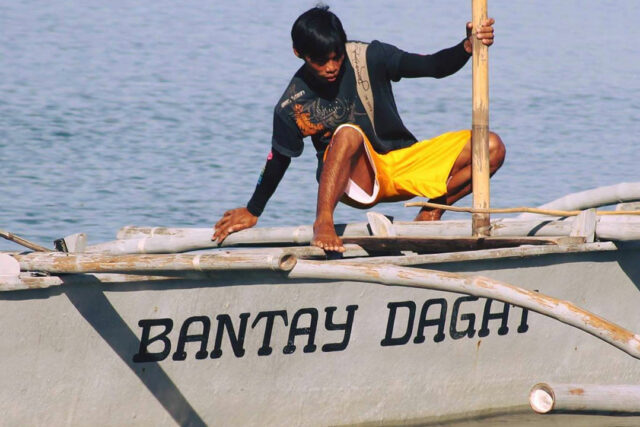
A VOLUNTEER fisherman for the Bantay Dagat civilian patrol. — FACEBOOK.COM/DAGATBANTAY

By Kenneth Christiane L. Basilio, Reporter

THE Philippines is beefing up its civilian fishery patrol force to boost maritime monitoring as Chinese activity intensifies in the South China Sea, officials said on Monday.

Manila’s fishery bureau is reviewing the state of its civilian patrol vessels and preparing guidelines to formalize the fleet’s operations, Presidential Assistant for Maritime Concerns Andres C. Centino said.

“Efforts are under way to complete a comprehensive inventory of Bantay Dagat (sea guards) units, where they will be issuing informed guidelines governing their creation, their adaptation and setting the standards of operations,” he told a security forum in Manila, referring to the civilian patrol fleet in Filipino.

The sea patrol is managed by the Bureau of Fisheries and Aquatic Resources and is composed of volunteer teams, mostly fishermen, tasked with a round-the-clock watch of the Philippines’ coastal waters.

More frequent civilian patrols could help authorities improve awareness of Philippine waters as the Southeast Asian nation grapples with lingering tensions in the strategic waters, said Rear Admiral Roy Vincent T. Trinidad, navy spokesman for the South China Sea.

“Our maritime domain awareness is an all-source effort,” he told reporters on the sidelines of the forum. “This will add up to the 360-monitoring that we are doing.”

China claims nearly all of the strategic waterway via a U-shaped, 1940s nine-dash line map that overlaps with the exclusive waters of the Philippines and neighbors like Vietnam and Malaysia, irking Manila as Beijing continues to claim sovereignty by deploying an armada of coast guard and navy ships.

Tyler Pavlowich, a maritime research associate at the University of Rhode Island, said some Filipino fishers have extended their volunteer work by helping spot Chinese vessels operating within the country’s 200-nautical-mile (370-kilometer) exclusive economic zone (EEZ).

“We brought in commercial fishers as an important partner… so we used that to paint a more complete maritime domain awareness picture,” he told the forum.

Fishermen play a key role in boosting maritime awareness by sharing maritime information since the government can’t maintain extensive awareness of Philippine waters on its own, Mr. Centino said.

“Maritime domain awareness, as recognized in both national and international practice, requires not only technological investment and interagency coordination, but also timely information from those who frequent these areas,” he said.

Civilian fishers also help identify threats at sea, including Chinese vessels acting aggressively within the country’s EEZ, he added.

“The National Maritime Center, together with the Fish Rights Program, provided radio equipment to the fishermen so that they can have the means to report what’s happening,” Mr. Centino said.

The Chinese Embassy in Manila did not immediately reply to a Viber message seeking comment.

The Philippines and China have been at loggerheads near disputed features in the South China, with Manila accusing China’s coast guard of aggression and Beijing furious over what it calls repeated provocations and territorial incursions.

Manila has also accused China of maintaining a maritime militia to bolster its presence in the South China Sea. Beijing has maintained that they are civilian ships.

Marcos urges new officers to uphold integrity amid South China Sea tensions

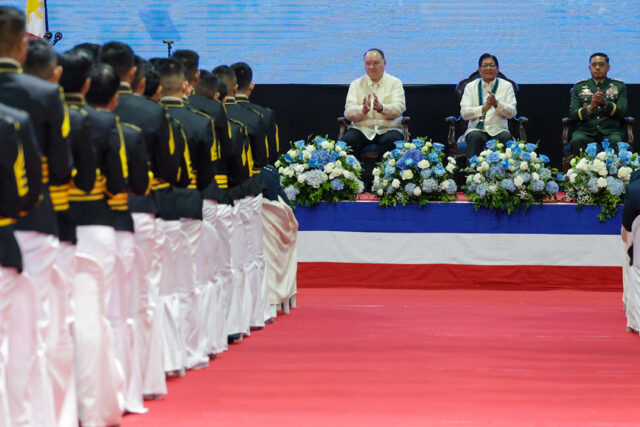
PRESIDENT Ferdinand R. Marcos, Jr. Is flanked by AFP Chief of Staff General Romeo S. Brawner, Jr. And Defense Secretary Gilberto C. Teodoro, Jr. at the graduate rites of army, navy and air force officers. — PHILIPPINE STAR/NOEL B. PABALATE

PRESIDENT Ferdinand R. Marcos, Jr. urged newly commissioned military officers to uphold integrity and professionalism as the Philippines faces escalating security challenges, particularly in the South China Sea.

Speaking at the graduation rites of the Major Services Officer Candidate Course at Villamor Air Base in Pasay City on Monday, Mr. Marcos said global developments were creating new risks for the country. He stressed the need for a modern, disciplined and politically neutral Armed Forces of the Philippines (AFP).

He said the Philippines “must continue to defend our rights in the West Philippine Sea,” where tensions with China remain high.

Manila and Beijing are locked in a diplomatic stalemate as talks on a bilateral framework have stalled, with both sides failing to agree on key security and economic terms. Authorities have said Chinese vessels continue to harass Philippine ships and fishermen despite a 2016 United Nations-backed arbitral ruling in Manila’s favor.

Addressing the 2025 graduating classes of the Army’s Bumannawag, the Navy’s Sagmaraya and the Air Force’s Kahimdaliyan, Mr. Marcos said their training places them at the forefront of national defense, disaster response and civic service.

He reminded them that their loyalty “must not be to any individual or faction, but only to the republic.”

The President reaffirmed his administration’s defense agenda, citing investments in radar systems, ships, aircraft and upgraded military facilities. He also highlighted deepening security cooperation with allies such as the US, Japan and Australia.

Mr. Marcos said the AFP’s mandate extends beyond defending the country’s borders. The new officers, he said, would be tasked to rescue families during natural calamities, help secure elections and help government programs in underserved areas.

He warned the graduates to guard against corruption, saying their integrity would be tested as they advance in their careers.

The ceremony, attended by Defense Secretary Gilberto C. Teodoro, Jr. and AFP Chief of Staff General Romeo S. Brawner, Jr., served as one of the military’s major commissioning events this year as the government accelerates defense modernization amid rising geopolitical tensions in the region. — Chloe Mari A. Hufana

CoA flags OVP entrepreneurial program

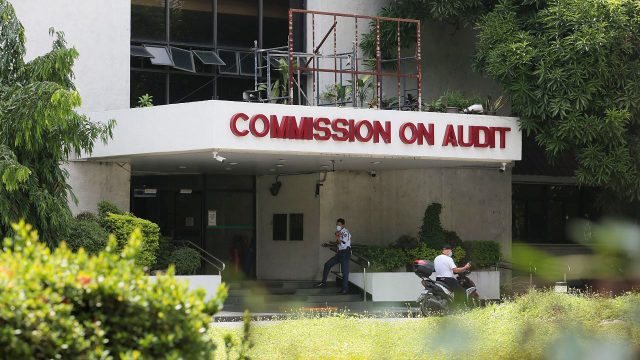
PHILIPPINE STAR/MICHAEL VARCAS

THE Commission on Audit (CoA) has flagged the Office of the Vice-President (OVP) for failing to assess the viability of projects backed with seed money under its flagship entrepreneurial program.

State auditors gave an unmodified opinion on the OVP’s financial report, but said the agency did not check the feasibility of some of the project proposals by the 138 beneficiaries of its Mag-negosyo Ta ‘Day — Cebuano for “let’s do business” — program.

“The OVP has only visited 11 beneficiaries for monitoring after three months upon the release of funds, while the remaining 72 beneficiaries were visited either before or after the required period for monitoring or none at all,” CoA said in its 2024 audit report.

The OVP did not immediately reply to an e-mail and Viber message seeking comment.

The Mag-negosyo Ta ‘Day program aims to address the needs of people and groups suffering from “poverty, injustice and calamities” by helping them become self‑reliant through seed funding, according to the OVP’s website.

State auditors said home visits to 17 beneficiaries were delayed by 20 to 142 days, raising concerns that observations and issues on project implementation might not have been promptly communicated to the OVP.

“In order to evaluate and ensure that the seed capital fund is used for microenterprise development, monitoring and evaluation activities should be regularly conducted and properly documented,” according to the report.

“Thus, the OVP may not be able to determine whether the beneficiaries were provided with a sustainable income source and had improved their socioeconomic status,” it added.

Auditors added that 14 beneficiaries did not receive home visits, despite program rules requiring inspections a year after fund liquidation to check on livelihood activities and improvements.

“Verbal inquiry with the focal person for the program revealed that home visits were not regularly conducted due to lack of manpower,” CoA said. 

It added that home visits to 27 beneficiaries were conducted before the scheduled monitoring period, preventing the agency from properly assessing the status of project implementation.

Auditors said early visits were conducted to 14 other beneficiaries whose seed funds were fully used. “Even though the funds were fully utilized… It is premature to assess the progress or status of the project implementation within a short period of time.” — Kenneth Christiane L. Basilio

Senate resumes budget talks

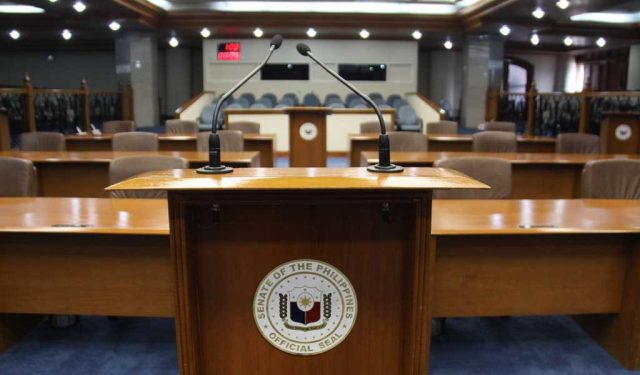
BW FILE PHOTO

THE Philippine Senate will hold a plenary session on Tuesday, despite the Dec. 2 local holiday in Pasay City, to avoid delays in finalizing the chamber’s version of the P6.793-trillion national budget for 2026, its Finance committee chair said.

“We had a talk with (fellow senators) that we will have a session even if it’s a holiday, because if we have a session on Wednesday for a period of amendments, it will be delayed,” Senator Sherwin T. Gatchalian told a news briefing on Monday.

He added that senators had already agreed to hold a plenary session on Tuesday despite the local holiday.

Monday’s session was suspended after the third floor of the Senate building was hit by fire last Sunday, resulting in water leaking into the Sessional Hall.

The chamber was scheduled to conduct the period of amendments for the proposed spending plan.

Mr. Gatchalian added that this would avoid further delays as the chamber targets passing the budget on second reading by Dec. 3 and on third reading by Dec. 9.

“There’s just one week to prepare the documents and then we’ll go into the bicameral conference committee,” he said.

“Before the process was amendments, second, third reading — all in one day. Members didn’t have time to read the amendments, so now we’ll give them time to review the amendments,” he added.

The House of Representatives, earlier, approved on final reading House bill No. 4058, the proposed General Appropriation Act.

He said that the bicameral conference committee will be scheduled for Dec. 11 to 13 and would be livestreamed to ensure transparency.

“Since this is the first time this will happen, we have yet to sit down formally on what will be the course of this bicameral conference committee,” Mr. Gatchalian said.

He added that the Senate is working to finalize the bicameral report by Dec. 16 and ratify the budget by Dec. 17.

“Hopefully, we can sign the bicameral report by Dec. 16, then the tentative signing of the budget will be on Dec. 29,” he added. — Adrian H. Halili

House suspends Cavite Rep. Barzaga for 60 days

PHILSTAR FILE PHOTO

THE House of Representatives on Monday suspended Cavite Rep. Francisco “Kiko” A. Barzaga for 60 days over disorderly behavior for his social media posts seen by some congressmen as anti-government and inappropriate for a lawmaker.

With 249 members voting in the affirmative, 5 negative and 11 abstentions, the chamber adopted the recommendations of the House Committee on Ethics and Privileges under Committee Report No. 28.

“The sole issue to be resolved is whether or not Rep. Barzaga committed any acts of misconduct that constitute disorderly behavior which may reflect upon the House of Representatives when he posted, retained and failed to remove the subject social media post,” Party-list Rep. JC M. Abalos told lawmakers during Monday’s session.

The committee acted on complaints made by House Deputy Speaker and Antipolo Rep. Ronaldo V. Puno and 29 other lawmakers who alleged that Mr. Barzaga’s social media posts also contain “language and imagery that employ derogatory and inflammatory rhetoric against government institutions, use vulgar and inappropriate language unbefitting a public official, promoted divisiveness and undermine public confidence in government,” Mr. Abalos said.

Mr. Abalos said the Cavite lawmaker had argued that his social media posts were made in exercise of free speech.

“If every member would invoke their right to free speech in every instance where an improper conduct is being investigated, there would be no instance when a member can ever be held accountable or liable,” said Mr. Abalos.

“Although members of the House of Representatives are given a wide latitude in expressing their views on matters of public concern, they remain responsible to the House whenever they go beyond the threshold of conduct that is befitting for a congressman,” he added. — Kenneth Christiane L. Basilio

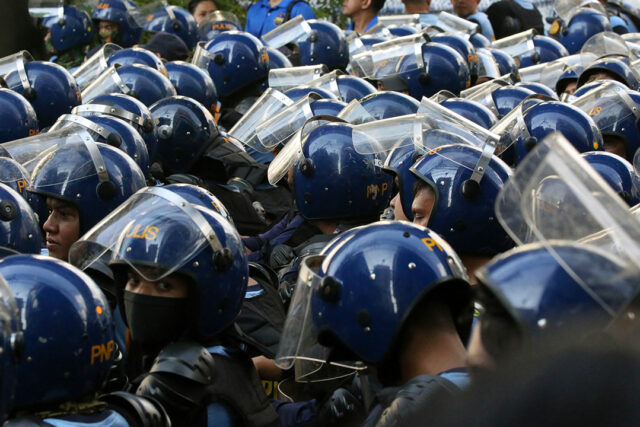
SILG: Nov. 30 protests peaceful

THE police blocked protesters going to Mendiola during the Nov. 30 protest against corruption. — PHILIPPINE STAR/EDD GUMBAN

SECRETARY of the Interior and Local Government (SILG) Juanito Victor C. Remulla on Monday said anti-corruption demonstrations held across the country over the weekend remained peaceful, with no incidents of violence reported as police enforced crowd control measures.

Mr. Remulla told a Palace briefing that about 20,000 people joined the protests in Metro Manila on Sunday, citing consolidated counts from the Philippine National Police (PNP).

He said about 6,000 gathered at the People Power Monument at the movement’s peak, 3,000 at Luneta, 800 to 1,000 at Liwasang Bonifacio, and about 2,000 during the first wave in Mendiola, with a smaller second wave of around 200 people later in the day.

Randulf T. Tuaño, chief of the Public Information Office, meanwhile, said over 59,000 protestors took part on Sunday nationwide.

“I’m pleased to report that there were no injuries, no acts of violence, no hooliganism, no anarchy,” Mr. Remulla said in Filipino. The PNP’s security preparations were followed, and the public also cooperated.”

The Interior chief said the demonstrations — which called for stronger measures against corruption — proceeded in an orderly manner as authorities implemented crowd management protocols and coordinated with organizers. — Chloe Mari A. Hufana

E-bike ban meant to improve safety

COMMUTERS walk past an e-trike traversing United Nations Avenue in Manila amid the government’s heightened monitoring of light electric vehicles. _ PHILIPPINE STAR/RYAN BALDEMOR

THE Land Transportation Office’s (LTO) move to bar electric bicycles and tricycles from national roads is intended to improve public safety and should not be seen as an anti-poor measure, Malacañang said on Monday.

Palace Press Officer Clarissa A. Castro said the planned restrictions — which President Ferdinand R. Marcos, Jr. ordered temporarily deferred — are designed to reduce accidents on major thoroughfares, where slower, lightweight electric vehicles are more vulnerable.

“This is not about making things difficult for our citizens,” Ms. Castro told a Palace briefing in Filipino. “The policy aims to ensure the safety of e-bike users and everyone on the road. These are motorized vehicles, and there are laws governing their use.”

The LTO has postponed the start of impounding e-bikes and e-trikes found traveling on national highways and major roads to Jan. 2 next year, following appeals from riders and owners.

LTO Chief Markus V. Lacanilao earlier noted that the extension responds to public appeals and aims to ensure that owners clearly understand existing regulations. — Chloe Mari A. Hufana

ICI-TWG drafting framework for asset recovery

The Bureau of Customs recovered 12 luxury vehicles linked to the Discaya family following a court-ordered search operation in Pasig City, Sept. 2, 2025. — BUREAU OF CUSTOMS

THE Independent Commission for Infrastructure (ICI) technical working group (TWG) on Monday said it is drafting a proposal to improve tracking of frozen and recovered assets.

“We have a draft proposal for a joint memorandum of agreement among member agencies, and we earlier presented a dashboard… and a database… Once operational, this framework will enable real-time tracking of both frozen and recovered assets, as well as the related legal cases,” Renato “Aboy” A. Paraiso, acting executive director of the Cybercrime Investigation and Coordinating Center (CICC), said.

Mr. Paraiso was appointed chair of the TWG, while Justice Undersecretary Deo L. Marco will serve as vice-chair, leading efforts on case build-up and asset recovery.

He added that collaboration with international authorities, including Singapore, is underway to manage overseas air assets linked to former congressman Elizaldy S. Co.

The TWG intends to meet every Tuesday to maintain momentum and monitor progress, Mr. Paraiso said.

It convened its third session on Monday amid continued push to recover more assets allegedly acquired through anomalous flood control projects.

“The demand is still very strong for people who are involved, they’d like to see them in jail,” said ICI Commissioner Rogelio “Babes” L. Singson, referencing the ongoing “one trillion rally.” He described the TWG as a platform for addressing non-legal avenues, including asset recovery and administrative remedies, while acknowledging that legal proceedings remain ongoing.

The TWG comprises key government agencies, including the Bureau of Customs (BoC), Bureau of Internal Revenue, Philippine National Police (PNP), Anti-Money Laundering Council, CICC, Civil Aviation Authority of the Philippines, and the Department of Justice, among others.

This subgroup within the ICI is tasked with tracing, freezing, and recovering wealth allegedly siphoned through questionable flood control projects.

During the session, the PNP-Criminal Investigation and Detection Group submitted documents from its technical field validation of suspected “ghost” flood control projects.

Meanwhile, the BoC reported it will adjust the floor price in bidding confiscated high-value assets, including luxury vehicles linked to government contractors Pacifico F. Discaya II and Cezarah Rowena C. Discaya.

To encourage competitive bidding, the BoC adjusted floor prices on several items: a Rolls-Royce was lowered to P36 million from P45 million, while a Toyota Sequoia was reset at P4.6 million.

Chris Noel Bendijo, deputy chief of staff at the BoC, said the agency is set to hold the second round of auctions for the Discayas-owned luxury vehicles on Dec. 5. Items include a 2023 Rolls-Royce Cullinan, 2022 Bentley, 2022 Toyota Tundra, and 2023 Toyota Sequoia.

Mr. Bendijo said that by lowering the price, “we are encouraging and enticing more bidders to participate, which would eventually lead to better competition.”

If there are no takers in the second or subsequent auctions, the BoC has the discretion to destroy the luxury vehicles.

“Remember that aside from disposition based on sale, we can resort to condemnation or just destroy those vehicles… So that is still an available option,” Mr. Bendijo said told a press briefing after the asset recovery meeting at the ICI. — Erika Mae P. Sinaking

Marcos orders review of Army’s disability discharge policy

PRESIDENT Ferdinand R. Marcos, Jr. speaks at the graduation ceremony for new commissioned officers of the Armed Forces of the Philippines at the Villamor Air Base in Pasay City, Dec. 1. — PHILIPPINE STAR/NOEL B. PABALATE

PHILIPPINE President Ferdinand R. Marcos, Jr. on Monday ordered an overhaul of the Armed Forces of the Philippines’ (AFP) Complete Disability Discharge (CDD) policy, aiming to ensure that soldiers injured in the line of duty continue to find meaningful employment despite their injuries.

The President tasked Defense Secretary Gilberto C. Teodoro, Jr., with reviewing the CDD policy to prevent future cases where injured soldiers are simply discharged, emphasizing recognition and continued support for their service.

“I have also instructed our Secretary of National Defense to review this policy so that situations like this do not happen again, where a soldier who is injured in the line of duty, while defending the Philippines, is simply discharged. That is not right. We will create a new CDD policy as soon as possible,” he said in Filipino via a video posted on his Facebook.

The announcement came after Captain Jerome J. Jacuba, 0-146467, was blinded by a combat-related explosion and initially slated for CDD, which would have ended his military service.

Mr. Marcos described the original discharge as “unjust” given Mr. Jacuba’s years of service and battlefield sacrifice.

He instructed Chief of Staff Romeo S. Brawner, Jr. to suspend Mr. Jacuba’s CDD, promote him to major and assign him to roles under “major adaptive duties,” allowing him to continue contributing to the military despite his disability.

“Even though he has lost his sight, there are still many ways a soldier can contribute,” Mr. Marcos said.

The AFP’s CDD is an official separation from military service granted to personnel who have a service-related physical disability that entirely prevents them from resuming duty.

This discharge enables affected members to apply for disability pensions and other entitled benefits. — Chloe Mari A. Hufana

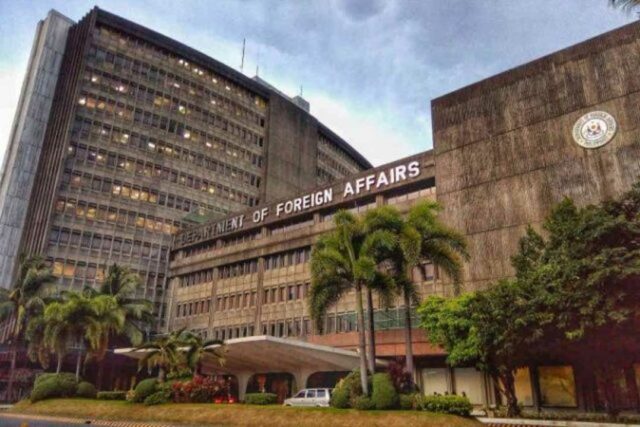
Sri Lanka flood displaces Filipina

DEPARTMENT OF FOREIGN AFFAIRS FACEBOOK PAGE

A FILIPINA in Sri Lanka was forced to flee following heavy rainfall, flooding, and landslides due to Cyclone Ditwah, the Department of Foreign Affairs (DFA) said on Monday.

“One Filipino in Negombo City is confirmed to have been displaced because of the floods,” the DFA said in a statement.

The agency said that the unidentified Filipina has received medical attention at a local hospital and is being assisted by the Honorary Consulate General.

The DFA said that it is closely monitoring the situation of all Filipinos in Sri Lanka after the onslaught of the storm, through the Philippine Embassy in Bangladesh and the Honorary Consulate General in Sri Lanka.

“The Embassy continues to coordinate with Sri Lankan authorities and stands ready to provide assistance to any Filipino who may have been affected by the calamity,” it added.

The DFA said that there are about 711 Filipinos working in Sri Lanka.

Sri Lankan authorities reported 330 people have died due to the onslaught of Cyclone Ditwah, with about 370 more missing after heavy rains lashed the country causing widespread landslides and floods. — Adrian H. Halili