Home Blog Page 987

DEPDev seeks momentum for Marcos agenda

PCOO

By Aubrey Rose A. Inosante, Reporter

THE Department of Economy, Planning, and Development (DEPDev) wants the incoming Congress to prioritize key legislative measures that lawmakers failed to pass, including bills on national land use policy and a centralized water agency.

In a statement on Wednesday, DEPDev Secretary Arsenio M. Balisacan said he hopes for “continued momentum” for the Marcos government’s legislative agenda. A new set of congressmen and 12 of the 24-member Senate will take office in late July.

“DEPDev fully supports the passage of the Department of Water Resources bill and the proposed National Land Use Act as part of our thrust to complete the groundwork for more efficient governance and sustainable development in the years ahead,” said Mr. Balisacan, who heads the Legislative-Executive Development Advisory Council secretariat.

House Bill No. 8162 or the Land Use bill seeks to provide the government framework for land distribution among key sectors, while protecting critical areas.

House Bill No. 9663 will create a Department of Water Resources and Water Regulatory Commission to improve access to water, flood control, power production and sanitation services.

Both bills cleared the House of Representatives in 2023 but got stalled in the Senate.

Reinielle Matt M. Erece, an economist at Oikonomia Advisory and Research, Inc., expects lawmakers to pass the national land use policy to boost food security and urban development.

“On the political side, there are already some elected senators that have publicly supported this bill during their campaign and hopefully, they’ll push through with this advocacy when the new Congress starts,” he said in a Viber message. 

On the other hand, he expects the bill creating a Department of Water Resources to face delays.

Congress approved seven other priority bills that are awaiting President Ferdinand R. Marcos, Jr.’s signature before it adjourned this month.

These include the Government Optimization Act, which allows the President to streamline agency operations, and a measure extending land lease terms for foreign investors to 99 from 75 years.

Also ratified were the E-Governance Act and Konektadong Pinoy Act, which both aim to build a more inclusive and affordable digital ecosystem.

The Enhanced Fiscal Regime for Large-Scale Metallic Mining Act, which proposes a five-tier windfall profit tax and lifts the ore export ban earlier imposed by the House of Representatives to boost government revenue was also ratified.

Other approved measures were the Virology Institute of the Philippines and the Accelerated and Reformed Right-of-Way Act.

Once signed, these bills will bring the number of enacted priority measures under the common legislative agenda to 40 — the highest since the administration of Fidel V. Ramos, DEPDev said.

The President had also signed into law a measure that gave additional tax incentives to certain enterprises, the Public-Private Partnership Code of the Philippines and Real Property Valuation and Assessment Reform Act.

Also enacted were the Capital Markets Efficiency Promotion Act, Trabaho Para sa Bayan Act and Tatak Pinoy Act.

Other measures that the President signed were the Academic Recovery and Accessible Learning Program Act and Enterprise-Based Education and Training Framework Act, as well as measures to boost agricultural productivity.

ComClark’s P31.55-B air traffic control proposal now under review

STOCK PHOTO | Image by Vecstock from Freepik

By Ashley Erika O. Jose, Reporter

THE P31.55-BILLION unsolicited proposal of ComClark Network and Technology Corp. for the management of the country’s air navigation traffic and control system is now under review by the Department of Transportation (DoTr) and the Civil Aviation Authority of the Philippines (CAAP), according to the Public-Private Partnership (PPP) Center.

“Yes, the PPP Center endorsed the PPP for Entire Air Navigation Services in the Philippines to the Civil Aviation Authority of the Philippines and Department of Transportation,” PPP Center Deputy Executive Director Jeffrey I. Manalo said in a Viber message to BusinessWorld.

Mr. Manalo said the unsolicited proposal was submitted by the consortium of ComClark Network, JG Summit Infrastructure Holdings, and Asia’s Emerging Dragon Corp.

On Monday, the PPP Center said the project had been added to the official PPP pipeline, along with 52 other new projects.

Mr. Manalo said the DoTr and CAAP have accepted the proposal and are now conducting a detailed evaluation.

The deadline for completing the evaluation is Aug. 21.

To recall, ComClark said in February that it intended to resubmit its unsolicited proposal to assume responsibility for the management of the country’s air navigation traffic and control system.

The company’s earlier P29.82-billion proposal had been rejected and returned by the DoTr last year.

Earlier this year, ComClark said it would submit additional documents, including technical materials to establish the track record and qualifications of its partners Enaire and Indra.

The two companies are Spanish firms with expertise in air traffic management and are providers of integrated solutions for the transport and aviation sectors.

The PPP Center earlier said the Air Traffic Services–Air Navigation Services project is also being evaluated as a potential solicited proposal.

The project involves the financing, design, construction, operation, and maintenance of the country’s air traffic and air navigation services, including services within Philippine airspace and international airspace under Philippine jurisdiction.

Regulator approves adjusted toll rates for CCLEX

CEBU-CORDOVA Link Expressway (CCLEX) — BW FILE PHOTO

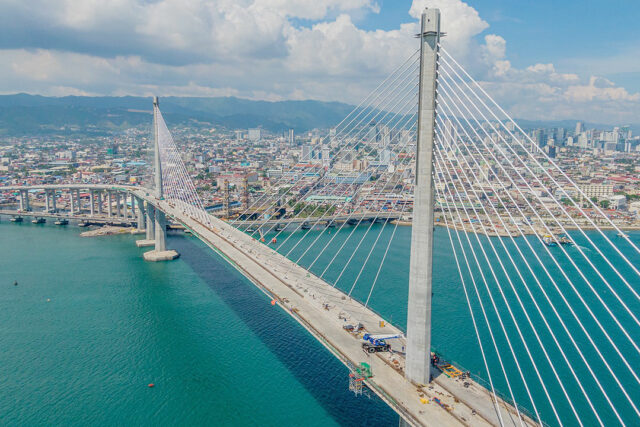
THE Local Toll Regulatory Council (LTRC) has approved the collection of adjusted toll rates for the Cebu-Cordova Link Expressway (CCLEX), effective July 1.

“We understand that any toll changes can raise concerns, and we assure you that we are steadfast in our commitment to continuously enhance our services to provide you safe, seamless, and reliable travel experience,” Cebu Cordova Link Expressway Corp. (CCLEC) President and General Manager Allan G. Alfon said in a media release on Wednesday.

CCLEC, a subsidiary of Metro Pacific Tollways Corp. (MPTC), operates the 8.9-kilometer expressway connecting Cebu City to the municipality of Cordova on Mactan Island.

To mitigate the impact on motorists, the company said the toll increase will be implemented in phases, starting with provisional discounted rates on July 1, before the full approved rates are applied at a later date.

According to CCLEC, the implementation of adjusted toll rates aligns with the staggered toll adjustment mechanism provided under its concession agreement with the Cebu City Government and the Cordova Municipal Government.

The toll adjustment also forms part of the recovery program for additional costs incurred during the construction period due to the COVID-19 pandemic and Typhoon Odette in 2021, which caused project delays.

Under the new toll matrix, the approved rates are P68 for Class 1M vehicles, or motorcycles with engine displacements between 110 and 399 cubic centimeters (cc); P107 for Class 1 vehicles, which include motorcycles with engine displacements of 400 cc and above, cars, jeeps, pick-up trucks, and small vans; P214 for Class 2 vehicles, or those with two or three axles and a height exceeding seven feet, such as light trucks, buses, and high-roof vans; and P321 for Class 3 vehicles, such as rigid trucks and multi-axle trailers exceeding seven feet in height.

The discounted rates that will take effect on July 1 are P65 for Class 1M vehicles, P100 for Class 1 vehicles, P200 for Class 2 vehicles, and P300 for Class 3 vehicles.

The P33-billion CCLEX, which opened in 2022, has reduced travel time between Cebu City and Mactan Island by up to 75%.

MPTC said last year it was seeking a P15-billion investment from Spanish infrastructure developer Acciona S.A. to support the tollway’s expansion and upgrade.

“To further provide better expressway experience and greater mobility to Cebu road users, CCLEC is also embarking on expansion projects that will connect CCLEX to downtown Cebu City and the Mactan-Cebu International Airport,” the company said.

MPTC is the tollway arm of Metro Pacific Investments Corp., one of the three main Philippine units of Hong Kong-based First Pacific Co. Ltd., alongside Philex Mining Corp. and PLDT Inc.

Hastings Holdings, Inc., a unit of PLDT Beneficial Trust Fund subsidiary MediaQuest Holdings, Inc., has a majority stake in BusinessWorld through the Philippine Star Group, which it controls. — Ashley Erika O. Jose

Mega for Mega

SCREEN GRAB FROM MEGAPRIMEFOODS.COM.PH

The canned fish company is crossing its t’s and dotting its i’s in preparation for an IPO

FOR its 50th anniversary this month, Mega Prime Foods, Inc. (MPFI) — the company behind the Mega sardines brand, among other canned goods and bottled sauces — tapped “Megastar” Sharon Cuneta as its latest brand ambassador.

On June 6, at Shangri-La The Fort in Bonifacio Global City, celebrity singer/actress Ms. Cuneta sang one of her hits, “Maging Sino Ka Man,” as well as the new jingle for Mega Sardines, “Pangako ng Mega,” to the tune of her own hit, “Kahit Maputi na ang Buhok Ko.”

A new commercial by Ms. Cuneta also announced the Mega Milyonaryo raffle, which will give away around P50 million in prizes (with five winners of P1 million each).

“This is why this is the most expensive portion of the night,” joked Marvin Tiu Lim, chief growth and development officer for MPFI, before introducing the raffle and Ms. Cuneta. Marvin is a son of William Tiu Lim, Mega Prime Foods founder and chairman. The senior Mr. Tiu Lim, appearing onstage with his wife Marylou, said that the Mega gala that evening coincided with their wedding anniversary. Mr. Tiu Lim stepped down as chief executive in 2023 in favor of the next generation, with his daughter Michelle Tiu Lim-Chan taking the lead.

As for the Megastar, she said in a speech, “Sa wakas, magkasama na rin tayo (at last, we are together).”

She recounted that she had watched an interview with the senior Mr. Tiu Lim at the company’s 25th anniversary. “You’d been trying to negotiate with my team,” she said about that long ago interview. “I heard mahal ako (that I was expensive).” After thanking the Tiu Lim family, she said, “I’m very honored, especially because it’s the namesake of the title that (was given) to me years ago.”

The younger Mr. Tiu Lim said, “We’re doing this with someone special… someone who really embodies what Mega stands for.”

DOWN TO BUSINESS
Mega was founded in 1975 as a small fishing company. It had captured a 26% market share by 2023. According to a speech by Mr. Tiu Lim, they’re now producing up to 3 million cans of fish a day. “I believe we are now the world’s largest sardine producer,” he said.

“We will double our business every five years. It’s ambitious, but it’s possible,” he said. “This includes, of course, preparing hopefully to become IPO (initial public offering)-ready in the coming years.”

In an interview with BusinessWorld, Mr. Tiu Lim laid out the steps the company is taking to be traded publicly. “Now, we have an independent board, three independent directors; we have corporate governance in place. We have different committees… We’re really putting in all the steps and processes that a normal publicly listed company has, but then not taking it public yet — as soon as we’re ready.”

The company is more than just sardines: it has several units like Mega Tuna, Mega Squid, Mega Prime Quality fruits and vegetables, and Jimm’s Coffee Mix. During the anniversary shindig, actor Coco Martin also appeared onstage for a song-and-dance number and to show his latest commercial for Jimm’s.

In a speech, Mr. Tiu Lim says that they aim to see 30% of their business coming from exports. In an interview, he said, “We’re in the markets where OFWs (overseas Filipino workers) are, but we want to take it mainstream. We want to target not only the OFWs, but the whole population in general. We’re looking at the Middle East, Africa; we’re looking at different areas for growth.”

He said, “Mega is now in every other Filipino household. Soon, we aim to be in every single Filipino home.”

The Medical Wellness Association in the US also recently named sardines a “superfood,” following numerous tests. Mr. Tiu Lim said, “We believe in providing Filipinos the most fresh fish available,” highlighting their operations where they can the fish within 12 hours of being caught.

In a speech, he said, “We’re not just a food company. We’re in the business of nourishing lives.” — Joseph L. Garcia

Leviste divests SPNEC stake, eyes over P34B in proceeds

BUSINESSMAN Leandro Antonio L. Leviste is generating over P34 billion in proceeds from the divestment of his shares in listed SP New Energy Corp. (SPNEC) ahead of assuming office as representative of the first district of Batangas on June 30.

Mr. Leviste signed a deal to sell 5.01 billion SPNEC shares to Meralco PowerGen Corp. (MGen) for P6.26 billion, on top of a prior agreement to sell 5.82 billion shares for P7.5 billion, Solar Philippines Power Project Holdings, Inc. said in a Facebook post on Wednesday.

MGen already paid P13.76 billion to Mr. Leviste, with the transfer of shares to follow. MGen also previously bought 3.77 billion shares worth P4.5 billion from Mr. Leviste.

Altogether, Mr. Leviste’s wholly owned companies have agreed to sell 14.6 billion shares to MGen for P18.26 billion. He also sold 1.84 billion SNPEC shares to public shareholders for P2.23 billion in 2023.

In total, Mr. Leviste sold 16.44 billion SPNEC shares for P20.49 billion. Solar Philippines still owns 8.16 billion SPNEC shares after the transaction.

Solar Philippines said Mr. Leviste is considering options for other private placements and financing on the remaining SPNEC shares, which would bring the total funding raised to over P34 billion.

“Mr. Leviste decided to focus on public service in 2024 after selling to Meralco the controlling stake in SPNEC. Mr. Leviste continues to invest the proceeds of these share sales in real estate and equity investments, with the proceeds of these investments funding his philanthropic initiatives,” Solar Philippines said.

Mr. Leviste founded Solar Philippines in 2013 to accelerate solar energy development in the country. He was elected as congressman of the first district of Batangas after securing 268,764 votes during the 2025 Philippine midterm elections.

SPNEC, through unit Terra Solar Philippines, Inc., is building a 3,500-megawatt-peak solar farm and 4,500-megawatt-hour battery energy storage system.

SPNEC is now controlled by the Pangilinan group through MGen Renewable Energy, Inc., the renewable energy development arm of MGen. The latter is a unit of Manila Electric Co. (Meralco).

Meralco’s controlling stakeholder, Beacon Electric Asset Holdings, Inc., is partly owned by PLDT Inc.

Hastings Holdings, Inc., a unit of PLDT Beneficial Trust Fund subsidiary MediaQuest Holdings, Inc., has an interest in BusinessWorld through the Philippine Star Group, which it controls.

SPNEC shares rose 0.83% or one centavo to P1.21 per share on Wednesday. — Revin Mikhael D. Ochave

Gov’t partially awards T-bonds

BW FILE PHOTO

THE GOVERNMENT made a partial award of the dual-tenor reissued Treasury bonds (T-bonds) it offered on Wednesday as the market stayed cautious due to lingering uncertainties over the conflict in the Middle East and the global trade environment.

The Bureau of the Treasury (BTr) raised only P35.076 billion from its dual-tranche T-bond offering, lower than the P40-billion plan, even as total bids reached P63.286 billion or above the amount placed on the auction block.

Broken down, the Treasury borrowed P20 billion as planned via the reissued seven-year bonds, with total bids for the tenor reaching P40.681 billion or more than double the amount on offer.

This brought the outstanding volume for the issue to P321.4 billion, the Treasury said in a statement. It said it made a full award of the tenor as the average rate fetched at the auction was lower than comparable secondary market levels.

The bonds, which have a remaining life of two years and 10 months, were awarded at an average rate of 5.76%. Accepted yields ranged from 5.735% to 5.77%.

The average rate of the reissued papers increased by 5.7 basis points (bps) from the 5.703% fetched for the series’ last award on May 14 and was also 213.5 bps above the 3.625% coupon for the issue.

Still, this was 0.2 bp below the 5.762% fetched for the same bond series and 3.2 bps lower than the 5.792% quoted for the three-year bond — the benchmark tenor closest to the remaining life of the issue — at the secondary market before Wednesday’s auction, based on the PHP Bloomberg Valuation Service (BVAL) Reference Rates data provided by the BTr.

Meanwhile, the government raised only P15.076 billion from the reissued 25-year T-bonds it offered on Wednesday, short of the P20-billion program, even as total bids reached P22.605 billion.

This brought the outstanding volume for the bond series to P65.1 billion, the BTr said.

The notes, which have a remaining life of 24 years and seven months, were awarded at an average rate of 6.649%. Accepted yields ranged from 6.6% to 6.7%.

The average rate climbed by 17.3 bps from the 6.476% fetched for the series’ last award on March 27 and was also 27.4 bps above the 6.375% coupon for the issue.

This was likewise 2 bps higher than the 6.629% seen for the same bond series and 0.1 bp  above the 6.648% quoted for the 25-year bond at the secondary market before Wednesday’s auction, according to the PHL BVAL Reference Rates data from the BTr.

“The rather tepid auction award today reflected market caution, especially for longer-dated securities, as uncertainties on both the US tariff policies and the geopolitical tensions in the Middle East continue to cloud investor appetite. Even for awarded rates, the average rates fetched were higher than the secondary market rates,” a trader said in an e-mail.

The government made a full award of the shorter tenor as its average rate went down amid a slight improvement in risk appetite after Iran and Israel agreed to a ceasefire after exchanging attacks for 12 days, which eased inflation concerns, Rizal Commercial Banking Corp. Chief Economist Michael L. Ricafort said in a Viber message.

However, the reissued 25-year bond were partially awarded as rates remained high, mirroring long-term US yields’ movements, due to worries over the Trump administration’s fiscal situation, Mr. Ricafort added.

The government borrows from local and foreign sources to help fund its budget deficit, which is capped at P1.54 trillion or 5.3% of gross domestic product this year.

The ceasefire brokered by US President Donald J. Trump between Iran and Israel appeared to be holding on Wednesday a day after both countries signalled that their air war had ended, at least for now, Reuters reported.

Each side claimed victory on Tuesday after 12 days of war, which the US joined with airstrikes in support of Israel to take out Iran’s uranium-enrichment facilities.

Mr. Trump said over the weekend that US stealth bombers had “obliterated” Iran’s program to develop nuclear weapons. Iran says its enrichment activities are for civilian purposes only.

But Mr. Trump’s claim appeared to be contradicted by an initial report by one of his administration’s intelligence agencies, according to three people familiar with the matter.

According to the report, which was produced by the Defense Intelligence Agency, the strikes sealed off the entrances to two of the facilities, but did not collapse underground buildings, said one of the people familiar with its findings.

Some centrifuges remained intact, the Washington Post said, citing an unnamed person familiar with the report.

Israel launched the surprise air war on June 13, attacking Iranian nuclear facilities and killing top military commanders in the worst blow to the Islamic Republic since the 1980s war with Iraq.

Iran, which denies trying to build nuclear weapons, retaliated with barrages of missiles on Israeli military sites and cities.

Oil prices edged higher on Wednesday, finding some respite after plummeting in the last two sessions, as investors assessed the stability of the ceasefire and the diminished prospect of an Iranian blockade of the Strait of Hormuz.

The truce appeared fragile: Both Israel and Iran took hours to acknowledge they had accepted the ceasefire and accused each other of violating it.

Mr. Trump scolded both sides but aimed especially stinging criticism at Israel, telling the close US ally to “calm down now.” He later said Israel called off further attacks at his command. — A.M.C. Sy with Reuters

Bistro Group opens second of three steakhouse brands

OUTLAW RIBEYE

THE BISTRO GROUP has opened another steakhouse franchise and BusinessWorld got a taste of its meaty specialty.

LongHorn Steakhouse, in Shangri-La Plaza, is just one of the steakhouses the company has in the country (more on that later). The Bistro Group has a total of 26 brands in the country, with 225 stores across the nation. LongHorn, which opened in the Philippines last April, is an American brand owned by Darden Restaurants (which also owns Olive Garden, another brand brought here by Bistro).

FROM SHRIMP TO STEAK
We sat down to their Wild West Shrimp, hand-breaded and tossed with cherry peppers and garlic butter, served with ranch dip. Nice and appetizing, but nothing compared to the LongHorn Salmon that followed it: hand-cut Atlantic salmon marinated in bourbon marinade — firm and perfectly moist, it tasted like something served in a luxury restaurant (despite the relatively low P1,645 at which it is sold, for 10 oz.).

The ribs, predictably, fell off the bone, and we liked that it was served with a baked potato.

What’s a steakhouse without steak, and LongHorn heeded our call with the Outlaw Ribeye (P4,850 for 20 oz.). It’s not as tender as more expensive (or even some cheaper) steaks available in the city, but just as juicy and deep in flavor.

We plan to come back for dessert, the Chocolate Stampede at P695, with several preparations of chocolate in one cake, topped with vanilla bean ice cream.

AN EXPERIENCE
“Longhorn Philippines was brought here for a purpose. We wanted people to experience not just eating good steaks but also experience the culture, fun, and excitement or how it is really like dining in LongHorn Steakhouse,” said Julio Sibulo, general manager of LongHorn Steakhouse, in an e-mail.

He also said that they plan to open another branch this year in SM Mall of Asia.

There are no Philippines-only exclusive items so far: “We haven’t made a local menu yet as we want consumers to really experience exactly what it is like in the US. Perhaps just a few side dishes but not for the entree category,” said Mr. Sibulo.

MORE STEAK
The Bistro Group is coming in strong with new steakhouses opening within months of each other.

Late last year, it opened the higher-end Morton’s The Steakhouse, and opened LongHorn a few months later. Brazilian-themed steakhouse Fogo de Chao will follow soon (we saw a sign in Glorietta announcing its forthcoming opening).

Mr. Sibulo said, “The company has always been like that, not just for those three mentioned concepts. I feel like what we are trying to do is that the company brings all the best restaurants worldwide in the Philippines so that somehow the country is more updated with the latest food brands that are soaring high in different countries,” he said.

“The goal of the company is to grow bigger and bigger of course but considering that, it has to be a win-win situation for both consumers and providers.”

LongHorn Steakhouse is located at Streetscape, Shangri-La Plaza, Ortigas Center, Mandaluyong. It currently has a Happy Hour promo — a “Buy 2 on all Margaritas and Cocktails, Get 1 for Free” offer that is available beginning 7:30 p.m. each evening. — Joseph L. Garcia

ACEN, UPC break ground on 540-MW projects in India

ACENRENEWABLES.COM

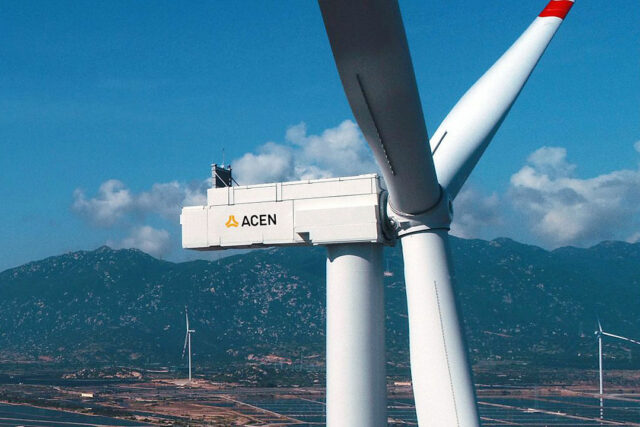
AYALA-LED ACEN Corp. and Singapore-based UPC Renewables have started building two large renewable energy (RE) projects in India with a total capacity of 540 megawatts (MW), which are scheduled for completion by early 2027.

In a media release on Wednesday, ACEN said it had broken ground with UPC Renewables on a 420-megawatt-peak (MWp) solar farm in Rajasthan and a 120-MW wind farm in Karnataka.

The projects are expected to generate a combined 1,158 gigawatt-hours (GWh) of clean electricity annually — enough to power around 241,000 homes and avoid more than 876,000 tons of carbon emissions per year.

The 420-MWp solar farm is projected to generate 767 GWh annually, while the 120-MW wind farm is expected to deliver 391 GWh of renewable energy per year.

“These new projects represent not just scale, but momentum — as we continue to turn opportunities into action. Our enduring partnership with UPC Renewables has been instrumental in enabling disciplined capital deployment across high-potential markets like India,” ACEN International Chief Executive Officer and Group Chief Investment Officer Patrice Clausse said.

Brian Caffyn, chairman and group chief executive officer of UPC Renewables, said the launch of the projects “marks another important milestone in our expansion across Asia-Pacific.”

“Following the successful deployment of 630 MWp of solar capacity in India, this next phase further strengthens our trusted partnership with ACEN and the excellent team in India driving this vision forward,” he said.

The new projects build on ACEN and UPC Renewables’ existing portfolio in India, which includes three operational assets: the 420-MW Masaya Solar, 70-MW Paryapt Solar, and 140-MW Sitara Solar.

UPC Renewables India Chief Executive Officer Alok Nigam said the two projects form part of a broader pipeline of over 1 gigawatt-peak (GWp) of renewable energy projects that are expected to be delivered within the next two years.

“We are thrilled to kick off the second phase of growth for UPC India’s platform with the construction of these 500-MW-plus solar and wind projects. The projects are part of a broader pipeline of 1-GWp-plus RE projects, which we aim to deliver over the next two years and plays a meaningful role in India’s green energy transition,” Mr. Nigam said.

UPC Renewables has been developing utility-scale wind and solar farms across multiple countries since 1994. Companies formed by UPC have built and operated 80 projects with 10 gigawatts of installed capacity and $12 billion in capital invested.

ACEN, the listed energy platform of the Ayala group, currently has 7 GW of attributable renewable energy capacity across operational, under-construction, and committed projects.

The company has expanded its renewable energy footprint outside the Philippines to Australia, India, Indonesia, Vietnam, Lao PDR, and the United States. — Sheldeen Joy Talavera

Yields on term deposits drop after BSP decision

BW FILE PHOTO

TERM DEPOSIT YIELDS declined on Wednesday after the Bangko Sentral ng Pilipinas (BSP) delivered a second straight rate cut last week.

Total bids for the central bank’s term deposit facility (TDF) reached P112.339 billion, above the P100 billion placed on the auction block but below the P143.638 billion in tenders seen last week for a P140-billion offer. However, the central bank awarded only P96.531 billion in papers as the two-week deposits went undersubscribed.

Broken down, tenders for the seven-day term deposits stood at P65.808 billion, more than the P50 billion placed on the auction block but lower than the P94.542 billion in bids seen last week for the a P70-billion offer. The BSP made a full P50-billion award of the one-week tenor.

Banks asked for yields ranging from 5.1% to 5.385%, narrower than the 5.1% to 5.5055% margin seen last week. This caused the average rate of the one-week term deposits to fall by 18.03 basis points (bps) to 5.3013% from 5.4816% a week ago.

Meanwhile, the 14-day papers attracted bids worth P46.531 billion, below the P50 billion auctioned off by the BSP as well as the P49.096 billion in tenders fetched for the P70 billion on offer last week. The central bank accepted all the bids submitted for the tenor.

Accepted rates were from 5.25% to 5.53%, wider than the 5.46% to 5.53% range seen a week ago. As a result, the average yield of the 14-day deposits went down by 10.21 bps to 5.4117% from the 5.5138% fetched last week.

The BSP has not auctioned off 28-day term deposits for more than four years to give way to its weekly offerings of securities with the same tenor.

The TDF and BSP bills are used by the central bank to mop up excess liquidity in the financial system and to better guide market yields closer to the policy rate.

“The BSP TDF average auction yields declined, largely due to the 25-bp BSP rate cut on June 19… BSP TDF yields eased despite lower total bids and partial awards, partly reflecting higher bid yields,” Rizal Commercial Banking Corp. Chief Economist Michael L. Ricafort said in a Viber message.

Mr. Ricafort added that TDF rates dropped on easing inflation concerns amid the recent decline in global crude oil prices after Iran and Israel agreed to a ceasefire after exchanging airstrikes for 12 days.

The Monetary Board last week cut benchmark borrowing costs by 25 bps for a second straight meeting, bringing the target reverse repurchase rate to 5.25%, as expected by 15 out of 16 analysts in a BusinessWorld poll.

It has now lowered rates by 125 bps since it began its easing cycle in August last year.

BSP Governor Eli M. Remolona, Jr. said they could deliver at least one more 25-bp cut this year as the inflation outlook has moderated, but said they remain watchful of emerging price risks, including the conflict in the Middle East and global trade uncertainties.

The Monetary Board has three more policy meetings this year. — AMCS

Hilton breaks into cruise with a Waldorf Astoria Nile ship

By Fran Golden

WHEN Marriott dipped into cruising with its introduction of the Ritz-Carlton Yacht Collection brand in 2022, it was the first hotel company to head to the ocean. Then came Four Seasons, Orient Express, and Aman — all with plans to launch ocean yachts in the next two years. And now, as of May, Hilton Worldwide Holdings has decided to quietly join the fray with its flagship luxury brand Waldorf Astoria, which is set to introduce a Nile River cruiser in late 2026.

The Waldorf Astoria Nile River Experience will bear some of the hallmarks of the hotels that share its name: a Peacock Alley Bar, a monumental lobby clock and art deco design flourishes. (Yes, there will be plenty of Champagne, perhaps even enough to fill the Nile.) But Hilton’s Head of Luxury Brands Dino Michael says the decision to expand into cruising has more to do with the company’s heritage than keeping up with the competition.

Hilton, after all, has a long history in Egypt, stretching from the 1958 opening of the Nile Hilton to the 589-room Waldorf Astoria Cairo Heliopolis, which opened in 2023, and the months-old Hilton Cairo Nile Maadi. It also operated two “floating hotels” there in the 1960s, long before the phrase was trendy. The Isis and Orisis, two 184-passenger vessels launched in 1965 and 1966, each sailed for about 25 years up and down the Nile.

Rediscovering that history in the lead-up to the Cairo hotel opening made executives feel nostalgic, Mr. Michael says. “The conversation led from one thing to another.” Before long, he says, the team had concluded, “you know, we should do it again.”

With that in mind, Mr. Michael says the Nile River Experience won’t be part of a broader entrance by Hilton into the luxury cruise market, but rather “a distinctive offering that reimagines Nile River cruising through the lens of the Waldorf Astoria brand.”

EGYPT’S TOURISM MOMENT
The Nile is a crowded market for luxury cruising, with a broad range of companies sailing along similar routes. But it’s also thriving: Viking will have 10 ships sailing the Nile by 2026, and this fall will see the debut of two butler-serviced dahabeahs — wind-powered boats associated with Egyptian royalty — from lauded Indian hotelier Oberoi.

So is tourism in Egypt, generally. Despite the turmoil enveloping the broader Middle East, the country’s tourism ministry has seen record arrivals in the first months of 2025, with visitor numbers up almost 24% in April compared with the year before. That trend is expected to continue with the late 2025 opening of the long-awaited Grand Egyptian Museum and a newly unveiled, $30-million refurbishment to the tourism infrastructure around the famed pyramids of Giza.

To that booming backdrop, Hilton will add a five-deck vessel with a lavish rooftop deck and 29 river-view suites, each with personal concierges able to arrange “tailored programming” off the ship. “There was an existing vessel that was in need of a full renovation, which is great for us because you get to create from the ground up,” Mr. Michael says. He declines, however, to name the ship or the price of the project. The company’s local partner for the endeavor is Middle East for Nile Cruises and Hotels, owned by the Egyptian plastics manufacturer Al-Ahram Group, whose assets include a 21-year-old ship called The Nile Story.

The reimagined Hilton cruiser will sail a tried-and-true route. Departures will set sail from Luxor toward the Valley of the Kings and the intriguing market town of Aswan; other stops will include private docks at Esna, Edfu, and Kom Ombo, to see temples dedicated to the gods of crocodiles and falcons. Other experiences, such as helicopter rides and wellness-oriented excursions, are under discussion, though Mr. Michael says it’s too early to talk specifics; the goal, he says, is to avoid “touristy and overcrowded” spots and to seek “unique” opportunities to explore along the river.

POINTS HOUNDS WELCOME
One distinguishing factor is that guests will be able to earn and burn Hilton Honors points on the Waldorf Astoria Nile River Experience’s cruises. While prices have yet to be decided, Mr. Michael says bookings are expected to open for sale around the second quarter of 2026, and trips will range from four to six nights. The only other Nile cruises that can be paid for with loyalty points are much longer itineraries — nine- to 13-day trips with AmaWaterways, Viking and Uniworld River Cruises — which are bookable via Marriott Bonvoy’s Cruise With Points program.

And while travelers can also book the Waldorf Astoria in Cairo on points to extend their trips on either end, Hilton doesn’t plan to replicate that strategy for now. Where other brands such as Orient Express and Four Seasons are deliberately planning diverse rail and sea itineraries that can easily get combined with stays at nearby hotels, Hilton plans for now to stick to the Nile.

“Right now, it’s just something we felt was unique,” Mr. Michael says. “Given the popularity of Nile cruising and the huge opportunity that exists at that premium level, we thought Waldorf Astoria was the right fit.”

A Nile cruise, Mr. Michael says, is “on a lot of bucket lists — and when done well, it’s extraordinary.” Bloomberg

SEC discontinues joint certification for capital stock increase applications

BW FILE PHOTO

THE SECURITIES and Exchange Commission (SEC) has discontinued the use of joint certification for applications to increase capital stock through cash infusion due to weak public adoption.

In a notice on Wednesday, the SEC Financial Analysis and Audit Department said the decision followed a review of the joint certification requirement for applications to increase capital stock via cash infusion.

“It has been observed that there is a low rate of availment and adoption by the transacting public,” the notice said.

“In view of the foregoing, and in the interest of process efficiency and clarity, the use of the joint certification is hereby discontinued, effective immediately upon issuance of this notice,” it added.

In January, the SEC Company Registration and Monitoring Department implemented a new format for the cover sheet and joint certification to be used by stock corporations for applications to increase their capital stock through cash infusion.

The joint certification replaced several documents, including the certificate of increase, directors’ certificate, treasurer’s affidavit, and secretary’s certificates on the list of stockholders, nonexistence of intracorporate disputes, and waiver of preemptive rights.

Last month, the SEC launched six digital platforms and a data center to enhance the delivery of its services.

Some of the new platforms include the Electronic Workbench and Analytics Technical Computing Hub, which notifies corporations of the deadlines for filing reportorial requirements, and the SEC Verification of Electronic Records and Information Trust and Authentication System, which allows multiple authorized parties to approve and sign corporate documents, such as board resolutions and compliance reports, in real-time. — Revin Mikhael D. Ochave

Shangri-La The Fort, Manila accepted into global luxury travel group Virtuoso

Shangri-La The Fort, Manila has been accepted into Virtuoso’s exclusive portfolio of luxury travel partners, comprising 2,300 preferred suppliers in 100 countries. According to Amit Oberoi, general manager of Shangri-La The Fort, Manila, inclusion in Virtuoso will present new sales and marketing opportunities to the network’s luxury travel advisors and their highly desirable clientele. Virtuoso agencies worldwide sell an average of US$35 billion annually, making the network the most significant player in luxury travel.

“Virtuoso’s acceptance process is incredibly selective, so becoming a preferred partner is a true honor,” said Oberoi. “The reputation Virtuoso member agencies have for outstanding dedication to their clients is a perfect fit with our own bespoke approach to service. Now that we’re part of this renowned network, we look forward to offering Virtuoso advisors and their clients the special amenities, values and experiences that surpass their expectations.”

Shangri-La The Fort, Manila joins Virtuoso’s collection of the finest luxury hotels, resorts, cruise lines, airlines, tour operators and other travel entities worldwide. These partners, which specialize in world-class client service and experiences, provide superior offerings, rare opportunities and exceptional value for Virtuoso clients. These prestigious providers are able to market to Virtuoso clients via network vehicles and to Virtuoso agencies through multiple communications channels and events, including Virtuoso Travel Week, luxury travel’s preeminent worldwide gathering. Shangri-La The Fort, Manila’s acceptance into Virtuoso gives it direct relationships with the world’s leading leisure travel agencies in North and Latin America, the Caribbean, Europe, Asia-Pacific, Africa and the Middle East.

Located in the heart of Bonifacio Global City, Shangri-La The Fort features 576 elegantly appointed guestrooms and suites, award-winning dining experiences and its world-class fitness and wellness facilities at Kerry Sports Manila. With seamless access to retail, lifestyle and entertainment venues, the hotel serves as a dynamic hub for business and leisure travel.

For more information about Shangri-La The Fort, call +632 8820-0888 or visit www.shangri-la.com/manila/shangrilaatthefort.

About Company Name

Shangri-La Group is one of the world’s premier hospitality companies. Founded in 1971, the Group now operates over 100 hotels globally under the Shangri-La, Kerry, JEN and Traders brands. Renowned for its distinctive Asian hospitality and thoughtful service, Shangri-La offers guests memorable experiences across a diverse portfolio of destinations in Asia-Pacific, the Middle East, Europe and North America.

In addition to its hotels and resorts, the Group’s operations extend to mixed-use developments, residences, and lifestyle destinations that reflect its commitment to excellence, sustainability and innovation. With a deep-rooted Classification: Internal belief in caring for people and the communities it serves, Shangri-La continues to set new standards in luxury, comfort and service.

For more information, please visit www.shangri-la.com.

About Virtuoso

Virtuoso is the leading global travel agency network specializing in luxury and experiential travel. This by-invitation-only organization comprises over 1,200 travel agency locations with more than 20,000 travel advisors in 58 countries throughout North America, Latin America, the Caribbean, Europe, Asia-Pacific, Africa and the Middle East. Drawing upon its preferred relationships with 2,300 of the world’s best hotels and resorts, cruise lines, airlines, tour companies and premier destinations, the network provides its upscale clientele with exclusive amenities, rare experiences and privileged access. Normalized annual sales of US$35 billion make Virtuoso a powerhouse in the luxury travel industry. For more information, visit www.virtuoso.com.


Spotlight is BusinessWorld’s sponsored section that allows advertisers to amplify their brand and connect with BusinessWorld’s audience by publishing their stories on the BusinessWorld Web site. For more information, send an email to online@bworldonline.com.

Join us on Viber at https://bit.ly/3hv6bLA to get more updates and subscribe to BusinessWorld’s titles and get exclusive content through www.bworld-x.com.