Home Blog Page 9657

Politics and Crisis: A Discussion SeriesRe-imagining ASEAN in a time of crisis

By the Ateneo de Manila Department of Political Science

(Part 4 of an eight-part series)

WITH AROUND 650 million inhabitants and a land area covering 4.5 million kilometers, the Southeast Asian region is home to the world’s ninth largest economy and a diverse set of cultures, beliefs, and political systems. The region also contains the busiest international sea and trade routes in the world. The way the Association of Southeast Asian Nations (ASEAN) handles the crisis will have implications, not just on its member-states, but the world.

We argue on two points: First, now more than ever, there is an immediate need for the 10 member states to come up with an integrated and well-coordinated response to adequately address the COVID-19 pandemic. Secondly, this integrated response offers an opportunity for the ASEAN to expand substantive measures to further integrate the region once the crisis is over.

ASEAN RESPONSES: CONVERGENCE OR DIVERGENCE?
One major trend taking place within the region is how each nation has tried to “flatten the curve” of the pandemic with travel bans and border lockdowns.

For instance, as early as January, Brunei started imposing entry restrictions for travelers coming from Hubei province. While those coming from other parts of China were allowed entry into the sultanate, they were required to follow a strict two-week self-quarantine upon arrival. A total entry ban for all foreign nationals took effect starting March 24, while citizens and residents needed to secure the Office of the Prime Minister’s permission before leaving the country.

Like Brunei, Indonesia also imposed a travel ban to and from China on Feb. 5 to curb the spread of the disease. This was followed by more travel restrictions for countries like South Korea, Italy, Iran, Spain, France, Germany, Switzerland and the United Kingdom. Despite declaring the pandemic as an “unnatural national disaster,” the Jokowi administration refused to impose a national lockdown and instead implemented “large-scale social restrictions” on its people. This decision has sparked some controversy between the central and local governments, given that regional leaders have begun introducing measures to control movement within their own territories.

Malaysia’s response paints a totally different picture. A partial lockdown was implemented on March 18 in the form of a “movement control order (MCO),” a sanitary cordon that restricts the movement of its citizens. While the delivery of food and basic necessities remained unhampered, road block operations manned by military personnel were set up across the country to monitor cross-border business and activities. Just two days before, on March 16, a similar decision was adopted by the Philippines, placing the entire island of Luzon under “enhanced community quarantine (ECQ)” until April 14. Following President Duterte’s announcement of a state of public health emergency on March 8, the ECQ resulted in the closing of ports and terminals, the cancellation of work and classes in offices and universities, the installation of checkpoints, and the disruption of the public transport system.

According to Prime Minister Muhyiddin Yassim, while the MCO has successfully reduced the spread of COVID-19, the Malaysian government has decided to extend it until April 18 based on the advice given by medical specialists and the Ministry of Health. Similarly, last week, President Duterte confirmed that the ECQ would be extended until the end of April. It is interesting to note, however, that mass testing will only commence on April 14, the original date for the lifting of the ECQ.

Singapore took on a more drastic turn last week when Prime Minister Lee Hsien Loong announced that the city-state will be implementing a partial month-long lockdown starting April 7 until May 4. Essential businesses and key services will remain available during this “circuit breaker” period, work and online learning will continue at home. Trains and buses have remained operational, but the holding of public gatherings and other social events has been banned.

In other parts of mainland Southeast Asia, various governments have similarly turned to lockdowns and other drastic measures to contain the spread of the disease.

A new regional compact needs to be forged in a post-COVID ASEAN. Strong national leaderships can only go so far. — FREEPIK

Starting March 17, Cambodia’s Ministry of Health implemented an entry ban for foreigners traveling from Italy, Germany, Spain, France, and the US for a month. Last week, the government announced that it will be shutting down all its district and provincial borders for a week, from April 9 to 16. On March 29, Myanmar (which has been initially accused of underreporting COVID-19 cases within its borders) initiated stricter preventive measures, banning incoming flights until April 13 (and further extending it to April 30), and cancelling the week-long Thingyan New Year celebration this week. The following day, March 30, Laos announced that it will also close off its international and provincial borders for three weeks.

On April 1, Vientamese Prime Minister Nguyen Xuan Phuc signed a decree classifying COVID-19 as a “Class A” contagious disease, elevating it to the level of a nationwide epidemic. He then announced a 15-day period of home quarantine and social distancing across the whole country. Two days after, the Thai government imposed a nationwide curfew to encourage its citizens to stay at home and avoid social gatherings. In a televised speech, Prime Minister Prayuth Chan-o-cha stressed the importance of prioritizing the nation’s health over individual freedom. This is the latest step the Thai government has taken since Bangkok was placed under partial lockdown on March 22 and an Emergency Decree empowered the current administration to turn to draconian measures in controlling movement and free speech.

ASEAN AS A PLATFORM FOR CONVERGENCE: CAUGHT BY SURPRISE?
The responses of each individual nation-state under the ASEAN bloc exposes the lack of any meaningful regional integration in the bloc. In other words, this crisis reveals the different “governing biases” of the ASEAN bloc, and this brings about important questions that should be settled if the bloc is at all serious about the prospects of greater regional integration.

The need for greater cooperation and integration is not lost on ASEAN. On April 7, ASEAN Health Ministers released a joint statement recognizing the need for “active engagement and cooperation among ASEAN Member States, with various stakeholders through a whole-of-government and whole-of-society approach, and the pro-active and timely action of the ASEAN Health Sector in the collective response towards COVID-19.” On April 14, ASEAN Leaders held a Virtual Summit specifically to talk about COVID-19, with each leader echoing the same sentiments. But what are the possible issues and problems that might hinder this cooperation and integration in the long fight against this pandemic and future crises?

The first problem is that while there are indicators of regional integration and cooperation at the economic level with the establishment of the ASEAN Economic Community (AEC) in 2015, there is a lack of an integrated response in border closings, containment measures, the transportation of food and other basic necessities, (i.e. the humanitarian and diplomatic facet of the response). However, the exchange of goods and aid in this crisis still remains a largely bilateral, rather than regional affair. Those seriously looking into the prospects of greater ASEAN integrations should therefore ask why ASEAN (and in fact, the world), seemed to be caught by surprise by the spread of COVID-19 given that the region was largely expected to be more prepared for pandemics given its history with previous outbreaks and the institutions for addressing these concerns are already in place. If it is because of the nature of the disease to be more contagious than previous types of outbreaks, current protocols and institutions that deal with non-traditional security issues must be adjusted to address these kinds of concerns that have a higher level of rapidity than usual.

This means that the role of the ASEAN Risk Communication Resource Centre and the ASEAN Coordinating Center for Humanitarian Assistance needs to be clarified, assessed, and strengthened if we are able to more efficiently respond to future humanitarian crises. In terms of integration at the healthcare front, the ASEAN can lean on the institutions already put in place when the region was also hit by the SARS and Avian Influenza epidemics. There are already mechanisms in place, such as the Protocol for Communication and Information Sharing on Emerging Infectious Diseases, the Regional Multi-Sectoral Pandemic Preparedness Strategic Framework, and the ASEAN Minimum Standards on Joint Multi-sectoral Outbreak Investigation and Response that the ASEAN can lean on and reassess in light of the current pandemic. Other structures, such as the ASEAN Coordinating Center for Humanitarian Assistance and the ASEAN Plus Three (APT) Field Epidemiology Training Network formed during previous disease outbreaks in the regions must also be expanded and improved.

Second, Beijing’s growing influence on the region also remains an important question. Beijing’s aggressive charitable push in order to change global perceptions on its responsibility over the spread and handling of the pandemic will raise the prospect of further ASEAN integration in the future. Hurrell (2004) says that regional institutions are “not just concerned with liberal purposes of solving common problems or sharing shared values. They are also sites of power and reflect and entrench power hierarchies and the interests of powerful states.” The question still remains as to the extent that each member-states’ relationship with Beijing accounted for the timing and nature of each country’s initial response to the pandemic. There is also the greater, more long-term question if it is Beijing which will define the terms of greater cooperation in the region owing to its growing influence over the domestic affairs of ASEAN member states, or if ASEAN can serve its own interests and soften Beijing’s influence over the region. This certainly puts the ASEAN in a tight spot. In fact, the pandemic weakens an already fraught possibility of any joint actions in the region to respond to the crisis and instead shows that the region is still very much vulnerable to the power politics of major players outside of it.

Recently, this sentiment was echoed by the European Union’s Minister for Foreign Affairs Josep Borrel when he took note that the political tussle between the United States and China on the pandemic must also be seen as containing “a geo-political component including a struggle for influence through spinning and the ‘politics of generosity’.” The EU, being a highly-integrated region, was also hit hard by the pandemic and serves as a good starting point to study the successes and failures of pandemic response at a regional level. He states that: “It is vital that the EU shows it is a Union that protects and that solidarity is not an empty phrase. After the first wave in which national authorities took center stage, now the EU is coming to the fore with joint actions on all tracks where member states have empowered it to act: with joint procurement of vital medical equipment, with a joint economic stimulus and a necessary relaxation of fiscal and state aid rules.”

REIMAGINING ASEAN IN A TIME OF CRISIS
The prospects of greater political regionalism and economic integration requires a fundamental re-imagination of the values and norms that will govern the ASEAN. The old norms of “non-interference” and “non-confrontation” when dealing with transnational issues have proved to be largely ineffective in addressing not just COVID-19 but previous issues such as the territorial disputes regarding the West Philippine Sea and the Rohingya refugee crisis.

A new regional compact needs to be forged in a post-COVID ASEAN. Strong national leaderships can only go so far. This crisis opens the possibility that beyond the coordination on trade and the flow of goods, institutions such as healthcare, labor, social welfare, and education are global concerns and also need to be seriously discussed at a regional level. Therefore substantive new regional standards can be put in place and issues of regional power players need to be addressed in order to push the ASEAN into a direction of greater political integration, crisis context or otherwise.

This will not be the last major crisis that will hit the region and the rest of the world as bigger issues such as climate change will need more coordinated action. The time is ripe for reform, re-invention, and greater integration, as the world deals with a disrupted status quo and prepares for a new geo-political landscape.
Treatment innovation vs. politics of envy

In an address to the nation last Monday, April 13, about government policies to fight the China virus, a.k.a. SARS-COV2 which causes COVID-19, President Rodrigo R. Duterte said that a new treatment, an “antibody” has been developed by a giant pharmaceutical company. Problem is that “we are on the last ladder. Ang mauna niyan ‘yung mga mayayaman” (the first to benefit are the rich).

We take this statement by the President to make the following arguments.

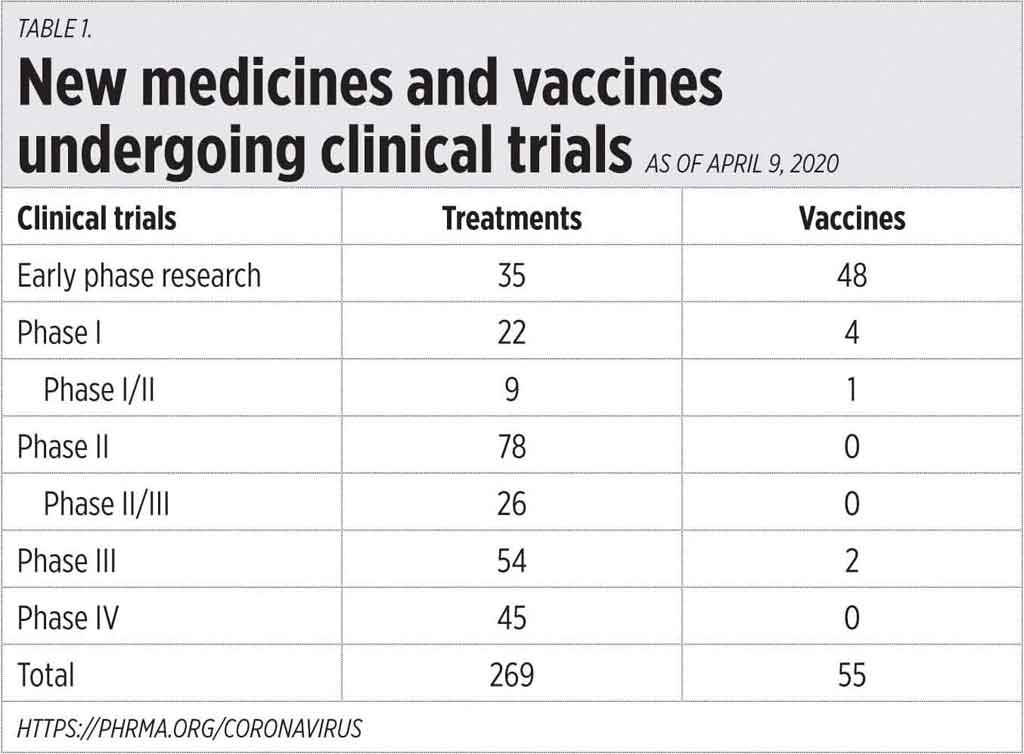
One, there are many new treatments and new vaccines being developed by many companies. So not just one or two but more than 300 from at least two dozen pharmaceutical and biotechnology companies and laboratories. Vaccines are used on healthy people to train their immune system to recognize pathogens like the one that causes COVID-19 and neutralize these diseases before they can harm the body (see Table 1).

Of the 300+ active clinical trials, the majority are antiviral or target the virus directly, the rest focus on related effects of COVID-19 like pneumonia, inflammation, monoclonal antibodies, cell therapies, etc.

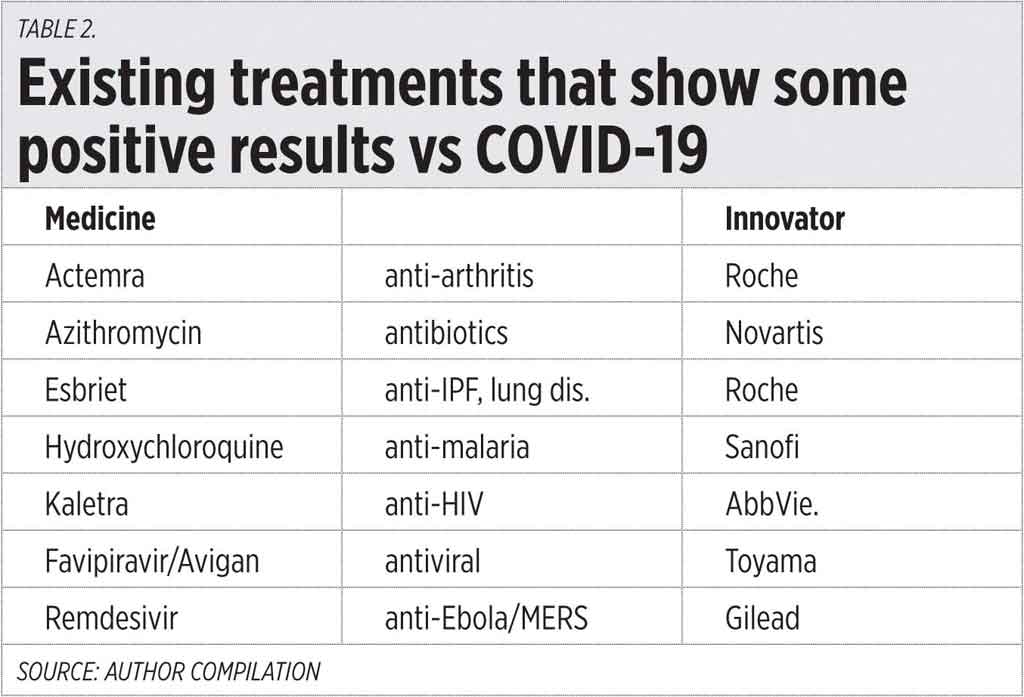
Two, some existing drugs can be repurposed to fight the virus and be manufactured cheaply. Prices as low as $1 to $29 per course of treatment and still deliver some profits to the innovator companies. They still need further clinical trials to specifically address COVID-19 but they have been used in some countries already (see Table 2).

Of the 300+ active clinical trials, more than 200 are testing medicines previously approved for another indication like the above drugs, antiviral combinations, and novel compounds.

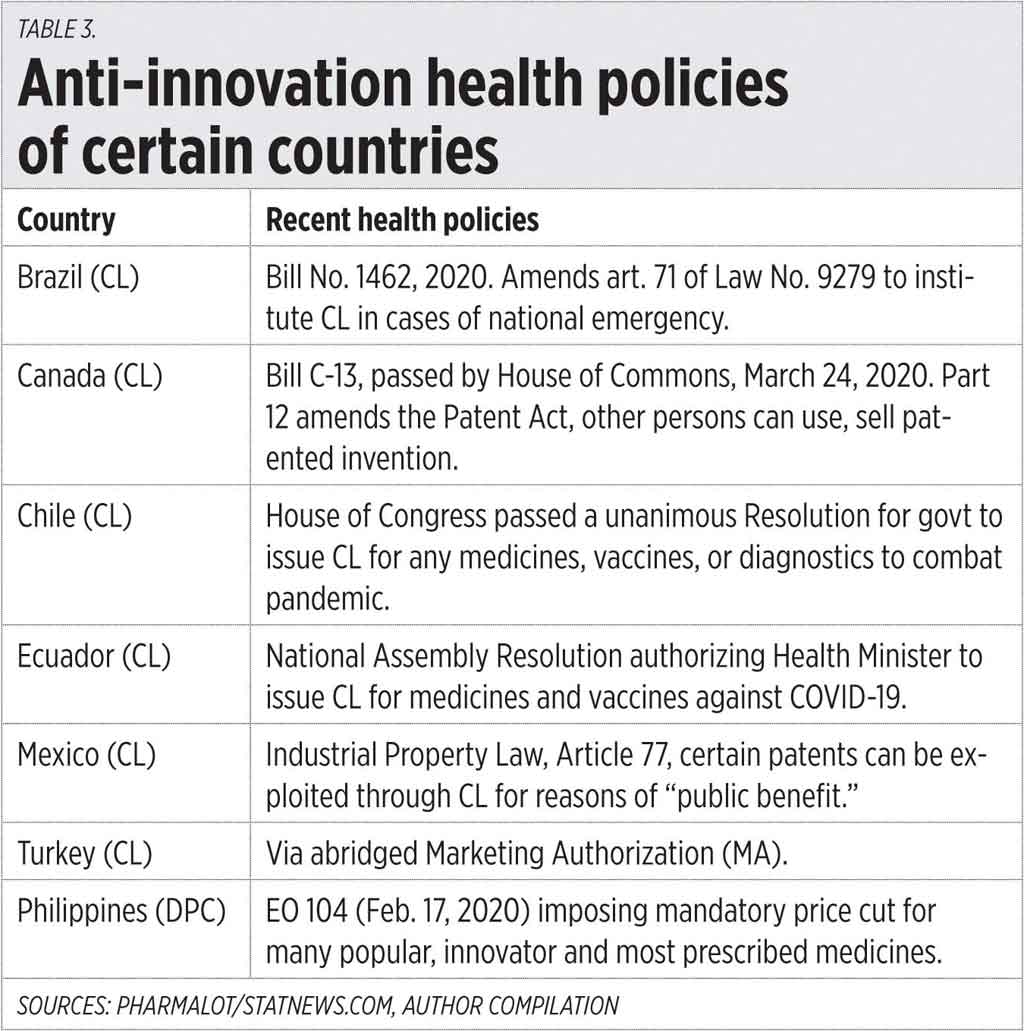
Three, public health policies, not country wealth, will determine who will get new medicines and vaccines. There is more competition among many medicines both existing and under development from many innovator companies, so physicians and patients will have more choices. Despite this, some governments are preparing anti-innovation, anti-IPR policies like compulsory licensing and drug price control that are meant to punish innovator companies (see Table 3).

Four, new drug price control policies should be reversed by the President to attract innovators. When any of those new medicines and vaccines under development become successful and are available in the market, let the innovators bring their products to the Philippines. Initial high prices to cover high costs and high risks of developing these products can be mitigated by bulk purchase, lowering the price. EO 104 aims to impose price controls at the maximum wholesale price (MWP) then maximum retail price (MRP) levels and one of the four criteria is if medicines are most prescribed by physicians. Like compulsory licensing, this is based on envy, penalizing successful, revolutionary, disease-killer medicines and vaccines. The anti-rich, anti-innovator philosophy is wrong.

A rich family normally has drivers, helpers, other household and office workers. When that rich family is infected, chances are they might also infect their workers, who might infect the neighbors, vendors, family members and other people they interact with. When that rich family is protected by new medicines and vaccines, the threat of infection to other people is controlled. They might even shoulder the price of vaccination of their household staff. So the rich benefitting from new treatment will also benefit the poor.

The politics of envy is wrong and based on emotional and populist sentiments. Policies like compulsory licensing and drug price control should be avoided and abandoned. Attracting more innovation and competition is the way to help combat this virus scourge.


Bienvenido S. Oplas, Jr. is the president of Minimal Government Thinkers.

minimalgovernment@gmail.com

Managing in disasters

Expect some form of “rationing” to start in about two weeks, even with some easing on the Luzon-wide lockdown after April 30. And by this, I refer not only to food and other items but also in terms of work opportunities and access to various types of services. In fact, I foresee “rationing” to be a big part of our lives in the next couple of years, at least. What will be rationed? Supplies, to begin with. Many manufacturers and processors are still grappling with bottlenecks in raw material supply, in personnel, and in distribution. And even after the enhanced community quarantine (ECQ), as we move to another mode of quarantine or restriction, many of these bottlenecks will remain. For how long, we do not know.

“Access” will likewise be rationed, as movement will remain restricted. Some will be given priority, for one reason or the other, just like under the ECQ. But most will have to wait and see. People will be given a “fixed amount” of access initially, with the “ration” of access and mobility perhaps being increased over time. Public transportation will have to be rationed, initially.

Resources will also have to be rationed at the onset, and this covers both public and private resources. Many public agencies and private corporations have “advanced” a significant amount of resources since March to help the public cope with the pandemic. Some bonuses were actually given ahead particularly to employees. Moving forward, remaining resources for the year and the year after will have to be released in a calibrated manner. Resource allocation will have to be managed, or rationed.

Even the National Government is somewhat overextended at this point. And, any debt incurred now as a result of the great need for resources to address the pandemic is a sure “tax” in the future. How, when, and from whom that “tax” will be collected is anybody’s guess, but it will have to be collected, one way or the other. Public resources will likewise have to be rationed and reprioritized in the coming years.

Speaking of rations, it is distressing to note that some local governments have had to “ration” assistance as well, particularly local units that are somewhat cash-strapped or ill-prepared in terms of resources to deal with the pandemic. I am sure that if one will only bother to review the annual audit reports of LGUs prepared by the Commission on Audit, many will be found to have “underfunded” trust funds for disaster management.

While the Bayanihan Fund is supposed to help address this problem, it is far from sufficient to cover all the poor households that are in dire need of help. I have heard of one first-class municipality that was budgeted to receive over P11 million from that special fund. But, considering the number of poor households in the area, estimated at around 4,000 out of 12,000 households in all, then that amount will have to be equitably “rationed” to maximize its benefit.

That budget comes out to about P2,750 per household, which has an average composition of four individuals. Divide that by the total number of days in lockdown, say 45 days, then that amount translates to about P61 per day for a family of four. And, that is assuming a poverty incidence of only 30% in that municipality. That daily budget can perhaps cover no more than a kilogram of rice and two small sardine cans to cover three meals for a family of four.

Better than nothing, of course. But the fact remains that unless LGUs have prepared for such eventualities, then they will be hard-pressed to provide assistance to their constituents. Even with the declaration of a national emergency, which then allows LGUs to draw on disaster funds, if such trust funds have been mismanaged, then there will not be much to draw on.

The thing is, even if the Commission on Audit audits LGUs annually and flags down deficiencies in disaster trust funds, unless LGUs are made to strictly comply with rules with respect to funding such trusts over time, then deficiencies will remain. LGUs that are non-compliant should not be given much leeway to address audit deficiencies, for such negligence borders on the criminal if trust funds are depleted when disasters happen.

If there is one lesson to be learned from the COVID-19 pandemic, it now reveals to the public the capabilities, or lack thereof, of both the national government and LGUs to respond to disasters. Moreover, it is an opportunity to audit which LGUs have been compliant in providing for disaster trust funds, and which ones were deficient. In the case of the latter, it raises the question whether such deficiency negatively affected the delivery of assistance to constituents.

In the case of wealthier LGUs, it is easy enough to re-channel resources and reallocate them to disaster response and assistance. But what about the poor towns in the provinces, who rely mostly on real property taxes, business licenses, and internal revenue allotments for income? What about barangays that have not been receiving their just share in local taxes? How are they to help their own people in times of need?

Deep pockets do not necessarily mean unlimited funds. Even the private sector can do and give only so much, either by way of donations or assistance or tax payments in advance. LGUs will have to learn to better manage resources, and save for a rainy day. There are good years, and there are lean years. Only by setting aside can LGUs have ample resources during bad periods. LGUs must fend for themselves, because they cannot always rely on the National Government.

Bottomline here is this: disaster funds are set aside for a reason. They are built little by little, and over time. But such trust funds must be funded religiously and consistently. LGUs that fail to do so must be held accountable and liable. At the end of the day, the efficient management of such LGU funds spell the difference between disaster management and disastrous management.


Marvin Tort is a former managing editor of BusinessWorld, and a former chairman of the Philippines Press Council.

matort@yahoo.com

COVID-19 social amelioration issues

Flattening the COVID-19 curve requires having a lockdown. In the Philippines, the lockdown is euphemistically called enhanced community quarantine (ECQ). The ECQ buys time until our system has conducted massive testing of all people with symptoms; done intensive contact tracing; and expanded health facilities and recruited health workers to accommodate and treat patients.

Our ECQ is working. I quote a study submitted to the Inter-Agency Task Force (IATF) titled “Evaluating Potential Consequences of Alternative Public Responses to the COVID-19 Epidemic in the Philippines,” Maria Elena Herrera et al (April 8): “If ECQ had never been implemented, our models shows ~4.7 million Filipinos would be infected simultaneously on May 23, with ~1.4 million of them need hospitalization, a number far exceeding that of the 2018 authorized bed count of 29.5 thousand.”

But the study likewise cautions us that even upon the eventual lifting of the ECQ, “there can only be a gradual lifting of quarantine measures, and social distancing, border controls, self-quarantine, and limitations on socializing and gatherings must continue to be in place.”

The benefits from ECQ, especially on our people’s health, are tremendous, but economic costs are unavoidable. Economic and productive activities are paralyzed. Most of the labor force is idled or displaced. The income and consumption of the overwhelming majority of citizens plunge. The period after the ECQ lifting will still constrain production and commerce.

Hence, the government has put in place an emergency program to tide over the citizenry, especially the most vulnerable. The social amelioration measures include:

A P205 billion subsidy program for 18 million poor and low-income families that belong to the informal sector;

A P35 billion wage subsidy for employees of small businesses affected by the ECQ;

An additional budget of P30 billion for local government units (LGUs) to support the vulnerable sectors;

A P10 billion emergency loan program from the Land Bank of the Philippines to LGUs;

Additional funding of P2.8 billion for the Department of Agriculture’s program of zero-interest loans of up to P25,000 for each farmer or fisherman;

An additional budget of P16.5 billion for the rice programs towards increasing productivity and the buffer stock;

A cash assistance program of P2 billion for displaced workers and P1.5 billion for overseas Filipino workers;

A P1 billion loan program for micro-, small-, and medium-enterprises, plus P203 million for enterprise development training and livelihood kits; and,

An amount of P1.2 billion for the Social Security System’s unemployment benefits.

The list is longer. All in all, the estimated budget for the emergency support is P305 billion. The money is there. The government has realigned the national budget and has borrowed money, with the Bangko Sentral ng Pilipinas purchasing government securities amounting to P300 billion, and official donors or creditors providing additional financing.

Note that the biggest chunk of the budget is allocated for the low-income families that constitute the informal sector. And there lies the challenge — quick and effective execution.

The Department of Social Welfare and Development (DSWD) has the main task of disbursing the cash transfers. Two-thirds of the budget for the emergency program is allocated for the cash transfers. Sadly, the DSWD is institutionally and organizationally weak.

The DSWD has already been beset with inefficiency, even before COVID-19 engulfed the country. In my column “What Explains the Increase in Self-Rated Poverty in the Last Quarter of 2019?” (BusinessWorld, Feb. 23), I reported that in 2019, the completion rate of cash grants to the poor households and indigent senior citizens was a dismal 42.85%.

In addition, the DSWD has yet to release an updated Listahanan (the National Household Targeting System for Poverty Reduction), the information system that tells us who the poor are and where they are. Updating the Listahanan was conducted in 2019, but the DSWD is behind schedule in encoding the data.

It does not help either that the DSWD has gone through four leadership changes in this political administration. This has resulted in changing policies and organizational rigmarole. The confusion and the disarray have demoralized the DSWD cadres.

Thus, in the war against COVID-19, the DSWD is slow, tentative and timid. In disbursing the cash grants to the LGUs, it is afraid that any violation of how the LGUs use and liquidate the money will ultimately be the liability and accountability of the DSWD. The DSWD is scared of the Commission on Audit (COA). That fear has prevented it from executing a bold and rapid strategy of disbursement to the LGUs.

The DSWD’s conservatism has translated into stiff rules. Documentary requirement demands beneficiaries have government IDs. But those in the informal sector do not have IDs even as the Philippines has not put in place a national ID system. The deadline for the liquidation of the expenses is tight. Without the liquidation, LGUs cannot receive the next tranche of cash grants. The LGU officials also face the threat of criminal, civil, and administrative liabilities if it is reported that the cash grants were given to unqualified beneficiaries.

The fear of the law has also made DSWD less transparent. The DSWD does not want to share the information it has with other parties, other than the LGUs, for fear of violating the Data Privacy Act. This prevents audit or verification by an independent third party.

The DWSD is but one side of the problem. The LGUs, a large number of them, also are weak. This partly explains the DSWD’s fear or apprehension.

Many LGUs do not even have the community-based monitoring system (CBMS) in place, making them dependent on the DSWD Listahanan . But then the DSWD has not encoded the updated Listahanan.

An operational issue is how to neatly match the targeted beneficiaries drawn from the 2015 Listahanan but adjusted to population growth and the actual number of beneficiaries in a specific locality. Some mayors complain about pre-determined “slots” for beneficiaries that they see as inadequate. This could have been the result of a misunderstanding of the distribution of the cash subsidies. The DSWD is responsible for distributing the cash transfers to the Pantawid Pamilyang Pilipino Program (4Ps) beneficiaries. The LGUs are responsible for the other low-income families in the informal sector that are not covered by the 4Ps. The assistance for the minimum wage workers or the workers in the formal sector is coursed through other agencies like the Department of Labor and Employment and the Social Security System. It is likely that some LGUs lumped together all these segments.

Worse, lest we forget, the patronage system is alive and kicking even in the time of a pandemic. Sad to say, we have but pockets of local good governance. Thus, the majority of local executives will play populist and satisfy all families, even those who technically belong to the upper class.

The problems nevertheless are surmountable. To illustrate, the interpretation of COA rules can be made malleable, if only COA bureaucrats would show enlightenment. In this regard, the national leadership must flag both the DSWD and COA to adapt, do things differently, and scrap rigidity. The documentary requirement on IDs should be relaxed by having a vouching system in the community or barangay. The liquidation of the payout should not impede the release of forthcoming subsidies. And punishment should only be applied to those who commit fraud.

On transparency, the National Privacy Commission must likewise exercise flexibility in interpreting the law on data privacy. In fact, the law is quite clear that data privacy does not apply to “information relating to any discretionary benefit of a financial nature” and “information necessary in order to carry out the functions of public authority.”

The possibility of actual beneficiaries exceeding the targeted number of beneficiaries, because of omission errors and, worse, leakage due political patronage, is not a binding constraint. LGUs will have adequate resources. This is especially true for highly urbanized LGUs most affected by the ECQ, which enjoy big internal revenue allotments (IRA). Apart from the cash transfers amounting to P205 billion, the LGUs have a top-up of P30 billion that the Department of Budget and Management is releasing to them in the fight against COVID-19. The LGUs should likewise use their available resources from, say, the Quick Response Fund and the Local Development Fund. And if LGUs would like to have more funds, they could borrow from their future IRA.

To end, I quote the Roman emperor Marcus Aurelius, made famous by the movie Gladiator: “The impediment to action advances action. What stands in the way becomes the way.”


Filomeno S. Sta. Ana III coordinates the Action for Economic Reforms.

www.aer.ph

The Pandemic of Hope

Two important events are happening in the nation as I write this piece. First, Luzon is on extended enhanced community quarantine, and second, Christians are celebrating Easter. These two realities pose questions on existence and survival on one hand, and the celebration of Christ’s triumph over death on the other.

The latest numbers of COVID-19 positives continue to rise both locally and worldwide. Some LGUs have eased anxiety by crafting protocols on how to handle COVID-19 patients in their communities; those that have not are increasing their constituency’s stress. I found watching and reading the news bearable until COVID-19 hit our community. We feel afraid, distressed, uncertain, and hopeless.

This pandemic has tested not only the health system, but also the leadership and governance of local executives. Despite insufficient hospital supplies, medical and corollary service providers showed commitment, care, and professionalism. We salute these heroes and heroines in white and plain clothes.

Dwight D. Eisenhower, the 34th US President, once said, “The supreme quality for leadership is unquestionably integrity. Without it, no real success is possible, no matter whether it is on a section gang, a football field, in an army, or in an office.” Indeed, leaders with integrity reassure the public by communicating clear strategic plans, speaking in plain language, and conveying the true situation of the country. These were wanting at the start of the pandemic: the game plan was not clear, and communication channels were confusing. Evidently, leaders were grappling with how to deal with the emergency.

Also frontliners in this pandemic are school administrators and faculty. School administrators have to make decisions that may not be popular with students. Teachers, to continue educating their students, must rethink academic goals and objectives and brush up on their technical skills as they transition to online delivery.

THIS PANDEMIC RAISES SOME IMPORTANT QUESTIONS.
1. No country is totally prepared for a pandemic. COVID-19 came unexpectedly. In Europe, only Germany has a hospital capacity of 30,000 beds for a single facility. The rest of Europe struggles with slower responses. In Asia, Singapore, Hong Kong, and Taiwan have shown better pandemic management. Could their experience with the SARS outbreak have prepared them better? How can we learn from their experience?

2. The world is at war with an invisible enemy that does not discriminate. Anyone can be a suspect, a probable, or a confirmed case of COVID-19. Sadly, patients have to fight the disease alone and probably die alone. Would changing its priorities make government respond better to the crisis?

3. We Filipinos are known for our bayanihan, or our community spirit of working selflessly together for a cause. This has been exhibited by the extension of help by industry leaders, LGUs, various groups, and individuals to ease the plight of workers and boost frontliners’ morale. The population also recognizes the heroism of medical staff and other frontliners in their unequivocal service. Kabayanihan is now synonymous with washing of hands, the wearing of masks, social distancing, and staying at home. Can heroism be sustained in doing ordinary things extraordinarily well?

4. International cooperation is crucial. Should societies prioritize not just economic activity, but also life and well-being? For example, who should benefit from collaborative biochemical research?

Coincidentally, this health emergency has brought a pandemic of hope (the expectation and desire for something good to happen). We have witnessed:

1. Easter celebrations without live audiences live-streamed on our mobile phones and TV broadcasts;

2. News reporting delivered right from the homes of the anchors;

3. Important national decisions done and communicated via Zoom and Google Hangouts;

4. Transitioning by schools from face-to-face delivery to online platforms;

5. Creativity and determination of our scientific community to produce local test kits, and ingenuity of the creative industries in designing personal protective equipment and masks; and

6. People reflecting and deciding on what are essentials.

Amidst the threat to life, we go back to our families, our cradles of life. We work, play, and pray together again. With joy and faith in the Risen Lord, let us spread a pandemic of hope that will strengthen our collective efforts and fuel the bayanihan spirit of the Filipino.


Dr. Ma. Paquita Diongon-Bonnet is an Associate Professor at De La Salle University. She is also the Chair of the Management and Organization Department of the Ramon V. Del Rosario College of Business. She teaches Lasallian Business Leadership, Ethics, and Corporate Social Responsibility in the Master of Business Administration Program.

maria.paquita.diongon-bonnet@dlsu.edu.ph

AFC extends postponement of competitions

CITING the continuing spread of the coronavirus disease 2019 (COVID-19), the Asian Football Confederation (AFC) moved to postpone until further notice matches set for May and June.

In an announcement released on Tuesday, the AFC said it was extending the postponement of competitions under its supervision with the COVID-19 pandemic still a growing concern.

Affected matches included those in the AFC Cup 2020 Group Stage matches of Philippines Football League (PFL) clubs Ceres-Negros FC and Kaya FC-Iloilo FC set for May.

Also postponed to a later date were those of the Philippine national men’s football team in their FIFA World Cup Qatar 2022/AFC Asian Cup China 2023 Preliminary Joint Qualification Round 2 bid set for June 4 (against China) and June 9 (Maldives).

Last month the AFC postponed matches set for March and April as it wanted to ensure the safety of all stakeholders and fans as the COVID-19 pandemic took further root in the region.

The leader in Group G, three-time PFL champion Ceres (2-1-0) was set to take on Than Quang Ninh of Vietnam (1-1-1) on May 13.

The “Busmen” won their last match in convincing fashion, defeating Indonesia’s Bali United FC, 4-0, in a match played behind closed doors at the Rizal Memorial Football Stadium because of COVID-19 on March 11.

Kaya, meanwhile, was bracing for an all-important Group H match against group-pacing Tampines Rovers of Singapore on May 12.

The Iloilo-based team is currently second in its grouping with a 1-2-0 record and five points, two behind Tampines (2-1-0).

It drew, 1-1, with PSM Makassar of Indonesia in its last game on March 10.

Meanwhile, the extension of postponement of competitions by the AFC pushed the Azkals’ inaction longer.

The last time the Azkals played in the qualifiers was against Syria in November last year where it lost, 1-0. They were supposed to face Guam on March 26, China (June 4) and Maldives (June 9); games that are now to be played on still-to-be-determined dates.

The Azkals are currently in third spot in Group A of the joint qualifiers with seven points built on a 2-1-2 record.

Syria (5-0-0) is on top of the heap with 15 points, followed by China (2-1-1) with seven.

Maldives (2-0-3) is fourth with six points while Guam (0-0-5) has no points and is already eliminated in the race.

The top teams in the groupings in round two advance to the third round of the World Cup qualifiers and earn a spot in the Asian Cup.

The AFC said it will continue to coordinate and consult with Member Associations on all possible options for the continuation of all competitions in due course. — Michael Angelo S. Murillo

Silver, Goodell among Trump advisers on sports restart

LOS ANGELES — National Basketball Association Commissioner Adam Silver, National Football League chief Roger Goodell and Dallas Mavericks owner Mark Cuban are among the 14 sports figures advising the United States government on when to resume with sporting events, President Donald Trump said on Tuesday.

The National Basketball Association postponed its season last month when it learned that one of its players had tested positive for the coronavirus and other leagues quickly followed suit, bringing a halt to the professional sports calendar.

“We have to get our sports back,” Trump said at the White House.

“I’m tired of watching baseball games that are 14 years old,” he said in reference to how networks like ESPN have resorted to re-airing old games to fill the broadcasting void.

In addition to Silver, Goodell and Cuban, the committee also includes Major League Baseball Commissioner Rob Manfred, Ultimate Fighting Championship President Dana White, PGA Tour Commissioner Jay Monahan, LPGA Commissioner Michael Whan, USTA Chairman Patrick Galbraith, Major League Soccer Commissioner Don Garber, WWE Chairman Vince McMahon, NASCAR Vice Chairperson Lesa Kennedy, National Hockey League Commissioner Gary Bettman, New England Patriots owner Robert Kraft and Dallas Cowboys owner Jerry Jones

While Silver and Manfred have said they don’t expect to resume with games right away, White and McMahon have both pushed hard to hold events during the pandemic.

The WWE was cleared to resume taping its wrestling events at its Orlando training facility after Florida officials deemed it an “essential business,” ESPN reported on Monday, a move that could clear the way for other sports to return in the state.

Nearly two million people globally have been infected and more than 124,000 have died since the disease emerged in China late last year, according to a Reuters tally.

More than 2,200 died in the United States alone on Tuesday from COVID-19, the disease caused by the new coronavirus, a record toll according to the tally, even as the country debated how to reopen its economy. — Reuters

Those knight endgames

FIDE Candidates Tournament
Yekaterinburg, Russia
March 15–April 5, 2020
First Half Standings (round 7 of 14)

1–2 Maxime Vachier-Lagrave FRA 2767, Ian Nepomniachtchi RUS 2774, 4.5/7

3–6 Fabiano Caruana USA 2842, Alexander Grischuk RUS 2777, Anish Giri NED 2763, Wang Hao CHN 2762, 3.5/7

7–8 Kirill Alekseenko RUS 2698, Ding Liren CHN 2805, 2.5/7

Note: Tournament suspended after 7 rounds

The FIDE Candidates Tournament began on March 16th, in Yekaterinburg, Russia, with eight of the top players of the world to play a double round-robin over 14 rounds to decide who would challenge the reigning world champion, Magnus Carlsen, in December for the title. Due to the coronavirus pandemic though, the tournament had to be suspended at the halfway point, to be resumed later.

In the meantime let us take a look at this very difficult endgame from round six.

The Russian-born Dutch GM Anish Giri (born June 28, 1994) participated once before in the 2016 Candidates Tournament 2016 (Moscow, Russia) where he drew all 14 games. Here in Yekaterinburg he broke the draw streak by losing to Nepomniachtchi in round 1. After four draws he finally scored his first win ever in the Candidates.’ And he really earned it — the game was even for a long time but he persisted into a difficult knight-and-pawn endgame and finally won after a bad mistake by his opponent who was exhausted after seven hours of play.

These endgames are really difficult. In Dvoretsky’s Endgame Manual the author says that “We shall not be making a systematic examination of the endgame in which a knight faces a knight and pawn: its theory is quite complex, and in my view, rather chaotic. There are no principles which are operative for many positions; the evaluation and the course of the struggle depend entirely upon the concrete details.”

Just some rules of the thumb (taken from Dvoretsky’s book):

• The peculiarities of the knight, such as its “distaste” for rook pawns, or its ability to fork pieces or win tempi by checking the enemy king, function here.

• The knight must quite often be sacrificed in order to obtain a “knight versus pawns” endgame.

• Botvinnik’s Formula. “Knight endgames are pawn endgames”: that’s something Botvinnik once said. What he had in mind, is that many of the laws of pawn endings apply equally to knight endings. The same high value is given, for instance, to the active position of the king or the outside passed pawn. Such techniques as the pawn breakthrough, shouldering, the various methods of playing for zugzwang, and so forth, are seen constantly, not just in pawn endgames, but also in knight endgames.

• Pawns on the same side. Is it possible to convert an extra pawn, if all the pawns are on the same side? Practice has shown that the chances of success are greater in knight endgames than in any other type of endgame — with the exception of pawn endgames. For example, the “four vs. three” position is considered a win.

Alekseenko, Kirill (2698) — Giri, Anish (2763) [C54]
FIDE Candidates 2020 Yekaterinburg (6.2), 23.03.2020

1.e4 e5 2.Nf3 Nc6 3.Bc4 Bc5

IM Roven Vogel reviewed Wesley So’s chessbase DVD on “My Black Secrets in the Modern Italian” (which, by the way, all Filipino chess players are required to buy. Go to chessbase.com and click “shop”) points out some essential motifs and ideas expounded on by Wesley:

• The very modern concept of pushing back the Bg5 with h6/g5 followed by Nh7 and h5/h4/g4 to attack the king.

• He also suggests going for Kg7 followed by Ng8/Nge7/Ng6.

• Furthermore, Wesley advises black to play the important move …a5 instead of …a6 to gain more space, because …a5 allows you to try out the optional maneuver Qb8/Qa7.

You will see from current tournament praxis that these ideas are regularly being implemented.

4.0–0 Nf6 5.d3 d6 6.c3 0–0 7.Re1 a5

Motif no. 3, right?

8.Nbd2 Be6 9.Bb5 Ba7

This move is actually new in this position. As given in no. 3 above, the logical follow-up to 7…a5 is …Qd8–b8–a7. Let’s take a look at an example: 9…Qb8 10.Nf1 Qa7 11.Be3 Bxe3 12.Nxe3 Ne7 Black is preparing …c6 and if possible also …d5. 13.a4 Ng6 (13…c6 14.Bc4 d5 15.exd5 cxd5 16.Bb5 there is some uncomfortable pressure on e5) 14.Bc4 Bxc4 15.Nxc4 At the moment there are equal chances for both sides. White can still go for d3–d4. So,W (2810)-Ding,L (2777) Tbilisi 2017 1/2 47.

10.Nf1 Ne7 11.Ng3 c6 12.Ba4 Ng6 13.h3?!

This was the perfect time to play 13.d4 for one, it prevents Black’s next move.

13…d5!

Black has equalized and can look forward to a fight on even terms.

14.exd5 Nxd5 15.Bc2

Not 15.Nxe5? Nxe5 16.Rxe5 Bxf2+! 17.Kxf2 Qf6+ Black wins material.

15…Qc7 16.d4 exd4 17.Nxd4 Rae8 18.Bg5

Don’t fall for 18.Nxe6? Bxf2+! 19.Kxf2 fxe6+ 20.Kg1 Qxg3 Black is clearly better, maybe even winning.

18…Ndf4 19.Qd2 Bd5 20.Rxe8 Rxe8 21.Re1 Re5 22.Bxf4 Rxe1+ 23.Qxe1 Qxf4 24.Qe8+ Nf8 25.Bb3 Bxd4 26.cxd4 Bxb3 27.axb3 Qf6

[27…Qxd4?? is refuted by 28.Nf5 (threatening the queen and mate starting Ne7+) 28…Qd1+ 29.Kh2 g6 30.Nh6+ Kg7 31.Qxf7+ Kxh6 32.Qxf8+ Kh5 (32…Kg5 33.f4+ Kh5 34.g4+ Kh4 35.Qh6#) 33.g4+ Kg5 34.f4+ Kh4 35.Qf6+ and mate]

28.Qe4 g6 29.Ne2 Ne6 30.h4 h5 31.g3 Qd8 32.Qe5 Qb6 33.d5

Removing his isolated queen’s pawn from the board. That’s one less weakness to worry about.

33…cxd5 34.Qxd5 Kf8 35.Nc3 Qc7 36.Ne4 Qc1+ 37.Kg2 Qxb2 38.Qd7?

White should have taken either the pawn on a5 or the one on b7. Alekseenko probably wanted to create some threats against the enemy King while Black is in time trouble. He probably reasoned that he can capture the pawn anytime.

38…b6 39.Nd6 Qf6 40.Qe8+ Kg7 41.Qd7 Kg8 42.Qe8+ Nf8 43.Qc6 Qd8 44.Nc4?!

But this is wrong — 44.Nb7! wins back the pawn. After 44…Qd4 45.Nd6! Qc5 (to prevent Qc7) (45…Kg7 46.Qc7 Qd5+ 47.Kh2 Qxb3 48.Ne8+ Kh7 49.Qe5 Ne6 50.Nf6+ Kh8 (50…Kh6 has the same effect: 51.Ng8+ Kh7 52.Nf6+) 51.Nxh5+ Kg8 52.Nf6+ Kg7 (52…Kf8 53.Qb8+ Ke7 54.Ng8+ Kd7 55.Nf6+ Ke7 draw) ) 46.Qxc5 bxc5 47.Nc4 the material balance is restored.

44…Ne6 45.Nxb6 Nd4 46.Qc5 Nxb3 47.Qb5 Nd2! 48.Qxa5 Qd3 49.Qa1 Qe4+ 50.Kg1 Nf3+ 51.Kf1 Nxh4 52.Qa8+

[52.gxh4?? Qh1+ wins the white queen]

52…Qxa8 53.Nxa8 Nf3

Black has three pawns against White’s two all on the same side of the board. This should probably be a draw but Giri shows that it can be tricky.

54.Kg2 Ne5 55.f4? <D>

POSITION AFTER 55.F4

White should have maintained his pawns where they were. Now Black has the possibility of an additional pawn lever with ….h5–h4.

55…Ng4 56.Nb6 Kf8 57.Nd5 Ke8 58.Nc3 Ke7 59.Ne4 Ne3+ 60.Kf3 Nc4 61.Ng5 Kf6 62.Ne4+ Kf5 63.Nf2 Nd2+ 64.Ke3 Nf1+ 65.Kf3 Nh2+ 66.Kg2 Ng4 67.Nh3

You remember the old rule that if you are ahead exchange pieces, and if you are behind exchange pawns, right? If White exchanges pieces then 67.Nxg4?? hxg4 68.Kf2 g5 liquidates quickly to a won pawn endgame.

67…f6 68.Kf3 Ke6 69.Ke4 Kd6 70.Ng1 Kc5 71.Kd3 Nh6 72.Ke3 Nf5+ 73.Kf3 Kc4 74.Nh3 Nd4+ 75.Ke3 Nf5+ 76.Kf3 Kd4 77.Nf2 Nd6 78.Nh3?

It is starting to get tricky. Correct is 78.Nd1! Kd3 79.Nb2+ (White shouldn’t let his knight be stuck to the corner of the board. For example if 79.Nf2+? Kd2 80.Nh3 Nb5! 81.Kf2 Nd4 82.Ng1 Kd1 83.Nh3 Nf5 84.Ng1 Kd2 85.Nh3 Kd3 86.Kf3 Nd4+ 87.Kf2 Ke4 88.Ng1 h4! wins. This “pawn lever” is what I was talking about back in move 55.) 79…Kd2 80.Na4 Ke1 81.Kg2 Ke2 82.Nc5 this knight can now attack the black pawns from behind.

78…Ne4?

[78…Kd3! wins with the maneuver I just showed last move 79.Kf2 Nf5 80.Kf3 Kd2 81.Kf2 Nd4 etc]

79.Ng1 Kd3 80.Kg2 Nd2 81.Kf2 Ke4 82.Ne2 Nb1 83.Ng1 h4 84.Nh3 Kf5 85.gxh4 Kg4 86.f5!

The correct drawing maneuver, doubling Black’s pawns.

86…gxf5

[86…Kxf5 87.Kf3 Nd2+ 88.Kg3 draws with White maintaining a strongpoint on f4]

87.Ke3 Nc3

[87…Kxh3? 88.Kf4 white wins both black pawns and it is a dead draw]

88.Nf2+ Kg3 89.Nd3?

Loses. 89.Nh1+ Kg4 (89…Kxh4 Malcolm 90.Kf4 Nd5+ 91.Kxf5 Kh5 92.Ke6 draw) 90.Nf2+ Kh5 91.Kf4 and, once again, a draw.

89…Nd5+ 90.Kd4 Nf4

Black manages to save his pawns and now it is a win for him.

91.Nc5

[91.Nxf4 Kxf4 92.Kd3 Kg4 93.Ke3 (93.h5 Kxh5 94.Ke3 Kg4) 93…f4+ 94.Ke4 f3 95.Ke3 Kg3]

91…Kxh4 92.Ke3 Kg3 93.Nb3 Ne6 94.Nd2 f4+ 95.Ke2 Ng5 96.Kf1 f3 97.Kg1 f2+ 98.Kf1 f5 0–1

On the 78th move White erred by playing Nh3 instead of Nd1, and on the 89th move his mistake was playing Nd3 instead of Nh1. So, on the first instance the knight should have gone to the center instead of the corner, and on the second instance it should have gone to the corner rather than the center. Yup, those knight endgames are really difficult to play.


Bobby Ang is a founding member of the National Chess Federation of the Philippines (NCFP) and its first Executive Director. A Certified Public Accountant (CPA), he taught accounting in the University of Santo Tomas (UST) for 25 years and is currently Chief Audit Executive of the Equicom Group of Companies.

bobby@cpamd.net

2021 budget to tackle virus impact

By Genshen L. Espedido

THE House of Representatives will work with the Executive branch in planning next year’s national budget, which will take into account the government’s post-coronavirus response.

House leaders including Deputy Speaker for Finance Rep. Luis Raymund F. Villafuerte and appropriations committee chairman Rep. Eric G. Yap were scheduled to meet with Budget officials on Wednesday to discuss the 2021 appropriations.

The Development Budget Coordination Committee (DBCC) had endorsed a P4.6-trillion spending program for next year, P500 billion higher than this year.

But Albay Rep. Jose Maria Clemente S. Salceda, who heads the ways and means committee, said the budget might have to be trimmed as revenue falls amid a coronavirus pandemic.

During a virtual hearing of the House’s Defeat COVID-19 committee yesterday, Mr. Salceda said the budget increase from this year would have to be scaled down to 5–6% from DBCC’s 10–11% proposal, which was made before the outbreak.

“Minus inflation of 2.5%, we can still grow by up to 3%,” Mr. Salceda said.

He noted that the Finance department expects lower tax collections this year because most companies have temporarily closed shop after President Rodrigo R. Duterte locked down the entire Luzon island starting on March 17 to contain the outbreak.

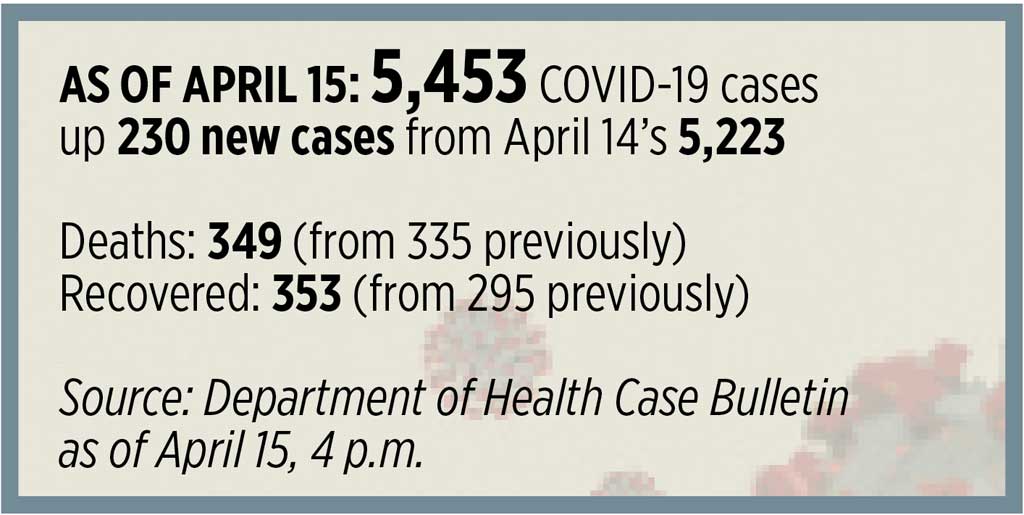
The Department of Health reported 230 new infections yesterday, bringing the total to 5,453.

Fourteen more patients died, raising the death toll to 349, it said in a bulletin. Fifty-eight more patients have gotten well, bringing the total recoveries to 353, it added.

Mr. Villafuerte said Congress, the DBCC and Budget department must take into account the state’s responses to the coronavirus disease 2019.

“For Congress, definitely, the investments would continue to be in infrastructure and health,” the lawmaker said. “We will have to prioritize health because of the situation.”

Mr. Villafuerte disagreed with Mr. Salceda that Congress and the administration might have to consider a budget lower than what the DBCC had proposed.

He said the lower chamber could adopt DBCC’s P4.6-trillion proposal, with the expected shortfall plugged with more borrowings.

“We are in a good fiscal position,” he said. “We can borrow money. We are bankable. I think we can stick to that budget based on a reprioritization.” — with Vann Marlo M. Villegas

Manila to take part in COVID-19 drug trials involving Avigan

THE Philippines will take part in clinical drug trials for COVID-19 in Japan, according to the spokesman of a government task force against the pandemic.

President Rodrigo R. Duterte attended a special summit of the Association of Southeast Asian Nations on the coronavirus disease, where he spoke with Japanese Prime Minister Shinzo Abe about the Japanese anti-flu drug Avigan, Cabinet Secretary Karlo Alexei B. Nograles said at a briefing yesterday.

Mr. Duterte reiterated that the Manila would participate in clinical trials of potential vaccines against the coronavirus disease 2019, said Mr. Nograles, who is also the task force spokesman.

Avigan is being studied by 50 countries as a possible cure for COVID-19. The Japanese government earlier this month said it would offer Avigan for free to countries that want to use it in treating the virus.

The company that makes drug, a unit of Fujifilm Holding Corp., has pledged to triple production.

ASEAN member-economies pledged at Monday’s summit to focus on research and development of vaccines and medicines amid the global pandemic.

ASEAN also called on countries to boost trade within the region and strengthen national and regional epidemic preparedness and response to any future health emergencies.

ASEAN also agreed to prepare a post-pandemic recovery plan to help boost economies in the region.

Mr. Nograles said Mr. Duterte has asked his economic managers to create a recovery plan that will be enforced once a Luzon-wide lockdown ends on April 30. — Gillian M. Cortez

CDC tells gov’t to slow coronavirus infections

THE Philippines should try to temper the rise in coronavirus infections to better prepare its health system pending global efforts to come up with a vaccine, according to the US Centers for Disease Control and Prevention (CDC).

Governments that have imposed lockdowns should balance the increase in cases and their healthcare systems’ preparedness in deciding whether to lift it, Barbara Marston, CDC COVID-19 International Task Force lead, said at a teleconference on Wednesday.

“Nobody knows completely how to do that yet,” Ms. Marston said. “The factors you have to consider are, have cases declined? What would happen if there were more cases? Is the health system ready to take on more cases? And balance all those things,” she added.

President Rodrigo R. Duterte locked the entire Luzon island on March 17, suspending work, classes and public transportation to contain the pandemic. He later extended the quarantine by two more weeks until April 30.

The Department of Health (DoH) started operating 15 testing centers this week, increasing capacities to 3,000 samples daily.

A task force against the coronavirus disease 2019 plans to boost the number of tests to 10,000 samples a day.

The CDC recommended maintaining efforts to “slow down” the spread of COVID-19 that has infected 1.9 million and killed more than 126,000 people while increasing testing capacity.

Ms. Marston said keeping people in isolation and imposing social distancing measures could slow infections, while more health workers should be trained.

“What you want to do is slow things down and then use the time that you gain by slowing anything down to do anything possible to prepare the health system,” she said.

“If we’re lucky, we can slow things down long enough to maybe get a vaccine or some treatment, but we don’t have those right now,” she added.

Meanwhile, Party-list Rep. Elizaldy S. Co proposed that quarantines be lifted in provinces and cities that have had zero to one coronavirus infection in the past 15 days.

“The objective of quarantine lifting is to allow people, albeit in limited numbers and in select localities, to return to their jobs,” the congressman said in a statement.

“We’re fighting a protracted war and until no vaccine is invented, the government’s limited resources can’t support and feed all those who were displaced. We need to save government funds for the longer battle,” he added. — C. A. Tadalan and G. L. Espedido

#COVID-19 Regional Updates (04/15/20)

Cebu to launch program to help stranded residents return home

THE CEBU provincial government is setting up a center to help residents return home after they have been locked out due to the enhanced community quarantine (ECQ) declaration to mitigate the entry of the coronavirus disease 2019 (COVID-19). Under the ECQ policy, the province’s borders were strictly closed except for cargo delivery and frontline workers. “The Stranded Cebuanos Assistance Center (SCAC) will become operational soon,” the provincial government said in a post on its Facebook page on Wednesday. Cebu has yet to announce an end-date for its ECQ implementation. Bohol province has been implementing a similar program through its Offshore Boholanos Coordinating Team. As of April 13, Bohol had received 11,868 requests for assistance. “As of this writing, there are requests pending prompting the team to add 40 more validators by tomorrow to fast track the process,” the local government said. The requests are validated by the team before organizing transport assistance to bring qualified residents home, with priority given to stranded students and displaced workers. Bohol’s community quarantine measures will be in effect until April 30. — MSJ

Davao City eyes ban on cockfighting, small town lottery

DAVAO City officials are looking at a total ban on gambling, including cockfighting events and the government-operated small town lottery. “There was a consensus that we would make Davao City gambling-free. Meaning, even legal gambling activities must not be allowed,” Mayor Sara Duterte-Carpio said in an interview Tuesday over the local government-run radio station. The issue on gambling activities has been central in the coronavirus disease 2019 (COVID-19) situation in the city as a series of cockfighting events in March has been traced as the main venue of COVID-19 local transmission cases. The derby was given a permit by the city government prior to the imposition of quarantine measures. “Government should not be the entity to encourage gambling to the poor,” Ms. Carpio said. As of April 15, the entire Davao Region recorded 92 COVID-19 patients, with Davao City accounting for the highest number at 76. — Carmelito Q. Francisco

Dar asks Bukidnon gov’t to ease restrictions on agriculture, transport

AGRICULTURE Secretary William D. Dar has appealed to the provincial government of Bukidnon to allow uninterrupted operations related to food production and transport. “We appeal for your deeper understanding of the importance of the unhampered movement of food and agricultural workers in minimizing the economic impact of the coronavirus pandemic,” Mr. Dar said in a letter to Bukidnon Governor Jose Maria R. Zubiri Jr. The secretary cited that the local directive is not in line with the Department of Agriculture’s memorandum granting continued operations of companies related to food production. The governor issued strict quarantine guidelines, in effect from April 13–26, after the province recorded its first positive case of the coronavirus disease 2019. Agriculture-related businesses such as sugar and fresh fruits are among those ordered to shut down operations for two weeks. “Subsequently, disruption in the operations will have a negative impact on the supply chain and will ultimately result in the financial dislocation of thousands of their employees,” Mr. Dar said. — Revin Mikhael D. Ochave

ADVERTISEMENT
ADVERTISEMENT