Home Blog Page 965

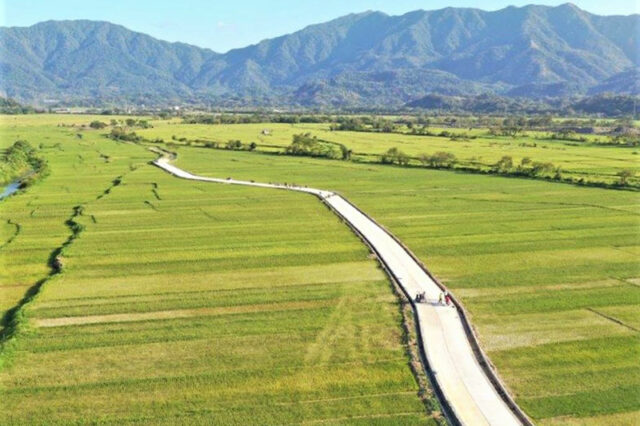
DPWH to probe ‘ghost’ farm-to-market road projects in Marcos anti-graft drive
DPWH.GOV.PH

THE Department of Public Works and Highways (DPWH) will investigate irregularities in farm-to-market road projects flagged by the Agriculture department, widening the Marcos administration’s anti-graft drive.

Public Works Secretary Vivencio “Vince” B. Dizon has ordered close monitoring of the claims, Palace Press Officer Clarissa A. Castro told a news on Tuesday, noting that anomalies in public works must be addressed swiftly.

“All cases like this involving anomalies — not just in flood control projects but in all infrastructure — will be closely monitored,” she said in Filipino.

Agriculture Secretary Francisco P. Tiu Laurel, Jr. earlier reported “ghost” farm-to-market road projects in Davao Occidental and Zamboanga del Norte, some of which either do not exist or remain incomplete despite funding.

Two of the questionable projects date back to 2021 and 2022, he said, adding that the findings would be forwarded to President Ferdinand R. Marcos, Jr.

The disclosures came as senators probe overpriced and substandard flood control projects. During hearings, contractors Cezarah Rowena “Sarah” C. Discaya and her husband Pacifico F. Discaya admitted to bribing lawmakers and officials to secure government contracts.

High-profile politicians have been linked to the scandal, including Speaker Ferdinand Martin G. Romualdez, resigned Party-list Rep. Elizaldy S. Co, Senators Francis G. Escudero, Jose “Jinggoy” Estrada, and Joel J. Villanueva, as well as former Senators Nancy S. Binay and Ramon “Bong” B. Revilla, Jr.

The controversies have sharpened scrutiny of infrastructure spending, stoking calls for greater transparency and stricter oversight as the government seeks to restore credibility in public works.

Meanwhile, Senator Francis Pancratius “Kiko” N. Pangilinan urged the Independent Commission for Infrastructure (ICI) to reconsider its decision not to livestream proceedings in its probe of the multibillion-peso flood control scandal, warning that the move could undermine public trust.

“Transparency is fundamental to public accountability,” he said in a statement. “With all due respect, the decision of the ICI to prevent the public from monitoring its proceedings online is ill-advised.”

ICI Executive Director Brian Keith Hosaka earlier said the commission would keep its hearings closed to avoid “trial by publicity” and prevent them from being used for political gain.

He said the ICI’s role is fact-finding, with cases to be turned over to bodies such as the Office of the Ombudsman.

Political analysts have cautioned that Mr. Marcos’s anti-graft push could be dismissed as political theater unless it leads to prosecutions and convictions. Business groups have also pressed for stronger accountability measures.

“The last nail on the coffin of public accountability is in the unacceptable delays in the resolution of corruption cases and the paltry conviction rates,” Mr. Pangilinan said.

He added that real accountability rests with the Judiciary, calling for swift trials, stiffer penalties and an end to impunity.

The scandal centers on irregularities in flood control projects, where about P500 billion has been allocated since 2022.

Mr. Marcos has since created the ICI with powers to recommend criminal, civil and administrative charges in both flood-related and other infrastructure projects.

Critics warn the controversy threatens to weaken disaster-preparedness spending in a country hit by an average of 20 storms a year and widely seen as the world’s most disaster-prone nation.

Also on Tuesday, House Deputy Minority Leader and Party-list Rep. Antonio L. Tinio said the President has approved about 3,700 public works projects worth P214 billion in regions flagged as hotspots for questionable infrastructure deals.

During plenary debates on the 2026 budget, the congressman said Mr. Marcos had approved funding for the projects through unprogrammed appropriations, alleging the President shares responsibility in the widespread infrastructure corruption issue.

“The one who approved all the projects under unprogrammed appropriations was the President himself,” he told the floor.

Ms. Castro did not immediately reply to a Viber message seeking comment.

Mr. Tinio said about P29.4 billion in public works funding was allocated to the Mimaropa region in the past two years, with P25 billion directed to infrastructure projects in Central Luzon and P16 billion in the National Capital Region.

The corruption scandal came to light after the President used his July State of the Nation Address to accuse lawmakers of profiting from government projects. Since then, the President has ordered lifestyle checks on officials, conducted surprise inspections of projects and created the ICI to pursue cases.

Subsequent inquiries by several agencies have flagged irregularities, citing recycled documentation and substandard construction materials.

On Sept. 21, thousands of Filipinos marched in the capital in the biggest protest in years against the multibillion-peso flood control scandal, turning weeks of online outrage over corruption into mass street demonstrations that rattled the political establishment. — Chloe Mari A. Hufana and Adrian H. Halili

Philippine military denies rumors of coup scheme

PHILIPPINE STAR/EDD GUMBAN

A PHILIPPINE military official on Tuesday dismissed rumors of a brewing coup, saying that troops would not participate in any attempt to overthrow President Ferdinand R. Marcos, Jr.

Reports of a possible military coup against Mr. Marcos on Sept. 21 circulated on social media as thousands of Filipinos took to the streets in the biggest protest in years over the multibillion-peso flood control scandal.

“These movements… [and] claims that there’s some kind of plot are clearly unfounded,” Philippine military spokeswoman Francel Margareth A. Padilla told a news briefing in Filipino. “There’s no truth to them.”

“The Armed Forces of the Philippines (AFP) remains intact, professional and disciplined,” she added.

The Southeast Asian nation is no stranger to coup attempts, having seen more than a dozen military mutinies since the restoration of democracy in 1986, after the late former President Ferdinand E. Marcos, Sr. was overthrown by a popular street uprising.

The last serious attempt to unseat a civilian government was in 2006, during the presidency of Gloria Macapagal Arroyo, but it was foiled by state security forces and led to the arrest of several military and police officials. A week-long national state of emergency was declared to quell the uprising.

Each succeeding President has seen the threat of a coup by disgruntled troops, with the government of ex-President Rodrigo R. Duterte having to deal with alleged plots to unseat him during his 2016-2022 presidency.

Ms. Padilla said the Philippine military remains neutral and won’t meddle with political matters, underscoring that it is now a “professional organization” and would shun calls for a coup amid the deepening flood control scandal.

The President faces mounting pressure as his administration is rocked by an unfolding scandal involving substandard, incomplete or nonexistent infrastructure in a country regularly battered by flooding.

Reports of irregularities in infrastructure contracts have fueled public outrage after a series of typhoons and monsoon rains earlier this year left Metro Manila and nearby provinces flooded despite extensive flood control projects.

The controversy stems from Mr. Marcos’ revelation in August that more than 6,000 flood control projects launched since 2022 lacked key details. About P545 billion has been allocated for flood control since then, with P100 billion cornered by top contractors.

“Politically motivated distractions are like static on a radio,” Ms. Padilla said. “They make noise, but they don’t actually change the signal. Our focus is locked on our mission, and that is to protect the people and secure the state,” she added. — Kenneth Christiane L. Basilio

PCG retrieves Chinese sea drone off Palawan province

PHOTO SHOWS an underwater drone with Chinese markings from the Philippine National Police in Bicol, Dec. 30, 2024. — PHILIPPINE NATIONAL POLICE REGIONAL OFFICE 5

THE PHILIPPINE Coast Guard (PCG) on Tuesday said it had taken custody of a suspected sea drone recovered by Filipino fishers off northern Palawan, marking the latest in a series of similar recoveries since 2022.

The 12-foot-long drone found on Sept. 28 bore Chinese markings, was equipped with water temperature and depth sensors, and showed signs of corrosion from prolonged saltwater exposure, it said in a statement.

Authorities are analyzing the origin, operational history and potential national security risks of the sea drone, which the PCG said matches a series of similar devices recovered since 2022, at least three of which were traced to China through Chinese SIM cards and transceivers linked to a China-based contractor.

“This incident highlights the need for continued community awareness and a whole-of-nation approach to deter unauthorized activities in our waters,” PCG Commandant Admiral Ronnie Gil L. Gavan said in the statement.

The Chinese Embassy in Manila did not immediately reply to a Viber message seeking comment.

The Philippine Navy in April said at least three sea drones recovered within the country’s waters in the past two years had a “50% to 80%” likelihood of being deployed by China and might have been intended for mapping out the sea floor of Philippine waters, in preparation for underwater warfare.

Equipped with advanced technology, the suspected Chinese sea drones could measure water depth, temperature, salinity, detect underwater sounds and transmit the data via satellite communication.

“Previous forensic analyses of similar recovered autonomous underwater vessels have identified them as tools for advanced underwater surveillance and seafloor mapping,” the PCG said.

Chinese research vessels were detected in northern Philippine waters earlier this year, prompting concern among maritime authorities over the possible military applications of scientific data collected during unauthorized surveys.

The Philippines and China have long clashed over competing claims in the South China Sea, a strategic and resource-rich waterway through which trillions of dollars in annual maritime trade flows.

Beijing claims nearly all of the contested waters via a U-shaped, 1940s nine-dash line map that overlaps with the exclusive waters of the Philippines and neighbors like Vietnam and Malaysia.

A United Nations-backed tribunal in 2016 voided China’s sweeping claims for being illegal, a ruling that Beijing does not recognize. — Kenneth Christiane L. Basilio

Speaker eyes 8 bills in priority legislative agenda

PCOO

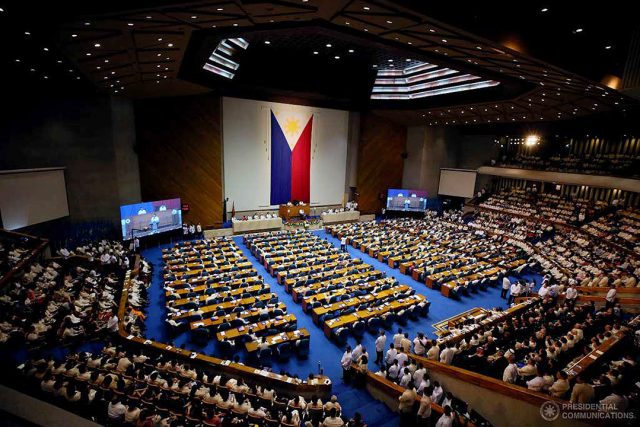
SPEAKER FAUSTINO “Bojie” G. Dy III on Tuesday said he is pushing the inclusion of eight bills in the government’s priority legislative agenda, including proposals to strengthen bases conversion for development and ban relatives of public officials from bidding for state projects.

Mr. Dy met with top officials at the presidential palace for the first Legislative-Executive Development Advisory Council (LEDAC) meeting of the 20th Congress, where he also proposed bills on guidelines for digital campaigning in elections and modernization of the Bureau of Immigration.

“We meet today in a spirit of collaborative governance to align our legislative agenda with the administration’s Philippine Development Plan and its eight-point socioeconomic agenda,” he said in a statement.

The LEDAC is composed of congressional leaders and private sector representatives, and aims to identify priority bills for streamlined passage based on the government’s agenda.

The Speaker is pushing the prioritization of a bill granting greater market regulatory powers to the National Food Authority over the rice industry, alongside a measure to strengthen disaster risk financing and insurance for faster calamity response.

He is also backing a proposed program to reward “outstanding” school graduates from low- and middle-income families, and a magna carta for villages aimed at granting long-overdue benefits and resources to local governments.

“With the President’s leadership and the collective will of this council, we are confident that we can achieve these legislative goals,” Mr. Dy said.

Meanwhile, Albay Rep. Cielo Krisel B. Lagman said Mr. Dy also vowed to support the inclusion of a House bill seeking to establish an independent commission to investigate bogus flood control deals via law as an administration priority.

House Bill No. 4453 proposes the creation of a five-member commission to investigate corruption in flood control projects. It would be granted full access to state records and have subpoena and contempt powers for noncompliance.

“When he met with the Liberal Party bloc last week, he told us that our bill is something he supports,” Ms. Lagman said, adding that Mr. Dy would tell the President about the proposal.

President Ferdinand R. Marcos, Jr. created the Independent Commission for Infrastructure through an executive order earlier this month to probe corruption in public works projects. — Kenneth Christiane L. Basilio

Senate to invite Co in flood probe

PHILIPPINE STAR/EDD GUMBAN

THE Senate Blue Ribbon Committee will invite former Party-list Rep. Elizaldy S. Co to its next hearing on anomalous flood control projects.

“For the next hearing of the committee, we will send an invitation letter to his address. Now we know he is abroad and will not show up,” Senator Panfilo “Ping” M. Lacson, who heads the committee said in a statement. “If that is the case, we will issue a subpoena, and then a show-cause order.”

He added that if the former congressman fails to attend the next hearing, the Senate will cite him in contempt and issue a warrant of arrest.

Mr. Co, who resigned from his congressional post on Monday, was previously given parliamentary courtesy by the Senate.

He will be replaced by Ako Bicol party-list third nominee Jan Franz Norbert Joselito A. Chan, Party-list Rep. Alfredo C. Garbin, Jr. said in a Viber message.

This comes amid allegations over his role in questionable flood control projects and budget insertions. He has also been accused of collecting as much as 25% commissions from congressional insertions, which he denies. Mr. Co sat as the Appropriations committee for more than two years since the start of President Ferdinand R. Marcos, Jr.’s term.

Malacañang on Tuesday urged Mr. Co to return to the Philippines and face all accusations against him.

“If a case is filed against him, he will not be able to avoid it. He cannot run from it,” Palace Press Officer Clarissa A. Castro told a news briefing in Filipino.

“It would be better if, should he face any charges, he simply fights for his rights and stands by the truth supported by his evidence.”

Mr. Co is currently in Madrid, Spain while an International Criminal Police Organization (Interpol) blue notice is against him.

Justice Secretary Jesus Crispin C. Remulla earlier said that authorities no longer expect Mr. Co to appear before the Department of Justice, raising the possibility of him being declared a fugitive through Interpol.

He clarified that while Mr. Co has not yet been officially classified as a fugitive, that designation is likely forthcoming.

In a separate statement, Cebu Rep. Vincent Franco “Duke” D. Frasco said Mr. Co’s resignation should not absolve him of alleged crimes linked to anomalous flood control deals.

“If consequences are limited only to a nominee, Congress sets a dangerous precedent: that members can violate rules, resign to avoid expulsion, and leave their party untouched,” he said.

Mr. Co’s resignation “is not an abandonment,” Mr. Garbin said in response to Mr. Frasco’s statement. “It demonstrates respect for institutional integrity, allowing investigations to proceed free of any suspicion of undue influence.”

Meanwhile, Senator Lacson said that the committee will also invite former House Speaker Ferdinand Martin G. Romualdez to the hearing.

The senator said that the Blue Ribbon Committee will continue its hearings on anomalous infrastructure projects as long as there are new major developments that it needs to look into.

“If we stop the probe now, we may reinforce the perception rightly or wrongly that we are covering up for someone. No. I said it clearly, we will go where the evidence leads us,” he said.

Earlier, the House Infrastructure Committee halted its investigation to give way to the independent government fact-finding body.

Also on Tuesday, listed firm Altus Property Ventures, Inc. (APVI) announced the resignation of Maynard S. Ngu as an independent member of its board of directors on Sept. 29.

In a stock exchange disclosure, the APVI board said it has accepted Mr. Ngu’s resignation, who stepped down due to personal reasons.

Mr. Ngu has been tagged by former Public Works Undersecretary Roberto R. Bernardo in connection with an ongoing inquiry related to flood control projects.

In a sworn affidavit, Mr. Bernardo claimed that Mr. Ngu is the bagman of Senator Francis “Chiz” G. Escudero

Mr. Ngu, a government contractor, contributed P30 million to Mr. Escudero’s 2022 senatorial campaign, according to a report by the Philippine Center for Investigative Journalism.

Mr. Ngu is the chief executive officer of Cosmic Technologies, which is behind the local cellphone brand Cherry Mobile. — Adrian H. Halili, Chloe Mari A. Hufana, Kenneth Christiane L. Basilio and Beatriz Marie D. Cruz

Subway drilling work set for Jan.

THE Tunnel Boring Machine at the Camp Aguinaldo station of the Metro Manila Subway Project in Quezon City on Jan. 16, 2025. — PHILIPPINE STAR/MIGUEL DE GUZMAN

THE Department of Transportation (DoTr) is set to start the drilling works for the Metro Manila Subway Project (MMSP) within the Corinthian Gardens alignment by January 2026 as its right-of-way (RoW) acquisition for the project continues to progress.

This came after residents and homeowners of Corinthian Gardens have accepted compensation amounting to a combined P420.08 million for the property that will be affected by the construction of the subway, the Transportation department said on Tuesday.

Within the Corinthian Gardens, the subway project covers about 500 meters and will affect a total of 33 properties, DoTr said, noting that as of Sept. 30, it has issued a total of 32 compensation offers at P820.56 million to affected property owners.

Of these, only 20 owners have accepted the offers, the Transportation department said, adding that negotiations for the remaining property owners are still ongoing.

Further, the DoTr is targeting full acquisition of RoW requirements for the MMSP by March of 2026, as the current RoW status stands at 75%. 

Acting Secretary Giovanni Z. Lopez previously said that the agency has set a target RoW acquisition of about 95% by the end of the year.

The DoTr is hoping to award the last three remaining packages of the Metro Manila Subway project around October or November.

The last three remaining contract packages (CP) are 105, 108, 109. The packages cover the construction of the station in Kalayaan Avenue and Bonifacio Global City, Lawton and Senate-DepEd stations, and the Ninoy Aquino International Airport Terminal 3 station, respectively.

The remaining contract packages are valued at between P10 billion and P15 billion.

In July, the DoTr said that it is pushing for partial operations of the subway line, though the entire line is expected to be completed by 2032.

The subway, which will be 33 kilometers long with 17 stations, seeks to cut travel time between Quezon City and NAIA to 35 minutes from over an hour currently. It is expected to accommodate up to 370,000 passengers daily. — Ashley Erika O. Jose

More EDSA busway enforcers sought

PHILIPPINE STAR/MIGUEL DE GUZMAN

A PHILIPPINE Senator urged the Department of Transportation (DoTr) to station more enforcers in EDSA busway stations, citing safety concerns for passengers.

“Maybe we can put an enforcer there, 24 hours a day, or a member of SAICT (Special Action and Intelligence Committee for Transportation),” Senator Erwin T. Tulfo said in a senate hearing on Tuesday. “That’s just to ensure safety at each station so that passengers who get off won’t be put at risk.”

The EDSA Busway, a dedicated bus lane along Metro Manila’s busiest thoroughfare, consists of 23 stations operating 24 hours a day.

“We fully agree we need to continue our enforcement, especially now that our operations are 24-7,” Transportation Undersecretary Mark Steven Pastor told senators.

He added that the agency will also issue a directive next year for all operators to ensure that all buses have left side doors.

“So that’s to ensure that there are no safety issues when they get off,” Mr. Pastor said.

The Senator also told the Transportation department to implement measures to make the busway more accessible to Persons with Disability (PWDs).

He pushed for the agency to require transportation companies catering to the EDSA Busway to provide a kneeling bus for PWD commuters.

“I believe you need to talk to the bus owners, our companies — they are not friendly to people in wheelchairs,” Mr. Tulfo told the DoTr.

“We need them to introduce kneeling buses. The ones that get off to accommodate people in wheelchairs, the ones that work like in other countries,” he added. — Adrian H. Halili

QC among most bike-friendly in SEA

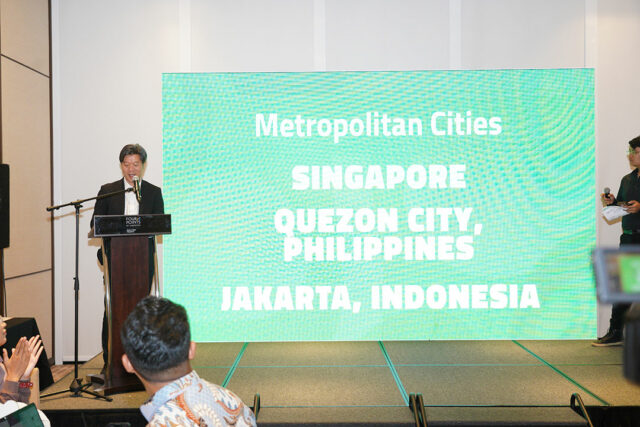
QUEZON CITY is among the Most Promising Bicycle-Friendly Metroplitan Cities in Southeast Asia Mobility Awards this year.

QUEZON CITY (QC) emerged as among the Most Promising Bicycle-Friendly Metroplitan Cities during this year’s Southeast Asia Mobility Awards (SEAMA).

The city, along with Jakarta and Singapore, were recognized in the category for its increasing investment in protected bike lanes, and progress in bike-inclusive planning among others.

“This recognition belongs not only to the city government, but to every cyclist, commuter, planner, and partner who embraces the vision of a safer, greener, and more inclusive city,” Quezon City Mayor Maria Josefina “Joy” G. Belmonte said, according to a media release on Tuesday.

The inaugural SEAMA, held in Malaysia last Sept. 19, honored cities and commuters across six Southeast Asian countries, including the Philippines, Indonesia, Malaysia, Singapore, Thailand, and Vietnam.

Iloilo City, known as the country’s bike capital, was also recognized as one of the Most Promising Bicycle-Friendly Component Cities. It joined George Town, Malaysia, and Bandung, Indonesia.

“Together, we prove that we can work hand-in-hand, and we can build a city where sustainable transport and vibrant public spaces are not only possible but celebrated. May our story inspire our cities to create safer, greener, and more peaceful, people-centered mobility,” Iloilo City Mayor Raisa Treñas-Chu said. — CAT

PH keeps Tier 1 ranking in US global anti-trafficking report

PHILSTAR FILE PHOTO

THE PHILIPPINES has maintained its Tier 1 status for the 10th straight year in the United States Department of State’s Trafficking in Persons (TIP) Report, marking a decade of compliance with global standards in fighting human trafficking, the Department of Justice-Inter-Agency Council Against Trafficking (DOJ-IACAT) said on Tuesday.

According to the report, dated Sept. 29, the Philippines was among 33 out of 188 governments that satisfied the minimum requirements of the US Trafficking Victims Protection Act of 2000.

Justice Secretary Jesus Crispin C. Remulla, who chairs the IACAT, said the recognition underscores the government’s intensified efforts to pursue trafficking cases and protect victims, particularly minors exploited online.

“There is no place for complacency in our justice system. This Tier 1 ranking is a beacon of light, an impetus for our sustained efforts,” he said in a statement.

The report cited the Philippines’ “increased prosecution and law enforcement” initiatives, including rescue operations, case build-ups, convictions, and the use of plea bargaining in online child exploitation cases to speed up resolution and reduce witness trauma.

It also noted preventive measures such as awareness campaigns, port monitoring, and coordination with local and foreign partners, as well as services for migrant workers and restitution guidelines for trafficking survivors.

Mr. Remulla added that the government remains committed to banning Philippine offshore gaming operators (POGOs) linked to trafficking and scam operations.

Nicholas Felix L. Ty, Justice undersecretary in charge of IACAT, stressed the importance of international cooperation. “We are only a part of a larger chain of protection,” he said, adding that the Philippines would continue engaging “civil society groups, private sectors, and foreign governments in anti-trafficking efforts.” — Erika Mae P. Sinaking

PDEA: P29.76-B drugs seized in first half

PHILSTAR FILE PHOTO

THE Philippine Drug Enforcement Agency (PDEA) said that it has seized P29.76 billion worth of illegal drugs in the first six months of 2025, surpassing total drug seizures last year.

In a Senate budget hearing, PDEA Director General Izagani R. Nerez said that the agency exceeded the P8.28 billion worth of illegal substances confiscated during the full year of 2024.

Mr. Nerez reported that that agency had seized 4.24 tons of crystal methamphetamine (shabu) during the first semester.

It had also confiscated a total of 803 kilograms of marijuana, 6.58 kilos of cocaine, and 22,161 pieces of ecstasy during the six-month period.

Senator Ronald “Bato” M. dela Rosa also approved the proposed P4.53-billion budget of PDEA along with the P598-million budget of the Dangerous Drugs Board for plenary consideration. — Adrian H. Halili

P35-B smuggled goods seized in first 8 months

BUREAU OF CUSTOMS

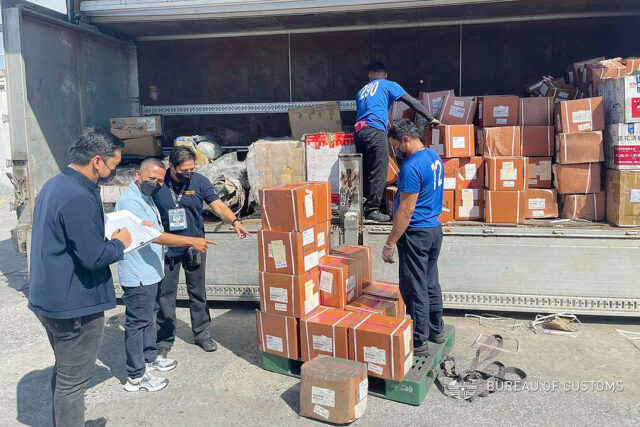
THE BUREAU of Customs (BoC) has confiscated P34.725 billion worth of smuggled goods in the eight months through August.

“We were able to seize from Jan. 1 to Aug. 31, 2025, a total of 633 seizure operations, confiscating goods amounting to P34.725 billion,” Assistant Commissioner Vincent Philip C. Maronilla said in a speech on Tuesday.

The top five highest valued commodities include various items valued at P20.166 billion, followed by wildlife and natural resources at P4.784 billion, illegal drugs at P4.562 billion, cigarettes, tobacco, and vape at P2.104 billion, and counterfeit goods at P1.401 billion. — Aaron Michael C. Sy

CEAP calls for ‘reasonable’ tuition rates in private schools

RUBEN RODRIGUEZ-UNSPLASH

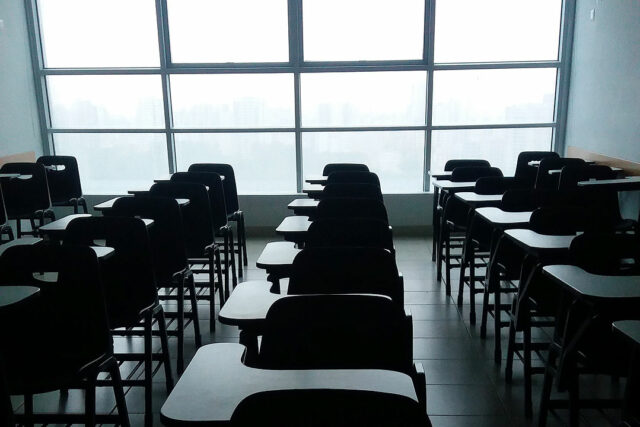
THE Catholic Educational Association of the Philippines (CEAP) on Tuesday called for a more flexible framework for tuition rates to help private institutions cope with the dwindling enrollment rate.

“One of the things that is very crucial to us right now is the tuition fee increases. They are pegged to regional inflation rates,” CEAP Corporate Secretary Joaquin Severino S. Martinez told reporters in a press conference.

“If tuition is capped only by inflation, schools will be forced to cut corners or worse, shut down,” he added.

CEAP President Karel S. San Juan noted that enrollment for basic education in private schools dropped to 1.4 million in 2022 from 4.3 million in 2019.

Private schools are estimated to have 2 million students, while public schools have 16 million students.

He added that the free tuition law is one of the factors contributing to the decline in enrollment among private schools.

“Because of the difficult economic situation, of course, our students would gravitate towards free tuition fees in public schools, so that’s a loss of enrollment to us,” Mr. San Juan said at the same event.

Tertiary or college education is made accessible and affordable for all Filipinos through free tuition and exemption from other school fees in state universities, local colleges, and state-run technical-vocational institutions, under Republic Act No. 10931, the Universal Access to Quality Tertiary Education Act.

“Ever since the pandemic, there have been schools that closed,” Mr. San Juan said. “The pandemic is an example of how the private school sector is so dependent on tuition fees alone.”

UPHOLDING CATHOLIC VALUES
Apart from its challenges in tuition fees and enrollees, the CEAP also underscored the importance of retaining ethics in the General Education (GE) curriculum of higher education institutions (HEIs).

The Department of Education (DepEd) in late May proposed the removal of ethics in the GE curriculum to avoid duplication of subjects taught in Grades 7 to 12.

“For CEAP, ethics is not optional. It is essential. And look what’s happening to our country today,” CEAP Executive Director Narcy F. Ador Dionisio said.

“This is our current situation. What more would happen if we remove ethics?” he added.

The Catholic educators underscored that ethics “forms the conscience of students” and that alumni involved in corruption allegations in the business and government sector have “lost their fear of God and conscience”.

“It’s embarrassing if you graduate from a Catholic school and you become corrupt,” Mr. San Juan said.

“You’re living lives contrary to the very essence of the values that we have taught you in the schools and universities,” he added. — Almira Louise S. Martinez