

Home Blog Page 9608

Portugal to move asylum seekers to tourist flats

LISBON — Portugal will test 500 asylum seekers for the coronavirus and move some into apartments left empty by tourists, after an outbreak at an immigrant hostel last week prompted scrutiny of overcrowded conditions that could lead to contagion.

Portugal is housing 800 asylum seekers in hostels across the country while they wait for their applications to be processed. A single case at one hostel in Lisbon last week prompted all 175 residents to be tested, revealing that 138 had contracted the virus.

The Ministry of Internal Affairs said on Sunday it was planning to “take advantage of the reduced pressure on the housing market in the capital” to move some asylum seekers to hostels and apartments left empty because of the lack of tourists this summer.

Applications for asylum increased in Portugal nearly threefold in the past five years to 1,716 in 2019.

The Council for Refugees (CPR), responsible for housing people while their applications are being processed, has capacity for just 150, and puts up the remaining applicants in hostels or social housing.

CPR head Monica Farinha told Reuters she was concerned that the conditions of the hostels, with several people to a room, meant there was a high risk of contagion.

Health minister Marta Temido said on Sunday that a study of nearly 3,000 of the country’s 23,864 cases indicated that co-habitation and contagion in concentrated spaces such as care homes and the Lisbon hostel were the top causes of transmission of the disease.

The country is preparing to ease a lockdown imposed on March 18 and currently in place until May 2, but the health minister urged people to remember that social distancing measures would need to continue to avoid a resurgence in cases. — Reuters

UnionBank net income climbs 22% in 1st quarter

UNIONBANK of the Philippines, Inc. saw its net profit rise in the first quarter. — WWW.FACEBOOK.COM/UNIONBANKPH

UNIONBANK OF THE Philippines, Inc. booked a higher net profit in the first three months of the year amid better revenues and higher net interest income.

The bank’s net income grew 22% year on year to P2.641 billion, according to the lender’s filing with the local bourse on Monday.

Revenues also jumped 37% to P9.5 billion. This was bolstered by its net interest income which surged 47% to P6.8 billion.

The bank’s loan book increased 24% to P391.8 billion on the back of growth in commercial lending (35%), consumer loans (34%), SME (small and medium-sized enterprises) banking (25%) and its credit card business (15%).

The potential impact of the coronavirus disease 2019 (COVID-19) has also been factored in by UnionBank as it boosted its provisions for loan losses to P1.3 billion, 7.6 times higher than the P174.6 million it allotted in January to March 2019.

“We deemed it prudent to set aside higher provisions for the year given the uncertainties brought about by this unprecedented health crisis,” UnionBank Treasurer and Chief Financial OfficerJose Emmanuel U. Hilado said in a statement.

“Our solid financial performance and capital base shall provide us the cushion to withstand the economic impact of the enhanced community quarantine,” he added.

Meanwhile, the lender’s margins increased by 114 basis points to 4.5% from 3.4% in the previous year. This was boosted by lower funding costs due to the 22% growth in current account, savings account deposits, paired with the reduction in policy rates and reserve requirement ratio by the Bangko Sentral ng Pilipinas.

UnionBank’s total assets as of March stood at P751.855 billion.

“UnionBank is committed to support the economy and its customers by ensuring access to liquidity and other financial needs amid this crisis,” UnionBank President and Chief Executive Officer Edwin R. Bautista said in a statement.

In February, the bank raised P6.8 billion through its series A unsecured subordinated notes eligible as Tier 2 capital. With an interest rate of 5.25%, the papers will be callable in 5.25 years and will mature in 2030.

The Aboitiz-led lender’s shares finished trading at P54.40 apiece on Monday, up by 40 centavos or 0.74% from its previous close. — Luz Wendy T. Noble

US property market in ‘chaos’ as laws waived on rent, debt payments

TOM Barrack said the US property market is in “chaos” and still on the verge of collapse because the federal government and local authorities are allowing renters and homeowners to skip payments because of the coronavirus.

“We haven’t had a crisis like this,” Mr. Barrack, chief executive officer of Colony Capital, Inc., said in an interview Friday on Bloomberg Television. “We’ve never had one where we just have a government taking of revenue.”

The stimulus bill passed by Congress last month included a provision allowing borrowers to defer payments for as long as a year without penalty on federally backed mortgages. At the same time, cities and states throughout the country have suspended evictions and foreclosures to help the tens of millions of Americans who’ve lost their jobs.

Normally, lenders and landlords can use the legal system to enforce rent and interest obligations, but “all those options are out the window,” Mr. Barrack said.

A month ago, Mr. Barrack, 72, was among the first big real estate investors to warn publicly about the perilous state of the industry and to call for government intervention. He proposed an orchestrated forbearance, a “time out” in which any payments could be accrued onto leases and loans.

Many of the measures he sought then, including market liquidity from the Federal Reserve and delays in new accounting rules, were adopted. Others, such as a halt on margin calls by banks and a suspension of mark-to-market requirements on financing arrangements, weren’t.

Federal efforts such as the Paycheck Protection Program and Main Street Lending Program are “difficult to utilize” for companies like Colony, which is structured as a real estate investment trust, Mr. Barrack said.

“We’re not using those,” he said. “We’re encouraging many of our borrowers and our users to rely on whatever subsidies they can get to continue to make their payments.”

Colony’s real estate portfolio was valued at almost $50 billion as of Dec. 31. Mr. Barrack said its digital infrastructure investments — cell towers, data-storage facilities and fiber-optic networks — are holding up best. Retail and hospitality assets are the worst performers.

In April, the number of Colony tenants who made rent payments was “amazingly good,” dropping only 3% to 5% from normal levels, Mr. Barrack said. He expects fewer will remain current next month.

Mr. Barrack, who first saw property prices collapse during the savings and loan crisis of the 1980s, predicted that big companies like Colony, which he said still has “plenty of liquidity,” will survive the recession and real estate shakeout.

“The people who’ll be crushed are the people who own the equity, the people who own bonds and debt, the pensioners,” he said. “At the end of the day, the government is going to have to step in and subsidize it all if people don’t go back to work.” — Bloomberg

ICTSI, Bloomberry start mass-testing 2,500 employees

RAZON-LED firms International Container Terminal Services, Inc. (ICTSI) and Bloomberry Resorts Corp.’s Solaire Resort & Casino said they have started testing their employees for the coronavirus disease 2019 (COVID-19).

“Complementing the Philippine government’s thrust to help curb the spread of the coronavirus disease, ICTSI and Solaire partnered with the Tropical Disease Foundation (TDF) and Ayala Healthcare Holdings, Inc. (AC Health) to screen employees for the COVID-19 virus, both for those who have been working from home and for those who have been working at the very front lines to help keep the economy moving,” ICTSI said in a news release.

In an e-mailed reply to a question, ICTSI told BusinessWorld that the mass testing initially involves “about 2,500 employees.”

Enrique K. Razon Jr., chairman of ICTSI and Bloomberry, was quoted as saying in the news release: “Our employees are our number one asset. As we try to overcome this most difficult phase and [as we move] into the ‘new normal’, we do so without letting our guard down. Consistent with our aim of helping the country’s health infrastructure in tackling the extent of the pandemic, our decision to invest in mass testing will give us, our employees, and their loved ones the reassurance that they will have a safe working environment, which ICTSI and Solaire are well-known for.”

ICTSI said the Bloomberry Cultural Foundation, Inc. (BCFI) recently bought 100,000 test kits from China and South Korea approved by the Food and Drug Administration (FDA) to help the government in its battle against the COVID-19 pandemic.

It said the foundation had also donated P60 million worth of personal protective equipment (PPE) and N95 masks to the Department of Health. — Arjay L. Balinbin

Liquidity growth slows in February amid outbreak

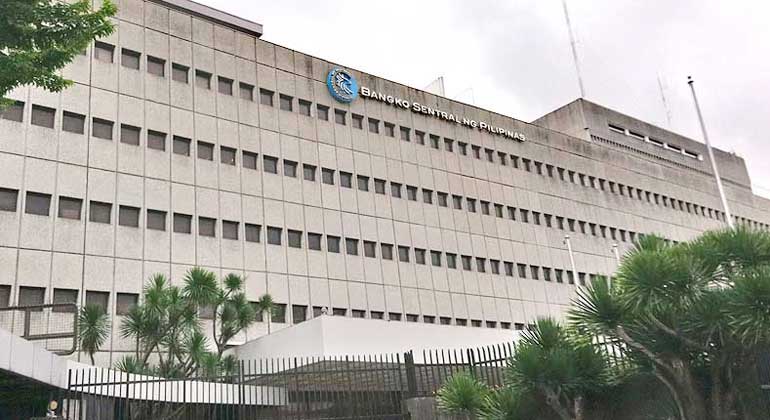
LIQUIDITY growth slowed in February. — BW FILE PHOTO

MONEY SUPPLY growth in February slowed, with markets already factoring in the possible impact of the coronavirus disease 2019 (COVID-19) on the economy.

Domestic liquidity or M3, the broadest measure of money supply in an economy, grew by 10.9% year on year, slower than the upward-revised 12% seen in January, according to preliminary data from the Bangko Sentral ng Pilipinas (BSP).

Month on month, M3 slipped by 0.3%.

“Demand for credit remained the principal driver of money supply growth,” the BSP said in a statement on Monday.

Net claims on the central government grew by 18.4% in February, easing from the downward-revised 31.8% expansion in January, which the BSP said was due in part to the increase in deposits by the government with the central bank.

Domestic claims, which were mainly fueled by credit to the private sector, likewise saw slower growth of 10.3% coming from the 11.7% seen the previous month.

The BSP identified sectors such as real estate activities; financial and insurance activities; electricity, gas, steam and air conditioning supply; information and communication; and construction as main drivers of loans for production activities.

“Loans for household consumption remained robust due mainly to faster growth in motor vehicle loans during the month,” the central bank said.

Meanwhile, net foreign assets (NFA) in peso terms inched up by 9.6% year on year in February, easing from the 8.7% growth in January. The BSP said higher dollar reserves boosted the NFA position.

“Going forward, the BSP will remain vigilant in monitoring domestic liquidity and credit dynamics amid significant disruptions to economic activity. The BSP reassures the public of its commitment and readiness to deploy its full range of instruments to ensure that liquidity and credit remain adequate amid the ongoing health crisis,” the central bank said.

UnionBank of the Philippines, Inc. Chief Economist Ruben Carlo O. Asuncion said M3 growth slowed in February likely due increasing worries about the COVID-19 outbreak, which was then already starting to escalate in some countries.

“M3 growth in February may have started to take a cue from the “once-in-a-lifetime” COVID-19 crisis. The market may have started to anticipate what could happen if the COVID-19 outbreak in China further escalates and reaches local shores,” Mr. Asuncion said in an e-mailed response.

Meanwhile, Rizal Commercial Banking Corp. Chief Economist Michael L. Ricafort said the slower February pace came after the government’s issuance of retail Treasury bonds (RTB).

“The slower domestic liquidity growth as of February may primarily reflect the reduction of peso funds in the financial system after record RTB issuance by the government that effectively siphoned off a record P310.8 billion from the financial market,” Mr. Ricafort said in an e-mail. — LWTN

Christian Bautista, Janine Teñoso pay tribute to frontliners with song

Singers Christian Bautista and Janine Teñoso are paying tribute to the frontliners of the ongoing COVID-19 pandemic through a song with an accompanying music video, “Bukas Wala Nang Ulan.”

The music video is a collage of photos and videos of frontliners and COVID-19 survivors “showing both the hardships and sacrifices of those battling the disease… and the joys of how people are coming together as one community,” said a press release.

“Although it is early on into the pandemic, the video also features some triumphs of early survivors — showing hope that we can all surpass the situation,” it added.

The music video was also described as a call to action for relief efforts. Part of the proceeds from streaming are to be donated to the Philippine Red Cross Quezon City chapter.

Universal Records, which distributes the song, has partnered with Help From Home, an organization that coordinates and connects “individuals and institutions to those most in need: frontliners and communities at risk.”

Bukas Wala Nang Ulan” is available on Spotify, Apple Music, YouTube Music, and other digital stores worldwide. — ZBC

Where do the country’s oldest (and at most risk of COVID-19) populations live?

Where do the country’s oldest (and at most risk of COVID-19) populations live?

How PSEi member stocks performed — April 27, 2020

Here’s a quick glance at how PSEi stocks fared on Monday, April 27, 2020.


First-round aid recipients still eligible for next round during GCQ

HOUSEHOLDS that received the first round of social welfare cash assistance will remain eligible to receive the second round even after their communities transition from enhanced community quarantine (ECQ) after April 30 to a less-restrictive general community quarantine (GCQ), the Department of Social Welfare and Development (DSWD) said.

The DSWD said in a briefing that the emerging rules for distributing the remaining assistance, known as the social amelioration program (SAP), are being drafted ahead of the ECQ-GCQ transition which kicks in for some parts of the country at the end of the month.

Social Welfare Secretary Rolando Joselito D. Bautista said April distributions reached over 18 million families and that the department has transferred 97.13% of its SAP funding to local government units (LGUs). He estimated that SAP funds worth P37 billion have reached intended beneficiaries.

The SAP involves monthly grants of between P5,000 to P8,000 to poor households in communities affected by the lockdown over a period of two months.

Mr. Bautista said a technical working group is drafting the guidelines after President Rodrigo R. Duterte announced Friday that some parts of the country will transition to GCQ after April 30, while Metro Manila and other areas deemed high-risk for coronavirus disease 2019 (COVID-19) will remain under ECQ until May 15.

GCQ features fewer restrictions on movement and a gradual return to work for industries that had been classified as non-essential and subject to shutdown orders under the Luzon-wide ECQ.

Ito ang magiging basehan namin sa paggawa ng guidelines para sa implementasyon ng SAP for the second tranche. Kailangan kasi namin ang approval ng IATF (This will be the basis for creating the guidelines for the second tranche of the SAP. We need the approval of the Inter-Agency Task Force for the Management of Emerging Infectious Diseases for the guidelines,” he said.

Palace Spokesman Herminio L. Roque has said the government will look into corruption and inefficiency in distributing SAP funds, citing reports that qualified households have not been reached by the program and that some “ghost” beneficiaries are still on the beneficiary lists, despite being dead.

Malinaw po ang babala ng ating President: zero tolerance dun sa korapsyon lalo na kung pagpyepyestahan ay ang ayuda para sa mga naghihirap dahil sa ECQ… pagpaparusahan kayo at hahanapin kayo (The warning of the President is clear: there will be zero tolerance of corruption especially if they are messing with the aid for those who are suffering because of the ECQ… you will be punished and you will be hunted down),” Mr. Roque said in a briefing Monday.

Mr. Roque said the Palace endorses the disbursement of the second round of SAP funds to those that received the first round of aid. — Gillian M. Cortez

Small-firm wage subsidy program receives P51-B in funding — DBM

THE Department of Budget and Management (DBM) has released P51 billion worth of funding for the government’s wage subsidy program for employees of small businesses, which will be rolled out starting next month.

In a mobile phone message Monday, Budget Secretary Wendel E. Avisado said that the DBM released both the Special Allotment Release Order (SARO) and Notice of Cash Allocation (NCA) for the funds intended for the subsidy program.

Mr. Avisado said the P51 billion will be sourced from “unprogrammed funds.”

According to a DBM document obtained by reporters, a P51-billion SARO was issued to the Social Security System (SSS), the main implementing agency, on Friday. The SARO was approved by the Office of the President on April 20.

Payouts for the first tranche of the P51-billion Small Business Wage Subsidy (SBWS) will be given starting Friday, May 1 until May 15, with the second tranche to be distributed on May 16-31.

The application period for the subsidy program was extended until May 8 from the earlier April 30 cutoff after the SSS website went down for a few days after it started accepting applications on April 16.

The government said the program will extend cash handouts worth P5,000-P8,000 to some 3.4 million employees of small businesses affected by the lockdown.

Small businesses are defined as those not belonging to the top 2,745 large taxpayers of the Bureau of Internal Revenue (BIR).

Employees eligible for the program should not have been retrenched or resigned.

Applicants of the COVID-19 Adjustment Measures Program (CAMP) of the Labor department will be transferred to the SBWS program..

CAMP beneficiaries will only be eligible for a one-month wage subsidy. The second tranche of the government’s P205-billion cash aid to 18 million poor families and those belonging to the informal sector will also begin next month. — Beatrice M. Laforga

DA, TESDA to offer training in urban agriculture, rice farming

THE Department of Agriculture (DA) said it has signed an agreement with the Technical Education Skills and Development Authority (TESDA) to offer training in urban agriculture, rice farming and livestock and poultry raising.

The initial areas of joint training were announced as part of a broader food-security effort with parts of the country less than a week away from transitioning to less-restrictive forms of quarantine.

“Our farmers need a complete package of support and technical assistance to enable them to produce more. In this regard, we welcome the TESDA as a partner as together we confront the ‘new normal’ environment as a result of the coronavirus disease 2019 (COVID-19) pandemic,” Agriculture Secretary William D. Dar said in a statement Monday.

Mr. Dar and TESDA Director-General Isidro S. Lapeña reached the agreement recently to jointly design the coursework.

“Agriculture has been our top priority. Our training institutions are directed to prioritize the agri-sector in allocating budget for their skills training. In this time of pandemic, we are now seeing the importance of food security. We can utilize both big and small spaces to plant vegetables,” Mr. Lapeña said. — Revin Mikhael D. Ochave

Gov’t rice buffer stock projected at 94 days by end of 2020

THE rice buffer stock held in government warehouses has been projected at the equivalent of 94 days’ consumption by the end of the year, Agriculture Secretary William D. Dar said.

“We would like to inform the public that based on our estimates, the country will enjoy an ending rice inventory of 3.27 million metric tons (MT) by Dec. 31. That means we will have rice to feed the entire country for 94 more days or three months, up to March 2021,” Mr. Dar said in a statement.

The Department of Agriculture said the overall rice supply by the end of the year, including those held by households and commercial traders, is projected at 17.99 million MT, 18% higher than overall rice demand of about 14.67 million MT.

“Let us not create unnecessary panic over our food supply… We remain forward-looking in squarely addressing concerns that threaten our food security,” Mr. Dar said. — Revin Mikhael D. Ochave