Home Blog Page 9175

Femtech addresses the global market for women’s health

By Patricia B. Mirasol

The rise of “femtech” has been a long time coming given that women make up half of the global population and their higher spending power is pushing the “she-conomy.” 

Femtech, which refers to the intersection between women’s health and technology, includes fertility solutions, period-tracking apps, pregnancy and nursing care, women’s sexual wellness, and reproductive system healthcare. It also addresses illnesses that disproportionately affect women, such as Alzheimer’s.

Previously sidelined as a niche market, the growth of femtech coincides with an increase in the inclusivity of women in clinical research and product development. The healthcare industry recognizes that there is a difference between women’s health and men’s health. No longer can women’s health be subsumed in a framework that treats the male as the default. 

Femtech is estimated by research and consulting firm Frost & Sullivan to have a market potential of $50 billion by 2025. 

WOMEN’S HEALTH SOLUTIONS
The term “femtech”—coined by Ida Tin, founder of the period tracking app Clue—has yet to gain currency in some corners of the world even if women-centric applications have been around for a few years. 

Said Louise, a 30-year-old Filipina, “I’ve been using the period tracker Glow for three years now. Tracking my period has helped me check my polycystic ovarian syndrome symptoms; I can easily check whether my symptoms are improving or not depending on the timing of my monthly period. It has also helped me in my annual check-up as well as in my overall reproductive health check.” Added Claire, another Filipina user of “Using Flo has been a very empowering experience for me, as it allows me to understand my body better and manage my calendar well.”

Other examples of femtech applications include: 


Reproductive health

Clue – helps women understand their cycles through with a period and ovulation tracker mobile phone app

 Ava – helps women who want to get pregnant through a sensor bracelet that detects a woman’s fertile window every month

Pregnancy and nursing care

Bonzun – offers an in vitro fertilization (IVF) system and service in the world that follows, supports, and guides the IVF patient through the whole process of conceiving a baby.

Naya – offers a hospital-grade breast pump plus an app to track pump sessions, feeding sessions, and a mother’s sleep and hydration

Pelvic and uterine health

Elvie –  delivers products such as a Kegel trainer for stronger pelvic floor muscles

Minerva Surgical – delivers products for the treatment of abnormal uterine bleeding

General wellness

Braster – provides a medical device for comfortable in-home breast examination

MobileODT – provides a colposcope and enhanced visual assessment solution for colposcopy, sexual assault, and gynecologic examinations

PANDEMIC AS ACCELERATOR
Because of the pandemic, people are focusing on their health and prioritizing their wellbeing. With healthcare systems flooded with COVID-19 patients, people are less willing to go to hospitals but are more willing to look after their own health, noted Jacqueline Kressner, co-founder of Femcy, a personalized menstrual wellness solution for women in Asia. “People are still wanting to get pregnant and manage their menstrual wellness; that never goes away,” said Ms. Kressner, adding that femtech allows women to monitor their health at home.

In Australia, femtech advocates were worried that they would lose momentum because of the coronavirus. “The first month of the pandemic really threw the industry for the loop, but innovators in the space were able to easily pivot to accommodate new health restrictions,” said Megan Capriccio, Sydney ambassador to the FemTech Collective and director of FemTech Consulting. 

Telehealth services, at-home subscription box services, and software applications, Ms. Capriccio added, benefited from the new normal.

EMERGING MARKET
In the Philippines, femtech has room to grow. “Developers build products and services to solve problems they see in the world. If there aren’t enough women at the helm in the tech community, it follows you won’t see enough solutions designed for women,” said Santiago Arnaiz, co-founder and COO of health and wellness venture builder Day3 Innovations. 

Underfunding is another factor that should be considered: the femtech industry attracts only 1.4% of the aggregated capital that flows into healthcare. As Tania Boler, co-founder & CEO of Elvie, said, “Investors don’t take women’s wearable tech as seriously as they need to. But given that the consumer need is so big, I think it’s going to hit them on the head at some point.”

Christina Jenkins, lead investor at Portfolia Femtech Fund, told Forbes earlier this year: “The best femtech business models will answer the question, ‘What will compel women to spend money on themselves, and not just others?’” 

Both Ms. Capriccio and Ms. Kressner said that part of the answer lies in products that allow women to feel empowered, stronger, and better equipped to show up for themselves and their loved ones. FemTech can disrupt the women’s health market—there are plenty of unmet needs waiting for a solution.
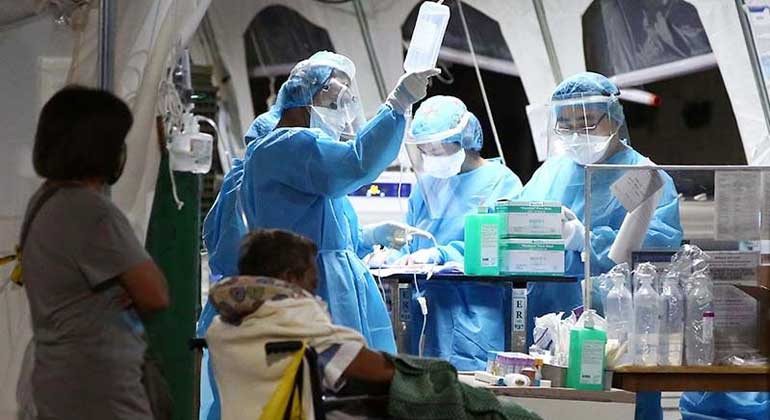
Novavax coronavirus vaccine induces immune response in early study, shares jump

Novavax Inc. said on Tuesday its experimental COVID-19 vaccine produced high levels of antibodies against the novel coronavirus, according to initial data from a small, early-stage clinical trial, sending the company’s shares up 10%.

The company said it could start a large pivotal Phase III trial as soon as late September, and on a conference call added that it could produce 1 billion to 2 billion doses of the vaccine in 2021.

Novavax research chief Gregory Glenn told Reuters the late-stage clinical trial could potentially glean enough data to obtain regulatory approvals as early as December.

Maryland-based Novavax said its vaccine candidate, NVX-CoV2373, produced higher levels of the antibodies in healthy volunteers after two doses than those found in recovered COVID-19 patients, raising hopes for its eventual success.

The addition of the company’s Matrix-M adjuvant, a substance designed to boost the body’s immune response, did enhance the effect of the vaccine in the study, the company said.

The Novavax vaccine is among the first of a handful of programs singled out for US funding under Operation Warp Speed, the White House program to accelerate access to vaccines and treatments that can fight the virus.

Effective vaccines and treatments are considered essential to halting a pandemic that has claimed more than 695,000 lives worldwide.

Novavax’s vaccine contains synthesized pieces of the surface protein that the coronavirus uses to invade human cells, spurring production of antibodies to fight the infection.

The US government in July agreed to pay Novavax $1.6 billion to help cover costs related to testing and manufacturing the vaccine, with the aim of procuring 100 million doses by January 2021.

The trial, which started in late May, tested the vaccine in 106 subjects aged 18 to 59 versus a placebo. The Phase I study looked at the vaccine’s safety and ability to induce immune responses.

It tested 5 microgram and 25 microgram doses of the vaccine, with and without the adjuvant. The company said it would likely move forward with the lower dose.

Eight study participants experienced adverse side effects after receiving a second vaccine dose during the trial, although none required medical intervention, the company said.

Headache, fatigue, and muscle pain were among the more common side effects, and the vaccine was “well tolerated” overall, the company said.

Because COVID-19 vaccines are being developed at unprecedented speed, safety issues are being watched very closely.

“When you are talking about vaccinating the entire world, safety is almost more important than efficacy,” said Brad Loncar, chief executive of Loncar Investments, an investment fund specializing in biotechnology companies.

The Phase II portion of the study will be conducted in multiple countries, including the United States. It will gauge the vaccine’s ability to prevent infections or reduce severity of COVID-19, in addition to safety and immune response, among a broader range of volunteers. — Reuters

Toll expected to rise in blast that shook Beirut, killing 78 and injuring thousands

BEIRUT — Lebanese rescue workers dug through the rubble looking for survivors of a powerful warehouse explosion that shook the capital Beirut, killing 78 people and injuring nearly 4,000 in a toll that officials expected to rise.

Tuesday’s blast at port warehouses storing highly explosive material was the most powerful in years in Beirut, already reeling from an economic crisis and a surge in coronavirus infections.

President Michel Aoun said that 2,750 tonnes of ammonium nitrate, used in fertilizers and bombs, had been stored for six years at the port without safety measures, and he said that was “unacceptable”.

He called for an emergency cabinet meeting on Wednesday.

Officials did not say what caused the blaze that set off the blast. A security source and local media said it was started by welding work being carried out on a hole in the warehouse.

“What we are witnessing is a huge catastrophe,” the head of Lebanon’s Red Cross George Kettani told broadcaster Mayadeen. “There are victims and casualties everywhere.”

Hours after the blast, which struck shortly after 6 p.m. (1500 GMT), a fire still blazed in the port district, casting an orange glow across the night sky as helicopters hovered and ambulance sirens sounded across the capital.

The blast revived memories of a 1975–90 civil war and its aftermath, when Lebanese endured heavy shelling, car bombings and Israeli air raids. Some residents thought an earthquake had struck.

Dazed, weeping and injured people walked through streets searching for relatives.

“The blast blew me off metres away. I was in a daze and was all covered in blood. It brought back the vision of another explosion I witnessed against the US embassy in 1983,” said Huda Baroudi, a Beirut designer.

Prime Minister Hassan Diab promised there would be accountability for the deadly blast at the “dangerous warehouse”, adding “those responsible will pay the price.”

The US embassy in Beirut warned residents about reports of toxic gases released by the blast, urging people to stay indoors and wear masks if available.

MANY MISSING

“There are many people missing. People are asking the emergency department about their loved ones and it is difficult to search at night because there is no electricity,” Health Minister Hamad Hasan told Reuters.

Hasan said 78 people were killed and nearly 4,000 injured.

Footage of the explosion shared by residents on social media showed a column of smoke rising from the port, followed by an enormous blast, sending a white cloud and a fireball into the sky. Those filming the incident from high buildings 2 kilometers from the port were thrown backwards by the shock.

Bleeding people were seen running and shouting for help in clouds of smoke and dust in streets littered with damaged buildings, flying debris, and wrecked cars and furniture.

The explosion occurred three days before a UN-backed court is due to deliver a verdict in the trial of four suspects from the Shi’ite Muslim group Hezbollah over a 2005 bombing which killed former Prime Minister Rafik al-Hariri and 21 others.

Hariri was killed by a huge truck bomb on the same waterfront, about 2 kilometers from the port.

Israeli officials said Israel, which has fought several wars with Lebanon, had nothing to do with Tuesday’s blast and said their country was ready to give humanitarian and medical assistance. Shi’ite Iran, the main backer of Hezbollah, also offered support, as did Tehran’s regional rival Saudi Arabia, a leading Sunni power.

At a White House briefing, US President Donald Trump indicated that the explosion was a possible attack, but two US officials, speaking on condition of anonymity, said initial information contradicted Mr. Trump’s view. — Reuters

External trade’s slump continues in June

THE COUNTRY’S exports and imports continued to plunge, albeit at a slower pace in June, the Philippine Statistics Authority (PSA) reported this morning. 
Merchandise exports shrank by 13.3% to $5.33 billion in June after a 26.9% yearly decline in May, preliminary trade data from the PSA showed.
Likewise, merchandise imports fell 24.5% to $6.63 billion in June, slower than the 40.6% plunge recorded in May.
The June export fall marked the fourth straight month of decline. For merchandise imports, the decline is on its 14th straight month.
Trade deficit in June was recorded at $1.30 billion, lower than the $2.64-billion gap in the same month last year.
For the six months to June, exports were down 17.8% to $28.43 billion, well below the four-percent contraction expected by the Development Budget Coordination Committee (DBCC) this year
Meanwhile, the merchandise import bill dropped 29% to $39.03 billion on a cumulative basis against the DBCC’s target of a 5.5% contraction for the year.
That brought the year-to-date trade balance to a $10.60-billion deficit, smaller than $20.42-billion shortfall in the same six months last year. – Jobo E. Hernandez

Inflation picks up in July

The overall year-on-year increase in prices of widely used goods quickened slightly in July, the Philippine Statistics Authority (PSA) reported this morning.

Preliminary data from the PSA showed headline inflation at 2.7% last month, picking up from the 2.5% pace in June, albeit still slower than the 2.4% rate in July 2019.

The July figure is higher than the 2.6% median in a BusinessWorld poll conducted late last week and falls within the 2.2%-3% estimate given by the Bangko Sentral ng Pilipinas (BSP) for July.

Year to date, inflation settled at 2.5%, still within the BSP’s 2%-4% target band and above the 2.3% forecast for the entire 2020.

Core inflation, which discounted volatile prices of food and fuel, stood at 3.3% in July, accelerating from three percent the previous month and 3.2% logged last year.

Food-alone inflation eased to 2.5% from 2.7% the previous month, but faster than 1.7% a year ago.

Moreover, the PSA reported preliminary figures for inflation as experienced by low-income households for July. That month, the inflation rate for the bottom 30% of income households was 2.9%, slower than June’s three percent, but faster than July 2019’s 2.5%.

The consumer price index (CPI) for the bottom 30% modifies the model basket of goods to reflect the spending patterns of the poor. This compared to the headline CPI which measures inflation as experienced by the average household. – Lourdes O. Pilar

Impact of pandemic gives greater impetus to digital and self-service channels amidst reduced customer service manpower

The continuous threat of COVID-19 to public health has severely hit business process outsourcing (BPOs) firms and enterprises who rely on agents to provide critical frontline support for customers.

Globe, despite its commitment to delivering good customer experience, is no exception to the constraints and challenges of BPOs. This gave an impetus to accelerate the shift to digital channels.

Relying heavily on outsourced personnel to handle its customer service channels including its 24/7 hotlines and care services on social media, Globe is currently facing severely limited manpower support.

“The temporary closure of some partner BPOs, ongoing social distancing measures which limit the number of personnel in offices, suspension of BPO operations when employees get infected, and the very fear of BPO agents to report for work only to contract the virus has been a challenge for us in sustaining our promise to support our customers. While this is understandable as we go through these very difficult times, these truly had an impact on our after sales service operations,” said Rebecca V. Eclipse, Chief Customer Experience Officer of Globe.

One Globe partner BPO, for instance, had COVID-19 cases during the first two weeks of July alone, giving management no other recourse but to close down one of its sites. The same action was taken by another Globe partner BPO after a substantial number of its agents were placed under quarantine.

The situation caused the manpower support for customer service operations to drop nearly by half. The remaining service complement for back office, social media, and after sales support now stands at only 49%, 66%, and 57%, respectively, of pre-Covid manpower supplement. The reduction prompted the company to assign the remaining limited number of agents to critical customer transactions and encourage its customers to use self-service applications for basic inquiries and requests.

“We are concerned about the general well-being of our customer service representatives who still report to work despite the health risks. This is why we are doing our best not only to address their needs but also to ease their workload so they can focus on things that need their personal attention,” added Eclipse.

While working from home is being explored by Globe for the customer service agents, it is not a readily available option due to the increasing number of online scams, fraud and social engineering which may put customers’ privacy and security at risk.

To respond to the needs of customers while operating with limited personnel, Globe has introduced several apps which can easily be. downloaded on mobile devices, via Google Play for Android and iOS for Apple.

Globe Postpaid and Prepaid customers, for instance, can use the GlobeOne app to fulfill the most frequent inquiries, allowing customers to track real-time data usage, subscribe to the latest promos and content offers, pay and manage bills, buy regular load and reload retailer wallet, check and avail roaming promos, and get help with account and service-related concerns.

For Globe At Home prepaid WiFi users, Globe At Home app can help them check their prepaid balance, track data usage, and top-up or Share-A-Promo to another prepaid WiFi account. Globe At Home postpaid customers can use the same app to view and pay bills online, track data usage, upgrade plans, and get tech support and help with other account-related concerns. There is also a TM app for TM customers to check their load history, balance, and expiry as well as monitor their load transactions, track promo usage, register to favorite TM promos, unsubscribe to promos, redeem TM rewards, and chat with a customer service representative.

Sustaining good customer experience while maintaining people’s safety is crucial during these times and digital experiences is key.

To know more about Globe, visit www.globe.com.ph.

Regional Updates (08/04/20)

Medical community offers to help DoH with contact tracing, telemedicine

PHILSTAR/MIGUEL DE GUZMAN

THE MEDICAL community has offered to help the Department of Health (DoH) in improving the contact tracing system and use of telemedicine. These two areas, considered as “very low hanging fruits,” were discussed during a meeting between medical groups and the Health department on Monday, according to Lei Camiling-Alfonso from the Philippine Science of Public Health Physicians. “First we will help in the telenavigation and teleconsultation,” she said in a forum Tuesday by the Philippine College of Physicians. “We will also help po in the contact tracing system, and we will also help po in strengthening coordination and implementation with the LGUs (local government units),” she added. Ms. Alfonso noted that the contact tracing system should be under a digitized “single format” that could be used nationwide. “’Yung single format na to ito ho talaga ang lakas ng isang (This single format, this is really the strength of the) contact tracing system. Dapat united, pare-pareho tayo para kahit saan, pwede syang gumana (It should be united, the same system, so that it can be used anywhere),” she said. Ms. Alfonso said they will also help in manning telenavigation and telemedicine systems, particularly in emergency areas, to minimize patients going to hospitals.

‘LAST TIMEOUT’
Metro Manila and the neighboring provinces of Cavite, Laguna, Bulacan, and Rizal have been reverted to strict lockdown by the government from Aug. 4 to 18 following an appeal for a “timeout” from the medical community. Ms. Alfonso said the two-week lockdown is not enough to solve all the problems relating to the coronavirus outbreak, but everyone should maximize what they can do during the period. Philippine Medical Association President Jose P. Santiago, Jr. said these two weeks will be the “last timeout.” “We have to really maximize the last 13 days of our (strict quarantine),” he said at the same forum. “The enemy is the virus, solutions lie with the human solidarity.” — Vann Marlo M. Villegas

Old Davao airport terminal being converted into COVID-19 holding area, testing facility underway

@DPWH11

THE OLD terminal building at the Davao International Airport is under renovation to serve as one of the holding areas for arriving passengers while waiting for their coronavirus test result. The Department of Public Works and Highways (DPWH) Davao Region office is in charge of the work, along with the installation of airconditioned tents on a vacant lot in front of the airport to house more beds. Once completed, the two facilities will have a combined 300-bed capacity. “The (DPWH) regional office is working hand in hand with LGUs (local government units) in ensuring that we will provide our people with adequate infrastructure support during these hard times. We can assure OFWs (overseas Filipino workers), LSIs (locally stranded individuals) and regular airline passengers that they will complete their temporary isolation in a safe and restful environment,” Regional Director Allan S. Borromeo said in a statement.

TEST LAB
Meanwhile, Davao City Mayor Sara Duterte-Carpio said the planned reverse transcription polymerase chain reaction (RT-PCR) test facility for the airport is underway with all machines already available. “So far, complete na, we have donors for the RT-PCR Machine, RNA (ribonucleic acid) machin for the laboratory,” she announced over local radio. The city government is coordinating with the Southern Philippines Medical Center, which already runs an accredited laboratory, to have the airport facility attached to its operations. Ms. Carpio said the laboratory was initiated by the Department of Tourism as part of the plan to beef up regional airports for the revival of domestic and international tourism. — MSJ

MORE Power reports reduction in illegal connections in Iloilo City

ABOUT THREE in ten barangays in Iloilo City have been cleared of illegal connections, according to the city’s new power distributor. Razon-led MORE Electric and Power Corp. (MORE Power) reported on Tuesday that the company and the city government have disconnected households that were pilfering electricity from its distribution system, which is one of the causes of power outages in the past months. Ariel Castañeda, project manager of MORE Power’s iKonek program, said more than 3,000 illegally connected households were apprehended in the last week of July. Of this number, more than 1,000 applied for connection. Mr. Castañeda said the company has simplified the application process for new connections to discourage electricity theft. “Humina ang reports ng mga (There were fewer reports of) low voltage and power outages in those areas,” Mr. Castañeda said in an online briefing. So far, the anti-pilferage operation covered 30% of Iloilo City’s villages. MORE Power estimates about 30,000 so-called “jumper connections” in the city. MORE Power, which became Iloilo City’s sole electricity distributor in February, covers over 65,000 households. — Adam J. Ang

Motorcycle back-riding allowed for health frontliners, essential workers

MEDICAL FRONTLINERS and other workers in categorized essential sectors may back-ride on a motorcycle to and from work in areas under strict lockdown, the government announced Tuesday. Palace Spokesperson Harry L. Roque, in a briefing, said the task force in charge of the coronavirus response approved the measure as Metro Manila and the surrounding provinces of Laguna, Cavite, Bulacan and Rizal are placed under strict quarantine rules from Aug. 4 to 18. Public transport, except tricycles in some areas, are banned during the lockdown. Mr. Roque said riding pillion is allowed provided it is not under a hire arrangement and the government-recommended barrier is used between driver and passenger. “Ang motorsiklo po ay privately owned, hindi po siya motorcycle taxi, hindi for hire at hindi hina-hire during the trip (The motorcycle should be privately owned and not a motorcyle taxi, not for hire, and not hired during the trip),” he said. In a separate briefing, Lt. Gen. T. Guillermo Eleazar, police deputy chief for operations, said motorcycle drivers and passengers must present identification cards and other required documents to police officers manning quarantine control points or checkpoints. The driver does not have to be a medical or essential worker. “We hope that this will help our medical workers and other frontliners a lot during the entire MECQ (modified enhanced community quarantine) period, and we also ask motorcycle riders to follow the guidelines to ensure their smooth and safe travel,” Mr. Eleazar said. — Gillian M. Cortez and Emmanuel Tupas/PHILSTAR

QC official reprimanded over ‘shoot-to-kill’ comment on quarantine violators

QUEZON CITY’s task force head on quarantine rules implementation has been reprimanded by national and local officials over his social media post saying violators should be shot and killed. “Ito po ay mali (This is wrong), it is inappropriate, it is irresponsible,” Quezon City Mayor Joy Belmonte said in a briefing on Tuesday. Task Force Disiplina head Rannie Ludovica on Monday wrote on his personal Facebook page: “Mula bukas shoot to kill na ang lalabag sa MECQ.” Metro Manila, which includes Quezon City, and surrounding provinces have been reverted to a strict lockdown from August 4 to 18 to mitigate the coronavirus outbreak. Ms. Belmonte said while the post was “inappropriate,” the public should understand that Mr. Ludovica was just expressing “frustration” over continued violations of health protocols and quarantine rules. The capital Metro Manila accounts for more than half of the over 100,000 coronavirus cases in the country. Interior and Local Government  Undersecretary Jonathan E. Malaya said Mr. Ludovica’s threat was not only improper but illegal, stressing that any measure to instill discipline on people should be within the bounds of the  law. “Local government unit department heads must be circumspect in their social media posts since this may be mistaken by their constituents as official LGU (local government) policy,” Mr. Malaya said in a statement. — Gillian M. Cortez and Emmanuel Tupas/PHILSTAR

BI scales down main office operations

THE BUREAU of Immigration (BI) has scaled down its main office operations as Metro Manila and nearby provinces are under strict lockdown from Aug. 4 to 18 to mitigate the continued increase in coronavirus cases in the capital. The online appointment system for foreign clients is temporarily suspended until the 18th, except for those scheduled to leave within the lockdown period, according to Commissioner Jaime H. Morente. Confirmed flight bookings or tickets should be presented to gain entry at the BI headquarters in Manila. Others with confirmed appointments but leaving after the 18th may reapply for a new schedule, he said in a statement. Transactions are suspended for the following: applications for conversion to or renewal of immigrant visa; petition for recognition as Philippine citizens, including the dual citizenship law; downgrading of visa status; tourist visa extension; special work permits and provisional permit to work; renewal of alien certificate of registration; and implementation of applications for visa conversion or extension. The bureau also advised departing foreigners with tourist visas who overstayed for more than six months to just pay their visa extension fees at the airport. Meanwhile, the National Bureau of Investigation also said clearance processing in areas under strict lockdown is suspended. — Vann Marlo M. Villegas

Napocor brings electricity to Mangsee Island

THE REMOTE island of Mangsee, located in the southernmost part of Palawan, now has a 200-kilowatt diesel-fired generator as power source. State-led National Power Corp. (Napocor) announced on Tuesday that it has switched on the facility, providing eight-hour electricity to some 300 households. An additional 500 customers will be connected by end-August. Two more areas in Palawan — Calandagan Island in Araceli and Bisucay Island in Cuyo — are up for electrification in the next months, Napocor said. The state firm operates 277 power plants run by small utilities in remote, off-grid areas. — Adam J. Ang

PSE hikes minimum public ownership

By Denise A. Valdez, Senior Reporter

THE Philippine Stock Exchange, Inc. (PSE) increased the minimum public ownership (MPO)requirement for companies that plan to list on the stock market.

In a memorandum released Tuesday, the bourse operator said companies applying for an initial public offering (IPO) are required to offer at least 20% to 33% of their outstanding capital stock to the public.

The required minimum public float will depend on a company’s market capitalization. Those with a market cap not more than P500 million should offer 33% of their outstanding capital stock post-IPO or P50 million, whichever is higher.

Firms with a market capitalization of between P500 million and P1 billion should have a public offer size representing 25% of their capital stock or P100 million.

Companies with market capitalization exceeding P1 billion must have a public offer of 20% of their outstanding capital stock or P250 million.

After listing, a company is required to maintain a public float of at least 20% at all times.

The 20% minimum public ownership requirement also applies to companies that will list by way of introduction or conduct a backdoor listing.

“For companies doing a backdoor listing, compliance with the 20% MPO shall be reckoned from the actual issuance or transfer of securities which triggered the application of the Backdoor Listing Rules or from actual transfer of the business in cases where the Backdoor Listing Rules are triggered by substantial change in business,” the PSE said.

These adjustments are expected to benefit the market by spurring liquidity, therefore helping address the susceptibility to price manipulation, said Aniceto K. Pangan, equity trader at Diversified Securities, Inc.

“A higher minimum public float should be positive for the market and the investors as valuations will be market driven,” he said in a text message.

The previous minimum public ownership requirement for listed firms was 10%, except for companies that conducted IPOs starting 2017,  which were required to have a minimum public float of 20%.

“(I) think it will stimulate more trading activity and liquidity, which in turn will better represent the fair value of stock and sentiment of shareholders,” Regina Capital Development Corp. Head of Sales Luis A. Limlingan said when asked about the new guidelines.

In its published guidelines, the PSE said it is its intention to increase market depth and liquidity by raising the public ownership of listed firms.

“The increase in liquidity improves market efficiency, reduces volatility and helps in better price discovery,” it said.

The PSE said this helps the Philippines’ ongoing ASEAN integration efforts by attracting more capital into the local bourse.

The new guidelines took effect on Aug. 3.

Coronavirus gives PHL time to reexamine US ties

By Charmaine A. Tadalan and Vann Marlo M. Villegas, Reporters

THE global coronavirus pandemic has given the US government much reprieve after Philippine President Rodrigo R. Duterte delayed the termination of a military agreement on troop deployment, which he finds to be a distraction to the world’s anti-COVID-19 efforts.

The visiting forces agreement (VFA), which allows the US to shield its servicemen from prosecution in the Philippines, has been a thorny issue for Filipino patriots who see it as a lopsided deal. The US has used the VFA at least twice to keep accused soldiers under its jurisdiction.

BW Bullseye 2020-focusTake the case of US soldier Daniel J. Smith, who was accused of raping a Filipina in Subic, Zambales north of Manila in 2005. A year later, a Philippine court convicted and sentenced him to jail for life, only for him to be transferred to the US Embassy after a deal between the two allied countries.

His custody transfer sparked protests especially among critics who argued that Filipinos have become second-class citizens in their own country because of the one-sided military pact.

More than a decade later, the deal is again in the spotlight after Mr. Duterte officially informed the US in February of his decision to end the military pact, but critics said he did so for all the wrong reasons.

Foremost was the US decision to cancel the visa of Senator Ronald M. de la Rosa, the President’s trusted ally and former police chief who implemented his deadly war on drugs.

“The coronavirus pandemic is creating a situation where smaller states have been unable to respond to contingencies in the South China Sea,” Jay L. Batongbacal, director of the University of the Philippines Institute of Maritime Affairs and Law of the Sea, said by telephone.

Mr. Batongbacal said Mr. Duterte might have ordered the suspension as the former US colony got preoccupied with dealing with the virus and to keep China, which has taken advantage of the global health crisis to consolidate its control of the disputed waterway, in check.

“Duterte is probably using the suspension of the military pact as a leverage against the US,” he said, adding that the Philippines could still lobby for a better deal.

Ending the VFA complicates Washington’s efforts to maintain an Asia-Pacific troop presence amid friction over the presence of US personnel in Japan and South Korea and security concerns about China and North Korea.

Washington has called the relationship “ironclad” despite Mr. Duterte’s complaints that include allegations of US hypocrisy and ill treatment.

REWINDING HISTORY
Some Philippine lawmakers are concerned that without the VFA, two other pacts that make up the long-standing US alliance with Manila would be irrelevant, namely the 2014 Enhanced Defense Cooperation Agreement made under the Obama administration, and a 1951 Mutual Defense Treaty.

Three American aircraft carriers had been patrolling the Indo-Pacific waters for the first time in nearly three years, a massive show of naval force in a region roiled by spiking tensions between the US and China, the Associated Press reported on June 12.

The patrol of the three warships, accompanied by Navy cruisers, destroyers, fighter jets and other aircraft came as the US escalated criticism of China’s response to the coronavirus pandemic, its moves to impose greater control over Hong Kong and its island-building activities in the disputed sea.

The VFA allows the US Navy and Air Force to operate in the South China Sea more effectively because they can stay there longer, Mr. Batongbacal said. Otherwise, US forces would have to come from Guam or Japan to patrol the area and won’t be able to use the country’s ports for resupply, he added.

“The VFA and Enhanced Defense Cooperation Agreement also allow us now to build up our external defense capabilities in ways that were never specified in any agreement before,” Mr. Batongbacal said.

Political analyst Malcolm Cook, ISEAS-Yusof Ishak Institute’s senior visiting fellow in Sydney, said the VFA has been critical to Philippine military operations especially in the Mindanao region.

“No VFA would remove the legal basis for the deployment of US military advisers in Mindanao and major exercises between the Philippine and US armed forces,” he said in a  July 2 e-mail. “The Marawi siege would have been worse without the VFA.”

“I would go further, if the Duterte administration terminates the visiting forces agreement with the US, it would rewind history to the period after the Philippine Senate terminated the US bases in the Philippines in 1991,” Mr. Cook said.

Foreign Affairs Secretary Teodoro L. Locsin, Jr. told the Senate at the start of the year the Philippines received $267.75 million in military funding from the US between 2016 and 2019. The US had planned to spend more than $200 million in military aid in the two years through 2021, he added.

Manila must either strengthen its military or rely more on China, said Herman Joseph S. Kraft, a political science professor and head of UP’s Political Science department.

CHINA AGGRESSION
“We could strengthen our military and foreign policy and adopt a more independent stance,” he said by telephone last month. “That means investing more in the military to be able to defend our sovereignty.”

The Philippines could do away with the VFA without breaking up with the US given China’s aggressive stance in the South China Sea, said Renato C. de Castro, an international studies professor at De La Salle University.

“It’s not the end of everything, but the US government would find it very difficult to deploy their forces here if they’re not provided legal guarantee,” he said by telephone.

Mr. De Castro said the Mutual Defense Treaty is the “most important” out of all the agreements it has with the US because a board created by the pact determines the number of military exercises to be held.

He added that the Philippines might be inclined to replace the deal with a “more equitable” one, similar to the country’s defense pact with Australia, once the suspension is lifted.

Mr. Duterte is bent on ending the pact despite a United States offer to fix the visa of Mr. De la Rosa, presidential spokesman Harry L. Roque told an online news briefing last month.

“Chinese aggression in the South China Sea has continued,” Mr. De Castro said. “In fact, it has become more intense since the pandemic.”

“I think this really rattled the government despite its efforts to please and appease China,” he said.

A Chinese-owned vessel in February allegedly pointed a radar gun at a Philippine Navy ship, while China has announced plans to set up two districts in Paracel and Spratly Islands, prompting the Duterte government to fire off diplomatic protests.

“These developments convinced the Duterte administration that it could not simply drop our alliance with the United States,” Mr. De Castro said.

“I think the visiting forces agreement won’t be terminated,” he said. “It will be replaced by a more equitable status of forces agreement similar to our pact with Australia.”

The Philippine Supreme Court in 2009 said Mr. Smith, the American soldier, must be held in a local prison, as it ruled keeping him at the US Embassy in Manila violated the military accord.

Mr. Smith was eventually spirited out of the country shortly after he was acquitted that same year after his victim retracted.

PhilHealth may collapse by 2022 if pandemic continues, official says

PHILIPPINE HEALTH Insurance Corp. (PhilHealth) faces the risk of collapse by 2022 if the pandemic continues and it fails to secure additional subsidies from the government, an official told the Senate on Tuesday.

The Senate began an investigation into alleged corruption at PhilHealth, with a whistleblower accusing former officials of stealing some P15 billion through fraudulent programs.

Nerissa R. Santiago, a PhilHealth senior vice-president, said the agency will no longer have any reserve funds by 2021, as contributions declined and benefit payouts rose amid the pandemic.

“Before the pandemic, the actuarial life was more than 10 years. However, because of the pandemic there’s a double impact on the program because of the decreased collections as well as the expected increase in benefits payout… we are expecting by 2021, we will be on the red already,” she told the panel.

Ms. Santiago noted PhilHealth will incur a net operating loss of P90 billion this year and P147 billion in 2021.

Asked by Senate Minority Leader Franklin M. Drilon if PhilHealth is facing collapse by 2022, Ms. Santiago answered in the affirmative, noting the agency will need government subsidies to keep it afloat.

Senator Ralph G. Recto, however, rejected Ms. Santiago’s claims that PhilHealth funds will be depleted since contributions are mandatory. He noted taxes imposed on various products such as sugar-sweetened beverages and alcohol are earmarked for PhilHealth.

Ang PhilHealth ay National Government and in fact, a monopoly at walang kahirap-hirap na mag-raise ng revenue dahil mandated ng batas (PhilHealth is with the National Government. In fact, it’s a monopoly and it’s effortless for it to raise revenue because it’s in the law),” Mr. Recto said.

‘ENDLESS CORRUPTION’
Former PhilHealth Anti-Fraud Legal Officer Thorsson Keith also told the Senate that some of the agency’s executive committee members allegedly colluded to defraud PhilHealth of around P15 billion.

Naniniwala ako, base sa aking investigation na ang perang winaldas o ninakaw ay humigit kumulang P15 billion  (I believe, based on my investigation the money spent, rather stolen is more or less P15 billion.),” he said, adding the corruption was “endless.”

PhilHealth President and Chief Operating Officer Ricardo Morales categorically denied the allegations made by Mr. Keith, saying he should substantiate these claims.

Mr. Keith, who resigned from his post last month, said P15 billion was lost through the procurement of overpriced equipment and the Interim Reimbursement Mechanism (IRM), among others. The IRM allowed the agency to grant advance payments to healthcare institutions up to three months during the coronavirus pandemic, even if only P1 billion was liquidated.

“We are in this mess because of PhilHealth’s non-compliance with rules, including a simple CoA (Commission on Audit) rule. That is why we have all these problems because you disregard all the rules designed to protect public funds,” Mr. Drilon told Mr. Morales.

During the hearing, former PhilHealth board member Alejandro L. Cabading said he repeatedly flagged questionable budgetary items for the IT department, including a P2.1-billion budget proposal that did not provide specific details.

In response, Mr. Morales said the P2.1 billion was meant to improve the systematic fraud problem, citing a December 2019 study that showed its fraud index is 7.5%. This means the agency lost P10.2 billion to fraud out of the P136-billion total benefit payment last year.

“If the corporation stands to lose tens of billions a year through fraud which can be avoided by information technology, then the alleged overpriced P2.1 billion it program over three years appears paltry,” Mr. Morales said in the same hearing.

Meanwhile, Palace Spokesperson Harry L. Roque said President Rodrigo R. Duterte ordered the Office of the President Undersecretary Jesus Melchor V. Quitain to probe the allegations of corruption at PhilHealth. — C.A. Tadalan with report from GMC

Pandemic to accelerate digitalization

The pandemic is triggering a shift to digital consumption in the Philippines. — REUTERS

THE digitalization that is expected to spur the country’s young workforce to drive consumption by 2030 will be accelerated by the pandemic, a report from the World Economic Forum and Bain & Company said.

The “Future of Consumption in Fast-Growth Consumer Markets: ASEAN” report released in June showed the Philippine median age will be 29 by 2030, creating a young consumer base that will discover products on social media and spend online.

“The combination of an expanding workforce, low labor costs and the potential for productivity gains is highly attractive for investment and growth,” the report said.

The pandemic is hastening this shift, with older generations previously resistant to digital consumption now forced to buy groceries online.

“This is the first step to triggering an irreversible change in channel preferences, opening new consumer markets and increasing the share of wallet from existing e-commerce consumers.”

E-commerce company Lazada Philippines said it has been adding three times more sellers daily onto its website during the lockdown compared with the previous months.

Mall foot traffic, in mid-July, remained below 50% even as restrictions were easing, the Trade department said. Metro Manila and four other areas have since shifted back to a stricter lockdown after coronavirus disease 2019 (COVID-19) cases surged to over 100,000.

The report said online platforms offering entertainment and transaction services will converge by 2030, with e-commerce offering more entertainment to create social or content-driven shopping.

The pandemic, the report said, has weakened consumer confidence, although essential products will see a temporary spike in demand and healthy snacks, food delivery, and hand sanitizers will see higher demand “even post-recovery.”

A significant number of consumers are expected to hold back, Bangko Sentral ng Pilipinas Governor Benjamin E. Diokno said last month, as they continue to take precautions amid a fear of the disease.

Consumption is the main driver of the Philippine economy, making up 70% of the gross domestic product (GDP).

Digitalization will also require millions to be reskilled as automation reduces employment in labor-intensive sectors, the report said.

“High-skilled jobs will be in demand and at least 43 million people will need to be reskilled in Indonesia, Malaysia, the Philippines, Singapore, Thailand and Viet Nam.”

Trade Undersecretary Rafaelita M. Aldaba has said that the pandemic could lead companies to modernize and automate their operations to survive. — Jenina P. Ibañez

San Miguel’s beer unit posts 62% profit drop

SAN MIGUEL CORP. (SMC) is expecting its beer business to start recovering in the second half, after being battered with a 62.3% earnings drop in the first six months by restrictions on alcoholic beverages.

In a statement Tuesday, SMC said its beer unit San Miguel Brewery, Inc. (SMB) recorded a net income of P5 billion for the six months to June.

The conglomerate did not release a comparative figure for last year’s first semester, but it previously reported a P13.258-billion income for the unit, which translates into a 62.3% year-on-year decline.

Its revenues stood at P42.8 billion, lower by 39% from last year’s P70.28 billion, pulling operating income down 61% to P7.4 billion.

The declines were attributed to the lockdown starting in mid-March to contain the coronavirus outbreak. This resulted in liquor bans and the closure of beer selling outlets for more than two months. The higher excise tax on beer products was also identified as a factor.

But SMC said both SMB and its spirits unit Ginebra San Miguel, Inc. (GSM) saw “significant” improvements in demand at the end of the second quarter, when the liquor ban was lifted despite the continuing lockdown.

“Demand for our beer and liquor products remain strong, and if June and July are any indication, we’re seeing signs of a strong recovery in the second half of the year,” SMC President and Chief Operating Officer Ramon S. Ang said in the statement.

He added SMB and GSM are managing costs and tightening business controls to keep posting profits and protecting margins. Part of the strategy is boosting the company’s digital presence to keep its products accessible to consumers.

“We’re optimistic about this second half, especially since our first half reflects the full impact of the pandemic… We look forward to executing on all the programs we’ve put in place, especially since it will boost not just our businesses, but also the many other small and medium enterprises in our supply chain,” Mr. Ang said.

SMC posted an attributable net loss of P1.27 billion in the first quarter, a turnaround from its attributable net income of P5.71 billion last year, due to the impact of the pandemic across its business units.

Shares in SMC at the exchange shed 50 centavos or 0.51% to P98.50 each on Tuesday. — Denise A. Valdez