Home Blog Page 914

Donald Trump slaps new US tariffs on drugs, trucks and furniture
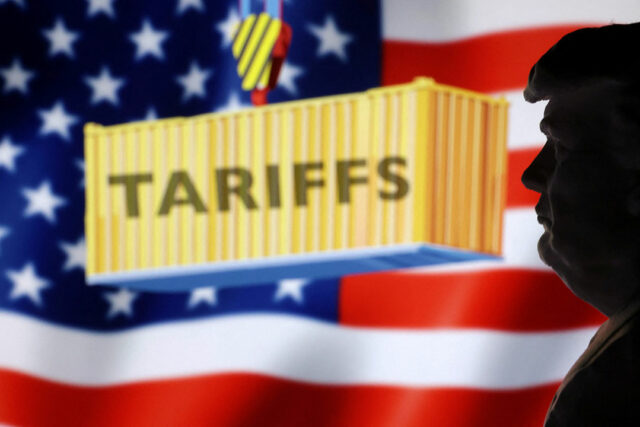
US President Donald J. Trump announced he will impose a 10% baseline tariff on all imports to the United States. — REUTERS

WASHINGTON – President Donald Trump on Thursday unveiled a fresh round of punishing tariffs on a broad range of imported goods, including 100% duties on branded drugs and 25% levies on heavy-duty trucks, set to come into force next week.

The latest salvo, which Trump said was to protect the US manufacturing industry and national security, follows sweeping duties on trading partners of up to 50% and other targeted levies on imported products such as steel.

The barrage has cast a pall over global growth and paralyzed business decision-making around the world, while the Federal Reserve has said it is also contributing to higher consumer prices in America.

Trump’s latest announcements on Truth Social did not mention whether the new levies would stack on top of existing national tariffs. But recently struck trade deals with Japan, the EU, and the United Kingdom include provisions that cap tariffs for specific products like pharmaceuticals.

Tokyo said it was still analyzing the potential impact of the new measures, which Canberra called “unfair” and “unjustified”.

Trump also followed through on a pledge to “bring back” America’s furniture business, saying he would start charging a 50% tariff on imported kitchen cabinets and bathroom vanities and a 30% tariff on upholstered furniture. All the new duties take effect from October 1.

“The reason for this is the large scale ‘FLOODING’ of these products into the United States by other outside Countries,” Trump said.

Stocks of pharmaceutical companies across Asia fell as investors reacted to the news, with Australia’s CSL hitting a six-year low, Japan’s Sumitomo PharmaT tumbling more than 3% and pharmaceutical indices in Hong Kong and India down more than 1%.

An index tracking Chinese-listed furniture makers also dropped around 1%.

The new actions are seen as part of the Trump administration’s shift to better-established legal authorities for its tariff actions, given the risks associated with a case before the Supreme Court on the legality of his sweeping global tariffs.

The new 100% tariff on any branded or patented pharmaceutical product will apply to all imports unless the company has already broken ground on building a manufacturing plant in the United States, Trump said.

The Pharmaceutical Research and Manufacturers of America, an industry group, said companies “continue to announce hundreds of billions in new US investments. Tariffs risk those plans.”

The Trump administration has opened a dozen probes into the national security ramifications of imports of wind turbines, airplanes, semiconductors, polysilicon, copper, timber and lumber and critical minerals to form the basis of new tariffs.

Trump this week announced new probes into personal protective equipment, medical items, robotics and industrial machinery. He previously imposed national security tariffs on steel and aluminum and derivatives, light-duty autos and parts, and copper.

FOREIGN POLICY TOOL
Trump has made the levies a key foreign policy tool, using them to renegotiate trade deals, extract concessions and exert political pressure on other countries.

His administration has played down the impact on consumer prices and touted tariffs as a significant revenue source, with Treasury Secretary Scott Bessent saying Washington could collect $300 billion by the end of the year.

Some economies that have already struck deals may get a reprieve on the latest duties.
The EU’s deal with the US stipulates it will pay a 15% tariff on goods including pharmaceuticals, while Japan has an agreement that its tariff rates will not exceed others including the EU, Tokyo’s trade negotiator Ryosei Akazawa said on Friday.

Akazawa declined to comment directly on the new measures, adding Tokyo was still assessing how they related to their existing deal.

In Australia, Health Minister Mark Butler told reporters the government was working to understand the implications of the new “unfair, unjustified tariffs after 20 years of free trade.”

More than half of the $85.6 billion in ingredients used in medicines consumed in the United States are manufactured in the US, with the remainder from Europe and other US allies, the US pharmaceutical trade group said earlier this year.

When it comes to furniture, imports to the United States hit $25.5 billion in 2024, up 7% from the year prior. About 60% of those imports came from Vietnam and China, according to Furniture Today, a trade publication.

“Many of our members were shocked when we heard the news. I think the decision on the additional tariff is unfair,” said Nguyen Thi Thu Hoai from the Wood and Handicraft Association of Dong Nai province, one of Vietnam’s largest furniture clusters.

Trump in August had promised to impose new furniture tariffs, saying it “will bring the Furniture Business back” to North Carolina, South Carolina and Michigan.

Furniture and wood products manufacturing employment in the US has halved since 2000 to around 340,000 today, according to government statistics.

INFLATION PRESSURE
Higher tariffs on commercial vehicles could put pressure on transportation costs just as Trump has vowed to reduce inflation, especially on consumer goods such as groceries.

Trump said the new heavy-duty truck tariffs were to protect manufacturers from “unfair outside competition” and said the move would benefit companies such as Paccar-owned Peterbilt and Kenworth and Daimler Truck-owned Freightliner.

The US Chamber of Commerce earlier urged the department not to impose new truck tariffs, noting the top five import sources are Mexico, Canada, Japan, Germany, and Finland “all of which are allies or close partners of the United States posing no threat to US national security.”

Mexico, the largest truck exporter, has opposed new tariffs, telling the Commerce Department in May that all Mexican trucks exported to the United States have on average 50% US content, including diesel engines. Chrysler-parent Stellantis is among many companies that produces trucks in Mexico.

Last year, the United States imported almost $128 billion in heavy vehicle parts from Mexico, accounting for approximately 28% of total US imports in the category, Mexico said. — Reuters

Bad weather, weak demand weigh on Philippine business sentiment in Q3

Workers dismantle a tarpaulin billboard along EDSA in San Juan City, Sept. 22, as heavy rains swept across Metro Manila. PHOTO BY MIGUEL DE GUZMAN, The Philippines

By Katherine K. Chan, Reporter

Philippine businesses turned less optimistic about the economy in the third quarter amid bad weather and sluggish demand during “ghost month,” a survey by the Bangko Sentral ng Pilipinas (BSP) showed.

Based on its latest Business Expectations Survey, the overall confidence index (CI) for businesses fell to 23.2% in the third quarter, down from the 28.8% in the second quarter and the 32.9% in the same quarter last year.

BSP Survey: Business Sentiment Less Optimistic While Consumer Spending Seen to Increase in Q3A positive CI indicates that more respondents are optimistic than pessimistic.

However, this was the lowest CI seen since the 23.9% recorded in the fourth quarter of 2022.

The business confidence index has been on a decline for three consecutive quarters.

“Philippine businesses were less optimistic about the economy in the third quarter of the year,” the BSP said in a statement. “Their dampened confidence was primarily attributed to the slack in demand during the ‘ghost month’ and the onset of the rainy and typhoon season.”

This year, “ghost month,” the seventh month in the Chinese lunar calendar, ran from Aug. 23 to Sept. 21. Some investors avoid making big investments or decisions during this period.

The country also experienced heavy rains and flooding brought by several tropical storms and the southwest monsoon from late July to early August.

“Global headwinds, such as higher US tariffs, geopolitical tensions, and weaker foreign demand, also weighed on business confidence,” the BSP said.

The US began imposing a 19% tariff on goods from the Philippines on Aug. 7.

At the same time, business confidence for the fourth quarter improved to 49.5% from 39.3% previously, as a surge in consumer spending is usually seen ahead of the holidays.

The overall business outlook for the next 12 months eased to 48.1% from 51% the previous quarter.

“Despite the lower year-ahead CI, it remained positive, reflecting businesses’ continued optimism about near-term economic prospects,” the BSP said.

Businesses surveyed also see the peso appreciating against the US dollar in the fourth quarter and over the next 12 months but expect inflation to accelerate further.

“Firms also expect inflation over the next 12 months to remain within the National Government’s target range, indicating firmly anchored business inflation expectations. Within-target inflation supports investments and job creation,” the BSP said.

Businesses expect inflation to have settled at 2.1% in the third quarter, and picking up to 2.3% next quarter, and 2.4% in the next 12 months.

The central bank surveyed 1,523 firms nationwide, 580 of which are in the National Capital Region (NCR) and 943 in areas outside NCR, from July 4 to Aug. 17.

CONSUMERS LESS PESSIMISTIC
Meanwhile, Filipino consumers turned less downbeat in the third quarter, citing more financial opportunities, the results of the BSP’s Consumer Expectations Survey (CES) showed.

Based on the third-quarter CES, consumers’ CI turned less negative to -9.8% from -14% in the second quarter and -15.6% a year ago.

A negative CI means more respondents are pessimistic than optimistic.

“Filipino consumers were less pessimistic in the third quarter of the year, citing new income sources, higher earnings, and more working family members as the main reasons,” the BSP said.

However, consumers showed stronger confidence for the fourth quarter with a CI of 6.9% from 0.6% in the previous survey.

For the year ahead, consumer confidence improved further14.1% from 11.8% previously.

“The more upbeat outlook of consumers for both periods was attributed to expectations of higher income, additional earnings, more job openings, and stable prices of goods and services,” the central bank said.

Meanwhile, consumers expect prices to rise in the second half of the year but see inflation easing in the year ahead.

They see inflation averaging 2.6% in the next 12 months, lower than the 3.7% recorded in the previous survey.

The consumers’ top concerns included rising food prices, limited supply of food and fuel, and the effectiveness of government programs and policies in addressing higher prices.

The latest CES survey was conducted from July 1 to 12, covering 5,493 households, with 2,475 from the NCR and 3,018 from areas outside NCR.

Global debt hits record high of nearly $338 trillion, says IIF

More foreign capital went into the country in July to yield a net inflow for a second straight month. — REUTERS/DADO RUVIC/ILLUSTRATION

LONDON – Global debt hit a record high of $337.7 trillion at the end of the second quarter, driven by easing global financial conditions, a softer US dollar and a more accommodative stance from major central banks, a quarterly report showed on Thursday.

The Institute of International Finance (IIF), a financial services trade group, said that global debt rose over $21 trillion in the first half of the year to $337.7 trillion.

China, France, the United States, Germany, Britain, and Japan recorded the largest increases in debt levels in U.S. dollar terms, though some of that was due to a waning dollar, the IIF found.

The U.S. currency has weakened 9.75% since the start of the year against a basket of major trading partners.

GLOBAL DEBT SURGE COMPARABLE TO COVID-ERA INCREASE
“The scale of this increase was comparable to the surge seen in H2 2020, when pandemic-related policy responses drove an unprecedented buildup in global debt,” the IIF said in its Global Debt Monitor.

Looking at debt-to-GDP ratios – an indicator of the ability to repay debt by comparing to what is being produced – Canada, China, Saudi Arabia and Poland saw the sharpest increases. The ratio declined in Ireland, Japan, and Norway, the report found.

Overall, the global debt-to-output ratio continued to move slowly lower, standing just above 324%. However, in emerging markets the ratio hit 242.4% – a new record after a downward revision on the last report in May.

Total debt in emerging markets rose by $3.4 trillion in the second quarter to a record high of more than $109 trillion.

Emre Tiftik, IIF Sustainable Research Director, said in a webinar that rising military spending will strain government balance sheets amid intensifying geopolitical tensions.

Tiftik noted that the debt increase is mainly in government debt, which has risen sharply in G7 countries and China.

He added that bond market reactions are harsher in advanced economies, with G7 10-year yields near their highest since 2011.

BOND MARKET PRESSURES
Emerging markets face a record high of nearly $3.2 trillion in bond and loan redemptions in the remainder of 2025, the IIF said.

It warned that fiscal strains could intensify in countries such as Japan, Germany, and France, urging caution over so-called “bond vigilantes” – referring to investors who sell off bonds of countries whose finances they deem unsustainable.

“While government debt ratios rose sharply across emerging markets in H1 — most notably in Chile and China — market reaction has been stronger in mature markets this year,” the IIF said.

The report flagged U.S. debt concerns, noting that short-term borrowing makes up about 20% of total debt and 80% of Treasury issuance.

It warned that this reliance could increase political pressure on central banks to keep rates low, risking monetary policy independence. — Reuters

Philippines to secure part of $55-million US maritime security funds

ORIGINAL PHOTO FROM THE PHILIPPINE COASTGUARD FACEBOOK ACCOUNT

The Philippines is among the nations that will get a share of the $55 million funding aimed at enhancing maritime law enforcement in the Indo-Pacific, according to the US Department of State.

In a statement, the State Department said it will allocate $55 million in new funding to boost maritime law enforcement capacity of several countries in the Indo-Pacific, including the Philippines, Vietnam, Indonesia, Malaysia, the Pacific Islands, and maritime South Asian nations.

“This funding will enable these partners to counter illicit maritime activities, exercise their sovereign rights, and interdict illicit fishing and maritime trafficking operations,” it said.

The US has contributed over $1.5 billion in maritime security assistance to the Indo-Pacific since 2017.

US Secretary of State Marco Rubio emphasized “the importance of collective efforts to advance a free and open South China Sea, through which trillions of dollars in global trade flow annually.”

He also noted China’s “expansive and unlawful maritime claims” in the South China Sea.

The South China Sea remains one of Asia’s most volatile flashpoints, claimed wholly or partly by China, the Philippines, Vietnam, Malaysia, Brunei, Indonesia, and Taiwan. Beijing asserts sovereignty over more than 80% of the waterway based on a 1940s map — a claim dismissed by the Permanent Court of Arbitration in The Hague.

Mr. Rubio had co-hosted a ministerial meeting on “Reinforcing Cooperation to Achieve a Secure and Stable Maritime Domain” on Sept. 24. This was attended by his counterparts from Australia, Estonia, Greece, Japan, the Netherlands, the Philippines, Romania, and the UK, among others.

“A free, open Indo-Pacific is vital to global trade and security. Together, we’re building a coalition to safeguard these principles,” Mr. Rubio said in a separate post on X on Thursday.

President Ferdinand R. Marcos, Jr., who came to office in 2022, has taken a stronger public stance against Beijing’s actions in the South China Sea. His administration has deepened ties with the US and other like-minded partners such as Australia and Japan, while expanding joint maritime activities. — Almira Louise S. Martinez

What’s behind the flood corruption scandal in the Philippines?

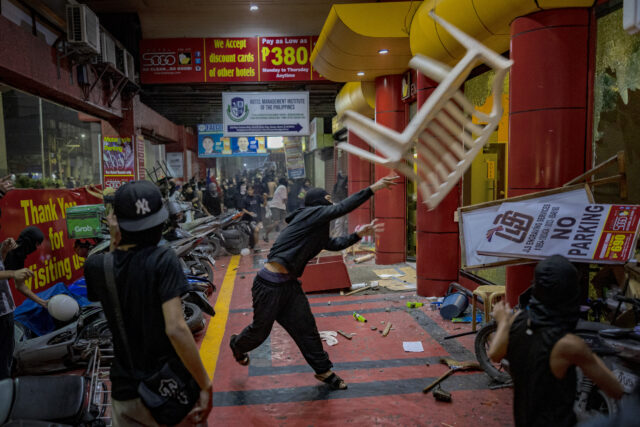
Filipinos attack a motel during anti-corruption demonstrations in Manila on Sept. 21. PHOTOGRAPHER: EZRA ACAYAN/GETTY IMAGES VIA BLOOBERG CONNECT

Allegations of widespread government corruption in flood infrastructure projects worth billions of dollars ignited mass protests across the Philippines on Sept. 21, intensifying pressure on President Ferdinand Marcos Jr. to implement sweeping reforms to root out a problem that has long plagued the Southeast Asian nation.

The scandal has sparked outrage across the Philippines, a country highly vulnerable to deadly flooding, particularly after it emerged that much of the government-funded infrastructure was defective, or, in some cases, not even built.

The pattern of corruption in flood-control projects over the past decade has reached an unprecedented level, with losses possibly exceeding a trillion pesos, according to Public Works Secretary Vince Dizon. At that magnitude, it would surpass the $10 billion in ill-gotten wealth allegedly amassed by the late Ferdinand Marcos — father of the current president — and his cronies during his dictatorship four decades ago.

WHAT IS THE SCANDAL ALL ABOUT?
Since 2022 when Mr. Marcos Jr. took office, his administration has rolled out 9,855 flood-control infrastructure projects nationwide worth P546 billion ($9.5 billion). Many other flood-related projects were undertaken prior to 2022. These projects were meant to fortify the Philippines against frequent typhoons and flooding.

This year’s persistent and massive flooding in many parts of the country prompted citizens to vent their frustrations on social media, and question how the government was addressing the issue. Subsequent investigations revealed that many flood-control projects had not been built to approved specifications and in some instances had not been built at all, despite funds having been disbursed. The revelations raised the alarm over possible corruption.

Testimony at a Senate inquiry in September suggested widespread collusion between government engineers, politicians and private building contractors, who allegedly pocketed hefty kickbacks from flood-control projects. According to one former government engineer, at least 25% of each project’s budget was routinely skimmed off as kickbacks. To make up for the lost funds, corners were often cut through the use of low-quality materials, or construction costs were inflated, on paper, it’s alleged.

The revelations have hit a raw nerve in the Philippines, one of the world’s most disaster-prone nations. For a country that experiences about 20 tropical cyclones a year, these flood-control projects are seen as critical.

WHO HAS BEEN IMPLICATED IN THE SCANDAL?
Sixty-seven legislators in the House of Representatives were allegedly contractors of their own government-funded infrastructure projects, according to Senator Panfilo Lacson, who’s leading the probe in the Senate.

Among those implicated in the scandal is House Speaker Martin Romualdez, a cousin of Mr. Marcos Jr. He has since given up the chamber’s leadership while denying any wrongdoing. That decision by Mr. Romualdez, one of Mr. Marcos Jr.’s closest allies, signals a political fallout that may deepen in coming weeks as investigations continue.

Senator Francis Escudero was replaced as Senate head after he admitted that a private contractor donated to his 2022 election campaign, but he denied helping the company secure government projects.

HOW HAS THE PUBLIC RESPONDED?
Following several smaller rallies, tens of thousands of Filipinos took to the streets in the capital and across the nation on Sept. 21 to denounce the corruption. The protests were largely peaceful, authorities said. But there were incidents of chaos in Manila where some young protesters set fire to a container van and threw rocks and Molotov cocktails at police officers in two separate incidents not far from the presidential palace. More than 200 people, some of them minors, were arrested.

The public also poured out their anger on social media, targeting relatives of contractors and politicians who have flaunted their wealth online.

Philippine business groups have called for an end to corruption in government, saying guilty officials must be prosecuted and vowed to blacklist those who conspire with erring politicians.

“Anger is directed not only at those directly implicated in the theft of public funds, but also at a political system seen as failing to safeguard the public interest in areas ranging from legislative corruption to the ineffectiveness of anti-corruption agencies,” Bob Herrera-Lim, managing director of advisory firm Teneo, wrote in a Sept. 18 note.

So far, the corruption allegations and public uproar haven’t affected Philippine financial markets to a great extent, with the peso about 1% lower against the dollar since the start of September and the benchmark stock index down less than 1%.

HOW HAVE MARCOS JR. AND HIS GOVERNMENT RESPONDED?
Mr. Marcos Jr. first mentioned the graft scandal during his annual State of the Nation address to Congress in July, saying that many of the government’s flood-control projects were money-making schemes and promising to crack down on the corruption.

After the accusations came to light, he personally inspected some of the projects, particularly in Bulacan province, north of the capital, where the largest number of projects were approved, including one that secured public funding but was never built.

Since the beginning of September, the government has fired four public works officials and suspended 16 others. It has also filed corruption cases against those state employees and four private contractors with the Ombudsman. Mr. Marcos Jr. appointed Mr. Dizon as the new head of the public works department, after the former chief quit because of the scandal.

The government has canceled P252 billion worth of flood-control projects for 2026, tightened the approval process, and formed an independent commission that’s investigating these programs from the past 10 years.

Upon the request of the Anti-Money Laundering Council, a Philippine court has ordered hundreds of bank accounts to be frozen as authorities build cases against those involved in unlawful activities.

Mr. Marcos Jr. said no-one would be spared in the government’s probe, including his relatives and allies. He also supported the protests, saying he understood the public anger but warned that law enforcement would act if demonstrations became violent.

WHAT’S AT STAKE FOR THE PHILIPPINES?
Political stability and economic growth hang in the balance as Marcos Jr. confronts the fallout from the corruption scandal — a fight analysts say could shape his legacy.

He will be under intense public scrutiny over his resolve to stamp out corruption amid growing calls for the government to prosecute corrupt officials. Failure to do so could stoke further public dissatisfaction, fuel more street protests, and embolden the opposition, including his deputy, Vice President Sara Duterte, who has criticized the Marcos Jr. administration’s response to the scandal as slow.

But there could be economic repercussions. Tighter scrutiny over flood-control projects will likely slow government disbursements in the short term, according to Union Bank of the Philippines chief economist Ruben Carlo Asuncion. He estimated that a 10% decline in spending over one quarter could shave about a 0.13 percentage point off annual gross domestic product growth. Still, the broader economic impact may be minimal, Maybank Securities analysts said, given that household consumption — not government spending — makes up about 70% of the country’s GDP. — Bloomberg

SMHCC upcycles over 10,000 yards of linens into livelihood through ‘Tela Tales’

Women volunteers from Brgy. Felisa, Bacolod learn embroidery techniques as part of SMHCC’s Tela Tales program, which transforms upcycled linens into sustainable livelihood opportunities.

SM Hotels and Convention Centers (SMHCC), the hospitality arm of SM Prime Holdings, Inc. (SM Prime), has upcycled more than 10,000 yards of used hotel linens under its sustainability initiative, ‘Tela Tales.’ The volume is equivalent to the fabric needs of more than 500 hotel rooms, underscoring how circular design can create both environmental and social impact.

Launched in 2024, ‘Tela Tales’ transforms discarded bedsheets, banquet linens and towels into handcrafted products such as bags, home items and its newest line — Snuggle Mates plush toys. The toys, designed by social enterprise brand Brave Story, feature 11 animal characters inspired by SMHCC’s properties nationwide.

These include Bamboo the panda for Lanson Place Mall of Asia, Ozzy the bear for Taal Vista Hotel, Lori the parrot for Pico de Loro Beach and Country Club, and Pau the turtle for Park Inn by Radisson Iloilo, among others.

Tela Tales Snuggle Mates, handcrafted by community artisans using upcycled hotel linens, are the latest creations from SMHCC’s circular sustainability program.

‘Tela Tales’ products are sewn by 55 women volunteers from partner communities in Tagaytay, Nasugbu, Bacolod, Iloilo and Quezon City. Part of the proceeds directly support local livelihoods, while the program itself reduces waste and diverts materials from landfills. Even prior to ‘Tela Tales,’ SMHCC had avoided disposal of linens by donating them to charities or distributing them during calamities.

“To date, the program has produced more than 1,000 upcycled items and received recognition from local governments in Iloilo, Bacolod and other cities for its contribution to waste reduction and inclusive community partnerships,” said Leah Magallanes, SMHCC Vice-President for Sustainability and Quality.

Moving forward, SMHCC plans to expand ‘Tela Tales’ to more locations and introduce new product lines, including travel accessories and seasonal collections.

The initiative also aligns with SMHCC’s commitment to the United Nations Sustainable Development Goals (SDG), particularly SDG 17 on Partnerships for the Goals. Beyond cutting storage and disposal costs, ‘Tela Tales’ deepens employee engagement, promotes sustainable practices in operations and strengthens long-term ties with local communities.


Spotlight is BusinessWorld’s sponsored section that allows advertisers to amplify their brand and connect with BusinessWorld’s audience by publishing their stories on the BusinessWorld Web site. For more information, send an email to online@bworldonline.com.

Join us on Viber at https://bit.ly/3hv6bLA to get more updates and subscribe to BusinessWorld’s titles and get exclusive content through www.bworld-x.com.

Trust your product, never quit, Mega Prime founder advises entrepreneurs

The executive behind the canned sardines brand, Mega Sardines, shared key advice for aspiring entrepreneurs, especially those in the manufacturing sector.

“I would like to state that you must believe in your product. If you believe in your product, then you do your best to come up with a very consistent product,” William Tiu Lim, founder and chairman of Mega Prime Foods Inc., said.

Interview by Edg Adrian Eva
Video editing by Arjale Queral

Severe Tropical Storm Opong  makes first landfall in Eastern Samar

Motorists and pedestrians endure heavy rains in Makati City. PHOTO BY RYAN BALDEMOR, THE PHILIPPINE STAR

Severe Tropical Storm Bualoi, locally named Opong, made its first landfall over Eastern Samar and is now heading toward Romblon, threatening to bring destructive winds and torrential rains, according to the Philippine Atmospheric, Geophysical and Astronomical Services Administration (PAGASA).

The cyclone earlier intensified into a typhoon category and made its first landfall over San Policarpo, Eastern Samar, at 11:30 p.m. on Thursday.

The weakened Severe Tropical Storm Bualoi, with sustained winds of 110 kilometers per hour (kph) near its eye and gusts reaching 150 kph, was located over the coastal waters of Mandaon, Masbate, with a chance of making landfall over Romblon, according to PAGASA’s 8:00 a.m. advisory.

It was also moving West Northwestward at a speed of 30 kph.

Tropical cyclone wind signals were still hoisted in more than a dozen areas across the country’s three major islands.

Signal No. 3, carrying storm-force winds, was hoisted over several areas in Luzon including Sorsogon, Masbate, Albay, Camarines Sur, the southern portion of Quezon, Marinduque, Romblon, Oriental Mindoro, Occidental Mindoro, Batangas, and the southern portion of Laguna.

In the Visayas, it covered the western portion of Northern Samar, the western portion of Samar, the extreme northern portion of Biliran, the northwestern portion of Capiz, the northern portion of Aklan, and the Caluya Islands.

Signal No. 2, carrying gale-force winds, was raised in parts of Luzon including Catanduanes, the rest of Camarines Sur, Camarines Norte, the rest of Quezon, the rest of Laguna, Rizal, Cavite, Metro Manila, Bulacan, Pampanga, Bataan, and the southern portion of Zambales.

In the Visayas, it covered the rest of Northern Samar, the northern portion of Eastern Samar, the northern and central portions of Samar, the rest of Biliran, the northern portion of Leyte, the northern portion of Cebu including Camotes and Bantayan Islands, the extreme northern portion of Negros Occidental, the northern portion of Iloilo, the rest of Capiz, the rest of Aklan, and the northwestern portion of Antique.

Signal No. 1, carrying strong winds, was placed other parts of Luzon — Quirino, the central and southern portions of Nueva Vizcaya, Benguet, La Union, Pangasinan, Aurora, Nueva Ecija, Tarlac, the rest of Zambales, Cuyo Islands, and the northern portion of mainland Palawan.

In the Visayas, it included the rest of Eastern Samar, the rest of Samar, the rest of Leyte, Southern Leyte, the eastern and central portions of Bohol, the central portion of Cebu, the northern portion of Negros Oriental, the northern and central portions of Negros Occidental, the central portion of Iloilo, and the central portion of Antique.

In Mindanao, it covered Dinagat Islands and Surigao del Norte including Siargao and Bucas Grande Islands.

PAGASA also raised a storm surge warning across coastal areas near Bualoi, where a moderate to high risk of storm surge may occur within the next 24 hours.

Storm surges of up to 3 meters are expected in affected areas, particularly in Albay, Batangas, Romblon, and various parts of Samar.

Malacañang earlier suspended classes and government work for Friday due to the expected effects of Bualoi. Classes at all levels and government work were suspended in Metro Manila, Biliran, Eastern Samar, Masbate, Northern Samar, Romblon, Samar, and Sorsogon.

Meanwhile, classes at all levels were suspended in Aklan, Albay, Antique, Bataan, Batangas, Camarines Norte, Camarines Sur, Capiz, Cavite, Catanduanes, Guimaras, Iloilo, Laguna, Leyte, Marinduque, Negros Occidental, Oriental Mindoro, Rizal, and Quezon.

4 DEATHS
Meanwhile, four people were reported dead due to Opong, the National Disaster Risk Reduction and Management Council (NDRRMC) said.
In a press briefing, the NDRRMC reported that one of the fatalities was from Monreal in Ticao Island, Masbate, where a resident was killed by a fallen tree.
Another death was recorded in Masbate City after a wall collapsed, while a resident in Mobo, Masbate, died from fallen debris inside a house.
The fourth fatality was in Mercedes, Camarines Norte, where a resident was struck by lightning.
The NDRRMC noted that the newly reported fatalities are not yet included in the overall 14 recorded deaths in its latest situational report as of 6:00 a.m. — Edg Adrian A. Eva

US plans to delay retirement of many more coal power plants to feed AI boom

PEXELS-PIXABAY

NEW YORK – The administration of US President Donald Trump expects most of the nation’s coal-fired power plants to delay retirement to help deliver the vast amount of electricity needed to fuel artificial intelligence, Energy Secretary Chris Wright told Reuters on Thursday.

Keeping those often half-century-old coal plants running is part of a broader strategy to increase the country’s power output that will also include boosting nuclear energy and allowing backup power plants to operate around the clock.

The administration has made expanding energy production a top priority while rejecting concerns about climate change, which Trump told the United Nations this week amounted to a global “con job.”

“Energy sobriety has returned to Washington, D.C. Our focus is on Americans and the price of utility and avoiding blackouts,” Wright said at a Reuters Newsmaker event. “We’ve got to stop existing firm capacity from retirement.”

The government had been in discussions with many utilities nationwide and expects the majority of the several dozen US coal plants nearing retirement to delay closure, he said.

“I would say the majority of that coal capacity will stay online,” he added.

The administration is also prepared to use its emergency powers to extend the life of coal-fired plants, he said.

Last month, Wright extended his emergency order to keep a Michigan coal plant running, even though the plant’s operator had been planning to shut permanently for economic reasons.

The Energy Department also ordered a gas and oil-fired power plant, slated for retirement in Pennsylvania, to continue operating.

Wright said more plants should expect similar orders, which fall under grid stability provisions in the Federal Power Act.

“Absolutely, absolutely. Yeah, that’s not the only one,” Wright said.

Wright said the US would also aim to get more out of the existing grid by running backup generators and standby power plants continuously, rather than just when electricity demand surges.

The White House is also seeking to boost nuclear energy, including through regulatory reforms to speed permitting and by hosting new nuclear technologies through the Department of Energy.

“We need that industry as another source of energy, and so we’re going to give temporary nudges to get it started,” Wright said.

Currently, two shut US nuclear power plants – including one on Three Mile Island in Pennsylvania – are in the unprecedented process of being restarted. Three Mile Island, dubbed the Crane Clean Energy Center, would deliver electricity for Microsoft data centers.

Total US electricity demand is projected to hit record highs this year and next, according to the Energy Information Administration. Growth in the country’s power consumption will also continue to accelerate through the end of the decade as massive AI data center campuses power up.

The global race by countries, primarily the US and China, to dominate AI will depend largely on connecting new electricity supplies, the Trump administration has said.

China built 100 gigawatts of coal-fired power last year and another 100 gigawatts are under construction, Wright said.

“Right now, it doesn’t matter what China says about climate policy,” Wright said. “They’re growing their electricity, they’re building their industrial might, and they’re saying: please keep sending us your industry.”

The Department of Energy, this year, also opened federal land for the development of power plants and data centers.

So far, the department has received some 300 inquiries, Wright said. — Reuters

Trump signs order declaring TikTok sale ready and values it at $14 billion

WASHINGTON – President Donald Trump signed an executive order on Thursday declaring that his plan to sell Chinese-owned TikTok’s US operations to US and global investors will address the national security requirements in a 2024 law.

The new US company will be valued at around $14 billion, Vice President JD Vance said, putting a price tag on the popular short video app far below some analyst estimates.

Trump on Thursday delayed until January 20 enforcement of the law that bans the app unless its Chinese owners sell it amid efforts to extract TikTok’s US assets from the global platform, line up American and other investors, and win approval from the Chinese government.

The publication of the executive order shows Trump is making progress on the sale of TikTok’s US assets, but numerous details need to be fleshed out, including how the US entity will use TikTok’s most important asset, its recommendation algorithm.

“There was some resistance on the Chinese side, but the fundamental thing that we wanted to accomplish is that we wanted to keep TikTok operating, but we also wanted to make sure that we protected Americans’ data privacy as required by law,” Vance told reporters at an Oval Office briefing.

Trump’s order says the algorithm will be retrained and monitored by the US company’s security partners, and operation of the algorithm will be under the control of the new joint venture.

Trump said Chinese President Xi Jinping has indicated approval of the plans. “I spoke with President Xi,” Trump said. “We had a good talk, I told him what we were doing, and he said go ahead with it.”

The Chinese embassy in Washington did not immediately respond to a request for comment. TikTok did not immediately comment on Trump’s action.

Trump has credited TikTok, which has 170 million US users, with helping him win reelection last year. Trump has 15 million followers on his personal TikTok account. The White House also launched an official TikTok account last month.

“This is going to be American-operated all the way,” Trump said.

He said that Michael Dell, the founder, chairman and CEO of Dell Technologies; Rupert Murdoch, the chairman emeritus of Fox News owner Fox Corp and newspaper publisher News Corp, and “probably four or five absolutely world-class investors” would be part of the deal.

The White House did not discuss how it came up with the $14 billion valuation.

TikTok’s Chinese parent, ByteDance, currently values itself at more than $330 billion, according to its new employee share buyback plan. TikTok contributes a small percentage of the company’s total revenue.

According to Wedbush Securities analyst Dan Ives, TikTok was estimated to be worth $30 billion to $40 billion without the algorithm as of April 2025.

Alan Rozenshtein, a professor at the University of Minnesota Law School, said the executive order leaves unanswered questions, including whether ByteDance will still control the algorithm. “The problem is that the president has certified the deal, but he has not provided a lot of information on the algorithm,” he said.

ORACLE AND OTHERS TO OWN TIKTOK IN THE US
A group of three investors, including Oracle and private-equity firm Silver Lake, will take a roughly 50% stake in TikTok US, two sources familiar with the deal said on Thursday.

A group of existing shareholders in ByteDance will hold a roughly 30% stake, one of the sources said. Among ByteDance’s current investors are Susquehanna International Group, General Atlantic and KKR.

Given intense investor interest in TikTok, the 50% stake may still shift, the source noted.

Oracle and Silver Lake did not immediately respond to requests for comment.

CNBC reported earlier, citing sources, that Abu Dhabi-based MGX, Oracle and Silver Lake are poised to be the main investors in TikTok US with a combined 45% ownership.

MGX did not immediately respond to a Reuters request for comment on the CNBC report.

Republican House of Representatives lawmakers said they want to see more details of the deal to ensure it represents a clean break with China. “As the details are finalized, we must ensure this deal protects American users from the influence and surveillance of CCP-aligned groups,” said US Representatives Brett Guthrie, Gus Bilirakis and Richard Hudson, all Republicans.

The agreement on TikTok’s US operations includes the appointment by ByteDance of one of seven board members for the new entity, with Americans holding the other six seats, a senior White House official said on Saturday.

ByteDance would hold less than 20% in TikTok US to comply with requirements set out in the 2024 law that ordered it shut down by January 2025 if its US assets were not sold by ByteDance. — Reuters

US economy notches fastest growth pace in nearly two years in second quarter

A woman carries shopping bags in Manhattan in New York City, US, Aug. 11, 2025. REUTERS/EDUARDO MUNOZ

WASHINGTON – The US economy grew faster than previously estimated in the second quarter amid strong consumer spending and business investment, though momentum appears to be slowing as the effects of tariffs and policy uncertainty start to filter through.

The quickest growth pace in nearly two years reported by the Commerce Department on Thursday also reflected a sharp contraction in the trade deficit as the flood of imports slowed.

The economy’s resilience was underscored by other data showing strong demand by business for equipment in August, driven by an artificial intelligence (AI) spending boom, and a drop in first-time applications for state unemployment benefits last week as companies hoard workers.

The data at face value suggested further interest rate cuts from the Federal Reserve were probably unwarranted. Tepid hiring blamed by economists on President Donald Trump’s import duties and an immigration crackdown caused job growth to almost stall in the three months through August, prompting the US central bank to resume its policy easing last week.

“It is clear that the current level of Fed interest rates is not slowing the economy down and is not hurting the labor market either,” said Christopher Rupkey, chief economist at FWDBONDS. “If job growth is slowing down, it is not the economy that is the problem, it is the Trump 2.0 policies on immigration.”

Gross domestic product increased at an upwardly revised 3.8% annualized rate last quarter, the fastest pace since the third quarter of 2023, the Commerce Department’s Bureau of Economic Analysis said in its third GDP estimate.

The economy was previously reported to have grown at a 3.3% pace in the second quarter. Economists polled by Reuters had expected GDP growth would be unrevised.

The government revised the national accounts data from the first quarter of 2020 through the first quarter of 2025. The economy contracted at a 0.6% pace in the first quarter, revised slightly down from the previously reported 0.5% pace of decline.

Growth estimates for the first and fourth quarters of 2024 were revised significantly lower, but were offset by upgrades to second- and third-quarter GDP. The economy grew 2.8% in 2024, unrevised from the previous estimate.

A sharp narrowing of the trade deficit as imports collapsed after a record surge in the January-March quarter was the main driver of the rebound in GDP last quarter. The smaller trade deficit added a record 4.83 percentage points to GDP growth after slicing off 4.68 percentage points in the first quarter.

Imports surged in the January-March quarter as businesses rushed to beat the duties, which boosted the nation’s average tariff rate to its highest level in a century. Both the first- and second-quarter GDP readings are not a true reflection of the economy’s health because of the wild swings in imports.

Trade could add to GDP growth in the third quarter. A separate report from the Commerce Department’s Census Bureau showed the goods trade deficit contracted 16.8% to $85.5 billion in August as imports plunged.

The upgrade to second-quarter GDP mostly reflected an upward revision to consumer spending, which is now estimated to have increased at a 2.5% pace, instead of the previously reported 1.6% rate. There was increased spending on services like transportation as well as finance and insurance.

Consumer spending, the main engine of the economy, grew at a 0.6% rate in the first quarter, revised up from a 0.5% pace.

Business spending on intellectual property products was upgraded to a 15.0% rate from the 12.8% pace estimated last month. Business investment in equipment grew at a faster 8.5% clip instead of the previously reported 7.4% pace.

Business spending on equipment is so far holding up in the third quarter, though the pace of growth has probably slowed.

A third report from the Census Bureau showed non-defense capital goods orders excluding aircraft, a closely watched proxy for business spending, rose 0.6% in August after advancing 0.8% in July. Shipments of these so-called core capital goods slipped 0.3% after rising 0.6% in July.

Stocks on Wall Street fell as investors viewed the data as not supportive of further rate cuts. The dollar rose against a basket of currencies. US Treasury yields were higher.

SLOW GROWTH IS EXPECTED IN THE SECOND HALF
Last week’s 25 basis point cut lowered the Fed’s benchmark overnight interest rate to the 4.00%-4.25% range. There were small upward revisions to inflation last quarter.

Inflation has been slow to rise in response to tariffs as businesses sold inventory accumulated before the duties kicked in and even absorbed some of the taxes. Inventory accumulation decreased at a $18.3 billion rate in the second quarter.

Final sales to private domestic purchasers, which exclude trade, inventories and government, and are viewed by economists and policymakers alike as a barometer of underlying economic growth, grew at a 2.9% rate in the second quarter. That was an upward revision to the previously reported 1.9% pace.

Economists are bracing for lackluster growth in the second half of the year because of the lingering drag from trade policy uncertainty as well as mass deportations, which are hampering job growth through reduced labor supply.

“Notwithstanding an expected moderate real GDP gain in the third quarter – driven by resilient consumer spending, the AI investment boom and wild swings in international trade – growth is projected to decelerate in the second half of the year,” said Lydia Boussour, senior economist at EY-Parthenon.

Growth estimates for the third quarter are converging around a 2.5% rate.

There were notable downward revisions to profit estimates last quarter, suggesting businesses were not dumping all tariffs on consumers. Economists warned a compression of profit margins could pressure the labor market.

A fourth report from the Labor Department showed initial claims for state unemployment benefits dropped 14,000 to a seasonally adjusted 218,000 for the week ended September 20.

“The hit to corporate profit margins has been small, which is key,” said Ryan Sweet, chief US economist at Oxford Economics. “If corporate profit margins compress it would increase the odds of a significant increase in layoffs.” — Reuters

BSP open to October cut if growth slows

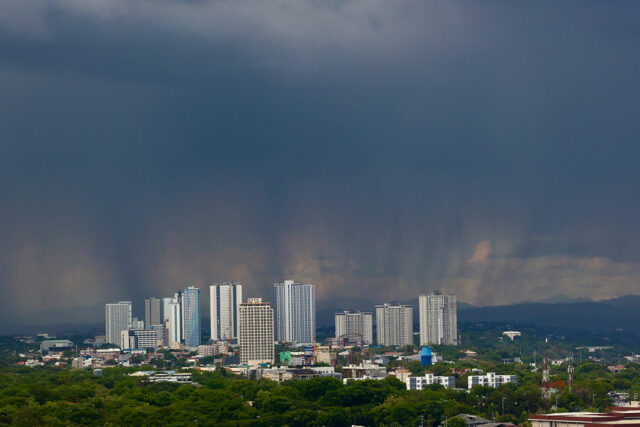
Clouds hover over buildings in Quezon City, April 28, 2025. — PHILIPPINE STAR/MIGUEL DE GUZMAN

By Katherine K. Chan

THE BANGKO SENTRAL ng Pilipinas (BSP) could lower borrowing costs as early as October if the economy shows signs of losing momentum, BSP Governor Eli M. Remolona, Jr. said, suggesting that policymakers are not ruling out further easing even after cutting rates for three straight meetings.

“If we see [economic] output slowing down because of the lack of demand, then we would step in, easing policy rates [to] strengthen demand,” he said in an exclusive interview on Thought Leaders with Cathy Yang on One News on Thursday.

But the BSP chief said monetary policy would be ineffective in addressing supply-driven slowdowns. “If it’s a supply thing, there’s little we can do. So, it has to come from a demand side for us to act decisively,” he added.

Last month, the Philippine central bank lowered its benchmark interest rate by 25 basis points (bps) to 5%, marking its third consecutive cut. That brought total easing to 150 bps since August 2024.

Mr. Remolona has repeatedly described the policy setting as a “Goldilocks rate,” balancing inflation and growth.

“We’re in the Goldilocks zone, I would say,” he said. “So, if the forecast stays… we’re going to stay where we are in terms of the policy rate. There may be small adjustments — a pause or an ease — but more or less, we’re going to be at the same range.”

The governor said two quarter-point reductions in October and December are “possible but not likely.” While not ruling them out, he said the central bank is inclined to hold steady if forecasts for both inflation and growth remain intact.

Larger cuts are improbable. “A 50-bp cut is a big shot,” Mr. Remolona said, stressing that easing would likely continue in smaller, incremental steps. He added that only a sharper slowdown in economic activity and a rise in unemployment would prompt more aggressive action.

Philippine inflation averaged 1.7% in the first eight months, below the BSP’s 2-4% target, after quickening slightly to 1.5% in August.

This was the sixth straight month that consumer price growth undershot the target. The economy expanded by 5.5% in the second quarter from a year earlier, quicker than 5.4% in the previous quarter.

The BSP projects full-year growth to settle at the lower end of the government’s 5.5-6.5% goal, with inflation ending the year at 1.7%.

The Monetary Board has two remaining policy meetings this year, on Oct. 9 and Dec. 11. Mr. Remolona said the central bank typically makes decisions every two months as new data come in, but he did not rule out off-cycle action.

“Of course, if it’s really bad, we can move the policy rate even outside our usual schedule of policy meetings, but that’s highly unlikely,” he said.

Beyond the immediate growth-inflation trade-off, Mr. Remolona said policy adjustments also help banks operate more efficiently.

“For me, it’s no longer a monetary policy thing,” he said. “It’s more of a structural thing to help banks be more efficient in terms of lending, pricing their deposits.”

The central bank chief said inflation risks are generally low. The BSP expects price increases to average 3.3% next year and 3.4% in 2027, both within target.

“If it’s not so good data, then of course we’ll ease,” he said. “The risks of higher inflation which would make us tighten, the way we see it now, those risks are small. So, I think we’re comfortable for now.”