

Home Blog Page 9103

PSEi slips as investors took profits

PHILIPPINE shares ended the week in negative territory after investors booked profits to steer clear of market uncertainties during the weekend.

The bellwether Philippine Stock Exchange index (PSEi) fell 34.62 points or 0.58% to close at 5,908.9 while the broader all-shares index dropped 9.05 points or 0.25% to 3,553.58.

In a mobile phone message, Philstocks Financial Inc. Research Associate Claire T. Alviar said that aside from investors taking profit, the market also reeled from the decline of market heavyweight SM Investments Corp. (SM).

On Friday, SM plummeted 3.65% or P33 to end at P872 per share, which according to Ms. Alviar, was the sharpest drop during the trading day.

“Further profit taking dragged the bourse near its immediate and short-term support of 5,900 level,” she said.

Meanwhile, Timson Securities, Inc. Head of Online Trading and Trader Darren Blaine T. Pangan said the local market skipped out on the upward trend among most Asian markets.

Other Asian markets were in the green during the close of the local bourse. Japan’s Nikkei 225 and Topix indices, Hong Kong’s Hang Seng index, and China’s CSI 300 index were all recording gains as of press time.

“Investors remain cautious over the country’s economic performance as we head to the last quarter of the year,” Mr. Pangan said in a mobile phone message.

Back home, the market’s sectoral indices posted varying results on Friday.

Financials rose 8.79 points or 0.76% to 1,154.57; mining and oil went up 5.91 points or 0.09% to 6,060.68; and services climbed 1.02 points or 0.07% to 1,463.5.

Meanwhile, holding firms declined 70.27 points or 1.13% to 6,143.69; property shrank 28.94 points or 1.04% to 2,743.25; and industrials fell 11.21 points or 0.14% to 7,844.97.

Trading value was at P7.64 billion on Friday with 767.34 million shares changing hands, against Thursday’s P6.01 billion with 952.32 million shares.

Advancers and decliners ended at 94 names each, while 46 ended unchanged.

Net foreign selling amounted to P892.27 million, down from the previous day’s P1.17 billion. “We may have to see if the index manages to stay above the 5,750 support area, while 6,200 remains the immediate resistance level for the bourse,” Timson’s Mr. Pangan said. — Revin Mikhael D. Ochave

BIR backs time limits on bank AMC bill tax perks

Tax incentives contained in the proposed Financial Institution Strategic Transfer (FIST) law should be subject to time limit, the Department of Finance (DoF) said, citing Bureau of Internal Revenue (BIR) Commissioner Caesar R. Dulay.

Citing Mr. Dulay’s letter to Senator Grace Poe-Llamanzares, the DoF said Friday that Mr. Dulay told legislators that the tax perks “should not be perpetual but time bound.”

FIST authorizes the establishment of asset-management companies (AMCs) which will take over banks’ bad assets, to help the lenders stay healthy during the economic recovery.

Senate Bill (SB) No. 1594 also provides tax exemptions and fee privileges on the transfer of non-performing assets from financial institutions to AMCs, known in the legislation as FIST corporations (FISTCs).

The bill set a two-year period for the validity of the tax privileges, subject to a two-year extension by the Secretary of Finance.

Among the perks of the transactions are exemptions from documentary stamp tax, value-added tax, and capital gains tax.

In lieu of applicable fees, the transfers are subject to fees equivalent to 50% of applicable registration and transfer fees on the transfer of real estate mortgage and securities and interest; half of the filing fees for any foreclosure initiated by the FISTC; and also half of the land registration fees prescribed by the Land Registration Authority (LRA).

FISTCs are also exempt from income tax on net Interest income and some mortgage registration fees.

The DoF estimates that the tax benefits will cost the government between P3.3 billion and P13 billion in foregone revenue each year over the next five years.

Mr. Dulay said the BIR supports the measure and will stand ready to draft the implementing rules and regulations (IRR) once the measure is passed.

The House of Representatives in late May approved its version of the measure, House Bill 6816.

“While we have stated also that the tax incentives may affect our revenue in terms of foregone revenue, on the balance, we believe that the objectives of the bill will far outweigh the effect on our revenue collections,” Mr. Dulay said. — Beatrice M. Laforga

PHL households likeliest in region to have experienced job loss during pandemic

Households in the Philippines were the most likely in Southeast Asia to have encountered job losses or reduced workloads during the pandemic, according to a survey of eight of the 10 Association of Southeast Asian Nations (ASEAN) countries.

The Asian Development Bank Institute (ADBI) said in a presentation during the 53rd Asian Development Bank (ADB) Annual meeting that 73.5% of households surveyed in the Philippines reported at least one person losing a job, the highest rate of the eight countries surveyed. The other seven are Cambodia, Indonesia, Laos, Malaysia, Myanmar, Thailand and Vietnam.

Conducted between the end of May and July, the surveyors interviewed 1,000 households in each country about the impact of coronavirus disease 2019 (COVID-19) on their income, employment or working hours, spending, and the education of children in the household.

The ADBI found that the Philippines also returned the highest percentage of households reporting income declines – 84% – with only 1% reporting higher income and the remainder saying income was unchanged.

“It seems that both the strictness of the restrictions and the number of cases were factors, as the Philippines had the highest number of cases, both in absolute numbers and relative to the total population,” Peter J. Morgan, senior consulting economist and the vice chair of ADBI Research Department, said in an email Friday.

He said there was “some correlation” between the strictness of the lockdown imposed by the governments and the adverse impact on both income and jobs, with the link to jobs more correlated.

“There does seem to be some correlation between strictness… and the impacts on income, but the relationship is not so tight on income. The Philippines had the strictest restrictions and the largest share of households reporting declines in income (84%). However, Cambodia had relatively light restrictions, but 75% of households still reported declines, while Malaysia’s restrictions were in the middle, but it had the smallest share of households reporting declines (54%). The relationship with job losses/work reductions seems tighter,” he said.

Most of the country was placed under strict lockdown between March and May. Restrictions were eased in June but safety protocols are still being practiced.

Mr. Morgan the Philippine respondents also returned the highest percentage of those reporting a decline in remittances (75%) and wage or salary (81%) income.

It said 85% of respondents in the Philippines reported financial difficulties, the highest in the region after Indonesia’s 84% and Thailand’s 75%.

The ADBI said 51.8% of Filipino households reported sufficient resources for basic needs for less than two weeks, the second-highest among countries surveyed, while 21% said they have enough for two weeks to a month.

“The recovery process is likely to be relatively slow in view of the relatively large impacts on income and employment,” Mr. Morgan said.

Most Philippine households reported reduced consumption or spending, sold goods online for extra income, or borrowed money from microfinance institutions to deal with the reduced income.

“Income declines were offset by drawdowns of cash and savings which were utilized by half of the region’s households. Delayed payments and debt repayments were used by 35% of households while 34% applied for government aid,” ADBI Dean Tetsushi Sonobe said in a statement.

Meanwhile, the study also found that 46% of children in Filipino households did not attend school during the pandemic, the second highest after Myanmar where 52% of children did not attend school.
“About 15% of children stopped going to school, especially in Myanmar and in the Philippines. Many students in other countries use online classes but a significant percentage could not fully participate due to weak/insufficient internet connections and lack of digital devices,” ADBI said. — Beatrice M. Laforga

How a piping solutions company is keeping Filipinos safe from viruses

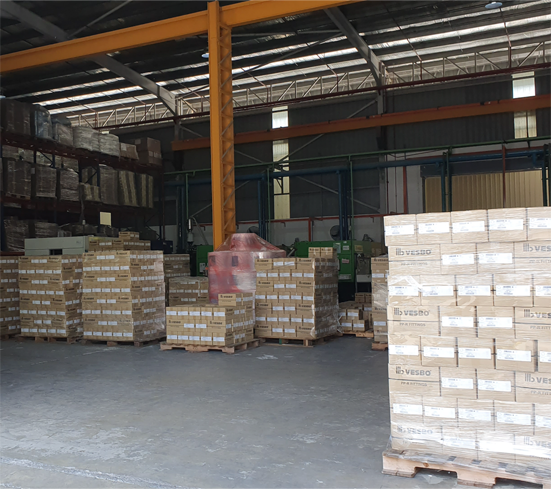
Vesbo BIOCOTE, a European brand imported by Philippine company Techglobal Inc., is the first anti-microbial and anti-viral pipe in the country.

At a time when health and safety are of utmost public concern, even non-health industries, such as those in the construction business, are compelled to search for solutions that have both immediate and long-term benefits. Since the pandemic, architects, designers, and other industry professionals have been recalibrating their plans to consider all factors that form part of the so-called “new normal.” Among them are adding provisions for social distancing and proper building sanitation, as well as the improvement of water quality.

Techglobal Incorporated, a plumbing and fire protection solutions company established in 1996, has been at the forefront of innovation when it comes to water piping systems. They were the first to bring to the Philippines and to Asia, the European made Vesbo PPRC Piping Systems, a brand of polypropylene random copolymer pipes that offer superior water quality and leakage protection.

Leading in plumbing and fire protection innovations since 1996, Techglobal Incorporated was first to bring to the Philippines and to Asia the European made Vesbo PPRC Piping Systems, a brand of polypropylene random copolymer pipes that offer superior water quality and leakage protection.

Developed by a German company and its Turkish manufacturing partner in 1992, Vesbo is a global leader in thermoplastic piping that ignited a trend in Europe and the Middle East in the late ‘90s. Vesbo PPRC is a better and more viable alternative to the traditionally used galvanized iron (GI) pipes, which were prone to rusting and leaking because of its vulnerable material. Recently, it teamed up with a British company called Biocote to develop an enhanced version of the Vesbo PPRC with anti-microbial and anti-viral properties that cleans water as it passes through.

As we continue the fight against COVID-19, it is only timely that Techglobal launched Vesbo Biocote in the Philippines recently. According to Aldrin Derrick Chua, Director of Marketing at Techglobal, the product adds a layer of protection for end-users as it reduces the risk of ingesting contaminated water coming from interconnected piping and plumbing systems. “This is the first and only anti-bacterial piping system in our country right now,” he says, raising the importance of Vesbo Biocote’s innovation during this health crisis.

Aldrin Derrick Chua, Director of Marketing at Techglobal, notes the importance of clean water and a reliable piping system especially during this time of a health crisis. Vesbo Pipes add a generous layer of protection for end-users as it reduces the risk of ingesting contaminated water coming from interconnected piping and plumbing systems.

Vesbo Biocote pipes feature a thin film layer that contains antimicrobial additive. This is responsible for killing microbes, viruses, bacteria, etc. Not only does the product keep the water potable and free from unwanted elements, it also upgrades the quality of construction projects in general. “Vesbo has a lot of features that boast product quality: It’s lightweight. It’s made of high-quality raw materials and the machines and molds used to manufacture the product are also more sophisticated. We pride ourselves in bringing in new technology that’s better in quality and innovation compared to our competitors. That’s why we are the top choice of premiere developers” says Chua.

Among Techglobal’s clients are the country’s top property developers like SMDC, Ayala Land, Robinsons, Vista, Filinvest, Ortigas and Co, Century Properties, New San Jose, and Anchorland. These properties have been using Techglobal piping products such as Vesbo PPR for indoor piping systems, Vesbo Multi-layer UV PPR for outdoor piping systems, and the Vasen Sanitary HDPE (high-density polyethylene), which is a better alternative to the orange PVC pipes commonly used in drainage and sanitary systems.

As for Vesbo Biocote, Techglobal targets to serve more end-users, especially healthcare facilities, by conducting product demos and seminars for architects, developers, designers, and contractors to choose the product, which has immediate and long-term benefits compared to cheaper brands. Some of the hospitals that currently use Vesbo are Cardinal Santos Memorial Hospital and St. Lukes BGC. With proper upkeep and maintenance through the help of Techglobal’s efficient aftersales services, Vesbo pipes can last


House bill seeks loans, grants for small online businesses

A BILL proposing loans and grants fo owners of small online businesses has ben filed in the House, with its proponent citing the industry’s central role in sustaining the lockdown economy.
Representative Jose Ma. Clemente S. Salceda of Albay, who chairs the House Ways and Means commiteee, said his House Bill No. 7698, the proposed Online Small Enterprise Support Services Act of 2020, also includes packages for training and registration assistance.

“It’s a comprehensive range of services designed to help Filipinos who have found employment in the digital economy. It’s a gift that we can find a sector where we can create jobs in the middle of an economic crisis,” Mr. Salceda said.

The bill sets the eligibility cutoff for small businesses at under P1 million in sales and provides access to loans from government banks, free credit reports and credit scores, and other benefits.
HB 7698 also proposes to service the registration of online enterprises by via a one-stop portal for all government applications, the “Online Negosyo Center”.

It tasks the Technical Education and Skills Development Authority (TESDA) to provide training programs on online entrepreneurship such as supply chain management, marketing, packaging, maintenance of online selling spaces, consumer relations, laws and regulations on online selling, among others. Grants will also be given to displaced workers and other sectors in need, upon completion of the TESDA training programs.

The bill supports online enterprises in rural communities by tasking the Agricultural Credit Policy Council (ACPC) to develop a credit facility for farmers and fisherfolk seeking to do business online. It also tasks the Department of Agriculture (DA) to help them find direct market access online.

Mr. Salceda said online selling has mitigated job losses during the pandemic.

Social Weather Stations estimates that around 27.3 million Filipinos rendered jobless by the pandemic.

“Small online businesses are the saviors of the COVID-19 economy. We would see far more unemployment and far more poverty if Filipino households did not turn to small online businesses,” Mr. Salceda said.

“Many online businesses have sprung up over the past few months because of COVID-19. Unfortunately, many of them are still unregistered. Instead of punishing them for simply trying to make a living, my approach is to make registration worth it. If you’re a small online business, you serve the economy, whether registered or not. But we will offer generous benefits if you register and pay taxes. It’s a fair and humane deal,”he added. — Kyle Aristophere T. Atienza

SEIPI, Malaysian counterparts to collaborate on sci-tech center

The Semiconductor and Electronics Industries in the Philippines Foundation, Inc. (SEIPI) said Friday it is collaborating with Malaysian industry associations to set up a science and technology center in the Philippines.

“We have met with several Malaysian organizations. The first one is SFAM (Semiconductor Fabrication Association of Malaysia),” SEIPI President Danilo C. Lachica said at an online conference.

He said the Malaysian group has agreed to help SEIPI with its plan to set up a science and technology center “to move the Philippines’ electronics industry up the value chain.”

“We will set up meetings with SFAM members and hopefully develop a memorandum of agreement on collaborative activities,” he added.

Mr. Lachica said the science and technology center is part of the industry’s road map funded by the Trade department and administered by the Science and Technology department.

“It’s called Product and Technology Holistic Strategy (PATHS)… We are looking for funding and technology partners like the Malaysian group,” he said.

Mr. Lachica also said SEIPI met with the Malaysian Integrated Chip Designer Association (MICDA) for “potential collaborative activities” concerning an integrated circuit (IC) design facility, outsourcing IC design and packaging activities, trade fairs, research and development, and localization.

He added SEIPI is also looking at a possible partnership with MIMOS Bhd., a Malaysian government-owned research and development center.

He said MIMOS can be a consultant or a partner for research and development work and microelectronics and technology transfer. — Arjay L. Balinbin

Legislator warns of possible budget delay over unequal ‘pork’ distribution

A MINORITY legislator warned Friday of possible delays to the 2021 budget due to a looming dispute in Congress over what he described as the “unequal distribution of pork.”

In a statement, Deputy Minority leader and Bayan Muna Rep. Carlos I. Zarate pointed to the P4.5 billion worth of confidential and intelligence funds and the P19.1 billion earmarked for the National Task Force to End Local Communist Armed Conflict – which are both under the supervision of the Office of the President. He alleged that these funds constitute “presidential pork” and “generals’ pork,” respectively.

“The unprecedented P4.5 billion confidential and intelligence funds of the Office of the President is of course presidential pork. The P19.1 billion budget of the NTF-ELCAC parked in different departments are generals’ pork. Even the apparent disparity in the allocations of funds by the different departments, mainly the Department of Public Works and Highways (DPWH), are of course a matter of pork,” Mr. Zarate said.

Interior and Local Government Secretary Eduardo M. Ano has said that part of the NTF-ELCAC’s funds for 2021 amounting to P16.44 billion is intended for the development of 822 barangays, with itemized spending plans due in October.

The Interior department belongs to the NTF-ELCAC, which was formed in 2018.

Mr. Zarate and other Makabayan legislators have held that “unitemized” projects should be considered “pork,” which was ruled unconstitutional by the Supreme Court in 2013. The court struck down a previous practice of distributing funds through a fraud-ridden channel known as the Priority Development Assistance Fund (PDAF), which lacked transparency in its distributions of unitemized lump-sum funds.

“This is also the reason why many lawmakers are questioning the supposed huge allocations of projects to some areas while others did not get as much,” Mr. Zarate said.

He said the alleged “pork-like allocations” should instead be channelled to health, education, and social pensions.

“As it is, it would indeed be better to realign all these pork-like allocations in, among others, the fight against COVID 19, in aid to those displaced and now jobless workers and help our children study under these current conditions,” he said.

The Commission on Audit told the House at a hearing that it is planning a special audit of funds allocated to NTF-ELCAC. — Kyle Aristophere T. Atienza

Sun Life to invest in upgrading digital capacity in PHL

INSURER Sun Life of Canada, Inc. said it will upgrade its digital capacity in the Philippines, which it considers its top Asian market, in a bet on the region’s potential to bounce back from the coronavirus disease 2019 (COVID-19) pandemic.

“The Philippines is now the crown jewel in Asia. It is our strongest market in Asia and I only see that increasing as we rebound and recover from the crisis,” Sun Life Asia President Leo Grepin said in a webinar Friday.

Sun Life Philippines was the country’s top insurer for a ninth year last year with total premiums of P39.5 billion, the Insurance Commission reported.

The life insurer also posted the industry’s top net profit of P8.2 billion in 2019, with total assets of P254.5 billion.

The company said the purpose of the digital investment is to reach more clients which it cannot service face-to-face because of social dstancing rules.

“Our investments in digital technology have never been higher. We have rolled out capabilities for clients to self-service themselves, and we have developed capabilities for our advisors to engage remotely with their clients which is incredibly important,” Mr. Grepin said.

Sun Life said the digital tools will not replace its financial advisors, but extend the human touch to help clients address their various needs.

“In periods of instability, dialogue and proactive contact is incredibly important, so we are investing a lot in digital technologies,” Mr. Grepin said.

Sun Life Philippines Chief Market Development Michael G. Manuel expects more Filipinos to benefit from the digital expansion, especially in exploring investment-linked insurance to grow their funds in a resilient stock market.

Mr. Manuel said the company’s earnings are expected to decline 25% this year due to the business downturn, with some analysts projecting a 27% rebound next year as coronavirus restrictions ease.

Mr. Manuel said he expects the government’s infrastructure program to boost the economy.

“In 2021, we’ll probably see positive signs of economic growth as the government tries to (accelerate) Build, Build, Build,” he said at the webinar.

In a message to Congress last month, President Rodrigo R. Duterte said the Transportation Department is allotting P106.3 billion to build more railways, including the country’s first subway in Metro Manila, to improve commuting and increase productivity in the cities.

The government’s 2021 budget proposal includes P1.107-trillion for infrastructure.

Mr. Manuel is also optimistic the stock market will sustain growth despite a recent trend of net foreign selling.

He said while net foreign selling has amounted to $1.8 billion since November, the main index between March and April bounced back by nearly 30%.

He said this recovery means Philippine investors retain a positive outlook for the Philippine economy.

“If more locals are holding the market, then possibly there’s more stability moving forward because foreigners tend to sway the markets up and down,” Mr. Manuel said.

Mr. Manuel expects the economy growing at least 5% next year. — Kathryn Kristina T. Jose

CIC seeks P35 million to upgrade database security

State-run Credit Information Corp. (CIC) is seeking P35 million from the national budget next year to upgrade database security, which currently contains credit data on 18.2 million borrowers.

CIC also asked for a P65 million budget to acquire software licenses.

The database needs upgraded security because “the credit data submitted to us contain highly sensitive personal information,” CIC President and CEO Aileen L. Amor-Bautista said in a statement Friday.

Republic Act No. 9510 or the Credit Information System Act (CISA) authorizes the CIC to set up a comprehensive and centralized credit information system that collects and distributes credit-related information.

CIC requires financial institutions to submit credit data online and allows access to them at all times.

Its officials expect more small lenders to submit credit data online after the CIC rolled out its Primary ID Number Tagging System, which addresses issues that emerged at cooperatives and microfinance institutions, who deal with borrowers with no access to government-issued IDs.

Around 519 lenders have started submitting basic credit datas, the CIC said.

On Aug. 19, it said 15 new institutions joined, mainly cooperatives, lending companies, and rural banks.

CIC deems cyber security to be a critical issue as more people transact online due to the coronavirus disease 2019 restrictions.

“As our database expands, the need to tighten the security of our system becomes all the more imperative, especially these days when potential cyber-attacks threaten businesses and organizations with the implementation of remote work amid the pandemic,” Ms. Amor-Bautista said.

The P4.506-trillion national budget proposal for next year is 9.9% larger than the 2020 spending plan and is equivalent to 21.8% of gross domestic product, the Department of Budget and Management said.

For next year, President Rodrigo R. Duterte said the government has allotted P1.2 billion to cybersecurity.

Internet security firm Kaspersky reported 3.906 million cyber threats among its users in the Philippines in the fourth quarter of 2019, before the pandemic. This put the Philippine users in seventh place among those most likely to experience cyberattacks.

The number of new malicious files the firm collects daily rose to 400,000 during the coronavirus pandemic, its chief executive officer Eugene Kaspersky said at the Asia Pacific Online Policy Forum last month. — Kathryn Kristina T. Jose

Peso rebounds after US signals possible stimulus expansion

The peso rebounded Friday after the central bank launched a bond auction and the US government resumed talks on an expanded stimulus fund to mitigate the impact of the coronavirus disease 2019 (COVID-19) outbreak.

The pesot closed at P48.395 against the dollar Friday, against its P48.51 finish Thursday, according to Bankers Association of the Philippines data.

The peso opened at P48.46, its low for the day. The high was P48.375.

Dollar volume fell to $575.74 million from $710.9 million Thursday.

Rizal Commercial Banking Corp. Chief Economist Michael L. Ricafort said the peso rose ahead of the release of the bond auction results Friday from the issuer, the Bangko Sentral ng Pilipinas (BSP).

The central bank said it would initially offer P20 billion worth of 28-day BSP bills as an additional tool for managing liquidity in the financial system.

The BSP said the auction volume was set at low levels to begin with, to be gradually increased based on market response.

Mr. Ricafort also said the peso was stronger following a statement from the White House on the US stimulus fund for COVID-19 relief.

“The peso was stronger versus the dollar after the White House signalled its openness to talks for a bigger stimulus fund with Congressional Democrats within 7-10 days. Talks have been delayed since August,” Mr. Ricafort said in a text message.

The White House said Wednesday that President Donald J. Trump is willing to accept up to $1.5 trillion in stimulus as outlined in a bipartisan plan issued by 50 House members.

This is higher than the proposal from Republican senators of $1 trillion and less than that of Speaker Nancy Pelosi of $2.2 trillion.

Federal Reserve Chairman Jerome Powell earlier warned the US economy will further slow down if approval of the stimulus drags on.

It expects US GDP to decline 3.7%. For next year, it is looking at a 4% drop.

For Monday, Mr. Ricafort expects the peso to trade between P48.30 and P48.60. — Kathryn Kristina T. Jose

EJ Obiena records another podium finish

By Michael Angelo S. Murillo

Tokyo Olympics-bound Filipino pole-vaulter EJ Obiena wound up on the podium once again, winning bronze at the Golden Gala competition in Italy on Friday (Manila time).

Twenty-four-year-old Obiena cleared a new season-best of 5.80 meters and held his own against a solid field of competitors in the Rome leg of the Diamond League.

It was a continuation of the steady form the Filipino has had since resuming his season, disrupted by the coronavirus pandemic.

Mr. Obiena cleared a similar height with silver-winning Ben Broeders of Belgium but the latter did it in two attempts while the former had it on his third try.

Winning gold was Sweden’s Armand Duplantis, who cleared a record-breaking height of 6.15 meters. It is now the new outdoor world record, eclipsing the 26-year record of 6.14 meters set by Ukrainian legend Sergey Bubka in 1994.

Rounding out the top 5 were Renaud Lavillenie (5.70 meters) of France and Harry Coppell (5.60 meters) of Great Britain.

In a post on his Facebook page following his outing in Rome, Mr. Obiena said he was happy to have won his third bronze and sixth medal since resuming his season and recording a season-best output.

“It was a tough competition but it pushed me to record a 5.8m season’s best,” he said, adding that he is looking forward to his next competitions.

Last week, Mr. Obiena won gold at the 59th Ostrava Golden Spike in the Czech Republic.

Mr. Obiena won gold in last year’s Southeast Asian Games and is one of four Filipino athletes already assured of a spot in the Olympic Games in 2021 in Japan, along with gymnast Carlos Yulo and boxers Eumir Felix Marcial and Irish Magno.

Next for him is the final tournament in the Diamond League in Doha, Qatar.

Online FIDE trainers seminar set for Sept. 25 to 27

The Philippines is eyeing to produce world-class chess trainers and coaches as it hosts the FIDE Trainers’ Online Seminar slated from Sept. 25 to 27 via Zoom platform.

World-renowned trainers Grandmasters Dejan Bojkov of Bulgaria and Melikset Khachiyan of Armenia, International Masters Jesper Hall of Sweden and Vishal Sarin of India along with top local mentors GMs Jayson Gonzales will conduct the three-day webinar.

About 40 participants from Australia, Fiji, Guam, Japan, India, Indonesia, Laos, Macau, Malaysia, Mongolia, Myanmar, New Zealand, Singapore, Solomon Islands, Taipei, Vietnam and the Philippines have already registered.

The Philippine Academy for Chess Excellence is organizing the event sanctioned and backed by the Asian Chess Federation, FIDE Trainers Commission and the National Chess Federation of the Philippines (NCFP).

“This is a once-in-a-lifetime experience for those aspiring to be world-class coaches and trainers,” said Mr. Gonzales.

Gracing the opening of the event are NCFP president Butch Pichay, Oceania Chess Confederation’s Paul Spiller, ASEAN Chess Academy’s Ignatius Leong, FTC’s Peter Long, ACF’s Hisham Al-Tahir and Sami Khader.

Seminar fee is pegged at $230 (or around P11,000) with the first 15 Filipino registrants getting a 25% discount.

For inquiries, interested parties may call Michelle Yaon at 0966-8108378 or send message to Philchesstournaments’ Facebook page.