Home Blog Page 8863

Coping

As expected, the National Basketball Association is pushing ahead with its plan to restart the 2019–20 campaign despite all the uncertainty caused by the novel coronavirus pandemic. With its future literally at stake, the league felt it had no choice but to exhaust any and all measures possible in reclaiming a significant part of the season it was compelled to indefinitely suspend last March 11. And, notably, safety remains at the forefront of its efforts; the measures it has instituted have been lauded by no less than Dr. Anthony Fauci, director of the National Institute of Allergy and Infectious Diseases and an influential member of the White House Coronavirus Task Force.

To be sure, the NBA has been careful to involve all stakeholders in preparations for the resumption of play. And, certainly, the active participation of the players association in crafting protocols governing movement within the bubble environment at the ESPN Wide World of Sports Complex in Walt Disney World Florida has helped it move forward with controlled opposition. Even with all the painstaking care with which it made sure to act in aiming for a consensus, it still had to deal with pockets of resistance. Imagine if it simply went full speed ahead and assumed that it knew best, period. In the face of eminently valid health and social justice concerns, it would have been exposed as callous as best and greedy at worst.

Admittedly, the NBA is bent on salvaging the final and most important segment of the campaign for financial reasons. Had it gone for a full cancelation, it would have had to write off 10-figure losses and likewise put a huge question mark on the immediate term. Amid the crunch felt by even the better-paid players, franchise owners would no doubt have insisted on a renegotiation of collective bargaining terms and held hostage the next season until the forging of a new accord. Meanwhile, the well-earned reputation of the league as one of and for fans — unlike, say, Major League Baseball — would have taken a considerable hit.

There can be no overestimating the risks involved, the NBA’s preparedness notwithstanding. The threat is real, and not just because there remains plenty to be known about the virus. With a vaccine still a ways away and infection despite the closed-doors setup inevitable, relative success will be measured not in terms of eliminating setbacks, but, rather, in how the setbacks were anticipated and responded to with resolve. As commissioner Adam Silver acknowledged in a conference call with league officials over the weekend, “we know that COVID-19 will be with us for the foreseeable future. And we are left with no choice but to learn to live with this virus.”

Indeed, the NBA is keen on coping with the pandemic by establishing a new normal under its terms. First, it needs to show that it can adapt; restarting the season on July 30 is the first in a series of steps designed to crown a champion when the battlesmoke clears. If it is able to tread the dangerous landscape and prune down 30 to 22 to 16 to eight to four to two to one with few incidents of note, then it will have been able to prep for the work that comes next. Having already survived, it would want to prove that it can thrive.


Anthony L. Cuaycong has been writing Courtside since BusinessWorld introduced a Sports section in 1994. He is a consultant on strategic planning, operations and Human Resources management, corporate communications, and business development.

Amateur traders pile into Asian stocks, making the pros nervous

The can’t-miss rise of equity markets around Asia is fueling the explosion of interest among retail investors in the region, mirroring their exuberance worldwide. Millions of investors who had never so much as opened a trading account before have been piling into the market. But it’s also giving professionals pause — what happens when these investors are no longer around?

When the coronavirus pandemic sent shares plunging, you didn’t have to be a professional investor to spot a buying opportunity. In fact, it might be better if you weren’t.

The can’t-miss rise of equity markets around Asia is fueling the explosion of interest among retail investors in the region, mirroring their exuberance worldwide. Millions of investors who had never so much as opened a trading account before have been piling into the market.

Just as the pandemic led bored Americans to make the Robinhood investing app a household name, it’s the amateurs who have helped to lift equities from India to Thailand despite some of the worst macroeconomic fundamentals in memory. But it’s also giving professionals pause — what happens when these investors are no longer around?

“If everyone is going into the same name and something happens, those names are likely to be sold off quite aggressively,” said Catherine Yeung, Fidelity International’s investment director. “I think we just need to be wary that market seems a bit complacent at the moment.”

In Japan, the Tokyo Stock Exchange Mothers Index, which hosts many tech start-up listings, has soared throughout the pandemic: buying the dip on almost any small-cap stock would make money. All but seven of the 320 companies on the board have gained since April’s start, from vaccine hopeful Agnes Inc., up 235%, to Precision System Science Co., which is developing a virus test and has added more than 480%.

“If there’s a report on TV about a coronavirus-related stock that’s going up, they can just buy it the next day and make profit,” said Naoki Murakami, a long-time Japanese day-trader. He points to “simple” bets by amateur investors on stocks such as AnGes or Avigan maker Fujifilm Holdings Corp.

In the US, Robinhood and the Reddit forum called r/wallstreetbets have become a dominant force in the market, boosting everything from the stocks of bankrupt companies such as Hertz Global Holdings Inc. to revenue-less start-ups like truck maker Nikola Corp. That pattern has been repeated in Europe with brokerages in Germany, the UK, and France all reporting a jump in participation by individual investors, fueled by a fear of missing out.

And while the names may be less familiar, the same picture appears across countries in Asia that imposed lockdowns.

DIGITAL HABITS
Retail investors supported Singapore’s exit from bear market territory. Dividends in the city-state are a draw, “and they are sitting at home, they have nothing to do,” said Aik Hong Ng, deputy head of Phillip Investor Centre, a unit of Phillip Securities Pte. Some are loading up on debt and leverage to buy more shares.

“Almost-global shelter-in-place measures are entrenching digital habits across all aspects of daily life. This includes digitizing our investment behavior,” said Clarie Kwa, chief market officer for wealth management advisory firm 360F in Singapore. “Without the normal distractions of life, people actually stop procrastinating and open their first retail accounts, motivated further by their fear of missing a chance to buy low.”

In the Philippines, AAA Southeast Equities Inc. saw two to three times more new online brokerage accounts opened each month from March when the lockdown was imposed, said President William Matthew Cabango. Meanwhile, India has seen 1.8 million new accounts opened since March, while South Koreans are borrowing to fuel their purchases.

THE AMATEUR
As the first major economy to adopt the zero-interest rate policies and central bank asset purchases that are boosting equity valuations across the world, Japan’s experience may be the most informative.

Burned when the bubble collapsed, for years Japan’s retail investors have avoided stocks. Two decades of underperformance instilled habits that propelled investors to try to sell at the top. Yet that attitude could at last be shifting.

Japanese individuals opened more than 820,000 online brokerage accounts between February and April, more than double the number in the same period in 2019.

A 35-year-old Japanese housewife, who had long watched her husband and parents buy stocks and get gifts typical for shareholders, never before found the right time to start buying herself.

“I’m THE amateur,” she said, declining to give her name citing privacy concerns. “But I saw a chance when shares plunged and I started buying.” She’s been documenting her experience on Twitter under the handle @kabukonosekai, buying the dips on large companies and planning to hold them long term.

In a regular survey this month of retail investors by Monex Group Inc., just 17% said the plunge led them to sell risk assets and move into cash, with 37% saying they took the opportunity to increase their share holdings.

LONG-TERM RETURN
Well, who wouldn’t be happy with their performance in the market that goes up regardless of bad news? The question turns to whether these investors will cut and run during the next dip, or learn new ways to succeed.

In China, interest has waned somewhat. A surge of account openings in March and April coincided with lockdowns throughout the country, but May figures were more muted. China has already had a considerable retail investor presence, with the lockdown stock boom paling in comparison to some recent share rallies.

In Japan, where retail investors are less of a force, individuals’ share of trading volume jumped during the state of emergency, and more surprisingly has stayed consistent even as workers have returned to the office.

“Oddly enough, many if not most of the retail investors take a long view,” said veteran investor Mark Mobius, co-founder of Mobius Capital Partners, “and they will probably keep their money in the market and think of a long term return.” — Bloomberg

Facebook will label newsworthy posts that break rules, as ad boycott widens

Facebook CEO Mark Zuckerberg said Facebook would ban ads that claim people from groups based on race, religion, sexual orientation or immigration status are a threat to physical safety or health. Facebook has drawn heat from employees and lawmakers in recent weeks over its decisions not to act on inflammatory posts by US President Donald Trump. — Reuters

Facebook Inc. said on Friday it will start labeling newsworthy content that violates the social media company’s policies, and label all posts and ads about voting with links to authoritative information, including those from politicians.

A Facebook spokeswoman confirmed its new policy would have meant attaching a link on voting information to US President Donald Trump’s post last month about mail-in ballots. Rival Twitter had affixed a fact-checking label to that post.

Facebook has drawn heat from employees and lawmakers in recent weeks over its decisions not to act on inflammatory posts by the president.

“There are no exceptions for politicians in any of the policies I’m announcing here today,” Chief Executive Mark Zuckerberg said in a Facebook post.

Mr. Zuckerberg also said Facebook would ban ads that claim people from groups based on race, religion, sexual orientation or immigration status are a threat to physical safety or health.

The policy changes come during a growing ad boycott campaign, called “Stop Hate for Profit,” that was started by several US civil rights groups after the death of George Floyd, to pressure the company to act on hate speech and misinformation.

Mr. Zuckerberg’s address fell short, said Rashad Robinson, president of civil rights group Color Of Change, which is one of the groups behind the boycott campaign.

“What we’ve seen in today’s address from Mark Zuckerberg is a failure to wrestle with the harms FB has caused on our democracy & civil rights,” Mr. Robinson tweeted. “If this is the response he’s giving to major advertisers withdrawing millions of dollars from the company, we can’t trust his leadership.”

Shares of Facebook closed down more than 8% and Twitter ended 7% lower on Friday after Unilever PLC said it would stop its US ads on Facebook, Instagram, and Twitter for the rest of the year, citing “divisiveness and hate speech during this polarized election period in the US.”

More than 90 advertisers including Japanese carmaker Honda Motor Co. Ltd’s US subsidiary, Unilever’s Ben & Jerry’s, Verizon Communications Inc., and The North Face, a unit of VF Corp., have joined the campaign, according to a list by ad activism group Sleeping Giants.

Hours after Facebook’s announcement, Coca-Cola Co. said starting from July 1, it would pause paid advertising on all social media platforms globally for at least 30 days.

One of Facebook’s top spenders, consumer goods giant Procter & Gamble Co. (P&G), on Wednesday pledged to conduct a review of ad platforms and stop spending where it found hateful content. P&G declined to say if it had reached a decision on Facebook.

The campaign specifically asks businesses not to advertise on Facebook’s platforms in July, though Twitter has also long been urged to clean up alleged abuses and misinformation on its platform.

“We have developed policies and platform capabilities designed to protect and serve the public conversation, and as always, are committed to amplifying voices from under-represented communities and marginalized groups,” said Sarah Personette, vice-president for Twitter’s Global Client Solutions.

“We are respectful of our partners’ decisions and will continue to work and communicate closely with them during this time.”

In a statement, a Facebook spokeswoman pointed to its civil rights audit and investments in Artificial Intelligence that allow it to find and take action on hate speech.

“We know we have more work to do,” she said, noting that Facebook will continue working with civil rights groups, the Global Alliance for Responsible Media, and other experts to develop more tools, technology and policies to “continue this fight.” — Reuters

Wirecard’s Philippine business partners under probe, FT says

An investigation will look into Wirecard’s local partners, including PayEasy Solutions, Centurion Online Payment International, and ConePay International. Image courtesy of Reuters.

Philippine regulators are investigating Wirecard AG’s local partner businesses which could establish the full extent of the country’s exposure to one of Europe’s worst accounting scandals, the Financial Times (FT) reports.

The probe will examine Wirecard’s partners including PayEasy Solutions, Centurion Online Payment International, and ConePay International, FT reports, citing Mel Georgie Racela, executive director at the nation’s Anti-Money Laundering Council. The entities were among those identified in the FT’s report last year that appeared, on paper at least, to do substantial business with the German company.

“We have included [around five] business partners of Wirecard as persons and entities of interest,” Mr. Racela told the FT report. “We also need to dig further in on the directors and officers of these business partners.”

“We are willing to talk to all parties involved to clean up this mess,” said Benjamin E. Diokno, Bangko Sentral ng Pilipinas Governor, the FT reported citing an interview with him. — Bloomberg

Bankers in traffic-clogged India are more productive working from home

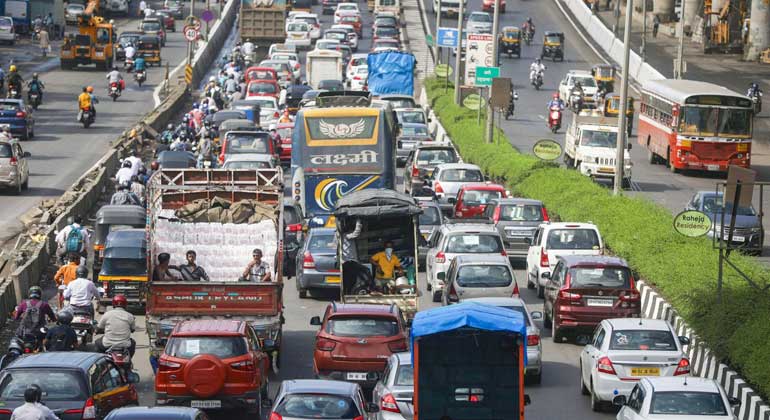
As banks and asset managers around the world try to figure out how they’ll manage their offices after the coronavirus pandemic, many in Mumbai — India’s finance hub — see the opportunity for permanent change in how they work. “Working from home saves almost 3-to-4 hours every day in travel time for some people,” said one executive. Image courtesy of Reuters.

Work from home may remain part of the norm for many in India’s financial industry beyond the end of the world’s biggest lockdown. The reason: elimination of lengthy commutes in the past three months has boosted employee productivity.

Take Jefferies’ India team for example. On average, its 60 members have managed to save over an hour every day on commute and 70% of them have seen higher productivity, according to a note from the brokerage, drawing on a survey of its staff.

As banks and asset managers around the world try to figure out how they’ll manage their offices after the coronavirus pandemic, many in Mumbai — India’s finance hub — see the opportunity for permanent change in how they work. The average commute time on the city’s major routes is over an hour, more than twice the averages of Singapore, Hong Kong and New York, according to a study by the IDFC Institute, a public policy think-tank.

Neil Parikh, chief executive officer of Parag Parikh Financial Advisory Services, like many others is finding the experience better than expected — so much so that he’s reconsidering plans of adding to the money manager’s offices in India’s top cities. He plans to equip new hires with laptops and high-speed Internet connections instead.

“Now there’s no stigma around working from home,” he said. “I can see some from my research team being much more productive. Working from home saves almost 3-to-4 hours every day in travel time for some people.”

Reliance Securities Ltd. has shelved plans to shift to a new premise. The firm, one of India’s leading retail broking houses, will have half its staff continue to work from home as it implements a rotational program to comply with social distancing norms, according to Chief Human Resource Officer Meenaa Sharma.

“Many of our employees are saying that their productivity has gone up, and feedback from clients on research reports is good,” she said.

SECOND WAVE
While the daily number of virus cases in Mumbai, India’s worst-hit city, has been stable in recent days, concerns over a second wave means businesses have little choice but to operate remotely. With its economy set for its first full-year contraction in 40 years, India has begun reopening from the lockdown imposed on March 24 even as the country has the fourth-highest number of infections in the world.

Yet, not everyone in the world of finance is in a position to work remotely on a long-term basis. While banks and stock depositories had been open through the lockdown, designated as “essential services,” dealers who execute trades may have to return to office in greater numbers once regulatory relaxations are rolled back.

“Businesses like ours where there’s sensitivity of information, at least some part of staff like dealers have to be in the office” said Jinesh Gopani, head of equities at Axis Asset Management Co. “Those parts were allowed at home because it was a crisis. But it is not ideal from the regulator’s point of view in the long term.”

For now, only a fraction of the staff in the financial-services industry is back in office. The unexpected benefits of working remotely mean it’s likely to be a favored option well into the future.

“Productivity has improved dramatically because of removing unproductive travel time,” said Mr. Gopani. Working from home one or two days a week may become “the new normal.” — Bloomberg

Global coronavirus cases approach 10 million

BEIJING — Global coronavirus cases neared 10 million on Sunday according to a Reuters tally, marking a major milestone in the spread of the respiratory disease that has so far killed almost half a million people in seven months.

The figure is roughly double the number of severe influenza illnesses recorded annually, according to the World Health Organization.

The milestone will come as many hard-hit countries are easing lockdowns while making extensive alterations to work and social life that could last for a year or more until a vaccine is available.

Some countries are experiencing a resurgence in infections, leading authorities to partially reinstate lockdowns, in what experts say could be a recurring pattern in the coming months and into 2021.

North America, Latin America, and Europe each account for around 25% of cases, while Asia and the Middle East have around 11% and 9% respectively, according to the Reuters tally, which uses government reports.

There have been more than 497,000 fatalities linked to the disease so far, roughly the same as the number of influenza deaths reported annually.

The first cases of the new coronavirus were confirmed on Jan. 10 in Wuhan in China, before infections and fatalities surged in Europe, then the United States, and later Russia.

The pandemic has now entered a new phase, with India and Brazil battling outbreaks of over 10,000 cases a day, putting a major strain on resources.

The two countries accounted for over a third of all new cases in the past week. Brazil reported a record 54,700 new cases on June 19. Some researchers said the death toll in Latin America could rise to over 380,000 by October, from around 100,000 this week.

The total number of cases continued to increase at a rate of between 1-2% a day in the past week, down from rates above 10% in March.

Countries including China, New Zealand and Australia have seen new outbreaks in the past month, despite largely quashing local transmission.

In Beijing, where hundreds of new cases were linked to an agricultural market, testing capacity has been ramped up to 300,000 a day.

The United States, which has reported the most cases of any country at more than 2.5 million, managed to slow the spread of the virus in May, only to see it expand in recent weeks to rural areas and other places that were previously unaffected.

In some countries with limited testing capabilities, case numbers reflect a small proportion of total infections. Roughly half of reported infections are known to have recovered. — Reuters

Globe myBusiness powers Ateneo de Davao’s digital school year

Industries are developing ways to thrive amid the new normal brought by the COVID-19 pandemic. In the coming school year, educational institutions are transitioning to online learning to allow students to complete their requirements while staying safe at home.

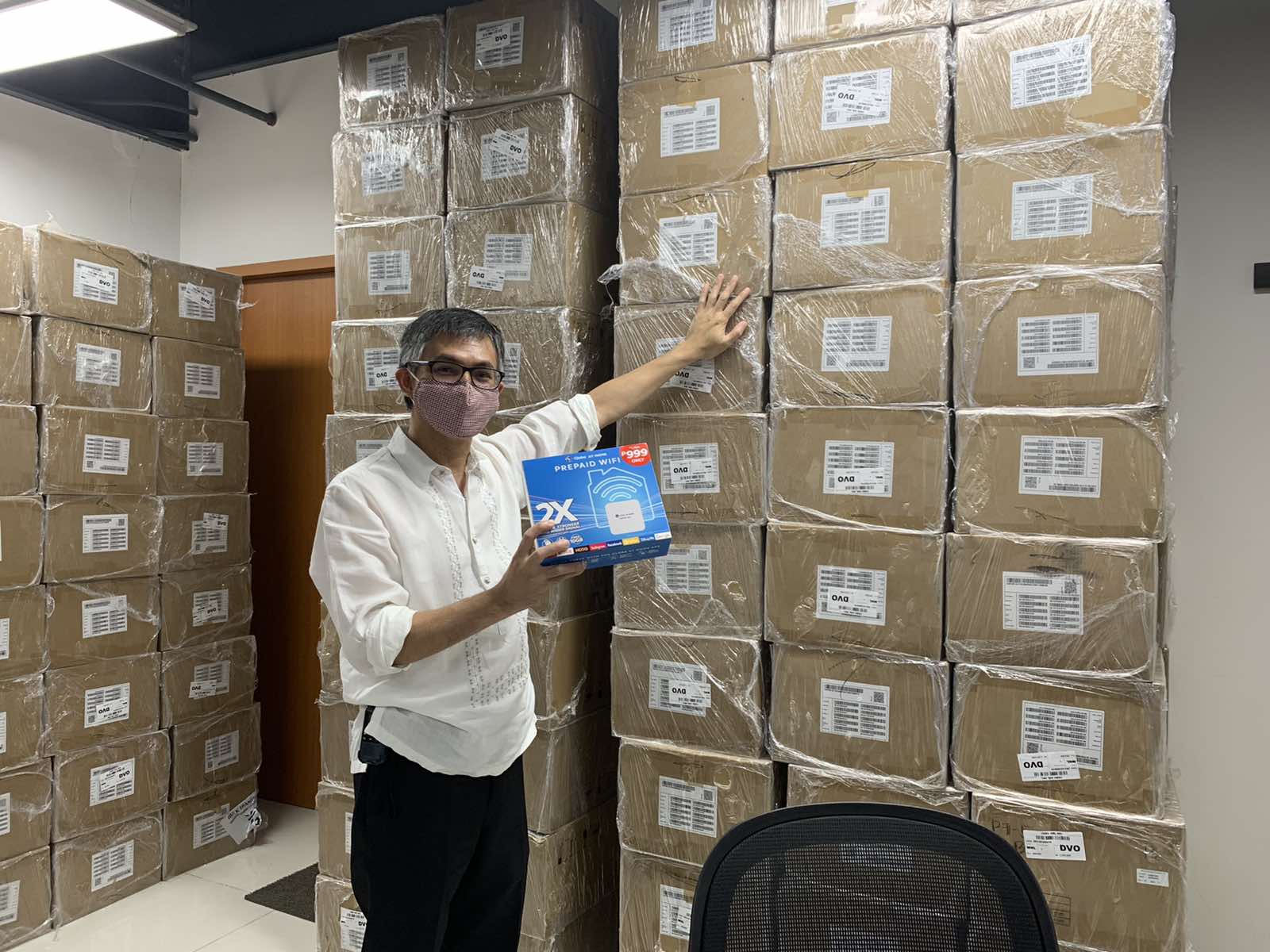
Strengthening its position as an invaluable partner in promoting 21st Century Learning, Globe myBusiness has partnered with Ateneo de Davao University (ADDU) by providing tailor-made internet plans for the next school year. Through the partnership, the university secured 7,000 Globe at Home Prepaid WiFi units for instructors and students. The kits are equipped with a WiFi modem with a LAN port, free 10GB of data allocation upon modem activation, and access to a customizable suite of apps to aid the learning process.

“Technology plays an important role in this global pandemic, as it connects us while keeping us safe in our homes,” shares Bernie Jereza, Institutional Communications and Promotions or ICOMMP Office Head of ADDU.  “We are making the transition more seamless by providing students their own WiFi kits to stay connected. What started out as an order for 2,000 units quickly became 7,000 to better serve the students of the basic and higher education units.”

Jeremy Eliab, Executive Vice President at ADDU cites how technology can open new doors for Ateneo de Davao University, with the possibility of admitting students from other parts of the country and in the future, the world. He also advises other schools to prepare for crises using connectivity and other innovations: “We’re forced to shift. For small schools that don’t have the proper IT infrastructure, use limited resources. Do classes by email or phone, or what your bandwidth can accommodate. Deal with the limitations and shift online.”

#Recreate. The way we learn.

In line with partnering with different schools, Globe myBusiness is helping educational institutions integrate technology through the new mySchoolSURF, a lineup of internet promos specifically designed to help students and instructors in online learning. Plans start at P199, which comes with 34GB of data allocation valid for 7 days.

All plans come with 4GB daily data allocations for pre-defined apps useful for learning. This includes video conferencing tools like Zoom, and research and productivity platforms such as Office 365, Canva, Blackboard and Course Hero. It also comes with access to messaging apps like Viber, WhatsApp, and Facebook Messenger.

By bridging teachers to information and technology that enable continuous learning, especially during times of crisis, Globe myBusiness continues to prove itself an invaluable partner in promoting 21st Century Learning and improving resilience in education.

Learn more about this story via https://www.globe.com.ph/about-us/newsroom.html.

Peso strengthens past P50/dollar after BSP easing

The peso strengthened past the P50 to the dollar level after the latest round of easing from the central bank and as market participants took profits ahead of the US inflation report.

The peso finished trading at P49.92 against the dollar, after closing at P50.00 Thursday, according to data from the Bankers Association of the Philippines.

Week-on-week, the currency was stronger than its P50.06 close on June 19.

The peso opened at P50, which was the session low. The high was P49.89.

Dollar volume fell to $738.2 million from $848.93 million Thursday.

Rizal Commercial Banking Corp. Chief Economist Michael L. Ricafort said markets factored in the latest easing from the Bangko Sentral ng Pilipinas (BSP).

“The peso exchange rate closed at its strongest in more than two weeks after the surprise cut in local policy rates, seen as a pre-emptive monetary easing that could further support economic recovery from the pandemic,” he said in a text message.

On Thursday, the Monetary Board slashed rates by 50 basis points (bps) in a surprise move that represented its fourth easing round this year. It was viewed as a bid to boost the economy as global recovery prospects dimmed. This brought the overnight reverse repurchase rate, lending and deposit facilities to record lows of 2.25%, 2.75%, and 1.75%, respectively starting Friday.

So far, the BSP has slashed rates by 175 bps this year in a bid to mitigate the impact of the pandemic.

A trader who asked not to be identified said the market was also anticipating US core inflation data due out late Friday.

“The peso appreciated from some profit-taking ahead of likely weaker US inflation reports,” he said in an e-mail.

Core inflation strips out volatile elements from the headline inflation indicator, which is the consumer price index (CPI), and is thought to better reflect long-term inflation trends at a time when spending patterns captured by the CPI have been distorted by lockdowns. — Luz Wendy T. Noble

Rate cuts seen boosting consumer, business confidence

The unexpected 50 basis point (bp) reduction in benchmark interest rates is being positioned as a measure to restore consumer and business confidence, the Deprtment of Finance said.

Finance Secretary Carlos G. Dominguez III said in an online forum organized by Bloomberg that to mitigate the adverse impact of the pandemic on the economy, bringing back confidence of consumers is of ”utmost importance.”

“We’ve seen that we have to bring back confidence to our bankers, (and) we have to bring back confidence to our consumers because our economy is about 70-75% consumption- driven,” Mr. Dominguez told said at the Emerging Market Debt: A Roadmap Beyond COVID-19 webcast late Thursday.

He was responding to Bloomberg Economics Senior Executive Editor Stephanie Flanders who inquired about the unexpected 50-bp reduction delivered by the Monetary Board (MB) earlier that day. Mr. Dominguez is a member of the MB.

“It is of utmost importance that we bring back the confidence of our public in spending again,” Mr. Dominguez said, noting that Governor Benjamin E Diokno would be a more authoritative.

The Bangko Sentral ng Pilipinas (BSP) Monetary Board surprised the markets late Thursday by reducing policy rates by 50 bps, bringing current rates to record lows of 2.25%, 2.75 and 1.75% for overnight reverse repurchases, lending and deposit facilities, respectively

The new rates took effect Friday.

So far this year, the MB has reduced benchmark interest rates by a total of 175 bps to help cushion the impact of the pandemic on the economy.

BSP Governor Benjamin E. Diokno said Thursday that the rate action was taken in response to the severe economic downturn worldwide, and noted that inflation has been benign.

Only three out of 13 economists polled by BusinessWorld last week forecast a rate cut at this MB meeting.

The BSP increased its inflation forecast for 2020 to 2.3% from 2.2%, which remained within its 2-4% target range.

The economy contracted by 0.2% in the first quarter.

The government’s economic team is projecting a 2-3.4% contraction in 2020 due to the fallout from the pandemic and lockdowns.

“We see that our economy is going to be hit hard. We will shrink by maybe about three and a half percent this year. But we’re ready for a big bounce back next year,” Mr. Dominguez said. — Beatrice M. Laforga

DoTr orders 40% discount on shipping rates for food cargoes

Transportation Secretary Arthur P. Tugade has ordered shipping lines to offer at least a 40% discount off regular shipping rates for shipments of food and a quota of 12% of the ship’s capacity for such cargoes.

Department Order No. 2020-007 was issued by Mr. Tugade on June 24 and was published in newspapers Friday.

The Department of Transportation (DoTr) said the discounted rates and cargo quota are intended to “help ensure the viability of food production and delivery thereof in line with the government’s mandate to provide food security for the people.”

The 12% quota is to be observed on a per-voyage basis and applies to shipments of agricultural and food products.

The agricultural and food products are defined as raw or processed commodities meant for human consumption, excluding water, salt and additives.

Another department order, 2020-008, issued the same day and also published Friday, creates a shippers’ protection office to address complaints about the industry’s rates, charges and practices.

The new office will assist shippers, both international and domestic, who encounter “unreasonable fees and charges imposed by international and domestic shipping lines.”

The creation of the office is deemed a temporary emergency measure during the emergency “to protect people from the impact and effects of exorbitant and unreasonable shipping fees resulting in increased prices for domestic consumers.” — Arjay L. Balinbin

Game plan for tourism revival is locals-only

Provinces that are reopening their tourist attrcations are focusing on domestic visitors initially, with Boracay only allowing guests from the immediate region, Tourism Secretary Bernadette Romulo-Puyat said.

Ms. Puyat estimated that 50% of tourism establishments in areas under modified general community quarantine can now operate.

The governor of Aklan province and the mayor of Malay, Aklan, have indicated their intention to open the resort island of Boracay only to visitors from the Western Visayas.

Gusto raw nila slow but sure yung pagbukas (They want to open slowly but surely),” she said at the Laging Handa briefing.

Ms. Puyat also said the governors of Palawan and Bohol, which are both under eased quarantine conditions, intend to open their provinces for domestic tourism first.

“So sa domestic tourism pa nga langpwede nang unti-unti na magkakatrabaho ang ating tourism stakeholders at mabubuhay ang turismo (Domestic visitors will do for now as the industry slowly returns to work),” she said.

Ms. Puyat noted that tourism accounted for 12.7% of gross domestic product in 2018, with 10.8% of that total generated by domestic tourism.

The government is also studying a strategy of “travel bubbles,” which would allow visitors from low-infection countries like New Zealand and Australia to directly visit some destinations with international airports.

“We have 12 international airports. May options sila (they have the option) to fly (directly to) zero-COVID destinations,” she said.

In 2019, the Philippines took in 8.26 million international visitors, breaching the 8.2 million target.

“But of course (arrivals are) very hard to predict for this year because of all the different travel restrictions,” she said. — Vann Marlo M. Villegas

Rediscount rates lowered after rate cut

The central bank’s rediscount rate has been lowered to reflect the latest adjustment in the benchmark interest rates.

“The rediscount rate for loans under the peso rediscount facility has been set at 2.75%, regardless of loan maturity (i.e., 1 to 180 days) effective June 26,” the Bangko Sentral ng Pilipinas (BSP) said in a statement Friday.

The 2.75% rediscount rate reflects the record low lending rate of 2.75% after the BSP reduced key policy rates by another 50 basis points Thursday.

Overnight reverse repurchase as well as deposit rates were likewise trimmed to 2.25% and 1.75%, respectively.

The temporary reduction of the term spread on peso rediscounting loans relative to BSP’s overnight lending rate to zero will be effective until July 17 and form part of the central bank’s economic relief efforts. It is subject to changes by the Monetary Board.

The BSP rediscount facility allows banks to access additional liquidity by pledging their collectibles as collateral.

Banks may use the fresh cash – in peso, dollar or yen – to grant more loans for corporate or retail clients and service unexpected withdrawals. — Luz Wendy T. Noble