Home Blog Page 885

360 families affected by NSCR to get new housing this year

JICA

THE Department of Transportation (DoTr) said it is expediting the relocation of residents in the path of the North-South Commuter Railway (NSCR), with the first 360 families to be rehoused within the year.

In a statement on Wednesday, the DoTr said it eventually plans to build 82 three-story buildings for affected families, with the first 12 such structures ready to accommodate the initial families before the year ends.

Last month, the DoTr said it hopes to issue the bid documents for the NSCR operations and maintenance (O&M) contract in October.

The DoTr concluded the roadshow for the P229.32-billion O&M contract, which included stops in Singapore and Paris.It hopes to award the concession by March or April.

The 147-kilometer NSCR will connect Malolos, Bulacan with Clark International Airport, and Tutuban, Manila with Calamba, Laguna. The P873-billion project is co-financed by the Japan International Cooperation Agency and the Asian Development Bank. It will have 35 stations and three depots.

According to the DoTr, the Valenzuela to Malolos segment will be partially operational by 2027, while the Malolos to Clark segment could start operations by 2028. — Ashley Erika O. Jose

Masbate, Leyte, Quezon, Eastern Samar fisheries most exposed to climate change

STOCK PHOTO | Image by Giustiliano Calgaro from Pixabay

THE National Fisheries Research and Development Institute (NFRDI) said the provinces deemed most vulnerable to climate change were Masbate, Leyte, Quezon and Eastern Samar.

Researchers led by Riza Jane S. Banicod zeroed in on the vulnerable provinces by evaluating their reliance on stable supply and consistent weather. They concluded that climate change is likeliest to have the most social impact in those locations.

The researchers conducted Climate Vulnerability Assessments using 27 indicators.

The Central and Western Visayas were also classified as vulnerable due to high sensitivity to raw material supply, particularly during the closed fishing season.

These six regions were also classified as having low adaptive capacity.

Sea surface temperatures have already risen by 0.7 degrees Celsius and could potentially rise by up to 3.5 degrees at least by 2100 without proper climate action.

NFRDI presented its research at the 2025 National Research Symposium. — Andre Christopher H. Alampay

Zambales gets agri investments like cold storage, greenhouses

DA

THE Department of Agriculture (DA) said Zambales has been allocated 150 greenhouses and a P35-million cold storage facility due to be delivered next year.

Agriculture Secretary Francisco P. Tiu Laurel, Jr. called Zambales “a key pillar of our agriculture sector,” and turned over the initial facilities, which are intended to reduce post-harvest losses and improve producer incomes.

According to the Philippine Statistics Authority,Central Luzon is the top agriculture and fisheries producer, with Zambales accounting for 5.2% of the total.

The greenhouses are meant for the cultivation of bell peppers, ginger, tomatoes, and carrots.

The DA also turned over hybrid seed, multi-cultivators, hand tractors, shallow tube wells for irrigation, tractors, and a mobile soil laboratory. — Andre Christopher H. Alampay

PHL unit of HK’s SSG opens Cavite plant

PHILIPPINE STAR/KRIZ JOHN ROSALES

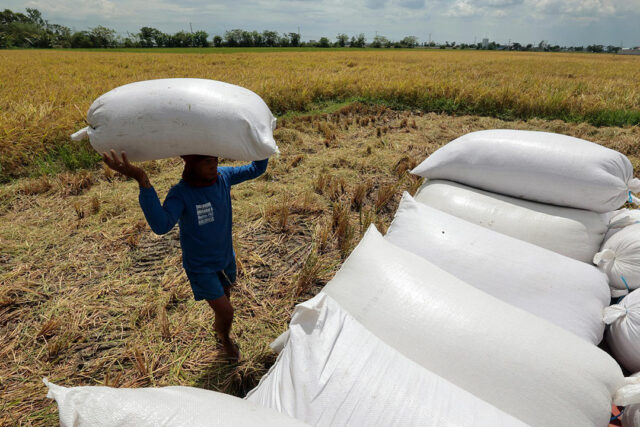
SAKO PILIPINAS, a subsidiary of Hong Kong (HK) SSG Limited, has inaugurated its 1,000-square-meter expansion at the Cavite Economic Zone, where it will make woven sacks to supply the rice and fertilizer industries, the Philippine Economic Zone Authority (PEZA) said.

“The expansion is expected to boost SAKO Pilipinas’ growing operations, which currently produces more than 22 million packaging units annually,” PEZA said in a social media post on Wednesday.

SAKO Pilipinas makes polypropylene and paper sacks and also supplies the feed, sand, gravel, and detergent industries. A portion of its raw materials consists of recycled packaging.

Erny Yu, chief executive officer of SAKO Pilipinas, said that the new facility will support manufacturers with reliable and tailored packaging solutions.

“SAKO Pilipinas combines global expertise with a local, sustainable approach to ensure that our packaging solutions meet what the local market needs,” he added.

PEZA Director General Tereso O. Panga said that the company’s products “are an essential partner in keeping our industries and daily lives moving.” — Justine Irish D. Tabile

PSE index climbs on positive data, foreign buying

BW FILE PHOTO

PHILIPPINE STOCKS edged up on Wednesday, boosted by foreign buying and positive economic data that could affect the Bangko Sentral ng Pilipinas’ (BSP) policy decision this week.

The Philippine Stock Exchange index (PSEi) rose by 0.24% or 14.91 points to close at 6,098.74, while the broader all shares index increased by 0.31% or 11.43 points to end at 3,684.65.

“The PSEi continued to move upward as buying pressure supported the market’s momentum. Investors remained optimistic ahead of the Bangko Sentral ng Pilipinas’ upcoming interest rate decision, taking cues from the latest inflation data, which came in below the central bank’s target range,” Regina Capital Development Corp. Head of Sales Luis A. Limlingan said in a Viber message.

Headline inflation picked up to 1.7% in September from 1.5% in August, the Philippine Statistics Authority reported on Tuesday. This was within the BSP’s 1.5-2.3% forecast and below the 1.9% median estimate in a BusinessWorld poll of 12 analysts.

For the first nine months, inflation averaged 1.7%, matching the BSP’s forecast for the year and still below its 2-4% annual target.

The Monetary Board will meet to review policy on Thursday (Oct. 9). Ten of the 16 analysts in a BusinessWorld poll expect the central bank to pause anew after it delivered three straight cuts, while the remaining six said a fourth consecutive 25-basis-point reduction could happen this week to help support domestic demand and boost the economy.

“The local market extended its climb as investors digested the Philippines’ August labor market data which posted good figures, with the number of employed increasing 8.8% month on month and 19% year on year,” Philstocks Financial, Inc. Research Manager Japhet Louis O. Tantiangco said in a Viber message.

“The peso’s strengthening against the US dollar also gave the market a boost. Foreign investors helped in the climb,” he added.

The peso closed at P57.95 versus the greenback on Wednesday, jumping by 15 centavos from its P58.10 finish on Tuesday, Bankers Association of the Philippines data showed.

Meanwhile, net foreign buying was at P540.06 million on Wednesday, a reversal of the P218.1 million in net selling recorded on Tuesday.

Most sectoral indices closed higher on Wednesday. Mining and oil surged by 4.91% or 671.77 points to 14,341.41; services jumped by 2.09% or 47.39 points to 2,309.50; industrials rose by 0.38% or 34.32 points to 9,003.39; and holding firms increased by 0.18% or 9.26 points to 4,917.98.

Meanwhile, financials declined by 1.09% or 22.77 points to 2,064.75, and property dropped by 0.57% or 13.19 points to 2,282.43.

Value turnover declined to P6.38 billion on Wednesday with 4.54 billion shares traded from the P10.35 billion with 2.37 billion shares that changed hands on Tuesday.

Advancers narrowly outnumbered decliners, 94 to 92, while 65 names closed unchanged. — A.G.C. Magno

Customs sees up to P12B in revenue foregone with 90-day rice import freeze

PHILSTAR FILE PHOTO

THE Bureau of Customs (BoC) said it expects to forego up to P12 billion in revenue should the rice import freeze extend to 90 days.

Customs Commissioner Ariel F. Nepomuceno told reporters on the sidelines of an event on Wednesday that the bureau assumes a revenue hit of P3 billion-P4 billion a month if rice imports are halted, meaning the corresponding toll on revenue would be P6 billion-P8 billion for the current 60-day freeze on rice imports.

“In rice, our foregone revenue, assuming 60 days… would amount to P6 billion to P8 billion over those two months,” he said, adding that a 90-day freeze could result in P9 billion to P12 billion in revenue foregone.

Agriculture Secretary Francisco P. Tiu Laurel, Jr. said on Monday that the government will extend the rice import suspension until the end of this year but keep tariffs at 15%.

President Ferdinand R. Marcos, Jr. initially ordered a 60-day suspension of rice imports starting September, to provide relief to farmers who have been receiving low offers for their grain.

The Bureau of the Treasury reported that Customs collections rose 1.51% to P544 billion as of the end of July, equivalent to 56.74% of its revised P958.7-billion target for the year.

Executive Order No. 62 issued last year had lowered tariffs on imports of rice, electric vehicles and other commodities resulting in a corresponding hit to Customs revenue.

During the same conversation with reporters, Mr. Nepomuceno said full digitalization can help curb misdeclaration of imports to evade duty and taxes.

He said the BoC has not been allotted a budget this year to pursue digitalization efforts and is studying options for a public-private partnership.

“Our only job is to make sure that the minimum required features or capabilities are there. The system should have 100% digitalized processes,” he said. — Aubrey Rose A. Inosante

Weak investment forces strategy shift to helping established businesses grow — DTI

DTI Undersecretary Ma. Cristina A. Roque

THE Department of Trade and Industry (DTI) said an investment slowdown has forced it to shift its focus to established businesses, with which it is exploring possible growth pathways.

“We acknowledge that we have a bit of a local problem now here. So, investments are, of course, coming in, but not as much as we expected them to be,” Trade Secretary Ma. Cristina A. Roque said on Wednesday at the Federation of Philippine Industries Business Summit 2025.

“What DTI will be doing is to strengthen the industries that are here … I’ve already set up meetings with some of the industry players to discuss how to grow and strengthen their businesses here in the Philippines,” she added.

She said that because of “recent developments,” investors are in wait-and-see mode. Asked whether investors have turned cautious because of the public works corruption scandal, she said, “I am not sure … because they don’t say it specifically.”

“But for those that already have investments here, pumapasok pa rin sila kasi alam na nila kung anong meron (they are keeping at it because they know the score),” she said.

She said that the government’s role now is to ensure that it helps established businesses resolve any issues they face.

However, she said that the Board of Investments will be sticking with its P1.75-trillion target for the year, because it is crucial to keep the tone positive. “We don’t want to discourage the Filipino people,” she added.

She also said the domestic market remains the main driver for investment.

“Some of the tycoons don’t even export … they just rely on the local market. This is what makes us attractive,” she added. — Justine Irish D. Tabile

Budget priorities often out of step with PHL development plan — JICA

THE Philippine Development Plan is often not fully aligned with budget priorities, Japan International Cooperation Agency (JICA) Chief Representative Baba Takashi said.

Speaking at the Philippine Development Forum, Mr. Baba  said: “We find that while the Philippine development plan sets the strategic direction, its alignment with the national budget is not always strong.”

This has caused delays in projects supported by Official Development Assistance (ODA) , he said on Oct. 6.

He noted that the Philippines sends “mixed signals on which priorities should be supported by ODA and local funds.”

Mr. Baba said the National Government committed to allocate counterpart funding of up to P6 trillion for foreign-funded projects, on top of the budget for regular projects and programs.

“Development partners are prepared to support the infrastructure sector with up to P2.1 trillion in public investment from 2025 to 2028,” he said.

Rep. Mikaela Angela B. Suansing, who chairs the House appropriations committee, has said that Congress supported the budget for 2026 foreign-assisted projects, noting that legislators left the executive branch’s proposed ODA allocations intact.

Mr. Baba also noted the poor coordination by core government agencies a disconnect between executive and legislative priorities, leading to inefficiencies in project rollouts.

The he said operations and maintenance budgets are also an issue.

“Inadequate funding or lack of long-term planning for maintenance leads to rapid deterioration of facilities and services. This gap undermines the very investment made in infrastructure,” he said. — Aubrey Rose A. Inosante

PHL expecting more dumped goods in reaction to Trump tariffs, DTI says

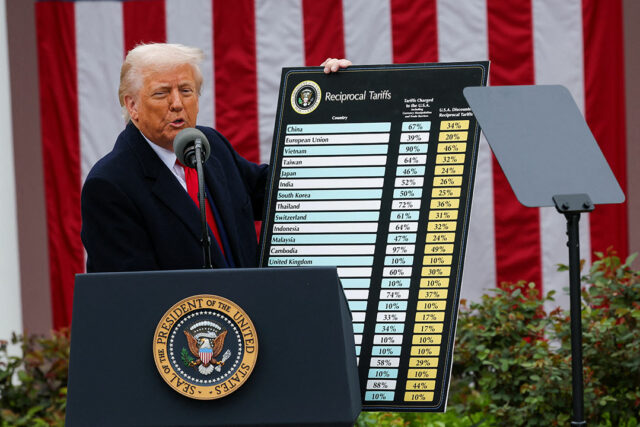
US PRESIDENT Donald Trump delivers remarks on tariffs in the Rose Garden at the White House in Washington, DC, April 2, 2025. — REUTERS

THE Department of Trade and Industry (DTI) said it is bracing for more goods to be dumped in the Philippines after US imposed reciprocal tariffs in August.

Speaking at the Federation of Philippine Industries Business Summit 2025, Trade Secretary Ma. Cristina A. Roque said she is enlisting the aid of the Bureau of Customs (BoC) to address the expected surge in imports.

“We really have to work together. A lot of dumping is expected to happen, dahil medyo challenging ang tariffs ng US (because the US tariffs are a bit challenging),” she said on Wednesday.

“We are expecting a lot of goods to be brought in here from China, Vietnam, and many other countries,” she added, singling out shipments of  cement, steel, and garments.

“These are products that are being sold to the US, especially from China. And (the dumping is taking place) not only in the Philippines but also in Southeast Asia,” she said.

“When all of us trade ministers talk, that is what we are expecting — that there will be dumping,” she added.

She said industry representatives have already reported increasing imports of cheap garments and school supplies.

“We have to work with the BoC because if the goods cannot enter, then there’s no issue,” she said.

Dapat talaga maghigpit sa goods (They need to be strict with these goods) or they need to tax them,” she added. “I don’t know what the commissioner will decide, but we need to protect the manufacturing sector.”

BoC Commissioner Ariel F. Nepomuceno said that dumping of goods may result in government revenue taking a hit, which will need to be offset in some other way.

He added that some of the foregone revenue will stem from the zero-tariff concessions won by the US for its goods, which he estimated at P30 billion, judging from volumes shipped in 2024, when the goods were still charged tariffs. — Justine Irish D. Tabile

DA pitches P216.1-B budget to ensure food security, enhance farmer incomes

FRANCISCO P. TIU LAUREL, JR. — PHILIPPINE STAR/JESSE BUSTOS

THE Department of Agriculture (DA) said a budget of P216.1 billion will help the Philippines achieve food security and raise incomes for agricultural workers industry.

Agriculture Secretary Francisco P. Tiu Laurel, Jr. said at a Senate hearing that chronic underfunding of agriculture has worsened farmer poverty as well as the trade deficit in farm goods.

According to the Philippine Statistics Authority (PSA), 27% of farmers and 27.4% of fisherfolk living in extreme poverty

“As their representatives, it is our duty to be their advocates — to speak for them, to help them fulfill their dreams, realize their hopes, and empower them not only to uplift their own lives but also to sustain the tens of millions of Filipinos who rely on them for nourishment,” Mr. Laurel said.

The budget Mr. Laurel is proposing would represent a 21.22% increase from the budget approved in 2025.

The DA plans to focus its spending on modernizing the industry, increasing incomes, and building climate resilience. — Andre Christopher H. Alampay

Nobel Prize in Chemistry 2025 awarded to scientists behind groundbreaking ‘Hermione’s Handbag’ materials

A view of a bust of Alfred Nobel in the Nobel Forum in Stockholm, Sweden, October 6, 2025. — REUTERS/TOM LITTLE

STOCKHOLM — Scientists Susumu Kitagawa, Richard Robson and Omar Yaghi won the 2025 Nobel chemistry prize for developing a new form of molecular architecture, yielding materials that can help tackle challenges such as climate change and lack of fresh water.

The three laureates worked to create molecular constructions, known as metal-organic frameworks or MOFs, with large spaces through which gases and other chemicals can flow and that can be utilised to harvest water from desert air, capture carbon dioxide or store toxic gases.

The academy said some of these materials had a remarkably large surface area – a porous material roughly the size of a small sugar cube could contain as much surface area as a large football pitch.

“A small amount of such material can be almost like Hermione’s handbag in Harry Potter. It can store huge amounts of gas in a tiny volume,” Olof Ramstrom, Member of the Nobel Committee for Chemistry, said.

USES COULD INCLUDE DEALING WITH ‘FOREVER CHEMICALS’
The more than a century-old prize is awarded by the Royal Swedish Academy of Sciences and the winners share 11 million Swedish crowns ($1.2 million), as well as the fame of winning arguably the world’s most prestigious science award.

Kitagawa told the Nobel press conference that he was deeply honoured by the award.

“My dream is to capture air and separate air to – for instance, in CO2 or oxygen or water or something – and convert this to useful materials using renewable energy,” he said.

After the discoveries, chemists have built tens of thousands of different MOFs, some of which “may contribute to solving some of humankind’s greatest challenges”, the Academy said, adding that additional uses included separating toxic PFAS, or “forever chemicals”, from water and breaking down traces of pharmaceuticals in the environment.

Kitagawa is a professor at Kyoto University in Japan, while Robson is a professor at the University of Melbourne, Australia, and Yaghi is a professor at the University of California, Berkeley, in the United States.

Kitagawa is Japanese, Robson was born in Britain but moved to Australia in his late 20s, while Yaghi is Jordanian-American.

Yaghi, whose parents were Palestinian refugees living in Amman, moved to the U.S. as a teenager. His team managed to create a crystal-like structure using metal atoms and showed that these structures were robust and durable, yet highly porous.

“That basically was the spark that ignited the field,” he said in comments included in a statement from the University of California, Berkeley.

THIRD 2025 NOBEL PRIZE, LITERATURE NEXT ON THURSDAY
The Chemistry Nobel was the third prize announced in this year’s crop of awards, in keeping with tradition, following those for medicine and physics announced earlier this week.

Established in the will of Swedish inventor and businessman Alfred Nobel, the prizes for achievements in science, literature and peace have been awarded since 1901, with a few interruptions mostly due to the world wars.

Nobel was himself a chemist and his developments in that field helped underpin the wealth he amassed from his invention of dynamite in the 19th century. The economics prize is a later addition funded by the Swedish central bank.

Sometimes overshadowed by more famous laureates in the fields of physics, literature and peace, the chemistry awards have still recognised many influential discoveries such as nuclear fission, DNA sequencing techniques, and yeast.Last year’s chemistry award went to U.S. scientists David Baker and John Jumper and Briton Demis Hassabis for work on decoding the structure of proteins and creating new ones, yielding advances in areas such as drug development. — Reuters


Journaling key to emotional regulation for entrepreneurs 

ILOVEBDJ.COM

Writing in a journal can help entrepreneurs regulate their emotions amid the pressures of running a business, according to Belle de Jour (BDJ), a locally known lifestyle and planner brand. 

Darlyn Ty-Nilo, founder of BDJ, told BusinessWorld the importance of proper emotional regulation, noting that it significantly impacts a person’s productivity, particularly for entrepreneurs. 

“Because of all these things, as an entrepreneur running a business, you need self-clarity. If you yourself are confused, how can you expect to lead others?,” Darlyn Ty-Nilo, founder of BDJ, said in an interview in both mixed English and Filipino during the brand’s 20th anniversary on Wednesday. 

“So that’s what you go through when you’re trying to do journaling for your emotions—journaling for clarity of your emotions,” Ms. Nilo said. 

She added that journals can also help organize the mind, making it easier to plan and manage tasks effectively. 

According to research from the University of Dayton in the US, entrepreneurs are exposed to higher levels of stress compared to other workers, which can negatively impact their health. 

The study also emphasizes that managing stress is essential not only for entrepreneurs’ well-being but also for the success and performance of their businesses. 

Meanwhile, a separate survey conducted by Endeavor among 118 tech founders found that 75% of entrepreneurs feel pressure from others’ expectations, while 54% said discussing mental health is considered taboo in the ecosystem. 

The report also cited a US study showing that 72% of entrepreneurs experience mental health concerns. 

Grounded in the pressures she experienced in business, particularly during the pandemic, Ms. Nilo said this was the reason she also launched the Life Business Workshop to help women entrepreneurs stay inspired and focused on their business journeys. 

As part of the brand’s 20th anniversary celebration, BDJ also announced that the 2026 20th Edition Planner and the Manifest Bag collection are now available for pre-order until October 20. Edg Adrian A. Eva 

ADVERTISEMENT
ADVERTISEMENT