Home Blog Page 8807

Keepr Storage PH taps Project Assistant

ENTREPRENEUR ANNA Moncupa turned to Project Assistant, a company that provides digital solutions to startups and enterprises, when she was looking to start her business Keepr Storage PH.

Project Assistant helped create an app for Keepr Storage PH, which allows users to access a personal storage service from a mobile device.

In a statement, Ms. Moncupa said he picked Project Assistant over dozens of developers because it provided world-class quality.

Launched in 2011, Project Assistant provides a host of tech solutions such as comprehensive web marketing, design, branding, and mobile app development. It helped entrepreneurs turn their ideas into actual websites and mobile apps.

Keepr provides users in Metro Manila with flexible storage solutions that can be easily accessed on both Android and Apple devices.

How PSEi member stocks performed — November 9, 2020

Here’s a quick glance at how PSEi stocks fared on Monday, November 9, 2020.


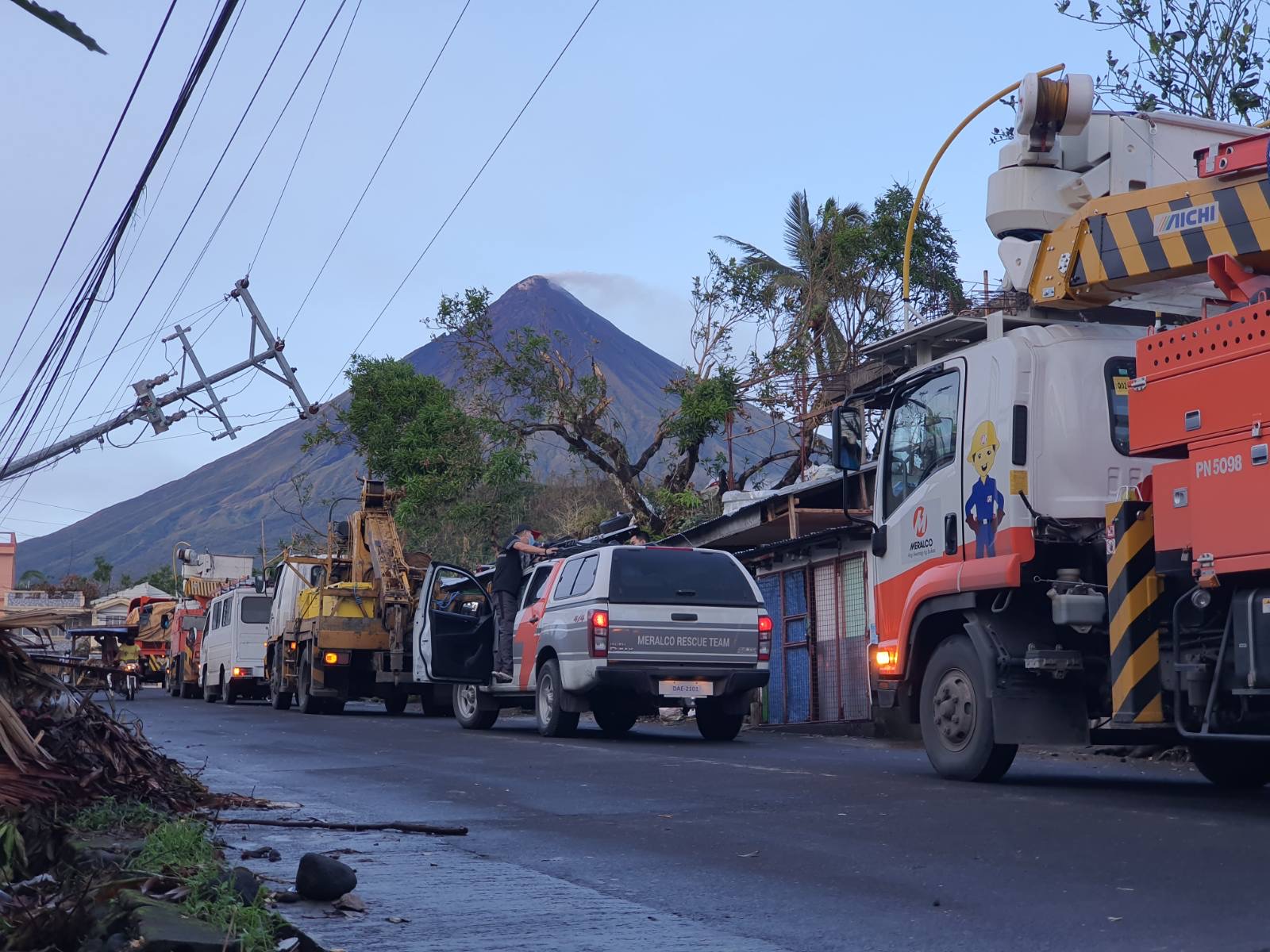
Meralco help restore power in typhoon-hit areas

The Manila Electric Company (Meralco), along with its social development arm One Meralco Foundation (OMF), joined the Power Restoration Rapid Deployment ( PRRD)Task Force Kapatid 2020 early Saturday morning to help expedite the restoration of electricity service in areas severely battered by super typhoon Rolly.

Meralco deployed a 206-strong contingent of engineers, linemen, and support personnel to help in the power restoration in Albay, Catanduanes, and parts of Camarines Sur. 65 of them will be helping the National Grid Corporation of the Philippines (NGCP) in its restoration efforts in Bicol.

Meralco is closely coordinating with the Department of Energy (DOE), National Electrification Administration (NEA), Philippine Rural Electric Cooperatives Association Inc. (Philreca), and the

PSE index ends flat ahead of 3rd quarter GDP data

By Denise A. Valdez, Senior Reporter

PHILIPPINE SHARES closed flat on Monday as investors were on wait-and-see mode ahead of the release of third quarter gross domestic product (GDP) data and amid post-election developments in the United States (US).

The benchmark Philippine Stock Exchange index (PSEi) inched up 0.16 point or less than 1% to close at 6,685.85, while the broader all shares index climbed 16.40 points or 0.41% to end at 3,961.12.

The index opened the session at 6,665.08 and posted losses throughout the day, hitting an intraday low of 6,619.59. It started to pick up in the last minute of trading to close at its best showing for the session.

“Buyers were mainly on the sidelines, despite the rally in other Asian markets. Investors may be waiting for developments on the status of the global economy as well as the political situation in the US before deciding whether to make a move in the market,” AAA Southeast Equities, Inc. Research Head Christopher John Mangun said in an e-mail.

Most Asian stocks were recording gains at the PSEi’s close on Monday following the election of Joe Biden as 46th US President over the weekend.

“The market closed marginally higher as investors were cautiously optimistic after the US Presidential election concluded… Despite this, market breadth remained positive as traders speculated on which issues would perform well during the last quarter of the year,” Timson Securities, Inc. Trader Darren T. Pangan said in a text message.

Also a key driver in Monday’s market movement was third-quarter GDP data which the government is scheduled to release on Tuesday. A BusinessWorld poll of 19 economists showed an expected GDP contraction of 9.2%, improving from the downward-revised 16.9% decline in the second quarter.

Most sectoral indices ended Monday’s session in green territory: mining and oil rose 249.70 points or 3.15% to 8,153.71; industrials grew 168.26 points or 1.89% to 9,028.59; property added 37.13 points or 1.16% to 3,232.41; services picked up 5.70 points or 0.37% to 1,517.84; and financials climbed 2.94 points or 0.23% to 1,283.11.

The holding firms sub-index was the only one that recorded a loss, sliding 89.38 points or 1.26% to close at 6,953.35 on Monday.

Value turnover stood at P8.02 billion with 1.71 billion issues switching hands, down from P10.08 billion with 4.08 billion issues in the last session.

Advancers outnumbered decliners, 131 against 83, while 43 names ended unchanged.

Foreign investors returned to selling on Monday, posting net outflows of P394.7 million against the net foreign buying of P453.57 million seen on Friday.

“6,900 may be considered the next resistance level, while 6,400 is where support may be pegged at,” Mr. Pangan said.

“The market may move higher in the coming days as the sentiment improves,” Mr. Mangun added.

Peso climbs versus the dollar ahead of GDP data

THE PESO strengthened versus the dollar on Monday as the market expects the economy to have rebounded in the third quarter from its double-digit contraction in the April to June period.

The local unit closed at P48.145 versus the dollar on Monday, rising by 7.5 centavos from its P48.22 finish on Friday, data from the Bankers Association of the Philippines showed.

The peso opened Monday’s session at P48.15 against the greenback and reached an intraday high of P48.11. Meanwhile, its weakest showing for the day was at P48.18 versus the dollar.

Dollars traded declined to $679.3 million on Monday from $779 million in the previous session.

Rizal Commercial Banking Corp. Chief Economist Michael L. Ricafort said the peso went up as the market expects a smaller economic contraction in the third quarter.

“Peso was stronger a day ahead of the latest third-quarter GDP (gross domestic product) data, which is expected to improve from the record contraction of -16.9% year-on-year in the second quarter,” Mr. Ricafort said in a text message.

A trader said in an e-mail on Monday that a better economic performance will increase demand for peso.

The Philippine economy is expected to have declined in the third quarter, though at a slower pace than the previous three-month period amid relaxed lockdown restrictions, economists said.

A BusinessWorld poll of 19 economists yielded a median estimate of a 9.2% decline in gross domestic product (GDP) in the third quarter, easing from the downward-revised 16.9% plunge in the second quarter.

If realized, this will bring the GDP contraction in the first three quarters of 2020 to 8.9%.

The government expects the economy to shrink between 4.5% and 6.6%, or an average of 5.5%, this year.

The Philippine Statistics Authority will report third-quarter GDP data on Tuesday.

Mr. Ricafort sees the peso moving from P48.08 to P48.18 versus the dollar, while the trader expects a range of P48 to P48.20. — KKTJ

Moody’s Analytics downgrades PHL growth outlook for 2021

MOODY’S ANALYTICS downgraded its growth outlook for the Philippines for 2021 to 6.2% from its 7.8% estimate issued last month, citing the government’s tepid fiscal response which may result in a recovery weaker than it could have been.

“The 2021 forecast has been revised downward because there has been a smaller fiscal policy response than we had previously assumed,” Steve Cochrane, chief Asia-Pacific economist at Moody’s Analytics, said in an e-mail Monday.

Republic Act (RA) No. 11494 or the Bayanihan to Recover as One Act (Bayanihan II) allocated an additional P165 billion for the country’s pandemic response. It followed the P275 billion provided by RA 11469 or Bayanihan I to address the economic crisis. In total, the government’s fiscal response is equivalent to about 3.9% of gross domestic product (GDP), according to a policy tracker maintained by the International Monetary Fund.

Meanwhile, Moody’s Analytics upgraded its 2020 GDP outlook to minus 8.2%, against the earlier forecast of minus 9.2%, citing some improvements seen in manufacturing and trade.

“Manufacturing is rebounding a little better than expected. Further, exports, which had been following an uncertain path, improved quite a bit in September, and with trade picking up globally and in Southeast Asia, trade should add some support to economic growth,” Mr. Cochrane said.

The Monthly Integrated Survey of Selected Industries reported that factory output, as measured by the Volume of Production Index, contracted by 8.4% year on year in September, according to the Philippine Statistics Authority (PSA). This represented an improvement from the decline of 9% in August.

Merchandise exports rose 2.2% to $6.22 billion in September following a 12.8% year-on-year drop in August, the PSA said. This is the first month of expansion in exports since the 2.8% seen in February, before the coronavirus disease 2019 (COVID-19) outbreak became a pandemic.

In the third quarter, Moody’s Analytics said GDP likely contracted 6%, a less drastic decline than the minus 9.2% median estimate from a BusinessWorld poll of 19 economists last week. In the second quarter, which included the weeks when the lockdown was at its most strict, the contraction was a record 16.5%.

Mr. Cochrane said the easing restrictions will pave the way for the economy to gradually pick up.

“We should be able to characterize the economy as beginning its recovery some time in the third quarter, perhaps in late August. So far, the fourth quarter looks like it is continuing the recovery, and 2021 will look better as well.”

The government expects the economy to contract between 4.5% and 6.6% before bouncing back with growth of 6.5% to 7.5% next year.

The PSA will report third-quarter GDP data on Tuesday, Nov. 10. — Luz Wendy T. Noble

Typhoon damage to power co-ops hits P369.821M

THE estimated cost of damage sustained by electric cooperatives due to Typhoon Rolly (international name: Goni) has climbed to P369.821 million, according to the National Electrification Administration (NEA) on Monday.

It said 1.3 million affected households or 62.68% have had their power restored, leaving some 780,597 households still without access to electricity, many of them in the Bicol region.

The NEA reported that power has been restored in 14 municipalities in Camarines Norte and Sorsogon as of Monday afternoon.

The power situation in Masbate, including Ticao Island, and the Calabarzon Region is normal, according to the NEA.

In a separate advisory, the National Grid Corp. of the Philippines said that its transmission lines and facilities are operating normally.

METRO MANILA’S DISTRIBUTION UTILITY
Asked about the impact of Typhoon Rolly on Manila Electric Co., Meralco Head of Utility Economics Lawrence S. Fernandez said power supply and demand both fell.

“For a few days, both supply and demand were affected. They were both reduced by Typhoon Rolly pero after that, nag normalize (but after that, they have since normalized),” Mr. Fernandez said in a briefing Monday.

“On the supply side, there were several power plants that were affected… Nagbaba sila ng output (they reduced output) in preparation for the arrival of the typhoon. On the demand side, bumaba rin sa Meralco system (it also fell within the Meralco system) for a few days as Typhoon Rolly passed through the Meralco service area,” he added.

Meralco’s controlling stakeholder, Beacon Electric Asset Holdings, Inc., is partly owned by PLDT, Inc., Hastings Holdings, Inc., a unit of PLDT Beneficial Trust Fund subsidiary MediaQuest Holdings, Inc., has a stake in BusinessWorld through the Philippine Star Group, which it controls. — Angelica Y. Yang

Pandemic restrictions on restaurants seen driving more coffee consumption at home

THE constraints imposed by the pandemic on restaurant operations will force more consumers to prepare coffee at home, providing an opportunity for brands to sell more via groceries, according to Fitch Solutions Country Risk & Industry Research.

Consumers are also looking to spend less, limiting their purchases to essentials like groceries, which will make supermarkets the new battleground for coffee companies competing for space in their customers’ shopping carts, Fitch Solutions said.

“Within the coffee segment, this will play out with the substitution of on-trade coffee with coffee bought through retail channels,” it said in a report Monday.

The changes in consumer behavior will benefit not only instant coffee makers but also producers of premium coffee as higher-income individuals opt out of cafes, Fitch Solutions added.

“Between 2020 and 2024, coffee consumption is projected to increase from 3.9 kilograms per capita in 2020, to 5 kilograms by 2024,” it said.

Prospects for the coffee industry are also supported by estimated household spending on coffee of about $352 in 2020, much higher compared with Malaysia ($240) and Indonesia ($137).

Coffee is widely consumed across all income brackets, with instant coffee accounting for about 90% of the market.

“Breaking this down, coffee is the most popular non-alcoholic drink purchased through the mass grocery retail channel, accounting for approximately 43% of total non-alcoholic drinks spending. This is followed by fruit and vegetable juices, which account for a further 31%,” Fitch Solutions said.

By 2024, coffee as a proportion of total non-alcoholic drinks spending is expected to grow to 44%.

The country’s large young adult population could boost the outlook of spending on coffee products, it said. More than 35.1 million or nearly a third (32%) of the population are aged between 20 to 39.

“We classify this group as the trendsetting generation, who are earning incomes and have larger discretionary spending levels. These consumers are more likely to spend on more speciality and more premium products,” Fitch Solutions said.

It noted the growing middle-income population of the Philippines — those with annual disposable income of more than $10,000. It estimated this population at 4.5 million households, which Fitch Solutions expects to rise to 8 million by 2024.

“This target market will be key to supporting sustainable growth in spending on coffee products over the next five years,” it said. — Luz Wendy T. Noble

DoF’s Dominguez says tax not a factor in closure of PHL refineries

FINANCE Secretary Carlos G. Dominguez III said refinery closures in the Philippines are not a response to the tax regime but rather are a global phenomenon triggered by changing oil-industry economics.

“Another refinery closing — it’s not about the fiscal environment but rather the ability to compete with larger integrated end-to-end refineries with petrochemical complexes,” Mr. Dominguez III told reporters via Viber over the weekend.

He cited the recent move of Royal Dutch Shell to close down its refinery in Convent, Louisiana as an example of industry migration out of the refining business due to weak oil demand.

“The economics of oil refining are drastically changing,” he added.

According to Reuters, the Shell refinery in Convent is the largest such facility in the US and is due to shut down this month, after the company failed to find a buyer.

The Philippines’ remaining oil refinery, run by Petron Corp., announced late last month a planned closure due to heavy losses and the unfavorable tax regime.

House Ways and Means Chairman and Albay Representative Jose Ma. Clemente S. Salceda said that demand remains the industry’s main problem, but added that legislators are willing to review the tax regime to address concerns raised by the refining industry.

“I am open to the idea of looking into whether there are inequities in the tax system in favor of importers as opposed to local refiners. The Committee is guided by the principle of pari passu (on an equal footing) in taxation, so we try not to make distinctions unless they are supremely justified by the common good,” Mr. Salceda said in a Viber message Sunday.

He said he supports the continued operations of refiners for energy security reasons, but said the various issues faced by the industry need to be worked out.

“I’m open to hearing more about this problem. I can make a call when I see the numbers from both DoF (Department of Finance) and concerned private sector parties. If there is a violation of pari passu, and the economic impacts far outweigh potential revenue losses, we can perhaps figure out a solution,” he added.

Petron President and CEO Ramon S. Ang has said the group might close the refinery “very soon” if the tax playing field is not leveled between refiners and importers.

Oil refiners are subject to 12% input value-added tax (VAT) on crude oil imports, which they refine and sell on as refined products. Refined products are also subject to 12% output VAT and excise tax.

Importers only need to pay VAT once as well as excise tax on their shipments of refined products.

Mr. Dominguez has said there is no need to change the tax laws because the closure of the refineries has more to do with the industry’s exposure to adverse oil price movements.

“We note that in the refinery business, there may be market and timing issues — such as importing crude at a high price, then after refining, world crude prices might be lower, thus, refining margins could be lower. On the other hand, an importer, who imports finished products can sell these products right away, making him less vulnerable to oil price movements. It’s actually a supply chain issue rather than a tax issue,” he said late last month.

“We don’t need to change our tax laws on this. It’s happening worldwide, refinery margins are getting squeezed,” he added.

Petron’s refinery closure poses a setback to energy security, according to Fernando L. Martinez, chairman and CEO of Eastern Petroleum, in a text message last week.

“However, the existing and projected world oil surplus will keep both the supply and price situation in check to the benefit of consumers thereby neutralizing any possible supply gap for the country,” Mr. Martinez added.

In August, Pilipinas Shell Petroleum Corp. said it will shut down its refinery in Batangas province due to worsening conditions in the industry due to the decline in fuel demand due to the pandemic.

Pilipinas Shell will instead convert its facility into an import terminal so it can continue to supply the local market.

Petron is also considering turning its refinery into an import terminal. — Beatrice M. Laforga with Angelica Y. Yang


Gov’t extends deadline to pay taxes owed to LGUs to Dec. 19

THE deadline to pay taxes, fees and charges to local government units (LGUs) has been extended again to Dec. 19 to provide some relief from the pandemic.

In a statement Monday, the Department of Finance (DoF) said it issued Department Circular No. 003-2020 moving the deadline to Dec. 19 for payment of all taxes, fees and charges due on or beyond Sept. 4 with no interest, surcharges or penalties.

Finance Secretary Carlos G. Dominguez III said the guidelines are authorized by Republic Act (RA) No. 11494 or the Bayanihan to Recover As One Act (Bayanihan II).

The circular also suspended until Dec. 19 the counting of the period to pay local taxes, fees, and charges as well as the period for the redemption of real properties sold or forfeited at public auction.

If an LGU had extended the deadline even before Bayanihan II took effect, the DoF said the deadline will be moved to Dec. 19. Meanwhile, further extensions beyond the set date will have to be in line with RA 7160 or the Local Government Code.

“As for local tax delinquencies prior to the effectivity of Bayanihan II on Sept. 15, all payments shall be due and demandable upon the expiration of the Dec. 19 deadline,” the DoF said.

Interest, penalties and surcharges will be charged after the deadline has passed.

At the height of the lockdown in April, the government also extended the payment deadline for local taxes, without interest or penalties, as part of the first relief package under RA 11469 or the Bayanihan to Heal as One Act.

The DoF said the new relief measure aims to ease the burden of households and businesses severely affected by the coronavirus pandemic.

The circular asked LGUs and local treasurers to inform the taxpayers of the new dates. They also need to reconfigure the electronic information systems to incorporate the new deadline.

Local treasurers have also been told to postpone administrative or judicial actions they were planning to conduct while the law is still in effect.

Taxpayers who want to settle their fees early can also do so as LGUs were ordered to accelerate implementation of electronic payment systems.

The Bureau of Local Government Finance (BLGF) can provide technical help to LGUs in implementing the new guidelines. The BLGF will also monitor compliance. — Beatrice M. Laforga

Farmers seek bigger say in agri modernization

FARM ORGANIZATIONS asked Agriculture Secretary William D. Dar to consult more extensively to guide the implementation of Republic Act No. 8435, or the Agriculture and Fisheries Modernization Act (AFMA).

In an open letter, 58 leaders of various agricultural organizations, such as the United Broilers Raisers Association, Samahang Industriya ng Agrikultura, the Philippine Chamber of Agriculture and Food, Inc., and the Federation of Free Farmers, said the lack of consultation by the Department of Agriculture (DA) does not meet its obligations under the law.

They said that under the law, stakeholders must be consulted in the formulation and the implementation of the Agriculture and Fisheries Modernization Plan.

“This means the participation in making budget requests and full transparency in program implementation. This would entail the designation of clear performance targets and quantifiable and verifiable impact indicators and the conduct of up-to-date monitoring and impact assessment,” they said.

They said they were not consulted on the AFMA, which tackles issues like food security, poverty alleviation, income enhancement, global competitiveness, and sustainability.

The agricultural groups said one of the components of the AFMA that was not implemented was a national information network (NIN) with industry data, modeled on a system in place in the US.

They said, NIN will provide information and marketing services such as data on supply, demand, price and price trends, as well as market forecasts.

“It is the reason for the disconnect between farmgate and retail prices for agricultural commodities. It is also why issues such as unfair trade and smuggling have not been addressed,” they said.

They added that other AFMA provisions not implemented were the establishment of Strategic Agriculture and Fisheries Development Zones and Agro-Industry Modernization Credit and Financing Programs.

“The first step is to follow the law and implement AFMA. That is the only way to effectively gain the trust and respect of stakeholders,” they added.

Acting Socioeconomic Planning Secretary Karl Kendrick T. Chua said last week that the agriculture sector has not reflected improvement commensurate to its level of funding.

Mr. Chua added that the performance of the farm sector is hindered by restrictive policies that slow competition and productivity.

The Department of Budget and Management approved a budget of P66.4 billion for the DA in 2021. — Revin Mikhael D. Ochave

The significance of the Electronic Commerce Act during the pandemic

Twenty years ago, RA 8792 (the Electronic Commerce Act) was signed into law. The government was preparing for the digital age as the world moved on to information and technology-based means of communication. It is safe to say that the progress towards using information technology for business did not escalate the way it was predicted. The cost involved in ensuring integrity of electronic documents has been one of the challenges of the business sector and the government in transforming to fully IT-based operation. Before the pandemic, the business sector relied on face-to-face interaction, including inquiries, follow-up and manual submission of reporting requirements to the government. The latter still uses traditional means of communication when sending notices to taxpayers as well. For signatures on reports submitted to the government, wet-ink signatures on documents have been consistently and strictly required.

Earlier this year, due to the pandemic, most of the government offices we deal with, such as the Board of Investments (BoI), the Philippine Economic Zone Authority (PEZA), the Bureau of Internal Revenue (BIR), the Securities and Exchange Commission (SEC) and even some Local Government Units (LGU), resorted to the use of e-mail as the main mode of communicating with clients. Memorandum circulars (MC) were issued to address the challenges in sending and receiving reporting requirements while working remotely. For instance, the SEC issued MC No. 10 series of 2020 to facilitate the receipt of submission of reporting requirements of corporations and other entities. The MC allowed submission by electronic mail (e-mail) and the use of electronic signature, as defined by RA 8792, for the reports and files. It was evident that the issuance was a temporary solution to the enhanced community quarantine (ECQ) being implemented at that time as companies were still required to ensure that reports be accompanied by wet-ink signatures of authorized signatories, with hard copies of the documents to be filed after the quarantine.

Recently, in an apparent move towards long-term reliance on Information and Communication Technology (ICT) for receiving and sending documents via electronic means, SEC MC No. 28 highlighted the validity and enforceability of electronic data messages based on RA 8792. Fundamentally, the MC aims to facilitate and expedite the transmission and receipt of official communications and enhance their integrity for all transactions with the SEC. To achieve this, security measures such as Multi-factor Authentication (MFA) are mandatory, including the use of mechanisms, such as One-Time Personal Identification Number (OTP) systems or two-step verification by a Software-based Authenticator.

The MC requires corporations, partnerships, associations, and individuals to formally designate an official and alternate e-mail and cellphone number for their transactions with the SEC. These entities and individuals are given 60 days from the date of effectivity of the circular to comply with the submission. For future applications and for those with pending applications, such information must either be indicated upon filing of registration forms or submitted within 30 days from the issuance of the certificate of registration, license, or authority. The MC further requires that beginning Feb. 23, 2021, the information should be included in the General Information Sheet (GIS) or Notification Update Form (NUF) regularly filed with the SEC; otherwise such documents will be considered incomplete.

The e-mail addresses and cellular phone numbers will be under the control of the corporate secretary, the person charged with the administration and management of the corporation sole, the resident agent of the foreign corporation, the managing partner, the individual, or their duly authorized representative. These requirements mean additional responsibilities for corporate secretaries and authorized representatives because under Section 8 of the MC, companies must use the official and alternate e-mail addresses for transactions, applications, letters, requests, papers and pleadings under the jurisdiction of, or for consideration by, the Commission. “The Commission may likewise send notices, letter-replies, orders, decisions and/or other documents through the e-mail addresses and there is a presumption that these notices are deemed received by the entities on the date so sent by the SEC. Service of notice through this process shall be considered compliance with the notice requirement of administrative due process.” Thus, these e-mail addresses and cellular phones must be strictly monitored to avoid prescription of the reglementary period required to respond to the notices, orders and similar documents sent by SEC.

While the MC entails additional work for corporate secretaries, authorized representatives, and practitioners like us dealing with the SEC, this is definitely a welcome development. These types of issuances ensure everyone’s safety while bringing into mainstream the online means to communicate. Establishing the use of information technology as the means to communicate will maximize the resources of both the government and private sector.

We are looking forward to other government agencies to follow suit and institutionalize the use of information and communications technology defined under RA 8792. Other government agencies may also establish clearer rules and remove any cloud of doubt on the validity of documents filed electronically and use of electronic signature.

On a related note, I think we can all agree that the time has come to apply the provisions of the two-decade-old law, especially in terms of using electronic signatures. While some government agencies receive and recognize reports, letters, and requests affixed with electronic signatures, there are several instances where filing was refused, and taxpayers were required to refile using another copy with wet-ink signatures on the document.

We hope that due consideration be given on Sections 8 and 9 of the Electronic Commerce Act on the legal recognition and presumption relating to electronic signatures in formulating memorandums and circulars relevant to the submission of electronic documents and the use of information-technology based communications.

Let’s Talk Tax is a weekly newspaper column of P&A Grant Thornton that aims to keep the public informed of various developments in taxation. This article is not intended to be a substitute for competent professional advice.


Gemmalu O. Molleno-Placido is a senior associate of the Tax Advisory & Compliance division of P&A Grant Thornton, the Philippine member firm of Grant Thornton International Ltd.

pagrantthornton@ph.gt.com