Home Blog Page 8419

Busy Lakers

Free agency in the National Basketball Association has turned competition into a year-round affair. Once upon a time, the off-season used to give players and fans alike a respite from the challenges of keeping up with, and keeping tabs on, movements in the league, actual or prospective. Not anymore. Instead of quiet moments enabling protagonists to take stock of their accomplishments, or lack thereof, flurry after flurry of activity now mark campaigns and turnarounds. The hectic schedule in the midst of the pandemic serves only to accentuate the speed with which changes occur; in one particular case, eagerness got the better of trade partners to the point where the Commissioner’s Office has had to step in and probe its beginnings, its seeming consummation even prior to the start of the official negotiating phase, and its equally abrupt end.

Considering the stakes involved, the Lakers arguably stand as the prime example of the franchises’ need to keep pace with each other. Fresh off a bubble-accentuated championship run, they have been compelled to hit the ground running in their quest to put up the best-possible title defense. In part, it’s because they know their window is relatively short; LeBron James, while still the best of the best in the NBA, is turning 36 next month, and history has invariably dealt precipitous falls to supposed rocking-chair candidates defying the odds; in larger measure, it’s because they have no choice; in the modern era, doing nothing means falling behind. Even with the Larry O’Brien Trophy in hand—or, perhaps, precisely with the Larry O’Brien Trophy in hand given the targets on their backs.

So the Lakers got busy as soon as free agency began. And, in doing so, general manager Rob Pelinka proved relentlessly ruthless. He sent erstwhile starter Danny Green packing for Sixth Man of the Year runner-up Dennis Schroder. He then one-upped himself, netting actual SMoTY winner Montrezl Harrell (which then forced successful reclamation project Dwight Howard to delete a tweet announcing a return to the purple and gold and promptly move to the Sixers). For good measure, he tapped Wesley Matthews as the designated three-and-D appointee and secured the return of vital cog Kentavious Caldwell-Pope. All while he remains on the lookout for more productive deals to make. Not bad for a honcho who was publicly pilloried by living legend Magic Johnson just last year and who finished no better than seventh in the Executive of the Year sweepstakes.

Not surprisingly, the Lakers aren’t done. They may already have enough talent to let Avery Bradley walk away and join the Heat, their Finals foils, but they’re keen on staying active in free agency and, in the process, becoming even better. Whether they continue to have the financial flexibility to maintain their relevancy in the market remains to be seen; from the outside looking in, their deal with Matthews involved the use of their bi-annual exception, thus placing them in a hard cap. Creative sign-and-trade propositions, coupled with their unique status to lure title-hungry players with bargain-basement salaries, figure to keep them pushing to improve their lineup.

Which, in a nutshell, means the Lakers are poised to begin the 2020-21 season as heavy favorites. Never mind that they’ll have little rest and no time to enjoy the fruits of their previous labor. With James and fellow All-NBA First Team member Anthony Davis leading the way, they’re where they deservedly are: on top, surveying the jockeying for position at their feet. And, certainly, it helps that projected threats have become weaker even with the start of the season still a month away. The Warriors have lost Klay Thompson to injury. The Bucks have failed to add Bogdan Bogdanovic due to overeagerness and loose lips. The Clippers have become weaker following key departures.

Indeed, the Lakers are right where they want to be: first among equals.


Anthony L. Cuaycong has been writing Courtside since BusinessWorld introduced a Sports section in 1994. He is a consultant on strategic planning, operations and Human Resources management, corporate communications, and business development.

COVID-19 tally nears 420,000; 8,123 dead

THE DEPARTMENT of Health reported 1,968 coronavirus infections on Sunday, bringing the country’s total to 418,818.

The death toll rose to 8,123 with 43 new fatalities while recoveries increased by 10,957 to 386,486, it said in a bulletin.

There were 24,209 active cases, 82.5% of which were mild, 8.2% did not show symptoms, 5.8% were critical, 3.2% were severe, and 0.28% were moderate.

Cavite reported the highest number of new cases at 107, followed by Quezon City at 97, Davao City at 86, Laguna at 84, and Quezon at 77.

A total of 5.1 million individuals have been tested for the coronavirus disease 2019 (COVID-19) as of Nov. 20, according to the Health department’s tracker website.

President Rodrigo R. Duterte last week approved the emergency use of coronavirus vaccines in the country.

This would cut the approval process to 21 days from six months.

Food and Drug Administration (FDA) Director General Rolando Enrique D. Domingo on Thursday said five vaccine manufacturers intend to conduct clinical trials in the Philippines.

About 58.5 million were infected and about 1.4 million people died of coronavirus worldwide, according to the Worldometers website, citing various sources including data from the World Health Organization (WHO).

About 40.5 million people have recovered, it said.

COLD STORAGE FOR VACCINES
At the House of Representatives, a bill seeking to determine the specifications of the cold storage facilities needed for the COVID-19 vaccines has been filed.

Quezon City Rep. Precious H. Castelo filed House Bill No. 8000 or the proposed Vaccine-Ready Philippines Act of 2020, which mandates the Health department to provide sufficient and appropriate cold storage equipment for storage and safekeeping of the vaccines prior to arrival in the country.

“This pandemic has taught us many things, one of which is the importance of preparation. While this pandemic is something that caught many countries and governments off guard, this is not sufficient excuse not to prepare,” the bill’s explanatory note stated.

“Considering that the Philippines is also a relatively populous nation, a safe and effective mass distribution of the vaccines require ample planning and preparation.”

The measure also tasks the Health department, in coordination with the Inter-Agency Task Force  (IATF) for the Management of Emerging Infectious Diseases, to promulgate the necessary rules and regulations for the implementation of the law.

Secretary Carlito G. Galvez, Jr., IATF chief implementer, has been designated by the President as vaccine czar, giving him authority to lead and coordinate all aspects of the vaccine procurement and distribution.

ASEAN
A senator, meanwhile, called on southeast Asian leaders to agree on a global price ceiling and even a waiver on patents for vaccines.

Senator Imee R. Marcos, chair of the Senate committee on economic affairs, urged the Association of Southeast Asian Nations (ASEAN) to use “its clout to start a new way of doing business in the manufacture, patenting, pricing, and distribution of vaccines for COVID-19 and future pandemics.”

“We need a global accord on COVID-19 vaccines, a standard ceiling on vaccine prices, diversified manufacturing and supply in all world regions,” Ms. Marcos said in a statement over the weekend.

“The ASEAN can initiate a new normal for patents and copyrights, a world order of fairness, compassion and commitment to the common good,” she said.

Leaders of the 10-member ASEAN held a Special Summit on COVID-19 in April to discuss a “collective response” to the pandemic.

In the joint declaration issued on April 14, the member nations resolved to “remain united and vigilant against COVID-19 and commit to work closely with the WHO, ASEAN’s external partners and the international community” to stop the spread of the pandemic and “protect people’s lives and livelihoods.”

ASEAN is composed of Brunei, Cambodia, Indonesia, Laos, Malaysia, Myanmar, the Philippines, Singapore, Thailand, and Vietnam. — Vann Marlo M. Villegas and Kyle Aristophere T. Atienza

Filipino scientist cites rising diseases due to warmer temperature

CONCRETE action is needed now to address the climate crisis so that nations across the world, particularly in southeast Asia, can prevent the emergence of diseases, a Filipino doctor said on Friday.

In a virtual briefing, Renzo R. Guinto, chief planetary doctor of think-and-do tank PH Lab, said a planet vulnerable to the effects of climate change will lead to the rise of more illnesses amid the new normal brought on by the coronavirus disease 2019 (COVID-19) pandemic.

“A warming planet is conducive (to) the reemergence of all diseases and the emergence of new ones,” he said during the launch of the RISE-Southeast Asia Alliance for Health and Climate.

Southeast Asian countries, including the Philippines, are hotspots for emerging infectious diseases and are highly vulnerable to the effects of climate change as well, Mr. Guinto said, citing data from Asian Scientist and the Multiple Climate Hazard Index.

Around 250,000 climate-related deaths are projected from 2030 to 2050, the World Health Organization (WHO) said six years ago. The causes of these deaths may be related to heat-related illnesses, diarrhea, malaria, and malnutrition.

Mr. Guinto noted that these are but “gross underestimates” as they only cover diseases that could be quantified.

“We’re afraid of the COVID-19 numbers but these are the additional numbers that we expect from 2030 to 2050. We should start thinking about the health consequences of climate change in the years and decades to come,” he said.

Mr. Guinto also emphasized the predicament of the recent typhoon victims in the Philippines who had to choose between protection from climate-related diseases or health security from COVID-19.

On Thursday last week, Finance Secretary Carlos G. Dominguez III urged the Climate Change Commission to “be more aggressive” in mitigating the impact of climate change in the country. — Angelica Y. Yang

SEC warns against text scams using Duterte’s name

THE SECURITIES and Exchange Commission (SEC) is warning the public against text scams that use the name of President Rodrigo R. Duterte relating to a charity raffle where the message recipients is supposed to have won thousands in pesos.

In an advisory on its website, the corporate regulator said it has received reports that a certain foundation, claiming to be named President: Rodrigo Duterte Charity Foundation, is sending text messages that it is giving away P750,000 through an electronic raffle.

“…President: Rodrigo Duterte Charity Foundation is not registered with the commission as a corporation. Further, the Policy and Specialized Supervision Sector of the Bangko Sentral ng Pilipinas (BSP) has confirmed that the alleged electronic raffle is a fake,” the SEC said.

Based on its investigation, the SEC said that the text scams claim to be working with the central bank for a “Handog Maagang Pamasko Pangkabuhayan” and “Handog Pangkabuhayan” program.

It gives an approval number by the Department of Trade and Industry (DTI) and tells the recipients to contact a hotline number to claim the prize.

A similar scam had been found by the SEC earlier this year, and accordingly, it issued an advisory against it on Apr. 2.

“[T]he public is hereby advised not to reply or call the hotline numbers given,” it said. “Should you receive any text scam, you are advised to report the matter to the National Telecommunications Commission (NTC), the National Bureau of Investigation (NBI), the Bangko Sentral ng Pilipinas (BSP), the Department of Trade and Industry, or this commission.”

The people behind the text scams are warned of criminal prosecution and penalties under Republic Act No. 11469 or the Cyber Crime Law and Data Privacy Act. This includes a two-month imprisonment, a fine of P10,000 to P1 million, or both. — Denise A. Valdez

Nationwide round-up (11/22/20)

Probe on safety of resettlement sites sought in House

A RESOLUTION calling for an inquiry into the safety of relocation sites and structural integrity of housing units in areas vulnerable to natural hazards has been filed at the House of Representatives. “There is a need to inquire into the safety of the relocation sites and the integrity of the housing units and other infrastructure in the resettlement areas in the country in order to create laws and regulations that will effectively and efficiently promote the disaster resiliency of our housing resettlements,” Bahay Party-list Rep. Naealla Bainto-Aguinaldo said in a statement over the weekend. Ms. Aguinaldo, who co-chairs the House committee on housing and urban development, filed the still unnumbered resolution after residents of resettlement sites such as Kasiglahan Village in Montalban, Rizal were forced to flee due to severe flooding during the onslaught of Typhoon Ulysses (international name: Vamco) in the second week of November. “There is also information that some structures in the village collapsed during the surge of said typhoon,” the lawmaker said. Ms. Aguinaldo said the government needs to assess whether resettlement sites in the country are “indeed safe… If they are not, then the government may need to consider relocating these communities or take steps to mitigate the threats posed by natural calamities brought about by storms like Typhoon Ulysses.” She noted that Kasiglahan Village was also flooded in 2014 due to Tropical Cyclone Luis. In recent years, there have been multiple flooding incidents reported in the same area. Ms. Aguinaldo also cited in the resolution that Republic Act No. 10121, or the Philippine Disaster Risk Reduction and Management Act of 2010, mandates the creation of coordination mechanisms and programs “with continuing budget appropriation on disaster risk reduction from national down to local levels towards building a disaster-resilient nation and communities.”— Kyle Aristophere T. Atienza

Almost 320,000 OFWs back to hometowns

PHILSTAR/EDD GUMBAN

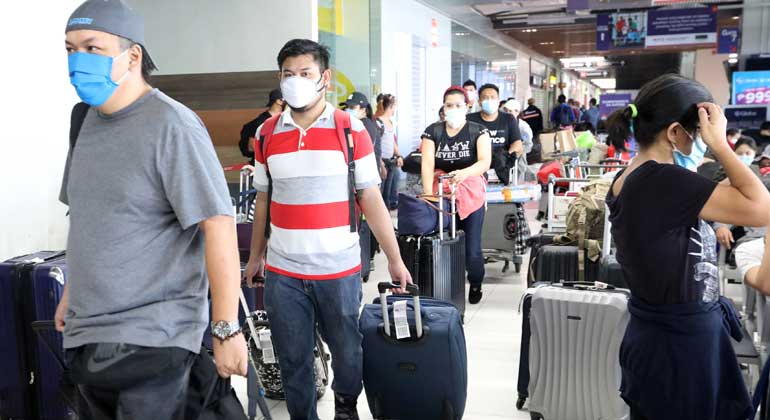
ALMOST 320,000 overseas Filipino workers (OFW) have returned to their home provinces as of Nov. 21 since the start of the coronavirus pandemic early this year, the Labor department reported on Sunday. In a statement, the Department of Labor and Employment (DoLE) said “319,333 OFWs were transported to their respective provinces as of Saturday,” with assistance from the government. The DoLE provided coronavirus RT-PCR testing, a requirement by most local governments for returning residents and OFWs displaced by the global pandemic. Labor Secretary Silvestre H. Bello III said the OFWs who have come home will also be given support through livelihood programs. “We have also enhanced our livelihood programs for the reintegration of our returning heroes,” Mr. Bello said. — Gillian M. Cortez

House to propose P5-B increase in 2021 calamity fund

THE HOUSE of Representatives will seek an increase of at least P5 billion in the 2021 calamity fund for the reconstruction of areas devastated by recent strong typhoons, Speaker Lord Allan Q. Velasco said over the over weekend. Mr. Velasco said the House will propose the increase during the bicameral conference on the proposed P4.506-trillion national budget for next year. The two chambers of Congress will convene after the Senate approves its version of the budget. Mr. Velasco noted that the House passed the 2021 spending bill before typhoons Quinta, Rolly and Ulysses (international names: Molave, Goni, and Vamco) wreaked havoc in many parts of the country, especially in Luzon. “Given the tremendous damage caused by these successive strong typhoons, it is imperative that we augment the calamity fund in next year’s spending plan. We have to help our people rebuild their lives and their communities,” he said. Mr. Velasco noted that government agencies have so far estimated the damage caused by the three typhoons to infrastructure and agriculture at around P35 billion. Under the budget submitted by President Rodrigo R. Duterte to Congress in August, the calamity fund amounts to P20 billion, up by P4 billion from this year’s P16 billion. Of the total, P5 billion will go to the reconstruction of Marawi City while P6.25 billion would be augmentation for the quick response funds of six agencies. Of the P6.25 billion, P2 billion will go to the Department of Education, P1.25 billion to the Department of Social Welfare and Development, P1 billion to the Department of Agriculture, P1 billion to the Department of Public Works and Highways, P500 million to the Department of Health, and P500 million to the Department of National Defense-Office of Civil Defense. “That’s a total of P11.25 billion that is specifically appropriated, leaving a balance of P8.75 billion President Duterte could use to help victims of calamities and other disasters. That balance is not even enough to rebuild Bicol, which was hard hit by Typhoon Rolly,” Mr. Velasco said.

ALTERNATIVE
If the calamity fund could not be increased, he said, additional allocation could instead be given to agencies involved in the rehabilitation of typhoon-damaged communities. “Alternatively, we can allocate the additional money in the budgets of the agencies involved in reconstruction and helping typhoon victims,” Mr. Velasco said. “There are enough appropriations in the proposed budget from which the needed funds could be taken,” he added. — Kyle Aristophere T. Atienza

Regional Updates (11/22/20)

Abu Sayyaf members surrender

FOUR members of the Abu Sayyaf, a kidnap-for-ranson group that has pledged ties with the extremist Islamic State, surrendered on Saturday in Sulu after another one turned himself in to the military in Tawi-Tawi on Friday. The Western Mindanao Command, in a statement on Sunday, reported that those who surrendered said “their group was greatly weakened by the (recent) neutralization of their leaders and their comrades.”

JICA to review 37-month construction period for Davao Bypass project’s tunnel segment

RDC-XI

THE original 37-month construction period for the first 10.7-kilometer segment of the Davao City Bypass project, which includes a 2.3-km mountain tunnel, will be reviewed in consideration of adjustments arising from the ongoing coronavirus pandemic. Kiyo Kawabuchi, senior representative for the Japan International Cooperation Agency (JICA) in the Philippines, said health-related restrictions may cause delays in procurement, among other factors. The bypass is being funded under Japanese Official Development Assistance through JICA, with the 34.830 billion yen (about P16 billion) loan agreement signed June 16. “Lockdown measures and border controls which prevented the travel and movement of Japanese nationals to the Philippines at the early stages of the pandemic affected the timely processing of the contract for (the first package),” Mr. Kawabuchi said in an email interview. Nonetheless, he said JICA, the Philippine Department of Public Works and Highways, and the contractors and consultants are determined to fast-track the construction. “Despite the challenges brought about by COVID-19 (coronavirus disease 2019), JICA together with DPWH and other government agencies, the contractors and consultants, are all committed to work together to address the pandemic’s impacts and complete the project as soon as possible for the benefit of the Dabawenyos and the entire Mindanao,” he said. The contract for the initial civil works was signed Oct. 29, 2020 by DPWH and the joint venture of Shimizu Corporation, Ulticon Builders, Inc., and Takenaka Civil Engineering and Construction Co. Ltd. “It is expected that Japanese technology such as excavation techniques for tunnel construction will be applied and our Filipino engineers and skilled workers may take advantage of acquiring technical knowledge and expertise in the building of the tunnel that will be the longest in the country once completed,” DPWH Undersecretary Emil K. Sadain said during the contract signing. — Maya M. Padillo

7 unserviceable DoE vehicles up for bidding

THE Department of Energy (DoE), through its Disposal Committee (DC), is again inviting interested parties to bid for the agency’s seven units of unserviceable vehicles with an estimated appraised value of P118,260. In an announcement posted on its website last week, the agency said the vehicles are located within its main premises in Metro Manila. The sale of the properties will be on an “as-is-where-is” basis. Interested bidders can submit their sealed bids at the department’s Supply and Property Management Division on or before December 7, 2020, the same day of bid opening. Bidders must pay a non-refundable fee of P1,000. Before the opening of bids, they must also pay a 10% bid bond in either cash or cashier’s/manager’s check to the Treasury Division. The winning bidder’s bond will be considered as partial payment, and the balance will have to be paid within five working days after receiving the Notice of Award. “The DoE-DC reserves the right to reject any or all bids with or without cause, to waive any defect in them and to award the bidder whose offer is the most advantageous to the government,” DoE-DC Chairperson Robert B. Uy said in a statement. — Angelica Y. Yang

Biden ‘outsourcing tax’ promise clouds outlook for BPO industry

By Jenina P. Ibañez, Reporter

A PROTECTIONIST stance by a Biden administration could come in the form of a tax on outsourced operations, which may dampen the prospects of the business process outsourcing (BPO) industry, the head of an industry advisory firm said.

Democratic presidential candidate Joe Biden, the apparent winner of the Nov. 3 election, has floated an offshoring tax penalty, tax credits for investment that creates domestic manufacturing jobs, and the closure of tax loopholes on foreign profits.

Outsource Accelerator Chief Executive Officer Derek Gallimore in an online interview said if disincentives to outsourcing become a “significant policy” of a Democratic government, it could have a short to medium-term effect on Philippine BPOs.

“With COVID, we’re going to go into probably the biggest economic depression the world has ever seen. So that means people will be justifying or looking to save domestic jobs, so that might motivate (Mr. Biden),” he said.

He said outsourcing, however, still has the potential to grow.

“Fundamentally I don’t think a president changes that much,” he said, adding that the pandemic could also motivate global companies that are cutting costs to consider outsourcing.

Information Technology and Business Process Association of the Philippines (IBPAP) once again reduced its revenue and employment targets up to 2022, as growth is expected to be flat for the rest of the year due to the ongoing quarantine.

The potential effects of US policy on BPOs will still depend on actual measures taken by any incoming administration, delaying any sense of clarity on which particular outsourcing sectors could be affected by reshoring.

“It’s popular for all politicians to say that we’re going to keep jobs at home,” Mr. Gallimore said, but noted that the Biden campaign promoted specific policies on offshoring.

“Whether he follows through on that is a different thing,” he said.

BPO sector remains ‘robust’ during quarantine

By Gillian M. Cortez, Reporter

THE business process outsourcing (BPO) industry is getting by during the lockdown with “robust” growth, if continued hiring activity is any indication, according to tech hiring company Kalibrr.

In an interview with BusinessWorld last week, Kalibrr CEO Paul V. Rivera said the BPO industry “has been growing during this pandemic.”

“We still have a very robust BPO industry and if anything…and we are seeing new job opportunities that are remote job opportunities,” he said.

He added that opportunities are emerging from the BPO sector especially during the COVID-19 crisis, with 50,000 to 75,000 job openings so far in Metro Manila alone.

Mr. Rivera said job posts for the Philippines in general are still down and the rate of recovery has yet to improve. Small and medium enterprises were the most affected, which contributed to the decline in employment. However, Mr. Rivera said like BPOs, other industries saw significant growth like logistics, e-commerce, digital payments, and other allied sectors.

Jobseekers are also increasingly trying their hand at freelance work, Mr. Rivera added.

“BPOs give one view of the employment opportunities but there are many more employment opportunities and freelance opportunities that may not be fully visible in one place but can provide significant livelihood,” he said.

Employers use the free Kalibrr service to find suitable candidates for their job availabilities.

“We want to be the platform where they can discover employment opportunities,” he said.

Plastic industry under pressure from import competition

THE plastics industry is under pressure from import competition at a time of global surpluses for the segment, as well as reduced activity during the lockdown, the industry association said.

Philippine Plastics Industry Association, Inc. President Danny Ngo said lockdown measures have reduced production by constraining the movement of personnel and supplies, especially during the initial months of the public health emergency.

The plastics industry produces mostly pipes and packaging, supplying the food, agriculture, and electronics industries.

The pandemic has increased the global use of plastics as demand for medical goods and take-out containers surged, while the collapse of the oil market made virgin plastic manufacturing cheaper than recycling, alarming environmental advocates.

In the Philippines, importers have the upper hand.

“It’s very hard for us, the local industry, to compete with the foreign brands — especially our ASEAN neighbors. Because of this pandemic, there is a surplus in production from our neighbors. So in order for them to survive, they send their products to us. So the local industry is also suffering,” Mr. Ngo said in English and Filipino in an online video interview.

Plastics manufacturers have also been pushing back against efforts to impose safeguard tariffs on their raw materials, saying that a disrupted resin supply chain could lead to factory closures.

JG Summit Petrochemical Corp. has asked the Trade department to initiate a safeguard measures investigation, claiming that a surge in resin imports in recent years has caused it substantial injury. The Safeguard Measures Act, or Republic Act No. 8800, allows domestic producers to ask the government to conduct an investigation into their import competitors if they claim to have been harmed by excessive imports.

The plastics association said safeguards could lead to the Philippine market being flooded with imported plastic finished goods, as the industry competes with manufacturers based in countries with cheaper production costs.

“It might happen that we also have to lay off workers, because our plastic becomes more expensive and it becomes cheaper to import finished goods,” Mr. Ngo said.

Despite the surge in demand for fast food containers, Mr. Ngo said that overall demand is still down as businesses that remain closed or operate at reduced operations order less plastic packaging.

“When the economy is down, plastic is affected. So demand increased for food packaging because of online orders. But what about the other industries — garments, agriculture, exports? Demand may have increased in one area, but for all others, it declined. The retail industry is not functioning anymore.”

Increased medical and take-out container waste caused by the pandemic has prompted concerns from environmentalists.

The study increased plastic pollution due to COVID-19 pandemic: Challenges and recommendations published at the Chemical Engineering Journal said that mismanaged plastic waste during the pandemic could harm the marine environment and block sewage.

The authors recommended improved waste management, the use of bio-based or biodegradable plastics, and disinfection for safe recycling.

Mr. Ngo said the plastics industry is calling for better waste segregation to improve the facilitate recycling. — Jenina P. Ibañez

ADB study points to favorable outcomes for tricycle drivers borrowing from fintech firms

TRICYCLE DRIVERS that availed of loans from financial technology (fintech) companies en route to owning their vehicles improved their earnings considerably despite working fewer hours compared to those that did not take out loans, according to a survey by the Asian Development Bank (ADB).

According to the survey of 2,487 tricycle drivers in Metro Manila, conducted last year, the ADB said those who obtained fintech loans to purchase their vehicles were able to earn P21,545 a month or a net daily salary of P731 because there were able to expand their businesses and tap other sources of income. They were found to have worked 67 hours per week on average.

This compares with the P6,360 monthly income or P551 net daily salary of tricycle drivers tied to the so-called boundary system, whereby non-owners paid a share of their income to use tricycles owned by others. Fintech loans were also found to return superior outcomes compared to other modes of purchase like conventional loans or drivers that tapped savings. The non-fintech drivers worked an average of 69.2 hours a week.

“Comparing the fintech and conventional drivers, the study found that fintech drivers have more risk appetite, more rationalized working hours, and earn much higher incomes than conventional drivers. They have relatively better access to financing sources and have good financial plans and goals, but face large obligations to loan repayments,” according to the third volume of ADB’s “Asia Small and Medium-Sized Enterprise Monitor 2020” report released over the weekend.

The ADB said fintech loan programs target tricycle drivers that have limited access to bank loans or other financing options because of low credit scores or lack of collateral.

The collateral-free loan program offered by Japanese fintech firm Global Mobility Service uses technology to monitor drivers’ ability to pay on time. Failure to do so deactivates the motorcycle engine.

Drivers that availed of fintech loans, however, reported paying larger amounts for amortization and pay more frequently, typically weekly, compared with monthly payments sought by traditional lenders.

They also faced stricter repayment rules and schedules, such as the deactivation or repossession of their motorcycles in the event of late payment, as opposed to conventional lenders which imposed one-time fees. The ADB said fintech lenders’ strict rules could hurt drivers more but it can also encourage conscientious behavior among borrowers.

“The regression analysis indicated that fintech loans intensify driver work habits. They work more days per week, boost overall income, improve money management, have financial goals, and create more savings for business operations. While the loan repayment burden reduces their incentive to borrow for non-tricycle purposes, fintech loans allow more people to open bank accounts,” it said.

“The survey findings suggest that using fintech loans improves living standards and the social welfare of tricycle drivers — and could potentially support the development of local economies by enhancing financial inclusion,” it added. — Beatrice M. Laforga

Legislator seeks immediate release of Bayanihan II funds for MSMEs

A LEGISLATOR urged the Department of Trade and Industry (DTI) to expedite the release of stimulus funds intended to help small firms stay afloat.

With only one month left before the expiration of Republic Act 11494 or the Bayanihan to Recover as One Act (Bayanihan II), House Deputy Majority Leader Bernadette Herrera-Dy said DTI needs to ensure that struggling micro-, small-, and medium-sized enterprises (MSMEs) will benefit from the P10 billion allocated under the law’s COVID-19 Assistance to Restart Enterprises (CARES) program.

“Congress allocated that amount precisely to help these struggling MSMEs so that they could continue operating and paying their employees,” the legislator, representing Bagong Henerasyon Party-list, said.

“Our economy is slowly opening up again and our MSMEs will play a big role in its revival, so we should provide them with the necessary assistance right away,” she added.

According to the DTI, P8 billion out of the P10 billion allotted for CARES has been released to the Small Business Corp. (SB Corp.).

The P10 billion was intended as assistance to MSMEs and the tourism industry in the form of low-interest loans.

The CARES fund was expected to benefit around 100,000 enterprises and 200,000 workers.

However, the DTI has said that only 6,600 loans have been approved so far, equivalent to P1.2 billion, while 26,000 CARES loan applications remain pending with SB Corp.

“The DTI should push SB Corp. to fast-track the processing of loans and release the money to qualified MSMEs as soon as possible,” Ms. Herrera-Dy said.

She said MSMEs are among the hardest-hit by the pandemic in large part due to the most stringent and longest lockdown in Southeast Asia.

“The pandemic pushed many MSMEs into financial hardship, prompting them to either shut down permanently or lay off some workers just to stay afloat,” Ms. Herrera-Dy said.

Bayanihan II succeeded the Bayanihan to Heal as One Act, which gave President Rodrigo R. Duterte special powers to effectively respond to the COVID-19 pandemic. Bayanihan II expires on Dec. 19. — Kyle Aristophere T. Atienza

Smokestacks in a storm

The appalling human and economic toll of the recent typhoons has led to ritual finger-pointing and recrimination among government agencies. A prominent example is the argument over the role played by the release of dam water, particularly from Magat Dam, in exacerbating the floods experienced in Cagayan and Isabela. The provincial government of Cagayan has now threatened to sue the National Irrigation Administration (NIA), which operates Magat Dam, for the damage the flooding has caused.

And — as called for in the usual script — a congressional fact-finding investigation is also in the offing.

In their own defense, the dam operators point out that not being able to relieve the pressure on the dam would have led to a dam break and an even worse catastrophe. In a possible court case, the province would need to argue that the dam operator’s behavior rose to a threshold of negligence that led to a strict liability. Against this, the dam operator will likely contrapose a defense of statutory privilege (Magat was ordered built by the dictator Marcos in 1978), force majeure (the fact of the typhoon itself), and processes beyond the dam owner’s control (e.g., watershed denudation owing to logging, mining, and the river’s meander).

On the narrow issue of negligence, the dam operators’ main argument is that they followed the letter of the existing protocol for releasing dam water, that is, providing sufficiently early warning about the timing and volume of water about to be released (it is said, via e-mail, text messages, and hard copy). This, after all, was all that was required under their “mandate.”

All these narrow legal points however obscure a larger problem. This much became evident in an Inquirer interview with the Cagayan governor, Manuel Mamba, who was quoted as saying, “Sa amin, we don’t know the extent of the effect on the flooding itself. Kahit na sabihin mo sa aming 6,000 [cubic meters per second of water], kahit sabihin mo sa aming apat na swimming pool per second ang mailalabas niya… ’Di naman [kami] sinabihan na magpa-evacuate na kayo dahil mag-release kami ng ganito, ganito kasi ang mangyayari, they do not even tell us dahil hindi nila alam kung gaano kalalim. ‘Di nila alam kung anong epekto ng binibitawan nila.” (Even if you tell us 6,000 [cubic meters per second of water], even if you say you will release four swimming pools per second… They did not tell us to start evacuating because we will release this much because this will happen, they did not even tell us because they did not know how deep. They did not know what the effect of what they released would be.) The newspaper report then goes on to speculate that the tragedy in question was due to “unclear communication” from the dam operators. But, really, it was more — and worse — than that.

The first and obvious failure was one of science — both its production and use. The governor was complaining that the factual and scientific information provided (i.e., cubic meters of dam water released per second) was insufficient data to act on. The dam operators provided an input into how much they were about to contribute to the river’s flow. But the single crucial variable was the predicted overall rise in the river’s flood level taking everything into account, i.e., not just the dam’s contribution but also how much rainfall there had been, the river’s present carrying capacity, the level of ground saturation, its meander, etc. — all of which in turn depended on longer-term processes such as siltation, changing forest cover, land use especially in the watersheds, and climate change (yes, Nonoy, that too).

A second piece of useful knowledge would have been the areas of settlement at various elevations that were at risk of, say, inundation or landslides given varying levels of rainfall and flood. None of these data were apparently readily available — not even now. Producing the data and making them available, but more importantly piecing them together in actionable form, was a task that fell between chairs: it was viewed as the responsibility of neither the dam operator NIA, nor the local government, nor PAGASA (Philippine Atmospheric, Geophysical and Astronomical Services Administration), nor DENR (Department of Environment and Natural Resources), nor of any single government agency for that matter.

Joel Mokyr, the doyen of the history of technological change, draws a distinction between “propositional knowledge” (episteme) and “prescriptive knowledge” (techne), i.e., the “what” as distinct from the “how.” Propositional knowledge is knowledge of natural laws and of cause-and-effect relations in the abstract — say, that wind loads and wind uplift of a certain force will threaten the integrity of buildings of certain types. Elements of prescriptive knowledge, on the other hand, “consist of ‘do-loops’ replete with ‘if-then’ statements instructing one how to carry out activities…” [Mokyr 2002: 10]. In the case of typhoons, which occur frequently, both types of knowledge are by now established and well-known. The propositional fact that winds of 100-185 kph will rip the roofs off most houses of light materials is coupled with the technological “routine” or prescription that tells people to take shelter in stronger structures once Signal No. 3 is raised in their area.

In the case of the Cagayan-Isabela floods, however, this type of science and technology — particularly the codification of propositional knowledge into prescriptive signals and routines — was clearly absent. There is still a gap in the country’s warning system in that it fails to translate expected rainfall — particularly when typhoon signals are down, as they were in Cagayan — into predicted flood levels on which local governments can base actionable routines.

The type of integrative science required is not unknown, however, and was already exemplified by the late-lamented Project NOAH. That multidisciplinary project under the Aquino administration, led by UP’s Mahar Lagmay and C.P. David and using LIDAR, produced ground-breaking disaster maps under various scenarios for 16 provinces, down to the barangay level. Among its achievements was the establishment of a storm-surge warning system (learning from Yolanda) apart from flood-, wind force-, and landslide-warnings. Unfortunately the program could not be expanded — and therefore did not include Cagayan and Isabela — before its funding support was cut by the incoming Duterte administration in 2017. (The current presidential spokesman cannot now even recall that it existed. Oh, well.)

The second and deeper failure however is one of governance. The government’s typical disjointed approach to preparing for and mitigating disasters and other novel challenges reflects the widespread “silo mentality” or “smokestack syndrome” among its agencies. This refers to the inability or unwillingness of agencies to share information and responsibility. Instead, each entity routinely spews out its customary information or follows an inflexible routine as listed in its “mandate” — in the worst sense of the word bureaucratic — without much regard for whether these are still relevant or adequate to the tasks at hand.

While more or less present in all complex organizations with a division of functions, the smokestack syndrome is particularly acute in the Philippines owing to the deep politicization of the civil service. At the beginning of his term, the president personally appoints thousands of his erstwhile supporters into the bureaucracy — from cabinet secretaries down to bureau directors, a global idiosyncrasy — each claiming to have a more or less direct line to the chief and therefore entitled to their own autonomy and discretion in their own larger or smaller domains. Much like the Holy Roman Empire (i.e., medieval Germany), each prince, whether petty or great, has a direct franchise from the emperor which makes others loath to intervene or cooperate — for good or ill. No surprise therefore that in this environment, any initiative for a joint effort will be in short supply and always dependent on prior clearance from ever-higher-ups — and ultimately the president. More importantly, lower subordinates come to develop a parochial patriotism and servile loyalty towards their specific bosses that kills all initiative and makes cooperation and coordination tedious and long-winded.

Proof that this happens will be seen in the strange penchant among departments and agencies for signing MoAs (memorandum of agreement) not only with non-government entities but revealingly even with each other to accomplish some common function that should have been part of their duties anyway. MoA signings — the obligatory pomp and photo-ops are testimony to the arduous effort required to reach agreement — are homologous to treaties between sovereign states. Hundreds of these exist, e.g., between the NIA and the DENR; between the NIA and PAGASA; between the Department of Finance (DoF) and the money laundering council; the DoF and the Philippine Competition Commission (PCC); the Department of Trade and Industry (DTI) and the PCC; the DTI and the Department of Energy (DoE); the DTI and the telecoms commission, and so forth and so on, with even more for lower-level agencies. And here’s one for the books: there are actually MoAs signed between a department and its own subordinate bureaus! One example is a MoA between the DoF, the Bureau of Customs and the Bureau of Internal Revenue — suggesting that the latter two are virtually independent kingdoms (which they are).

Apply this to the disaster at hand and view it from the vantage of a local mayor. The NIA operates the dam and has a MoA with PAGASA and the DENR but is concerned only with conditions affecting the structural integrity of its dams — not the total runoff and flooding of the local communities. There is a big data hole when it comes to the effects on a mayor’s particular jurisdiction. Of course, local politicians are not blameless, either — they could have pushed politically for the information needed and shown initiative by themselves funding the studies required.

A rare exception that has made the rounds of social media is the case of Mayor Cristina Antonio of Alcala, Cagayan, who earlier on took the initiative to commission a study by UP scientists of the flooding hazards in her town. As even this exemplary case shows, however, although expert advice may exist, implementing it frequently requires powers that challenge the financial and logistical capacities of local governments, as well exceed their jurisdictional authority. The mayor’s plea in her social media post in the midst of desperate flooding contained a gem of wisdom: “The problem being complex, the solution is also a combination of interventions that should be anchored on science and drawn after scientists have studied the Cagayan River itself” (my emphasis). Under the current system, if the mayor had to solve this problem on her own, apart from finding the finance to do it, she would probably have to work for and sign separate MoAs with PAGASA, the DENR, the Department of Public Works and Highways, the NIA, the Department of Agriculture, among others — not leaving much time till the next typhoon.

In any event, the government’s solution to the complex multifaceted problem posed by the recent calamities thus far has been its other favourite response besides MoAs — forming a “task force.” BAYAN’s Rep. Carlos Zarate counts 15 task forces already in existence (the Inquirer counts 18). The so-called “Build Back Better” (actually a post-Yolanda slogan borrowed from the Aquino administration) task force has 24 members — which almost qualifies it to be the entire government. Other observers have rightly observed that the ad hoc, time-bound nature and propaganda imperatives of task forces gives little opportunity for carefully considered solutions to what are in reality complex problems tractable only by well-founded science. The real impact (and danger) of including many agencies in a task force, however, is that it allows a reallocation of budgets to other priorities the task force may decide on. For good or ill, it overrides the priorities these agencies have set and substitutes for them the task force’s own judgement.

In the worst case, a task force will choose and implement priorities that are haphazard and misplaced. As the mayor of Alcala warns, “It is not dredging every which way, it is not putting up a dike here and there. It is knowing, based on sound science, what to do and what not to do…” In the best case, a task force may indeed choose the right priorities for the moment. But task forces will ultimately disband, and once the crisis has passed or media attention dies, the various agencies will go back to emitting their own varicolored smoke — or resting under their own kulambô (mosquito net) — until roused by the next catastrophe. This is no way to build lasting institutions.


Emmanuel S. De Dios is professor emeritus at the University of the Philippines School of Economics. He has no interest in where the president was or what he was doing. Only in things that matter.