Home Blog Page 8234

Vaccine-plus vacuity


RAWPIXEL.COMN/FREEPIK

A lethal mix of government ineptitude, economic need and insufficient information has made the Philippines the country with the most number of COVID-19 cases in Southeast Asia.

As of Wednesday, April 14, nearly 900,000 men, women, and children and even entire families had been afflicted with the disease. That number — most of it from the National Capital Region (NCR) and surrounding provinces — could reach the one million mark, or nearly 1% of the country’s over 100 million population by the end of the month.

Should the trend continue, the country’s less than adequate health system, already severely challenged by shortfalls in hospital beds and other facilities as well as supplies and personnel, could totally collapse as doctors, nurses, and other medical frontliners are exhausted beyond human endurance, or even catch the contagion themselves.

And yet the NCR, Bulacan, Cavite, Laguna and Rizal had been under Enhanced Community Quarantine (ECQ) lockdown from March 29 to April 11 after the number of daily infections surged as a result of the reopening of cinemas and other public places and the easing of domestic and international travel. Some businesses and companies were operating despite the ECQ, and their workers commuting daily to and from their places of employment mostly via jeepneys, buses, and municipal train services such as the MRT and LRT. In the process these conveyances were helping spread the coronavirus in workplaces and in employee homes. Oddly enough, however, it was individual motorists and motorcyclists rather than jeepneys and buses the police were monitoring and stopping at their checkpoints. The NCR-plus “bubbles” being placed under “modified” ECQ despite the continuing surge in cases has been opposed by health experts, but was nevertheless implemented last Monday, April 12.

Only those engaged in such enterprises as providing food and medicine were supposed to be at work during the ECQ, although one barangay dolt thought that delivering rice porridge (lugaw) is not in that category. Millions of other workers in “non-essential” industries and those that have permanently shut down have lost their jobs and sources of income. Government financial aid — ayuda — is supposed to temporarily meet their families’ needs. But only a few hundred thousands have so far received the P1,000 to P4,000 promised, while the usual bureaucratic red tape — depending upon the local government unit it could mean requiring ID cards and other papers — has made the process of getting that paltry amount as difficult as pulling teeth.

Long lines stretching for blocks are among its consequences, and together with it the increased chances of catching and transmitting the infection among those waiting for hours or being made to make two or more trips to the local barangay hall. Although some local government units are distributing financial aid from house to house, the more enterprising are also distributing ayuda in kind — a kilo or two of rice, sardines and instant noodles are the usual components — despite their constituencies’ preference for cash.

The same bureaucratic maze characterizes the vaccination program President Rodrigo Duterte has been saying since a year ago is the only thing that could end the pandemic. In some jurisdictions only those with voter IDs and/or proof that one is a resident of the locality can register in their vaccination programs. Those requirements negate the strategic goal of immunizing as many as possible, to achieve which anyone, whether voter or local resident, should be given the vaccine, subject only to such medical safety protocols as looking into pre-existing ailments, allergies, etc., which already delay the process.

However, because the Duterte regime did not act quickly enough in ordering vaccines, and earlier even limited its sources to China’s pharmaceutical companies, the country has run out of AstraZeneca doses while still awaiting others. Only China’s Sinovac vaccine is still available. The Department of Health had earlier proscribed it for use on senior citizens, but last week announced that it can now be administered to those 60 years old and above on the specious argument that any vaccine, whatever the risks, is better than none.

Meanwhile, although it has not been tested and registered for humans, the Philippine Food and Drug Administration (FDA) has approved the use in one hospital of the anti-parasitic veterinary drug Ivermectin despite a standing order from Mr. Duterte for the police to arrest those who supply the drug for human use, and the Department of Health threat to cancel the professional licenses of doctors who prescribe it for their patients.

The confusion arising from this policy chaos fans the anti-vaccination reservations and skepticism already rampant among large segments of the population, and makes convincing those who fear suffering from the side effects of certain vaccines even more problematic. It helps make more difficult achieving the goal of vaccinating 70 million out of the country’s 100 million-plus population so as to achieve the herd immunity that is bringing people’s lives back to normal and reviving the economy in other countries.

Testing 20% of the population as those other countries have done could ease the contagion, but the Inter-Agency Task Force for the Management of Emerging Infectious Diseases (IATF-EID) charged with combating the pandemic has not made it a priority and instead insists on lockdowns regardless of their limitations in cutting the spread of the infection.

Despite its reliance on lockdowns, the Duterte administration has time and again declared that the surviving business companies’ resuming operations is essential in reviving the economy, halting its contraction, and curbing the recession. Breadwinners also want to keep working or to get back to work even if they have not been vaccinated, and despite the government ayuda that in the context of the continuing increase in the prices of food and other needs amounts to only a few drops in the vast ocean of cash the average Filipino family of six needs to survive.

Among other consequences, the current state of affairs is further encouraging the fatalism and the “God will take care of it” perspective that social psychologists have long noted as characteristic of Philippine feudal society. It is all too evident in the “things will take care of themselves” (bahala na) attitude of the poorest and most oppressed classes and even among the less desperate, and their assumption that everything — whether the pandemic, poverty, corruption or bad government — is God’s will and beyond human capacity to understand.

But the fear and desperation are also morphing into anger and such demands for change even from some Duterte allies as the disbandment of the IATF-EID and its replacement by a body of doctors, epidemiologists, and other health experts as members. There are also the beginnings of a call for Mr. Duterte to give way to the leadership of Vice-President Maria Leonor “Leni” Robredo.

Change is the one thing the dynastic rulers of this country have always opposed while claiming to be for it. It was nevertheless what then candidate for President Rodrigo Duterte offered in 2016 to a people disillusioned by an endless succession of false leaders. Good government was what 16 million voters thought was forthcoming when he assumed the country’s highest elective office, but what the country has since been getting is the exact opposite. The vacuum in leadership, competence and moral and intellectual gravity in government in the last five years and during the present crisis is once more demonstrating that just like the promises of his predecessors, his own are nothing more than words without meaning, and gestures without substance.


Luis V. Teodoro is on Facebook and Twitter (@luisteodoro).

www.luisteodoro.com

Emerging markets: The post-pandemic promise

FREEPIK

A YEAR has now passed since the correction of March 2020, as markets first appreciated the implications of a global pandemic. The last 12 months have seen more disruption than entire decades in ordinary times. Emerging markets, led by Asia, have remained relatively resilient, having successfully adapted to or suppressed the virus. By contrast, a return to economic normality in the West is dependent almost wholly on vaccines. While we are seeing rapid progress with vaccinations in the United States and United Kingdom, Europe remains far behind amid continued lockdowns and economic stagnation.

A YEAR ON
Looking back on our prior outlooks, we highlight some key points:

• At the early stages of the pandemic, we emphasized China’s resilience — borne of drastic policy measures — which suggested even at an early stage that of large economies, China could ultimately be among the least affected by COVID-19.

• We saw far greater risks associated with demand destruction in the West and related liquidity and corporate stress driving a deflationary shock.

• While the massive monetary and fiscal packages unveiled in developed markets globally were greeted with optimism, we harbored doubts whether this would translate into the V-shaped recovery we expected in China.

• This caution hinged on whether developed markets would be able to replicate several factors shown to successfully drive containment. These included decisive policymaking paired with effective execution, economic resilience supported by digitalization, and social cohesion.

THE WORLD TODAY
Many countries in the West failed on the factors outlined above, albeit the extent to which we would see divergence with the more successful emerging Asian economies has taken us by surprise. This gulf in performance was evident across health outcomes, economic impact, partisan politics, and social unrest — in turn, reinforcing the spread of the virus.

With continued weakness in developed markets, we have seen a continuance of unprecedented fiscal and monetary stimulus. In the United States, the long-term implications for debt service, incipient inflation and currency debasement remain unaddressed. In Europe, the longer lockdowns are extended, the greater the risk that temporary economic weakness translates into structural stagnation.

We continue to hold our views of a year ago, and believe the structural underpinnings of emerging markets’ resilience have been evidenced by the stark contrast with developed markets over this period.

CHINA
It is striking that while China was the only major economy to show reasonable growth during 2020, and with an ongoing strong recovery, policymakers have set a more cautious growth target for 2021 of 6% against International Monetary Fund forecasts of 8%. In addition, for the first time, no longer-term average growth target was set. This was paired with greater emphasis on environmental and social reforms and new clean technologies — a “greening” of the economy. These measures signal the government’s broader push to a more sustainable and higher quality of growth for the long term.

China’s fiscal and monetary stimulus during the pandemic was far more measured than in the West; previous periods of overheating in real estate and shadow lending have driven an innate caution. We are now accordingly seeing a greater balance in China between economic recovery and policy leeway — a “Goldilocks” environment in which the government has greater flexibility to respond to economic developments. With any slowing of the economy, we wouldn’t be surprised to see policy loosening.

We believe we’ve passed the nadir in China-US relations, though tensions will remain elevated. After years of aggressive trade policy, the US trade deficit continues to reach all-time highs. Rather than a futile focus on trade, we believe the United States would benefit more from domestic reforms, infrastructure investment, and advancing digitization in its economy.

PORTFOLIO IMPLICATIONS
The concept of a world-leading emerging-market company has evolved from an aspiration to a reality over the last decade — a trend reinforced during the pandemic.

Taiwanese and South Korean semiconductor firms dominate the global industry with their strong manufacturing capabilities, especially in cutting-edge semiconductor chips. Moreover, their clout has generated the cash for them to ramp up investments and widen their competitive advantages amid booming demand for chips from high-performance computing, bitcoin, auto, and other businesses. By comparison, Western semiconductor firms have struggled to keep up, whether in innovation or capital expenditure.

South Korean companies have also spearheaded the development of electric vehicle batteries, which have achieved greater penetration worldwide on the back of policy support and technology advancements. In China, biotechnology firms are developing innovative treatments for cancer and other major diseases and have won the confidence of global pharmaceutical groups in licensing these new drugs. India’s internet space, which has been under-represented in stock markets, also offers huge potential, in our view.

Taken together, evidence of emerging market companies scaling the value chain has increased, and we see durable growth characteristics in many of these firms. We expect a rising number of high-quality companies to emerge as various industries continue to develop and consolidate.

From the height of the pandemic through to the current early stage of recovery, our conviction in the growing structural advantages of emerging markets, led by key Asian economies, has only strengthened as the evidence has accumulated. Exemplifying this post COVID-19, China is now on track to become the world’s largest economy before the end of the decade. We believe this trend, which the COVID-19-led divide in performance over the last year reinforced, will continue to have positive implications for portfolio allocations to emerging markets, led by China, for years to come. 


Manraj Sekhon is the CIO of Franklin Templeton Emerging Markets Equity.

How Bernie Madoff fooled the world

BERNARD MADOFF has gone to meet his maker, but we have not heard the last of him. Like Charles Ponzi before him, his name has already become part of the financial lexicon, shorthand for how financiers can exploit human nature for profit.

Ponzi, with a plan involving airmail stamps, gave his name to investment plans that pay old investors with money they take in from new investors, and do not make the underlying investments that they claim. Sadly, there have been plenty more such schemes since Ponzi died in 1949, many of which came to light like Madoff’s in the wake of the financial crisis of 2008. But Madoff took the Ponzi concept to extremes nobody had previously thought possible. The news that he had been arrested and charged with running a Ponzi scheme then estimated to be worth $65 billion was one of the greatest of all the shocks of 2008. Across the world of finance the reaction was the same when the news hit screens: “How is this even possible?”

More than a decade later, we can begin to see the secrets of Madoff’s success. As he departs, we should all understand the key principles that allowed him to get away with what he did for so long:

• He was disciplined. The scheme was internally consistent, records were kept, clients received fictitious statements on a regular basis, and those who wanted to withdraw cash received it promptly. Close examination of those statements might have raised concerns but he also worked out how not to raise such alarm;

• Consistency was his distinction, rather than anything spectacular. Everyone knows the cliche that if something looks too good to be true, it probably is. Judged in its totality, Madoff’s investment record was far too good to be true. But no one year ever looked that great. He simply continued compounding his “gains” at a rate of 10% or thereabouts, year after year. He never claimed to do better, even if the market was up 20%. It was only after he had been operating for many years that statisticians could call foul. His very consistency eventually became statistically impossible to believe, but each individual year, in itself, was perfectly plausible;

• He understood that conservative people can be conned by the right kind of trickster, and not just the greedy hoping to make a fast buck. Madoffs’ victims weren’t in many cases wildly greedy, or star struck by some improbable way to make money in a hurry. They saw investing with Madoff as a trustworthy and conservative way to ensure that their savings would gain steadily;

• Exclusivity will help you sell anything to anyone. Madoff did not advertise his scheme. And he had a well-practiced schtick of telling friends who asked if they could buy into his funds that they were full and that there was nothing he could do for them — only to relent and say that he could find a way in for them. In such circumstances, people feel privileged to be allowed in and perceive something special in what they are buying. It is almost a virtue that your fund is not regulated and lacks transparency. A decade later, alternative assets such as hedge funds and private equity continue to benefit from this;

• You don’t even need a great story to persuade people to invest with you. On the rare occasions that Madoff talked about his investing strategy in public, he was almost comically imprecise. Replicating his results was impossible; but as he hadn’t told people enough to try to replicate them, he could avoid detection;

Utter ruthlessness and a sociopathic lack of any concern for others make crime much easier. Madoff deliberately targeted charities and his own religious groups. He stole from his friends. A practicing Orthodox Jew, he stole from his fellow congregants and ransacked the endowment of Yeshiva University, one of the central institutions of the US Orthodox community, where he was the chairman of the board of trustees. One of his own sons was driven to suicide. Cynicism on such a scale is hard for most of us to imagine. In a version of Josef Goebbels’ “big lie,” the more he became involved as a philanthropist, the harder it became to believe that he was stealing from those philanthropies;

• A position in the establishment is great cover. Madoff ran a brokerage, and rose to be chairman of Nasdaq.

Beyond these points, many red flags should have been obvious at the time. His numbers were audited by an accounting firm with only three employees. Several whistle-blowers pointed out that his numbers were too good to be true, but assumed that he was engaged in insider trading, front running, or money laundering, rather than making up his numbers out of thin air.

Gossip that he was up to something was widespread on Wall Street. Several banks wouldn’t touch him. Journalists were sniffing around and Barron’s, one of the most influential voices on Wall Street, had run a piece questioning his numbers as early as 2001. But Madoff’s scheme was so well conceived and organized that he carried on as ever.

Regulatory changes in the wake of Madoff have been minimal. And so perhaps the most sobering thought as he leaves is that without the once-in-a-century crisis of 2008 he might well have died without ever being detected.

BLOOMBERG OPINION

New Covid-19 vaccine storage facility energized by Meralco

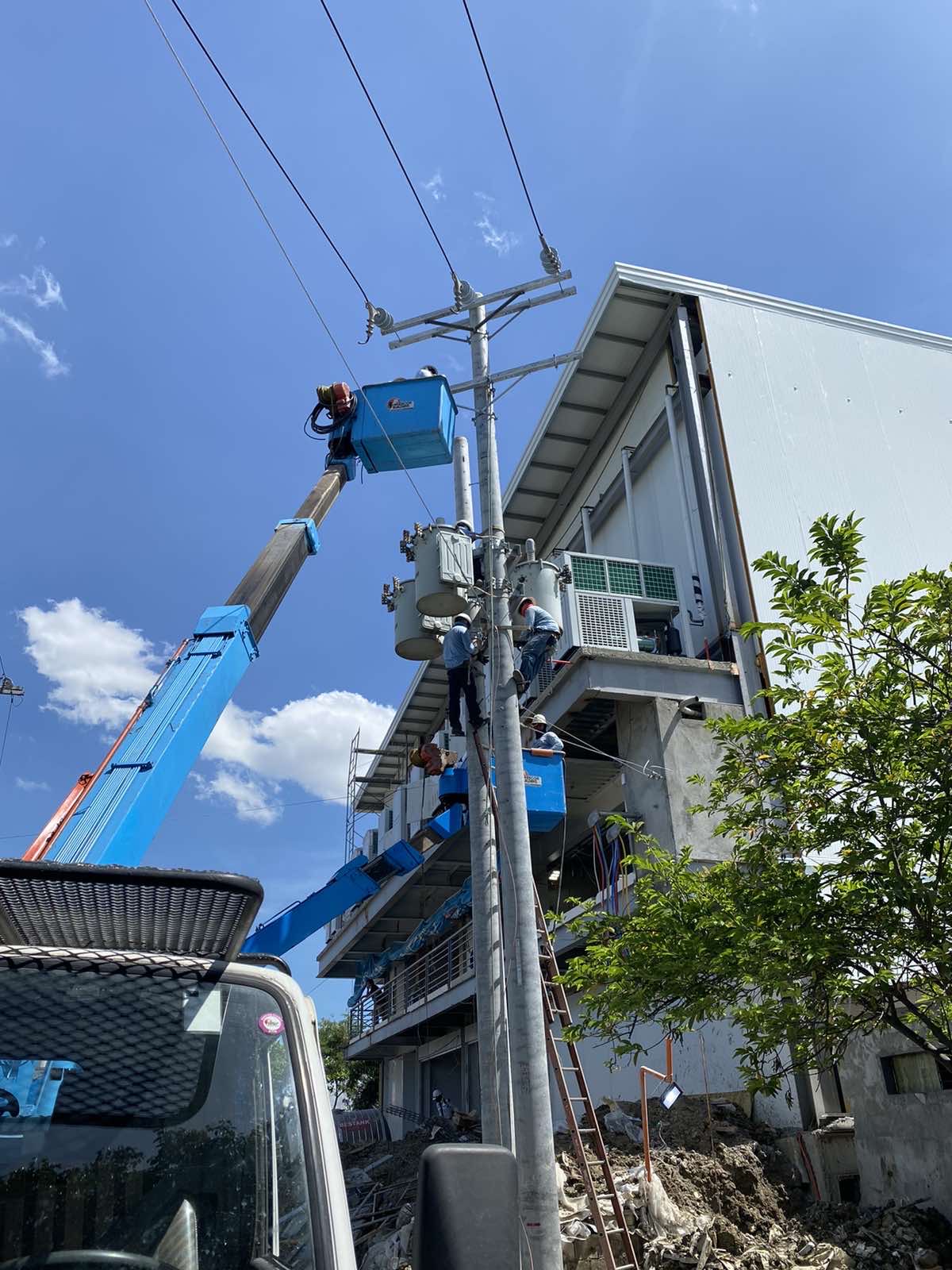
Meralco energizes a new COVID-19 vaccine storage facility located at Flamingo Street, New Marikina Subdivision, Barangay Sta. Elena, Marikina City. The project involves the installation of 15-meter and tandem 13.5-meter concrete poles, three (3) 167-kVA distribution transformers, service drop, and metering facility, and extension of three (3) spans of covered overhead conductor. This new,privately-owned facility will be used to store the AstraZeneca, Sinovac, Moderna, and Pfizer COVID-19 vaccines purchased by the government. In line with the company’s thrust to assist the government and the private sector in its continued fight against the COVID-19 pandemic, vital COVID-19 facilities such as these located in the Meralco franchise area are given the highest priority in terms of providing a safe, adequate, and reliable supply of electricity.  To date, more than 95 vital COVID-19 facilities have already been energized by Meralco and these include government offices, hospitals, testing laboratories, quarantine and vaccination centers, and vaccine storage facilities.


India breaches 200,000 daily COVID-19 cases

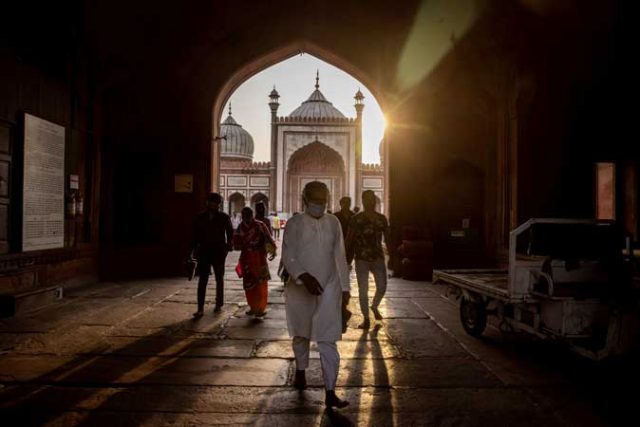
People leave after offering prayers on the first day of the Muslim fasting month of Ramadan, amidst the spread of the coronavirus disease (COVID-19), at Jama Masjid in the old quarters of Delhi, India, April 14, 2021. — REUTERS/DANISH SIDDIQUI

NEWDELHI/BENGALURU — India reported a record 200,000 new COVID-19 cases on Thursday and the financial hub of Mumbai entered a lockdown, as many hospitals treating coronavirus patients reported severe shortages of beds and oxygen supplies.

The surge was the seventh record daily increase in the last eight days and comes as India battles a massive second wave of infections that has its epicenter in the economically significant state of Maharashtra, home to Mumbai. The western state accounts for about a quarter of the country’s total cases.

India reported 200,739 coronavirus disease 2019 (COVID-19) cases over the last 24 hours, according to health ministry data released Thursday. Deaths stood at 1,038, taking the total to 173,123.

The total case load reached 14.1 million, only second to the United States, which leads the global tally with 31.4 million cases.

Hospitals and doctors in Maharashtra as well other regions including Gujarat and Delhi in the north reported chaotic scenes as healthcare facilities were overwhelmed with a surge in admissions of COVID-19 patients.

“The situation is horrible. We are a 900-bed hospital, but there are about 60 patients waiting and we don’t have space for them,” said Avinash Gawande, an official at the Government Medical College and Hospital in Nagpur, a commercial hub in Maharashtra.

Hospitals in other places including Gujarat, Prime Minister Narendra Modi’s home state, reported oxygen shortages. “If such conditions persist, the death toll will rise,” the head of a medical body in Ahmedabad wrote in a letter to the Gujarat state chief minister.

India’s government said the country was producing oxygen at its full capacity everyday for the last two days and it had boosted output.

“Along with the ramped up production of the oxygen manufacturing units and the surplus stocks available, the present availability of oxygen is sufficient,” the health ministry said in a statement on Thursday.

Meanwhile, hundreds of thousands of pilgrims still thronged to a religious festival in the north of the country on Wednesday, stoking fears of a new surge in COVID-19 cases in the region.

In capital Delhi, too, daily COVID-19 cases are hitting new records, with doctors warning the surge could be deadlier than in 2020.

“This virus is more infectious and virulent …. We have 35-year olds with pneumonia in intensive care, which was not happening last year,” said Dhiren Gupta, a pediatrician at Sir Ganga Ram Hospital in New Delhi. “The situation is chaotic.” — Reuters

Ponzi scheme mastermind Madoff dies in prison at 82

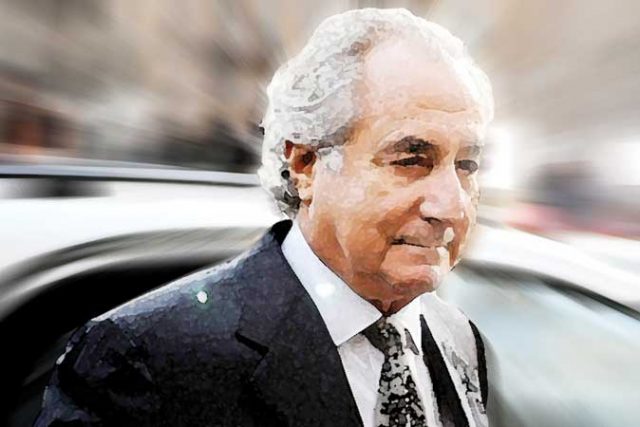
Bernard Madoff is escorted in a vehicle from Federal Court in New York Jan. 5, 2009. — REUTERS

NEW YORK — Bernard Madoff, who for decades masqueraded as a successful and trustworthy Wall Street kingpin before admitting to running the largest known Ponzi scheme in history, died on Wednesday in prison where he was serving a 150-year sentence. He was 82.

A spokeswoman for the Federal Bureau of Prisons said Mr. Madoff died at the Federal Medical Center in Butner, North Carolina, about 3:30 a.m. EDT (0730 GMT).

His death was believed to be from natural causes. Mr. Madoff had suffered from terminal kidney disease and several other medical ailments.

Mr. Madoff was imprisoned for engineering a fraud estimated as high as $64.8 billion. The judge who sentenced him in June 2009 condemned his crimes as “extraordinarily evil.”

In Feb. 2020, Mr. Madoff had sought “compassionate release” from prison so he could die at home, but the same judge denied that request.

“Bernie, up until his death, lived with guilt and remorse for his crimes,” Mr. Madoff’s lawyer Brandon Sample said in a statement.

“Although the crimes Bernie was convicted of have come to define who he was — he was also a father and a husband. He was soft spoken and an intellectual. Bernie was by no means perfect. But no man is.”

Mr. Madoff concealed his fraud through multiple recessions and the Sept. 11, 2001, attacks, but the 2008 financial crisis proved his undoing, as investors demanded he redeem $7 billion he did not have.

His Ponzi scheme made him a poster child for Wall Street greed, shining a harsh light on both his accomplices and on regulators who seemed on the cusp of exposing him, but failed.

In a typical Ponzi scheme, money from newer investors is used to pay sums owed to earlier investors.

Mr. Madoff was arrested on Dec. 11, 2008, after confessing to sons Mark and Andrew that his investment advisory business had been “one big lie.” They revealed the scheme to authorities.

Marc Litt, who led the prosecution of Mr. Madoff, said: “His passing closes a dark chapter of deception and greed that irretrievably damaged the lives of tens of thousands of victims. It is unfortunately fitting that he died in jail.”

Mr. Madoff’s thousands of victims, large and small, included individuals, charities, pension funds and hedge funds.

Among those he betrayed were the actors Kevin Bacon, Kyra Sedgwick and John Malkovich; baseball Hall of Fame pitcher Sandy Koufax; and a charity associated with director Steven Spielberg.

The former owners of the New York Mets, longtime Madoff clients, struggled for years to field a good baseball team because of losses they suffered. Many victims came from the Jewish community, where Mr. Madoff had been a major philanthropist.

“We thought he was God. We trusted everything in his hands,” Nobel Peace Prize winner Elie Wiesel, whose foundation lost $15.2 million, said in 2009.

Some victims lost everything.

“Bernie Madoff left my life December 11, 2008, when I found out that he stole all my money,” said Ronnie Sue Ambrosino, a Surprise, Arizona, resident whose family lost $1.6 million.

‘THEY GOT ME’
Mr. Madoff’s fraud exposed holes at the US Securities and Exchange Commission (SEC), which through incompetence or neglect botched a half-dozen examinations. “There were several times that I met with the SEC and thought, ‘They got me,’” Mr. Madoff told lawyers in a prison interview, according to ABC News.

Mr. Madoff had been the largest market-maker on the Nasdaq, once serving as its non-executive chairman.

His brokerage firm was located in a Midtown Manhattan tower known as the Lipstick Building. Employees there said they felt like part of Mr. Madoff’s family. They did not know he was running his fraud on a different floor. Only a trusted few did.

Mr. Madoff said his fraud began in the early 1990s, but prosecutors and many victims believe it started earlier.

Investors were entranced by the steady, double-digit annual gains that Mr. Madoff seemed to generate, and which others found impossible to explain or duplicate.

The money helped Mr. Madoff and his wife, Ruth, enjoy luxuries such as a Manhattan penthouse, a French villa and expensive cars and yachts, with a combined net worth of about $825 million.

But no one from Madoff’s immediate family was in the Manhattan courtroom when US District Judge Denny Chin sentenced him.

And no family, friends or supporters submitted letters attesting to his good character or deeds in support of leniency.

“I believed when I started this problem, this crime, that it would be something I would be able to work my way out of, but that became impossible,” Mr. Madoff told the court. “As hard as I tried, the deeper I dug myself into a hole.” Mr. Madoff also addressed victims in attendance, saying, “I am sorry. I know that doesn’t help you.”

Ira Lee Sorkin, a lawyer who had represented Mr. Madoff, said they last spoke 1-1/2 months ago.

He said that Mr. Madoff reported receiving good medical care and that he believed Mr. Madoff was remorseful.

“All I can say is it was a great tragedy,” he said. “There are no winners in this case, none whatsoever.”

KEEPING UP APPEARANCES
Bernard Lawrence Madoff was born on April 29, 1938, in the New York City borough of Queens and grew up there as the son of European immigrants who ran a brokerage out of their house.

Mr. Madoff graduated from Hofstra University in 1960 and briefly attended Brooklyn Law School before quitting.

That same year, he started Bernard L. Madoff Investment Securities, using his $500 in savings and office space borrowed from his father-in-law, Mr. Madoff told New York magazine in 2011.

Mr. Madoff started small, selling penny stocks in the over-the-counter market. By the early 1970s, he had become one of the five original broker-dealers in the Nasdaq trading system.

He advocated for greater market competition, at a time the New York Stock Exchange still dominated trading, and became an early force in electronic trading. At times friendly and charming, and at others aloof, Mr. Madoff had a penchant for neatness that some viewed as an obsession.

His offices were decorated in black and shades of gray, with little paperwork or objects visible on employee desks, and he coordinated several wedding rings with his wristwatches.

Market-making served Mr. Madoff well in the 1980s and 1990s, when he and his rivals could profit from buying a stock at $5 and selling it for $5.125, for example.

Profitability declined once decimalization became standard, but Mr. Madoff’s brokerage operation provided financial support for his fraud.

Clients were told they would make money through a “split-strike conversion strategy,” in which Mr. Madoff would buy a basket of large stocks to mirror the Standard & Poor’s 100 index, and reduce risk by purchasing and selling options on that index.

It wasn’t real.

Prosecutors said Mr. Madoff and his staff sent clients fake confirmations for trades he never executed, and fake account statements to document gains he never made. 

Madoff admitted to sometimes dipping into his account at JPMorgan Chase to pay customers who wanted their money back.

QUESTIONS MOUNT
Suspicions began surfacing in the early 1990s, when Mr. Madoff’s name came up in an SEC probe of a now-defunct Florida accounting firm, Avellino & Bienes.

In 2001, a Barron’s article noted skepticism on Wall Street about Mr. Madoff, including that he might be using his market-making operation to “smooth” returns for investors.

Mr. Madoff demurred. “It’s a proprietary strategy. I can’t go into it in great detail,” he said, while dismissing the Barron’s theory as ridiculous.

More questions were raised as a whistleblower, financial analyst Harry Markopolos, began pressing the SEC to stop Mr. Madoff.

From 1992 to 2008, the SEC received six complaints raising “significant red flags” about Mr. Madoff and whether he was trading anything, but never took even basic steps to figure out what he was doing, its inspector general David Kotz later said.

Mr. Madoff was arrested one day after his company’s annual Christmas party. In March 2009, he pleaded guilty to 11 criminal counts including fraud, money laundering and perjury.

Mr. Madoff initially maintained that the fraud was his alone, but prosecutors ended up winning 15 convictions or guilty pleas.

These included a guilty plea from Mr. Madoff’s younger brother Peter, the firm’s chief compliance officer, who received 10 years in prison. The only trial ended with convictions and prison terms for five former Madoff employees.

Prosecutors got a major boost after winning the cooperation of Frank DiPascali, Mr. Madoff’s longtime financial chief, who died in 2015 of lung cancer.

Ruth Madoff was not charged. She said she felt her husband had betrayed her after nearly a half-century of marriage. Many were skeptical of her claim she knew nothing about the fraud.

Prosecutors let Ruth Madoff keep $2.5 million.

PAYBACK
Within days of Mr. Madoff’s arrest, efforts began to recoup money for people who invested with him and for third parties that sent their money to his firm.

Irving Picard, a court-appointed trustee, has recouped more than $14.4 billion by targeting “net winners” who took more money out of Mr. Madoff’s firm than they put in.

“The pain experienced by the victims of Mr. Madoff’s fraud is not diminished by his death, nor is our work on behalf of his victims finished,” Mr. Picard said in a statement.

Nearly $3.2 billion has been distributed from a separate US government fund overseen by former SEC chairman Richard Breeden.

“This is certainly the largest single crime against individual investors in world history,” Mr. Breeden said in an interview. “You can put them back in the financial position they were in, but you can’t eliminate the suffering.”

The pain for Mr. Madoff’s family did not end with the patriarch’s imprisonment.

Tormented by his father’s actions and by lawsuits, Mark Madoff, the older son, hanged himself with a dog leash at age 46 on Dec. 11, 2010, the second anniversary of his father’s arrest.

Andrew Madoff died of cancer in September 2014, at age 48.

When rejecting Mr. Madoff’s request for compassionate release in June 2020, Judge Chin agreed with prosecutors that prison interviews where Mr. Madoff played down his crimes showed he “never fully accepted responsibility” for them.

Mr. Madoff told New York magazine he believed the record should show he had changed Wall Street, and that many victims might have lost more money in the markets had they not heard of him.

But he said he would not make excuses for his fraud and had come to terms with his crimes and pariah status.

“It is what it is,” he said. — Reuters

Brazil’s P1 coronavirus variant mutating, may become more dangerous —study

RIO DE JANEIRO -— Brazil’s P1 coronavírus variant, behind a deadly coronavirus disease 2019 (COVID-19) surge in the Latin American country that has raised international alarm, is mutating in ways that could make it better able to evade antibodies, according to scientists studying the virus.

Research conducted by the public health institute Fiocruz into the variants circulating in Brazil found mutations in the spike region of the virus that is used to enter and infect cells.

Those changes, the scientists said, could make the virus more resistant to vaccines — which target the spike protein — with potentially grave implications for the severity of the outbreak in Latin America’s most populous nation.

“We believe it’s another escape mechanism the virus is creating to evade the response of antibodies,” said Felipe Naveca, one of the authors of the study and part of Fiocruz in the Amazon city of Manaus, where the P1 variant is believed to have originated.

Mr. Naveca said the changes appeared to be similar to the mutations seen in the even more aggressive South African variant, against which studies have shown some vaccines have substantially reduced efficacy.

“This is particularly worrying because the virus is continuing to accelerate in its evolution,” he added.

Studies have shown the P1 variant to be as much as 2.5 times more contagious than the original coronavirus and more resistant to antibodies.

On Tuesday, France suspended all flights to and from Brazil in a bid to prevent the variant’s spread as Latin America’s largest economy becomes increasingly isolated.

The variant, which has quickly become dominant in Brazil, is thought to be a large factor behind a massive second wave that has brought the country’s death toll to over 350,000 — the second highest in the world behind the United States.

Brazil’s outbreak is also increasingly affecting younger people, with hospital data showing that in March more than half of all patients in intensive care were aged 40 or younger.

For Ester Sabino, a scientist at the faculty of medicine of the University of Sao Paulo who led the first genome sequencing of the coronavirus in Brazil, the mutations of the P1 variant are not surprising given the fast pace of transmission.

“If you have a high level of transmission, like you have in Brazil at the moment, your risk of new mutations and variants increases,” she said.

So far vaccines, such as those developed by AstraZeneca and China’s Sinovac, have proven effective against the Brazilian variant but Ms. Sabino said further mutations could put that at risk.

“It’s a real possibility,” she said. — Reuters

Dončić rescues Mavs in win

LUKA Dončić — DALLAS MAVERICKS FB PAGE
LUKA Dončić drained the game-winning three-pointer to give the Dallas Mavericks a stunning 114-113 victory over the Memphis Grizzlies on Wednesday. — DALLAS MAVERICKS FB PAGE

LUKA Dončić sank a stumbling, off-balance three-point floater as time expired to give the Dallas Mavericks a stunning 114-113 victory over the hosts Memphis Grizzlies on Wednesday night.

Doncic scored 25 of his 29 points in the second half and finished with nine assists to help Dallas end a two-game slide. Kristaps Porziņģis added 21 points for the Mavericks.

Grayson Allen matched his career best of six three-pointers and scored 23 points to lead the Grizzlies, but he missed two free throws with 2.2 seconds left to set the stage for Dončić’s game-winning shot.

Dwight Powell rebounded Allen’s second miss and the Mavericks called time out with 1.8 seconds left. Dončić got the ball on the inbounds pass and his left foot was clearly behind the three-point line as he got the shot up in time. It swished through the net.

Powell added 12 points and eight rebounds, and Tim Hardaway, Jr. had 11 points for the Mavericks.

Jonas Valančiūnas had 19 points and 15 rebounds to extend his Memphis franchise-record double-double streak to 16 straight games. He also has reached double figures in rebounding in 23 consecutive contests.

Ja Morant scored 17 points, Dillon Brooks added 15, and Desmond Bane had 11 for the Grizzlies, who dropped to 5-3 in April.

Valančiūnas slammed home a dunk and Kyle Anderson buried a three-pointer to give the Grizzlies a 111-106 lead with 2:07 left. Porziņģis and Dončić both drove for baskets to pull Dallas within one with 25.7 seconds left.

Morant made two free throws with 24.7 seconds left to give Memphis a three-point edge. Dončić split two free throws with 3.2 seconds left before Allen missed the two clutch free throws.

Dallas shot 50% from the field, including 13 of 40 from three-point range.

Memphis made 47.2% of its shots and was 13 of 34 from behind the arc.

Bane drained a three-pointer with 3.5 seconds remaining to give the Grizzlies an 89-83 advantage entering the final stanza.

Allen buried his sixth three-pointer with 6:38 left to complete a 7-0 run as Memphis took a 100-94 lead before the Mavericks rallied to knot the score.

Allen had 17 first-half points as Memphis held a 60-57 lead at the break. — Reuters

Professional license is a privilege not a right, reminds GAB amid VisMin issue

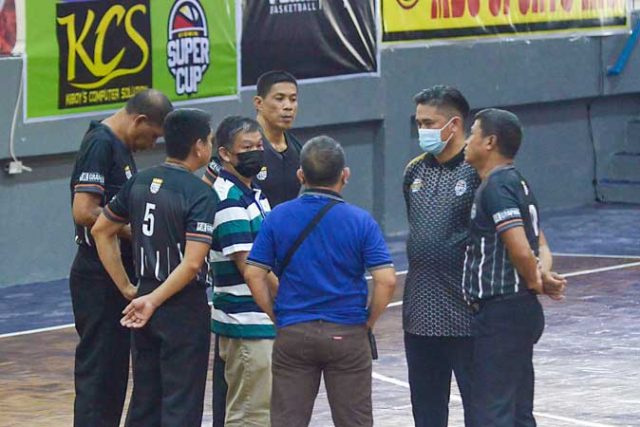
PILIPINAS VisMin Super Cup officials in a huddle during the controversial game between Siquijor and Lapu-Lapu City on Wednesday afternoon. — PILIPINAS VISMIN SUPER CUP

THE Games and Amusements Board (GAB) reminded on Wednesday that getting a license to practice a profession is a privilege and not a right, and carries corresponding responsibilities.

This after a game in the just-started Pilipinas VisMin Super Cup was rendered “questionable” and the subject of an investigation by the government pro sports regulator for possible illegal activities by some of the participants.

“We are awaiting the report of our sports regulators inside the bubble to be presented and decided upon by the board in our meeting tomorrow (Thursday). We would like to remind our players that a license to practice profession is not a right, but a concession and a privilege granted by the government,” GAB Chairman Baham Mitra said in a statement.

“Now, if they fail to abide by the rules, the government has the right to step in to impose necessary sanctions or revoke such a privilege. Officials, coaches, and players should act as professionals or lose their licenses. Shape up or ship out!” the statement further read.

GAB was acting after red flags were raised over the match between Siquijor Mystics and ARQ Builders-Lapu-Lapu City on Wednesday afternoon in the league’s “bubble” in Alcantara, Cebu, which was marred by “poor” free throw shooting and botched wide-open fastbreak layups.

In the game, a Lapu-Lapu player at one point shot his free throws with his left hand on the first attempt and with his right on the second. Both attempts missed badly.

In another, a Siquijor player got to steal the ball and was wide open for a layup, but muffed the shot badly and did not make an effort to at least rebound the ball and put it back.

The two were among the instances the GAB were looking into and asking for explanation.

The government agency as well as fans and, even, title league title sponsor Chooks-to-Go, deemed it uncanny that such a game by so-called professional players was played in such a manner, leaving a cloud of doubt suggesting possible game-fixing.

Interestingly, the match was postponed midway due to “power interruption” at the venue, a release from the league said, with Lapu-Lapu City ahead (27-13). It was set to be played at a later date.

As of this writing, the GAB was meeting with VisMin Super Cup officials to discuss the matter, with reports suggesting stiff sanctions for those found in the wrong, including expulsion from the league and revocation of licenses.

“We always believe in self-regulation, but GAB is always ready to step in anytime, especially when integrity is at stake. This needs decisive action as it affects the whole league and whole basketball community,” Mr. Mitra said.

Because of the investigation, the league postponed matches set for Thursday.

Chooks-to-Go, meanwhile, in a statement was seeking for the immediate resolution of the issue and calling for sanctions on those found culpable of wrongdoing. It also expressed its readiness to pull out from the partnership with the league if the need arises.

The Pilipinas VisMin Super Cup kicked off on April 9 with its Visayas leg with the end view of spotlighting basketball talents in the south.

Its Mindanao leg is slated to begin in May. — Michael Angelo S. Murillo

E-Gilas begins FIBA Esports Open III campaign in expanded field

E-GILAS Pilipinas begins its FIBA Esports Open III campaign on Friday in an expanded field in the Southeast Asian Conference. — FIBA ESPORTS

E-GILAS Pilipinas begins its International Basketball Federation (FIBA) Esports Open III campaign on Friday, April 16, in an expanded field in the Southeast Asian Conference.

Participating for the third straight time, Team Philippines is out to keep its solid standing in the online tournament, which has seen it perform well in the previous two editions.

The country’s E-gamers were among the winners in the first edition of the FIBA Esports Open held in June, ruling the Southeast Asian conference by sweeping Indonesia in their five-game series.

In the second edition in November, it finished runner-up to Australia in the reconfigured Southeast Asia/Oceania conference. The E-Boomers swept the Filipinos in their best-of-three finals.

For the third serving of the tournament, E-Gilas will have to contend against an expanded field of six teams in the conference, which is divided into two groups.

The Philippines is in Group I with Vietnam and Maldives while Group 2 features Indonesia, Sri Lanka, and Mongolia.

Group play starts on Friday, followed by the semifinals on Saturday and the finals on Sunday.

In a text message to BusinessWorld, Samahang Basketbol ng Pilipinas (SBP) President Al S. Panlilio said the country “will be represented by practically the same team that represented us in the FIBA Esports Open 2.”

He went on to say that the team had “friendlies” with the other teams in the lead-up.

The SBP official also shared that their group was very involved in the staging of the tournament, meeting with FIBA Asia on matters related to it.

Apart from the Southeast Asian Conference, also kicking off their respective tournaments on Friday are the Africa and Middle East conferences.

The North & Central America (Current Generation) and Europe (Current Generation) conferences follow suit on April 23-25.

The Open concludes on May 7-9 with the North & Central America (Next Gen), Europe (Next Gen) and South America tournaments.

All games, just like in the previous editions, will be available on FIBA’s digital channels with live content being streamed across Facebook, Twitch, and YouTube channels.

In coming up with the FIBA Esports Open, the world basketball governing body looks to add further dimension to it as an organization while also affording the basketball community more action amid the coronavirus pandemic. — Michael Angelo S. Murillo

VisMin Super Cup expels Siquijor Mystics

Newly launched regional basketball league Pilipinas VisMin Super Cup on Thursday moved to expel the Siquijor Mystics after investigation concluded that they threw their last game the day before.

In a video statement, league chief operations officer Rocky Chan said after a probe was conducted, they found the Mystics were gravely in the wrong by committing “disgraceful acts to the sport we love the most.”

The league did not give much details.

The game in question was that involving the Mystics and the ARQ Builders-Lapu Lapu City on Wednesday afternoon in the league’s “bubble” in Alcantara, Cebu, which was marred by “poor” free throw shooting and botched wide-open fastbreak layups.

In the game, a Lapu-Lapu player at one point shot his free throws with his left hand on the first attempt and with his right on the second. Both attempts missed badly.

In another, a Siquijor player got to steal the ball and was wide open for a layup but muffed the shot badly and did not make an effort to at least rebound the ball and put it back.

The two were among the instances the league, along with the Games and Amusements Board (GAB), were looking into the investigation and the bases for its decision, seeing them as red flags for possible illegal activities.

Banished from the league were Siquijor team members Joshua Alcober, Ryan Buenafe, Vincent Tangcay, Jan Penaflor, Gene Bellaza, Michael Calomot, Frederick Rodriguez, Jopet Quiro, Isagani Gooc, Miguel Castellano, Juan Aspiras, Peter Buenafe, and Michael Sereno.

Also kicked out of the league were head coach Joel Palapal and his staff.

All the games of Siquijor will be erased from the standings.

The Lapu-Lapu City team did not escape sanctions.

Rendell Senining, the wingman who attempted left- and right-handed free throws, was suspended for the season plus slapped with a P15,000 fine.

Hercules Tangkay, Reed Juntilla, Monbert Arong, Dawn Ochea, and Ferdinand Lusdoc, along with head coach Francis Auquico, were suspended for the rest of the first round. The players were fined P15,000 each while Auquico was handed a P30,000 penalty.

Mr. Auquico’s staff did not escape punishment as well as his assistants Jerry Abuyabor, Alex Cainglet, John Carlo Nuyles, Hamilton Tundag, and Roger Justin Potpot were slapped fines of P20,000 each.

“This is a clear statement of the Pilipinas VisMin Super Cup. Any deliberate actions by any player and coach is not tolerated in this league,” Mr. Chan reiterated.

To make sure such an incident does not happen again, the league will release a memo to the five remaining Visayas teams and the 10 teams in the Mindanao leg reminding them that those which will commit the same act as the Mystics will also be punished with expulsion plus a fine of P1 million.

The Visayas leg of the Pilipinas VisMin Super Cup kicked off on April 9.

Christian Lee is still ONE lightweight champion

ONE Championship world lightweight champion Christian Lee — ONE CHAMPIONSHIP
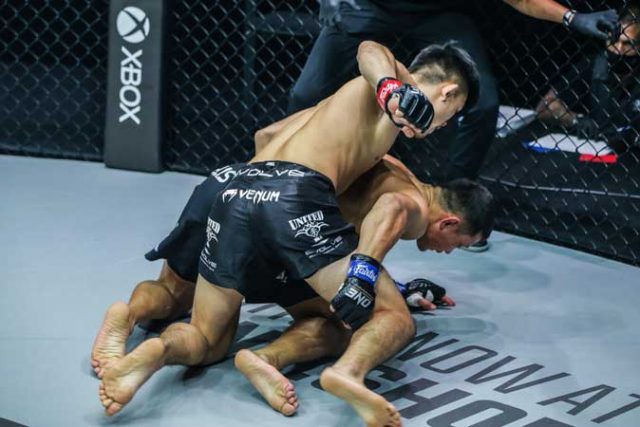
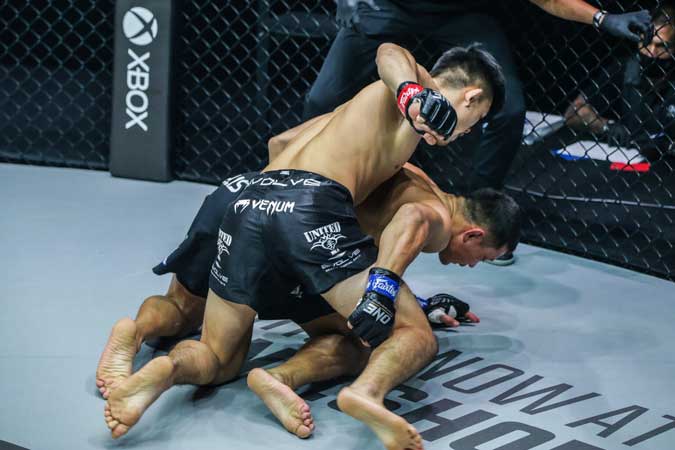
ONE Championship world lightweight champion Christian Lee goes for the finish against challenger Timofey Nastyukhin en route to successfully defending his title. — ONE CHAMPIONSHIP

By Michael Angelo S. Murillo, Senior Reporter

ONE Championship world lightweight champion Christian “The Warrior” Lee made short work of challenger Timofey Nastyukhin in their title fight on Thursday in Singapore.

Headlining “ONE on TNT II,” Mr. Lee, 22, representing Singapore and the United States, successfully defended his title after finishing Russian Nastyukhin’s challenege in less than two minutes in the opening round by way of technical knockout (punches).

After a brief feeling-out period, Mr. Lee picked up the pace, landing a solid counter left hand that sent his opponent down to the canvas.

Mr. Nastyukhin tried to fend off the barrage of follow-up punches by the champion but to no avail before the referee stepped in to stop the contest at the 1:13 mark of the first round.

It was the second successful defense of Mr. Lee of the title he won in 2019 over Japanese mixed martial arts legend Shinya Aoki.

He improved to 15 wins as opposed to three losses while Mr. Nastyukhin saw his two-fight win streak halted and his record drop to 14-5.

In the co-main event, meanwhile, American Janet Todd stopped Norway’s Anna Line Hogstad in the third round of their atomweight muay thai collision.

Ms. Todd, the reigning ONE atomweight kickboxing champion, gave her push to become a two-sport world champ a favor with the impressive win.

She was dominating her opponent in the previous two rounds before unleashing a quick kick to the body of Ms. Hogstad, who instantly crumbled in pain after.

The referee gave her the 10-count before deciding to wave off the fight after it became obvious Ms. Hogstad could not continue.

After the fight, Ms. Todd brought forth the possibility of fighting former muay thai champion Stamp Fairtex anew.

“ONE on TNT II” was part of the series of the breakthrough offering of ONE Championship, which sees its fights shown digitally and on television on prime time in the United States.

Next will be the third installment on April 22, headlined by the bantamweight battle between Brazilian John Lineker and American Troy Worthen.

ADVERTISEMENT
ADVERTISEMENT