Home Blog Page 8208

Globe extends free data access to educational platforms until 2022

As the health crisis continues to impact the country, many in the education sector, especially those in vulnerable communities, are having trouble staying digitally connected primarily because of financial constraints. With students and teachers struggling to keep up with the demands of remote learning, Globe is extending free data access to the Globe eLibrary and essential learning platforms of the national government until 2022.

To help make sure that the educational process is not hindered, Globe will extend the offer to cover the school year 2021-2022. The free access was offered by Globe to its customers last year to make it easier for everyone to learn and get resource materials from the Department of Education (https://commons.deped.gov.ph/), the Commission on Higher Education (https://phlconnect.ched.gov.ph/home) and the Technical Education and Skills Development Authority (https://www.e-tesda.gov.ph/) without incurring data charges on their Globe or TM-powered smartphones.

“We endeavor to help enhance opportunities for self-learning by making quality content available to teachers and students.  We hope our customers will take advantage of this free service to DepEd, CHED, and TESDA in cooperation with the DICT and NTC for their online learning requirements,” said Yoly Crisanto, Globe Chief Sustainability Officer and SVP for Corporate Communications.
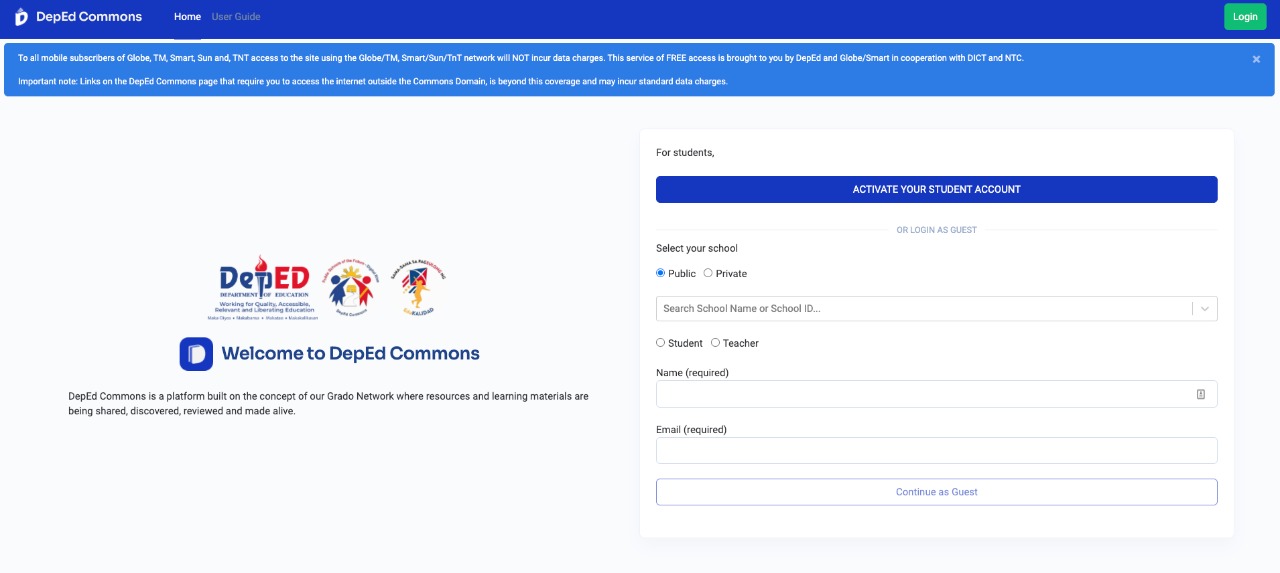
DepEd Commons contains online review materials and Open Educational Resources (OER) authored by public school teachers who are subject matter experts. Teachers can retain, reuse, revise, remix, and redistribute the content by blending it with a learning management system to deliver a distance learning modality.

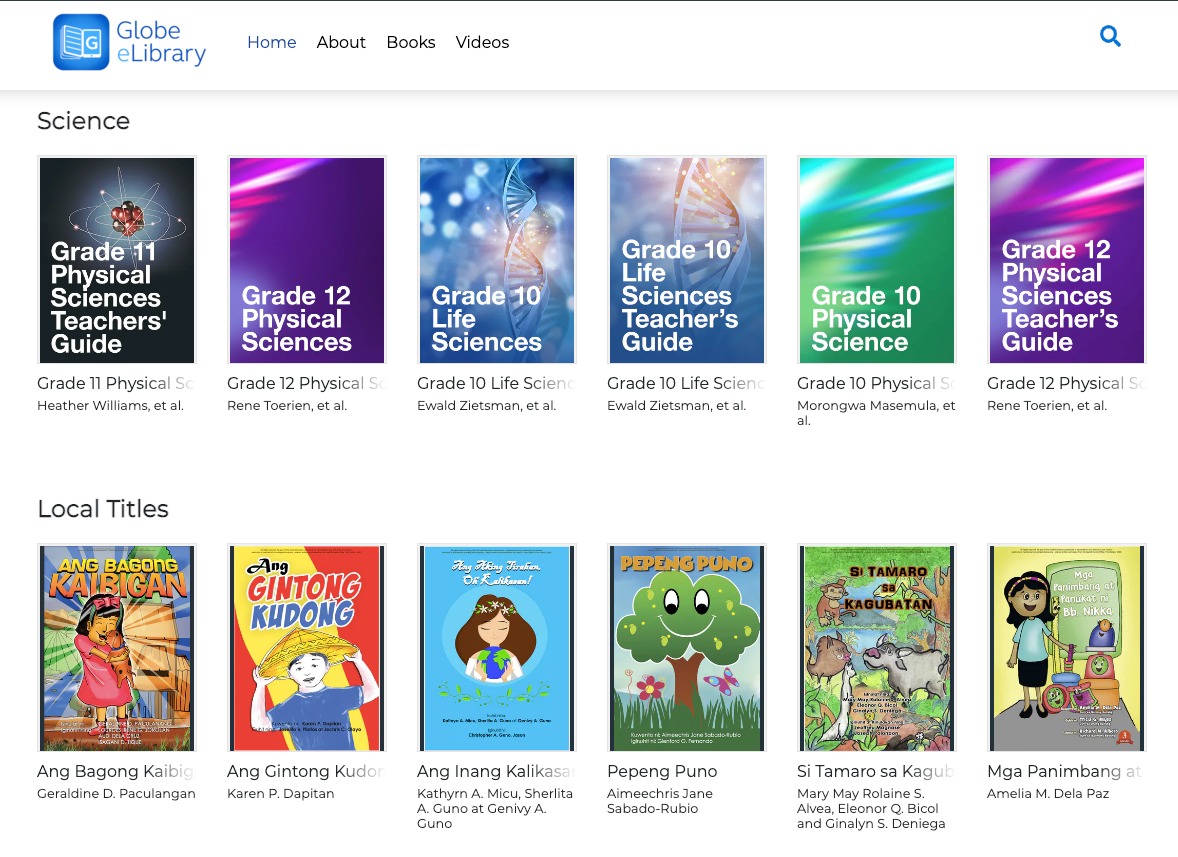
It also integrates the Globe eLibrary (https://globeelibrary.ph/), an online platform which features eLearning videos and age-appropriate and engaging e-books ranging from storybooks for children and young adults to textbooks on core subjects such as Math, Science, English, Filipino, Music, Arts, among others.
PHL CHED Connect, on the other hand, was developed by CHED and contains higher education course materials in text, media, and other digital assets that are useful for teaching, learning, and research purposes. Subject matters covered include humanities, architecture, business, engineering, IT, mass communications, criminal justice, agriculture, forestry and fishery among others.

For those interested in technical and vocational modules, the TESDA Online Program (TOP) makes training more accessible to Filipino citizens to widen their chances of employment or sources of livelihood. TOP offers free online courses such as Computer Systems Servicing National Certificate (NC) II, Food Processing NC II, Bread and Pastry NC II, Housekeeping NC II and other courses from sectors such as automotive, agriculture, entrepreneurship, healthcare, among others.

However, Globe reminds the public that while access to the said sites using the Globe/TM network will not entail any data charges, it does not cover the links outside the domains. Thus, all links clicked and visited will still incur standard data charges.

Apart from giving Globe and TM users free digital access to relevant online learning platforms, Globe is also committed to keeping netizens, especially the young ones, safe when they’re online. As such, Globe has developed Digital Thumbprint (DTP) online videos to help educate people regarding online safety, digital responsibility, online discernment and empowerment. More information on DTP may be found via https://www.globe.com.ph/about-us/sustainability/learning/digital-thumbprint.html#gref.

The company strongly supports the United Nations Sustainable Development Goals, particularly UN SDG No. 4 on the provision of quality education and UNSDG No. 9 which highlights the roles of infrastructure and innovation as crucial drivers of economic growth and development. Globe is committed to upholding the 10 United Nations Global Compact principles and 10 UN SDGs.


Seven Filipinos make it to the Forbes 30 Under 30 Asia 2021 list

Seven Filipinos landed in this year’s Forbes 30 Under 30 Asia list, which highlights millennial and Gen Z leaders who persevered and thrived despite global uncertainty.

They are:

  • Rexy Josh Dorado, co-founder of Kumu, a homegrown social media app
  • Guendoline Rome “No Rome” Viray Gomez, an artist and musician
  • Carmina Bayombong, co-founder of InvestEd Philippines, which provides educational loans to financially disadvantaged youth
  • Edward Christopher Dee, a researcher at Dana-Farber Cancer Institute, which specializes in comprehensive cancer treatment and research
  • Angela Chen and Aurelien Chu, co-founders of Eskwelabs, an edtech company that enables participatory and active learning experiences
  • Ryan Gervasa, founder of Virtualahan, a school that breaks down employment barriers for persons with disabilities
  • Gab Mejia, a conservation photographer 

“We’re honored to be recognized by Forbes and, above all, excited to be a beacon for the potential of the global Filipino community and its creative and economic power,” said Mr. Dorado, who is featured on the cover.

The criteria for making the list include their demonstration of leadership, how they embody the entrepreneurial spirit synonymous with Forbes, and their potential of success in their industry. Other factors like innovation, disruption — and size and growth of their ventures in some categories — also play a role.

“From a Filipino entrepreneur re-imagining social media platforms to a fintech unicorn founder and a group of Afghan teenage girls developing a low-cost ventilator to help fight the virus, these trailblazers are truly unstoppable,” said Rana W. Watson, Forbes 30 Under 30 Asia editor.

Others featured in the list’s sixth iteration are K-pop singer Ji-eun Lee “IU” and actor Joo-hyuk Nam from South Korea; the current world No. 1 ranked women’s singles table tennis player Chen Meng from China; indigenous rapper Danzal Baker “Baker Boy” from Australia; Sazzad Hossain, founder of SDI Academy from Singapore; Hong Kong singer Jackson Wang; Indian teenage influencer Jannat Rahmani; May Nagahisa, a Japanese ballerina at Mariinsky Theater; and India’s Pranav Bajaj, co-founder of Medulance Healthcare.

The average age of Asia’s under 30s list is 26.4 years. Eighty-three percent consider being under the age of 30 an advantage in their career. 

Thirty honorees were selected in 10 categories: the arts; entertainment and sports; finance and venture capital; media, marketing and advertising; retail and e-commerce; enterprise technology; industry, manufacturing and energy; healthcare and science; social impact and consumer technology. This year’s class was chosen from 2,500 nominations, researched by Forbes journalists from across the region and vetted by industry veterans.

Of the 300 honorees on the list, 17 have startups that have managed to secure over $15 million in funding each. One of these is Razorpay, which became the latest fintech unicorn to come out of India, and is valued at $3 billion. India is the most represented on this year’s list, with 76 members in total.

The birthday cutoff to make the 2021 list was December 31, 1990. Ages were calculated as of December 31, 2020. Last year, five Filipinos made the list: Francis Plaza, founder of e-payment processing platform PayMongo; Louise Mabulo, founder of the Cacao Project; Breech Asher Harani, multimedia artist at Alexandrite Pictures; gymnast Carlos Yulo; and skateboarder Margielyn Didal. — Patricia B. Mirasol

Russian military build-up near Ukraine numbers more than 150,000 troops, EU says

BRUSSELS – Russia has concentrated more than 150,000 troops on Ukraine’s border and in annexed Crimea, the EU’s top diplomat Josep Borrell said on Monday after EU foreign ministers were briefed by Ukraine’s foreign minister.

“It is more than 150,000 Russian troops massing on the Ukrainian borders and in Crimea. The risk of further escalation is evident,” Borrell said, declining to give a source for the figure.

He said no new economic sanctions or expulsions of Russian diplomats were planned for the time being, despite saying that the military build-up on Ukraine’s borders was the largest ever.

In Washington, the Pentagon said the Russian military build-up was larger than that in 2014 and it was not clear that it was for training purposes.

A U.S. official, speaking on the condition of anonymity, said the Russian build-up numbered in the tens of thousands but was not aware of intelligence that pointed to more than 150,000 Russian troops.

The United States also expressed its “deep concern” over Russia’s plans to block foreign naval ships and other vessels in parts of the Black Sea, State Department spokesman Ned Price said in a statement.

“This represents yet another unprovoked escalation in Moscow’s ongoing campaign to undermine and destabilise Ukraine,” Price said.

Russia has temporarily restricted the movement of foreign warships and what it called “other state ships” near Crimea.

Ukrainian Foreign Minister Dmytro Kuleba, after addressing EU foreign ministers, called on the EU to impose new sanctions on Russia.

Tensions between Moscow and Kyiv have been rising amid the military build-up and clashes in eastern Ukraine between the army and pro-Russian separatists.

The U.S. Federal Aviation Administration on Monday urged airlines to exercise “extreme caution” when flying near the Ukraine-Russian border, citing potential flight safety risks. – Reuters

U.S. will boost ‘Do Not Travel’ advisories to 80% of world

STOCK PHOTO

WASHINGTON – The U.S. State Department said on Monday it will boost its “Do Not Travel” guidance to about 80% of countries worldwide, citing “unprecedented risk to travelers” from the COVID-19 pandemic.

The State Department already listed 34 out of about 200 countries as “Level 4: Do Not Travel,” including places like Chad, Kosovo, Kenya, Brazil, Argentina, Haiti, Mozambique, Russia and Tanzania.

“This update will result in a significant increase in the number of countries at Level 4: Do Not Travel, to approximately 80% of countries worldwide,” the department said in a statement.

Getting to 80% would imply adding nearly 130 countries.

The State Department said the move does not imply a reassessment of current health situations in some countries, but rather “reflects an adjustment in the State Department’s Travel Advisory system to rely more on (Centers for Disease Control and Prevention’s) existing epidemiological assessments.”

Most Americans were already prevented from traveling to much of Europe because of COVID-19 restrictions. Washington has barred nearly all non-U.S. citizens who have recently been in most of Europe, China, Brazil, Iran and South Africa.

The White House has given no timeline for when it might ease those restrictions.

Asked for comment on the State Department announcement, Airlines for America, a trade group representing major U.S. carriers, said “the U.S. airline industry has been a strong advocate for the development of a risk-based, data-driven roadmap for restoring international travel.”

The group added it continues “to urge the federal government to transparently establish the criteria – including clear metrics, benchmarks, and a timeline – for reopening international markets.”

CDC did not immediately comment.

Earlier this month, the CDC said people who are fully vaccinated against COVID-19 can safely travel within the United States at “low risk” but CDC Director Rochelle Walensky discouraged Americans from doing so because of high coronavirus cases nationwide.

“We know that right now we have a surging number of cases. I would advocate against general travel overall,” Walensky said on April 2. “We are not recommending travel at this time, especially for unvaccinated individuals.” – Reuters

Betting on bamboo: Indonesian villages struggle to source safe, green power

STOCK PHOTO

SALIGUMA – Cutting through the glassy water of a mangrove-fringed inlet on the east coast of Indonesia’s Siberut island, Mateus Sabojiat and Anjelina Sadodolu arrived home by canoe to Saliguma village.

Back in their house, Sadodolu lit a wood fire to boil water before her husband left for work at the local government office.

“The electric power is on only when it is time to sleep,” said Sadodolu.

The couple in their forties, who have six children, live just a few hundred metres from Indonesia’s first power plant designed to be fuelled by bamboo, one of three such facilities built to bring electricity to isolated villages in Siberut.

But almost three years after construction was completed, the Saliguma biomass power plant supplies electricity to some of the village’s 3,780 residents only between 6pm and midnight – and is currently not using bamboo as originally intended.

Because of problems with the plant’s battery and other key equipment since September, it instead ran on diesel – which provides more stable but dirtier power – until early April.

Ongoing repairs mean it is still using a combination of diesel and wood.

Rural communities in Indonesia have harvested bamboo for food, fuel and shelter for centuries.

Forestry scientists say bamboo’s attributes — including the ability to grow rapidly even in barren soil — could bring economic breakthroughs in isolated areas while also curbing planet-warming emissions and providing power.

“It’s a beautiful kind of vegetation,” said Marcel Silvius, Indonesia head at the Global Green Growth Institute (GGGI), an intergovernmental organisation that helps developing countries implement climate action.

“It has significant root mass, and brings carbon and water back into the ground,” he told the Thomson Reuters Foundation.

A 2018 paper published in the journal Sustainability showed bamboo has high energy value and can sequester as much, or more, carbon than many other fast-growing tree species.

Forestry scientists and environmentalists envisage a green circular economy where communities plant bamboo seedlings on unproductive land, then receive both income and affordable, clean energy from the biomass they sell to local power plants.

Such a system, they say, could help restore Indonesia’s 24 million hectares (59.3 million acres) of degraded land, reduce reliance on expensive diesel generators and trim energy imports.

It could also contribute to Indonesia’s target of cutting its climate-heating emissions 29% from business-as-usual levels by 2030.

“We are not going to be able to connect all the islands of Indonesia with a single cable on a single grid like in Europe,” said Jaya Wahono, founder of Clean Power Indonesia and a pioneer of bamboo energy in the country.


LOW PRICES

Clean Power Indonesia first planned a pilot bamboo power plant in Bali province in 2013, but it stalled after state grid PLN offered only half the payment of 15 cents per kilowatt hour needed to make the project viable, according to Wahono.

In 2017, the Millennium Challenge Corporation, a U.S. aid agency, began distributing a $12-million grant for Clean Power Indonesia to construct three biomass plants on Siberut island, with a combined generation capacity of 700 kilowatts.

Families living nearby each received 100 bamboo seedlings, but the trees take several years to mature.

Saliguma residents said other available stocks were growing too far away to make the plant’s offered price of 700 rupiah ($0.05) per kilo worth the effort of gathering it.

“If I sell 10 kilos then that is 7,000 rupiah and I still cannot smoke,” said Leo, 46, a local indigenous man who goes by one name, holding up a pack of cigarettes costing more than 20 kilos of bamboo.

He switched to selling firewood to the plant, but that trade also stopped last September when the plant’s battery – needed to help regulate power produced from burning biomass – broke.

The other two plants on Siberut are still using bamboo but only produce six hours of power a day, due to a perceived lack of demand, officials said.

Clean Power’s Wahono attributed the problems partly to the 2019 transfer of the foreign aid-funded project’s assets, under a rule on state ownership, to the Mentawai regional government, which has no experience of running a power plant.

“That plant should be operating 24 hours a day,” he said.

The Mentawai government did not respond to requests for comment on why the Saliguma plant was under-performing.

Hari Kristijo, who oversaw development of the bamboo projects at Indonesia’s planning ministry, said the decision was made to supply power only in the evening because this was the period of peak demand, meaning lower production costs.

Many inhabitants of Saliguma expressed disappointment that the plant had not yet provided the day-time power they need to save money on fuel and start businesses to spark the economy.

“Nature is beautiful,” said Sabojiat. “But what does it matter if you don’t have any money?”


SMOKY FUELS

The biomass plant was intended to help replace the burning of fuels inside homes with electric power from a central source.

Sadodolu and Sabojiat have a fire lit for about four hours a day to cook food and boil water.

“Sometimes his nose is black,” said Sadodolu, pointing to her 10-year-old son.

In 2018, more than 19,000 children under the age of five died of preventable pneumonia in Indonesia, according to the U.N. children’s agency UNICEF, which attributes a large share of such deaths to indoor pollution from burning solid fuels.

Living without electricity also brings more immediate risks at night, as families resort to homemade candles using a fabric wick dipped in a tin of kerosene, known locally as an alito.

Cats, rats and roaming toddlers can easily topple an alito, said Sabojiat, igniting a small fuel bomb in homes built of timber and sago.

Five years ago, an alito sparked a deadly house fire near the Santo Petrus Catholic church.

Its occupant Aloisuis, in his mid-forties, escaped with major burns, but was unable to save his two-week-old daughter. He has since separated from his wife and is unable to work.

Village residents say near-misses and anxiety are common.


COSTLY TORCHES

Energy ministry data shows Indonesia’s electrification rate rose from 67% in 2010 to 99% a decade later, as isolated communities like Saliguma received power for the first time.

But in remote areas, that can simply mean village centres have electricity while outlying settlements remain in the dark, said Putra Adhiguna, a Jakarta-based energy analyst at the Institute for Energy Economics and Financial Analysis.

Gulu-guluk, one of Saliguma’s 11 hamlets, is a 30-minute motorcycle ride along a slippery trail from the biomass plant, and its 240 residents have yet to receive electric power.

“If we don’t have electricity, our economy is going nowhere,” said Gulu-Guluk head Daniel Sabailatti, 50, as children swam in the river and young men played sepak takraw, a sport using a rattan ball.

Due to the dangers of the alito, families spend about 20,000 rupiah a week on batteries for hand-held torches, more than double what a grid-connected household pays for electricity six hours a day. Most are in debt, said Sabailatti.


UNTAPPED POTENTIAL

GGGI’s Silvius said bamboo biomass was an “under-utilised” opportunity, adding that teething problems were not unexpected.

In February, two Indonesian universities published a roadmap to convert 500MW of the country’s diesel generators to bamboo.

Wahono, who is now working on a new 5MW bamboo plant with the GGGI in eastern Indonesia, said bamboo could be used widely as a feedstock, as the government seeks to replace about 2,000MW of polluting diesel generators over the next four years.

“This is in the interests of the global community,” he said. “We need to find a model that works for the people and the natural environment.” – Reuters

Philippines to start clinical trials on ivermectin, other drugs for COVID-19

MANILA – The Philippines will begin clinical trials of several drugs, including the anti-parasite medication ivermectin, in patients with COVID-19 to determine their efficacy in combatting the coronavirus, a senior government official said.

Some politicians in the Philippines have started promoting the use of ivermectin for coronavirus and given out free doses, although the country’s food and drugs regulator has cautioned against the use because of a lack of evidence for the drug as a treatment.

The clinical trial for ivermectin, which could last for six months, “will give us a more reliable estimate of the effects of ivermectin as an anti-viral agent in mild and moderate (COVID-19) patients,” science and technology minister, Fortunato Dela Pena, said in a presentation late on Monday.

The Southeast Asian nation, which is facing one of the worst coronavirus outbreaks in Asia, is battling a renewed surge in infections, with its vaccination drive on reaching 1.3 million people out of its more than 108 million population.

Ivermectin tablets have been approved for treating some worm infestations and for veterinary use in animals for parasites.

The World Health Organization last month recommended against using ivermectin in patients with COVID-19 except for clinical trials, because of a lack of data demonstrating its benefits.

Dela Pena said the government has also approved the clinical trials of a new formulation of methylprednisolone, a steroid, and melatonin, as treatments for COVID-19.

The government will also start trials of an herbal supplement, derived from the native tawa-tawa plant that can fight dengue, he said, adding to ongoing tests using virgin coconut oil for severe COVID-19 patients.

“We are trying several (medications). They may not be vaccines but they could potentially speed up the recovery,” Dela Pena said.

The Philippines has recorded more than 945,000 COVID-19 cases and over 16,000 deaths, the second highest rates in Southeast Asia, next to Indonesia. — Reuters

World Food Programme, Venezuela reach deal to supply food to 185,000 children

CARACAS – The United Nations’ World Food Programme (WFP) and Venezuelan officials said on Monday they had reached a deal to supply food to school children in the South American country suffering a humanitarian crisis spurred by an economic collapse.

The program will reach 185,000 children in the crisis-stricken country this year, and aims to expand to some 1.5 million by the end of the 2022-2023 school year, the WFP said in a statement. Child malnutrition has increased in Venezuela as the once-prosperous country’s economy collapsed.

“This is the first step toward a series of ambitious projects that will provide food support to all of the Venezuelan people,” Venezuela’s President Nicolas Maduro said in an address from the Miraflores presidential palace broadcast on state television, where visiting World Food Programme Executive Director David Beasley was also present.

Humanitarian aid groups have long pushed for Maduro’s government to allow the WFP to distribute food aid in Venezuela. The political opposition accuses Maduro’s government, which it calls a dictatorship, of conditioning state food assistance on political loyalty, a claim Maduro denies.

“Thank you for allowing us to be independent and to not let any of our work be politicized by anybody,” Beasley said. An earlier WFP statement had said schools were the “most appropriate platform” to “reach communities in an independent manner.”

Beasley also met with Venezuelan opposition leader Juan Guaido and ambassadors from several European countries, according to tweets from Guaido and France’s ambassador.

The agreement was applauded by Venezuelan aid workers and activists.

“This agreement with the WFP to start operations in Venezuela is of vital importance,” Feliciano Reyna, president of Caracas-based aid group Accion Solidaria which focuses on HIV/AIDS treatment and other medical relief, wrote on Twitter. “We hope it will build trust to broaden its areas of action.” – Reuters

Philippines approves emergency use of J&J, Bharat BiotechCOVID-19 vaccines

REUTERS

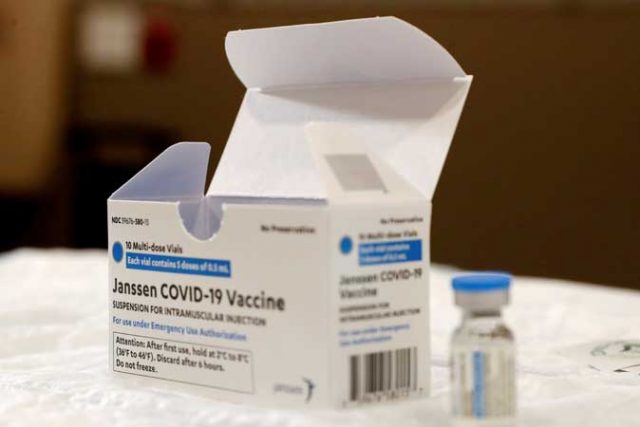
MANILA – The Philippines’ Food and Drug Administration (FDA) has allowed the emergency use of COVID-19 vaccines made by Johnson & Johnson and India’s Bharat Biotech, it said on Tuesday.

Both vaccines can be administered to people aged 18 and above in the Philippines, the agency chief, Rolando Enrique Domingo, said in a mobile text message.

The single-shot coronavirus vaccines developed by J&J’s unit Janssen and Bharat Biotech’s Covaxin are the fifth and sixth to receive emergency use approval in the Philippines, which is battling one of the worst outbreaks in Asia.

J&J is conducting late-stage clinical trials for its COVID-19 vaccine in the Philippines. — Reuters

Ontario complains of more vaccine delays as premier under fire for third COVID wave

FREEPIK

TORONTO – Ontario Premier Doug Ford said on Monday the province expects to face a delay in the supply of AstraZeneca Plc COVID-19 vaccine, as he faces significant blowback for his handling of the pandemic in Ontario.

“The Premier was notified today by our officials to be prepared for delays to two shipments of AstraZeneca expected from the federal government later this month and next,” a statement from Ford’s office said.

Ford has faced widespread criticism in recent days as Ontario’s pandemic spirals out of control, and he has sought to shift the blame to the sluggish supply of vaccines coming from the federal government.

No other province reported a drop in AstraZeneca supply on Monday. A federal government source who was not authorized to speak publicly said it was unclear what Ontario’s premier was referring to as there had been no change to AstraZeneca delivery schedules since early April.

An Ontario government source insisted the shipments were being delayed.

Canada’s most-populous province said on Sunday it would lower the minimum age for recipients of the AstraZeneca vaccine to 40 from 55. Alberta, Manitoba and British Columbia said on Monday they would also lower the age.

Ontario announced 4,447 new cases on Monday, with a 10.5% positivity rate and 19 more deaths. The rising caseload has pushed the province’s hospitals to the brink.

On Friday, Ontario announced measures to close borders with the provinces of Quebec and Manitoba. But the following day, it reversed its decision to close playgrounds and amended its granting of extra powers to police to enforce a stay-at-home order.

Doctors and pharmacists had expressed concern that not enough people were signing up to take the AstraZeneca shot, citing blood clot fears.

Two people in Canada have developed clots after receiving the shot and are recovering. UK regulators have estimated the risk is about four in one million.

Nadjla Banaei, client care coordinator at the South Riverdale Community Health Centre in Toronto, has had several patients express concerns about the AstraZeneca vaccine. They may have underlying health conditions and worry about what they have read, she said.

The move to lower the age group expands the pool of potential AstraZeneca recipients but does not necessarily quell fears around it, she said.

“Why did they drop the age all of a sudden? What are we supposed to communicate to people?” Banaei said. “Of course, with all these changes, people are going to be hesitant.”

Federal Health Minister Patty Hajdu said over the weekend that the provinces were free to offer AstraZeneca to anyone over 18.

The West Coast province of British Columbia said on Monday it would direct police to stop drivers to make sure they are not traveling outside their communities. – Reuters

Gov’t prepares euro bond issuance

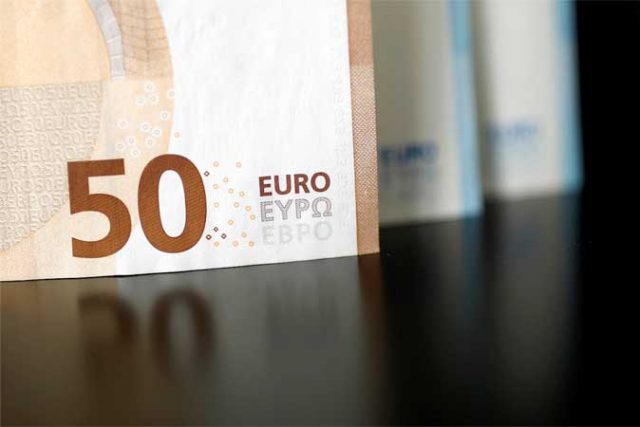
Euro banknotes are displayed in this picture illustration taken Nov. 14, 2017. — REUTERS/BENOIT TESSIER/ILLUSTRATION

THE Philippine government is returning to the global debt market for a second time this year with a euro-denominated bond issuance.

Citing a Philippine government filing with the United States Securities and Exchange Commission (SEC), Bloomberg reported the euro bond offering will have potential tenors of four years, 12 years and/or 20 years.

The notes will be US SEC-registered senior unsecured bonds, while the volume will be based on benchmark levels.

The issuance is expected to be rated Baa2 by Moody’s Investors Service, BBB+ by S&P Global Ratings and BBB by Fitch Ratings.

BNP Paribas S.A., Credit Suisse, Goldman Sachs, JPMorgan, Nomura and Standard Chartered Bank were appointed as the joint lead managers and joint bookrunners for the issuance.

Investor meetings were held in Asia, Europe and the United States on Monday.

National Treasurer Rosalia V. de Leon declined to provide more details about the issuance.

The last time the government issued euro-denominated bonds was in January 2020, raising €1.2 billion via its dual-tranche offering.

It sold €600 million each via the three-year and nine-year notes, as total bids reached €4.3 billion. The exercise was oversubscribed by more than three times than the initial plan of a benchmark size issuance worth €500 million.

The Philippines raised ¥55 billion (P24.2 billion) from a three-year, Japanese yen-denominated “Samurai” bond sale on March 30, marking the country’s first global bond sale for 2021. The issuance fetched a coupon of 0.001%.

Finance Secretary Carlos G. Dominguez III earlier said the country would tap the US bond market soon before “rates skyrocket.”

The government runs on a budget deficit as it spends more than the revenue being generated to fund programs that will drive economic growth.

It plans to raise P3 trillion this year both from local and foreign sources to plug its budget deficit seen hitting 8.9% of gross domestic product.

About P286 billion is estimated to come from global bond issuances. — Beatrice M. Laforga

PHL economy seen as region’s laggard on virus spike, slow vaccinations

PHILIPPINE STAR/ MICHAEL VARCAS

By Luz Wendy T. Noble, Reporter

THE Philippines’ economic recovery from the coronavirus pandemic will lag behind its Asia-Pacific neighbors, as coronavirus disease 2019 (COVID-19) infections continue to spike and vaccines remain in short supply, Moody’s Analytics said.

“The Philippines is the laggard of the entire region as a record-high number of new COVID-19 cases has led to a resumption of strict lockdowns in Metro Manila, and the country faces a severe shortage of vaccines,” Moody’s Analytics Chief APAC Economist Steven Cochrane said in a note on Monday.

The pessimistic outlook for the Philippines is in contrast to the improving outlook for the rest of the Asia-Pacific region, “as the global economy is on the cusp of an acceleration due to the global pace of vaccination and stimulative fiscal policy,” he added.

Mainland China, Taiwan, Vietnam and New Zealand are leading economic recovery in the region, while Singapore and Malaysia are seen to perform the best among Southeast Asian peers.

Mr. Cochrane noted the Philippines and India will likely see strong growth rates this year due in part to the very low base effects, after their economies contracted by a record 9.6% and 8%, respectively.

But with the recent surge in COVID-19 cases in the Philippines and India, Mr. Cochrane noted both countries are at “greatest risk” of underperforming this year.

The Health department reported 9,628 new COVID-19 cases on Monday, with active cases at 141,375. Metro Manila and nearby provinces remain under a modified enhanced community quarantine until April 30.

“The lack of control of the pandemic, the inability to acquire vaccines, and the relative distance from export supply chains all factor into the outlook for the Philippines to be among the weakest in the region,” Mr. Cochrane said.

Moody’s Analytics Senior APAC Economist Katrina Ell said in an e-mail to BusinessWorld that its 6.3% growth forecast for the Philippine economy this year remains unchanged.

“We’re sticking with our 6.3% forecast but downside risks are elevated given the spike in local infections combined with the delays in vaccination availability. Without these conditions improving soon, the Philippines’ recovery will miss expectations in 2021,” Ms. Ell said.

Economic managers are reviewing their 6.5-7.5% growth target this year, as they take into consideration the impact of the reimposition of strict lockdown measures.

HERD IMMUNITY BY 2023?
Moody’s Analytics said the speed of vaccination across the region is important in determining the pace of recovery.

“No other APAC country may achieve herd immunity until 2022. In some places, such as in the Philippines, but also perhaps in Japan, South Korea or even China, that milestone may not be achieved until 2023,” Mr. Cochrane said.

About 1.48 million vaccine doses have been given in the Philippines since its vaccination program started in March, presidential spokesperson Herminio “Harry” L. Roque, Jr. said at a briefing on Monday. The Philippine government has only used vaccines from AstraZeneca Plc. and Sinovac Biotech, Ltd., citing delays in the delivery of supplies from other drug makers.

The Philippines is now third in Southeast Asia in terms of vaccines given, after Indonesia (15.811 million) and Singapore (1.667 million), according to the National Vaccination Operations Center, which cited data from Bloomberg and foreign service posts.

Despite the challenges, Mr. Cochrane said the Philippines could still see some bright spots, particularly the business process outsourcing industry.

“The Philippines and Thailand are less dependent upon goods exports and, having seen little improvement in the pace of goods that they do export, will have to depend on the eventual opening of international travel and tourism and, in the case of the Philippines, service exports such as business processing and software services,” he said.

“The Philippines has a modest, roughly equal exposure to both export destinations and should see strengthened demand for its service exports,” he added.

Philippines touted as 2nd best investment destination for renewables in SE Asia — report

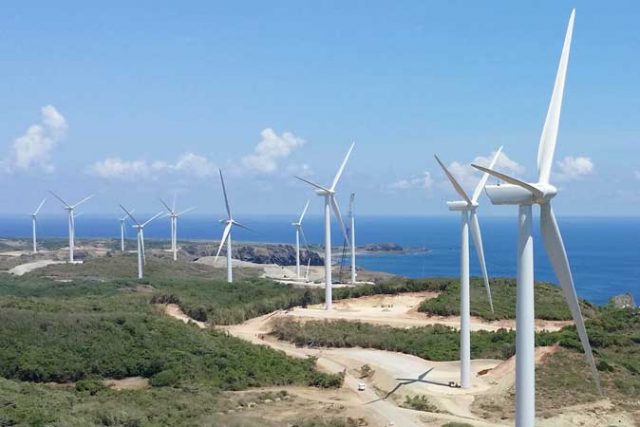
Wind-Farm

By Angelica Y. Yang, Reporter

THE Philippines is the second best investment destination for renewable energy (RE) in Southeast Asia with resources that can generate up to 3,000 gigawatts (GW), and a “highly-liberalized” active spot market, according to a report from HSBC Global Research.

In deciding the rankings, the independent research house considered the entry barriers and regulatory environments of six Southeast Asian countries. The two parameters were believed to have effects on RE investments.

HSBC Global Research said the Philippines had a relative score of 2.5, second only to Vietnam which got 2.8, but better than Singapore, Malaysia, Indonesia and Thailand.

It said the Philippines has a medium range of solar or wind resource availability of up to 3,000 GW, but had a “fragmented market” with local players such as Aboitiz Power, Manila Electric Co. and AC Energy Corp.

Aside from policies that support renewables, the country’s active wholesale electricity spot market is said to be “highly liberalized with partial retail competition.” The spot market is a venue where electricity can be traded as a commodity.

In its report, HSBC Global named the Philippines as one of the three countries that led the first wave of the RE capacity growth in the Association of Southeast Asian Nations (ASEAN) region last year due to its “attractive regulatory environment.”

This time, the next growth wave of renewable energy will be more evenly spread out across the Southeast Asian region, but improved regulations and declining equipment costs are the two major forces that will drive more inclusive development in the region.

“Our analysis shows that governments are either in the process of defining policies or have already stated clear regulatory policies related to renewables to attract further investments,” HSBC Global Research said, highlighting the renewable portfolio standards (RPS) program in the Philippines.

The RPS program requires distribution utilities to get an agreed portion of their supply from eligible RE facilities.

HSBC Global Research also noted the “spectacular” fall in the cost of equipment used in building renewable energy projects. “Solar module prices in 2020 were 89% lower than a decade ago, and are forecast to drop another 27% by 2025. The price of wind turbines in 2020 was down 41% (in) 2010, and is expected to fall another 18% by 2025,” it said.

Renewables in four Southeast Asian countries, including the Philippines, will be the cheapest source of power as levelized costs of energy for solar and onshore wind are projected to decrease by 2025, HSBC Global Research said.

Based on Bloomberg and HSBC estimates, utility scale solar projects have a levelized cost of energy of $62 per megawatt-hour (MWh) in the Philippines and this will go down by 16% to $52 per MWh by 2025. Meanwhile, the cost of onshore wind projects in the country is at $93 per MWh, and the level will decrease by 22% to $72 per MWh.

HSBC Global added that other costs in renewable projects are likely to “marginally come down.”

Green financing may help bring down borrowing costs, while technology advancements in solar and wind farms can help firms trim labor costs and reduce outage periods, it added.

Energy Secretary Alfonso G. Cusi last week invited US firms to invest in the Philippine energy sector, particularly in renewables. During a virtual economic briefing on bilateral relations with the US, he urged American firms to take part in the department’s green energy option program (GEOP) and the green energy auction program (GEAP).

The GEOP allows users consuming at least 100 kilowatts of power to source their supply from retail energy suppliers that generate electricity from renewables, while the GEAP allows qualified RE developers to offer their output to the rest of the power industry.