Home Blog Page 8152

BFAR issues red tide warning over Biliran, Western Samar, Zamboanga del Norte

THE BUREAU of Fisheries and Aquatic Resources (BFAR) warned consumers from eating shellfish harvested from Biliran Island and areas in Western Samar, Leyte, and Zamboanga del Norte after testing positive for paralytic shellfish poison or red tide.

In its 14th shellfish bulletin, BFAR issued new red tide warnings in Daram Island, Zumarraga, Cambatutay Bay and Villareal Bay, all in Western Samar; the town of Leyte, Carigara Bay, Ormoc Bay, and Cancabato Bay in Leyte; Murcielagos Bay, Zamboanga del Norte; and around the Biliran Islands.

Red tide warnings are also still up in Puerto Princesa Bay, Palawan; Dauis and Tagbilaran City, Bohol; Tambobo Bay, Negros Oriental; Calubian, Leyte; Balite Bay, Davao Oriental; and Lianga Bay, Bislig Bay, and Hinatuan, in Surigao del Sur.

All types of shellfish and Acetes sp. or alamang sourced from the red tide affected parts are unsafe for human consumption. However, other marine species harvested within the said areas can be eaten with proper handling.

Red tide occurs due to high concentrations of algae in the water. Human consumption of contaminated shellfish may result in paralytic shellfish poisoning, which affects the nervous system.

Typical symptoms of paralytic shellfish poisoning include headaches, dizziness, and nausea. Severe cases may include muscular paralysis and respiratory issues. — Revin Mikhael D. Ochave

DLS-CSB to serve as quarantine facility for judiciary personnel

THE SUPREME Court, Philippine Red Cross, and the De La Salle–College of Saint Benilde (DLS-CSB) have partnered to provide quarantine facilities for members of the judiciary who test positive for the coronavirus and are mild or asymptomatic cases.

“The Court is aware that most hospitals in Metro Manila and its neighboring provinces are reaching full COVID-19 capacity and are unable to admit any more COVID-19 positive patients,” the court’s Public Information Office said on Sunday.

The facility located at the DLS-CSB will be used for employees of the judiciary who are working in the National Capital Region and the surrounding provinces of Cavite, Laguna, Bulacan, and Rizal.

Philippine Red Cross will manage the facility while the court’s medical services will coordinate admission on a first-come, first-served basis. — Bianca Angelica D. Añago

Davao City to legalize, regulate motorcycle taxis

THE DAVAO City government will legalize the local operation of motorcycle taxis through an ordinance that is expected to be approved by the council this week.

Councilor Danilo C. Dayanghirang said the proposed ordinance was introduced by Mayor Sara Duterte-Carpio in consideration of lack of public transport in the city’s remote areas.

Motorcycle taxis, locally known as habal-habal, operate in many areas nationwide, especially far-flung areas that are not served by regular public utility vehicles.

“So we want to legalize their operations and to be regulated,” Mr. Dayanghirang said in a phone interview. He added that having a law and regulatory system will protect passengers.

The proposed ordinance requires motorcycle taxi drivers to have a license, vehicle registration, and a permit from the city government. Specific routes will also be set.

A bill that will legalize the use of motorcycles as public transport nationwide remains pending in Congress. — Maya M. Padillo

DBM still working on how to fund third stimulus package

PHILIPPINE STAR

THE DEPARTMENT of Budget and Management (DBM) said it is still seeking to identify funding sources for the third economic stimulus package, proposed at P405 billion, as the legislation goes before the House appropriations committee this week.

In an interview with DZBB Sunday, Budget Secretary Wendel E. Avisado said the department is not opposed to the House of Representatives’ desire to pass the Bayanihan to Arise as One bill, known informally as Bayanihan III, but added that its primary concern is finding the money.

Bakit nga ba hindi? Ang issue nga lang, kailangang pag-usapan kung saan manggagaling ng pondo gugulin diyan (Why not? The issue is we need to discuss where the funding will come from),” he said.

He added that there are currently three operating budgets that are focused on addressing the coronavirus disease 2019 (COVID-19) pandemic. These are allocations from the 2021 national budget; realigned funds from the 2020 national budget; and the Bayanihan to Recover as One Act, or Bayanihan II.

In a message to BusinessWorld Sunday, Marikina City Rep. Stella Luz A. Quimbo said the passage of the bill will be a priority once the House resumes session. The bill was approved by its originating panel, the joint Committees on Economic Affairs and Social Services, late last month. The Committee on Ways and Means also approved the measure last week.

“The Committee on Rules will decide on the agenda when we resume on May 17, but I hope that Bayanihan III will be taken up on the floor by then. This of course assumes that the Substitute bill gets taken up by the Committee on Appropriations this week and subsequently, the committee report is approved by the mother committee,” she said.

As one of the proponents of Bayanihan III, she said around P63 billion has been committed by the Department of Finance (DoF) from government-owned and -controlled corporations (GOCCs).

“What DoF has committed so far is about P63 billion from GOCCs excluding government financial institutions (GFI). We hope that they can also sweep up excess capital (from) GFIs.”

She added that Bayanihan III needs to be passed immediately as Bayanihan II is set to expire next month.

Ms. Quimbo said last week that the three operating budgets cited by the DBM are insufficient to fund plans to distribute cash aid under Bayanihan III, which will provide P216 billion to all citizens regardless of social status — more than half the value of the third package. — Gillian M. Cortez

Senate still studying need for Bayanihan III

PHILIPPINE STAR

The SENATE is still consulting government agencies and the private sector on the need for a third stimulus package for the coronavirus pandemic, which the House of Representatives is pushing aggressively for.

Senator Juan Edgardo M. Angara said the Finance committee is closely monitoring developments of the proposed third stimulus law, known informally as Bayanihan III, as the legislation makes its way through the House of Representatives.

“The committee is currently soliciting comment and feedback from government agencies and from the private sector on the need for a possible Bayanihan III stimulus package,” he told BusinessWorld in a phone message.

Mr. Angara said the Senate may “have one (hearing) in the succeeding weeks.”

“We are looking at having one (hearing) after we have collected position papers and data that we have requested,” Mr. Angara, who chairs the committee, added.

The House of Representatives committees on economic affairs, social services, and ways and means, early this month approved the measure authorizing P405.6 billion for Bayanihan III. It still has yet to be approved by the committee on appropriations.

Senator Ralph G. Recto in December filed Senate Bill No. 1953 or the Bayanihan to Rebuild As One, the chamber’s version of Bayanihan III, calling for P485 billion to support the economic recovery following the pandemic and the late-2020 typhoons.

The bill is currently with the Senate committees on economic affairs and finance.

Mr. Recto said in a phone message: “We can have a hearing to find out formally what the executive’s position will be.”

Senator Maria Josefa Imelda R. Marcos, who chairs the Economic Affairs committee, cited unspent funds from the 2020 budget, Bayanihan II, and contingency and calamity funds in the 2021 budget.

“For tidy budgeting, perhaps it’s best we account for those amounts first, ideally disburse its larger portion, before launching into yet another appropriations measure,” she said in a phone message to BusinessWorld.

Ms. Marcos added that discussions on the general appropriations act for 2022 “may be the best opportunity, maybe even the quickest way, to input vaccine financing, comprehensive social protection, cash-for-work programs, wage subsidies, and (micro, medium, and small enterprises) assistance.”

Senator Panfilo M. Lacson on Friday said he and Senate President Vicente C. Sotto III met with the head of the vaccination effort, Carlito G. Galvez Jr., the point perron on testing Vivencio B. Dizon, and the lead official on contact tracing Benjamin B. Magalong on Thursday to discuss red tape issues and funding needs hindering the COVID-19 containment effort.

The government wants a P90-billion budget for vaccine procurement under the Health department next year.

It also wants P20 billion under Bayanihan III for vaccine purchases. Mr. Lacson has proposed sourcing these funds via the realignment of unused funds of various executive agencies and the existing stimulus package. — Vann Marlo M. Villegas

GOCC subsidies in March drop 68% to P3.838 billion

PHILIPPINE STAR/BOY SANTOS

BUDGETARY SUPPORT provided to government-owned and -controlled corporations (GOCCs) declined 68% year on year to P3.838 billion in March, the Bureau of the Treasury (BTr) said.

In its cash operations report, the BTr said the year-earlier total was P11.952 billion.

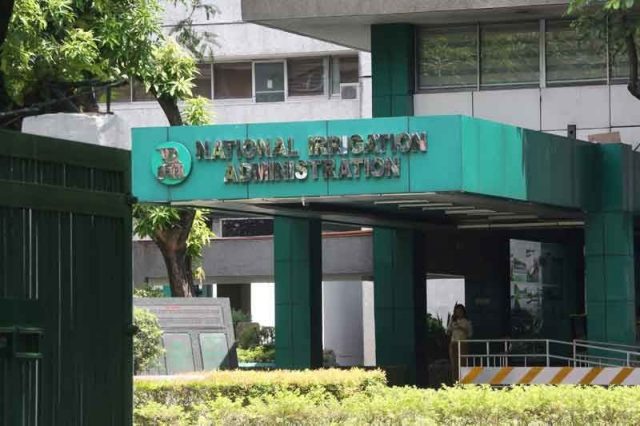
Around 65% of the March 2021 subsidies went to the National Irrigation Administration, down 15% year on year.

The Bases Conversion and Development Authority received P841 million, as opposed to zero a year earlier.

Other GOCCs that received the most subsidies were the Small Business Corp. (P500 million), Philippine Health Center (P444 million); National Kidney Transplant Institute (P320 million), Philippine National Railway (P312 million) and Philippine Children’s Medical Center (P309 million).

Also receiving subsidies were the Tourism Infrastructure and Enterprise Zone Authority (P1 million); Aurora Pacific Economic Zone and Freeport Authority and Zamboanga City Special Economic Zone Authority (P4 million each); Philippine Center for Economic Development (P5 million); and the Credit Information Corp. and the Southern Philippines Development Authority (P6 million each).

Meanwhile, the Philippine Health Insurance Corp., Philippine Rice Research Institute and Subic Bay Metropolitan Authority received no subsidies in March.

In the first quarter, GOCC subsidies hit P11.42 billion, down 49% from a year earlier.

The government subsidizes GOCCs firms to cover operational expenses not supported by their revenue.

It budgeted P148.188 billion for GOCC subsidies this year, down 22% year on year. — Beatrice M. Laforga

BoC seizes counterfeit clothing, smuggled meat worth P316M

PHILIPPINE STAR

THE Bureau of Customs (BoC) confiscated on Friday P316 million worth of smuggled counterfeit-branded clothing and meat.

In a statement issued over the weekend, the BoC said it seized P300 million worth of clothing from various warehouses in Pasay City. The brands being counterfeited were Adidas, Crocs, DC, Dickies, Disney, Fila, Frozen, Gap, Havaianas, Hello Kitty, Jag, Jordan, Lacoste, Lee, Levi’s, Louis Vuitton, Marvel, Mossimo, Nike, Petrol, Puma, Tribal and Uniqlo.

It also confiscated smuggled frozen meat, Peking duck and black duck valued at P16 million from a warehouse in Navotas City.

The BoC said the seizures were conducted in cooperation with the Manila International Container Port, Customs Intelligence and Investigation Service of the Port of Manila, and the Enforcement Group Enforcement and Security Service.

Customs Commissioner Rey Leonardo B. Guerrero said the agency will continue to work on deterring illegal activity. — Beatrice M. Laforga

Asian Dev’t Bank drops coal investments, may support more natural gas projects

REUTERS

THE Asian Development Bank (ADB) said in its first energy policy draft that it will not be funding new coal-fired plants but will consider investing in eligible natural gas projects.

“ADB will withdraw from financing new coal power and heat plants,” the bank said in its policy draft which was posted on its website Friday.

It added that it will not finance any coal mining, oil and natural gas field exploration, drilling or extraction.

The ADB said it will support its member-countries by financing technologies which will control the emissions of their currently operating coal-fired power plants and district heating systems. But the bank clarified that it does not plan on participating in investments that modernize, upgrade or renovate coal-fired facilities “unless it is to re-engineer such plants for use of cleaner fuels, such as natural gas or renewable energy sources.”

In the draft, the bank said it is looking at funding projects “with hybrid electricity solutions involving fossil fuels as backup systems together with renewable energy (RE)” for remote areas and isolated grids.

“We are happy that ADB finally decided to abandon coal once and for all in this draft policy,” environment and energy think-tank Center for Energy, Ecology, and Development (CEED) said in a statement Friday.

“However, in all its interventions, the Bank must have the immediate and complete phase-out of coal in mind. Retrofitting and any allowances for emissions in current projects would defeat the stated objective of the draft policy,” it added.

In its draft, ADB said that it may consider funding natural gas projects, including gas transmission and distribution pipelines, and liquified natural gas terminals, as long as all its requirements are met. “ADB will define sound screening criteria for other fossil fuel-generation projects, notably natural gas.”

Natural gas, for the bank, has played a key role in helping countries reduce emissions from coal. But it noted that generating power from natural gas does not eliminate greenhouse gas emissions.

“Despite these concerns, the current supply contracts and plans are expected to cause natural gas use to increase in the region during the next decade… In this context, it is a likely scenario that many of the region’s economies will continue to include gas in their energy transition strategies to replace coal and fuel oil,” the ADB said.

CEED expressed concern over the bank’s support for gas projects, including natural gas-related infrastructure and facilities.

“Asian communities, which are some of the most climate-vulnerable and pay some of the highest electricity rates in the world, need access to clean and affordable renewable energy. Fossil gas will just delay the necessary transition, at great cost to these communities,” CEED said.

Manila-based international policy group Institute for Climate and Sustainable Cities (ICSC) said Friday that ADB still leaves the door open to gas even as it closes the door on coal.

“There is no bridge in the world without an end, and if the Bank will consider fossil gas as a bridge and transition fuel, it needs to stipulate an end,” ICSC Senior Policy Advisor Pedro H. Maniego, Jr. said in a statement. “ADB did cite green hydrogen from renewable energy sources, which could eventually replace natural gas. Policies toward this end need to be established with urgency.”

In its policy draft, the ADB said achieving a low-carbon pathway in the energy transition requires power from renewable primary energy sources.

“The ADB will support a transition to cleaner power systems by supporting accelerated deployment of renewable energy including sustainable hydropower, solar PV installations and concentrated solar facilities for power, solar energy from collectors to heat, and on-shore and off-shore wind power,” it said.

The bank added that it will support large hydropower projects, but the application process will be “highly selective.”

“ADB will only support large hydropower schemes that have been evaluated as part of a robust strategic environmental and social assessment that has considered both alternative locations and designs,” it said.

CEED called large hydro projects a “destructive” form of RE projects, which are not “ecologically just.”

“In lieu of these and instead of promoting privatized systems, ADB would do well to support community-based microgrids which would empower local communities and can fuel the sustainable development we need today,” CEED said. — Angelica Y. Yang

DTI agency seeking to quantify value of design industry

THE Design Center of the Philippines is planning a survey this year which will seek to quantify the design community’s contributions to the economy, a Trade department official said.

The Design Center, an arm of the Department of Trade and Industry (DTI), helps promote Philippine design, provide food packaging services for small businesses, and develop sustainable products.

Working with a UK-based partner, the Design Center’s study will help identify what constitutes the design sector’s value-added.

“There is still a general perception of design primarily from an aesthetic point of view, so what we really wanted to underline is service design,” Design Center Executive Director Rhea Matute said in an online interview.

Service design focuses on using design principles to plan systems across industries.

“That conversation will be easier to have when you have data behind you as well as successful case studies,” she said.

The design economy, she added, includes both businesses that directly provide design services and those that employ design-related work.

“Within a larger economy, for example… you employ designers to develop your collaterals to help you develop your website. So to a certain extent, they’re participants in the design economy because they employ designers. So (the study will seek to come to an) understanding of how designers contribute not just to direct design sectors but to the larger economy and the kind of value they provide,” Ms. Matute said.

The Design Center will be focusing on nine areas as case studies: Manila, Makati, Quezon City, Taguig, Cebu, Davao, Baguio, Pampanga, and Cagayan de Oro.

“(We’ll be) understanding in each of nine how design is contributing to the larger economy of the city or the province so we’re reaching out to Luzon, Visayas and Mindanao through these nine areas.”

The Design Center is in the data-collection stage and is hosting roundtable discussions, with plans to release a report by August. The final output, a so-called design map, will in turn help shape a national design policy by the fourth quarter.

The national design policy to develop the sector is being formulated by a design council that includes government and private sector representatives.

“We want… design in the country… to make us more competitive, to be able to develop businesses that are competitive not just in the country but globally and to be able to use that soft power of design to have a recognition of the country that would be more transformative,” Ms. Matute said. — Jenina P. Ibañez

Pasig City sets up investment office

PHILIPPINE STAR/ MICHAEL VARCAS

PASIG CITY said it has issued an ordinance creating an economic development and investment office to drive business development and help the city recover from the economic downturn.

In ordinance no. 14 series of 2021 signed on April 29, the city government defined the office’s mandate as to promote investment and economic development. It restructures the Pasig City investment promotion center as the city’s primary investment arm, to be headed by an investment officer.

The office, the ordinance said, will help develop cost-effective business registration systems to attract investors, protect investor rights, and improve the city’s competitiveness.

The office will also help draft a local investments and incentives code, conduct marketing activity, and identify revenue-generating partnerships with the private sector.

The ordinance tasks the investment promotion officer with serving as Pasig City’s economic development representative in dealings with the National Government.

The organization of the office conforms to guidelines from the Department of Interior and Local Government released in December.

“(The office) will surely alleviate the economic problems faced by Pasig City especially during the time of the coronavirus 2019 pandemic, wherein both the national and local economy have taken a hit, with resultant unemployment and underemployment, shut down of industries and businesses, and the decline of gross domestic product,” according to the ordinance. — Jenina P. Ibañez

Prioritizing the integrity agenda in times of uncertainty

First of two parts

Pressure from the COVID-19 pandemic on emerging market economies continues to impede business growth. Economies and companies all over the world are seeing unprecedented challenges and difficulties, which have further exacerbated potential integrity issues. According to the emerging markets perspective of the EY Global Integrity Report, corruption and fraud still pose a major threat to long-term success for businesses. While regulatory regimes and activities designed to strengthen company integrity have increased during the recent months, the remote working conditions and regulatory scrutiny following the New Normal have only aggravated existing issues while presenting new ones.

The Global Integrity Report, conducted by global market research agency, Ipsos MORI, surveyed more than 1,700 employees from across all levels of large organizations in 21 emerging market countries. It presents relevant insights into the ethical challenges the organizations faced. From board executives to staff members, nearly 63% of the respondents believe it is difficult to maintain standards of integrity during periods of uncertain market conditions or periods of accelerated change. However, the report also reveals that emerging market businesses push efforts to mitigate misconduct, with 44% sharing how much easier it has been to report misconduct in the past three years, and 55% saying their management regularly communicates the significance of operating with integrity.

The report discusses four key areas — ranging from cybersecurity to raising corporate integrity higher in the management agenda — that organizations must focus on in their integrity agendas. By considering how the respondents dealt with these areas of risk, businesses may gain insights into how to overcome some of the challenges to post-pandemic recovery. The first part of this article will discuss prioritizing corporate integrity and encouraging the use of whistleblower channels.

PRIORITIZING CORPORATE INTEGRITY
The reputational damage from corporate integrity scandals can heavily scar the reputations of both the companies in question and their stakeholders, damaging even executives who are clearly not involved in such scandals. Stakeholder relationships are also impacted, compromising the long-term value of the involved business.

It is critical for organizations to build an integrity agenda from the top and clearly communicate the relevance of acting with integrity. Corporate integrity is not a mere act of compliance — to act with integrity is both the right thing to do and a means to differentiate the business.

Though frequently highlighting the importance of integrity in company-wide communications is an important step, actual action plans are much more significant. Senior management must reinforce their integrity message with clear examples, institute key performance indicators (KPIs) and have clear and quantifiable metrics to gauge the impact of their integrity initiatives.

Formal policies and programs will provide an avenue for top management to set an example, emphasizing that everyone will be held responsible for their actions regardless of rank or individual performance.

ENCOURAGING THE USE OF WHISTLEBLOWER CHANNELS
All employees should be heard. To truly embed integrity into an organization, it is critical to foster a culture of speaking up and active listening. Developing the right reporting channels not only provides a clear indicator of how the organization truly embraces integrity — it also discourages individuals from reporting issues directly to regulators or the media. Whistleblowing about unethical behavior can result in high-risk situations that may affect the reporting individual’s safety or lead them to fear reprisal both personally and professionally. The report states that 37% of the respondents in emerging markets do not report concerns about integrity due to apprehensions about their careers, while a worrying 29% choose to keep their concerns private due to fear of their own personal safety.

However, progress is still being made, particularly in emerging markets, with 44% of companies saying it is easier to report concerns in the past three years, and 31% sharing that their companies offer more protection to whistleblowers compared to before. This is driven in part by tighter regulations in emerging markets, but it is also in the best interest of the company to make the whistleblowing process as easy as possible. Employees who are unable to bring their issues to management may instead go directly to a regulator or to social media, leading to a much higher risk of reputational damage. On the other hand, fostering “psychological safety” among employees can help drive productivity, employee satisfaction, and even workplace innovation.

As a key pillar of any organization’s corporate governance framework, whistleblower programs require board oversight to be successful. Employees need to feel safe to report misconduct and believe that it is both a practical solution and in the best interest of the organization. Companies should provide multiple channels to report concerns so employees can choose an option that is comfortable and advantageous to them.

A minimum requirement to consider for a whistleblowing mechanism includes a formal system that efficiently normalizes the process, such as case management, resource allocation, and clarity regarding how to speak up. Protection is also imperative, and anonymous complaints must be addressed by stakeholders.

In the second part of this article, we will discuss the need for an increased focus on data protection and cybersecurity, and the need to address integrity issues in third party providers.

This article is for general information only and is not a substitute for professional advice where the facts and circumstances warrant. The views and opinions expressed above are those of the authors and do not necessarily represent the views of SGV & Co.


Roderick M. Vega is a Partner and the Forensic and Integrity Services (FIS) Leader of SGV & Co., and Dennis F. Antonio is an FIS Senior Manager of SGV & Co.

Allow imports to address domestic shortage

VECTORJUICE/FREEPIK

The logic is simple. All other things being equal, the price increases as supply of the particular good decreases. Alternatively, all things being equal, the price decreases as supply increases. Similarly, all else being equal, the price of the good increases as demand increases. And the price decreases as demand goes down.

That is the law of supply and demand.

An old joke goes that a national leader once wanted to repeal the law of supply and demand. The joke exposes ignorance of how markets behave.

Yet, our senators do not properly understand the basics of supply and demand. Consider their position on the pork shortage.

Prices have sharply risen because of the severe shortage of hogs brought about by the African Swine Fever (ASF). Also constraining the supply are rules that restrict the quantity of pork importation. The law’s minimum access volume for 2021 is fixed at 54,210 metric tons. But the economist Ramon Clarete estimates that in 2020, the supply gap for pork was more than 500,000 metric tons. The National Economic and Development Authority (NEDA), on the other hand, has estimated the supply gap in 2021 to reach 477,000 metric tons.

The supply gap estimates may vary, albeit insignificantly. But what is clear is that the supply gap is so huge. Hence, it comes as no surprise that year-on-year inflation in April 2021 increased by 57.7% nationally and by 68.5% in the National Capital Region.

Allowing significant importation is the only way to address the big supply gap and substantially reduce prices. However, to encourage imports, high tariff barriers likewise have to be eased. Hence, the President signed Executive Order (EO) No. 128, series of 2021, which is titled: Temporarily Modifying the Rates of Import Duty on Fresh, Chilled or Frozen Meat of Swine under Section 1611 of Republic Act No. 10863, Otherwise Known as the “Customs Modernization and Tariff Act.”

The senators however resisted this. Authored principally by Senator Franklin Drilon and co-signed by 18 senators, a Senate Resolution urges “the President to withdraw Executive Order No. 128, which provides for the temporary modification of the rates of import duty for fresh, chilled or frozen meat of swine, and to recall the recommendation to increase the Minimum Access Volume of pork.”

Senator Drilon, the most vocal in opposing Executive Order No. 128, ostensibly wants to protect the local hog raisers. But he and fellow senators dismiss the plight of the more than 100 million consumers who are reeling from the higher price of pork and its knock-on effect on prices of other goods.

Of course, we have to give support to the domestic swine industry, but it should not be at the expense of the Filipino people. The interests of the whole people must come first, especially during the pandemic.

The government has a plan to help the domestic producers. The domestic producers will be part of the solution to address the supply gap. Meeting the supply gap will not be exclusively done through importation. It is recognized though that the domestic industry cannot by itself immediately solve the huge gap in supply.

The Department of Agriculture is committed to improving hog production and accelerating the repopulation program. But while we are rebuilding our pig supply, the government cannot simply sit back and let inflation go haywire.

Hence, importation by increasing the minimum access volume and bringing down tariffs is an imperative. The Executive Order reduces the tariffs from 30% in-quota and 40% out-quota to 5% in-quota and 15% out-quota for the first six months and 10% in-quota and 20% out-quota for the following six months.

To be sure, the government has clearly stated that the lower tariff rates are only temporary. The measure intends to alleviate the crisis, until domestic supply returns to normal.

A recent development is that the Senate is seeking a compromise. Senator Ralph Recto has telegraphed the Senate’s message: “I don’t mind increasing the (MAV) minimum access volume, but why reduce the taxes? If the consumer does not get the reduced price, then what was the P13 billion for?” The amount Senator Recto is referring to is the forgone revenues resulting from lower tariffs.

Senator Recto’s statement does not make sense. We return to the relationship of supply and prices. Lower tariffs will encourage importation; lower tariffs also translate into reduced prices for consumers. The entry of imported pork also decreases prices as overall supply increases.

On the other hand, notwithstanding an increase in the MAV, high tariffs will remain a barrier to pork importation and will not lead to significant price reduction.

Neither the Senate’s original position nor the compromise it is seeking favors the Filipino people. The Senate position serves the interests of those who want pork prices to remain high.

Ironically, the senators are the ones crying for relief to the people in this time of pandemic.

We refuse to believe that they are ignorant of the law of supply and demand. We refuse to believe that they are ignorant of the fact that lower meat prices provide relief to our people who are suffering from a triple crisis — the pandemic crisis, the economic crisis, and the food crisis.

We hope the Senate sees the light. Executive Order No. 128 which modifies that tariff rate on pork imports and increases the minimum access volume will not at all kill the industry that our senators are protecting. Our paramount concern should be giving relief to the Filipino people, many of whom are now cash-strapped and hungry.


Filomeno S. Sta. Ana Iii And Jessica Reyes-Cantos are the coordinator and president of Action for Economic Reforms, respectively.