Home Blog Page 8045

Lawyers get confirmation of being under next priority group for COVID-19 vaccination; prisoners still under consideration

PHILIPPINE STAR/ JOVEN CAGANDE

THE INTEGRATED Bar of the Philippines, the official organization of all Philippine lawyers, has received confirmation from the government that legal professionals are included in the next priority group for vaccination against coronavirus disease 2019 (COVID-19).

The next sector in line for inoculation are those under group A4, which covers economic and government frontliners.

The vaccination program is currently covering the A1 to A3 groups, which include medical workers, senior citizens, and persons with comorbidities.

Meanwhile, Justice Secretary Menardo I. Guevarra said prisoners are not yet included in the A5 group, which covers the indigent population.

He told reporters on Tuesday that as of last week, inmates are still “under consideration for (priority group) A5.”

Kapatid, a support group for families and friends of political prisoners, have been appealing to the Department of Health to include inmates in congested jails across the country to be prioritized for COVID-19 vaccination.

“Prisoners should enjoy the same standards of health care that are available in the community, and should have access to necessary health-care services free of charge without discrimination on the grounds of their legal status,” the group said in a March 2 letter to Health Secretary Francisco T. Duque III. — Bianca Angelica D. Añago


Solons call for inclusion of dentists, med-techs in vaccination teams

A health emergency response team member in Davao City gets inoculated against the coronavirus in this April 2021 photo. — DAVAO CIO

A BILL was filed Tuesday for the inclusion of dentists and medical technologists as vaccinators to speed up the government’s inoculation program against coronavirus disease 2019 (COVID-19).

“With the arrival of more vaccines in the country, the swift roll out of the vaccine is needed for the efficient administration and prevention of possible expiration of the doses,” reads part of House Bill No. 9354, which will amend the recently enacted Republic Act No. 11525 or the COVID-19 Vaccination Program Act.

Under the existing law, those permitted to administer COVID-19 vaccines are duly trained doctors, nurses, pharmacists and midwives.

The government targets to vaccinate around 70% of the 108 million population to develop herd immunity. Around 2.2 million Filipinos have been vaccinated as of Monday since the start of the vaccination drive in March.

The proposal was jointly filed by Representatives Angelina DL Tan, Jose Christopher Y. Belmonte, and Stella Luz A. Quimbo. Gillian M. Cortez

Rep Quimbo calls on PhilHealth to settle hospital claims, seeks probe

PHILSTAR FILE PHOTO

A LAWMAKER filed a resolution calling on the Philippine Health Insurance Corp. (PhilHealth) to immediately settle its unpaid claims, and is seeking a probe on the agency’s fund management.

Marikina Rep. Stella Luz A. Quimbo filed House Resolutions 1769 and 1770 on Monday. The first urges PhilHealth to settle its balance to hospitals, while the second asks the House Committee on Good Government and Public Accountability to launch an investigation on the agency’s expenditures.

“There is an urgent need to settle payments due to hospitals so as not to further hinder our health system’s capacity to respond to the ongoing pandemic,” Ms. Quimbo said in HR 1769.

The investigation in aid of legislation will focus on the unpaid benefit claims of healthcare facilities and look into the efficiency of PhilHealth’s mechanisms in addressing unsettled claims.

Ms. Quimbo, in a privilege speech on Monday, said the measures are urgent as these unpaid claims have reportedly forced private hospitals to cut costs by retrenching personnel and downsizing facilities despite the continued high demand amid the coronavirus crisis. — Gillian M. Cortez

Human rights groups, family of slain activists list recommendations to Supreme Court on people’s protection 

EIGHT human rights groups and four family members of slain activists have submitted recommendations to the Supreme Court on increasing people’s protection against red-tagging or being labeled as a communist armed rebel, “search warrant factories,” and extrajudicial killings.

The recommendations, contained in a May 18 letter, relate to the High Court’s recent condemnation on the attacks on lawyers and judges, and its assurance that it will “act decisively when it is clear that injustices are done.”   

The groups called for the following: a review on the rules on writs meant to protect one’s right; create new rules to ensure the timely receipt of subpoenas and criminal complaints; make a repository of criminal charges; amend rules on the issuance of search warrants; and to investigate the so-called search warrant factories, referring to lower courts that have been issuing multiple search warrants and are allegedly “weaponized” by government forces to silence activists and critics.   

The rights groups said these concerns stem from the “unchecked powers of the Executive (branch of government),” and “require an immediate response from the Honorable Court as the protector of constitutional rights.”

They also said the “attacks against human rights lawyers violate the basic principle that lawyers shall not be identified with their clients or their clients’ causes as a result of discharging their functions.”

Further, they said “that it is equally important for the Honorable Court to look into the attacks suffered by the clients (of the human rights lawyers) and to understand the overarching government policies that cause them.” — Bianca Angelica D. Añago

NEA adds guidelines on writing-off lost, destroyed power bills

PHILSTAR FILE PHOTO

THE NATIONAL Electrification Administration (NEA) has issued additional guidelines on writing-off uncollected power bills that have been lost or destroyed due to natural calamities and man-made disasters.

In a memorandum posted on its website on Tuesday, NEA said the new regulations were added after an electric cooperative in Lanao del Sur requested to write-off electric bills whose records were deemed lost due to the armed conflict which took place in Marawi City in 2017.

The guidelines will be added to NEA’s earlier memo on the “Revised Guidelines for Writing-Off Worthless Consumer Accounts Receivables as Amended,” which was issued on Oct. 27, 2020.

Accounts qualified for write-off now include those whose physical or electronic copies are lost or damaged due to typhoons, earthquakes, floods, war, robbery and acts of terrorism, among others, the agency said.

Requests for canceling certain accounts must be approved by the cooperative’s board, which will issue a resolution stating the amount that will be waived and the circumstances of the loss or damage.

“The amount to be written-off, as proven by the required evidence presented, shall be limited and shall be applicable only to power bills that were lost on the date of declaration of the state of calamity or occurrence of the… unforeseen or fortuitous events and other circumstances,” NEA said.

The addendum will take effect 15 days after it is filed with the University of the Philippines Law Center.

The Oct. 27 revised guidelines were issued for electric cooperatives with receivables from consumers that have “unrealistically accumulated over the years.” — Angelica Y. Yang

Lawmaker asks Budget dep’t to immediately release funds for PGH repairs

MANILA DRRM OFFICE

A LAWMAKER is calling on the Budget department to immediately release funds to repair and re-equip the University of the Philippines-Public General Hospital (UP-PGH), the biggest coronavirus disease referral hospital in the capital, which was partly damaged by fire last Sunday.

The cost of damage was estimated at P300,000, according to the Bureau of Fire Protection.

In House Resolution 1768 filed by Quezon City Rep. Jose Christopher Y. Belmonte on Tuesday, the solon urged the Budget department and other pertinent agencies “to immediately release funds for the rehabilitation” of the state-run UP-PGH.

Mr. Belmonte also said the inter-agency task force handling the coronavirus response should establish “stop-gap” measures to help UP-PGH continue providing crucial medical services.

There were no casualties in the fire that broke out in the early hours of May 16 due to faulty electrical wiring.

Medical workers on duty promptly evacuated patients, including several newborns. — Gillian M. Cortez

Claimant of P3.1-M party drugs shipped from Malaysia arrested

A PACKAGE from Malaysia declared as “snacks” was discovered to contain 622 grams of Ketamine, also known as the party drug Special K. — BOC

AUTHORITIES arrested the claimant of a package from Malaysia containing P3.11 million worth of party drugs concealed in instant coffee sachets. A joint team from the Bureau of Customs (BoC), Philippine Drug Enforcement Agency, and NAIA Inter-agency Drug Interdiction Task Group nabbed Kristopher Segumban during a “controled delivery operations” in Caloocan City on May 17, the BoC reported on Tuesday. The suspect was the authorized representative of the package’s consignee, Nick Dimagiba. The package declared as “snacks” was discovered to contain the substance Ketamine, also known as the party drug Special K, after going through x-ray scanning at the Ninoy Aquino International Airport and K-9 sweeping. BoC said Ketamine was originally developed as anesthetics but commonly abused as party drugs for its tranquilizing effects. It was listed in the Philippines as a dangerous drug in 2005.

Senate bodies OK new anti-child porn law

PHILSTAR

THREE Senate committees on Tuesday approved a measure seeking to strengthen protection against the sexual abuse of children online.

Senator Risa N. Hontiveros-Baraquel, who heads the committee on women, endorsed to the plenary Senate Bill 2209, which will repeal the Anti-Child Pornography Act of 2009 and amend the Anti-Photo and Video Voyeurism Act of 2009.

The committees on science and technology and finance also approved the bill.

Ms. Baraquel said the bill penalizes the use of digital or analog communications to abuse and exploit children sexually.

Cases of online child sexual abuse almost quadrupled in the Philippines at the height of a coronavirus pandemic from March to May 2020, according to data from the Department of Justice.

The Philippines was also among the top 10 countries that produced child porn in 2016, Ms. Baraquel said in her sponsorship speech, citing a report by the United Nations International Children’s Emergency Fund (UNICEF). — Vann Marlo M. Villegass

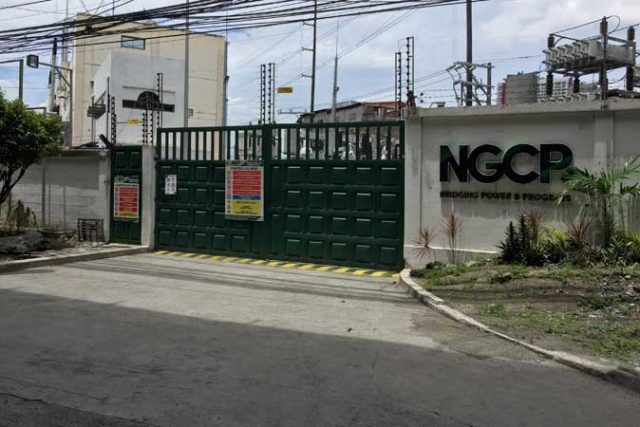
ERC gives NGCP six months to complete $1-billion IPO

BW FILE PHOTO

THE Energy Regulatory Commission (ERC) has ordered the National Grid Corp. of the Philippines (NGCP) to complete the listing process for a $1-billion initial public offering (IPO) within six months.

The order, issued in March, was posted this week on the commission’s website.

The NGCP had asked ERC to waive the deadline to list, citing the “unsuitability of current market conditions for IPOs” due to the public health emergency.

In an order dated March 10, the ERC said NGCP had 10 years to prepare its IPO, and that the transmission service provider cannot “invoke the current emergency health situation” to delay compliance.

“The Commission… hereby requires NGCP to complete within the period of six months from date of receipt of this order its IPO requirement and ultimately make a public offering of its shares in compliance with… R.A. No. 9511 (or the act granting a franchise to the NGCP),” the ERC said.

The commission said the company failed to establish that the current coronavirus disease (COVID-19) pandemic is unsuitable for IPOs. It said various companies like grocery retailer MerryMart Consumer Corp. and internet service provider Converge Information and Communications Technology Solutions, Inc. undertook public offerings at the height of the pandemic and community quarantine, which were well received by the public.

The ERC added that the NGCP has begun complying with its IPO requirements, and “only needs to complete the process.”

According to the regulator, the NGCP has engaged financial advisers, shortlisted joint global coordinators, reviewed proposals of underwriters and is in the process of finalizing its engagement of legal counsel.

The NGCP has tapped Standard Chartered Bank (Philippine Branch), and BDO Capital and Investment Corp. as its international and domestic financial advisors for the listing, the ERC said.

Citing BDO Capital President Eduardo V. Francisco, the ERC estimated the value of the shares to be listed will be about $1 billion. Mr. Francisco was the expert witness tapped by the NGCP to support its claims for an IPO extension.

In its order, the commission said the NGCP must submit a monthly progress report on its public listing activities on or before the fifth day of every month of the six-month compliance period.

The ERC’s order was signed by Chairperson Agnes VST Devanadera and three commissioners.

Under its franchise, the NGCP is required to list at least 20% of its outstanding shares on the bourse.

In January, the NGCP said it is pressing forward with preparations for the IPO even though “market conditions may not be ideal at the moment.”

NGCP Spokesperson Cynthia P. Alabanza has said that the company has been gearing up for a public listing since 2014 in compliance with the conditions of its franchise. — Angelica Y. Yang

Senate panel OK’s estate tax amnesty extension

SENATOR PIA CAYETANO — PHILSTAR

THE SENATE Ways and Means Committee has approved a measure extending the deadline to avail of estate tax amnesty by two years.

Senator Pilar Juliana S. Cayetano, chair of the Ways and Means committee, raised the Senate Bill No. 2208 to plenary, which set to amend a Republic Act (RA) No 11213 or the Tax Amnesty Act by extending the availment period to June 14, 2023.

Ms. Cayetano said the travel restrictions imposed during the pandemic affected the filing process for seeking the tax amnesty.

“The Committee deems it appropriate that we extend the period of availment of the estate tax amnesty for another two years, in order to allow Filipinos who have not been able to affordably settle their outstanding tax liabilities during the period, to do so,” she said in her sponsorship speech.

“At the same time, extending the program will also provide the government with additional revenue that will fund priority programs for the benefit of the people,” she added.

Ms. Cayetano also noted that revenue from the estate tax amnesty program is only P2.5 billion so far, lower than the projected P6.28 billion, citing data from the Bureau of Internal Revenue presented at a hearing early this month.

“Our current condition necessitates and justifies the need to pass this measure at this appropriate time. Surely, its enactment can provide economic relief for many Filipinos during this time of global health and economic crisis,” she said.

RA 11213, which took effect on June 15, 2019, provides a one-time opportunity for taxpayers to settle their unpaid estate taxes as of Dec. 31, 2017. The law will expire on June 15.

Ms. Cayetano said the committee removed the requirement for “proof of settlement” to be submitted by the heirs, after expert witnesses at the hearing cited it as a major reason for not availing of the amnesty.

“The Committee has decided, after hearing all the experts, to delete this requirement given that under the laws of succession, ownership is transmitted upon the death of the decedent, whether or not it has been supported by any judicial or extrajudicial form,” she said.

The House of Representatives approved the counterpart measure on third and final reading in September. — Vann Marlo M. Villegas

Gov’t sees digitization of property valuation boosting LGU revenue

THE Department of Finance (DoF) said the revenue-generating capacity of local government units (LGUs) is expected to receive a boost when the property valuation system is digitized.

“The Local Governance Reform Project (LGRP) will certainly help boost the revenue collection capacity of our local government units by adopting new digital tools and bolstering institutional development and policy support for property valuation,” Finance Secretary Carlos G. Dominguez III said in a statement Tuesday.

President Rodrigo R. Duterte issued Administrative Order No. 40 late last month creating the interagency governing board (IGB) to provide policy direction and serve as an oversight body for the project. It held its first meeting Tuesday to designate official representatives to the board, identify the project’s target outcomes and monitor progress.

The IGB is chaired by Mr. Dominguez, with the board consisting of officials from the National Economic and Development Authority, the Departments of Budget and Management, Information and Communications Technology, and the Interior and Local Government; as well as Asian Development Bank (ADB) Director Jose Antonio Tan III and other officials from the DoF.

Mr. Dominguez said the board should aim to help LGUs improve their services and make them more accountable, efficient and transparent.

“The undertaking we embark on today moves forward the process of devolution envisioned in the Local Government Code of 1991,” he told the board during the meeting.

“The measures that we will be undertaking through the Local Governance Reform Project will be fully functional and irreversible,” he added.

The Bureau of Local Government Finance will be the program’s main implementing body; other agencies with a role include the Bureau of Internal Revenue and the other IGB agencies.

The program was supported by a $26.53-million loan from the ADB signed in July.

The loan’s stated objective is to improve real property tax collection via valuation reform and the adoption of digital tools for reporting and updating tax maps and property valuation tables.

Reforming the real property valuation system to strengthen LGU revenue is part of the government’s Comprehensive Tax Reform Program.

The House of Representatives approved its version of the proposed Real Property Valuation and Assessment Reform Act on third reading in November 2019, while the Senate version is still in committee. The bill is among the priority measures that the executive and legislative branches hope to pass before Congress adjourns in June. — Beatrice M. Laforga

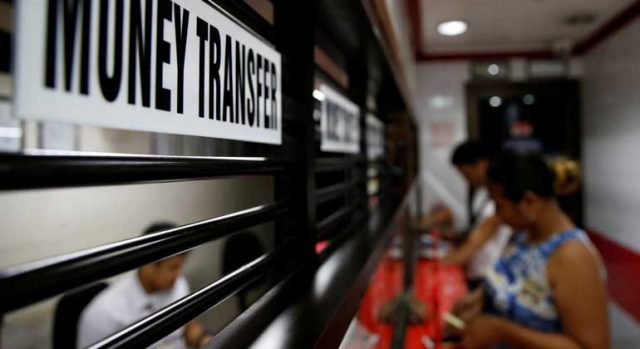
Remittances still in decline in real terms, Nomura says

CASH REMITTANCES in March were still declining in real terms and considering foreign exchange movements, according to Nomura Global Research.

“In local currency and inflation-adjusted terms, we estimate ‘real’ remittances growth was a much weaker minus 4.2% in March, picking up only slightly from the minus 4.7% in February,” Nomura chief ASEAN economist Euben Paracuelles and analyst Rangga Cipta said in a note Tuesday.

The peso closed at P47.55 to the dollar on Monday against its P48.023 close on Dec. 29, the last trading day of 2020. The peso’s appreciation means remittances in dollars yield lower peso values.

Inflation has exceeded the central bank’s 2-4% target band since January.

The Bangko Sentral ng Pilipinas estimated on Monday that remittance inflows rose for a second straight month in March, growing 4.9% year on year to $2.514 billion.

“This underlying (remittance) weakness is consistent with disappointing private consumption growth in the first quarter gross domestic product data. It also indicates that the support from remittances for household spending remains weak,” Nomura Global said.

Household spending declined 4.8% in the three months to March, reversing the 0.2% rise posted a year earlier. The contraction, however, was smaller than the minus 7.3% posted in the fourth quarter of 2020. Household spending accounts for up to three-fourths of the economy.

“The outlook for remittances is still uncertain, in our view. While some host countries like the US are recovering, worker deployments from the Philippines may be slow to recover due to the local COVID-19 (coronavirus disease 2019) situation and the latest border restrictions in Taiwan and Singapore may pose additional headwinds in the near term,” the analysts said.

Taiwan and Singapore were considered relatively successful in containing the virus, though both economies have reimposed restrictions in light of the increase in cases in recent weeks.

Nomura expects cash remittances to grow 5.1% this year, reflecting the low base from a year earlier. This is higher than the central bank’s 4% outlook.

Last year, remittance inflows dipped 0.8% to $29.903 billion, the first contraction since 2001. — Luz Wendy T. Noble