Home Blog Page 7921

UK house prices show biggest seasonal rise since 2015 — Rightmove

LONDON — Asking prices for British homes between mid-May and early June rose by 0.8% compared with a month before, the biggest rise for the time of year since 2015, as available housing remains in short supply, property website Rightmove said on Monday. 

The increase is less than the 1.8% recorded a month earlier but still takes asking prices 7.5% above their level in early March 2020, before Britain went into its first coronavirus lockdown. 

“Buyer demand remains very strong, though with an all-time low in the number of properties available for sale … and new stock at higher-than-ever average prices, there are early signs of a slowing in the frenetic pace,” Tim Bannister, Rightmove’s director of property data, said. 

Rightmove, which says it advertises 95% of homes for sale in Britain, collected the data between May 9 and June 12. 

British house prices surged last year despite the pandemic as many richer households sought more space to work from home, and the government cut property purchase taxes to reverse an initial slump in sales early in the pandemic. 

June is the last month when the full stamp duty tax break applies, before it is wholly phased out in October. 

Britain’s official measure of house prices, based on completed transactions, showed prices in the year to April rose 8.9%, after a 9.9% increase for the year to March. 

Rightmove said the most expensive homes were seeing the biggest percentage increases in asking prices. Typically, these were detached houses with at least four bedrooms whose buyers were less stretched for cash. 

London has seen weaker prices and demand than other parts of Britain, due to a fall in the number of foreign buyers and less need for many high-paid workers to commute to city-center jobs. 

Separate figures from property data company LonRes showed prices were 1.9% lower in expensive parts of the capital than a year ago. The number of new listings in central London was 33% higher in May than two years before. 

“Demand is not outstripping supply in most areas of prime London. Estate agents’ windows have, for the most part, stayed well stocked, meaning prices have not seen the rapid growth experienced in other parts of the country,” LonRes’s head of research, Marcus Dixon, said. — Reuters

AIR21 Strengthens team by transforming into Mini-Business Units

AIR21, the country’s reliable Total Logistics Solutions Provider, has constantly upgraded its teams to become more efficient, organized, and responsive to the needs of its clients. With its 42nd anniversary theme of “Kasama Mo saBawat Hamon ng Panahon,” AIR21 is proud to introduce its Mini-Business Unit (MBU) teams – the teams dedicated to providing you with better logistics services. This system groups AIR21’s larger operations teams into smaller, more focused units that promote leadership routines, concentrated engagement, and fundamental problem solving for their specific tasks.

Every MBU team consists of a coach, a team leader, and its members. Coaches ensure that the MBU’s principles and goals are communicated properly. The team leader makes sure that the team’s members achieve these. Regular Multi-Level Meetings with the leadership team helps keep the MBU’s goals aligned with each other and always focused towards improvement.

The five MBU teams are named SMART, SPEED, and STEEL for AIR21’s NCR and greater Luzon operations, and SORT and DEO (Data Entry Operators) for AIR21’s cargo sorting, consolidation, and data encoding. An additional three teams were also established last year – team Savior, who is in charge of pharmaceutical delivery operations; team FMG, who is in charge of truck maintenance and acquisition; and team STAR, who is in charge of warehouse operations.

Through this simple yet efficient system, AIR21 can better its services and remain the best Logistics Solutions Provider in the Philippines. It has only been a few years, but the MBU teams have already shown an increase in improving their work to benefit AIR21 and its customers.

“As we celebrate our 42nd year in the industry, creating the mini-business unit transformation program is a testament to our commitment in investing in our people. Together with improved processes and innovation, we are always up to the challenge of what our environment brings,” says AIR21 Founding Chairman Alberto D. Lina.

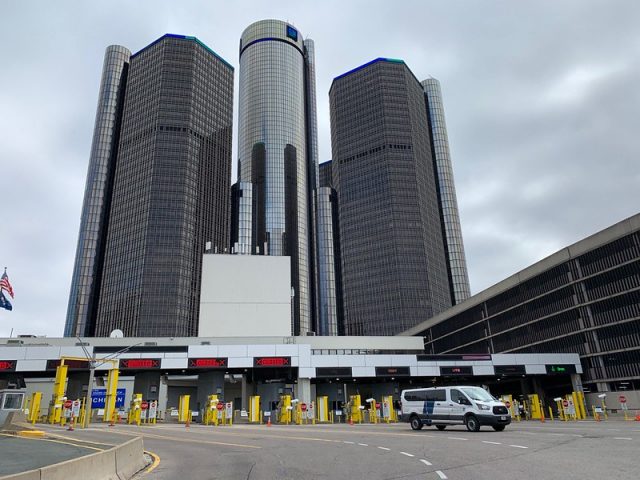
US extends travel restrictions at Canada, Mexico land borders through July 21 

Image via US Customs and Border Protection/Flickr

WASHINGTON  US land borders with Canada and Mexico will remain closed to non-essential travel until at least July 21, the US Homeland Security Department said on Sunday. 

The 30-day extension came after Canada announced its own extension on Friday of the requirements that were set to expire on Monday and have been in place since March 2020 because of the coronavirus pandemic. 

The US government held working-group meetings with Canada and Mexico on the travel restrictions last week and plans to hold meetings about every two weeks, US officials told Reuters. 

Homeland Security said in a statement it noted “positive developments in recent weeks and is participating with other US agencies in the White House’s expert working groups with Canada and Mexico to identify the conditions under which restrictions may be eased safely and sustainably.” 

Some US lawmakers and border communities that have been hit hard by the restrictions have pushed to relax them ahead of the busy summer travel season. 

Canada is also under pressure from companies and the tourism industry to ease the ban, which was imposed to help contain the spread of the coronavirus and has been renewed on a monthly basis since March 2020. 

Canadian Prime Minister Justin Trudeau stood firm, saying last week the border would stay largely shut until 75% of Canadians had received the first of a two-dose coronavirus vaccine and 20% had been given both shots. 

In talks between the United States and Canada last week, the US government did not endorse setting a specific threshold to trigger lifting the restrictions, a person briefed on the talks said. 

“The inability of the US and Canadian governments to reach an agreement on alleviating border restrictions … is simply unacceptable,” Democratic Representative Brian Higgins and Republican Representative Bill Huizenga, co-chairs of the Canada-US Interparliamentary Group said on Friday. 

The United States is also holding working-group meetings on relaxing travel restrictions with the UK and the European Union, but US and airline officials said previously they did not expect the Biden administration to lift the restrictions until around July 4 at the earliest.   David Shepardson/Reuters 

Iran, world powers adjourn nuclear talks, resumption date unclear

Sonia Sevilla/CC BY-SA 3.0/Wikimedia Commons

VIENNA/DUBAI  Negotiators for Iran and six world powers on Sunday adjourned talks on reviving their 2015 nuclear deal and return to respective capitals for consultations as remaining differences still need to be overcome, officials said. 

“We are now closer than ever to an agreement but the distance that exists between us and an agreement remains and bridging it is not an easy job,” Iran’s top negotiator Abbas Araqchi told state TV from Vienna. “We will return to Tehran tonight.” 

After more than a week of negotiations in their latest round, parties to the pact wrapped up with Russia’s envoy saying no date for a resumption in negotiations had been set for now, although he suggested they could return in about 10 days. 

Negotiations have been going on in Vienna since April to work out the nature and sequencing of steps Iran and the United States must take on nuclear activities and sanctions to return to full compliance with the nuclear pact. 

Ebrahim Raisi, a hardliner and fierce critic of the West, won Iran’s presidential election on Friday and will take office in early August, replacing pragmatist Hassan Rouhani, under whose aegis the 2015 deal was struck. 

But Mr. Raisi’s rise is unlikely to disrupt Iran’s effort under Supreme Leader Ayatollah Ali Khamenei, who has final say on all major policy, to restore the nuclear pact and be rid of tough US oil and financial sanctions. 

“We have made progress this week, in this sixth round. We are closer to a deal but we are not still there. We are closer than we were one week ago but we are not still there,” Enrique Mora, the European Union political director who has coordinated the discussions, told reporters in Vienna. 

The United States under then-President Donald J. Trump left the deal in 2018, branding its terms too weak to remove the risk of Iran developing nuclear weapons potential, and reimposed sanctions on the Islamic Republic. 

Iran has since breached the deal’s strict limits on uranium enrichment, a possible path to a nuclear bomb. It has said its moves would be reversed if the United States rescinded all sanctions. 

US National Security Adviser Jake Sullivan said disagreements over how to save the deal persisted, repeating that the ultimate decision on the issue lay with Khamenei. 

“There is still a fair distance to travel on some of the key issues, including on sanctions and on the nuclear commitments that Iran has to make,” Mr. Sullivan told broadcaster ABC News. He added that the question of which sanctions on Iran should be lifted was still being discussed. 

Iranian Foreign Minister Mohammad Javad Zarif said he had edited the text of a possible deal being discussed in Austria, saying it was getting “cleaner and cleaner.” He said there was a good possibility a deal could be reached before mid-August when the current Iranian administration leaves office. 

With the talks on pause, attention will now turn to extending a separate accord between the International Atomic Energy Agency (IAEA), the UN nuclear watchdog, and Iran. That pact, expiring on June 24, aims to cushion the blow of Tehran’s decision to reduce its cooperation with the IAEA by ending extra monitoring measures introduced by the 2015 deal. 

Mr. Mora said he expected the two sides to reach that deal. 

ISRAEL: DON’T NEGOTIATE WITH ‘BRUTAL’ NEW GOVERNMENT 

The Islamic Republic’s arch-enemy, Israel, on Sunday condemned Mr. Raisi’s election. New Prime Minister Naftali Bennett said it would be a “regime of brutal hangmen” with which world powers should not negotiate a new nuclear accord. 

“(His) election is, I would say, the last chance for world powers to wake up before returning to the nuclear agreement, and understand who they are doing business with,” Mr. Bennett said in a statement. 

Mr. Raisi has never publicly addressed allegations around his role in what the United States and human rights groups have called the extrajudicial executions of thousands of political prisoners in 1988. He is under US sanctions over that past. 

Mr. Bennett, a nationalist atop a cross-partisan coalition, has hewed to the opposition of conservative predecessor Benjamin Netanyahu to the nuclear deal, whose caps on projects with atomic bomb-making potential Israel deemed too lax. 

Iran has always denied seeking nuclear weapons. 

CREDIT FOR A DEAL 

Mr. Raisi, like Mr. Khamenei, has supported the nuclear talks as a route to cancelling US sanctions that have laid waste to the Islamic Republic’s oil-based economy and dramatically worsened economic hardships, stirring widespread discontent. 

The new government will hope to claim credit for any economic benefits arising from the revival of the accord, something the outgoing administration might clinch before Mr. Raisi takes office. 

“If the deal is finalized when Rouhani is (still) president, Raisi cannot be criticized by hardline supporters for giving concessions to the West,” a government official who is close to the talks told Reuters. “Also Rouhani, not Raisi, will be blamed for any future problems regarding the deal.” 

Several Iranian officials told Reuters that the country’s current negotiating team would remain intact at least for a few months under Mr. Raisi’s presidency. 

“Who Raisi picks as his foreign minister will reveal the new government’s foreign policy approach,” said another official. “But the establishment’s nuclear policy is not decided by the government” but by Mr. Khamenei.  Francois Murphy and Parisa Hafezi/Reuters 

UK launches plan to capitalize on science and technology breakthroughs

UNSPLASH

LONDON  Prime Minister Boris Johnson said he would lead a new drive to capitalize on scientific and technological breakthroughs made in Britain with a program to direct research into areas that will benefit the public good. 

Mr. Johnson will chair a group set up to “provide strategic direction on the use of science and technology as the tools to tackle great societal challenges, level up across the country and boost prosperity around the world,” his office said. 

Seeking strategic gains for post-Brexit Britain, the plan looks to build on the success of the country’s coronavirus vaccine program and identify other areas where the research and development sector can benefit from government funding. 

“From discovery to delivery, our vaccination program has proven what the UK can achieve at scale and at speed,” Mr. Johnson said in a statement. 

“With the right direction, pace and backing, we can breathe life into many more scientific and technological breakthroughs that transform the lives of people across the UK and the world.” 

The government’s Chief Scientific Adviser, Patrick Vallance, will head a new public body whose role will be to implement the strategy. 

Beyond coronavirus disease 2019 (COVID-19) vaccines and treatments, Britain wants to use its research capability to secure some of the economic benefits of a shift toward greener technology, although competition from other nations is intense. 

The majority of research and development spending in Britain is funded by the private sector, and overall investment in 2018 was 1.731% of GDP according to Organization for Economic Co-operation and Development (OECD) data  below the 2.419% OECD average. 

Since leaving the European Union, the government has announced plans to increase its spending on R&D. 

It plans to invest 14.9 billion pounds ($20.58 billion) in 2021/22, rising to 22 billion by 2024/25, and has committed to raise total R&D investment to 2.4% of economic output by 2027. — Reuters 

[B-SIDE Podcast] Sweet dreams, Philippines: how to deal with ‘coronasomnia’ and sleep better at night

Follow us on Spotify BusinessWorld B-Side

The Philippines isn’t sleeping well. Because of the coronavirus pandemic, we’re spending hours in bed, doomscrolling on Twitter, reading endless news articles about virus mutations and vaccine delays.  

The anxiety-inducing pandemic has done no favors to a country that has a robust business process outsourcing industry that operates in a different time zone. “We have a lot of shift workers that usually go against their internal clock,” said Dr. Jimmy V. Chang, head of the Comprehensive Sleep Disorders Center of St. Luke’s Medical Center, Quezon City, and chair of the Philippine Academy of Sleep Surgery.  

In this B-Side episode, Dr. Chang speaks with BusinessWorld reporter Patricia B. Mirasol about “coronasomnia” and how to sleep better at night. 

TAKEAWAYS 

Sleep is not a luxury. It is a necessity. 

Sleep is one of the requirements for survival, and is just as important as food and water. According to a May 2018 Mayo Clinic article, sleep deprivation increases can negatively affect one’s mood, temperament, and ability to focus. 

“A person cannot survive without sleep because it helps cope with the stress of being awake,” said Dr. Chang. “If you’re trying to fix your sleep and all else fails, please seek professional help.” Some patients, he said, attempt to fix their sleep-related issues but end up making things worse, because they don’t know the underlying reason behind them.  

The past year has brought about coronasomnia and pandemic dreams.  

The incidence of insomnia in the Philippines is not as high as other Asian countries, Dr. Chang said. The Center has seen an increasing trend in sleep difficulties this pandemic, however.  

Three factors contribute to insomnia, Dr. Chang said: predisposing factors (like personalities prone to developing insomnia); precipitating factors (like the fear of getting sick); and perpetuating factors (like disrupted routines).  

“We have a lot of time to spend in bed now. Doing things in bed apart from sleeping, such as watching TV, can disrupt your sleep,” he added. “We do see an increasing trend in sleep difficulties this pandemic.”  

This COVID-induced phenomenon is not unique to the Philippines. In the US, a survey conducted between March 11 to 15 by the American Academy of Sleep Medicine (AASM) revealed almost 60% of Americans are experiencing insomnia related to COVID-19.  

Moreover, Elizaveta Solomonova and Rebecca Robillard, of McGill University and the Royal’s Institute of Mental Health Research in Ottawa, respectively, conducted a survey of 968 people in North America and determined that 37% of individuals experienced “pandemic dreams” with clear connections to life during COVID-19. Many of these dreams, according to the survey, were marked by themes of not completing tasks (such as losing control of a vehicle) and being threatened by others.  

Lack of sleep affects the immune system, increasing the risks for illnesses. 

Proper duration and quality of sleep strengthens the immune system, Dr. Chang said. It helps us battle diseases like COVID infections and other viral infections. “It also enhances our response to vaccines, because it enhances the way our bodies generate responses to the vaccine that was given,” he added.  

Adults require between 79 hours of sleep daily, said Dr. Chang, with some being able to function with only 6 hours of sleep. Sleeping less than seven hours a night, added the same Mayo Clinic article, is associated with weight gain, diabetes, high blood pressure, and depression, among other health risks. Lack of sleep may furthermore lead to increased body aches and pains and impaired performance at work.  

Asians, he added, have a predilection for snoring and other sleeping disorders. 

“Asians have a more petite structural frame, as compared to Western populations, who have bigger jaws,” Dr. Chang said. “Most Asians have small chins, which makes our airways narrow as compared to other races… [This means] Filipinos are prone to having obstructive sleep apnea as well.” 

Don’t force yourself to sleep when you’re not sleepy. 

If you’re tossing and turning in bed because of pandemic-induced anxiety, said Dr. Chang, the worst thing you can do is to force yourself to sleep when you’re not sleepy. Among the tips he shared for getting a great night’s sleep, pandemic or no pandemic, is to set a fixed bedtime schedule, get sunlight exposure in the morning, and limit naps during the daytime. 

Additionally, getting a mattress or pillow that helps snoring patients fall asleep on their side allows for better breathing and deeper sleep. 

If nothing works, see a doctor. 

“If you’re trying to fix your sleep and all else fails, please seek professional help,” said Dr. Chang. 

St. Luke’s Comprehensive Sleep Disorders Center offers individualized treatments for more than 80 types of sleep disorders, including insomnia (a condition characterized by difficulty in sleeping), sleep apnea (a condition when breathing repeatedly stops and starts during sleep), and restless legs syndrome (a condition that causes an uncontrollable urge to move one’s legs, especially at night).  

The Center is composed of several specialists, including pulmonologists, ENTs, pediatric specialists, and psychologists who offer cognitive behavioral therapy for insomnia. 

“We’re here to help you,” said Dr. Chang. “Some patients try to fix their sleep by themselves not knowing that what they’re doing is actually making it worse.” 


Recorded remotely on June 14. Produced by Paolo L. Lopez and Sam L. Marcelo.

Follow us on Spotify BusinessWorld B-Side

Medical Doctors, Inc. announces schedule of stockholders’ meeting

BSP to keep policy settings steady

PIXABAY

THE BANGKO SENTRAL ng Pilipinas (BSP) will likely keep benchmark interest rates steady on Thursday to support the “fragile” economic recovery, with inflation improving on the back of government initiatives to ease supply issues. 

A BusinessWorld poll held last week showed 14 out of 16 analysts expect the central bank to retain its key policy rate at its record low of 2% at the Monetary Board’s fourth policy meeting for this year on June 24.

Analysts said it is crucial for the BSP to retain its accommodative stance in the meantime as the economy’s rebound from the impact of the coronavirus pandemic still has a long way to go.

Analysts’ Expectations on Policy Rates (June 25)

“[T]he economy remains in recession after five straight quarters in contraction, highlighting the dire need to deliver substantial monetary support to recovery efforts. This balancing act translates to a pause, with [BSP Governor Benjamin E.] Diokno providing an accommodative stance while also refraining from trimming borrowing costs further given the above-target inflation,” ING Bank N.V. Manila Senior Economist Nicholas Antonio T. Mapa said in an e-mail.

“A calibration of rate settings at this point would derail the very fragile recovery and only delay the economy’s bounce-back,” Mr. Mapa added, noting that the BSP’s adjustments last year are still working their way through the financial system due to the lag in monetary policy transmission.

The BSP slashed benchmark rates by a cumulative 200 basis points (bps) last year. Borrowing costs have been at record lows since the Monetary Board’s last adjustment, which was a 25-bp cut in November.

Aside from keeping rates low, the central bank has also provided stimulus by freeing up liquidity via various easing measures, which have released some P2.2 trillion into the financial system.

Mr. Diokno last week said the central bank will keep its policy stance “supportive of the government’s initiatives to address the effects of the pandemic, for as long as necessary, until the economic recovery gets underway,” which he earlier noted could be in the second half of 2022.

Philippine gross domestic product (GDP) shrank by 4.2% in the first quarter. This followed the record 9.6% economic contraction logged in 2020, which was the worst in Southeast Asia.

The government is targeting GDP growth of 6% to 7% this year. However, multilateral agencies and think tanks have said the fresh surge in infections from March to April, which resulted in the reimposition of strict lockdown measures in the capital and nearby provinces, along with the slow pace of the state’s vaccination program, pose risks to this goal.

Meanwhile, inflation rose by 4.5% for the third straight month in May. While this was slower than the two-year high of 4.7% in February, it exceeded the central bank’s 2-4% target range.

Year to date, headline inflation averaged at 4.4% as of May. The BSP expects inflation for 2021 and 2022 to reach 3.9% and 2.8%, respectively, within target but quicker than the 2.6% print in 2020.

INFLATION PRESSURES EASING
“There’s been some improvement in economic activity in the Philippines over the last few weeks. Daily COVID-19 cases have moderated from the previous peak. Average non-residential mobility has also improved as the government eases some of its more restrictive lockdown measures,” HSBC Global Research economist Noelan C. Arbis said in an e-mail.

“The good news is that inflationary pressures have waned, reducing the burden on the BSP to tighten monetary policy ahead of schedule to curb runaway prices. We believe that current policy settings are accommodative enough, while the need to potentially reduce accommodation has dissipated,” Mr. Arbis added.

Government measures meant to ease inflation pressures will also support the BSP’s accommodative policy stance, Philippine National Bank Head of Research Alvin Joseph A. Arogo said.

“The improvement in the inflation path due to lower tariffs and higher quota for imported pork should reduce the pressure on the BSP to prematurely raise the reverse repurchase rate amid a fragile economy,” he said.   

In May, the government temporarily lowered applicable tariffs for pork products and raised the minimum access volume for pork imports for a year. This was in response to the higher meat prices, which was largely to blame for inflation’s surge in the past months.

Meanwhile, Colegio de San Juan de Letran Dean Emmanuel J. Lopez said the BSP Monetary Board may hike rates by 25 bps on Thursday as large economies return to normalcy following substantial progress in their vaccination programs.

This is also the case in Metro Manila as more businesses have reopened and expanded their operating capacity, he said.

“The value of the dollar vis-a-vis Philippine peso is slowly gaining ground because of the relatively normal activity in the Western economy as proven by the continued rise in the price of oil and its by-products,” Mr. Lopez noted.

For his part, Bank of the Philippine Islands Lead Economist Emilio S. Neri, Jr. said the BSP could keep borrowing costs unchanged in the meantime but increased volatility in the foreign exchange market could give it a reason to tighten “before the end of the year” as the US central bank unwinds its pandemic-driven easy monetary policy.

“There is a risk, after all, that the FOMC (Federal Open Market Committee) will announce later this year its plans to reduce its bond purchases and magnify currency volatility across the emerging markets,” Mr. Neri said.

Mr. Diokno last week said a possible source of risk to financial stability is how markets would react once the US Federal Reserve cuts its bond purchases and, eventually, hikes borrowing costs. However, he said this is “not an immediate threat” as the BSP has room to “counteract” the impact of the Fed’s tightening. — Luz Wendy T. Noble

Two projects dropped, 13 added under revised priority infrastructure list

JCOMP-FREEPIK
THE government has revised its list of flagship infrastructure projects to prioritize projects that are implementation-ready during the current administration. — JCOMP-FREEPIK

THE GOVERNMENT dropped two infrastructure projects worth P38 billion and added 13 new ones worth P523 billion under the revised list of the Duterte administration’s flagship infrastructure projects, data from the National Economic and Development Authority (NEDA) showed.

The two projects removed from the revised list approved on May 12 were the P33.98-billion ICT Capability Development and Management Program and the P4.27-billion Bohol Northeast Basin Multipurpose Dam Project.

Meanwhile, 13 projects worth P523.1 billion were added to the list, including a road, a bridge, ports, flood management projects, earthquake-proofing and digital infrastructure, and other initiatives meant to respond to the coronavirus disease 2019 (COVID-19) pandemic.

The government has revised its list of flagship infrastructure projects several times since late 2019 to prioritize projects that are implementation-ready during the current administration.

The flagship list, which is a sub-list of priority projects under the “Build, Build, Build” program, now has a total cost of P4.687 trillion with 112 projects, with 29 projects targeted to be completed before the administration ends its term next year. Meanwhile, 51 are ongoing and 28 are in the pipeline. Four were already completed.

Among the 13 new projects, the P175.66-billion Bataan-Cavite Interlink Bridge was added back to the list after being scrapped in the previous update.

The P177.86-billion Laguna Lakeshore Road Network Project and the program for Digital Transformation Centers worth P33.98 billion were also added.

Two COVID-19-related infrastructure projects were also included in the latest list: the P21.35-billion Health System Enhancement to Address and Limit COVID-19 Project and the P20.1-billion Philippines COVID-19 Emergency Response Project.

There were also three projects for flood control: the P23.5-billion first phase of the Metro Manila Flood Management Project; the P8.55-billion flood risk management project for the Cagayan De Oro river; and the P7.5-billion flood control project for the Cagayan, Tagoloan and Imus rivers.

The P15.1-billion Philippines Seismic Risk Reduction and Resilience Project, as well as the P4.5-billion project for the University of the Philippines–Philippine General Hospital Cancer Center were also added to the list.

Lastly, three ports were included as priority projects: Davao Sasa Port (P19.9 billion), Iloilo Port (P9.92 billion) and General Santos Port (P5.2 billion).

Majority or 54 out of the 112 projects in the priority list with a combined estimated cost of P2.612 trillion will be funded purely by foreign aid, while 20 projects worth P1.504 trillion were unsolicited public-private partnership projects (PPP).

Meanwhile, 25 projects worth P186.24 billion will be funded by the government via its spending program, and the rest have mixed funding of PPP, official development assistance or the national budget.

The government aims to disburse P1.02 trillion for infrastructure this year.

State spending on infrastructure rose by 45% to P58.2 billion in April from a year earlier. In the first four months, these expenses rose by 29% to P253.4 billion. — B.M. Laforga

Exporters say new BIR issuances to cripple industry

TWO ISSUANCES by the Bureau of Internal Revenue (BIR) adopting a tax refund scheme for raw materials and sweetened drinks shipped outside the country will be detrimental for the exports industry, especially for small players, the chairman of an industry group said.

“This is quite a big concern for exporters. [The new ruling of] BIR makes it more challenging, more difficult for exporters to be getting raw materials from their local source because their local source doesn’t enjoy it (tax refund) automatically,” George T. Barcelon, chairman of Philippine Exporters Confederation, Inc. (Philexport), said in a phone interview on Sunday.

The BIR last week issued Revenue Regulations (RR) No. 9-2021, which imposed a 12% value-added tax (VAT) on raw materials and packaging supplies sold by local manufacturers to exporters. These were previously taxed at zero percent.

The regulations are meant to enforce the 12% VAT on export sales of companies that had previously been exempt as mandated under the Tax Reform for Acceleration and Inclusion (TRAIN) law. The law allows the government to impose the tax once the bureau improves its VAT refund system, where claims will be processed within 90 days, and once a refund center is established.

This issuance was followed by RR 10-2021, which requires the payment of excise tax on sweetened beverages for export upon their removal from production plants, only giving them the option to apply for tax credit or refund, or avail of the product replenishment scheme.

Marissa O. Cabreros, BIR deputy commissioner, said on Sunday RR 10-2021 is meant to “ensure that there is no diversion of what was declared for exportation into the domestic market for domestic consumption.”

All sweetened beverages for export will now be subject to excise tax, while only companies that can present documents that these products have been exported can avail of the tax exemption via the refund scheme, Ms. Cabreros said.

Mr. Barcelon said imposing a tax refund scheme, as opposed to the previous system where companies availed of the zero-percent tax automatically, is a “big hassle” and could cause companies to source their raw materials directly from international companies instead.

He said they will appeal to the Department of Finance (DoF) to suspend these two issuances because they put the exports sector at a disadvantage.

“We would take a position that we would request the ruling be suspended or should not be applied, ’yung dalawa na ’yan… We’ll have to appeal to the DoF, then the BIR and Customs will just follow whatever that is set up,” Mr. Barcelon said.

“That is a disadvantage to the local indirect manufacturers,” he added.

He also noted that these new rules came at a time when local exporters are only starting to rebound from the impact of the coronavirus pandemic while their counterparts in larger economies like the United States are already well on their way to recovery.

These issuances will also make the country’s export sector less competitive globally, he warned.

“Also, once you go through the bureaucratic process, small businesses are at a disadvantage since they are short-staffed and quarantine requirements are still in place. That is troublesome,” Mr. Barcelon said in a mix of Filipino and English.

Exporters are likewise at a disadvantage because of the peso’s strength versus the dollar as this makes exported goods more expensive abroad and narrows their margin, he added.

The peso has ranged around P47-48 versus the greenback since the pandemic started. Prior to the crisis, the local currency stayed above the P50-a-dollar mark.

The country’s total external trade in goods — or the sum of merchandise exports and imports — stood at $14.16 billion in April, more than double the $6.83 billion in the same month last year, Philippine Statistics Authority (PSA) data showed.

Merchandise exports during the month went up by 72.1% year on year to $5.71 billion, compared with a revised 33.3% expansion in March and a 41.3% decline in April 2020.

Meanwhile, merchandise imports grew by 140.9% to $8.45 billion versus the 22% year-on-year expansion in March and the 62.9% decline in April last year.

The trade deficit stood at $2.73 billion in April. This was a tad smaller than the $2.75-billion shortfall in March, but was bigger than the $187.10-million gap in April 2020.

Year to date, the trade balance widened to a $11.09-billion deficit, from $8.64-billion trade gap in 2020’s comparable four months.

For the same four-month period, exports and imports grew by an annual 19% (to $23.37 billion) and 21.9% (to $34.46 billion), respectively. These surpassed the Development Budget Coordination Committee’s revised growth targets for exports and imports at 8% and 12% for the year. — Beatrice M. Laforga

LGUs urged to build capacity amid devolution plans

LOCAL GOVERNMENT UNITS (LGU) need to build up data management and planning capacities as they absorb the basic services functions of the National Government, panelists at a virtual event on Philippine competitiveness said.

President Rodrigo R. Duterte recently signed Executive Order No. 138 tasking government agencies to transfer several functions to local government units by 2024.

International Labor Organization Philippines Country Director Khalid Hassan said there are different data management processes among different LGUs instead of a centralized system.

“Some of the LGUs are lacking capacities of micro-planning… Decentralization requires a lot of training, a lot of capacity building,” he said at the event organized by the Asian Institute of Management.

Financial services and improved infrastructure will be needed as more jobs are created in rural areas, he added.

“Great step, but a lot of planning, a lot of support will be needed in this process. Capacities have to be made at local government units.”

Ateneo de Manila University Center for Economic Research and Development Associate Director Ser Percival Peña-Reyes in the same event said that as this decentralization happens, national and local interests should be aligned.

“What would be the delineation of functions? What would be the division of labor? We have to spell that out clearly at the outset.”

Chris Nelson, executive director of the British Chamber of Commerce of the Philippines, for his part, said the devolution is both positive and negative. He credits LGUs that have actively rolled out coronavirus disease 2019 (COVID-19) vaccines.

“However — if I come back to the pandemic and the response — we need a national approach,” Mr. Nelson said. Citing the unified European digital passport as an example, he said some pandemic-related measures need national solutions.

Differences among LGU interpretations of national guidelines at the start of the pandemic had caused disruptions among industries, he added.

Meanwhile, a public sector workers union had said the devolution would displace civil servants, calling the order “anti-employee.”

“Its provisions for personnel to be affected by this order are limited, demeaning and its separation/retirement packages have no real funding,” the Confederation for Unity, Recognition, and Advancement of Government Employees (COURAGE) said.

The Philippines slipped seven spots to 52nd out of 64 countries in an annual global competitiveness report from Switzerland-based business school International Institute for Management Development. The country saw the steepest decline in Asia after its economic performance slumped amid the pandemic. — Jenina P. Ibañez

Latest REIT offerings highlight office spaces

By Keren Concepcion G. Valmonte

TWO more companies are gearing up for the listing of their real estate investment trusts (REITs), both of which highlight office spaces in their portfolio when many organizations are adopting work-from-home measures and hybrid work is gaining traction.

Filinvest Land, Inc. (FLI) through subsidiary Cyberzone Properties, Inc. filed its registration statement for a REIT initial public offering (IPO) in March. Last week, Megaworld Corp. also filed with regulators for the listing of its MREIT, Inc.

“They are offering up properties which generate income similar to the first two REIT listings which is office leasing due to their consistency to generate stable revenues and the fact that it is much easier to manage than other commercial properties,” AAA Southeast Equities, Inc. Research Head Christopher John Mangun said in an e-mail on Friday.

“Some have POGO (Philippine Offshore Gaming Operators) exposure which can have its own risk,” COL Financial Group, Inc. Chief Technical Analyst Juanis G. Barredo said in a Viber message on Friday.

FLI’s REIT portfolio includes 16 office buildings in Silicon Valley-inspired Northgate Cyberzone and one office tower in Cebu Cyberzone, majority of which is said to be occupied by multinational BPO (business process outsourcing) companies.

A mere 8.8% is occupied by traditional and retail tenants, while POGO tenants make up for 2.8%, Filinvest said.

Meanwhile, Megaworld’s MREIT will include 10 key office assets, namely: 1800 Eastwood Avenue, 1880 Eastwood Avenue, E-Commerce Plaza, One World Square, Two World Square, Three World Square, 8/10 Upper McKinley, 18/20 Upper McKinley, One Techno Place, and Richmonde Tower, where Richmonde Hotel Iloilo is located.

MREIT’s building tenants are also said to be mostly BPO companies, with lease contracts between five to 10 years. Megaworld envisions the REIT listing to be the largest office REIT in the Philippines, and eventually in Southeast Asia.

“Hybrid work-from-home arrangements and the rise of shared-office or co-working spaces may be a signal that the office leasing industry has peaked,” Mr. Mangun said. “We were seeing this even before the pandemic which is why companies were more comfortable offering these properties.”

It all comes down to dividend-yield, analysts said.

“If the yield is 5% and above as in the ASEAN region and expansion of assets in the REIT is readily accretive to the yield or cash dividend then this will be attractive to investors rather than create uncertainties at [these] times through construction of buildings,” Diversified Securities, Inc. Equity Trader Aniceto K. Pangan said in a text message on Friday.

“We’re looking at giving out 100% of the NOI (net operating income),” Filinvest Land President Josephine Gotianun-Yap said, adding that they are looking at offering the mid-five percent area.

Shares of Filinvest’s REIT will be offered at P8.30 at most. Ms. Gotianun-Yap also said they will look into infusing more properties into the portfolio once these reaches the criteria of REIT guidelines.

Meanwhile, Megaworld’s REIT is looking at a dividend of 4.1% for year ending June 2022 and 4.5% by June 2023 based on its forecast earnings. It has a maximum price of P22 per share.

COL Financial Group’s Mr. Barredo said that yields would have to be kept attractive.

“Investors will have to make decision based on the quality of the REIT and their yield — if lower than 5 to 4% — it may be lukewarm unless rates fall further,” Mr. Barredo said.

It is believed that the timing for these upcoming listings is better, factoring in last year’s performance in their valuations.

“More and more investors are getting comfortable with the new instrument which is attracting more companies to consider this fund-raising activity,” Mr. Mangun said.

“I think there will be more demand once companies offer up other types of income-generating properties like retail malls, industrial [such as] warehousing, cold-storage, terminals or in hospitality (like) hotels, resorts, events venues, theme parks),” he added.