Home Blog Page 7914

Local shares inch higher on last-minute buying
REUTERS

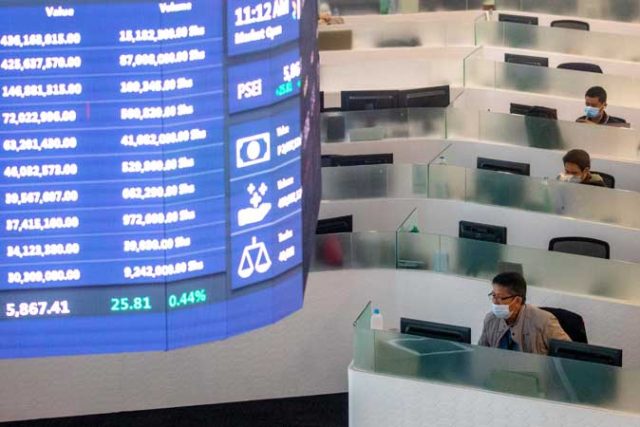
SHARES started the week in the green on last-minute buying ahead of the announcement of new quarantine restrictions, which was scheduled to happen after the market’s close on Monday.

The Philippine Stock Exchange index (PSEi) inched up by 9.70 points or 0.14% to close at 6,917.49 on Monday, while the all shares index went up by 16.71 points or 0.4% to 4,191.36.

Philstocks Financial, Inc. Senior Research Analyst Japhet Louis O. Tantiangco said last-minute buying boosted the index.

“Monday’s gains may also be reflective of the optimistic anticipation of investors with regard to the government’s decision on the quarantine classifications of the NCR (National Capital Region) Plus and MECQ (modified enhanced community quarantine) placed areas in the country after June 15,” Mr. Tantiangco said in a Viber message.

The Palace was set to announce the quarantine classification of Metro Manila and nearby provinces of Bulacan, Cavite, Laguna, and Rizal on Monday evening as current restrictions are only in effect until Tuesday, June 15.

“The PSEi ended slightly higher but mainly flat as losses on blue chip property and holding firms that were up last week were offset by gains in other issues that have not rallied as much within the same sectors,” AAA Southeast Equities, Inc. Research Head Christopher John Mangun said in an e-mail.

Sectoral indices were split on Monday. Financials gained 19.89 points or 1.35% to close at 1,488.08; services went up by 17.92 points or 1.16% to 1,560.46; and industrials improved by 69.03 points or 0.74% to finish at 9,371.43.

Meanwhile, mining and oil lost 57.47 points or 0.6% to 9,400.08; property declined by 20.15 points or 0.58% to end at 3,403.21; and holding firms shed 23.68 points or 0.34% to 6,935.32.

Value turnover increased to P6.32 billion with 3.93 billion shares switching hands on Monday, from the P5.76 billion with 4.13 billion issues traded on Friday.

Advancers outnumbered decliners, 117 versus 91, while 54 names closed unchanged.

Foreigners turned buyers anew with P20.36 million in net purchases on Monday from the P155.36 million in net outflows seen on Friday.

Philstocks Financial’s Mr. Tantiangco said he expects selling pressure to last until Tuesday.

“However, if… we’ll see easing of restrictions, primarily in the NCR Plus area, then we may see positive sentiment in [today’s] trading which could overshadow the selling pressures leading to an extension of the market’s gains,” Mr. Tantiangco said.

“The PSEi may continue higher and break above its major resistance between 6,950 and 7,000 as investors hold on to positions and gain more confidence in the economic recovery,” AAA Southeast Equities’ Mr. Mangun said.

“Hopefully, as COVID-19 (coronavirus disease 2019) is properly addressed and improved in the coming year… we will see a long-term reversal in the market later because the fundamentals will catch up,” Summit Securities, Inc. President Harry G. Liu added. — Keren Concepcion G. Valmonte

Peso down ahead of decision on quarantine measures

BW FILE PHOTO

THE PESO depreciated versus the greenback on Monday ahead of the government’s decision on lockdown measures for the rest of the month.

The local unit ended at P47.89 per dollar on Monday, sinking by 19 centavos from its P47.70 close on Friday, data from the Bankers Association of the Philippines showed.

The peso opened Monday’s session at P47.75 per dollar. Its weakest showing was at P47.905 while its intraday best was at P47.74 against the greenback.

Dollars traded hit $1.001 billion yesterday, climbing from the $684.79 million seen on Friday.

The peso weakened against the dollar ahead of Malacañang’s announcement of quarantine measures for the rest of June, which was scheduled to happen after the market’s close.

“The peso was weaker ahead of the possible easing of the quarantine classification alongside with additional measures to reopen the economy that could lead to faster recovery for imports as well,” Mr. Ricafort said in a text message.

President Rodrigo R. Duterte was scheduled to address the nation on Monday night and was expected to announce quarantine measures for the country for the rest of the month. Metro Manila and its adjacent provinces are under general community quarantine with heightened restrictions until June 15.

Meanwhile, a trader attributed the local unit’s depreciation to safe-haven demand for the dollar following news on the proposed infrastructure spending plan in the United States.

“The peso depreciated after a bipartisan group in the US Senate reportedly agreed to a consensus concerning the US infrastructure spending bill,” the trader said in an email.

Reuters reported that a bipartisan group of 10 Senate moderates reached a deal for a five-year infrastructure plan that would cost $974 billion, including new spending worth $579 billion. This deal is smaller than the $1.7-trillion proposal of US President Joseph R. Biden.

For today, Mr. Ricafort gave a forecast range of P47.80 to P47.95 per dollar, while the trader expects the local unit to move within the P47.80 to P48. — LWTN with Reuters

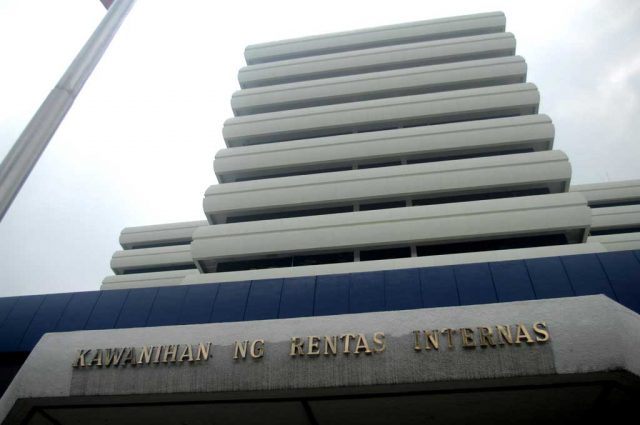
BIR awaiting Duterte’s signature on estate tax amnesty extension

BW FILE PHOTO

THE BUREAU of Internal Revenue (BIR) said it is waiting for President Rodrigo R. Duterte to sign a bill that will extend the validity of the estate tax amnesty program for another two years, with the original program set to end Monday.

BIR Deputy Commissioner Arnel SD. Guballa said in a message to reporters that the bill granting the extension is currently before Mr. Duterte for signature.

The House of Representatives adopted late last month Senate Bill 2208, which aims to extend the estate tax amnesty by another two years, to fast-track the process and ensure the measure’s prompt dispatch to Malacañang.

The bill will amend Republic Act 11213 or the Tax Amnesty Act of 2019, moving the deadline for amnesty applications to June 14, 2023.

The program allows taxpayers to settle their unpaid estate taxes on estates inherited as of the end of 2017.

Finance Secretary Carlos G. Dominguez III did not respond when asked to clarify the scenarios for a delayed signing.

Malacañang also did not respond to queries about the bill’s status.

Mr. Guballa said the agency is still compiling data on the results of the program and was not able to provide an updated estimate of the revenue generated from the amnesty.

The bureau had reported a take of P1.58 billion as of December.

Aside from the estate tax amnesty, the government also has an ongoing amnesty program for delinquent accounts, giving taxpayers an opportunity to settle their outstanding obligations and close their delinquency assessment cases in the years up to 2017.

The BIR had collected P3.544 billion in revenue from delinquent accounts as of December.

The two tax amnesty programs are among the revenue-generating measures authorized by the comprehensive tax reform program.

The Department of Finance (DoF) had forecast the potential for the amnesty on delinquent accounts to yield up to P21 billion in collections, with another P6 billion generated by the estate tax amnesty.

The DoF has said there were 18 tax amnesty programs implemented between 1972 and 2008, with the last round yielding P4.913 billion in collections. — Beatrice M. Laforga

House panel hopes to pass tax bill for private schools by end of Q3

The House Committee on Ways and Means said it will seek to approve a bill clearing up the ambiguity surrounding the eligibility of private schools to a 1% tax rate before the school year begins.

“We wish to settle the matter before the school year begins in June to August,” Jose Ma. Clemente S. Salceda, the committee’s chairman, said about his House Bill 9596.

The bill amends Section 27(B) of the National Internal Revenue Code of 1997, which would preclude the Bureau of Internal Revenue (BIR) from interpreting the CREATE law in a way that rules out private schools’ entitlement to the reduced tax rate.

Educational associations, headed by the Coordinating Council of Private Educational Associations, expressed their support for the bill.

The association welcomed “the relief that we need under the CREATE Act, so that we may be empowered to perform our role… in delivering quality education,” its Managing Director Joseph Noel M. Estrada said during the hearing.

Finance Associate Secretary Dakila E. Napao and Bureau of Internal Revenue (BIR) Deputy Commissioner Marissa O. Cabreros expressed support for the bill, but requested the addition of a clause denying schools the right to a refund, which the committee approved.

Mr. Salceda said forcing private schools to pay the regular corporate tax rate of 25%, as the BIR contends, will “force… private education to shed another 21,661 jobs due to the tax rate adjustment alone.”

The BIR interprets the CREATE tax relief to apply only to non-profits, rendering many private schools ineligible.

Tax relief until 2023 “would allow these schools to save an equivalent of 3.43% of compensation expenses, which could help them rehire at least 12,996 teachers at the start of the next school year,” he added. 

Speaker Lord Allan Jay Q. Velasco supports the bill, it emerged during the proceedings.

Senate Bill 2272, that chamber’s counterpart bill, was filed by Senator Juan Edgardo M. Angara on June 3.

On April 9, the BIR issued Revenue Regulation 5-2021 outlining its interpretation of the CREATE law, which would leave most private schools to pay 25%. — Bianca Angelica D. Añago

PHL spending on safety nets seen smaller than emerging market average

PHILIPPINE STAR/ MIGUEL DE GUZMAN

THE PHILIPPINES is among the emerging markets that have spent little on social safety nets relative to the size of its gross domestic product (GDP), Moody’s Investors Service said in a report.

Philippine spending on social safety nets accounts for 0.7% of its GDP, similar to that of Niger and Sri Lanka, Moody’s said.

Average spending of the 28 emerging markets analyzed was 1.54% of GDP.

“Among our sample, countries with broad and well-targeted programs have been able to deploy more support during the pandemic, thus mitigating the impact on consumption and growth, and reducing credit risks associated with social discontent,” Moody’s said in a note Monday.

Moody’s said Ukraine spent 4.4% on social safety nets, the highest in the group studies, while Togo spent 0.2% to bring up the rear.

Moody’s grouped countries according to their spending programs to assess their fiscal impact. The Philippines was classified in the fourth group, which has “well targeted safety net programs but relatively low spending, which limits the effects on reducing poverty and income inequality.” Other Asian countries within the category are Bangladesh, Malaysia, and Thailand.

“For governments with fiscal space and relatively moderate debt burdens, expanding the reach of social programs to reduce poverty and income inequality can support their credit profiles by decreasing social risks,” Moody’s said.

In July, Moody’s maintained its credit rating for the Philippines at “Baa2” with a stable outlook, citing the country’s strong fiscal position in recent years, which it said will help shield it from the impact of the coronavirus crisis. It noted, however, that policy reforms could take a back seat due to the pandemic. — Luz Wendy T. Noble

Net metering cap eyed for removal to boost RE investment

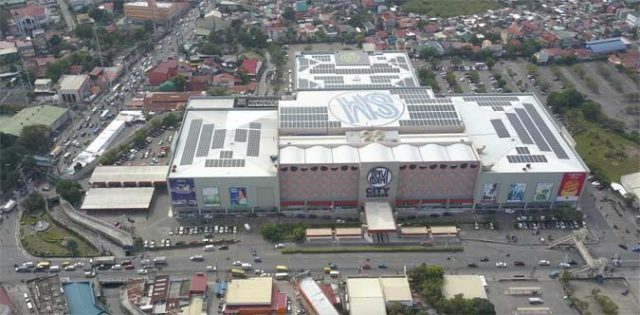
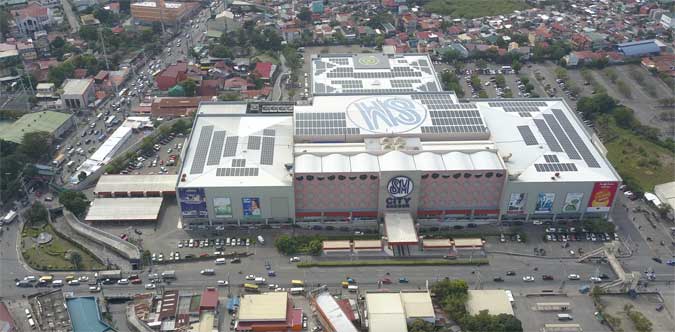
Over 3,100 solar panels are seen on the rooftop of SM City Bacoor in Cavite. Company handout
COMPANY HANDOUT

SENATOR Sherwin T. Gatchalian, who chairs the chamber’s energy committee, has filed a bill seeking to remove the 100-kilowatt (kW) ceiling on generation facilities which can participate in the net metering program, in a bid to encourage more investment in renewable energy (RE).

Net metering is authorized by the RE Act of 2008, allowing participants with their own RE facilities to feed power back onto the grid and have their contributions to the common pool of power be deducted from their consumption, such that their consumption is said to have been metered on a net basis.

Senate Bill No. 2219, which Mr. Gatchalian filed last month, said removing the cap will allow more end-users to participate in net metering.

In a separate statement Monday, Mr. Gatchalian also said more establishments, industrial buildings, and government offices will be able to join the program with caps removed, thereby encouraging investment in facilities like solar rooftops.

“Rooftops are as good as real estate because you can install panels there and generate revenue… But because of the limits of the law, this cannot be achieved,” Mr. Gatchalian said.

According to a reference guide on the RE law published in 2013, a 100-kW capacity limit was imposed because the law defined net metering as a “system appropriate for small generation entities which do not exceed 100 kW in capacity, each.”

Asked to comment, the Energy Regulatory Commission (ERC) said it backed the goal of opening up the program to more participants.

“We support the objective of the bill as it seeks to allow more end users to participate in the program,” ERC Commissioner-in-Charge Floresinda G. Baldo-Digal told BusinessWorld Monday.

Former National Renewable Energy Board Chairperson Monalisa C. Dimalanta said that she was “generally supportive” of the measure.

“(The removal of the cap) allows large customers to also explore RE to augment their own supply, self-providing in instances when the grid supply is not available. There is space on rooftops of economic zone locators that can immediately be made available not only if the cap is removed but also if permitting becomes easier to navigate,” she told BusinessWorld Monday.

“All in all, it promotes greater empowerment for our consumers,” she added. — Angelica Y. Yang

IEMOP plans to establish reserves market

THE Independent Electricity Market Operator of the Philippines (IEMOP) said it is looking at establishing a market for ancillary services (AS) to attract investment and ensure transparency in the system.

IEMOP Spokesperson Andrea May T. Caguete said that the planned reserves market aims to encourage investors to build facilities which address AS requirements, adding that phase one of the project is scheduled to be implemented this year.

“If we implement a reserve market, our generating (companies) will be incentivized to put up facilities in order to cater to our AS requirement,” Ms. Caguete said during a virtual briefing Monday.

Once in place, the market will help encourage more competition, she added.

IEMOP Head of Corporate Strategy and Communications Isidro E. Cacho, Jr. said such a market “can provide some transparency.”

“Right now, all the reserves are contracted under firm or non-firm (arrangements). We don’t have any information on that,” he said, noting that the presence of the market can shed more light on the contracting of reserves.

Mr. Cacho said that the IEMOP is working on a price determination method covering the pricing and cost recovery aspects of the reserves market. He added that IEMOP is proposing a single-buyer mechanism, with the grid operator in charge of procuring the reserves instead of an energy market made up of buyers and sellers.

“If the reserves market is in place and if the system lacks reserves, the (electricity) spot market can augment the supply required under the Philippine Grid Code,” he added.

During the briefing, IEMOP also gave updates on its limited live dispatch operations (LLDO), the completion of which brought it closer to its goal of launching the enhanced wholesale electricity spot market design and operations (EWDO).

EWDO seeks to implement various rule changes to the WESM, which will reduce the time between scheduling and dispatch of power, among others.

“We proceeded with the execution of the LLDO on May 29 and it lasted for a week until June 4, 2021… (During the) LLDO, we asked generators to implement their five-minute dispatch schedules,” IEMOP Manager of Operations Planning and Modeling Edward I. Olmedo said.

He added that IEMOP has submitted its LLDO report to the Department of Energy and is currently waiting for the department to clear the EWDO for live operations this month. — Angelica Y. Yang

Sign of the times: Intensifying taxpayers’ use of e-signatures

The Philippines is celebrating its 123rd year of independence. We have been enjoying our freedom for over a century and much has changed since then. For the business sector, changes have been directed towards intensifying the use of technology. Can we now say that we are moving towards freedom from the old way of doing business?

It seems that the government is indeed trying to veer away from the manual way of doing things. Even the Bureau of Internal Revenue (BIR) is keen on going digital. This year, the agency issued several regulations on the use of electronic signatures. Citing the Ease of Doing Business and the Electronic Commerce Act of 2000, the BIR issued Revenue Memorandum Circular (RMC) 29-2021 and RMC 46-2021 to address taxpayers’ concerns on the filing of BIR forms as they work from the comfort of their homes due to lockdowns after the onset of the COVID-19 pandemic.

An e-signature refers to any distinctive mark, characteristic, and/or sound in electronic form, representing the identity of a person and attached to or logically associated with the form/certificate or any methodology or procedure employed or adopted by a person and executed or adopted by such person with the intention of authenticating or approving an electronic data message or document. For purposes of RMC 29-2021, an e-signature includes digital and other methods of signing electronic documents.

RMC 29-2021 was issued to lay down the guidelines for the use of e-signatures on certain BIR forms/certificates. Pursuant to the RMC, withholding agents or their duly authorized representatives are given the option to use e-signatures for the following BIR forms/certificates:

1. BIR Form 2304 — Certificate of Income Payment not Subject to Withholding Tax (Excluding Compensation Income);

2. BIR Form 2306 — Certificate of Final Tax Withheld at Source;

3. BIR Form 2307 — Certificate of Creditable Tax Withheld at Source; and

4. BIR Form 2316 — Certificate of Compensation Payment/Tax Withheld.

In addition to the above-mentioned forms/certificates, RMC 46-2021 was issued which allows taxpayers to use electronic or digital signatures in the filing of Annual Income Tax Return (AITR). The e-signature or digital signature shall be deemed equivalent to the actual signature or “wet signature” for filing purposes.

On a related note, RMC 29-2021 cited the legal basis for the recognition of the e-signature under Section 8 of the E-commerce Act. Under this provision, an electronic signature on the electronic document is deemed equivalent to the signature of a person on a written document if that signature is proved by showing that a prescribed procedure, not alterable by the parties interested in the electronic document, existed under which —

(a) A method is used to identify the party sought to be bound and to indicate said party’s access to the electronic document necessary for his consent or approval through the electronic signature;

(b) The method is reliable and appropriate for the purpose for which the electronic document was generated or communicated, in light of all circumstances, including any relevant agreement;

(c) It is necessary for the party sought to be bound, in or order to proceed further with the transaction, to have executed or provided the electronic signature; and

(d) The other party is authorized and enabled to verify the electronic signature and to make the decision to proceed with the transaction authenticated by the same.

The above provisions put the taxpayers on the lookout regarding their internal procedures in attaching e-signatures or in performing similar methods on documents they intend to submit or file before the BIR. Taxpayers should ensure the credibility of all “e-signed” documents. Control and monitoring procedures must be installed to guarantee the integrity of each e-signed document and to make it easier to prove or disprove whether a particular document or correspondence was electronically signed legitimately by the authorized signatory.

The BIR issuances on e-signatures are much appreciated, and many are looking forward to subsequent issuances which would allow e-signatures to be used for other types of BIR forms and letter-correspondences with the BIR, particularly in correspondence on tax assessments or in tax refund cases. Certainly, taxpayers would not want their position or claim to be denied just because their e-signatures are not considered valid.

Under RMC 29-2021, an electronic signature includes “any” methodology or procedure employed or adopted by a person and executed or adopted by such a person with the intention of authenticating or approving an electronic data message or electronic document. As it continues to conduct dialogues with stakeholders, perhaps the BIR can expound on the coverage of “any” methodology or procedure in a bid to provide more clarity to taxpayers. This is not to limit the applicability of the law, but to serve as a guide to those who intend to maximize the use of technology in their transactions with the BIR.

I hope subsequent issuances make further clarifications to ease the apprehension of taxpayers in using e-signatures or similar methods, as filings and transmittals to the BIR are very crucial. We hope that the BIR eventually goes fully digital and maximizes the use of technology to break free from traditional procedures and to efficiently and effectively serve taxpayers.

Let’s Talk Tax is a weekly newspaper column of P&A Grant Thornton that aims to keep the public informed of various developments in taxation. This article is not intended to be a substitute for competent professional advice.


Gemmalu Molleno-Placido is a manager of the Tax Advisory & Compliance division of P&A Grant Thornton, the Philippine member firm of Grant Thornton International Ltd.

pagrantthornton@ph.gt.com

Poor Filipinos may get vaccinated soon, says Department of Health

THE GOVERNMENT will soon start vaccinating poor Filipinos against the coronavirus depending on available supplies, health authorities said on Monday.

Health Undersecretary Maria Rosario S. Vergeire said the World Health Organization had also allowed the use of vaccines obtained under a global initiative for equal access for the country’s poor population.

“This will be allowed depending on the supply,” she told an online news briefing in mixed English and Filipino.

Local governments with excess vaccine supply may vaccinate this group as early as now, Ms. Vergeire said.

Vaccines under the global initiative were originally allotted for health workers, senior citizens and seriously ill people.

Under the guidelines, local government units will coordinate with the Department of Social Welfare and Development for the list of poor Filipinos.

Additional poor populations identified and validated by local governments will be eligible for vaccination.

The government is vaccinating health frontliners, senior citizens, seriously ill people and economic frontliners.

About 6.8 million coronavirus vaccines had been given out as of June 13, according to the presidential palace.

Of the total, more than five million were first doses, while the rest were second doses, presidential spokesman Herminio “Harry” L. Roque, Jr. told a televised news briefing on Monday.

Mr. Roque said about 964,781 health workers and 471,425 senior citizens had been fully vaccinated.

About 412,246 seriously ill people and 7,020 essential workers had also completed their coronavirus shots.

Mr. Roque said the country has received about 12.7 million coronavirus vaccines.

The government last week took delivery of about 100,000 doses of Sputnik V shots from Russia and about 2.2 million doses of the vaccine made by Pfizer, Inc.

The country seeks to inoculate as many as 70 million Filipinos before the end of the year to attain herd immunity. It seeks to inoculate nine million people in the National Capital Region by late November. 

Meanwhile, Senator Panfilo M. Lacson pushed for a vaccine passport system that would allow easier entry of vaccinated people, especially returning migrant Filipino workers and foreign investors.

The senator said many returning migrants and foreign investors were reluctant to come here because of tight protocols. Returning overseas Filipino workers (OFW) might be required to be tested and then stay at home for 10 days, he said.

“Most of the time, OFWs return to the country because of an emergency. But if you are an OFW and you are required to be quarantined for 10 days, how many days of your leave will go to waste? I don’t think that makes sense,” he told the ABS-CBN News Channel.

“Our tourism sector and investment will suffer,” Mr. Lacson said. “If a potential investor who would like to come here learns of the requirements that include a swab test and staying at a quarantine facility not of his or her choice, would he or she still come?”

He asked an inter-agency task force to fine-tune protocols and ensure that these are in sync with other countries.

The government earlier cut the quarantine requirements for fully vaccinated foreign travelers to seven days.

This applies to foreigners who got vaccinated in the Philippines. Returning Filipinos who got vaccinated overseas must still undergo a 10-day quarantine at a facility and four days at home, Mr. Roque said earlier.

A person is considered fully vaccinated two or more weeks after completing his dose. — Vann Marlo M. Villegas and Kyle Aristophere T. Atienza

Rights group asks ICC to order Duterte arrest for ‘crimes vs humanity’

A HUMAN rights group has asked the International Criminal Court (ICC) in the Netherlands to order the arrest of President Rodrigo R. Duterte for alleged crimes against humanity in connection with deadly war on drugs.

In a supplementary pleading, members of Rise Up for life and for Rights asked the tribunal to detain the tough-talking leader pending his trial and investigation of the country’s human rights situation.

“The complainants stress the urgent need to open an investigation into crimes against humanity in the Philippines, and for the court thereafter to issue a warrant of arrest against respondent President Rodrigo R. Duterte,” they said.

The group also said the Justice department’s review of extrajudicial killings was neither comprehensive nor transparent. The public does not have access to its reports, it pointed out.

Justice Secretary Menardo I. Guevarra declined to comment. “All matters pertaining to the ICC are handled solely by the Department of Foreign Affairs (DFA),” he told reporters in a Viber group message.

“We respect the opinion of people who are critical of what we are seriously trying to do.”

The agency had received 52 case records from police and 107 cases from the Philippine Drug Enforcement Agency for its review, according to Mr. Guevarra’s recorded statement released by DFA on Sunday night.

Mr. Guevarra on Monday said he recorded the statement last week “for use by the DFA in the diplomatic community.”

“It was meant to be an update on the work of the review panel and on the status of the United Nations-Philippines joint program on technical cooperation on human rights,” he added. — Bianca Angelica D. Añago

Judge withdraws from senator’s drug case

OFFICE OF SEN. LEILA DE LIMA/RELEASE

A MUNTINLUPA judge has withdrawn from the drug trafficking case against one of President Rodrigo R. Duterte’s staunchest critics.

In a four-page order, Judge Liezel A. Aquiatan granted Senator Leila M. de Lima’s plea for inhibition even if it was “unfounded and totally unfair.”

Ms. De Lima sought the magistrate’s inhibition in May, accusing her of committing “blatant errors” in handling her case.

The lawmaker said Ms. Aquiatan had validated inadmissible evidence presented by government prosecutors, cherry-picked parts of the testimonies by witnesses, disregarded the testimonies of defense witnesses and added “her own versions of the narrative which were never even testified on by the incredible witnesses she chose to believe.”

Ms. Aquiatan in February junked one of Ms. De Lima’s drug cases but rejected her plea to dismiss a second case, citing evidence of the senator’s guilt. Another Muntinlupa court is hearing a third case. — Bianca Angelica D. Añago

Trade chief backs partial reopening of gyms sans safety certification 

PHILSTAR

TRADE Secretary Ramon M. Lopez is proposing a partial reopening of gyms that do not have a safety seal certification.

In a briefing on Monday, Mr. Lopez said he will request the government’s task force against the coronavirus to allow the operation of gyms at 20% capacity before they receive safety seal certifications.

Gyms and other indoor non-contact sports venues with certification are now allowed to operate up to 30% capacity in Metro Manila and neighboring regions.

Establishments that have been checked to be compliant with health safety protocols are given stickers displayed at entry points.

Mr. Lopez said his proposal will allow those waiting for inspection by the local government to resume business even at minimal capacity.

“Hopefully, this will encourage consumer confidence,” Mr. Lopez said.

Once the gyms have been certified, they will be able to reopen at 30% capacity. Establishments with safety seals, including restaurants, are allowed to increase their capacities by 10 percentage points.

Over a hundred applications for safety seals assessed by the Trade department have been denied due to non-compliance with health safety protocols, while another hundred have been approved. About 600 are still pending, Mr. Lopez said on Friday.

Safety seal inspection and certifications are divided among different government agencies. The Trade department covers various retail and repair services shops. — Jenina P. Ibañez