Home Blog Page 7806

Exporters want BIR to repeal new VAT rule

REUTERS

By Jenina P. Ibañez, Reporter

EXPORTERS and foreign chambers are calling for the repeal of the Bureau of Internal Revenue’s (BIR) tax refund scheme for raw materials shipped outside the country, which they said would cost Philippine jobs.

Industry leaders said Revenue Regulations (RR) No. 9-2021, which imposed a 12% value-added tax (VAT) on previously exempt raw materials and packaging supplies sold by local manufacturers to exporters, would weaken investor interest and cause multinational transfer to foreign suppliers.

VAT will also be imposed on outsourced services such as processing, manufacturing or repacking of goods to be exported.

Electronics exporters worry that the rule would hamper investor interest.

“(The VAT) would only be passed on to the export manufacturing companies. This will severely lower the ease of doing business and discourage investors,” Semiconductor and Electronics Industries in the Philippines, Inc. (SEIPI) President Danilo C. Lachica said in a press conference on Tuesday.

Multinationals in the Philippines would prefer to import parts from suppliers outside of the country instead of paying the costs associated with local suppliers, he said.

The sector’s revenues, as well as up to 50,000 employees, could be at risk, he said.

“Companies are going to move these orders outside, so instead of having 12% on the existing sales and — I’m exaggerating — you can likely have a situation where you have 12% on zero sales because they’re all coming from imported materials. So that kind of defeats the purpose.”

Wearables exporters, which have “razor thin margins,” make money based on the productivity of local production and services, Confederation of Wearable Exporters of the Philippines Executive Director Marites Jocson-Agoncillo said at the same event.

“The imposition of 12% VAT on locally sourced raw materials as well as on the local services such as our add-on capability to produce middle high-end products such as washing, embroidery of things that we put on the apparel — this directly cuts the profit center of the sector,” she said.

“This will drive exporters to import materials… We’ll be importing our threads, our cartons, our buttons. And (this) can marginalize the existence of the local support sectors such as the suppliers of the manufacturers of thread, button, zippers, and cartons.”

The 90-day VAT refund scheme, she added, “severely injures the companies’ cash flow.”

Melquiades L. Hernandez III, a member of the Pilipino Banana Growers and Exporters Association, also questioned the legal basis of the BIR regulation.

He said that there is a conflict between the Corporate Recovery and Tax Incentives for Enterprises (CREATE) law and the regulation, which BIR said was authorized by the Tax Reform for Acceleration and Inclusion (TRAIN) law. CREATE was passed later than TRAIN.

“CREATE law only limits but did not altogether remove the exemption or zero-rating of export-oriented registered business enterprises,” he said. According to CREATE, these businesses should still be entitled to VAT zero-rating on local goods and services purchases that are exclusively used in the registered activity, he added.

The export groups have sent letters to the BIR. Businesses could either take judicial action or take their concerns to the Senate.

“Being multinational companies, it’s always difficult to get sign offs, to actually be in a litigious state, but nevertheless I think compared to the previous issues that have come up, I think the multinational companies are more ready, willing, and able to take this up to the next level precisely because of the impact it will create… to the jobs that we have fought long and hard to preserve,” Concentrix APAC Regional General Counsel Michael Montero said.

Wearables exporters will take a different approach and reach out to the Senate instead.

Ms. Agoncillo said it would be difficult for her sector to take the same judicial path because the sector’s investors, which operate in various countries, see small margins in the Philippines and could instead decide to exit or reduce operations here.

“We’re really fighting for the existence of the industry,” she said.

Investor sentiment may be affected by Fitch’s negative outlook on PHL

PHILIPPINE STAR/ MICHAEL VARCAS

By Luz Wendy T. Noble, Reporter

INVESTOR SENTIMENT towards the Philippines may be affected after Fitch Ratings lowered its outlook on the sovereign to “negative” from “stable,” analysts said.

Fitch Ratings on Monday affirmed the Philippines’ credit rating at “BBB,” which is one notch above the minimum investment grade, but gave a negative outlook as it cited economic risks from the pandemic.

“We think this outlook revision represents a material negative surprise to investors,” Nomura Holdings, Inc. Chief ASEAN Economist Euben Paracuelles and economist Rangga Cipta said in a note on Tuesday.

With the negative outlook, Fitch may downgrade the “BBB” rating in the next 12 to 18 months.

However, economic managers insisted the Philippine economy is on track for a rebound.

“The negative outlook flags the risks that we are aware of, and the economic team will continue to exert effort to open the economy safely, manage risks from COVID-19, accelerate vaccine deployment, prudently use fiscal resources, and enact the remaining economic and fiscal reforms to further improve growth prospects,” Socioeconomic Planning Secretary Karl Kendrick T. Chua told reporters via Viber on Tuesday.

Bangko Sentral ng Pilipinas Governor Benjamin E. Diokno said the drag caused by the pandemic on the Philippine economy is expected to be “transitory.”

Investors appeared to have a knee-jerk reaction to the news. On Tuesday, the Philippine Stock Exchange index shed 118.74 points or 1.71% to close at 6,795.13, with all sectors in the red. The peso closed stronger at P50 per dollar on Tuesday from its P50.12 finish on Monday. During the session, the peso fell to P50.30, the weakest since June 2020.

“We expect near-term pressure on all financial markets as the Philippines suffers its first setback in terms of its once sterling credit rating,” ING Bank N.V. Manila Senior Economist Nicholas Antonio T. Mapa said in an e-mail.

Colegio de San Juan de Letran Graduate School Dean Emmanuel J. Lopez said the lowered outlook was expected since the economy remained in contraction since the first quarter of 2020.

“The biggest stumbling block however is how do we bring back the trust of the business community that seems to have been tainted by the existing political priorities that have divided the attention of the government,” Mr. Lopez said in an e-mail.

For Mr. Mapa, the government should take this as a signal to ramp up support for the economy as previous efforts have “fallen short of expectations.”

“The solution to this problem may be to bloat the deficit via a sizable rescue package that will jolt the economic engines back to life,” he said.

The budget deficit stood at P1.371 trillion in 2020, more than double the P660 billion shortfall in 2019. Last year’s fiscal gap widened to 7.63% of the gross domestic product (GDP) from 3.38% in 2019.

Economic managers have already rejected a P401-billion stimulus measure proposed by lawmakers. This year, the budget deficit is capped at P1.856 trillion or 9.3% of GDP.

“The government has been providing limited fiscal support measures, relative to its regional peers, even during lockdown periods. One could argue that this fiscal conservatism was partly due to the cabinet’s economic team trying to minimize ratings pressures,” Mr. Paracuelles and Mr. Cipta said.

Based on the International Monetary Fund’s policy tracker as of July 1, fiscal support in the Philippines coming from the two stimulus packages, Bayanihan I and II, was equivalent to 4.4% of the country’s gross domestic product (GDP) in 2020.

In its latest assessment, Fitch noted how the pandemic weakened the country’s fiscal metrics given its higher debt levels which is expected to go beyond the median increase for BBB-rated peers. It said an important consideration for the country’s rating will be the evolution of its fiscal deficit and debt levels and how it will balance fiscal consolidation to support economic recovery.

House Ways and Means Chair Jose Maria Clemente S. Salceda is optimistic the outlook on the Philippines will be stable again once the government completes its tax reform program.

“We should also reach for very low-hanging fruits such as the POGO (Philippine offshore gaming operators) tax regime and the e-sabong tax regime. President [Rodrigo R.] Duterte himself said that these areas can be revenue generators,” he said in a statement.

Finance Secretary Carlos G. Dominguez III has said the quicker vaccine rollout will help the economy recover faster, with fiscal consolidation expected by the time the virus is better contained and spending is normalized.

Vehicle sales up 45% in June

PHILIPPINE STAR/ MICHAEL VARCAS
The auto industry reported a 45% increase in sales in June, as mobility curbs continued to be eased in Metro Manila and nearby provinces. — PHILIPPINE STAR/ MICHAEL VARCAS

VEHICLE SALES in June jumped 45% compared with the same month last year as the auto industry continues to grapple with the impact of the pandemic.

Sales increased by 44.8% to 22,550 units in June compared with 15,578 units sold a year ago, a joint report from the Chamber of Automotive Manufacturers of the Philippines, Inc. (CAMPI) and Truck Manufacturers Association (TMA) released on Tuesday showed.

Sales in June 2020 tripled compared with the previous month as Luzon-wide lockdown restrictions eased and dealerships reopened, although sales figures remained more than 50% lower than the 31,950 units sold in June 2019.

Auto Sales

CAMPI President Rommel R. Gutierrez said in a statement that the industry has been recording double-digit year-on-year growth, but the monthly increase was “measly” at 2.2% from the 22,062 units sold in May.

“This is a respite amid the less buoyant consumer outlook for big-ticket items for the second quarter of this year according to a government survey,” he said.

“The auto industry continues to adjust to the effects of the pandemic at the same time striving to strike a balance between its contribution to the economy and keeping its stakeholders safe and healthy during these unprecedented times.”

Commercial vehicle sales went up 39.6% to 15,168 units in June compared with the same month last year, while also increasing 4.9% from the May figure.

Commercial vehicle sales accounted for two-thirds of total sales by CAMPI-TMA members for the month.

Passenger car sales went up 56.7% to 7,382 units compared with last year, but slipped 2.86% from the May figure.

For the first half, vehicle sales went up 56.1% to 132,767 units from 85,041 in the same six months last year.

Year to date, commercial vehicle sales increased 47.8% to 90,361 units, while passenger car sales rose 77.3% to 42,406 units.

Toyota Motors Philippines Corp. (TMP) continued to have the highest sales in June with 11,242 units sold or 49.85% market share.

Mitsubishi Motors Corp. followed with 2,933 units sold, with a 13.01% market share, while Suzuki Philippines, Inc. sold 1,795 units, with a 7.96% market share.

The car industry could recover to pre-pandemic sales as late as 2023, Mr. Gutierrez said earlier this year. — Jenina P. Ibañez

May NCR retail price growth fastest in over two years

THE RETAIL prices of general goods in Metro Manila grew at its fastest pace in over two years in May, according to data released by the Philippine Statistics Authority (PSA) on Tuesday.

The general retail price index (GRPI) rose at an annual rate of 2.1% in May, accelerating from the 2% print in April and 0.6% a year earlier.

This was the index’s quickest rise since logging a 2.7% year-on-year growth in April 2019.

Year to date, retail price growth in the National Capital Region (NCR) averaged 1.8% compared with 1.1% in last year’s comparable five months.

The PSA attributed the uptick in May mainly to the higher double-digit annual growth in mineral fuels, lubricants and related materials at 20.3%, from 20.2% in April 2021. These commodities account for around 4.2% of the retail basket in NCR.

Meanwhile, the indices of machinery and transport equipment and miscellaneous manufactured articles both posted a 0.4% growth in May, slightly up from 0.3% in April. These items make up 24.1% and 8.8% of the retail basket, respectively.

Bucking the trend was the slowing price growth of crude materials, inedible except fuels (1.7% from 1.9% in April) and chemicals, including animal and vegetable oils and fats (0.8% from 0.9%).

Compared with the previous month, growth in retail prices remained unchanged for the heavily weighted food index at 1.9%. Other commodities that saw steady growth rates were beverages and tobacco (6.4%) and manufactured goods classified chiefly by materials (1.0%).

“The substantial pickup in global crude oil prices appears to be clearly feeding through to retail prices, which was one of the main reasons for inflation for the month… The rest of the indices also saw modest acceleration in inflation as economic activity has picked up from the lows of last year,” ING Bank N.V. Manila Senior Economist Nicholas Antonio T. Mapa said in an e-mail.

Oil prices plummeted last year amid the ongoing coronavirus disease 2019 (COVID-19) pandemic that limited much of global economic activity during the period.

Dubai crude, a benchmark for oil transported to Asia, averaged $66.30 per barrel in May, more than double its rate a year ago. Having plunged to as low as $15-20 per barrel in April last year, Dubai crude prices have since rebounded to pre-pandemic levels at around $70-per-barrel in June.

At home, inflation so far averaged 4.4% at the national level this year following the six-month low of 4.1% in June. In Metro Manila, inflation averaged 3.8% year to date.

Despite the slowing inflation, economists noted the elevated global oil prices and the peso’s depreciation would likely contribute to inflationary pressures in the coming months.

“We can expect [the trend in the GRPI] to continue in June as energy prices stay elevated and issues on food supply remain,” Mr. Mapa said. — Lourdes O. Pilar

SMC unit plans 300-MW hydro plant in Aklan

A UNIT of SMC Global Power Holdings Corp. is planning to build a 300-megawatt (MW) pumped-storage hydro power plant in Malay, Aklan to provide the Visayas with reserve power, according to documents from the Environment department.

In its project description, Strategic Power Development Corp. said that the pumped-storage facility, which will operate along the Nabaoy and Imbaroto rivers, aims to supply “a portion of the renewable energy requirement to the Visayas grid particularly during peak hours.”

“This will also contribute to the stabilization of the Visayas grid by providing ancillary services and peaking power,” the firm added.

The Department of Environment and Natural Resources (DENR) said on its website that it would hold a public scoping for the planned facility via Zoom on July 28 as part of its environmental impact assessment process.

Strategic Power’s planned hydro project will consist of two dams or reservoirs, power waterways, and an underground powerhouse that can be reached through a 577-meter access tunnel.

The SMC Global Power wholly owned subsidiary said that the project’s construction is expected to generate employment and livelihood opportunities for locals.

It said that host communities living in the area also stand to benefit from the operations of the pumped-storage hydro plant as they will receive a portion of power sales — or one centavo per kilowatt-hour — in line with Republic Act No. 9136 or the Electric Power Industry Reform Act of 2001.

In 2014, the Energy department awarded a hydro service contract to Strategic Power, allowing it to develop the hydro facility.

SMC Global Power’s parent firm San Miguel Corp. (SMC) recently dropped “clean” coal power plant projects with a combined capacity of 1,500 MW as the firm detailed its plans to add more renewable energy in its portfolio.

Listed conglomerate San Miguel reported a first-quarter attributable net income to its parent of P9.30 billion, a reversal from its attributable net loss of P1.27 billion incurred in the same period last year as the economy slowly picked up.

Shares of San Miguel in the local bourse shed 1.10% or P1.3 to finish at P116.70 apiece on Tuesday. — Angelica Y. Yang

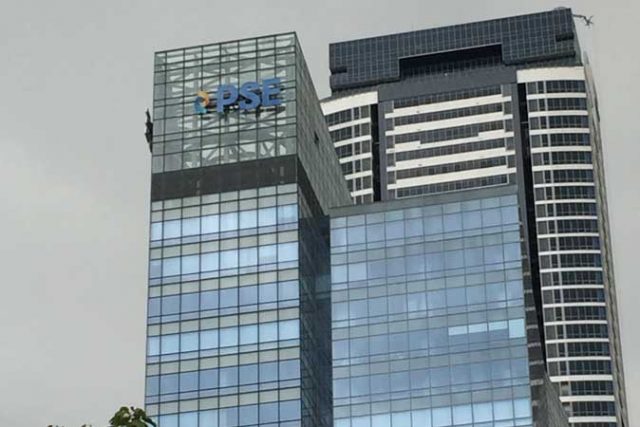
PSE to ‘clearly define’ corporate suitability rule

THE Philippine Stock Exchange (PSE) is planning to revise the suitability rule involving directors, officers, promoters, and control persons of its listing rules to include a new rule and to update some clauses.

“The proposed revisions seek to clearly define the suitability issues involving the directors, officers, or controlling stockholders of an issuer which would disqualify an issuer from listing its securities on the exchange, consistent with the exchange’s mandate to protect public interest at all times and maintain public confidence in the market,” the PSE said in a consultation paper on Tuesday.

Under the proposed rules, the PSE will be considering any conviction in the Regional Trial Court, Municipal Trial Court, Metropolitan Trial Court, Sandiganbayan, and other trial courts – whether abroad or at home — from a criminal proceeding for an offense involving moral turpitude as grounds for disqualification from listing securities.

Traffic violations and other minor offenses, however, are excluded.

The exchange will also consider as grounds for disqualification if the individual or if a company, where the individual has a stake in as a controlling stockholder or as a director/officer, was found by the commission or a similar body or a department, or by the Anti-Money Laundering Council, or by a self-regulatory organization violating its pertinent laws.

This will apply if the decision is not reversed, suspended, or vacated.

A director’s, executive officer’s, promoter’s, or control person’s “demonstrated poor track record in governance and management of another listed company” will be considered as probable grounds for disqualification from the listing of securities, the PSE proposed.

The exchange said “a serious question relating to the integrity or capability of the issuer or any of its director, executive officer, promoter or control person” is raised if any of the above happened in the past five years.

Rizal Commercial Banking Corp. Chief Economist Michael L. Ricafort views the proposed changes as a move “meant to better protect the interest of the investing public.”

“Furthermore, these are consistent with the increased adherence and compliance with ESG (environmental, social, and governance) standards in recent years, as increasingly required by regulators worldwide,” he said in a text message.

The PSE is now asking market participants to comment on the proposed revisions. — Keren Concepcion G. Valmonte

Greater role urged for independent directors

YANALYA - WWW.FREEPIK.COM

THE role of independent directors in companies or publicly listed companies are said to be important as they do not have any affiliations, therefore always putting forward the needs of the firm.

“The independent director distinguishes himself because he has no hidden agenda to support, except what is good for the company and all of its stakeholders,” Angelica H. Lavares, independent director at Metropolitan Bank & Trust Co. and Prulife UK said during the virtual forum hosted by the Management Association of the Philippines on Tuesday.

Independent directors are able to exercise their judgments freely, guided by their experiences and insights.

Panelists at the forum also said that independent directors should hold the position of chairperson of a publicly listed company.

“My view is that the chairperson of publicly listed companies should be an independent director because that enables him to remain objective in situations when there are conflicts or there are potential conflicts between parties in the organization,” SM Investments Corp. Lead Independent Director Alfredo E. Pascual said.

Former Independent Director and Board Chairman of Philippine National Bank Florencia G. Tarriela said if the chairperson is also an independent director, it allows for the company’s management to be perceived as independent “and there is credibility immediately.”

Companies are reminded to take the time to nominate and get to know who they are putting on the table to be their independent directors.

“I think a lot of companies engage in what I call supply-driven nominations,” said Roman Zyla, senior corporate governance officer and regional corporate governance lead for East Asia-Pacific at International Finance Corp.

“A company will cast a lookout on the market and say, ‘we can get that person, or that person,’ without often spending enough time reflecting on what the company’s real needs are.”

Firms should take into account what their needs are and what they are looking for in a director to help improve how their company is run, he said.

“Independence is a very subjective thing and yet, it’s a critical thing we need at boards more and more,” Mr. Zyla said. — Keren Concepcion G. Valmonte

So, tell me in 140 words or less

FREEPIK

CAST’s latest tackles an extreme situation that limits connections. Sound’s familiar?

DURING the lockdown last year, actor/director Nelsito Gomez was looking for stories about communication and connection; a story that, he said, is “an encouraging response to our reality of being forced to distance ourselves physically from our loved ones.”

When Mr. Gomez read Sam Steiner’s Lemons, Lemons, Lemons, Lemons, Lemons, he thought: “‘Two people thrown into an extreme situation that prevents them from connecting to one another? Sounds familiar!’”

The Company of Actors in Streamlined Theater (CAST) PH will stream a production of Sam Steiner’s Lemons, Lemons, Lemons, Lemons, Lemons at ticket2me.net on July 17, 24, and 31 (7 p.m.).

In the story’s dystopian society, the British government introduces the “Quietude Bill” which mandates every citizen’s speech be limited to 140 words a day. Bernadette (played by Gabby Padilla) and Oliver (Mr. Gomez) strive to handle their relationship under this rule. In a world where anyone can express anything, how effective would it be to communicate effectively by saying less?

Because of the limitations forced on theater groups by the COVID-19 pandemic, CAST PH — which specializes in staged readings (stripped down productions where the cast reads from scripts) — moves into the digital medium and streamlines experience into a theater and film hybrid. The production is done in collaboration with Stages Sessions and Menez Media, with Miguel Jimenez as executive producer and Benjamin Jimenez.

In this production, the two actors will interact in a split screen setup.

“We’re in a black box of sorts, with a carpet as our ‘playing’ area, and two actors ready to share a story, but with cameras thrown into the mix,” Mr. Gomez, who is also co-director of the play, told BusinessWorld in an e-mail.

Instead of regular face-to-face rehearsals, most of the production’s preparation was conducted virtually before meeting to shoot the play on set.

“Most of the work was done on Zoom — it’s the first time I’ve ever rehearsed for a show (and a two-hander at that) online. It had its limitations, but I think because of the nature of Lemons and how minimalistic Nel’s approach was in terms of blocking and stage design, it wasn’t too difficult when we finally transitioned to a physical set,” Ms. Padilla said of the new experience.

“…Especially for a story like Lemons where it’s about a couple figuring out how to manage their relationship through abnormal circumstances, it was a challenge for Gabby and I to develop chemistry on Zoom,” Mr. Gomez said. “But when we finally saw each other in person, it was like being freed from some cyber prison, and we could finally sync our performances and connect in a way that the play calls for.”

With a story that tackles the value of free speech, the lead actors hope that audience realizes the power of communication and silence.

“Being heard and being able to speak up is both a privilege and a responsibility. There is power in words and even silence can be political,” Ms. Padilla said.

For Mr. Gomez, words carry power and responsibility.

“A simple, ‘Hi’ can be very powerful if said at the right moment. Especially in this day, and age of cancel culture and information fatigue, I hope this story makes people re-evaluate how they use their words, whether digital or in person, and choose to use them for good, or for the better,” he said.

After Lemons, Lemons, Lemons, Lemons, Lemons, CAST PH plans to continue telling stories and exploring various techniques to do so.

“The goal obviously is to continue this with different material, experiment with other visual ideas, and open this to many other artists who want to create with us,” Mr. Gomez said.

“It’s hard. I’ll be honest,” he admitted. “But the mantra that got us through all the challenges of Lemons was, ‘We’ll get by with a little faith and imagination.’ And we did! And we hope to keep going.”

Lemons, Lemons, Lemons, Lemons, Lemons streams on July 17, 24, and 31, 7 p.m., at ticket2me.net. Tickets are priced at P200; at https://ticket2me.net/e/33401. For more information about the production, visit www.facebook.com/castphils — Michelle Anne P. Soliman

DoH hospitals to be upgraded into cancer centers

TWENTY-FOUR hospitals under the Department of Health (DoH) will be upgraded and turned into regional centers for cancer as mandated by the National Integrated Cancer Control Act (NICCA), according to Dr. Beverly Lorraine C. Ho, director for the Disease Prevention and Control Bureau of DoH.

“We will have basic comprehensive centers on a regional level, advanced comprehensive centers on a sub-national level, and a national specialty center on a national level,” said Dr. Ho in the second episode of “Tita Hope Talks,” a cancer conversation series headed by MSD Philippines’ cancer advocacy campaign Hope From Within.

“We’re not building from scratch. These are existing facilities that are actually being upgraded,” said Dr. Ho. The licensing of the cancer facilities, she added, is in its final stages and the investment needs of the project will be presented at the next budget hearing.

The regional cancer centers will support the Philippine Cancer Center, the national specialty center and cancer research institution that will be built in the lot of the Lung Center of the Philippines in Quezon City.

The hospitals are already operational, said Dr. Ho, who added that patients in these facilities are already receiving care and free medicine through DoH’s cancer assistance program. “It’s really the upgrading that we’re planning because that will require huge amounts of budget on an annual basis,” she said.

NICCA, or Republic Act No. 11215, was signed into law in February 2019 to allow the strengthening of essential programs throughout the cancer care spectrum. The system will be a collaboration with local government units  and their clinics, DoH and their hospitals, and the Philippine Health Insurance Corporation.

EARLY SCREENING AND DIAGNOSIS
Dr. Guia Elena Imelda R. Ladrera, section head of the Oncology Department of the Lung Center of the Philippines, emphasized the need for early detection to increase a cancer patient’s survival rate.

“As doctors, we might be lacking on educating the general public of the risk of different types of cancer. Without them knowing that, they won’t move forward to seek out screening, so we need to impart that important message across the different sectors of the Philippines,” she said.

Dr. Jorge G. Ignacio, chairman of the Philippine General Hospital (PGH) Cancer Institute, also shared that fewer patients have been going to the hospital, with 20% of cancer patients no longer getting regular treatments at PGH since the pandemic. This has led to reports of their cancers relapsing.

PGH re-mobilized its diagnostic van for breast cancer, which offers on-the-spot mammograms and ultrasounds in Metro Manila and nearby areas. Tests can also be done in laboratory clinics such as Hi-Precision Diagnostics.

Panelists encouraged people to be proactive about their health.

“Patients generally do not get screened because, one, cost — though there are various programs that can address that — and two, education and just not knowing what is available to them out there,” said Amiel Zosimo Herrera, founder and chief executive officer of MedCheck, an e-consult and clinical research company that facilitates telemedicine appointments between physicians and patients.

DoH’s Dr. Ho added: “In healthcare, we are drawn to the bottom 20%, which is healthcare for when we actually feel something wrong, but 80% of the health of our population is shaped by socioeconomic factors, the physical environment, and our health behaviors. … We should be health literate, knowing symptoms and knowing when to visit our physicians.” — Brontë H. Lacsamana

Megawide sees opportunity in horizontal infra

MEGAWIDE Construction Corp. sees potential in horizontal construction, as demand for vertical infrastructure is expected to decline as a result of the pandemic crisis.

“The company… believes that an emerging opportunity lies in the horizontal infrastructure space, particularly rail networks, as property consultants expect private sector vertical developments to face soft demand due to the economic slowdown,” Megawide said in a statement on Tuesday.

Megawide is keen on taking part in the Metro Manila Subway and the North-South Commuter Railway (NSCR) South Line projects.

“Our current exposure in the Malolos-Clark Railway Project allows us to gain experience in elevated railway systems civil works. If we can secure packages in both the NSCR South Line and the Subway projects, [we will have] building blocks to develop our competencies in at-grade and underground rail developments, respectively,” Megawide Chairman and Chief Executive Officer Edgar B. Saavedra said.

Mr. Saavedra announced at Megawide’s annual stockholders’ meeting on June 30 that the company intends to participate in three to four contract packages of the Metro Manila Subway project and another three to four contract packages of the NSCR South Line project.

“The risks associated with these ventures are well covered financially while execution risks are addressed by the expertise and experience of the participating bidders,” the company said.

The company also noted that it expanded its presence in the horizontal housing and commercial development segments after winning new contracts worth P1.24 billion in the first quarter, bringing its order book to P66.1 billion.

Megawide also expects its precast unit to become a significant contributor to its business.

“We are ramping up our precast capacity because we believe in its numerous applicability, especially in the residential and infrastructure space,” Mr. Saavedra said. “The long-term goal is to transform this support service into a significant contributor to our business, given its various applications and suitability to the current industry demands.”

The company operates an industrial facility in Taytay, Rizal, housing its two precast factories.

Megawide’s first-quarter attributable net income stood at P2.85 million, down from P200.94 million in the same period in 2020. Total revenues fell 22.8% to P3.83 billion from P4.96 billion previously.

Megawide shares closed 1.33% lower at P6.68 apiece on Tuesday. — Arjay L. Balinbin

Theater actress Celia Diaz Laurel, 93

CELIA DIAZ LAUREL — BW FILE PHOTO

A LITTLE more than a month after launching a book on her life in the theater, actress, singer, and painter Celia Diaz Laurel passed away on July 12, 8:30 p.m. She was 93 years old.

Celia Diaz Laurel was born on May 29, 1928 in Talisay, Negros Occidental. In a career spanning six decades, Ms. Diaz Laurel was known as a versatile stage actress, painter, set and costume designer, and writer.

She began acting during her elementary years in Assumption in Manila. She studied Fine Arts at the University of the Philippines where she was mentored by National Artists for Visual Arts Fernando Amorsolo and Guillermo Tolentino.

Her first major role was at the age of 19 when Russian-American director Sonia Rifkin tapped her to play Adela in The House of Bernarda Alba by Spanish dramatist Federico Garcia Lorca.

She went on to pursue a Masters in fine arts at Yale University, joining her husband Salvador “Doy” Laurel (who was later to become Vice-President of the Philippines) who was working on his master’s degree in Law at the same university at that time. Ms. Diaz Laurel later detoured to the Yale School of Drama following an impressive interview conducted by a school official.

She joined Repertory Philippines in 1968, where she did nearly 60 plays and worked as an actress starring in The Sound of Music, My Fair Lady, and The King and I; as set designer in Evita, Sweeney Todd; and costume designer for Joseph and the Amazing Technicolor Coat, Camelot, and Pippin. Forty-seven of the plays she worked on were directed by Rep founder Zeneida “Bibot” Amador.

In 2016, she was the recipient of Philstage’s Natatanging Gawad Buhay for Theater.

In a Facebook post, her granddaughter, singer Nicole Laurel wrote: “…Life with you, Lola is beautiful simply because you are in it, your smile, laughter, beauty, kindness, wisdom, love for the arts, love for life, grace and warm embrace are like no other. Thank you for teaching us, nurturing us and loving us… you are the most giving and forgiving person I have ever been blessed to know. Our love for the arts is all because of you…”

In celebration of her 93rd birthday on May 29, Ms. Diaz Laurel launched My Lives Behind the Proscenium, a book dedicated to the people who she considered as having contributed to her growth as a person and as an artist.

She is survived by her children Suzie, Lynnie, Cocoy, David, Larry, and Iwi. — MAPS

US officials say fully vaccinated don’t need booster

Image via US Secretary of Defense/CC BY 2.0/Wikimedia Commons

WASHINGTON — US health officials, after meeting with vaccine maker Pfizer reiterated on Monday that Americans who have been fully vaccinated do not need to get a booster shot, a spokesperson for the Health and Human Services (HHS) Department said.

Pfizer said last week it planned to ask US regulators to authorize a booster dose of its coronavirus disease 2019 (COVID-19) vaccine, based on evidence of greater risk of infection six months after inoculation and the spread of the highly contagious Delta variant.

HHS officials had a briefing from Pfizer on Monday regarding their latest, preliminary data on vaccinations and will continue to discuss when and if booster shots will be needed in the future, the spokesperson said.

Pfizer said it planned to publish “more definitive data” in a peer-reviewed journal.

“Both Pfizer and the US government share a sense of urgency in staying ahead of the virus that causes COVID-19, and we also agree that the scientific data will dictate next steps in the rigorous regulatory process that we always follow,” said Pfizer spokesperson Sharon Castillo.

The spread of the Delta variant, first detected in India and now the dominant form of new coronavirus infections in many countries, has raised concerns over whether available vaccines offer enough protection. Several experts say a booster shot would be warranted if there is a substantial increase in hospitalizations or deaths among vaccinated people.

For its part, the World Health Organization said on Monday that rich countries should not order booster shots for their vaccinated populations while other countries have yet to receive COVID-19 vaccines. — Reuters