Home Blog Page 7791

Aboitiz group’s net income more than triples

ABOITIZ Equity Ventures, Inc. (AEV) on Wednesday reported a consolidated net income of P7.6 billion, jumping by 276% year on year, in what it called “solid proof” of moving ahead despite the pandemic.

“Our early initiatives on innovation and digitalization propelled the organization’s business continuity at the onset of the pandemic and we are prepared and committed to see our businesses through with the same growth pathways and trajectory,” AEV President and Chief Executive Officer Sabin M. Aboitiz said in a disclosure to the exchange.

If one-off losses were not accounted for, the company’s core net income would have been P7.8 billion. AEV said it recognized nonrecurring losses, which declined by 16% to P219 million from the P262 million incurred in the first three months of 2020.

The company’s consolidated EBITDA (earnings before interest, tax, depreciation and amortization) totaled P18 billion for the quarter, improving by 53% from P11.8 billion.

“The first quarter of 2021 is solid proof that the Aboitiz Group is already making headway in its recovery and growth plans for the year,” Mr. Aboitiz said.

Aboitiz Power Corp. made up for 58% of the total income contributions of the company’s strategic business units. AEV’s power segment accounted for P4.8 billion, twice more than its P1.6-billion share in the first quarter of the previous year.

Meanwhile, AboitizPower’s consolidated net income for the quarter improved by 197% to P6.2 billion from P2.1 billion due to higher water inflows, improved availability of thermal facilities, and increased spot sales.

“Our first quarter results are very encouraging. We intend to keep this growth momentum by continuously working towards our availability and reliability targets,” AboitizPower President and Chief Executive Officer Emmanuel V. Rubio said in a separate regulatory filing on Wednesday.

AboitizPower took into account nonrecurring losses incurred during the three-month period amounting to P29 million, nearly 7% higher than the P27 million incurred in 2020.

“AboitizPower was also able to claim liquidated damages for the delay in the construction of GNPower Dinginin Ltd. Co. and received the final payment for business interruption claims resulting from the GNPower Mariveles Energy Center Ltd. Co. outages in 2020,” AEV’s power segment said.

The generation and retail electricity supply business of AboitizPower improved its EBITDA during the period to P11.9 billion from the P7.4 billion seen in the previous year.

Capacity sold totaled to 3,558 megawatts (MW), three percent higher than the 3,445 MW sold in 2020. Energy sales also improved to 6,130 gigawatt-hours (GWh), an improvement of eight percent from 6,130 GWh.

AboitizPower’s distribution segment, meanwhile, ended the first quarter with an EBITDA sliding down by two percent to P2.07 billion from P2.12 billion.

Energy sales slowed to 1,308 GWh, eight percent lower than the 1,429 GWh sold in the first three months of 2020 due to lower energy consumption of commercial and industrial customers.

UnionBank of the Philippines, the banking unit of AEV, accounted for P2.4 billion or 29% of the business segments’ income contribution. This is 79% higher than the P1.3 billion generated in the previous year.

The bank and its subsidiaries posted a net income of P4.7 billion for the first three months of the year, jumping by 79% from P2.6 billion a year ago.

Net revenues of UnionBank improved to P14.3 billion, while it booked net interest income of P7.2 billion due to the rise in CASA (current account savings accounts) deposits.

AEV’s non-listed food segments Pilmico Foods Corp., Pilmico Animal Nutrition Corp., and Pilmico International Pte. Ltd. contributed P630 million or 8% to the company’s earnings, which is a growth of 262% from the P174 million seen in the same period in 2020.

Its farms business generated P153 million in net income, the feeds segment earned P355 million, and the net income of the flour business amounted to P188 million.

The company’s infrastructure group Republic Cement & Building Materials, Inc. contributed P344 million or 4% in the first quarter, nearly five times higher than its P61-million share year on year due to higher sales volume while costs were reduced.

Real estate subsidiary AboitizLand, Inc. meanwhile accounted for P701 million of the income contribution due to improved sales.

The real estate subsidiary recorded a consolidated net income of P101 million in the first quarter, swinging from the P110-million loss incurred in the same period in the previous year.

The Aboitiz group also welcomed 84 new students to its Master of Data Science program at the Asian Institute of Management’s Aboitiz School of Innovation, Technology and Entrepreneurship (ASITE) via an online convocation last week. ASITE was created through a $10-million grant from the group.

AEV shares at the stock exchange went up by 3.97% or P1.35 to close at P35.35 apiece on Wednesday, while shares of Aboitiz Power gained 2.03% or P0.45 to finish at P22.65 each. — Keren Concepcion G. Valmonte

Yields on term deposits drop on tax flows, gov’t euro bond issue

BW FILE PHOTO

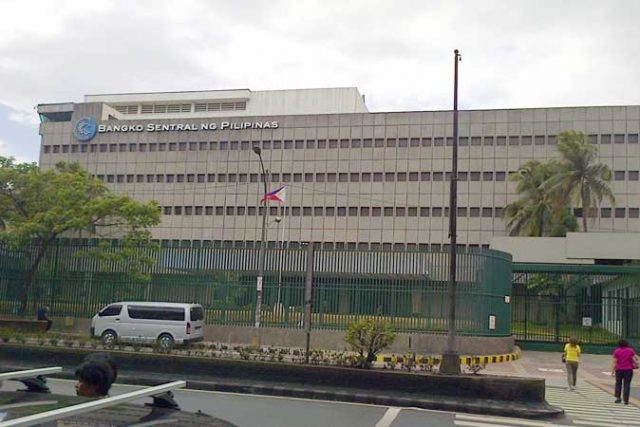
YIELDS on the central bank’s term deposits inched down on Wednesday on flows from the April deadline of tax payments and following the government’s return to the global bond market.

Total tenders for the term deposit facility (TDF) of the Bangko Sentral ng Pilipinas (BSP) amounted to P546.571 billion on Wednesday, surpassing the P490 billion on the auction block but lower than the P582.773 billion in bids seen last week.

Broken down, bids for the seven-day term deposits reached P174.267 billion, going beyond the P140-billion offer but lower than the P179.141 billion in tenders logged last week.

Accepted rates for the tenor ranged from 1.7% to 1.755%, a thinner band versus the 1.7% to 1.7715% logged in the previous week’s auction. This caused the average rate for the one-week term deposits to dip by 1.3 basis points (bps) to 1.7411% from 1.7541% previously.

Meanwhile, the two-week papers fetched bids worth P372.304 billion, higher than the P350 billion on the auction block but failing to surpass the P403.632 billion in tenders during the April 21 offering.

Banks asked for yields ranging from 1.725% to 1.78%, a slimmer margin compared with the 1.725% to 1.8% a week ago. With this, the average rate of the 14-day term deposits declined by 2.59 bps to 1.7601% from 1.786% in the previous auction.

The BSP did not offer 28-day deposits for the 27th consecutive auction to give way to its weekly offerings of bills with the same tenor.

The term deposits and BSP bills are instruments used by the central bank to mop up excess liquidity in the financial system and guide market interest rates.

Term deposit yields dropped on Wednesday following the April 15 deadline for tax payments, which is expected to boost the government’s cash position, Rizal Commercial Banking Corp. Chief Economist Michael L. Ricafort said.

“[This] reduces the need for the government to borrow locally and help ease the pressure on local interest rate benchmarks,” Mr. Ricafort said in a text message.

He added that yields on the papers declined after the government’s euro-denominated bond issuance last week.

The Bureau of the Treasury raised P122.4 billion (€2.1 billion) in fresh funds through four-year, 12-year, and 20-year debt papers last week, which will be used to support the national budget as the country struggles to contain the virus spread. — L.W.T. Noble

SMIC maintains ‘cautious optimism’ for year ahead

SMINVESTMENTS.COM

SM Investments Corp. (SMIC) on Wednesday said it would maintain “cautious optimism” while focusing on safety and innovation as the company moves forward in 2021.

“We maintain cautious optimism as we navigate the many uncertainties, but where we can move with flexibility and [with] less restrictions, we will proceed with expansions in the pipeline,” SMIC President and Chief Executive Officer Frederic C. DyBuncio said during the company’s virtual stockholders’ meeting on Wednesday.

The company said it would remain open to working with small businesses in “high growth potential sectors” and is continuing to look at potential candidates.

“We are always open to potential acquisitions and minority stakes fit with our objectives,” Mr. DyBuncio said.

SMIC has also developed new channels to reach its customers through different touchpoints, both online through social media platforms and through mobile phones.

Essential and nonessential products were made available via ShopSM, with SM Store’s call-to-deliver service.

SM Markets launched smmarkets.ph, which allows customers to order online for delivery or through a pick-up option. WalterMart also made expanded ordering options through call or text and pickup.

The company said these new initiatives allowed the company to provide more jobs, offering roles such as delivery personnel and personal shoppers.

The online facilities were supported by SM’s logistics businesses 2GO Group, Inc. and Airspeed Philippines, Inc.

“We continue to work hard to develop innovative online and offline delivery channels that are integrated into our business while enhancing customer service,” Mr. DyBuncio said.

Meanwhile, the company has offered its facilities to be used as vaccination sites to local government units.

Some SM malls have been converted into vaccination sites, namely those located in: Pulilan, Olongapo, Marilao, Cabanatuan, Cauayan, Tuguegarao, Masinag, San Mateo, Paranaque, Muntinlupa, Antipolo, North EDSA, Taguig, Trece Martires, Rosario, Calamba, San Pablo, Lemery, Lipa, Cebu, Iloilo, Bacolod, Ormoc, Butuan, and General Santos.

On Wednesday, SMIC shares at the local bourse improved by P31 to P990, improving by 3.23% from the previous trading day. — Keren Concepcion G. Valmonte

UnionBank applies for digital banking license

UNIONBANK OF THE Philippines, Inc. has submitted an application for a digital bank license, Bangko Sentral ng Pilipinas (BSP) Deputy Governor Chuchi G. Fonacier said on Wednesday.

“They [UnionBank] are the newest applicant of a digital bank license, the fourth one,” Ms. Fonacier confirmed in a Viber message.

Ms. Fonacier earlier said there were currently three applicants for a digital banking license from partnerships between local and foreign players.

UnionBank Senior Executive Vice-President and Chief Technology and Operations Officer Henry Rhoel R. Aguda likewise announced this at a webinar hosted by Malaysia-based FintechNews on Wednesday.

“We’ve already submitted our application [for a digital bank license], so the deputy governor is hopefully going to look at it favorably,” Henry Rhoel R. Aguda said, referring to Ms. Fonacier who was also among the speakers at the event.

Ms. Fonacier for her part said she had yet to go through the details of the application as it was just “freshly” submitted earlier this week.

BSP Governor Benjamin E. Diokno has said the central bank is willing to allow more digital banks to operate if a strong demand is seen. The Monetary Board has initially capped licenses at only five players. The framework for these lenders was issued in November last year.

The BSP believes the rise of digital banks will help them achieve their goal to have 70% of the Filipino adult population part of the formal financial system by 2023. Central bank data showed only 29% of Filipino adults belonged to the banked population in 2019, leaving about 51.2 million still unbanked.

Ms. Fonacier on Wednesday said there needs to be a balance so that the achievement of the central bank’s financial inclusion goals does not come “at the expense of financial stability.”

“That’s why in creating regulations, we have non-negotiables on evaluating proposals [such as] anti-money laundering concerns, and we also recognize consumer protection,” she said.

Earlier this month, the BSP granted the country’s first digital bank license to Overseas Filipino Bank, a subsidiary of Land Bank of the Philippines.

Digital banks are expected to offer products and services through online platforms versus the brick-and-mortar model of traditional lenders. These online banks are required to have a minimum capital of P1 billion.

There are already some local and foreign lenders engaged in all-online retail banking services through their apps, including CIMB Bank Philippines, Inc., ING Bank N.V. Manila, Tonik Digital Bank, Inc. (Philippines), East West Banking Corp.’s Komo and Rizal Commercial Banking Corp.’s Diskartech.

For UnionBank’s Mr. Aguda, securing a digital bank license is a “need” for traditional banks.

“They’re [incumbent digital banks] the ones that can maximize the advantage of a digital bank because the banking business is a huge conglomeration of services,” he said.

“So if you look at retail and consumer, that can best be served by a digital bank platform. And wealth management, trade finance, capital markets, foreign currency, real estate, that would be on the major bank,” Mr. Aguda added.

UnionBank’s net income jumped 79% to P4.7 billion in the first quarter amid an improved risk profile and stronger capital buffers.

Its shares closed at P70 apiece on Wednesday, down by P2.80 or by 3.85% from its previous finish. — Luz Wendy T. Noble

GCash targets P2 trillion transactions in 2021

INSTAGRAM/GCASHOFFICIAL

GLOBE TELECOM, Inc. on Wednesday said its mobile wallet arm GCash is targeting to reach more than P2 trillion in transactions this year as consumer behavior continues to shift from traditional to digital.

“I believe the number that we are targeting in gross transaction value is over P2 trillion this year,” Globe President and Chief Executive Officer Ernest L. Cu said at the online summit of the Shareholders’ Association of the Philippines (SharePHIL).

Last year, the GCash app processed more than P1 trillion in transactions, according to Mr. Cu.

GCash saw 38 million registered users, over 1 million merchants and social sellers using the mobile wallet, and over 6.8 million daily transactions, he added.

In January, Globe Fintech Innovations, Inc. or Mynt, operator GCash, raised more than $175 million in fresh capital from investment firm Bow Wave Capital Management.

According to Globe, the fresh funding would “further spur the growth of financial inclusion and the digitization of payments and financial services in the country.” — Arjay L. Balinbin

Moro cuisines: food that connects

PIYANGGANG manok, also spelled pyanggang manok, is a Filipino dish consisting of chicken braised in turmeric, onions, lemongrass, ginger, siling haba chilis, garlic, coconut milk, and ground burnt coconut. It originates from the Tausug people of Sulu and Mindanao. It is related to tiyula itum, another Tausug dish which uses burnt coconut. The dish is characteristically black in color. The chicken may also be grilled before adding the marinade. It is a type of ginataan. — PHOTO BY VEN TANEDO VIA FACEBOOK/FILIPINOFOODMONTHOFFICIAL

IT is vital to know about something to love it — and if we’re going to begin to fall in love with Mindanao, and therefore take care of it, we should know about one of its elements: its food.

A talk from Filipino Food Month’s series of webinars, “Philippines on a Plate,” discusses the cuisine of Muslim-Filipinos (called Moros). The speaker, chef and essayist Datu Shariff Pendatun, did not skirt around the issue that these dishes can be political when he held his talk on April 22. “The food of Muslim Mindanao has the power to connect, and not divide.” Mindanao has long been a seat of conflict for multiple reasons, mostly due to issues of insurgency, separatism, feudalism, and many other -isms. “The perception that people get of Muslim Mindanao is of war and massacre — things that are negative,” said Mr. Pendatun. “I personally kind of want to disabuse everybody of the idea that Moros are just about war, and guns, and strife.”

Even the term Moro itself is loaded: the word came from colonizing Spaniards who found it difficult to christianize the Southern parts of their newly conquered lands, and identified those same natives with the Muslims they fought for dominance in the Iberian peninsula. In the 1960s and ‘70s, according to Mr. Pendatun, Muslim leaders appropriated that term “in asserting an identity, separate from that of Filipino… because of the politics and economics of it all.”

He starts off with a listing of the different ethno-linguistic groups that comprise the Moro peoples: the Kaagans, the Maguindanaons (a people to which he belongs to), the Maranao, the Yakan, the Tausug, and the Samas. “We have to realize that we’re talking about Moro cuisines — with an ‘s’,” he said. “When we speak of the cuisines of the Muslim Filipinos, we speak of different cuisines.”

They may be different cuisines, but certain things join all of the 7,641 islands in the archipelago. He makes a point by listing ingredients that are common to all peoples of the country: these highlight our similarities, not our differences. These are red onions, garlic, ginger, and chilis. From there, he makes connections between the use of these ingredients in other South Asian countries, thus embracing this fraternity beyond national borders.

He then highlights what is unique (or at least, slightly more esoteric) to these cultures: the use of lemongrass, galangal, turmeric, and Kaffir lime. “These are just ingredients, but if you tell me that a group of people uses something, and then I use something —  that alone would already illustrate our relationship.”

He noted how some names and methods of some dishes are similar throughout the whole country. There’s the Maguindanaon tapay (which might share the same root as the Tagalog word for bread, tinapay) is a fermented rice dish which uses yeast as a starter. He then points to another fermented rice dish, the buro of the Kapampangan in the northern island of Luzon. In another segment, he discusses a Moro fondness for burning coconut and using it as flavoring for dishes like the Tausug Pyanggang — then points to similar ways of preparation in Bicol where a flavoring from burnt or toasted coconuts, tinutong, literally “toasted” is used, and the Laguna kulawo stew of vegetables and coconut milk. Meanwhile, a soup called Tiyula Itum (tula in some spellings) is a soup made with the same blackened coconuts — take away the black stuff, however, and it’s almost like the chicken soup tinola (the changing forms might be explained by the Tagalog matrix of naming dishes by their technique, instead of what goes into them).

He then moves on to eating rituals, such as leaving food out for spirits (beliefs much older than the Muslim and Christian influences in the country), pointing out similarities in the provisions of rice and meat as offerings — apparently the rituals in up-north Ilocos are very similar to those in down-south Mindanao.

“We may not share the same names, the same religious and cultural practices — but come on — we share food.” — Joseph L. Garcia

Deutsche Bank swings to profit in first quarter

REUTERS

FRANKFURT — Deutsche Bank swung to better-than-expected net profit in the first quarter of 2021 as strength at the investment bank helped offset the headwinds of an ongoing restructuring program and the coronavirus pandemic.

Deutsche painted a rosier look for 2021, saying it now expects revenues to be “essentially flat,” compared with a previous estimate of “marginally lower.”

The German lender said on Wednesday that its first-quarter net profit attributable to shareholders was €908 million ($1.10 billion), which compares with a year-earlier loss of €43 million. Analysts had expected a profit of almost €600 million.

It was the strongest quarter for Deutsche since the first quarter of 2014, as revenue at its fixed-income trading business and origination and advisory services surged, trends that have also lifted profits of competing banks.

The figures are good news for Chief Executive Officer Christian Sewing, who embarked on a radical restructuring two years ago that involved shedding 18,000 staff in an effort to return the bank to profitability.

“These results give us confidence that we’ll reach our 2022 targets,” Mr. Sewing said in a statement.

The investment bank’s resilience showed last year, helping Deutsche eke out a small profit for 2020 — its first after five years of losses.

Questions have remained about the sustainability of its investment banking boom, but analysts expect Deutsche to deliver another profit in 2021, a consensus forecast of their estimates shows.

Deutsche’s key fixed-income and currency sales and trading business, with revenue up 34% at nearly €2.5 billion, marked its best quarter since 2015.

That growth is better than some US investment banks. Goldman Sachs reported a 31% rise in such trading in the first quarter, while those at JPMorgan were up 15%.

Origination and advisory services revenue at Deutsche, up 40%, showed its best quarter since 2017.

However, low interest rates and a slowdown in global trade pressured revenue at Deutsche’s other divisions, such as those for corporate and retail clients, though asset management revenue rose 23%. — Reuters

McDonald’s eyes 30 new stores for 2021

COMPANY HANDOUT
MCDONALD’s opened its ‘green store’ in UN Ave. as part of its commitment to reduce its environmental footprint and source sustainable packaging. — COMPANY HANDOUT

MCDONALD’S Philippines plans to open at least 30 new stores this year as it plans for recovery, the company said on Wednesday.

“With growth between the first and second half of 2020, which carried over to Q1 of 2021, the company is bullish on gearing for recovery this year,” the company said in a press release.

Golden Arches Development Corp., the master franchisee of the McDonald’s brand in the Philippines, shut 30 stores last year after lease expirations and some concerns with financial sustainability, but opened 16 new stores despite the pandemic.

McDonald’s ended 2020 with 655 stores in the country, down from 669 branches at the start of the year. The company had previously set a pre-pandemic target of more than 700 stores by the end of 2021.

Indoor dine-in at restaurants is currently prohibited under modified enhanced community quarantine (MECQ) rules. Under this lockdown level, restaurants can operate half their outdoor seating capacity as well as take-out or delivery operations.

McDonald’s said that it had been scaling up its partnerships with food delivery mobile applications. It also launched a park-order-pay option at its stores.

“Our priority has always been to constantly evolve and introduce innovations for our customers, and for them to enhance their safe and frictionless experience across all channels. This continued rollout of our offerings is a strategic investment,” Golden Arches President and Chief Executive Officer Kenneth S. Yang said. — Jenina P. Ibañez

A river, trade, and sisig: What makes Kapampangan food so special?

SISIG — BW FILE PHOTO

We make up names and labels for the things that we find important. In the case of the Kapampangans, they have named their culture and have tied their identity to the riverbanks (pampang in Filipino), and therefore, to the river.

Restaurateur and author Gene Gonzalez, speaking during a Management Association of the Philippines (MAP) lecture on April 21, provided a unique view of Kapampangan culture, as a son of one of the province’s most illustrious families, one that hails from one of the province’s most storied towns: Sulipan.

Some of the country’s most famous names in food are in some way associated with the province. There’s cookbook author, TV host, chef, restaurateur, and founder of a culinary dynasty Nora Daza, Mr. Gonzalez himself, and fellow restaurateurs Claude Tayag and Sau del Rosario. The late American celebrity chef and journalist Anthony Bourdain himself trooped to the province for sisig, the modern version of which was invented by Kapampangan Lucia Cunanan, another name to add to the Kapampangan food pantheon.

Speaking of sisig, Mr. Gonzalez refutes claims that sisig as we know it — sizzling chopped pigs’ heads —  was invented from discarded heads from pig carcasses from queasy Americans in Clark Air Base. “Sisig has been around way back, during the turn of the century,” he said. According to him, “sisig” is a word that means “chopped,” and can be applied to many dishes of the region: they have varieties like banana heart sisig, and even one made with clams. “Sisig is a chopped pickled dish made of vinegar and spices,” he explains.

He provides an explanation for sisig’s necessity —  at least, one that comes from the class from which he descends. “There are many explanations. All I have to say is that when I was small, people from the elite Kapampangan class all had dentures. They were all sugar soldiers. They all liked sugar, because we come from a sugar-producing area. Before, if you had to be classy, sugar was an expensive spice. So, to be classy, and to emulate conspicuous consumption, people liked to put a lot of sugar in food. And people also have to have lots of dessert. People lost their teeth.”

“So how does a toothless person eat lechon (roast pig)? Make it into sisig.”

While we might think of legends to explain what we eat, sometimes, the reasons are far more practical. One takes the old form of sisig as a pickle, for example; or else the Kapampangan dish of fermented rice, buro. Pickling and fermenting were popular ways of preparing food in Pampanga — Mr. Gonzalez theorizes that it has to do with living by freshwater. “Because Pampanga is a freshwater produce culture; [and] is not a sea or coastal culture, I would say that early Kapampangan man ate things pickled rather than ate things raw, because of the presence of more parasites in freshwater fish.” In the same vein, the fish and prawns that went into a buro provided preservation and gave an umami flavor — but also left behind amino acids and probiotics, in the absence of a robust dairy-consuming culture.

On a personal note, he remembers feasts with large barramundi fish with homemade mayonnaise (a remnant left behind by European traders). It is this spirit of trade that seems to have propped up the fortunes (economic and culinary) of Pampanga — and it’s all due to the river. “Everything is furnished by the river,” he said.

According to him, ancient trade networks were opened up due to the connection between the Rio Grande de Pampanga and the Pasig river (and thus to the seas). During the Spanish colonial period, the same river network would come in handy, this time for trading luxury goods to the local sugar and rice-filled elite — think fine porcelain and crystal. He even says that there is some evidence that Kapampangans who were sent to Mexico during the Galleon Trade may have taught local Mexicans how to distill tequila —  a story he promises to tell another time.

The prosperity achieved by Pampanga’s sugar crop bought it cosmopolitan cuisine and flair; it also led the province to entertain some of the biggest names of the world: apparently, the Grand Duke Alexei Alexandrovich, uncle to the last Czar of Russia, had been to a home in Sulipan (a suitably grand one filled with the aforementioned European luxuries), as were various Asian royals, and a host of our founding fathers, and many members of Manila’s elite.

Do these justify the reputation of Pampanga as the country’s culinary capital? A lot of rival provinces might disagree.

“Many people say that Pampanga is the center of cuisine of the country,” said Mr. Gonzales. “Pampanga is one of the citadels of cuisine in our country. Remember that we are [in] one of more than 7,000 islands. Each and every area would have a different interpretation of any Filipino dish.

“I can tell you that I will only claim that it is one of the citadels because of very good commerce, trade —  and marketing,” he said.

According to him, one of the variables that make for good cuisine is the particular trade that goes on in a place. “Maybe we just go to the axiom that Pampanga was first,” he said. “Sometimes, in marketing, the axiom that ‘it’s better to be first than to be better’ will apply. I don’t want to make any grandiose claims, though many traditionalists would always say that it’s Kapampangan cuisine in the center.”

This should settle the debate: “I would like our friends and our fellow Filipinos to investigate and to see and to try the food of other areas themselves; to be able to understand that there is a rich food culture that is present.” — Joseph L. Garcia

Google’s sales beat estimates on ad surge; Alphabet plans buyback

REUTERS

GOOGLE parent Alphabet, Inc. on Tuesday beat quarterly revenue estimates and announced a $50-billion share buyback as the recovering economy and surging use of online services combined to accelerate its advertising and cloud businesses.

The results are the first sign that Google services may hold on to gains in usage brought on by lockdowns and other pandemic restrictions that forced people to shop and communicate online over the last year.

Alphabet shares were up about 4.7% at $2,398.61 in extended trading.

The results “reflect elevated consumer activity online and broad based growth in advertiser revenue,” Alphabet Chief Financial Officer Ruth Porat said in a statement.

Google ad sales surged 32% in the first quarter compared with a year ago, above expectations of analysts tracked by Refinitiv. Cloud sales increased 45.7%, in line with estimates.

About 17% of people in the United States, Alphabet’s top region by revenue, were fully vaccinated against COVID-19 by the end of the first quarter. Activities including in-person dining resumed in big cities in March, and security screenings at US airports had their busiest day in a year.

The changes coincided with Alphabet’s overall sales rising 34% to $55.3 billion, above analysts’ estimate of $51.7 billion, or 26% growth over last year’s first quarter, when ad sales fell significantly in the final couple of weeks.

Alphabet’s quarterly profit rose 162% to $17.9 billion or $26.29 per share, beating estimates of $15.88 per share. Earnings benefited from unrealized gains from venture capital investments and slower depreciation of some data center equipment.

The company’s operating margin rose to 30% for the first time since incorporating as Alphabet in 2015 even as its costs began to pick up again. Alphabet in 2020 suffered its slowest sales growth in 11 years, but posted record profit and upped its cash hoard by $17 billion after slowing hiring and construction.

The share repurchase authorization by Alphabet’s board follows a $25-billion buyback program announced in 2019. Jefferies analyst Brent Thill estimated Alphabet now has $56 billion left to spend buying its shares.

AD REBOUND
It was not immediately clear which industries powered Google’s growth in ad and cloud sales.

Increased ad buying by travel and entertainment companies would be a positive sign as hotel booking services and movie studios are among Google’s biggest spenders.

Google’s ad business, the global market leader as measured in sales, accounted for 81% of the quarterly revenue compared with 82% a year ago.

The operating loss for Google Cloud, a distant rival to the cloud businesses of Amazon.com, Inc. and Microsoft Corp., narrowed 44% to $974 million in the first quarter.

Google’s newer consumer subscription businesses, such as an ad-free version of YouTube, also could capture analysts’ attention.

Alphabet shares have surged 80% in the last year, 184th among companies in the S&P 500 index.

Privacy and antitrust lawsuits against Google that could result in changes to its ad operations have remained a concern for investors, according to analysts. But resolution remains distant, with one key trial not expected until 2023.

The latest dispute emerged on Monday when streaming TV technology company Roku, Inc. accused Google of engaging in anti-competitive behavior to benefit its YouTube and hardware businesses.

Discussions about changing US and European laws to impose new oversight on Google, Facebook, Inc. and other companies, especially regarding privacy and artificial intelligence, have lagged as legislators have been distracted by the pandemic.

Shares of Facebook, which had been up 62% during the last year entering on Tuesday, rose 1.7% after hours. Shares of Amazon, another big competitor in advertising, rose 0.2% after Alphabet’s results and had been up 44% over the last year. — Reuters

Tackling systemic risks needed to maintain financial stability

POLICY MAKERS in Asia-Pacific must effectively communicate systemic risks caused by the pandemic to avoid panic in financial markets, which could worsen their impact.

Members of the Financial Stability Board (FSB)-Regional Consultative Group for Asia (RCGA), which is co-chaired by Bangko Sentral ng Pilipinas (BSP) Governor Benjamin E. Diokno, in a meeting on April 27 discussed how “scars” from COVID-19 pandemic could affect corporate viability and debt servicing, the central bank said in a statement.

The meeting was attended by nine out of 17 member jurisdictions including the Philippines, Brunei Darussalam, Cambodia, Malaysia, New Zealand, Pakistan, Sri Lanka, Thailand, Vietnam, and co-chair India.

“If there is one word that aptly describes our discussions, it is ‘balance,’ There is that balance sought between the needs of today versus tomorrow, between support versus viability, and between instilling transparency versus avoiding undue concern,” Mr. Diokno was quoted as saying.

“There was a lively discussion on the need to support the markets today while remaining cognizant of possible unintended longer-term risks from these support measures. Communicating systemic risks, as difficult as this task is, was also prominently discussed,” the central bank said.

Systemic risks refer to the possibility of company-level events causing instability or the collapse of an industry or the economy. This was a huge contributor to the 2008 financial crisis.

Mr. Diokno said systemic risks should be relayed to investors “when markets are calm, rather than when these risks have materialized” so that financial stability can be maintained.

“The emerging story is that COVID is causing divergence within markets and across jurisdictions… COVID has forced us to adjust but we will happily do so because a state of stability by managing systemic risks is our shared objective,” he said.

Earlier this month, the International Monetary Fund warned that a “systemic solvency distress” could occur in the local banking system if the economic impact of the pandemic is worse than initially expected.

However, central bank officials have said the banking sector remains resilient and well-capitalized, with capital ratios well above the minimum regulatory requirements.

The country’s gross domestic product (GDP) shrank by a record 9.6% last year, making it the worst-hit economy in Southeast Asia. Economic managers are targeting GDP growth of 6.5% to 7.5% this year, although analysts have said the recent surge in infections and the return of restriction measures might threaten the country’s recovery. — LWTN

Cirtek Holdings lists P1-B commercial papers on PDEx

CIRTEK Holdings Philippines Corp. said the “success” of its listing of P1-billion worth of commercial papers on Wednesday is seen by the offering’s over four times oversubscription at a time of monetary easing and consecutive rate cuts by local and foreign central banks.

“The company intends to use the proceeds from the offer to partially retire its short-term obligations maturing in 2021 and refinance working capital of its subsidiaries,” the company said in a statement to mark the listing with the Philippine Dealing and Exchange Corp (PDEx).

The offering is part of Cirtek’s P6-billion commercial paper program. Multinational Investment Bancorporation acted as its sole arranger and lead underwriter.

The subsidiaries whose working capital will be refinanced are Quintel USA, Cirtek Electronics Corp., and Cirtek Advanced Technologies and Solutions, Inc. “as it takes part in the creation of a truly 5G enabled world,” the listed company added.

It also noted that its commercial paper offering, which was approved by the Securities and Exchange Commission, had been assigned a credit rating of PRS A (corp.) with a stable outlook by the Philippine Ratings Services Corp.

Companies rated PRS A (corp.) have an above average capacity to meet their financial commitments, while a stable outlook means the rating is likely to remain unchanged in the next 12 months.

Cirtek is a fully integrated technology company engaged in high-technology product development with a focus on 5G wireless communication. — Arjay L. Balinbin