Home Blog Page 7777

Expanding digital payments across the country

As a leading enabler of payments, UnionPay has expanded the acceptance of contactless transactions across the Philippines through its partner point-of-sale acquirers such as BDO Unibank Inc., Metropolitan Bank and Trust Co., Global Payments Asia Pacific (Philippines) Inc., Philippine National Bank, and Rizal Commercial Banking Corp.

UnionPay continues to expand cashless payments through partnerships with merchants, businesses

While there have been initiatives in implementing digital payments in the country before the pandemic, the past months have witnessed further appreciation and rapid acceleration of contactless and cashless payments.

In an effort to prevent the spread of COVID-19, online e-payment channels and online banking applications were increasingly used by consumers — from sending money to paying for goods and services. In turn, businesses ramped up the availability of their online channels for payments.

Proving this trend, a report by Statista and Rakuten Insights last June revealed that 31% of Filipino consumers stated they made purchases at least several times a month online during the COVID-19 pandemic.

UnionPay Philippines also observed the trend on their end, as Huiming Cai, General Manager of UnionPay International South East Asia, shared.

For instance, a campaign of one of its partner banks, BDO — which offered BDO UnionPay Gold and Diamond Credit Cardholders a 10% rebate on all online transactions — witnessed more than double year-on-year increase in online transaction volume last year. At the same period, UnionPay witnessed an over tenfold increase in PayPal transactions.

Recognizing that this shift to digital payments will continue in the “new normal”, UnionPay continues to establish itself as a reliable partner of businesses and institutions in enabling reliable contactless payments.

“Even before this pandemic, UnionPay has always been pushing for cashless transactions in the Philippines, in particular contactless payment such as online and card contactless payment for the locals. We have worked with both banks and non-banks to enable these services,” Mr. Cai said in an e-mail.

As a leading enabler of payments, UnionPay has expanded the acceptance of contactless transactions across the Philippines through its partner point-of-sale (POS) acquirers such as BDO Unibank Inc., Metropolitan Bank, and Trust Co., Global Payments Asia Pacific (Philippines) Inc., Philippine National Bank (PNB), and Rizal Commercial Banking Corp. (RCBC).

“At present, around 70% of POS terminals accepting UnionPay transactions are now contactless-enabled,” Mr. Cai added.

UnionPay has also partnered with several merchants with extensive nationwide coverage. Two leading retail establishments in the Philippines, The SM Store, and Robinsons Department Stores, have started to accept contactless payments for UnionPay cards. Prominent drugstores such as Mercury Drug and Watsons also accept this means of payment.

With EMVCo-based chip technology enabling UnionPay’s contactless payments, UnionPay Cardholders can be assured that their transactions using their card is safe and secure.

“These innovations in payment reduce the need for physical transactions like handling bank notes and face-to-face contact, which makes transacting these days even safer,” he said.

UnionPay is also expanding the acceptance of online payments as it collaborates with 2C2P Philippines which is an e-commerce payment enabler that offers innovative payment solutions tailored for the needs of merchants.

UnionPay has also partnered with several merchants with extensive nationwide coverage. Two leading retail establishments in the Philippines, The SM Store and Robinsons Department Stores, have started to accept contactless payments for UnionPay cards. Prominent drugstores such as Mercury Drug and Watsons also accept this means of payment.

Aside from enabling the online acceptance of UnionPay cards in the Philippine market, 2C2P has recently partnered with Philippine Airlines for its mobile app. Through this app, Cardholders can search and book their flights as well as purchase their tickers using their UnionPay cards anywhere customers are.

Also, through its collaboration with 2C2P, UnionPay has enabled top apparel retailer Zara Philippines, further expanding Cardholders’ options whenever they shop online.

Another viable means of digital payments is through Quick Response (QR) Codes, and UnionPay also maximizes this means through partnerships with Asia United Bank (AUB) back in 2018 and, more recently, Fucent Gateway Corporation (FGC).

Through its partnership with FGC, UnionPay will have presence in key locations in the Philippines, including the Ninoy Aquino International Airport and the Mactan-Cebu International Airport. The partnership also intends to expand QR Code acceptance at recreational spots, top hotels, and retail restaurant chains in tourist destinations.

“To date, UnionPay QR Code payments are accepted at over 10,400 major retail, attractions, hotels, and F&B merchants and more, becoming one of the leading international payment networks when it comes to QR Code deployment in the Philippines,” he said.

Through these partnerships, UnionPay has significantly enabled digital payments in the country, especially at a time when the push for cashless payments accelerated.

One partnership Mr. Cai recalls is with Cebuana Lhuillier Rural Bank, which issued its UnionPay-powered debit card that is intended to help unbanked and underserved consumers gain financial mobility.

“By enabling card application through any of Cebuana Lhuillier’s more than 2,500 branches located nationwide, Filipinos can easily open a bank account and apply for the card, at Cebuana Lhuillier branches, or online via the eCebuana app available on iOS and the Google Play Store,” Mr. Cai explained.

Transforming a largely cash-based economy into a cash-light one is a massive effort to undertake, and the current situation has just made this objective nearer to achieve.

There are challenges to tackle, nonetheless, among them building the confidence of merchants and consumers in cashless payments; and this is an area where UnionPay is willing to help address.

“UnionPay, with its deep and vast experience in building local payment switches and enabling cashless payments in 180 countries and regions, can play a role in addressing these gaps by providing the necessary tools and infrastructure to consumers and merchants,” he added.

He also sees an opportunity in the virtual card space as increased smartphone ownership is seen. Figures from Statista projects that from around 57.6% of the Philippine population in 2019, about 77.1% would be using a smartphone by 2025.

The digital payments enabler also remains open to collaborations for more merchants and businesses, helping them to gear up for a cashless society.

“UnionPay takes a win-win approach towards collaboration, working with over 2,400 partners worldwide to provide safe, seamless, and innovative payment services in 180 countries and regions,” Mr. Cai said.

GMA Network, Inc. announces schedule of annual stockholders’ meeting

The annual meeting of stockholders of GMA Network, Inc. will be conducted virtually via Zoom application on Wednesday, May 19, 2021, at 10:00 a.m.

Click to enlarge


Megawide Construction Corporation sets stockholders’ meeting via remote communication

MEGAWIDE CONSTRUCTION CORPORATION
No. 20 N. Domingo Street, Barangay Valencia, Quezon City
Tel. No. (02) 8655-1111

NOTICE OF SPECIAL STOCKHOLDERS’ MEETING

To the Stockholders of MEGAWIDE CONSTRUCTION CORPORATION (the “Company”):

Notice is hereby given that the Special Stockholders’ Meeting of the Company will be held on 21 May 2021, at 1:00 P.M. The meeting will be conducted via remote communication and can be accessed through the following link: Please click here

The agenda of the meeting is as follows: 

1. Call to Order 

  • The Chairman will call the meeting to order. 

2. Proof of Notice and Quorum 

  • The Corporate Secretary will certify that notices of the meeting have been duly sent to stockholders of record date as required by the By-Laws. He will also attest to the attendance at the meeting and whether a quorum is present. Except as otherwise provided by law, a quorum shall consist of stockholders owning majority of the outstanding capital stock, (exclusive of treasury stock), in person or represented by proxy. 

3. Amendment of the Articles of Incorporation to Increase Authorized Capital Stock (“ACS”) for Preferred Shares. 

  • The increase in the Company’s ACS for preferred shares will be submitted for the approval of the stockholders. 

4. Other Matters 

  • The floor will be open for questions from the stockholders. 

All stockholders of record at the close of business on 12 March 2021 are entitled to notice of and vote at the annual meeting and at any adjournment thereof. The stock and transfer books of the Company was closed from the end of business day on 15 March 2021. 

Please refer to Exhibit1” of the Definitive Information Sheet (available at the PSE EDGE website) or visit 

https://megawide.com.ph/megawide-special-stockholders-meeting-2021/

for the full details on the submission of proxies, procedure for voting, participation in the Special Stockholders’ Meeting of the Company, and to view the Company’s SEC Form 17-A. 

Quezon City, Philippines, 28 April 2021.


March deficit spending balloons

PHILIPPINE STAR/ MICHAEL VARCAS
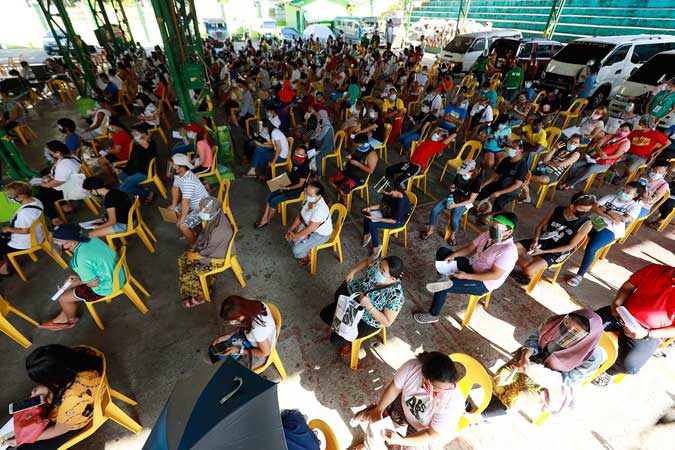
Residents wait to get their financial aid from the government at a covered court in Barangay Commonwealth, Quezon City, April 9. — PHILIPPINE STAR/ MICHAEL VARCAS

THE National Government’s budget deficit widened to P191.4 billion in March, as spending grew by double digits and revenues slipped amid a stricter lockdown, the Bureau of the Treasury (BTr) reported on Tuesday.

Preliminary data from the BTr showed the first-quarter budget gap stood at P321.5 billion, almost four times the P86.2 billion posted during the same period a year ago.

Finance Secretary Carlos G. Dominguez III said the deficit would likely remain elevated this year, as the prolonged pandemic means the government still spending to drive growth.

In an interview with CNBC, Mr. Dominguez said the goal is to bring down the deficit cap to 3.5-4% of gross domestic product (GDP) starting 2022.

Preliminary data from the BTr showed the budget deficit in March was almost triple the P71.6-billion deficit a year ago. Month on month, this was 65% higher than the P115.97-billion deficit in February.

This was attributed to increased expenditures, which rose by 22% to P407.4 billion last month from P333.2 billion spent in March 2020.

Primary spending or overall expenditures less interest payments jumped by 24% to P360 billion in March, due to higher disbursements for infrastructure projects of the Department of Public Works and Highways (DPWH) and social welfare programs of the Department of Social Welfare and Development (DSWD) and Department of Labor and Employment (DoLE).

“The continuing implementation of the Bayanihan II for initiatives such as the Rice Resiliency Program of the DA (Department of Agriculture) and health programs of the DoH (Department of Health) also contributed significantly to the strong spending performance in March,” the BTr added.

Interest payments increased by 11% to P47.7 billion in March, bringing the three-month total to P125.9 billion, up by 5% from a year earlier.

For the first quarter, total expenditures increased by 20% to P1 trillion, from P849.2 billion a year ago.

Meanwhile, overall revenues declined by 17% to P216.2 billion in March from its year-ago level of P261.6 billion, which had included dividend remittances from state-owned corporations as mandated by Republic Act No. 11469 or the Bayanihan to Heal As One Act.

Tax collections accounted for 88% of total revenues.

The government’s tax haul went up by 7% to P190.1 billion in March, largely driven by the 22.57% growth in Customs collections to P54.7 billion. The Bureau of Internal Revenue’s (BIR) collections inched up by 1.28% to P133.4 billion.

Nontax revenues dropped by 69% to P26.1 billion last month, mainly due to a 79% decline at BTr to P16.1 billion due to a high base last year. The BTr’s P77-billion income in March 2020 was buoyed by the early dividend remittances of state-owned firms.

Income from other sources such as fees, charges and proceeds from privatization efforts went up by 40% to P10 billion.

For the January to March period, total revenues were 8.7% lower year on year to P696.5 billion.

In a note on Tuesday, Rizal Commercial Banking Corp. (RCBC) Chief Economist Michael L. Ricafort said he expects the budget gap to widen further in the next few months as tax collections slide due to the extended lockdown and as the government increases spending to fuel recovery.

A wider deficit meant the government must increase borrowings as well and accommodate a higher debt-to-GDP ratio, he said. However, Mr. Ricafort warned that exceeding the international threshold of 60% debt-to-GDP ratio would make fiscal management “less sustainable” in the long term and could be viewed as credit-negative by debt watchers.

“Structurally, faster economic recovery that effectively increases the GDP base would help address this in the coming months/years, alongside fiscal reform measures. The more structural and sustainable solution is further reopening of the economy that increases the capacity, production, sales, income and employment of many businesses and industries and also helps in increasing the tax revenue collections of the government,” he added.

LOWER DEFICIT CAP
Meanwhile, Mr. Dominguez said in an interview with CNBC on Tuesday that the government is planning to bring down its fiscal deficit as a share of the country’s economic output to pre-pandemic levels of 3.5-4% by next year.

“We are very careful in managing this (pandemic) and we are pretty sure that by 2022, we will begin to return to the normal fiscal deficit we have of about 3.5% to 4%,” he said.

In a separate Viber message, Mr. Dominguez confirmed that narrowing the deficit-to-GDP ratio would largely be driven by revenue, coupled with a strong economic rebound.

“[The planned lower deficit will come] from a combination of a reduction in the disruptions due to the contagion, increase in public and private investments, drop in unemployment, increase in consumption, increase in taxable profit, return to solid investments-led growth of the economy,” he told reporters.

A 3.5-4% fiscal deficit ratio compares with the latest deficit cap of 7.3% of GDP for 2022 that was set by the Development Budget Coordination Committee (DBCC).

If realized, this will be a big turnaround from the actual 7.6% ratio in 2020 and will move closer to the pre-pandemic level of 3.4% in 2019. Before the pandemic, the government had been targeting to cap the budget deficit at 3.2% of GDP.

The DBCC is set to release its revised macroeconomic targets and medium-term fiscal program in May. — B.M.Laforga

National Government Fiscal Performance

Government to borrow P170B in May

BW FILE PHOTO

THE Bureau of the Treasury (BTr) is set to raise P170 billion from the domestic debt market in May, as the government seeks to boost liquidity amid the pandemic.

In an advisory, the BTr said the May domestic borrowing plan is the same amount programmed for this month.

The BTr said it would borrow P100 billion during the weekly offering of Treasury bills (T-bills), and another P70 billion via Treasury bonds (T-bonds) to be offered fortnightly.

In a Viber message to reporters, National Treasurer Rosalia V. de Leon said the borrowing program was unchanged to “build liquidity and make the curve more efficient.”

“Investors’ bias (is currently) on the belly for yield pickup without long duration risk,” she said.

A bond trader said by telephone that the movement of rates and demand on the upcoming auctions would depend on the economic data to be released in early May, such as April inflation and first-quarter gross domestic product (GDP).

The Philippine Statistics Authority will report April inflation data on May 5 and first-quarter GDP data on May 11.

The BTr kept the P25-billion weekly program for T-bills to be offered every Monday. This is broken down into P5 billion in 91-day debt, P8 billion in 182-day debt and P12 billion in 364-day securities.

It also planned to raise P35 billion in five-year T-bonds on May 6, and another P35 billion via  seven-year notes on May 20.

The government raised P205 billion from the local debt market this month, more than the programmed P170 billion, as it opened its tap facility on several occasions to take advantage of low rates and strong demand  during its auctions.

The government is looking to borrow P3 trillion this year from domestic and external sources to help fund a budget deficit seen to hit 8.9% of GDP. — Beatrice M. Laforga

Fitch Ratings lowers PHL growth outlook

PHILIPPINE STAR/ MICHAEL VARCAS

FITCH RATINGS lowered its economic growth projection for the Philippines this year, as it sees the country struggling to contain a renewed surge in coronavirus disease 2019 (COVID-19) infections.

In a note on Tuesday, Fitch Ratings said it now expects Philippine gross domestic product (GDP) to grow by 6.3% this year, slower than the 6.9% estimate it gave in January.

This is also below the government’s 6.5% to 7.5% target, and the most pessimistic outlook compared with those earlier given by S&P Global Ratings (7.9%), and Moody’s Investors Service (7%).

“We have revised down our growth projection for 2021 as daily COVID-19 infections have been on the rise lately, necessitating the imposition of lockdown measures in the National Capital Region and certain neighboring provinces,” Sagarika Chandra, director of sovereigns in the Asia-Pacific region at Fitch Ratings said in an e-mail.

The Philippines has recorded over a million COVID-19 cases since the pandemic began last year. The Health department on Tuesday reported 7,204 new infections, with the number of active cases at 71,675.

Metro Manila as well as Bulacan, Cavite, Laguna and Rizal are under a modified enhanced community quarantine until April 30.

“South and southeast Asian economies are struggling with a resurgence of the virus — especially in the Philippines and India — that, combined with weak tourism prospects and slow vaccine rollouts, is weighing on recovery or posing risks,” Fitch said in a note on Tuesday.

Fitch said there are disparities in the recovery of Asia-Pacific economies, with those in north Asia, Australia and New Zealand faring better than South and Southeast Asian countries.

“We expect APAC growth to rebound to 7.2% in 2021 from last year’s contraction of 0.9%,” it said, noting growth momentum in China and a rebound in India.

Meanwhile, Fitch raised its 2022 growth projection for the Philippines to 8.3% from 8%. Ms. Chandra said this is widely due to base effects.

Fitch said failure to bring back the country’s pre-pandemic “high economic growth rates” could be a factor in a possible downgrade of the Philippines’ credit rating.

It also warned against a sustained rise in government debt-to-GDP ratio caused by a reversal of reforms from a prudent macroeconomic policy framework it had established before the crisis. This could lead to sustained higher fiscal deficits, Fitch added.

The Philippines had a relatively low general government debt-to-GDP ratio of 34.1% in 2019 compared with the 42% median among its BBB-rated peers, but buffers have already been “eroded significantly” due to the pandemic, the ratings company said.

“We expect the general government debt-to-GDP ratio to rise to 52.3% and 55% of GDP in 2021 and 2022, respectively, which would still be slightly below the projected peer median of 57.3% and 59.4%, respectively, although this is a substantial increase from the 2019 level,” Fitch said.

Another risk for downgrade is a deterioration of external indicators such as dollar reserves, current account deficit, and net external debt, as these factors contribute to the country’s resilience to shocks, it added.

In January, Fitch kept the country’s “BBB” rating. A stable outlook has also been retained, indicating the rating could be unchanged for the next 18-24 months.

“The affirmation of the Philippines’ ‘BBB’ rating with a stable outlook balances modest government debt relative to peers, robust external buffers and still strong medium-term growth prospects, notwithstanding the deep pandemic-induced economic contraction, against relatively low per capita income and indicators of governance and human development compared to peers,” it said.

On the other hand, upside risks to the country’s credit rating includes improvement in the government’s revenue base and a boost in governance standards to make it nearer its rated peers’ median. — Luz Wendy T. Noble

DoF chief says consumer gains outweigh P14-B revenue loss from EO 128

PHILIPPINE STAR/ MICHAEL VARCAS

FINANCE Secretary Carlos G. Dominguez III on Tuesday defended the move to cut tariffs on pork imports, saying that while the government might lose about P14 billion in revenues, this measure would allow consumers to save P67 billion.

“Our revenues will drop by P13.68 billion. However, lowering the price of pork will save our consumers P67.38 billion. These gains of consumers dwarf the foregone revenues by P53.7 billion. Clearly, this is a trade-off beneficial to the entire country,” he said during a Senate committee of the whole’s hearing on Tuesday.

At the hearing, senators grilled the Finance chief over Executive Order (EO) 128, which reduced the tariff rates of pork imports within the minimum access volume (MAV) quota to 5% in the first three months and 10% in the following nine months; and out-quota pork imports to 15% in the first three months and 20% in the succeeding nine months.

Senate Minority Leader Franklin M. Drilon earlier filed a resolution urging President Rodrigo R. Duterte to withdraw EO 128 and recall the recommendation to increase the MAV for pork. He said the two policies would hurt the local hog industry.

However, Mr. Dominguez said EO 128 is aimed at protecting consumers from supply shortages and price increases.

“If you want to solve the problem quickly, you have to encourage importation of the materials that are short, which in this case is pork. We have designed the program to be time-bound. By the end of 12 months when we expect prices to drop and stabilize and production to pick up, then that is the time we ease off,” he added.

On March 26, Mr. Duterte recommended that Congress increase the MAV allocation for pork imports by 350,000 metric tons (MT), together with the current allocation of 54,210 MT, to address the supply shortage due to an African Swine Fever (ASF) outbreak.

“If the domestic production is higher, nobody will bring in pork with that tariff rate. Trust the market. The market will determine the price,” Mr. Dominguez said.

HIKE IN TARIFFS?
Meanwhile, the Tariff Commission is studying an increase in import duties on frozen pork meat products proposed by the Samahang Industriya ng Agrikultura (SINAG).

The group wrote a letter to the commission last month asking that tariffs on pork imports within a minimum access volume quota be increased to 44% from 30%, and that out-of-quota imports be set at 44% from 40%.

The commission in a notice signed on April 22 said that it was conducting an investigation and had asked interested parties to submit comments by May 7.

“The schedule of the public hearing will be announced at a later date,” the commission said.

SINAG Chairman Rosendo O. So in March said importers were profiting from a tariff rate that has no impact on prime pork cuts retail prices, noting that pork had been sold for P350 to P450 per kilogram in the first two months of this year, when pork market prices surged while an ASF outbreak cut supply.

The average landed cost of pork imports, he said, was P81 per kilogram in 2020.

“(Importers) are easily profiting between P200 and P250 per kilogram at the current retail of P350 to P400 per kilogram of pork belly (liempo) and pork shoulder (kasim),” Mr. So had said.  R.M.D.Ochave and J.P. Ibañez

Experts: Vaccine good trumps risks for seriously ill people

PHILIPPINE STAR/ MICHAEL VARCAS

By Patricia B. Mirasol

FILIPINO ADULTS with comorbidities, including chronic kidney disease, diabetes, and cardiovascular diseases such as hypertension, shouldn’t hesitate getting vaccinated against coronavirus disease 2019 (COVID-19). These individuals, who are classified under the government’s A3 priority group, are best poised to reap the benefits of COVID-19 vaccination, said doctors at an April 27 forum.

“The best vaccine is the one in your arm, especially for those in the eligible groups,” said Dr. Deborah Ignacia D. Ona, an associate professor of the University of the Philippines-Philippine General Hospital (UP-PGH)’s Division of Hypertension “Kaya kayo nandun sa list, kasi kayo ‘yung best person na magkakaroon ng benepisyo for this (You’re in the list because you’re one of the persons who will reap the most benefits from it). If you have the opportunity to be vaccinated, do not hesitate — regardless of the vaccine brand.”

Be brand agnostic, added Dr. Maaliddin B. Biruar, a nephrologist at the National Kidney and Transplant Institute. “Tanggapin na po natin ang meron (accept what’s available),” he said. “Remember that all vaccines are under Emergency Use Authorization. Emergency ito, tapos ipapagpaliban natin dahil sa brand (This is an emergency, but some decide to defer vaccination because they weren’t given their preferred vaccine brand). It doesn’t make sense. You deserve to receive the vaccine.”

Patients on dialysis, Dr. Biruar added, may schedule their vaccination the day after a dialysis session. “If your last session was on Tuesday, and the next one is on Friday, get vaccinated on Wednesday,” he suggested. Dialysis patients who contract COVID-19 have a mortality rate of more than 20% because of their poor immune system. In contrast, the mortality rate of the general population is 1.7%, highlighting the need for an added layer of COVID-19 protection for chronic kidney disease patients.

HIGH BLOOD PRESSURE, HIGH BLOOD SUGAR?
Prior to vaccination, hypertensive patients should control their blood pressure, which requires regular check-ups and medication compliance.

Maintenance medications should be taken per usual — even during vaccination day itself, Dr. Ona said. “Bring extra medication (to the vaccination site) in case you might need it. Don’t forget to follow the usual protocols of physical distancing, mask wearing, and hand washing. Do relax and go to your doctor the following day if your blood pressure rises.”

Medical clearance is not a prerequisite for COVID-19 vaccination, clarified forum speakers, despite the surge of requests. The exceptions to this, according to the Department of Health, are immunocompromised patients like those with autoimmune disease, HIV (human immunodeficiency virus), cancer patients currently undergoing immunosuppressive therapy, transplant patients, those undergoing steroid treatment, and patients who are bedridden or with a poor prognosis.

“What’s good about this vaccination is that patients who I haven’t seen in one or two years are suddenly scheduling follow-up consultations,” said Dr. Ona.

Even those who have high blood sugar can be vaccinated, said Dr. Nemencio A. Nicodemus, Jr., a clinical professor  at UP-PGH with a speciality in internal medicine, endocrinology, diabetes, and metabolism, provided that they maintain their medication use.

“What I do for patients who insist on a medical clearance is write that they have diabetes, are on maintenance medication, and that they can get the COVID-19 vaccination,” Dr. Nicodemus said, adding that there haven’t been any reports of DKA (diabetic ketoacidosis) or HHS (hyperosmolar hyperglycemic syndrome) — both life-threatening complications of diabetes — after the vaccination of diabetic individuals.

Diabetes in patients is associated with a two-fold increase in severity of COVID-19, as well as a two-fold increase in mortality, Dr. Nicodemus said. Like hypertensive patients, diabetic patients are also at three times more risk for COVID-19 hospitalization as compared to those who don’t have either disease. The established reasons for increased severity of COVID-19 in diabetic patients are obesity, cardiovascular disease, renal damage, psychiatric disease, and immune system dysfunction, he said.

While waiting in line at the vaccination site, it is best for everyone — especially those who are diabetic — to eat even before they start to feel hunger pangs, as hunger might lead to one’s blood sugar falling below the normal level.

Magbaon ng pagkain. Huwag magpagutom, lalo na if naka-maintenance (Bring food along with you. Don’t allow yourself to feel hunger, especially if you have diabetes and are on maintenance medication),” Dr. Nicodemus said.

House bill filed promoting cheaper ‘biosimilar’ drugs

PXHERE.COM

A LAWMAKER on Tuesday filed a bill that promotes using cheaper biosimilar drugs to provide affordable medical options to the poor.

In a statement on Tuesday, Albay Rep. Jose Ma. Clemente S. Salceda said he filed House Bill 9261 or the proposed Biosimilars Act to expand consumer knowledge on affordable alternatives to similar branded drugs. He added that biosimilars are “competitors’ versions of branded drugs.”

Biosimilar medicines are medicines that are different in terms of molecular size and medical production from generic medicines. It also takes a longer period for biosimilar medicines to reach the market as they require extensive trials and research as opposed to generic medicines.

“Increased education on biosimilars, and publicly available material that compares the costs of biosimilars, will allow patients and healthcare providers to make better informed choices on their healthcare preferences. Education will also improve price competition among pharmaceutical providers, as uncompetitive practices in pricing of biological products comes in part from the inability of patients to compare the prices of such products,” Mr. Salceda said.

If enacted, the bill mandates the health department to ensure resources on biological products, including biosimilar biological products and interchangeable biosimilar biological products, are available to patients, caregivers, and healthcare providers. A list of biosimilar products with their existing prices should also be available for public access and awareness.

Mr. Salceda added that the proposed measure is a response to rising hospital and medical expenses of Filipinos amid the coronavirus disease 2019 (COVID-19) pandemic. “Part of what makes branded drugs expensive is that the consumer is paying for the brand. Healthcare is a matter of life or death, not a matter of one brand being ‘better,’ especially if the chemical composition is practically the same as cheaper drugs,” Mr. Salceda said.

Having cheaper options will also prevent the public from turning to treatments that have no locally proven medical and therapeutic claims against COVID-19.

“The people are desperate for cheaper medicine. That’s why you see this hysteria over unsubstantiated cures for COVID-19. That is not good for the people. We still need proven drugs. But, if the proven drugs have less expensive twins, the public should know these alternatives exist,” he said.

Mr. Salceda added that expanded public knowledge on biosimilar drugs will benefit the poor as they are more exposed to health risks but do not have the capacity to afford healthcare. — Gillian M. Cortez

NGCP: Lack of supply hampers ‘firm’ reserve power

NGCP.PH

By Angelica Y. Yang, Reporter

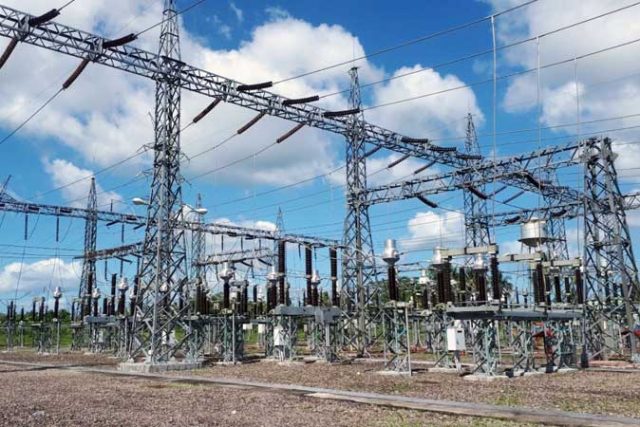
PRIVATELY owned National Grid Corp. of the Philippines (NGCP) said on Tuesday that it had not fully entered into a “firm” contract to buy reserve power, leaving the Energy department hanging after its call days earlier for such ancillary services to be fully contracted ahead of the summer months.

Even though the grid system operator wanted to contract on a firm basis, the supply was not there, said Ronald Dylan P. Concepcion, NGCP special counsel for legal and regulatory affairs, during the virtual hearing called by the Joint Congressional Energy Commission.

“A reserve can only be procured if there is sufficient supply of power. If there is no supply provided by generation companies, there is no reserve or there is no ancillary services to be procured,” Mr. Concepcion said.

“It’s not as easy as procuring ancillary services from a plant that is dedicated for ancillary services as desired by some proponents that will result in a firm contracting of ancillary services to which the NGCP is not totally agreeable with,” he added.

Mr. Concepcion was responding to a question from Senator Sherwin T. Gatchalian, chairman of the Senate energy committee.

Last week, the Department of Energy (DoE) flagged NGCP for not having enough firm-contracted reserves or ancillary services (AS) for the grid as of end-2020.

AS contracted from power generation companies will mean higher costs for NGCP, Mr. Concepcion said. “Definitely, a firm contracting ancillary services will be much more expensive.”

He said ancillary services are not a remedy for the lack of power supply because if a plant shuts down, the availability of supply is affected along with the contracted reserves.

“We are advocating, as of now, a policy to have a mix of firm and non-firm (AS) because… (this) will give us a better mix of reserves,” he said.

He said that NGCP was “continually looking for AS providers” for the Luzon, Visayas and Mindanao grids.

His statement comes days after the DoE said that NGCP was not compliant in terms of the required reserve levels procured under firm AS contracts.

DoE data show that NGCP had only contracted regulating, contingency, and dispatchable reserves of 237 megawatts (MW), 180 MW, and 145 MW, respectively, for the Luzon grid as of the fourth quarter last year.

The Luzon grid’s required capacity for regulating, contingency and dispatchable reserves are at 491 MW, 647 MW, and 647 MW. These reserves are considered as ancillary services.

Based on a 2019 DoE circular, NGCP can procure these types of reserves only through firm contracts.

During the hearing on Tuesday, DoE Secretary Alfonso G. Cusi said that having sufficient reserves in place will solve the problem of having yellow and red alerts.

A yellow alert is issued when reserves fall below ideal levels. This is subsequently downgraded to a red alert — with the possibility of power interruptions — when the supply situation worsens.

Mr. Cusi likened the reserve power under a non-firm contract to a deflated spare car tire.

May spare tire ka, wala namang hangin (You have a spare tire but there’s no air in it) — that is the equivalent of a non-firm reserve. Na-flat-tan ka, may spare tire pero wala namang hangin, anong gagawin mo? (You’ve got a flat tire, and you have a spare tire with no air, what are you going to do?) We’ve been saying from day one that we cannot have a reserve that is not firm, that is not there,” he said.

On the issue of ancillary services, Mr. Gatchalian requested the DoE and the Energy Regulatory Commission to “sit down” and talk about what can be done. “This is a standing policy for a very long time. It’s in EPIRA (Electric Power Industry Reform Act of 2001) and it can be enforced,” he said.

Meanwhile, Mr. Cusi also gave updates about the transmission development plan (TDP), which he described as “another issue.”

“In fact, I have not approved — I did not approve the TDP because of the lack of participation by TransCo (National Transmission Corp.),” he said, explaining that the plan needed the DoE’s approval.

NGCP previously said that the latest version of the TDP will cover 2021 to 2040 and would take into account the needs of the power grid.

Quad vaccine pact for Asia ‘on track’ despite India crisis — US officials

WASHINGTON — An agreement between the United States and three of its closest Indo-Pacific partners to produce up to a billion coronavirus vaccine doses in India by the end of 2022 to supply other Asian countries is “still on track,” senior US officials said on Monday, despite a surge of coronavirus disease 2019 (COVID-19) in India.

“It’s moving forward expeditiously,” a senior administration official told reporters in a briefing call, referring to the agreement last month between the leaders of the United States, India, Japan and Australia, a grouping known as the Quad.

A fact sheet issued after the countries held a virtual summit in March said the United States, through its International Development Finance Corp., would work to finance Indian drugmaker Biological E Ltd. to produce at least 1 billion COVID-19 vaccine doses by the end of 2022.

It said Japan was in discussions to provide concessional yen loans for India to expand vaccine output, and the Biden administration said the doses would go to Southeast Asian countries, elsewhere in the Indo-Pacific, and beyond.

India had urged the other Quad members to invest in its vaccine production capacity in an attempt to counter China’s widening vaccine diplomacy.

India has since become the latest epicenter of the pandemic, threatening to overwhelm its healthcare system. US President Joseph R. Biden, Jr., announced on Sunday Washington would immediately send raw materials for vaccines, medical equipment and protective gear to India to help it respond to a massive surge in coronavirus infections.

The White House said on Monday the United States would start to share up to 60 million doses of AstraZeneca Plc’s coronavirus vaccine with other countries as soon as the next few weeks. — Reuters

AboitizPower eyes 3,900 MW of RE by 2030

ABOITIZ Power Corp. is looking to build around 3,900 megawatts (MW) of renewable energy (RE) in about a decade as it seeks to reach an equal sharing of renewables and thermal energy capacity in its portfolio.

“I think that 50-50 ratio in 10 years is an aspirational target but we will get there with our aim to bring our renewable capacity estimates [to] around 3,900 MW by year 2029 to 2030,” AboitizPower President and Chief Executive Officer Emmanuel V. Rubio said during a media briefing after listed firm’s annual stockholders meeting on Monday evening.

He explained that the target capacity is an estimate of how much the firm can capture with the implementation of the renewable portfolio standards (RPS) program, which mandates electricity suppliers to source agreed portions of their energy supply from renewable resources.

Mr. Rubio earlier said that AboitizPower was working on a pipeline of 1,600 MW worth of hydro, wind and solar projects.

“The 1,600 [MW] is part of the 3,800 to 3,900 [MW] that we’re looking at in the next 10 years,” he said. “[On] the first few projects that we’ll start — we will be starting with solar. We’ll be groundbreaking hopefully within the year for a [solar] project in Cayanga, Pangasinan for 73 MW.”

While the firm does not have a definitive position on generating power from coal, Mr. Rubio said that AboitizPower has “always looked at the option of choosing gas” for the country’s baseload requirements. He said the group was considering gas-related projects in Luzon.

“We already have a team looking at our gas option. We’re doing very early… feasibility studies for gas on at least two locations… We have communicated that in RP Energy (Redondo Peninsula Energy, Inc.), we will not be building coal anymore, but we [are] actually reserving that side for a possible gas option,” he said.

RP Energy is a consortium composed of AboitizPower, Meralco PowerGen Corp., and Taiwan Cogeneration International Corp.

On using coal for power generation, Mr. Rubio said that the fuel source will remain competitive in specific niches “but market forces will decide on that at the end of the day.”

AboitizPower produces its Cleanergy brand from its hydro, geothermal, and solar power generation facilities. The firm aims to significantly expand its Cleanergy portfolio in the next 10 years. By 2030, renewables are seen to account for 65% of the firm’s new capacities.

Shares in AboitizPower at the local bourse inched down 2.42% or 55 centavos to close at P22.20 apiece on Tuesday. — Angelica Y. Yang