Home Blog Page 774

Party-lists back minority leader bet

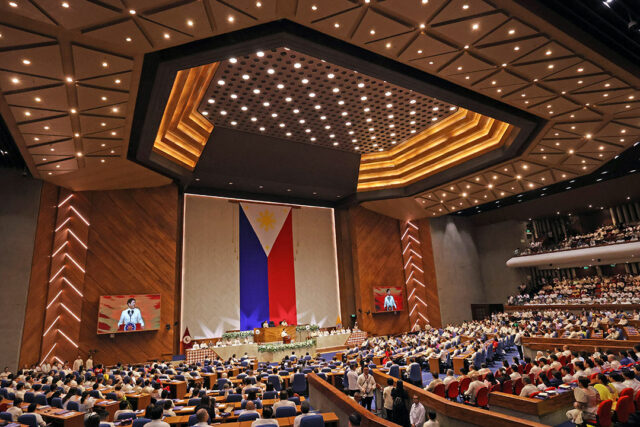
PHILIPPINE STAR /KJ ROSALES

A BROAD coalition of party-list groups on Sunday backed Party-list Rep. Marcelino C. Libanan’s bid to remain as the minority leader of the House of Representatives, a development showing a consensus to reinforce continuity in the chamber’s leadership in the 20th Congress.

In a statement, Mr. Libanan said there are 26 lawmakers that signed a joint manifesto of support to keep him as leader of the House minority bloc, notably including members of Akbayan Citizens’ Action Party, Liberal Party, Kabataan Party-list and Alliance of Concerned Teachers.

“With confidence in his ability to lead with honor, wisdom and dedication, we affirm our collective support for Rep. Libanan as minority leader,” the joint manifesto read, based on the statement.

Newly elected lawmakers began their term in the 20th Congress last week, but sessions won’t start until July 28, when they will elect the House leadership before President Ferdinand R. Marcos, Jr. delivers his fourth annual state of the nation address.

Party-list groups are allocated 63 seats in the House, or 20% of the chamber’s total membership.

The minority leader acts as spokesman of the minority bloc, which is mostly composed of party-list groups representing marginalized sectors. The post wields significant political clout within the chamber, as the minority leader automatically sits in all House committees. — Kenneth Christiane L. Basilio

Six BARMM officials reinstated

COTABATO CITY — The chief minister of the Bangsamoro region retained six out of more than 30 officials whom he ordered last month to resign as prelude to a revamp in the regional bureaucracy.

Bangsamoro Chief Minister Abdulrauf A. Macacua on Sunday said that he has declined the courtesy resignation of six of his subordinate-ministers, Akmad A. Brahim, natural resources; Ubaida C. Pacasem, budget and finance; Kadil M. Sinolinding, health; Muslimin G. Sema, labor and employment; Raissa H. Jajurie, social services; and Jehan A. Usop, science and technology.

“We are still evaluating the performance, in the past years, of other heads of different ministries and the chiefs of support agencies under the regional government as basis for their retention, or replacement,” Mr. Macacua told reporters via text message.

Officials of the eight newly established Bangsamoro municipalities in Cotabato province in region 12 had said that they are grateful to Mr. Macacua for declining the courtesy resignation of the ethnic Maguindanaon Mr. Sinolinding, a physician-ophthalmologist trained in India, and Ms. Jajurie, a practicing lawyer who is a Tausug from Sulu.

“Their ministries already have functional public service networks in the Special Geographic Area in Cotabato province and in two nearby towns in Maguindanao del Sur, Pagalungan and Datu Montawal. We are glad that they will remain in their offices,” said Pagalungan Mayor Abdillah G. Mamasabulod.

The Special Geographic Area (SGA) covers 63 barangays in different towns in Cotabato province in region 12 whose residents voted in favor of the inclusion of their domains into the core territory of the Bangsamoro Autonomous Region in Muslim Mindanao (BARMM) during a plebiscite in 2019.

Mayor Esmael S. Mama of Ligawasan, one of the eight towns in the SGA, said they are assured of the continuation of the joint eye care missions for marginalized villagers in their municipality.

“We are also grateful that our chief minister declined the resignation from office of our natural resources minister,” said Mr. Mama, referring to Mr. Brahim, an official of the Moro Islamic Liberation Front (MILF).

Mr. Sema, who has been at the helm of the Ministry of Labor and Employment-BARMM for about three years now, is chairman of the Moro National Liberation Front (MNLF).

The MILF and the MNLF, which have separate peace agreements with the national government, oversee the operations of a number of agencies under Mr. Macacua’s office. Both Fronts also have representatives in the 80-seat Bangsamoro parliament.

“We in Cotabato province are glad about the reinstatement of Minister Sema because there are so many MNLF members in the municipalities under my jurisdiction and in adjoining barangays composing the SGA that were carved out from municipalities under our province,” Cotabato Gov. Emmylou T. Mendoza said. — John Felix M. Unson

Flexible seafarers’ training pushed

STOCK PHOTO | Image by iliastefanidis30 from Pixabay

A SENATOR on Sunday called on government agencies handling seafarers to implement measures that will allow them to take training courses remotely while off duty.

In a statement, Senator Erwin T. Tulfo urged the Maritime Industry Authority and the Department of Migrant Workers to review how it conducts the training of seafarers.

The senator also questioned why vacationing seafarers still need to physically go to school when taking refresher or management courses that can be conducted online.

“Instead of spending time with their families while on vacation after months of duty, Filipino seafarers — such as marine engineers and deck officers say their vacation is consumed by physically attending refresher training courses,” he added.

Mr. Tulfo said that he is planning to file a resolution at the Senate to call for more flexible training courses for off duty seafarers. — Adrian H. Halili

Leaders of growing BRICS group gather for annual summit in Rio

A man walks in front of a building lit up in the colors of India’s national flag in Mumbai, India, Aug. 14, 2021. — REUTERS

RIO DE JANEIRO — Leaders of the growing BRICS group of developing nations were set to gather in Rio de Janeiro on Sunday, calling for reform of traditional Western institutions while presenting the bloc as a defender of multilateralism in an increasingly fractured world.

With forums such as the Group of 7 (G7) and Group of 20 groups of major economies hamstrung by divisions and the disruptive “America First” approach of US President Donald J. Trump, expansion of the BRICS has opened new space for diplomatic coordination.

“In the face of the resurgence of protectionism, it is up to emerging nations to defend the multilateral trade regime and reform the international financial architecture,” Brazilian President Luiz Inacio Lula da Silva told a BRICS business forum on Saturday.

BRICS nations now represent over half the world’s population and 40% of its economic output, Lula noted.

The BRICS group gathered leaders from Brazil, Russia, India and China at its first summit in 2009. The bloc later added South Africa and last year included Egypt, Ethiopia, Indonesia, Iran, Saudi Arabia and the United Arab Emirates as full members. This is the first leaders’ summit to include Indonesia.

“The vacuum left by others ends up being filled almost instantly by the BRICS,” said a Brazilian diplomat who asked not to be named. Although the G7 still concentrates vast power, the source added, “it doesn’t have the predominance it once did.”

However, there are questions about the shared goals of an increasingly heterogenous BRICS group, which has grown to include regional rivals along with major emerging economies.

Stealing some thunder from this year’s summit, Chinese President Xi Jinping chose to send his prime minister in his place. Russian President Vladimir Putin is attending online due to an arrest warrant from the International Criminal Court.

Still, many heads of state will gather for discussions at Rio’s Museum of Modern Art on Sunday and Monday, including Indian Prime Minister Narendra Modi and South African President Cyril Ramaphosa.

Over 30 nations have expressed interest in participating in the BRICS, either as full members or partners.

GROWING CLOUT, COMPLEXITY
Brazil, which also hosts the United Nations (UN) climate summit in November, has seized on both gatherings to highlight how seriously developing nations are tackling climate change, while Mr. Trump has slammed the brakes on US climate initiatives.

Both China and the United Arab Emirates signaled in meetings with Brazilian Finance Minister Fernando Haddad in Rio that they plan to invest in a proposed Tropical Forests Forever Facility, according to two sources with knowledge of the discussions about funding conservation of endangered forests around the world.

Expansion of the BRICS has added diplomatic weight to the gathering, which aspires to speak for developing nations across the Global South, strengthening calls for reforming global institutions such as the UN Security Council and the International Monetary Fund.

The growth of the bloc has also increased the challenges to reaching consensus on contentious geopolitical issues.

Ahead of the summit, negotiators struggled to find shared language for a joint statement about the bombardment of Gaza, the Israel-Iran conflict and a proposed reform of the Security Council, said two of the sources, who requested anonymity to speak openly.

To overcome differences among African nations regarding the continent’s proposed representative to a reformed Security Council, the group agreed to endorse seats for Brazil and India while leaving open which country should represent Africa’s interests, a person familiar with the talks told Reuters.

The BRICS will also continue their thinly veiled criticism of Mr. Trump’s US tariff policy. At an April ministerial meeting, the bloc expressed concern about “unjustified unilateral protectionist measures, including the indiscriminate increase of reciprocal tariffs.” — Reuters

OPEC+ speeds up oil output hikes, adds 548,000 barrels per day in August

REUTERS

LONDON — OPEC+ agreed on Saturday to raise production by 548,000 barrels per day (bpd) in August, further accelerating output increases at its first meeting since oil prices jumped — and then retreated — following Israeli and US attacks on Iran.

The group, which pumps about half of the world’s oil, has been curtailing production since 2022 to support the market. But it has reversed course this year to regain market share and as US President Donald J. Trump demanded the group pump more to help keep gasoline prices lower.

The production boost will come from eight members of the group — Saudi Arabia, Russia, the United Arab Emirates (UAE), Kuwait, Oman, Iraq, Kazakhstan and Algeria. The eight started to unwind their most recent layer of cuts of 2.2 million bpd in April.

The August increase represents a jump from monthly increases of 411,000 bpd OPEC+ had approved for May, June and July, and 138,000 bpd in April.

OPEC+ cited a steady global economic outlook and healthy market fundamentals, including low oil inventories, as reasons for releasing more oil.

The acceleration came after some OPEC+ members, such as Kazakhstan and Iraq, produced above their targets, angering other members that were sticking to cuts, sources have said.

Kazakh output returned to growth last month and matched an all-time high.

OPEC+, which groups the Organization of the Petroleum Exporting Countries and allies led by Russia, wants to expand market share amid growing supplies from rival producers like the United States, sources have said.

With the August increase, OPEC+ will have released 1.918 million bpd since April, which leaves just 280,000 bpd to be released from the 2.2 million bpd cut. On top of that, OPEC+ allowed the UAE to increase output by 300,000 bpd.

The group still has in place other layers of cuts amounting to 3.66 million bpd. The group of eight OPEC+ members will next meet on Aug. 3. — Reuters

Pope Leo takes first action to address abuse by Catholic clergy

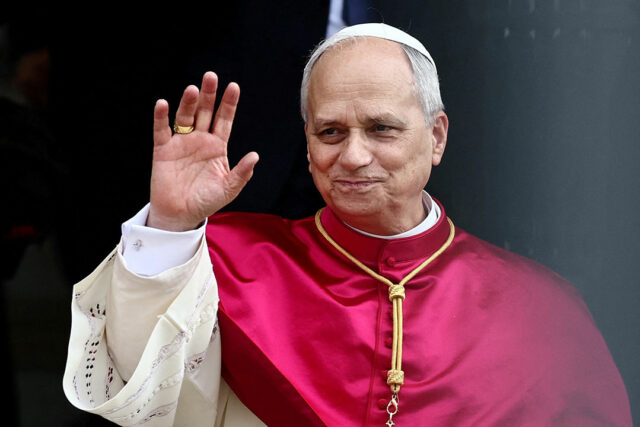
POPE LEO XIV waves as he leaves the basilica of Saint Paul Outside the Walls in Rome, Italy, May 20, 2025. — REUTERS

VATICAN CITY — Pope Leo XIV on Saturday appointed a French archbishop as the new leader of the Vatican’s commission on clergy sexual abuse, in the US pontiff’s first public move to confront an issue that has damaged the global Church’s credibility.

Thibault Verny, 59, will be president of the Pontifical Commission for the Protection of Minors while also remaining the archbishop of Chambery in southeast France.

The Vatican commission was created by Pope Francis in 2014 in an effort by the late pontiff to respond after sexual abuse scandals affected the Church in countries across the world.

The scandals have damaged the Church’s standing as a moral voice, led to lawsuits costing millions in countries across the globe, and resulted in a number of resignations of bishops.

Verny said he was committed to improving the Church’s safeguarding measures.

“We will promote the… equitable sharing of resources so that all parts of the Church, regardless of geography or circumstance, can uphold the highest standards of protection,” he said in a statement.

Verny replaces Cardinal Sean O’Malley, the former archbishop of Boston. O’Malley, 81, had been serving beyond the Church’s traditional retirement age of 80 for bishops.

O’Malley had led the group since its creation.

While some victims have praised the commission’s efforts, it has also been roiled by the resignations of several of its members over the years.

In 2023, a prominent Jesuit priest and papal adviser stepped down, saying publicly that he had concerns over the way the group was operating.

Verny was first made a member of the commission by Francis in 2022. He has also led the French Church’s safeguarding efforts.

O’Malley praised the appointment, saying in a statement Verny is “a collaborative leader committed to advancing the global adoption of protection and safeguarding, to as best possible assure the safety of those in the care of the Church throughout the world.” — Reuters

Death toll from Texas floods reaches at least 43; dozens still missing

STOCK PHOTO | Image by Hermann Traub from Pixabay

HUNT, Texas — At least 43 people, including 15 children, have been confirmed dead following flash floods in central Texas, authorities said on Saturday as rescuers continued a frantic search for dozens more campers, vacationers and residents who were still missing.

The casualty toll will likely rise, authorities said, as localities beyond the main site of the disaster in Kerr County were affected by the flooding. A Travis County official said four people had died from the flooding there, with 13 unaccounted for, and officials reported another death in Kendall County.

Some news organizations reported the death toll was already as high as 52. Reuters could not confirm that.

Officials said more than 850 people had been rescued, including some clinging to trees, after a sudden storm dumped up to 15 inches (38 centimeters) of rain in an area around the Guadalupe River, about 85 miles (140 kilometers) northwest of San Antonio.

Among the missing were 27 girls from the Camp Mystic summer camp, Kerrville City Manager Dalton Rice told a press conference on Saturday evening, and there may be others beyond that.

Mr. Rice said 27 people were known to be missing, but “we will not put a number on the other side because we just don’t know.”

The disaster unfolded rapidly on Friday morning as heavier-than-forecast rain drove river waters rapidly to as high as 29 feet (9 meters).

“We know that the rivers rise, but nobody saw this coming,” said Kerr County Judge Rob Kelly, the top local official in the region.

Kerr County Sheriff Larry Leitha said 17 of the confirmed dead, including five children, had yet to be identified.

The National Weather Service said the flash flood emergency has largely ended for Kerr County, following thunderstorms that dumped more than a foot of rain. That is half of the total the region sees in a typical year. A flood watch was in effect until 7 p.m. for the broader region.

Kerr County sits in the Texas Hill Country, a rural area known for rugged terrain, historic towns and tourist attractions.

Texas Lieutenant Governor Dan Patrick said an unknown number of visitors had come to the area for an Independence Day celebration by the river.

“We don’t know how many people were in tents on the side, in small trailers by the side, in rented homes by the side,” he said on Fox News Live.

‘COMPLETE SHOCK’
Camp Mystic, a nearly century-old Christian girls camp, had 700 girls in residence at the time of the flood, according to Mr. Patrick.

A day after the disaster struck, the camp was a scene of devastation. Inside one cabin, mud lines indicating how high the water had risen were at least six feet from the floor. Bed frames, mattresses and personal belongings caked with mud were scattered inside. Some buildings had broken windows, one had a missing wall.

Another girls’ camp in the area, Heart O’ the Hills, said on its website that co-owner Jane Ragsdale had died in the flood but no campers had been present as it was between sessions.

In Comfort, a town about 40 miles down the river from Camp Mystic, huge trees, some over 60 feet tall, were pulled out and scattered around the river by the floods, with several blocking roads. While the main highway from San Antonio to affected areas remained mainly intact, some two-lane bridges were severely damaged by water.

A Reuters photographer saw around 10 cars — some with smashed windshields and doors — that had been swept away by flood waters and lay abandoned near the river.

“Complete shock. I’m still in shock today,” said Tonia Fucci, 52, a Pennsylvanian who was in Comfort visiting her grandmother. “The devastation was such that I’m still in shock today. And with the rescues going on and helicopters, you just know there’s so many missing children and missing people. You just want them to be found for the sake of the families. But, you know, it’s not going to be a good ending. It’s just not going to be. There’s no way people could have survived the swiftness of the water.”

Videos posted online showed bare concrete platforms where homes used to stand and piles of rubble along the banks of the river. Rescuers plucked residents from rooftops and trees, sometimes forming human chains to fetch people from the floodwater, local media reported.

President Donald J. Trump said he and his wife Melania were praying for the victims. “Our Brave First Responders are on site doing what they do best,” he said on social media.

Texas Governor Greg Abbott told a press conference he had asked Mr. Trump to sign a disaster declaration, which would unlock federal aid for those affected. Homeland Security Secretary Kristi Noem said Mr. Trump would honor that request.

Mr. Trump has previously outlined plans to scale back the federal government’s role in responding to natural disasters, leaving states to shoulder more of the burden themselves.

Ms. Noem said a “moderate” flood watch issued on Thursday by the National Weather Service had not accurately predicted the extreme rainfall and said the Trump administration was working to upgrade the system.

The administration has cut thousands of jobs from the National Weather Service’s parent agency, the National Oceanic and Atmospheric Administration (NOAA), leaving many weather offices understaffed, said former NOAA director Rick Spinrad. He said he did not know if those staff cuts factored into the lack of advance warning for the extreme Texas flooding, but said they would inevitably degrade the agency’s ability to deliver accurate and timely forecasts.

“People’s ability to prepare for these storms will be compromised. It undoubtedly means that additional lives will be lost and probably more property damage,” he said. — Reuters

Musk announces forming of ‘America Party’ in further break from Trump

ELON MUSK — REUTERS

WASHINGTON — The tattered bromance between Republican President Donald J. Trump and his main campaign financier Elon Musk took another fractious turn on Saturday when the space and automotive billionaire announced the formation of a new political party, saying Mr. Trump’s “big, beautiful” tax bill would bankrupt America.

A day after asking his followers on his X platform whether a new US political party should be created, Mr. Musk declared in a post on Saturday that “Today, the America Party is formed to give you back your freedom.”

“By a factor of 2 to 1, you want a new political party and you shall have it!” he wrote.

The announcement from Mr. Musk comes after Mr. Trump signed his self-styled “big, beautiful” tax-cut and spending bill into law on Friday, which Mr. Musk fiercely opposed.

Mr. Musk, who became the world’s richest man thanks to his Tesla car company and his SpaceX satellite firm, spent hundreds of millions on Mr. Trump’s re-election and led the Department of Government Efficiency from the start of the president’s second term aimed at slashing government spending.

The two have since fallen out spectacularly over disagreements about the bill.

Mr. Musk said previously that he would start a new political party and spend money to unseat lawmakers who supported the bill.

Mr. Trump earlier last week threatened to cut off the billions of dollars in subsidies that Mr. Musk’s companies receive from the federal government.

Republicans have expressed concern that Mr. Musk’s on-again, off-again feud with Mr. Trump could hurt their chances to protect their majority in the 2026 midterm congressional elections.

Asked on X what was the one thing that made him go from loving Mr. Trump to attacking him, Mr. Musk said: “Increasing the deficit from an already insane $2T under Biden to $2.5T. This will bankrupt the country.”

He referenced the growth of Greece from subjugation to preeminence in the ancient world in another tweet, saying: “The way we’re going to crack the uniparty system is by using a variant of how Epaminondas shattered the myth of Spartan invincibility at Leuctra: Extremely concentrated force at a precise location on the battlefield.”

There was no immediate comment from Mr. Trump or the White House on Mr. Musk’s announcement.

The feud with Mr. Trump, often described as one between the world’s richest man and the world’s most powerful, has led to several precipitous falls in Tesla’s share price.

The stock soared after Mr. Trump’s November reelection and hit a high of more than $488 in December, before losing more than half of its value in April and closing the previous week out at $315.35.

Despite Mr. Musk’s deep pockets, breaking the Republican-Democratic duopoly will be a tall order, given that it has dominated American political life for more than 160 years, while Mr. Trump’s approval ratings in polls in his second term have generally held firm above 40%, despite often divisive policies. — Reuters

Dalai Lama turns 90 and vows to keep defying China for years

DHARAMSHALA, India — The spiritual leader of Tibetan Buddhists, the Dalai Lama, turned 90 on Sunday after a week of celebrations by followers during which he riled China again and spoke about his hope to live beyond 130 and reincarnate after dying.

The Nobel laureate is regarded as one of the world’s most influential religious leaders, with a following that extends well beyond Buddhism, but not by Beijing which calls him a separatist and has sought to bring the faith under its control.

Fleeing his native Tibet in 1959 in the wake of a failed uprising against Chinese rule, the 14th Dalai Lama along with hundreds of thousands of Tibetans took shelter in India and has since advocated for a peaceful “Middle Way” to seek autonomy and religious freedom for the Tibetan people.

Thousands of followers from around the world, celebrities, and officials from the United States and India, will attend his birthday celebrations in Dharamshala, the small Indian town in the foothills of the Himalayas where the Dalai Lama lives.

During the celebrations, which will include cultural performances and remarks by long-time follower and Hollywood star Richard Gere as well as federal Indian ministers, the Dalai Lama is scheduled to deliver a speech.

In a birthday message on his website on Sunday, the Dalai Lama said he was “just a simple Buddhist monk” and that he will continue to focus on his commitments of promoting human values and religious harmony.

WISHES POUR IN
Global leaders sent well-wishes, including Indian Prime Minister Narendra Modi and US Secretary of State Marco Rubio.

“I join 1.4 billion Indians in extending our warmest wishes to His Holiness the Dalai Lama on his 90th birthday. He has been an enduring symbol of love, compassion, patience and moral discipline,” Mr. Modi wrote on X.

Mr. Rubio said the Dalai Lama continued to inspire people by embodying a message of “unity, peace, and compassion.”

“The United States remains firmly committed to promoting respect for the human rights and fundamental freedoms of Tibetans. We support efforts to preserve Tibetans’ distinct linguistic, cultural, and religious heritage, including their ability to freely choose and venerate religious leaders without interference,” he said, according to a State department readout.

The preceding week of celebrations was particularly important for Tibetan Buddhists as the Dalai Lama had previously mentioned that he would speak about his succession at his 90th birthday.

On Wednesday, he allayed their concerns about the future of the institution of the Dalai Lama by saying that he would reincarnate as the leader of the faith upon his death and that his non-profit institution, the Gaden Phodrang Trust, had the sole authority to recognize his successor.

China has said that the succession will have to be approved by its leaders.

The United States, which is seeking to counter the rise of China, has called on Beijing to cease what it describes as interference in the succession of the Dalai Lama and other Tibetan Buddhist lamas. — Reuters

Asia’s shift towards ROI-driven AI

“Artificial intelligence (AI) spending has risen 3.3 times in the Asia Pacific and 2.7 times in ASEAN+, according to Lenovo’s CIO Playbook 2025.

Business leaders are prioritizing return on investment (ROI)-driven strategies, with the Philippines emerging as a regional AI frontrunner, the report said.

Despite challenges such as limited AI expertise and governance gaps that slow adoption, organizations remain optimistic and expect an ROI of up to 3.6 times for its AI projects.

“”Define the outcome that you want, and that outcome has to be measurable with a KPI [Key Performance Indicator] and a metric,”” said Michael Ngan, president and general manager of Lenovo Philippines, in this interview.

Interview by Patricia Mirasol
Video editing by Jayson Mariñas

Making HMO coverage accessible for MSMEs and freelancers

“Kwik.insure, a local insurtech company, is making health maintenance organization (HMO) coverage more accessible to micro, small, and medium enterprises (MSMEs) and self-employed individuals by offering low-cost plans with monthly payment options.

“What we discovered was that the MSME market—the retail market, meaning individuals and families—was not really being catered to,”” Hamilton C. Angluben, Kwin.insure’s chief executive officer said in an interview.

“And so now we’re focusing more on KwikCare, which is really an HMO designed for individuals, families, and small businesses.”

Related article: https://www.bworldonline.com/bw-launchpad/2025/06/25/681115/kwik-insure-offers-affordable-hmo-coverage-to-msmes/

Interview by Edg Adrian Eva
Video editing by Jayson Mariñas

Inflation inches up in June

BW FILE PHOTO

By Aubrey Rose A. Inosante, Reporter

Headline inflation slightly inched up in June, driven by higher costs of utilities and education, the Philippine Statistics Authority reported on Friday.

However, the deceleration in food prices, particularly rice, tempered June’s uptick below the target band, which leaves the central ample space for additional rate cuts this year.

The consumer price index (CPI) rose to 1.4% in June, slightly faster from 1.3% in May, but slowed from 3.7% in the same month a year ago, preliminary data from the PSA showed.

Inflation rates in the Philippines

The June print was within the Bangko Sentral ng Pilipinas’ (BSP) 1.1% to 1.9% forecast and below the 1.5% median estimate in a BusinessWorld poll late last week.

It also marked the fourth straight month that inflation settled below the BSP’s 2-4% target band.

For the first six months, inflation averaged 1.8%, cooling down from the 3.6% average in the first semester of 2024.

This sits well below the central bank’s target band but a bit higher than the downwardly revised 1.6% inflation baseline forecast this year.

Core inflation, which excludes volatile prices of food and fuel, remained steady at 2.2% in June.

Core inflation averaged 2.2% in the January-June period, slowing down from 3.4% in same period last year.

“Inflation is projected to remain below the lower end of the target in 2025, primarily due to the continued easing of rice prices. However, this could be partly offset by the recent spike in oil prices,” the BSP said in statement.

The BSP said “a more accommodative monetary policy stance is warranted.”

“Emerging risks to inflation from rising geopolitical tensions and external policy uncertainty will require closer monitoring, alongside the continued assessment of the impact of prior monetary policy adjustments,” the BSP said.

BSP Governor Eli M. Remolona said on Thursday that the central bank has room for two more rate cuts within the year due to benign inflation and growing external risks.

At its June 19 meeting, the central bank delivered a second straight 25-basis-point (bp) cut this year, bringing its policy rate to 5.25%.

The remaining policy meetings this year are scheduled for Aug. 28, Oct. 9, and Dec. 11.

“The main contributor to the increase in inflation in June 2025 compared to May 2025 was the faster increase in the prices of housing, water, electricity, gas and other fuels at a rate of 3.2%,” National Statistician Claire Dennis S. Mapa said in a briefing.

The index rose from 2.3% in May and 0.1% in the same month last year. It was the quickest increase in nine months or since the 3.3% logged in September last year.

Housing, water, electricity, gas and other fuels accounted for 63.3% of June’s uptrend, PSA said.

Headline and Electricity Inflation Rates in the Philippines

The largest uptick under this index was recorded in electricity, sharply rose to a two-year high of 7.4% in June from the 2.8% print in May. This was the top contributor to the June CPI, contributing 21.4% or 0.3 percentage point.

This was despite the Manila Electric Co. cut the overall rate by P0.1076 per kilowatt-hour (kWh) to P12.1552 per kWh in June from P12.2628 per kWh in the previous month.

In June, Mr. Mapa also attributed transport costs as a source of faster inflation, with 23.8% share.

Transport index declined at a slower pace to 1.6% from the 2.4% drop in May.

Likewise, gasoline’s drop slowed to 8.9% in June from the -13.2% in May. Diesel’s fall also eased to 7.1% in June from the 9.3% dip in the previous month.

Asked on the impact of the rise in pump prices driven by the prolonged Middle East war to the inflation, Mr. Mapa said this would likely be delayed.

“It will have impact. In the previous years, particularly in 2022-2023 [Ukraine-Russia war], it was substantial. But in the previous data, it had a lag effect, usually for two to three months,” Mr. Mapa said.

The heightened war between Israel and Iran drove global oil prices last month, which later pushed local pump prices but it later eased following the ceasefire deal.

During the month, pump price adjustments stood at a net increase of P6.30 a liter for gasoline, P8.25 a liter for diesel and P6.50 a liter for kerosene.

In addition, the PSA said the education services saw an uptick in tuition fees as school opened in June. It quickened to 5.4% from the revised 4.2% in May.

Headline and rice inflation rates in the Philippines

FOOD EASES IN JUNE
The heavily weighted food and nonalcoholic beverages index eased to 0.4% in June from 0.9% in May, with 10.8% share of June’s print.

The deceleration of the index, which accounts for nearly 40% of the country’s basket of goods and services, was the slowest in more than five years or since the 0.3% in November 2019.

Food-alone index similarly eased to its slowest clip in more than five years to 0.1% in June.

The PSA said meat and other slaughtered animals posted a 9.1% inflation rate, faster than 7.9% clip in the previous month.

Pork rose to 13% in June from 11.9% in May. This was the second contributor to the May inflation, contributing 18%.

Poultry also accelerated to 10.4% in June from 7.9% in May. Fish and other seafood prices also quickened to 6.2%.

Meanwhile, rice inflation further contracted for the sixth straight month to a record 14.3% in June, the biggest drop since 1995.

The PSA reported that rice prices declined further in the second phase of June with regular milled rice averaging P42.53 per kilo from the P43.32 per kilo in mid-May.

“The sharp decline in food inflation over the past year underscores the continued progress in our coordinated efforts to boost local production, improve logistics, and implement calibrated trade and biosecurity measures,” Economy, Planning, and Development (DEPDev) Secretary Arsenio M. Balisacan said.

“While the continued easing of food inflation is encouraging, we will maintain our vigilance against possible external and domestic risks. Volatile global markets and climate-related disruptions affecting fuel and electricity costs continue to threaten price stability,” Mr. Balisacan added.

Meanwhile, inflation in the National Capital Region (NCR) rose to 2.6% in June from 1.7% in May. Outside NCR, inflation eased to 1.1% from 1.2%.

Inflation for the bottom 30% of income households contracted for the first time in almost six years to 0.4% in June. This was sharpest decline since the 1.1% fall recorded in October 2019.

This brought the year-to-date inflation for the bottom 30% income households to 0.8%, decelerating from 4.7% in the first semester of 2024.

LAG EFFECTS FROM WAR, WAGE HIKE
Mr. Mapa said the impact of the rise in pump prices driven by the prolonged Middle East war and the approved P50 daily minimum wage hike to the inflation are likely to be delayed.

“It will have impact. In the previous years, particularly in 2022-2023 [Ukraine-Russia war], it was substantial. But in the previous data, it had a lag effect, usually for two to three months,” Mr. Mapa said.

He added that wage increases will likely affect categories such as personal care, miscellaneous goods, and services, though the full effect will be seen in later months.

Mr. Mapa said this would likely be the same case for recently approved P50 daily wage hike for Metro Manila minimum wage earners, the highest pay hike ever granted by the National Wages and Productivity Commission.

“The effectivity of the P50 wage increase here in the National Capital Region is still July 18. What we see in the areas where there are wage increases, first, we have a lag effect. So it doesn’t immediately have an impact. But there are some commodity items that have increased,” he said.

MORE ROOM TO CUT
Aris D. Dacanay, an economist for ASEAN at HSBC Global Research, expects inflation to average at 1.8%, still within the 2-4% target band, as nonfood-related goods remain soft due to imports from China.

“However, with full-year inflation likely falling below the BSP’s target band, the central bank has more than enough room to shift to a more accommodative stance and deepen its easing cycle to below 5% if the growth outlook were to stumble,” Mr. Dacanay said in a research note.

He said their baseline forecast showed that the BSP will likely cut its policy rate to a “neutral rate” of 5%.

The Philippine economy grew by a weaker-than-expected 5.4% in the first quarter, easing from the 5.9% pace last year. This was also below the revised 5.5-6.5% growth target this year.

“True enough, BSP Governor Remolona mentioned that the BSP is prepared to cut its policy rate by twice more this year — potentially bringing the policy rate to 4.75%,” Mr. Dacanay said.

“Though not our baseline scenario, the possibility or risks toward a slightly deeper easing cycle is not farfetched, as long as oil prices do not spike and the currency remains stable.”

Michael L. Ricafort, chief economist at Rizal Commercial Banking Corp., said the below target inflation can still support possible monetary easing.

This would “counteract risk of slower global economic growth due to President Donald J. Trump’s tariffs/trade wars and due to the Middle East tensions,” he said via Viber message.

“We expect inflation to remain low, as any upward pressures will likely be tempered by the sustained drop in rice prices. This supports our view that the BSP has room for two more 25-bp rate cuts this year,” Chinabank Research said in a note.

It also noted that the recently approved salary hike to be implemented on July 18 “could add some upward pressure” to the consumer prices.

“Should other regional wage boards implement a similar rate of increase, we nonetheless think the overall impact on inflation will be modest and unlikely to significantly push inflation off track,” Chinabank Research said in a note.

For the full year, Chinabank Research said it expects inflation to remain below the central bank’s 2-4% target, “barring any unexpected shocks.”

The BSP said the inflation likely to settle within the 2-4% target range for 2026 and 2027.