Home Blog Page 7691

DTI links Cebu MSMEs with consultancy services

THE DEPARTMENT of Trade and Industry (DTI) launched a program Thursday that will assist small businesses in Cebu through academic partnerships.

The “Resilient, Innovative, and Sustainable Entrepreneurs (RISE)” program was developed by the department’s regional innovation center in partnership with a Cebu business group.

The program will link micro-, small-, and medium-sized enterprises (MSMEs) to partnerships and services available in the region.

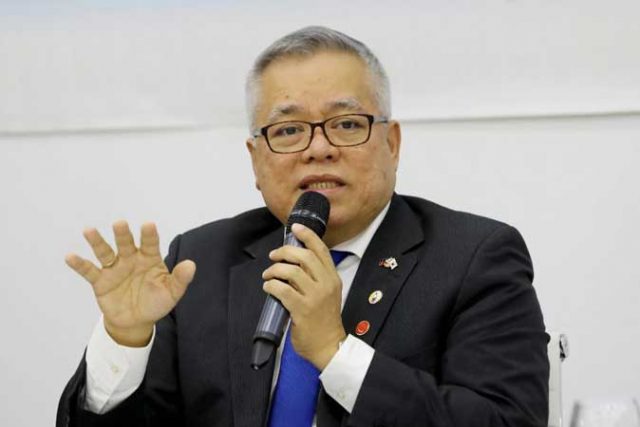
“(The program) will support our MSMEs by providing them direct consultancy and guidance service from partner universities and industry champions. These, in turn, would assist MSMEs in identifying their needs and provide innovative solutions to their problems,” Trade Secretary Ramon M. Lopez said during the virtual launch.

RISE will assist companies in developing business recovery plans to mitigate the effects of the coronavirus pandemic.

Potential partners include universities for technical consultancy and research links, startups for digitalization, government for funding and grants, and financial institutions for new capital loans.

Each business recovery plan will be specific to the firms, making market-oriented or technology-based recommendations.

RISE was also launched in partnership with the Cebu Institute of Technology University, Southwestern University PHINMA, and the Science, Technology, Research and Innovation for Development Program of the United States Agency for International Development. — Jenina P. Ibañez

BSP targets to complete open finance oversight body this year

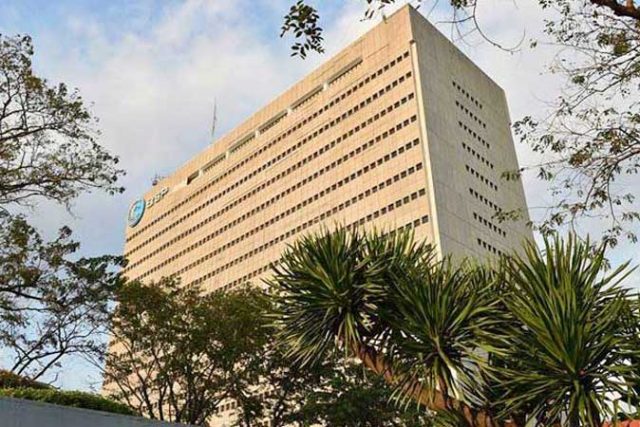
THE CENTRAL BANK is targeting to finalize within the year the members of the industry-led open finance oversight committee (OFOC) that will formulate the standards and framework for customer-consented data sharing among financial institutions, Bangko Sentral ng Pilipinas (BSP) Governor Benjamin E. Diokno said.

The OFOC is set to include representatives from various financial institutions such as commercial, thrift, rural, and digital banks, nonbank financial institutions, electronic money issuers, operators of payment systems, and other relevant sectors.

“It [OFOC] shall promote non-discriminatory membership by ensuring that key areas of interest of the financial industry are adequately represented and that all participants and applicants for membership are treated fairly and consistently,” Mr. Diokno said at an online briefing on Thursday.

The central bank in June released Circular 1122 or the open finance framework, which allows for consent-driven data portability, interoperability, and collaborative partnerships among financial institutions that adhere to the same standards of data security and privacy.

The framework has tiered implementation based on data sensitivity, data type, and data holder type. It has five tiers: product and service information, subscription and new account applications, account information, transactions, and others.

“The tiers are not necessarily sequential and multiple implementations may be undertaken simultaneously,” Mr. Diokno said.

The open finance framework also opens the possibility for easier know-your-customer (KYC) processes.

“It’s possible for us to be able to come up with agreements not only on the electronic KYC but also other ways to benefit from data sharing. It’s a matter of coming up with the rules that will help standardize that across the different players from banks to the other players in the market,” said Anatoly D. Gusto, Bank Officer V at the BSP’s Technology Risk and Innovation Supervision Department.

In June, the Rural Bankers Association of the Philippines and the Rizal Commercial Banking Corp. teamed up for a data-sharing project to help small lenders set up their own online platforms. The partnership came after the open finance framework was approved by the Monetary Board. — L.W.T. Noble

Amazon’s COVID dilemma: Mandate vaccinations and risk losing workers

WHILE MUCH of Corporate America scrambled to adjust COVID-19 policies this summer in response to a surge of cases, Amazon.com, Inc. was dismantling its coronavirus testing sites. Sequestered corners of warehouses and conference rooms where, just a few weeks ago employees were performing nasal swabs, are now blocked off or cleared of equipment.

This may seem counterintuitive as the Delta variant rips through many of the states where Amazon has warehouses. But the company says employees have plenty of other ways to get tested. Amazon, employees say, has been loath to make the tests compulsory for fear of alienating the COVID skeptics in its ranks. The same has held true for forcing workers to get vaccinated.

That in a nutshell is the quandary facing America’s second-largest private employer: how to keep its facilities COVID-free without sparking a mutiny among workers who are desperately needed to keep operations running amid a tight labor market and strong online demand. The company was known for high turnover among frontline workers even during the best of times. Now, with jobs abundant, warehouse employees have more options.

“A lot of the associates do not want to be forced to get something,” said a manager at an East Coast warehouse. If Amazon rolled out a vaccine mandate, “it wouldn’t go over well. They’d lose a lot of employees if they do that.”

Many of the workers at her facility are unvaccinated, said the manager, who spoke on the condition of anonymity because she wasn’t allowed to speak to the media. She said many of these workers comply with company guidance to wear masks if they haven’t had the jab. But some unvaccinated employees also occasionally walk around maskless.

The rapid advance of the more-transmissible Delta variant has sparked a reassessment of safety protocols at big companies. In the last week, Facebook, Inc., Google and Microsoft Corp. said employees at their campuses must be vaccinated, Apple, Inc. delayed its return-to-office plans, and Walmart, Inc. ordered workers at its thousands of stores to wear masks, regardless of vaccination status.

Amazon has so far held to its prior plans, which include a gradual loosening of safety restrictions for the several hundred thousand workers in warehouses and a return of most of the company’s office workers for at least three days a week beginning in September. The company could follow Walmart with some kind of mask mandate for its hourly workers. But there was no sign such a plan was on the table during an earnings conference call last week, when Chief Financial Officer Brian Olsavsky told reporters the company was monitoring local outbreaks and would adjust policies accordingly but had stopped short of requiring vaccination for its workers. He said the company’s priority is to get its employees vaccinated, and Amazon’s logistics group continues to sponsor on-site vaccination clinics for workers.

Big employers like Amazon and Walmart are in a “brutal war for frontline workers,” which makes it impossible to demand workers get vaccinated and keep stores and warehouses open, said Kirthi Kalyanam, director of the retail management institute at Santa Clara University. It’s too easy for workers who don’t want to be vaccinated to quit and find another job with a less strict employer or a gig-job like DoorDash.

Vaccination rates are also lower with workers with lower education levels, a labor pool on which Walmart and Amazon rely, he said. Walmart, the largest private US employer, last week said corporate staff must get vaccinated and that store and warehouse employees must resume wearing masks at work. Kalyanam said that mandating vaccines among leadership to set an example and then encouraging it at the worker level, is a reasonable approach.

“If the president of the United States and Centers for Disease Control are telling everyone to get vaccinated and people still aren’t doing it, an employer isn’t going to make a difference,” he said. “There’s no way for anyone to mandate this. You’ll lose your labor force and business will grind to a halt.”

“We’re working hard to protect our team — making it easy to get vaccines, requiring masks for people who aren’t vaccinated and continuing social distancing where appropriate,” said Amazon spokesperson Kelly Nantel. “Vaccines are the path out of this pandemic, and we’ve held more than 1,100 free vaccine events, administered close to 200,000 shots on-site, offered payments to employees who get vaccinated whether on-site or off and provided ongoing education and promotions to encourage all employees to get vaccinated.”

After COVID-19 was detected around Amazon’s Seattle headquarters in March 2020, Amazon sent its office staffers home. For warehouse workers who don’t have the luxury of remote work, the company for a time said those worried about their safety could miss shifts without penalty.

Absenteeism surged immediately, even in areas where COVID-19 had yet to be detected, according to someone familiar with Amazon’s response to the crisis. Warehouse managers inundated headquarters with requests to divert orders to other warehouses, which were themselves experiencing the same shortage of workers. The company’s vaunted logistics machine quickly broke down. Shipping times ballooned from days to weeks.

Amazon got things back on track with an unprecedented hiring spree, bringing on hundreds of thousands of new workers and opening hundreds of new facilities. But keeping the new hires coming has grown more difficult as the economy picks up and many employers raise wages and offer bonuses to lure back workers they shed during lockdowns.

As COVID cases plunged in the US this spring, Amazon started to chart a course for normalcy in its warehouses, which had been operating on a crisis footing for more than a year.

Amazon in May started letting employees who showed proof of vaccination take off their masks at work. The vaccinated receive stickers noting their status, so staffers charged with enforcing mask requirements can easily identify those who should still be covering their nose and mouth. That has fueled tension in some facilities, where some unvaccinated employees say they feel the company is singling them out, four warehouse workers said in interviews.

“That is nobody’s business,” said one worker, who requested anonymity in saying he’s unvaccinated and has had COVID-19. “No one deserves to know about my medical history.”

Amazon, which has been collecting fine-grained data about the prevalence of the respiratory disease in its ranks, has a detailed view of vaccination rates among employees, and in the areas where its workers live, down to the zip code. NBC News reported last month that some Amazon warehouses were seeing a rise in COVID cases, mirroring the surge in some cities.

Still, Amazon has continued to relax earlier guidelines it had instituted to keep people from congregating.

Barriers in bathrooms and break rooms have come down. Amazon stopped enforcing some social distancing measures in warehouse corridors, and shifts that used to be staggered to keep people from bunching up at security gates now have dozens or hundreds of employees arriving and departing at once.

In recent weeks, Amazon stopped performing temperature checks on arriving employees. In one Nevada warehouse, the area that used to host kiosks for self-administered COVID-19 tests is now being used as a storage area for safety equipment.

“They’ve almost completely rolled back all COVID-related changes,” said a worker at a Connecticut facility, who said she’s vaccinated but worried about spreading the virus to unvaccinated relatives. “Vaccinated people can still spread it to others, so I do wish they were still being cautious.”

In areas where local rules require masking for vaccinated people indoors, Amazon complies. Some warehouse workers say that the split between company-wide and regional mandates has created confusion, with employees receiving all-employee guidance that is sometimes quickly countermanded by text messages or notices from on-site HR staffers.

Amazon prefers to roll out broad policies that apply to most or all frontline workers and is attuned to the risk of taking a Walmart-style approach that sets different standards for corporate and logistics, said a person familiar with the company’s debate about COVID mandates. “They see the PR risk in saying ‘Oh, we’re going to make it mandatory for corporate, but not warehouses,’” the person said. “They are in a hard spot because they have a huge tech contingent, plus a warehouse contingent. It’s a tough question to answer if you want to do one thing for everybody.”

A poster distributed to Amazon warehouses urges employees to get the vaccine, describing how the shots help the body fight off the virus. Below that, the notice says: “The return to normal is coming.” — Bloomberg


D&L says Batangas plant to start May 2022

D&L Industries, Inc. will delay the earliest start of commercial operations (SCO) for its Batangas plant to May 2022 after its subsidiary was granted an extension by the Philippine Economic Zone Authority (PEZA).

“Our existing capacity is still sufficient to serve requirements in the near term, as such the extension in the SCO should have no material impact on current operations,” D&L President and Chief Executive Officer Alvin D. Lao said in a statement on Thursday.

Wholly owned unit D&L Premium Foods Corp. (DLPF) will be manufacturing various food ingredients for the company’s export business. DLPF was originally scheduled to begin its commercial operations by October this year.

PEZA granted DLPF an SCO extension to January 2023, following challenges brought by the recent surge in coronavirus disease 2019 (COVID-19) infections and the reimposition of stringent lockdown measures and shipping delays for the plant’s equipment.

However, another D&L wholly owned subsidiary Natura Aeropack Corp. (NAC) will start commercial operations in May next year as scheduled. It will be the first plant to operate within the company’s Batangas plant. NAC will be manufacturing coconut oleochemicals for different consumer care products.

D&L said it remains “committed” to its Batangas expansion project. The plant is situated on a 26-hectare property in its First Industrial Township – Special Economic Zone, half of which is covered by the ongoing expansion called Phase 1.

“We see ever-growing opportunities in relevant industries in the new normal that we can tap into with this new plant,” Mr. Lao said.

The plant will be dedicated to D&L’s growing export business in the food and oleochemicals segment. It will give the company capability to manufacture downstream packaging, which will also allow D&L to “pack at source.”

“This means that D&L will have the ability to process the raw materials and package them closer to finished consumer-facing products,” the company said.

D&L has spent around P4.5 billion so far for the project and has some P3.5 billion earmarked in remaining capital expenditures for this year and the next. In June, it filed a registration statement with the Securities and Exchange Commission for its maiden P5-billion fixed-rate bond offering to further fund the expansion project.

The company said it is in a “far better position to thrive in an adverse environment and a potentially protracted economic recovery period,” noting strong demand.

D&L recorded a 35% recurring net income growth year on year in the first quarter to P695 million, while its total net income grew 41% to P724 million. D&L believes it can reach its 2019 income levels should it maintain this momentum in the succeeding quarters.

On Thursday, shares of D&L at the stock exchange declined by 2.10% or 17 centavos to close at P7.92 each. — Keren Concepcion G. Valmonte

Singer Rihanna is officially a billionaire, Forbes says

EN.WIKIPEDIA.ORG/

POP star Rihanna’s net worth is estimated at $1.7 billion, making her the richest woman musician in the world, but her music is not the primary source of her wealth, Forbes magazine said on Wednesday.

The Barbados-born singer, whose birth name is Robyn Fenty, derives an estimated $1.4 billion of her fortune from her 50% stake in the Fenty Beauty cosmetics line, Forbes reported.

The rest of Rihanna’s wealth comes from her share of the Savage x Fenty lingerie company and her income as a singer and actress, the magazine said.

Rihanna’s beauty company, of which LVMH owns the other half, is known for its broad range of 50 skin tones, including dark shades for women of color, which were rare when it launched in 2017. This made it a leader in inclusivity in the industry.

The singer of “Umbrella” and “Love the Way You Lie” ranks second behind Oprah as the richest female entertainer, Forbes said. — Reuters

The business of banking

NOW that the National Capital Region and several provinces are once again placed under the enhanced community quarantine (ECQ) protocol in the next two weeks, everyone has more free time to indulge in leisurely activities while staying at home. Here are two newly released volumes that are recommended as reading fare during the ECQ.

The Business of Banking: Structure and Profitability; Risks and Controls is a textbook written by retired banker Deogracias Vistan. The book is primarily for Filipino graduates who decide to pursue a professional career in banking or those who choose the management track in such fields as marketing, trading, production, services, and entrepreneurship.

What makes it even more interesting is the author’s inside info on the evolution of the Philippine banking industry over the past 60 years, starting from the 1960s when a dramatic change emerged in how banks are managed. Significant events in the country’s financial sector are listed by decade from the pre-martial law era up to the year when the COVID-19 pandemic started.

This book reflects a banker’s perspective on banking as a profession, an industry, and a business. It discusses liquidity, interest rates, foreign exchange, credit line and loan processing, consumer and trust banking, treasury management, human resource development, audit and compliance, regulatory environment, and the future of Philippine banking. At the end of each chapter, there are practical cases for group discussion.

Mr. Vistan knows whereof he speaks, after more than three decades of management experience in major financial institutions. His career started in the so-called university of banking, Citibank, after which he became President of three commercial banks: Land Bank of the Philippines; the defunct Solidbank; and Equitable PCIBank, which was acquired by BDO. He also served as Chairman of United Coconut Planters Bank, Vice Chairman of Metrobank, and President of the Bankers Association of the Philippines.

Published by Anvil Higher Education, a division of Anvil Publishing, Inc., The Business of Banking is available at National Book Store branches nationwide. Anvil is the biggest tradebook publisher in the country and a nine-time Publisher of the Year awardee cited by the Manila Critics Circle.

PASSION FOR GARDENING
Another ex-Citibanker, Flor Gozon Tarriela, has become a prolific writer of environmental and inspirational books. Her latest volume titled Weedibles, Weedicinals Plus Edible Flowers and More was launched last month with Department of Agriculture (DA) Secretary William Dar and former Department of Health Secretary Dr. Jaime Galvez Tan as guests of honor.

Weedibles, Weedicinals is basically a book about plants presented in simple language. According to the author, it is not intended to be a substitute for the advice of a healthcare professional. Some of the featured plants come from Ms. Tarriela’s nature haven in Antipolo City called Flor’s Garden, a five-hectare bird and butterfly sanctuary just an hour’s drive from Ortigas Center.

Ms. Tarriela recently retired as Chairman of Philippine National Bank. She was the first Filipina Vice-President of Citibank and served as Finance Undersecretary in between her banking stints. Her love for gardening was inculcated by her mother, Carolina Gozon, and nurtured by her Earth School partnership with Dr. Galvez Tan, whom she credits for elevating her medicinal plant advocacy.

Highly recommended for the “plantitos” and “plantitas” who have multiplied all over the archipelago during this prolonged lockdown, this book published by the Agricultural Training Institute in Trece Martires City may be ordered either through atirtc4a@gmail.com or florsgarden@yahoo.com. Indeed, it is an expression of support for the DA’s flagship “Plant, Plant, Plant” program as a pandemic recovery response toward long-term food security and prosperity.


J. Albert Gamboa is the chief finance officer of Asian Center for Legal Excellence and co-chairman of the FINEX Week Committee. The opinion expressed herein does not necessarily reflect the views of these instiutions and BusinessWorld.

EEI swings to profit as revenues rise

CONSTRUCTION firm EEI Corp. registered a net income attributable to equity holders amounting to P250.17 million in the second quarter, a reversal of its year-on-year losses of P843.35 million, after generating higher revenues from its construction contracts as well merchandise and property sales.

In a regulatory filing on Thursday, EEI said that its total revenues in the three months ending June reached P4.89 billion, more than three times the value in the same period last year.

Earnings from construction contracts, which comprised majority of the listed firm’s earnings, reached P4.56 billion or more than double the previous level of P1.59 billion.

Meanwhile, EEI incurred higher expenses at P4.01 billion, up from P2.59 billion last year.

“EEI’s construction operations continued to improve during the second quarter of 2021, without any serious COVID-19 (coronavirus 2019) threats as the NCR (National Capital Region) Plus bubble remained mostly in the less stringent General Community Quarantine classification during the period,” the firm said.

EEI said its sustainable backlog of projects valued at P49.2 billion is enough to sustain the group for the next two to three years.

It added that it is “well-positioned” to win more contracts for mega infrastructure projects under the government’s Build, Build, Build program, and is confident in its investments and joint ventures, which have proven to be “resilient” amid the pandemic.

“The Group is positive that it will continue its recovery for the rest of the year and the years to come,” it added.

EEI is primarily engaged in the construction of power generating facilities, oil refineries, chemical production plants, cement plants, food and beverage manufacturing facilities, semiconductor assembly plants, roads, bridges, rails, ports, airports, high rise residential and office towers, and hotel buildings.

EEI shares improved by 4.03% or 31 centavos to finish at P8 apiece on Thursday. — Angelica Y. Yang

Marcventures incurs P51-M loss as revenues fall

MARCVENTURES Holdings, Inc. reported a P50.65 million net loss for the second quarter due to lower revenues.

The company said in a regulatory filing on Thursday that its net loss for the April to June period is a turnaround from its P261.48-million net income in the same period last year.

Revenues of Marcventures for the quarter reached P299.85 million, down 74.2% from P1.16 billion a year ago, while operating expenses fell 23.3% to P68.23 million against P88.9 million in 2020.

For the first six months of the year, the company recorded a P166.31-million net loss, a reversal of its P137.52-million net income in 2020.

Revenues during the January to June period fell 74.2% to P299.85 million compared to P1.16 billion in 2020.

“It was attributable to a lower volume of nickel ore shipped out during the period which led to a decrease in revenue as compared to last year of the same period,” the company said.

Operating expenses reached P206.37 million, up 2.1% from P202.20 million recorded the previous year, as a result of increases in taxes and licenses, professional fees, community relations, and environmental expenses.

“Aside from the volatile prices of ore in the market and US Dollar exchange rate, there are no other known trends, events or uncertainties that have had or that are reasonably expected to have a material favorable or unfavorable impact on net sales or revenues or income from continuing operations,” the company said.

Marcventures, through its subsidiary Marcventures Mining and Development Corp., operates a nickel mine under a mineral production sharing agreement in Surigao del Sur. The company’s other subsidiaries include BrightGreen Resources Corp., Alumina Mining Philippines, Inc., and Bauxite Resources, Inc.

On Thursday, its shares at the stock exchange dropped 12.50% or 15 centavos to finish at P1.05 each. — Revin Mikhael D. Ochave

Entertainment News (08/06/21)

Spotify launches new daily, weekly subscription plan

THIS week Spotify launched Premium Mini in the Philippines, a new bite-sized plan that offers flexibility with daily and weekly subscriptions for as low as P7/day and P26/week. Premium Mini users can enjoy almost all the benefits of the regular Premium plan, including: ad-free individual music listening on mobile with unlimited skips, with access to more than 70 million music tracks and over 2.9 million podcast titles; download and play up to 30 songs offline on one mobile device; and Premium Mini Listeners also have the ability to tune in to the same playlist or podcast with up to five friends via Group Session in beta. Spotify has introduced expanded payment options for people to easily access Premium Mini plans on the go via digital wallets such as GCash and PayMaya or through Carrier Billing. To sign up for Spotify Premium Mini, download Spotify’s mobile app or head over to Spotify’s website on desktop;click the “Premium” section at the top right of the website or at the bottom right of the Spotify app; choose “Get Mini” and choose “daily” or “weekly” plan (this is a prepaid offering); choose payment methods; register or log in to the Spotify account. Spotify’s Premium Mini Plan is currently available in the Philippines for Android mobile and tablet.

Dayaw Season 11 highlights Philippine sports

AWARD-winning documentary series Dayaw’s new season on the ABS-CBN News Channel (ANC premieres on Aug. 5. The show’s 11th season, titled “Kaka-ibang Sigla: Our Vital Energy,” focuses on traditional games, sports, and dance. The episodes will feature Filipino childhood games, Ifugao’s annual punnuk tug-of-war ritual, Filipino martial arts, and folk and indigenous dances. Dayaw is a production of ANC and the National Commission for Culture and the Arts (NCCA). It airs on Thursdays at 6 p.m. on ANC on cable and the ANC Facebook page.

Baguio mayor backs youngest Miss Universe PHL hopeful

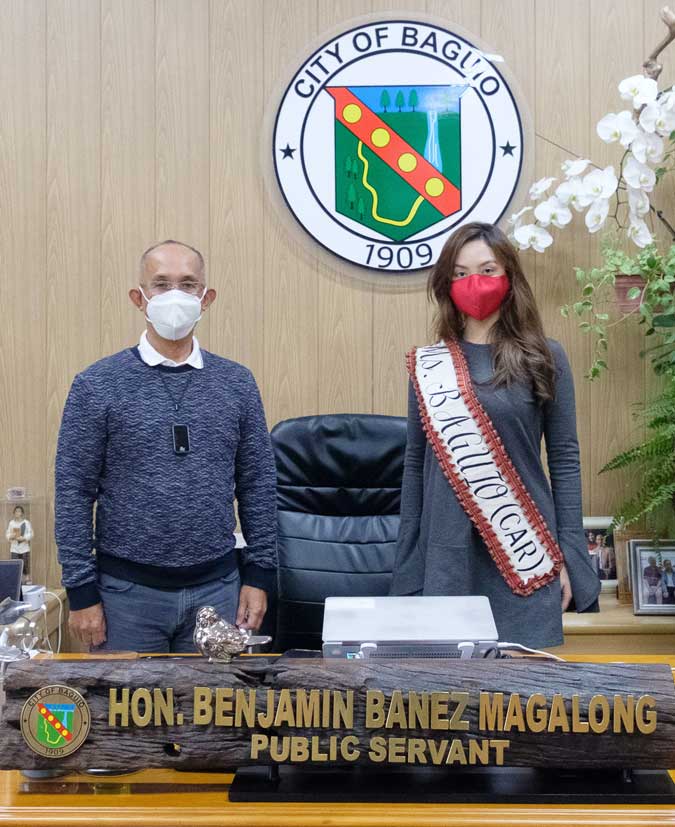
BAGUIO City Mayor Benjamin B. Magalong has extended his support for Miss Universe Philippines 2021 candidate Kristina Alexandra S. Rodriguez, the lone representative of the Cordillera Administrative Region (CAR) in this year’s pageant. During the courtesy call on Wednesday, Mr. Magalong reminded Rodriguez to always strive to become a good leader despite the difficulties that may be thrown her way, and to continue having strong passion and determination to pursue her dreams. For her part, the 18-year-old Rodriguez — the youngest among this year’s Miss Universe Philippines’ hopefuls and an incoming first year college student — said she took this opportunity to make the most out of the pandemic. Ms. Rodriguez is representing Baguio City, which is also in the midst of an impressive transformation amid this still-raging pandemic. Ms. Rodriguez is among the 100 candidates vying for the Miss Universe Philippines title this year. A series of challenges will decide who will advance in the next rounds. The coronation night is on Sept. 25.

KZ Tandingan, TJ Monterde release 2 songs

SINGERS and real-life couple KZ Tandingan and TJ Monterde have released the Bisaya songs, “Dodong” and “Inday,” respectively dedicating each tune to each other. “Dodong” is a lullaby that is Ms. Tandingan’s ode of gratitude for TJ’s love for her. Meanwhile, Mr. Monterde said that he wrote “Inday” as a song of reassurance for his partner. The two songs are part of the “Simula” playlist available on Star Music’s YouTube channel. The songs are out now on music streaming platforms.

GMA RTV airs Regional TV News on GTV

GMA Regional TV (RTV) now airs its flagship news program Regional TV News in the morning, weekdays at 9 a.m., and on Saturdays at 10 a.m. on GMA Network’s GTV channel. Regional TV News is produced by the teams behind the high-rating and award-winning newscasts GMA Regional TV Balitang Amianan (North Central Luzon), GMA Regional TV Balitang Bisdak (Central & Eastern Visayas), GMA Regional TV One Western Visayas (Western Visayas), GMA Regional TV One Mindanao (North, Central, South Central, Western, and Southern Mindanao) and GMA Regional TV Balitang Bicolandia (Bicol Region). Regional TV News provides the latest and most relevant news from the different regions and provinces on the national level.

iQiyi announces Amazon TV partnership

IQIYI, the Asian entertainment streaming service, launches its iQiyi International app on all Amazon Fire TV devices. In the Philippines, this is the Fire Stick Basic Edition. Amazon Fire TV device owners will be able to access iQiyi’s growing collection of pan-Asian content with more than 3,000 show titles. To facilitate international accessibility, iQiyi also offers streaming experience with localized user interfaces and subtitles in up to 12 languages, customized playback settings, and proprietary technology that allows users to watch their shows two seconds after clicking the play button. Owners of newer models of Amazon Fire TV Basic Edition (PH) sticks will be able to indulge in the Asian content viewing experience at home. Existing subscribers will be able to download and login to iQiyi on Amazon Fire TV devices, while new users can download and enjoy the free content. iQiyi International App is also currently available on iOS and Android devices, Samsung, Sony, Phillips, LG, and Apple TV.

Promos at the Shopee 8.8 Mega Flash Deals Sale

UNTIL Aug. 8, enjoy discounts up to 90% off on essentials, free shipping with no minimum spend, and others deals at the Shopee 8.8 Mega Flash Deals Sale. There are Midnight Flash Deals that drop from 12 to 2 a.m.; daily ₱8 Deals (if the desired flash deals aren’t live yet, click “Remind Me” to receive a notification once it’s available); free shipping vouchers (before checking out, see if your order is eligible for other platform or shop vouchers); a chance to claim up to 70,000 coins by playing the Shopee Quiz on Aug. 6, 7:20 p.m. (the prize pool will be divided among players who answer all questions correctly during the game); a shot at winning ₱10,000 by joining Shopee’s #ShopeeMegaLook Raffle; exclusive ShopeePay deals with up to 50% cashback when you pay your electricity, water, and internet bills with ShopeePay, ShopeePay ₱1 Deals from Puregold, Seaoil, Potato Corner, and more, 10% off on mobile load, and flash deals on load and data for as low as ₱1; and a chance to win ₱5,000 worth of ShopeePay credits by joining the #BudolFinds challenge on Tiktok which is ongoing until Aug. 8. To discover more about flash deals, visit https://shopee.ph/m/8-8.

Money Heist Part 5 on Netflix

Netflix presents Money Heist Part 5 in two installments. Volume 1 premieres on Sept. 3 and Volume 2 on Dec. 3. In this season, the robbery gang has been shut in the Bank of Spain for over 100 hours. While they have managed to rescue Lisbon, they also lost one of their own, the Professor has been captured and doesn’t have an escape plan. Just when it seems like nothing else could go wrong, an enemy comes on the scene that is much more powerful than any they’ve faced: the army. Watch the trailer of Money Heist Part 5 on YouTube at www.youtube.com/watch?v=p_RRfBnSikc.

PayMaya addressing customer reports on unauthorized transactions

MOBILE WALLET firm PayMaya Philippines is addressing concerns of users regarding unauthorized transactions using cards linked to their accounts.

“We have indeed received reports that some of our PayMaya customers recently experienced suspicious and unauthorized transaction attempts involving MasterCard, Inc. or Visa, Inc. cards linked to their PayMaya accounts,” PayMaya Head of Public Affairs and Communications Nick Bautista-Wilwayco said in an e-mail.

“Most of these transactions were unsuccessful as PayMaya’s anti-fraud system automatically detected and declined these attempts. For customers with unauthorized transactions, we are addressing these cases urgently,” she added.

Several PayMaya users on Thursday took to social media to inquire with the firm after they received notifications of these suspicious transactions, with some seeing their balance debited for payments to merchants with indecent business names.

“We would like to remind our account holders to keep their accounts secure by not sharing account and card details, passwords, and other personal information with any third party especially through phone, SMS, e-mail, social media, and website links…,” Ms. Wilwayco added.

Bangko Sentral ng Pilipinas (BSP) Deputy Governor Chuchi G. Fonacier said they have also reached out to PayMaya regarding these reports.

“The BSP is closely coordinating with the relevant BSP-supervised financial institutions on consumer-related concerns such as fraudulent and/or unauthorized transactions,” Ms. Fonacier said via text.

She said customers can submit their complaints to the BSP’s Consumer Protection and Market Conduct Office in case they are not satisfied with how financial institutions handle their concerns.

“Rest assured that BSFIs are bound to comply with applicable consumer redress/recourse mechanisms so that customers would be able to duly retrieve their funds,” Ms. Fonacier said.

PayMaya is a subsidiary of Voyager Innovations, Inc., the digital arm of PLDT, Inc.  Hastings Holdings, Inc., a unit of PLDT Beneficial Trust Fund subsidiary MediaQuest Holdings, Inc., has a majority stake in BusinessWorld through the Philippine Star Group, which it controls. — Luz Wendy T. Noble

Are human resource people critical thinkers?

I’m the operations manager of a medium-sized organization. My concern centers on our human resource (HR) manager, a 34-year-old man who appears to be clueless about what’s happening in our company and around the industry. He’s reactive on many people management problems and his programs don’t generate the maximum participation of the intended beneficiaries. And yet, he’s been doing the same things over and over for the past three years. I’ve seen the same thing happening in other companies as well. This is confirmed by my industry friends who think that many HR “professionals” are plain administrative managers incapable of being critical thinkers in this challenging world. What are your thoughts? — Blue Star.

I’m not sure if it’s the adverse effects of the pandemic on mental health. I’ve seen people jumping to conclusions, antagonizing their colleagues, sidestepping responsibility, and pushing their luck without any concrete evidence about their expertise. So, what’s making us focus our attention on HR people?

First and foremost, it’s the job of the Chief Executive Officer (CEO) to evaluate the HR manager’s work performance. And that should not prevent you from sharing your thoughts with the CEO if you perceive the HR programs are not meeting your department requirements and those of the organization.

But you’re right, except that we can’t make a generalization about the poor qualifications and performance of HR people unless we can come up with objective metrics for measuring what they can and cannot do.

“Recent complaints about the HR function have touched a nerve in a large, sympathetic audience, particularly in the United States,” according to Wharton management professor Peter Capelli in Forbes (2015). “The most vocal critics say that HR managers focus too much on ‘administrivia’ and lack vision and strategic insight.”

I share the same view. Here in the Philippines, I’ve seen many HR practitioners who perpetuate the reactive practice of exit interviews for resigned employees instead of promoting the “stay” interview or a kumustahan, motivational approach long before the employees even think of leaving.

LEAN HR
So, how do we define “critical thinking?” My short and crisp definition is “challenging the status quo to discover the best way of doing things.” You can create your own definition, but I’m confident that regardless of how you define “critical thinking,” the terms originality, initiative, rational or logical thought will be included.

The World Economic Forum’s Future of Jobs Report (2020) highlights the finding that “(c)ritical thinking and problem-solving top the list of skills employers believe will grow in prominence in the next five years.” Does the critical thinking requirement apply to HR? There’s no doubt about it. Critical thinking is imperative for all, including those in the HR profession. There is no cogent and practical reason why not.

If there’s a single formula for HR to follow in practicing critical thinking, I would recommend “Lean HR” or the application of kaizen and lean principles to help reduce, if not eliminate waste in operations. In so doing, we end up asking a lot of questions about how HR is doing its job. Here are some of them:

One, why does it take time for HR to hire job applicants? The last time I checked with my industry sources, I was told they’re averaging two-and-a-half months to source, screen, interview, negotiate, and do the on-boarding of new employees in across all jobs. There are many reasons that contribute to the delay. One thing that irritates me is when they refuse to interview applicants with incomplete documents.

Are we not supposed to do only paper screening of the applicants’ curriculum vitae? Interviews can be fast-tracked online, with or without the pandemic. Further, should we not secure only pre-employment documents from the top two candidates?

Two, why focus on the perfect attendance award instead of merit? Why reward people who are required to report daily and on time? Why focus on physical presence rather than actual results? Why do we micromanage people on work-from-home arrangements by turning on their laptop cameras? Why not strengthen the performance management system instead?

Or, if your organization can afford it, procure software that monitors worker progress on an hourly basis. Why must we retain the services of deadwood who can’t do other jobs?

Last, why delay the issuance of an employment certificate? You won’t believe the arrogance of HR people on this issue. Many organizations drag their feet in issuing this simple, one-page document stating only bare facts like the employee’s job title and the duration of their employment. And yet HR would often claim the signatories were absent, which is another issue — why should a simple document require several signatories?

Due to the increasing number of complaints from the general public, the labor department issued Labor Advisory 06-20 (signed on Jan. 31, 2020) that requires employers to issue a certificate of employment within three days and to release the clearance and terminal pay of resigned employees within 30 days.

REACTIVE APPROACH
The list of issues against HR is endless. That’s because they’re reactive to many people issues, if not outright wrong on many things. Do a simple check of what HR people post on social media. You’ll wonder how they can call themselves “HR managers” when they write and behave poorly in a public setting.

HR people are averse to critical thinking. They hate to experiment with new things. Identifying with tradition has been a survival strategy for many in HR. They prefer to be “yes” men and women rather than rock the boat. Submissiveness to top management rather than persuading them to do something new reflects how they understand risk and avoid uncertainty.


Have a consulting chat with Rey Elbo on Facebook, LinkedIn, or Twitter or you can send anonymous questions to

elbonomics@gmail.com or via https://reyelbo.consulting

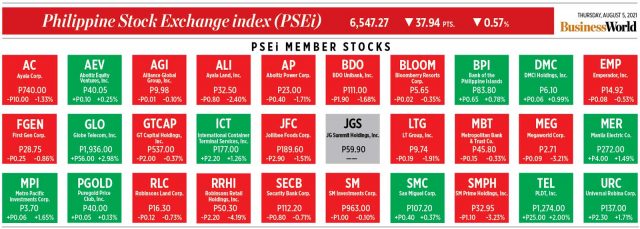
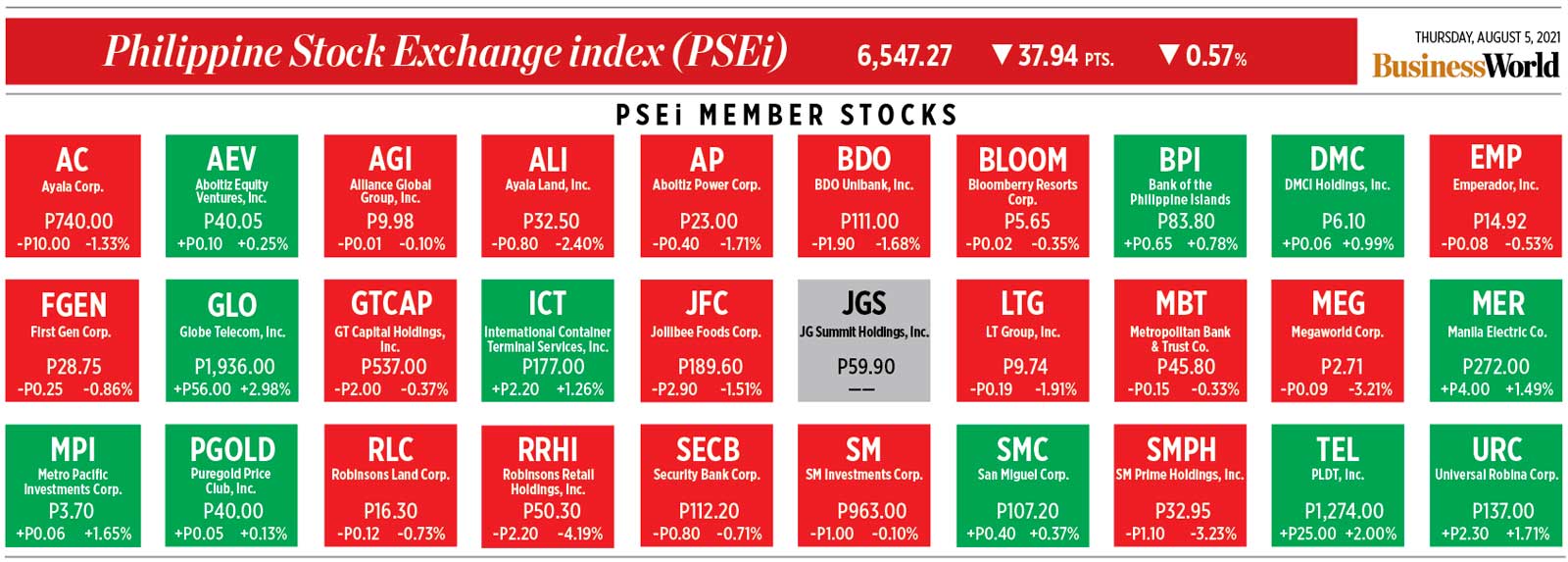
How PSEi member stocks performed — August 5, 2021

Here’s a quick glance at how PSEi stocks fared on Thursday, August 5, 2021.


ADVERTISEMENT
ADVERTISEMENT