Home Blog Page 7686

Israeli survey finds 3rd Pfizer vaccine dose has similar side effects to 2nd

JERUSALEM — Most people who received a third dose of Pfizer Inc.’s coronavirus disease 2019 (COVID-19) vaccine felt similar or fewer side effects than they did after receiving the second shot, according to an initial survey in Israel.  

Israel began offering the booster shots about 10 days ago to people over age 60 as part of efforts to slow the spread of the highly contagious Delta variant. That effectively turned Israel into a testing ground for a third dose before approval by the US Food and Drug Administration.  

Israel’s largest healthcare provider, Clalit, said on Sunday it had administered a third dose of the Pfizer/BioNTech vaccine to more than 240,000 people.  

About 4,500 people, all of whom received the booster shot from July 30 to Aug. 1, responded to questions and were included in the survey.  

Eighty-eight percent of participants in the survey said that in the days after receiving the third shot, they felt “similar or better” to how they felt after the second shot.  

Thirty-one percent reported some side effect, the most common being soreness at the injection site.  

About 0.4% said they suffered from difficulty breathing, and 1% said they sought medical treatment due to one or more side effect.  

Ran D. Balicer, Clalit’s chief innovation officer, said that even though the results are “initial and self-reported,” they allow a comparison of side effects with the second dose, and “it turns out that in most cases they are similar or less in the booster.”  

“Although we do not yet have long-term research on the efficacy and safety of the third booster dose, for the personal risk management of any person aged 60 plus, these findings continue to point to the benefit of immunization now, along with careful behavior among adults and avoiding gathering in closed spaces,” Mr. Balicer said. — Reuters 

No test, no entry: Berlin nightclubs pilot ‘reboot’ project

Image via clubcommission.de

BERLIN — Six Berlin nightclubs opened their doors this weekend to some 2,000 revelers free of masks and social distancing restrictions in a pilot project to assess whether testing for coronavirus disease 2019 (COVID-19) could prevent another lockdown for the city’s nightlife venues.  

To be admitted to the clubs, all participants in the project, named “Clubculture Reboot,” had to have tested negative on Friday with a Polymerase Chain Reaction (PCR) test, the most reliable commonly-used method of detecting COVID-19.  

They will be offered a cash incentive to get follow-up tests this coming Friday.  

Some 20 clubs applied to take part in the project, initiated by the Berlin Culture Ministry and scientists from the city’s Charité hospital. The six selected clubs were chosen based on their ventilation systems, city districts, and music genre.  

The idea of the study is to determine how to safely reopen nightclubs without anyone getting infected. If the pilot is successful, further such events could take place in the future.  

While COVID-19 restrictions are tight in Berlin, many party organizers plan events outside the capital city in the state of Brandenburg, where up to 1,000 revelers can dance to their heart’s content — and without masks — at open-air festivals, so long as they show proof of a negative COVID-19 test, vaccination or having recovered. — Reuters

Beyond Delta, scientists are watching new coronavirus variants

Alexey Solodovnikov, Valeria Arkhipova/CC BY-SA 4.0/Wikimedia Commons

CHICAGO — The continued spread of the SARS-CoV-2 virus has spawned a Greek alphabet of variants — a naming system used by the World Health Organization (WHO) to track concerning new mutations of the virus that causes coronavirus disease 2019 (COVID-19). Some have equipped the virus with better ways of infecting humans or evading vaccine protection.  

Scientists remain focused on Delta, now the dominant variant rising rapidly around the world, but are tracking others to see what may one day take its place.  

DELTA 
The Delta variant first detected in India remains the most worrisome. It is striking unvaccinated populations in many countries and has proven capable of infecting a higher proportion of vaccinated people than its predecessors.  

The WHO classifies Delta as a variant of concern, meaning it has been shown capable of increasing transmissibility, causing more severe disease or reducing the benefit of vaccines and treatments.  

According to Shane Crotty, a virologist at the La Jolla Institute for Immunology in San Diego, Delta’s “superpower” is its transmissibility. Chinese researchers found that people infected with Delta carry 1,260 times more virus in their noses compared with the original version of the coronavirus. Some US research suggests that the “viral load” in vaccinated individuals who become infected with Delta is on par with those who are unvaccinated, but more research is needed.  

While the original coronavirus took up to seven days to cause symptoms, Delta can cause symptoms two to three days faster, giving the immune system less time to respond and mount a defense.  

Delta also appears to be mutating further, with reports emerging of a “Delta Plus” variant, a sub-lineage that carries an additional mutation that has been shown to evade immune protection.  

India listed Delta Plus as a variant of concern in June, but neither the US Centers For Disease Control and Prevention nor the WHO have done so yet. According to Outbreak.info, an open-source COVID-19 database, Delta Plus has been detected in at least 32 countries. Experts say it is not yet clear whether it is more dangerous.  

LAMBDA — ON THE WANE? 
The Lambda variant has attracted attention as a potential new threat. But this version of the coronavirus, first identified in Peru in December, may be receding, several infectious disease experts told Reuters.  

The WHO classifies Lambda as a variant of interest, meaning it carries mutations suspected of causing a change in transmissibility or causing more severe disease, but it is still under investigation. Lab studies show it has mutations that resist vaccine-induced antibodies.  

Dr. Eric Topol, a professor of molecular medicine and director of the Scripps Research Translational Institute in La Jolla, California, said the percentage of new Lambda cases reported to GISAID, a database that tracks SARS-CoV-2 variants, has been dropping, a sign that the variant is waning.  

In a recent call with the CDC, disease experts said Lambda did not appear to be causing increased transmissibility, and vaccines appear to be holding up well against it, said Dr. William Schaffner, an infectious diseases expert at Vanderbilt University Medical Center who attended the discussion.  

B.1.621 — ONE TO WATCH 
The B.1.621 variant, which first arose in Colombia in January, where it caused a major outbreak, has yet to earn a Greek letter name.  

The European Center for Disease Prevention and Control has listed it as a variant of interest, while Public Health England describes B.1.621 as a variant under investigation. It carries several key mutations, including E484K, N501Y, and D614G, that have been linked with increased transmissibility and reduced immune protection. So far, there have been 37 likely and confirmed cases in the UK, according to a recent government report, and the variant has been identified in a number of patients in Florida.  

MORE ON THE WAY? 
Dr. Anthony Fauci, the White House’s chief medical adviser, recently warned that the United States could be in trouble unless more Americans get vaccinated, as a large pool of unvaccinated people give the virus more opportunity to spread and mutate into new variants.  

Proponents of greater international distribution of vaccine doses by rich countries say the same thing could happen as variants emerge unchecked among the populations of poor nations where very few people have been inoculated.  

Even so, a key issue is that the current vaccines block severe disease but do not prevent infection, said Dr. Gregory Poland, a vaccine scientist at the Mayo Clinic. That is because the virus is still capable of replicating in the nose, even among vaccinated people, who can then transmit the disease through tiny, aerosolized droplets.  

To defeat SARS-CoV-2, he said, will likely require a new generation of vaccines that also block transmission. Until then, the world will remain vulnerable to the rise of new coronavirus variants, according to Poland and other experts. — Julie Steenhuysen/Reuters

BSP chief sees strong recovery in second quarter GDP

PHILIPPINE STAR/ GEREMY PINTOLO

MANILA – The Philippines’ central bank will keep its accommodative monetary policy plans for as long as needed to ensure a strong and sustainable economic recovery from the coronavirus pandemic, its governor said on Monday.

Bangko Sentral ng Pilipinas Governor Benjamin Diokno also said he expects a “strong recovery” in the second quarter after a contraction in the first quarter. Policymakers will meet on Thursday to decide on key interest rates, while second-quarter economic data will be released on Tuesday.

The country’s gross domestic product (GDP) shrank by 3.9% in the first quarter, the Philippine Statistics Authority said on Monday, revising the figure from an initial 4.2% contraction.

In July, Philippine economic managers said GDP growth this year will likely be between 6.0% to 7.0%, but a two-week lockdown of the capital region to contain the more infectious Delta coronavirus variant could undermine the outlook.

“Looking ahead, we see a strong growth of around 7.7% in 2022 and 6.5% in 2023,” Mr. Diokno told ANC news channel.

GDP fell by a record 9.6% in 2020, owing to tight and lengthy coronavirus lockdowns that stifled consumer spending and business activities. — Reuters

[B-SIDE Podcast] NFTs 101: the creator economy and beyond

Follow us on Spotify BusinessWorld B-Side

In this B-Side episode, Marissa Trew, marketing manager of TZ APAC, a Singapore-based blockchain consultancy firm speaks with BusinessWorld reporter Michelle Anne P. Soliman about the potential of non-fungible tokens (NFTs) as a tool for conducting business, an investment instrument, or a revenue stream.

TAKEAWAYS 

NFTs have business applications beyond crypto art and blockchain games.  

NFTs, which represent unique assets on a blockchain, went mainstream because of pieces of digital art that fetched millions at auction, and celebrities like Paris Hilton, Snoop Dogg, and Grimes launching their own digital drops.  

But beyond these buzzworthy bits of news, NFTs can also be used in business-to-business transactions such as licensing, supply chain management, and invoicing.   

“NFTs have utility far beyond being a digital asset. There’s a large enterprise use case that’s being developed,” said Ms. Trew. “There’s a lot of actual B2B use cases that NFTs are able to provide well beyond the creator economy in the digital space, in terms of music, art, and collectibles.” 

NFTs give artists access to an online network and market. 

In the Asia Pacific region, artists are using NFTs to sell their work — not necessarily for $69 million as Beeple did at the Christie’s sale, but at less stratospheric prices (Filipino artist Luis Buenaventura III and Argentinian comic book artist Jose Delbo sold 222 editions of Satoshi The Creator – Genesis for $1,999 each). 

“Digital creators use it as a way to embrace technology to showcase their work,” said Ms. Trew said. “We saw artists making a little bit more money for their work being better able to generate sales, generate their audiences. And largely for digital artists who were traditionally making their money off commissions were now earning higher incomes just based on their original work.”  

‘Proof of Stake’ blockchains are more energy-efficient than their ‘Proof of Work’ counterparts. 

Proof of Work blockchains, according to Ms. Trew, are those that require a higher amount of energy consumption such as Bitcoin and Ethereum.  

“They require are massive amounts of computing power because the way they process transactions are by validating and solving complex algorithmic puzzles, which requires a strong computer network,” she said.   

Meanwhile Proof of Stake is considered a more energy-efficient option.  

“It relies on the amount of value users stake to the network to do the same kind of transactions. For example, Tezos is based on the proof of stake consensus mechanism. And just by relative scale, it consumes some estimates put it at 2 million times less energy than Ethereum to conduct the same kinds of transactions,” she said.  

TZ Apac is a leading adoption entity supporting the Tezos ecosystem in Asia.

Investing in NFTs is driven by sentiment. 

“The NFT discussion about whether it’s considered a future asset class is largely down to how much sentiment and how much you value people see in owning a digital asset over a physical asset,” Ms. Trew said.   

“People are having a new source of emotional experience…there is a feeling that’s associated with owning something that’s unique, that’s one of a kind in a digital realm. And that’s very new to people,” she said.   

“Their value comes from scarcity. So, it’s about generating demand over limited supply.” 

Recorded remotely on July 14. Produced by Paolo L. Lopez and Sam L. Marcelo.    

Follow us on Spotify BusinessWorld B-Side

Change the changeable

JOSEPH UY MONZON
SLOCPI GENERAL MANAGER’S CUP WINNER

“It was hard, but it was also an eye-opener. This award is truly and equally satisfying and humbling. We won the GM Cup—my first ever as a unit manager.”

Sun Life unit manager Joseph Uy Monzon, 59, shares that 2020 turned out to be the most rewarding milestone for his unit in Khaya branch.

Joseph has been a multi-awardee for the past 17 years, but the pandemic-laden 2020 still brought him feelings of doubt and hopelessness in his career. But instead of dwelling on the unknown, Joseph diverted his energy into constructive action. With faith and confidence, he proactively reached out—remotely—to his network and devised new and creative strategies for himself and his team.

“Change the changeable and accept the unchangeable,” he advises. “Seek opportunity to rise from the pack, overcome challenges and increase resiliency. Focus on the goal despite the circumstances.”

Joseph always reminds his team that work is not everything, but they need to be bolder during this challenging time because more people need to get insured and protected.

He furthers, “My main purpose in life is to provide for my family and be a good warrior in other people’s eyes,” says the father of two. “At work, I strive to help as many Filipinos achieve financial security in life.”

Joseph’s wife, Evelyn Monzon, is also his branch manager.

After experiencing a rollercoaster of emotions in the past years, he reminds his unit and all the advisors to keep their focus.

“Feeling anxious is natural, but worrying will lead us nowhere. Stay safe and healthy and don’t lose sight of your goals. Always set SMART goals and dream big because optimism leads to achievement.”

Have that tiger mindset

ELLEN DALAWAMPO - DANILA
SLOCPI SALES MANAGER’S CUP WINNER

“I believe that all success stories begin with a single step. This step may at times be so hard to start with or to keep from moving. However, with determination, perseverance, passion and a clear goal, success can be achieved.”

For Ellen Dalawampo – Danila, EXCELSA branch manager, every award is meaningful because it means one has overcome great challenges. And when she won the Sales Manager’s Cup, it felt extra special because the success and recognition were not hers alone, it’s the whole team’s.

If not for her co-advisors’ contribution, she wouldn’t have delivered their target, she explains. “This pandemic has truly tested our perseverance and determination to help many people secure their future. Yet, we were able to finish the race with flying colors because we were not shaken by fear. Instead, fear made us stronger. We worked as a team. We uplifted one another whenever we felt down.”

Even now as a branch manager, Marilyn, fondly called Ellen by her friends and peers, continues to be a financial advisor with a “mindset of a tiger,” as she describes. “Whenever it sees a gazelle, it says, ‘let’s do it.’ Never have the mindset of a gazelle, which whenever it sees a tiger, it says, ‘let’s go’.” For her, opportunities are not given to people all the time, so we better grab it while they are offered to us.

At home, Ellen is a doting mother to Dria, aged 3. She is grateful for the industry that has given her family the privilege of enjoying a truly brighter life. As such, she’s also able to prepare for her precious daughter’s future.

Ironically, among the many challenges she has encountered, is convincing her relatives to believe in insurance. But she won’t tire of encouraging them.

“As a financial advisor, I advocate financial independence especially among the people whom I love so much. I find the meaning of my life whenever I make my family and the people who work with me happy and successful. Seeing them grow professionally and financially gives me a satisfying feeling that no amount of money can buy.”

Create a rewarding workplace

JAYVEE BADILE
SLOCPI PRESIDENT’S CUP WINNER

“There is science between behavior and circumstance. The pandemic doubled the need for elevated morale and performance. Constant huddles for realignment, coaching sessions for innovation, top-tier communication for adaptation, and generously incentivized performance were very helpful in ensuring that the business ran as usual.”

At 27, Jayvee Badile is already a new business manager or branch manager in Sun Life. To be specific, he is the youngest and fastest promoted branch/agency manager in the Philippine insurance industry.

“As a branch manager, I ensure sustainability of our Standards, Systems and Structure,” he discusses. “I also make sure I know how they all feel on a personal level. That is why I build relationships grounded on the idea that we are all interconnected.”

He ensures that all his personnel’s hard work is rewarded generously, because for him, boosting the morale of the team—by creating a conducive, rewarding workplace—determines the trajectory of their performance.

Therefore, his award serves as a validation of his financial advisors’ strategic hard work under his leadership in Sun Life’s Phoenix Palm branch.

“While it increases our visibility, it also strengthens our purpose as agents of change, and it will serve as fuel to continue affecting more change. Finally, it proves that we have successfully delivered the advocacy of financial security to Filipinos especially amid a global pandemic.”

Coming from a poor family, Jayvee’s personal advocacy is to make financial independence inclusive for every Filipino. This starts by helping them make deliberate and informed decisions with the options Sun Life offers, regardless of their current financial standing.

“I want to amplify that success in general and in milestones is driven by mindset and habit. This principle is always guided by my purpose to change lives through inspiration and impact. If I had done it with bare grit and passion, anyone can do it,” he says.

“Take heart, push forward, and turn your face towards the sun,” he advises the new financial advisors. “So long as you are doing your best for the people you promised to serve, then you are on your way to that sweet success story that you are building.”

Hong Kong minister signals path to adopting China anti-sanctions law

Image via Wikimedia Commons/CC-BY-SA-3.0

HONG KONG — Hong Kong’s justice secretary said on Sunday that a mainland Chinese law to counter foreign sanctions could also be adopted in the China-ruled city by writing it into Hong Kong’s mini-constitution, pending a decision by the Chinese parliament.  

Justice Secretary Teresa Cheng’s comments are the strongest official indication so far that Hong Kong would embrace the mainland law, passed in June to counter foreign sanctions as the US and EU step up pressure over trade, technology, Hong Kong, and Xinjiang.  

Under the law, individuals or entities involved in making or implementing discriminatory measures against Chinese citizens or entities could be put on an anti-sanctions list by relevant departments in the Chinese government.  

Ms. Cheng wrote in an official blog entry that the “most natural and appropriate way” to introduce the anti-sanctions law into Hong Kong would be to add it to an annex of the Basic Law, or Hong Kong’s mini-constitution.  

She added that such a move needed first to be approved by the highest organ of China’s parliament, the National People’s Congress. Local media have reported that a decision would likely be made during a meeting in Beijing on Aug 17–20.  

Critics have warned that the anti-foreign sanctions law could undermine Hong Kong’s reputation as a global financial hub, and tarnish sentiment among foreign firms.  

Hong Kong, a former British colony, returned to Chinese sovereignty in 1997 with a guarantee of a high degree of autonomy and freedoms.  

The US government issued a business advisory last month warning firms that they are subject to the territory’s laws, including a China-imposed national security law, under which foreign nationals, including one US citizen, have been arrested.  

The US government has imposed several rounds of sanctions on Hong Kong and Chinese officials over Beijing’s crackdown on the city’s freedoms under the sweeping security legislation.  

Without naming the United States directly, Ms. Cheng wrote that countermeasures were acceptable.  

“Unilateral coercive measures are without a doubt at odds with the principle of non-intervention, unbecoming of any civilized nation,” she wrote.  

“In the face of international illegal acts, a State is justified in deploying any countermeasures as a response.”  

Under China’s anti-foreign sanctions law, individuals could be denied entry into China or be expelled. Their assets within China may be seized or frozen. They could also be restricted from doing business with entities or people within China. — Reuters 

Alibaba uses Cloud Technology to reduce heatstroke risk during Tokyo 2020

Multiple cloud services to support digital transformation of the Olympic Games

Alibaba Group, the Worldwide TOP Partner of the International Olympic Committee (IOC), today announced a new cloud-based solution to help Olympic Games Tokyo 2020 onsite staff reduce the risk of getting heatstroke during the summer in Tokyo.

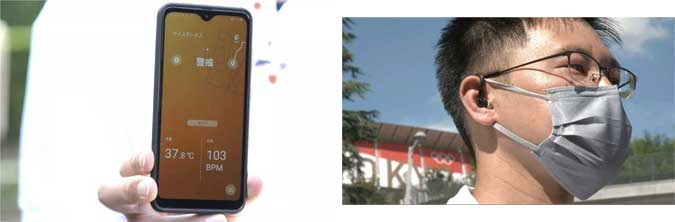
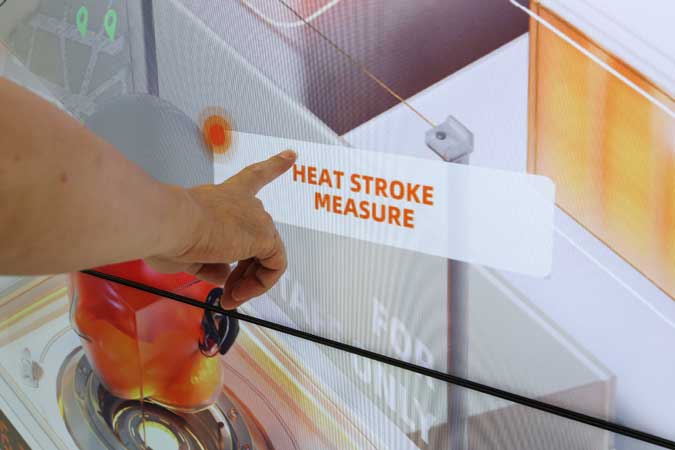
Through an intelligent ear-worn device, the technology helps keep track of the body temperature and heart rate of the Olympic onsite staff in Tokyo. Based on the body temperature, heart rate, and the environment index, a cloud-based system will identify the level of heatstroke risk in real time for individual working staff. Alerts will then be sent to those being exposed to a high level of risk along with recommended precautionary measures – such as drinking more water – to reduce the chances of getting heatstroke. The heat index in the surrounding environment including temperature, humidity and direct or radiant sunlight will be monitored through multiple heat stress WBGT (Wet Bulb Globe Temperature) meters set up at 14 Olympic competition venues.

Hidemasa Nakamura, Chief of the Main Operations Centre (MOC) of the Tokyo Organizing Committee for the Olympic and Paralympic Games, said: “The Tokyo Organizing Committee for the Olympic and Paralympic Games is working on various measures to protect working staff from the heat. Although it is expected to be extremely hot during the Olympic Games, we will provide support for the staff working for the operation of the Games. The cloud-based technology provided by Alibaba plays an important role here. The technology is used for WBGT measurement at the venue and the monitoring and prediction of the heat stroke risks for the staff. By working with Alibaba together with our other Worldwide Olympic partners, the organizing committee is determined to provide a safe tournament environment.”

“Leveraging our leading cloud technology, we hope to contribute to the safe and smooth operation of the Olympic Games,” said Selina Yuan, general manager of International Business, Alibaba Cloud Intelligence. “We believe our stable, resilient, elastic and secure cloud computing infrastructure will help digitalize the Olympic Games in various ways and bring new experiences to everyone involved.”

In addition, Alibaba has been offering various cloud services to support the digitalisation of Tokyo 2020:

  • OBS Cloud for broadcasters: Alibaba Cloud and Olympic Broadcasting Services (OBS) launched OBS Cloud in 2018, an innovative cloud-based broadcasting solution that helps transform the media industry for the digital age. During Tokyo 2020, it gives the Rights Holding Broadcasters (RHBs) access to the cloud hosted platform, which includes a variety of short-form, ready-to-air content produced by OBS, and is designed specifically for digital and social media platforms.
  • 3DAT for athletes: Hosted on Alibaba Cloud and leveraging Intel’s technology, 3D Athlete Tracking (3DAT) gives audiences professional insights into athletes’ performance as it happens. Without the need for motion tracking sensors, 3DAT leverages standard video, AI and Computer Vision to extract over 20 points in 3D on the athlete’s body, transforming that data into rich visualisations to enhance broadcasters’ storytelling for key Athletics sprinting events. 
  • Press Conference on Cloud:  This is a media service on the cloud for journalists who would like to watch and download the press conference videos during the Olympic Games if they cannot make to Tokyo. The service includes the video processing, audio/video editing and livestream/VOD distribution and video download function.
  • TOKYO 2020 Make The Beat!: In the run-up to the Olympic Games Tokyo 2020, global fans were invited to film themselves performing to the rhythm to cheer for their favorite athletes. A selection of the submitted material will be displayed during the event as a compilation generated using Alibaba Cloud technology.
  • Olympic Channel: Olympics.com, which is hosted on Alibaba Cloud, is designed to keep Olympic sports and athletes relevant in the years between each Olympic Games and attract new, younger audiences to a sports movement. 
  • Alibaba Cloud Pin: Designed to add new digital contribution to the traditional pin collecting and trading culture, this digital wearable is the first cloud pin designed to enable media professionals working at the International Broadcasting Centre (IBC) and Main Press Centre (MPC) to engage with each other and exchange social media contact information in a safe and interactive manner during the Olympic Games.

For more information about Alibaba’s efforts in digitalizing the Olympic Games, please visit: https://www.alibabacloud.com/olympics/home

Information Security Officers Group to hold month-long virtual interactive cybersecurity campaign in October

In celebration of National Cybersecurity Month, the Information Security Officers Group (ISOG) will once again hold the grandest and longest cybersecurity awareness campaign in the Philippines through a virtual summit to be held from Oct. 8 to Nov. 8, 2021.

With the theme “Securing the New Cyber Norm,” the full virtual event titled I Am Secure 2021: The Great Shift will bring together more than 3,000 enablers and decision-makers in the field of cybersecurity. This includes local and international C-level executives like Chief Information Security Officers (CISOs) and Chief Technology Officers, Data Privacy Officers, Security Architects, and Risk and Compliance Heads. Expected attendees also include experts in cybersecurity, data privacy, and banking & finance, as well as professionals from the academe, public, and private sectors.

The event will be a digital venue for attendees to engage with one another, establish standard procedures in the industry, equip themselves with new skills to promote information security, and empower Filipinos by strengthening legislative measures of fighting cybercrime.

“While the rapid shift to the digital world has helped various organizations thrive in the new normal, it can’t be denied that these connected digital technologies also come with a whole new list of cyber threats and risks,” ISOG VP and Summit Chairman Chito Jacinto said. “This event aims to equip and empower organizations and institutions to build a stronger cyber defense strategy that is essential in securing our digital economy against cyber risks, threats, and attacks in the new normal,” he added.

Three-dimensional (3D) digital venue

To veer away from being a boring webinar, the event will run through a state-of-the-art and globally awarded virtual venue platform. Through this technology, participants can enjoy a simulated event summit experience by entering three-dimensional virtual interactive lobby, plenary hall, breakout rooms, exhibition halls, and networking lounge.

Cybersecurity talks with augmented staging and presentations

Aside from an ultramodern virtual event platform, the cybersecurity summit will provide participants with informative webinars featuring topics such as password awareness, family home cyber tips, phishing awareness, and ransom awareness. To make the webinars even more engaging, it will come with augmented staging and presentations.

There will also be breakout and plenary sessions facilitated by reputable speakers who will be providing comprehensive insights on topics like defensive and offensive security.

Participants will also get to join and witness fun summit activities including booth exhibition, games, raffles, and Cyber Quiz Bee.

“Our efforts to make our digital cybersecurity awareness campaign as engaging and as empowering as possible is in line with our organization’s mission to strengthen information security through education and awareness programs. As we make the great shift towards digital, ISOG takes the lead in securing the new cyber norm in the country through programs like this,” ISOG President Archie Tolentino said.

Initial sponsors of the event are Trends, Globe Business, Cilynx, BlueVoyant with Microsoft, Huawei, Trendmicro with Netsec Technologies and VST ECS Phils Inc, Westcon with Palo Alto Networks, CyCognito, Tanium, Fortinet, Netpoleon with Netscout, F5, Nexus with Extrahop, MDI-Novare with FireEye, Group IB, Blancco, Tenable, Gigamon, Arcon, M-Security with RSA Netwitness, Aptsecure Technologies with Seclore, Everest IMS, IPV Network, Solarwinds, and Inspira.

ISOG, which consists of CISOs from different financial institutions and IT security professionals in the Philippines, has been organizing security summits since 2015.

To know more about I Am Secure 2021: The Great Shift virtual summit, you may send an email to isog2021@gmail.com. For more information on ISOG and cybersecurity in the Philippines, follow ISOG’s Facebook page at https://www.facebook.com/ISOGPH and website www.isog-summit.com.

ePLDT VITRO Data Center: Empowering enterprises across the country

ePLDT's premiere flagship data center VITRO Makati 2

Businesses nationwide now rely heavily on digital services to sustain their operations amidst restrictions brought about by compliance to health protocols and adherence to lockdown policies. This abrupt shift to digital means that their mission critical applications and services must be easily accessed by customers 24/7, which necessitate safekeeping in a secure, robust and reliable data center facility.

As the largest telco-neutral data center in the Philippines, ePLDT’s VITRO Data Center has been supporting businesses as they go through their respective transformation journey.

“VITRO is the pioneer and market leader in the Philippine data center market and for the past 20 years, we have earned the trust and confidence of enterprise customers both here and abroad as we enable mission critical applications,” said Jovy Hernandez, president & CEO of ePLDT and SVP & Head for PLDT and Smart Enterprise Business Groups.

ePLDT pioneered its first purpose-built data center with the establishment of VITRO Pasig in 2000. Since then, the information and communication technologies arm of PLDT Enterprise expanded to 10 fully operational data centers with over 9000 racks that can be found across the archipelago.

VITRO offers server colocation for clients to locate their critical resources and disaster recovery seats that employees can access when needed. Such facilities and infrastructures hold several certifications that ensure VITRO’s capability of housing the needs of businesses. Three of the 10 VITRO facilities acquired TIA-942 Rated 3, certifying that the data center operates on two identical yet separate source of cooling, electricity, and connectivity.

Other compliances from VITRO are the PCI-DSS certification and its different ISO certifications for Business Continuity, IT, Information Security, Environmental and Quality Management Systems.

“From previous on-premise deployments, enterprises now realized the need for immediate access to critical workloads regardless of mobility restrictions. VITRO provides a robust infrastructure with 99.99% SLA, seismic zone 4 compliance, and with telco connectivity options for both local and international,” he said.

Among ePLDT’s data center facilities, the VITRO Makati 2 is its most prestigious and flagship data center. With its 3,600-rack capacity and a total data center floor area of 18,632 sqm, the facility assists businesses to rapidly improve their IT infrastructure, allowing them to accelerate their speed to market schedules and significantly improve service and operation uptime.

ePLDT also assures that organizations outside Metro Manila have data centers to rely on with its VITRO Clark and VITRO Subic, which in total contain more than 1,500 racks.

The company provides data center colocation services in Visayas and Mindanao as well. The VITRO Cebu 2 is its largest data center facility outside Luzon, with its 794 racks and 5,855-sqm data center space. The company also built Davao City’s first data center, which has a 44-rack capacity attending to certain business needs of local and foreign customers in the region.

According to Mr. Hernandez, VITRO’s infrastructures are ready for the always-on customers and the unpredictable workload demands. “Most commonly known as 2N redundancy system, a prerequisite for being Rated 3, the facility can perform maintenance and repairs without causing disruptions to client’s critical resources,” Mr. Hernandez explained.

In addition, ePLDT’s technical experts for data center, cloud, cybersecurity, and managed IT are always within reach to aid companies in digital transformation. The company built the biggest Security Operations Center (SOC) in the Philippines to protect critical apps of the PLDT group. SOC is also manned 24/7 to address the threats and unusual IT behavior at a rapid pace.

PLDT is likewise committed to further expand these data center facilities to serve more enterprises moving forward.

“Additional data centers will not only improve the strategic locations of the existing data center network but also increase the rack capacity to attract not only local enterprises but also global technology companies requiring a presence in the Philippines,” Mr. Hernandez said.

ADVERTISEMENT
ADVERTISEMENT